


 Скачать презентацию The United States and the Collapse of the
54cde76dee7de1f6b042e7dd842ef159.ppt
- Количество слайдов: 47
 The United States and the Collapse of the Old World Order 1901 -1920 Chapter 23
 Main Points and Issues ¡ Progressive Diplomacy ¡ Woodrow Wilson and Moral Diplomacy ¡ The Road to War ¡ War and Society ¡ The Lost Peace
 Progressive Diplomacy ¡ ¡ ¡ Reflected progressive characteristics or order, control, and organization Remold and organize the economy of the Western hemisphere to benefit US Sense of American superiority, obligation, burden Spread “American” values and institutions, uplift, and “help” Economic expansion
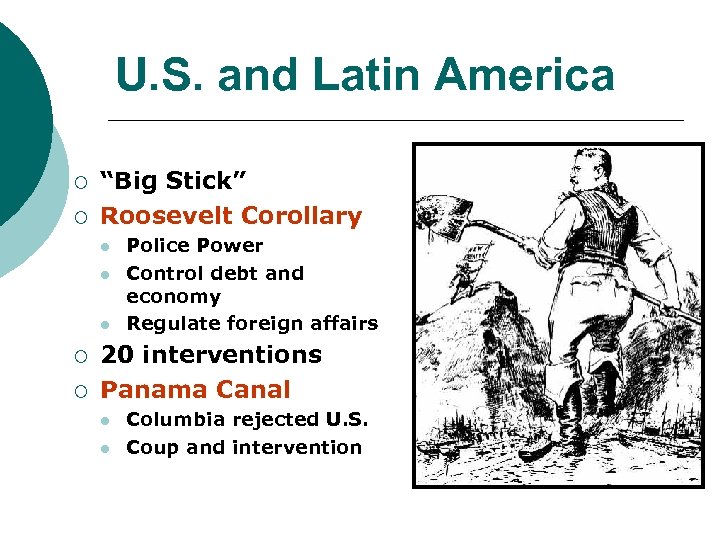 U. S. and Latin America ¡ ¡ “Big Stick” Roosevelt Corollary l l l ¡ ¡ Police Power Control debt and economy Regulate foreign affairs 20 interventions Panama Canal l l Columbia rejected U. S. Coup and intervention
 Theodore Roosevelt (TR) ¡ ¡ Open door in China, “protect” the Philippines, and defend against the Russians and Japanese Roosevelt calmed Japanese aggression in Russia, Nobel Peace Prize Japanese in US protested TR, and criticized segregation in CA TR ended segregation, but also made Japan restrict immigration to the US, in the “Gentlemen’s Agreement” of 1907
 Dollar Diplomacy ¡ William H. Taft l l l Economic influence & financial dependence Half of all US international investments were in Latin America Influence politics Intervention to protect “U. S. Interests” from anything “threatening” profits, including the domestic reform efforts of countries U. S. has invested in. Alliances with conservative and military forces to “maintain law and order”
 Wilson & “Moral Diplomacy” US as “beacon” of freedom, the chosen people to lead the poor out of darkness & into light & salvation ¡ Assumption of superiority made it easy to think that their way was the only way, the right way, and thus impose their institutions on others because they think it was best for them. ¡ Wilson-style democracy, capitalism, morality through force ¡
 Wilson’s Diplomacy Commercial self-interest masked as moral idealism ¡ Influence in Nicaragua 1910 s ¡ Marines in Haiti and Dominican Republic ¡
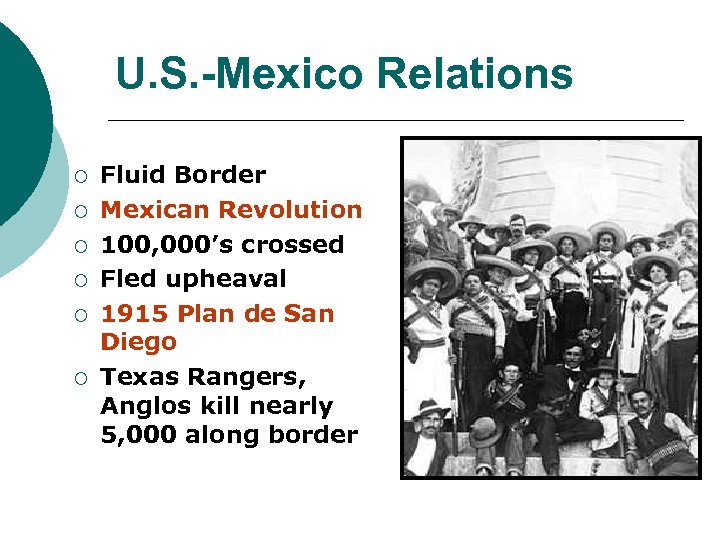 U. S. -Mexico Relations ¡ ¡ ¡ Fluid Border Mexican Revolution 100, 000’s crossed Fled upheaval 1915 Plan de San Diego Texas Rangers, Anglos kill nearly 5, 000 along border
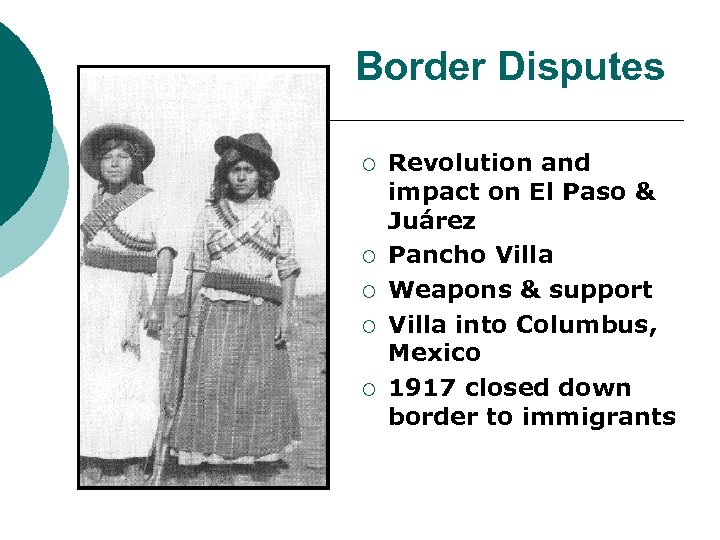 Border Disputes ¡ ¡ ¡ Revolution and impact on El Paso & Juárez Pancho Villa Weapons & support Villa into Columbus, Mexico 1917 closed down border to immigrants
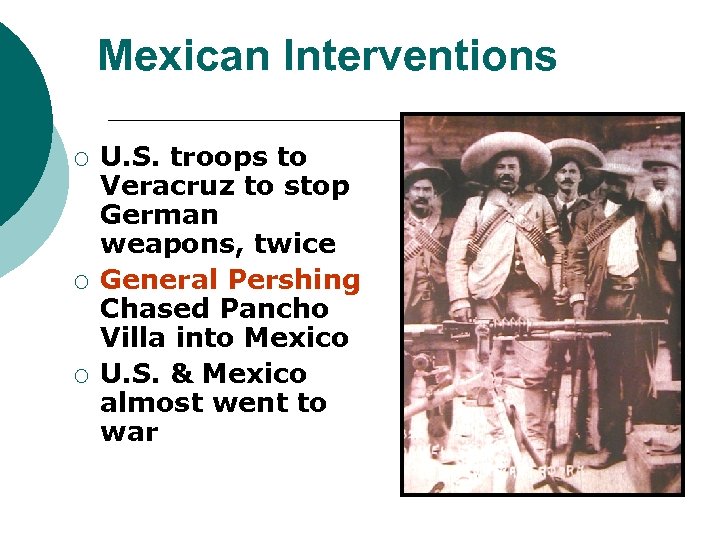 Mexican Interventions ¡ ¡ ¡ U. S. troops to Veracruz to stop German weapons, twice General Pershing Chased Pancho Villa into Mexico U. S. & Mexico almost went to war
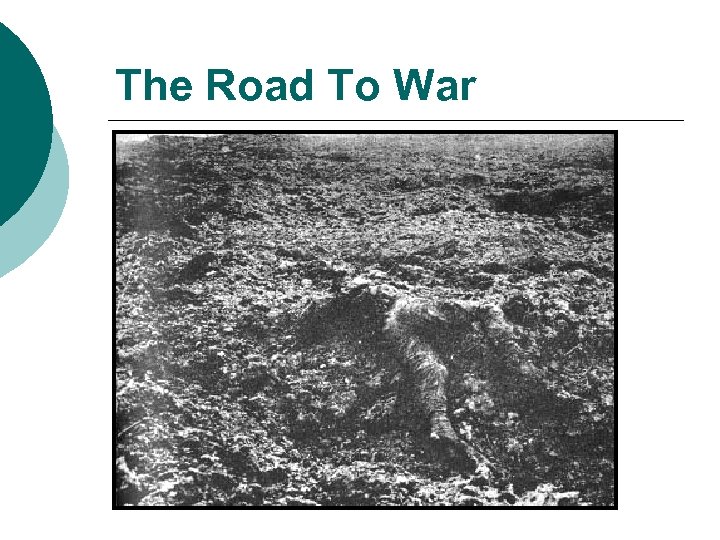 The Road To War
 Main Points ¡ Long term & Short term Origins ¡ Debates over War ¡ Main Events ¡ Casualties of War ¡ Nativism and xenophobia ¡ Legacies
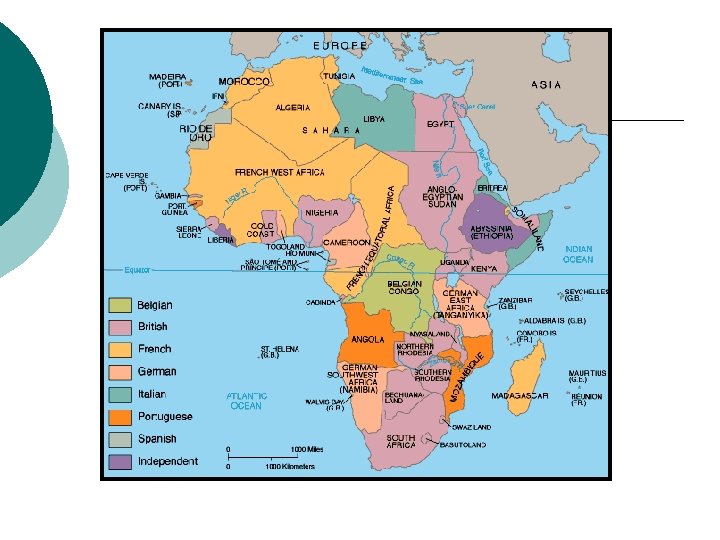
 Long-Term Origins European & Russian expansion ¡ Geopolitical competition ¡ Scramble for Africa, control over Middle East ¡ Age of empire and Imperialism ¡ “Entangling alliances” ¡ American economic interests ¡ Alliance with Britain ¡
 Short term Causes ¡ ¡ Franz Ferdinand, Archduke of Austria-Hungary (Central) killed by Serbian nationalist (Allied), which wanted independence from A-H attacked Serbia, and France defended it British had to back French, and Germans backed A-H, and Russia joined BR & FR Europe fell into war due to empire and alliances
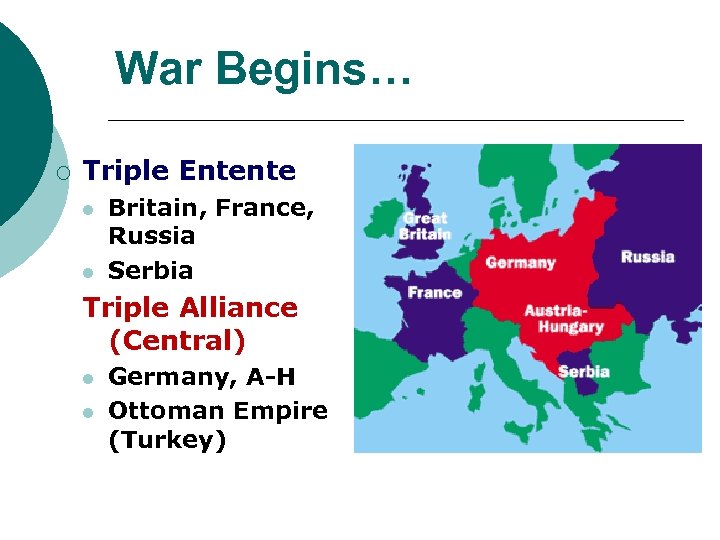 War Begins… ¡ Triple Entente l l Britain, France, Russia Serbia Triple Alliance (Central) l l Germany, A-H Ottoman Empire (Turkey)
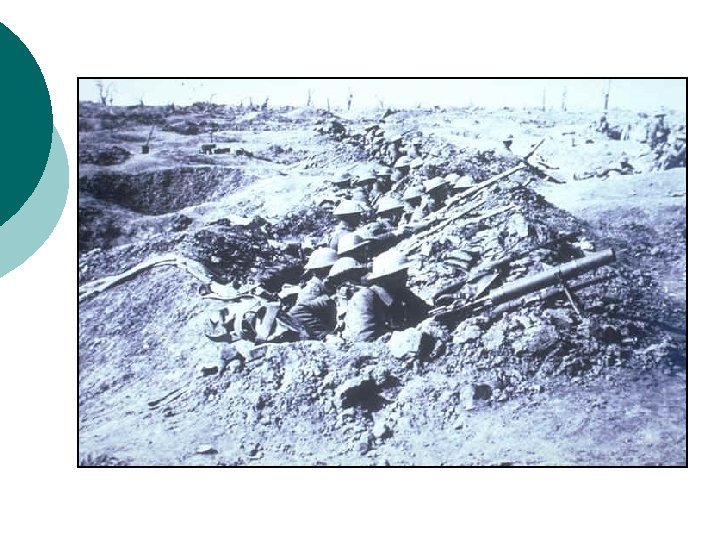
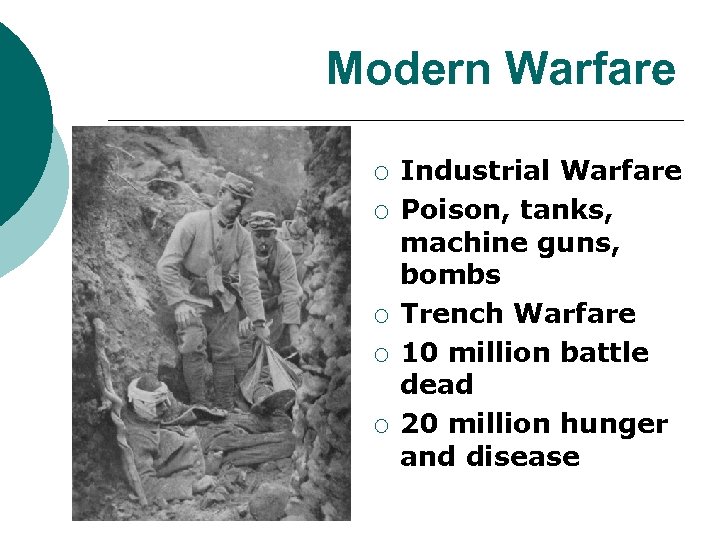 Modern Warfare ¡ ¡ ¡ Industrial Warfare Poison, tanks, machine guns, bombs Trench Warfare 10 million battle dead 20 million hunger and disease
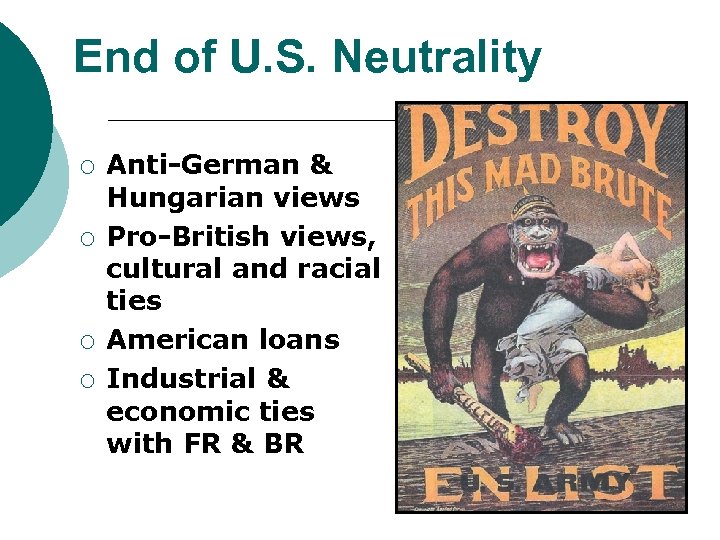 End of U. S. Neutrality ¡ ¡ Anti-German & Hungarian views Pro-British views, cultural and racial ties American loans Industrial & economic ties with FR & BR
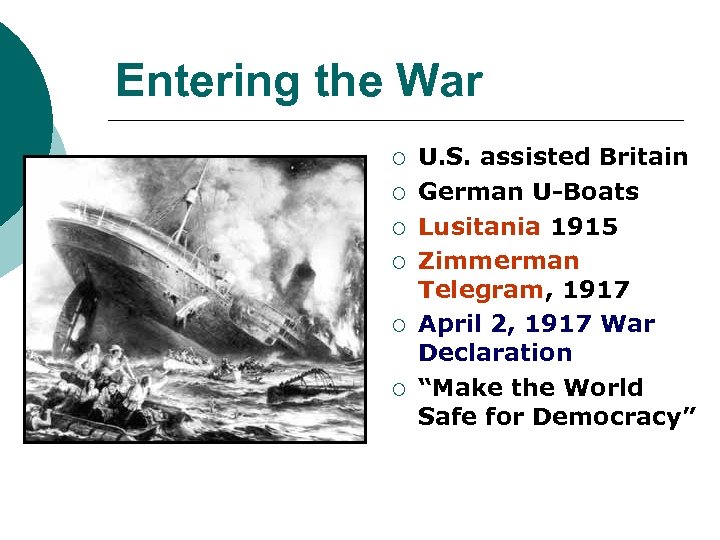 Entering the War ¡ ¡ ¡ U. S. assisted Britain German U-Boats Lusitania 1915 Zimmerman Telegram, 1917 April 2, 1917 War Declaration “Make the World Safe for Democracy”
 War is Good for Business ¡ William J. Bryan, Secretary of State 1914: l ¡ ¡ ¡ “opened the doors of all the weaker countries to an invasion of American capital & enterprise” J. P. Morgan: millions of $ in loans to Britain U. S. Steel made $348 million in profits selling to Britain $100 s of millions in U. S. supplies, weapons, ships, tanks, etc to allies
 Peace Responses ¡ ¡ W. E. B. Du. Bois: the war is for “the gold and diamonds of South Africa, the cocoa of Angola and Nigeria, the rubber and ivory of the Congo, the palm oil of the West Coast…” Eugene Debs: “They tell us that we live in a great free republic, that our institutions are democratic; that we are a free and selfgoverning people. That is too much, even for a joke…Wars throughout history have been waged for conquest and plunder. The master class has always declared the wars; the poor subjects have fought the battles. ”
 Continued… ¡ ¡ ¡ Many Americans doubted the ties between their security or interests and what they believed were the rivalries, treaties, agreements between European powers 75, 000 Americans volunteered within the first three months after declaration Sen. Thomas Hardwick (GA): “There was undoubtedly general, widespread opposition on the part of most people…to the enactment of the draft law. Numerous, largely attended mass meetings held in every part of the U. S. protested against it. ”
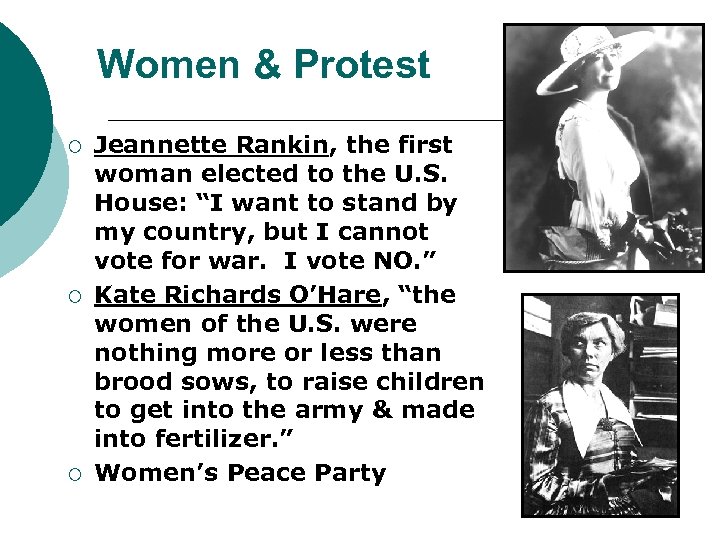 Women & Protest ¡ ¡ ¡ Jeannette Rankin, the first woman elected to the U. S. House: “I want to stand by my country, but I cannot vote for war. I vote NO. ” Kate Richards O’Hare, “the women of the U. S. were nothing more or less than brood sows, to raise children to get into the army & made into fertilizer. ” Women’s Peace Party
 War Mobilization ¡ ¡ Federal control over economy Selective Service Act: draft War Industries Board controlled military production and ensured control over profits, distribution, and manufacture War Labor Board broke strikes and enforced labor support for the war
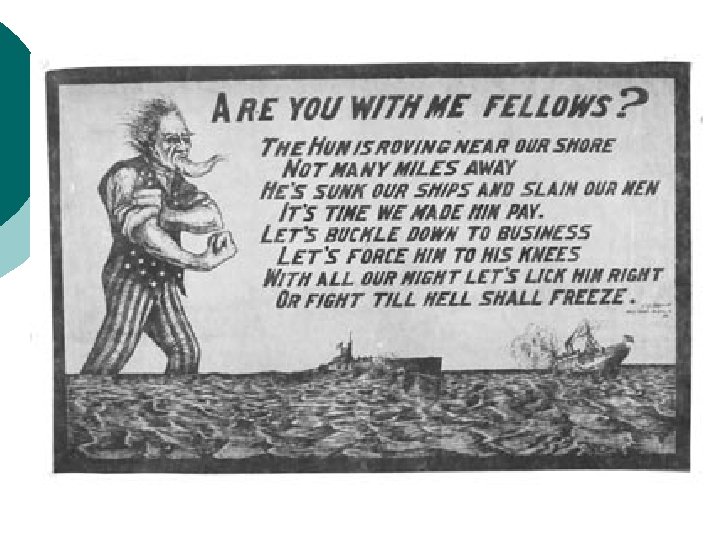
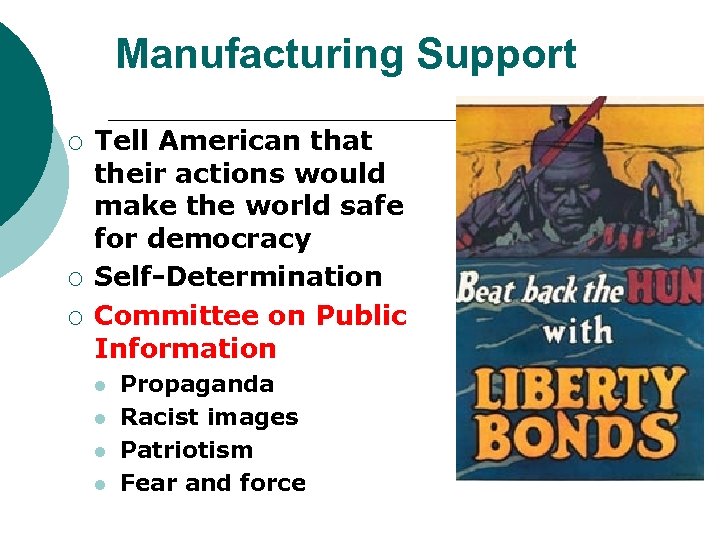 Manufacturing Support ¡ ¡ ¡ Tell American that their actions would make the world safe for democracy Self-Determination Committee on Public Information l l Propaganda Racist images Patriotism Fear and force
 Continued… ¡ ¡ Nationalism/patriotism to unite people to believe that their security depends on following capitalists and politicians who tell them to sacrifice for a “way of life. ” Convince them that their problem are NOT associated with internal class warfare or racism, but international dangers Convince them that they are good righteous people, and that their actions will spread democracy and bring liberty to others. It’s American: fight if you want to be accepted and have a part of the American dream
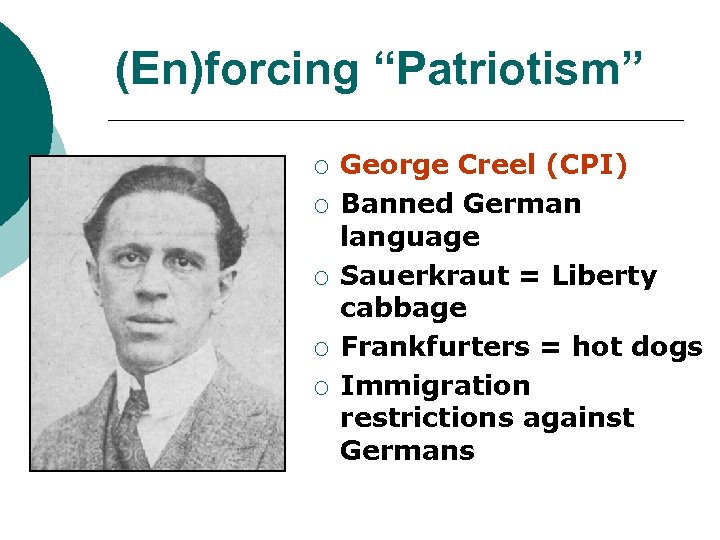 (En)forcing “Patriotism” ¡ ¡ ¡ George Creel (CPI) Banned German language Sauerkraut = Liberty cabbage Frankfurters = hot dogs Immigration restrictions against Germans
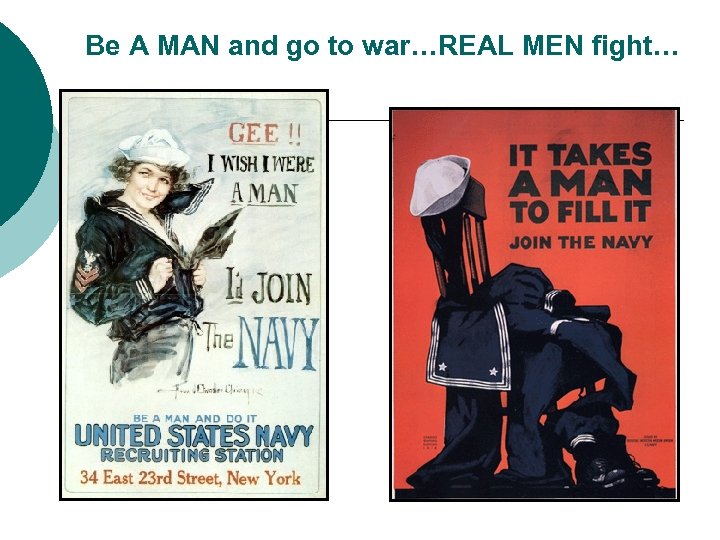 Be A MAN and go to war…REAL MEN fight…
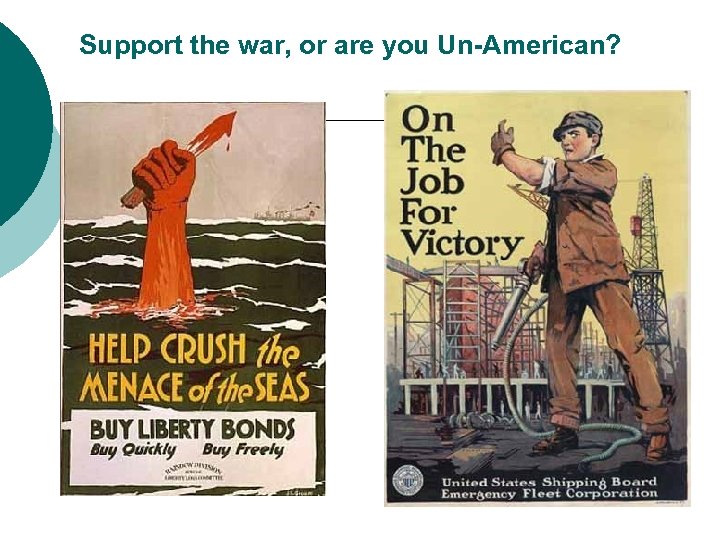 Support the war, or are you Un-American?
 The first casualty of war… ¡ Espionage Act of 1917 l ¡ Sedition Act of 1918 l ¡ Criminalized public gathering and organizing against the war Criminalized written material criticizing the war Schenk v. U. S. (1919) rejected free speech
 America during the War ¡ ¡ Charles Schenk arrested for distributing anti-war leaflets, sentenced to prison under the Espionage Act 1000’s arrested, w/o trial, under the Act NYT, 1917, “More than 100 men enrolled yesterday in the American Vigilante Patrol at the offices of the American Defense Society…the Patrol was formed to put an end to seditious street oratory. ” El Paso, TX: Closed down the border, fears of revolutionaries, anti-Mexican hysteria, Tom Lea
 Continued… Nearly 350, 000 evaded the draft ¡ 65, 000 claimed conscientious objector status ¡ Soldiers based in Ft. Riley, KS, refusing to fight were tortured ¡ University professors fired for vocal opposition ¡ 50, 000 American soldiers dead by end of war in November 1918 ¡
 The War Ends… ¡ Bolshevik Revolution, Oct. 1917 l l ¡ Wilson’s Fourteen Points, Jan. 1918 l l ¡ ¡ Lenin and others pulled Russia out of war Treaty gave eastern Russia to Germany (Poland, etc) National self-determination Open Diplomacy Free commerce and travel League of Nations Germany accepted defeat Treaty of Versailles, June 1919
 After the War Competing Visions l Socialism & Capitalism ¡ Creating nations ¡ l ¡ Finland, Lithuania, Poland, Hungary, Czech, Yugoslavia, Romania “The German Question” l l Punishment $, Guilt, Army
 The Red Scare In the US ¡ ¡ ¡ ¡ Bolsheviks=socialists & communists Free speech vs. national security Anti-communist hysteria Labor strikes and protest Conservatives said reformers were socialists and wanted revolution Simplified political differences Used negative labels to stereotype, scare, and bully Squashed political dissent
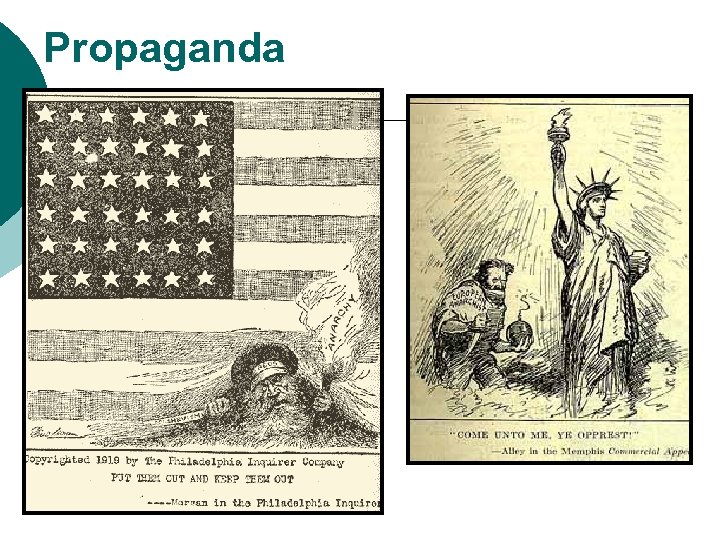 Propaganda
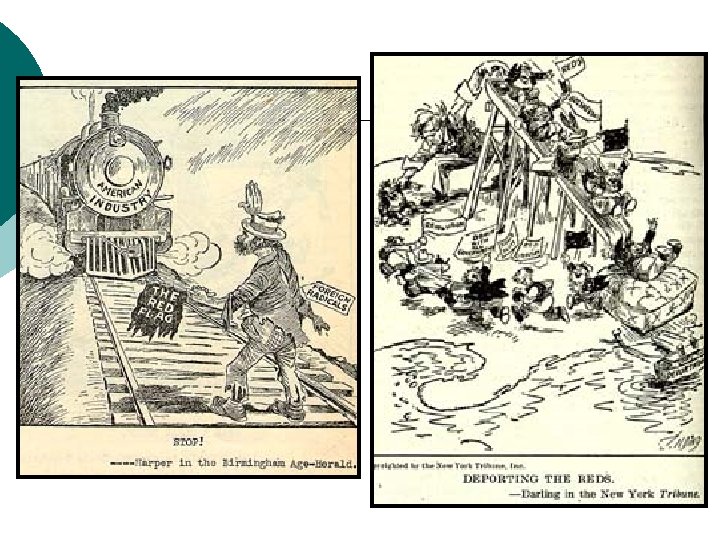
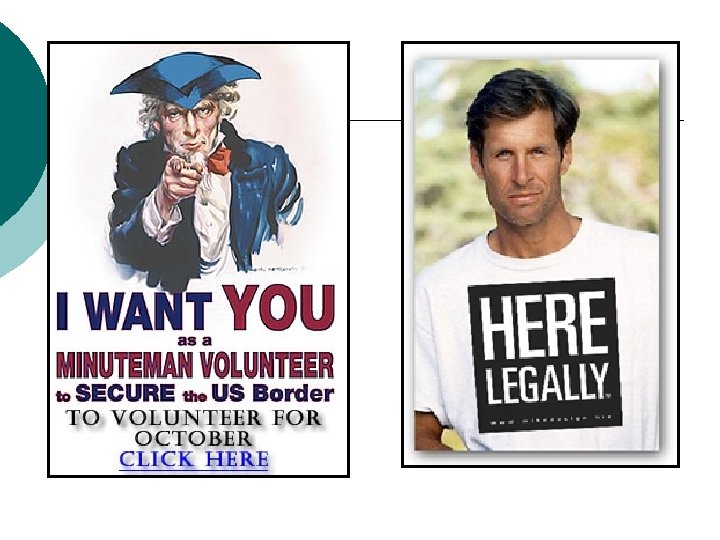
 Anti-Immigrant Propaganda ¡ ¡ ¡ ¡ Anti-radical sentiments merged with Anti-immigrant beliefs Distortion of political views Manufacture a threat, increase fear, focus that fear on a particular group Blame problems on immigrants Associate patriotism and Americanism with opposition to immigrants Oppression masked in national security Invasion, end of civilization
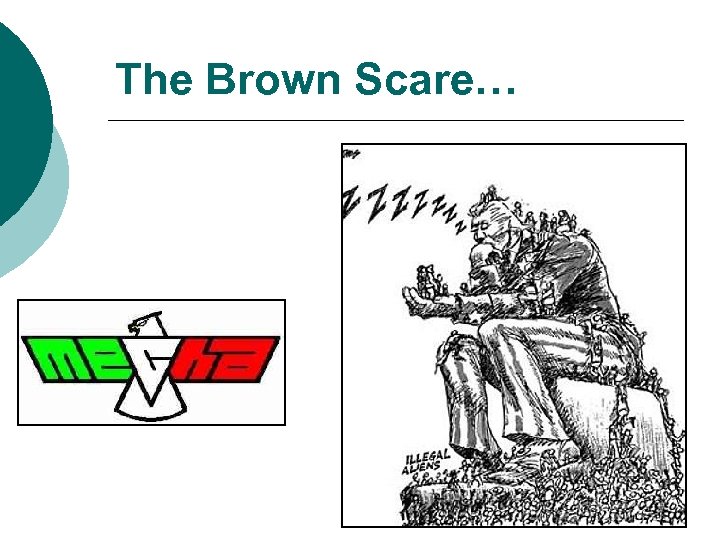 The Brown Scare…
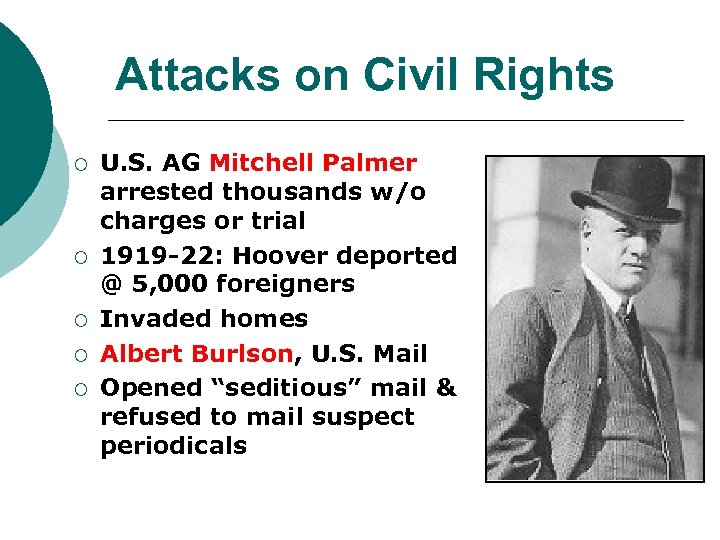 Attacks on Civil Rights ¡ ¡ ¡ U. S. AG Mitchell Palmer arrested thousands w/o charges or trial 1919 -22: Hoover deported @ 5, 000 foreigners Invaded homes Albert Burlson, U. S. Mail Opened “seditious” mail & refused to mail suspect periodicals
 “Free speech vs. Security” ¡ ¡ The Washington Post "There is no time to waste on hairsplitting over infringement of liberty. " New York Times referred to the injuries to a group of suspects as "souvenirs of the new attitude of aggressiveness which had been assumed by the Federal agents against Reds and suspected Reds. ”
 Continued… ¡ Twelve prominent lawyers that included future Supreme Court Justice Felix Frankfurter published "A Report on the Illegal Practices of The United States Department of Justice, " citing violations of the Fourth, Fifth, Sixth, and Eighth Amendments to the Constitution and accusing Palmer of "illegal acts" and "wanton violence. " Palmer then issued a series of warnings that a revolutionary plot to overthrow the government was to be launched on May 1, 1920. Nothing happened.
 Conclusions ¡ ¡ ¡ ¡ American economic interests and global politics War profit and support for Britain Manufacturing support for War in a Democracy Xenophobia and the Red Scare Origins of modern anti-immigrant hysteria Many people questioned the alleged “progress” that had been made during the “modern era”