


 Скачать презентацию the Truman Years 1945 1953 V-E Day
5dc1df6a7ba145b1c2103f53dd9e842f.ppt
- Количество слайдов: 35
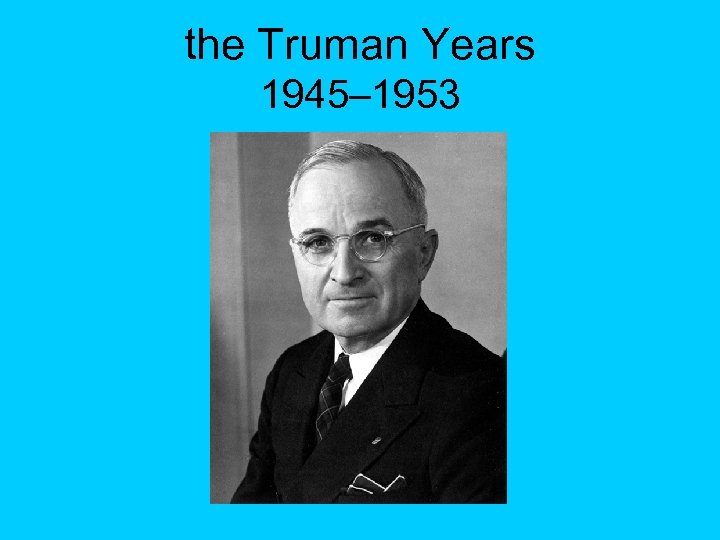 the Truman Years 1945– 1953
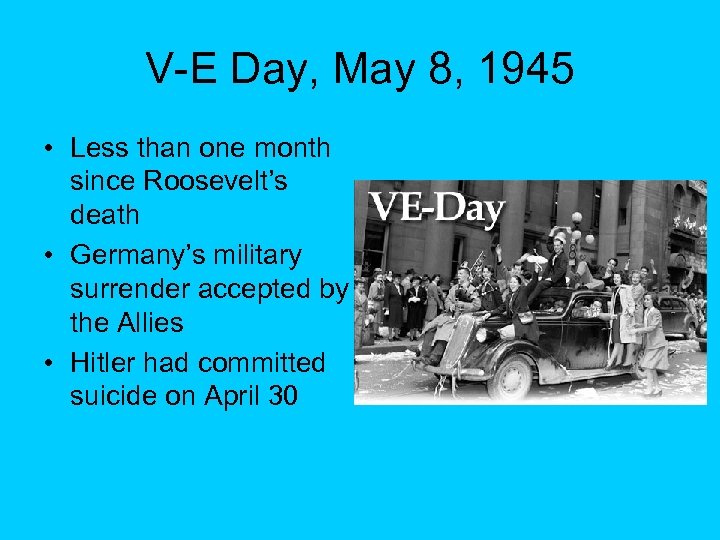 V-E Day, May 8, 1945 • Less than one month since Roosevelt’s death • Germany’s military surrender accepted by the Allies • Hitler had committed suicide on April 30
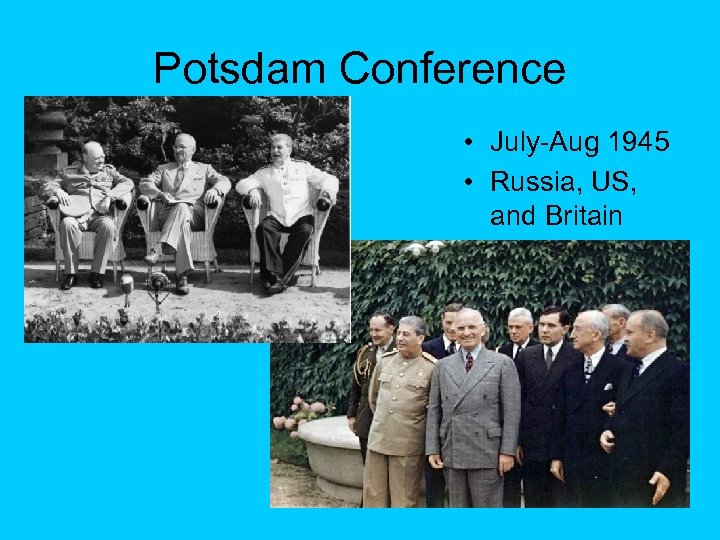 Potsdam Conference • July-Aug 1945 • Russia, US, and Britain
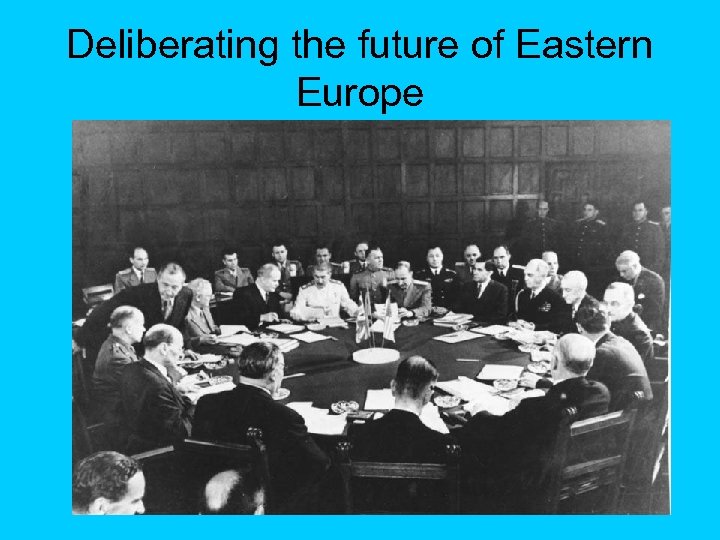 Deliberating the future of Eastern Europe
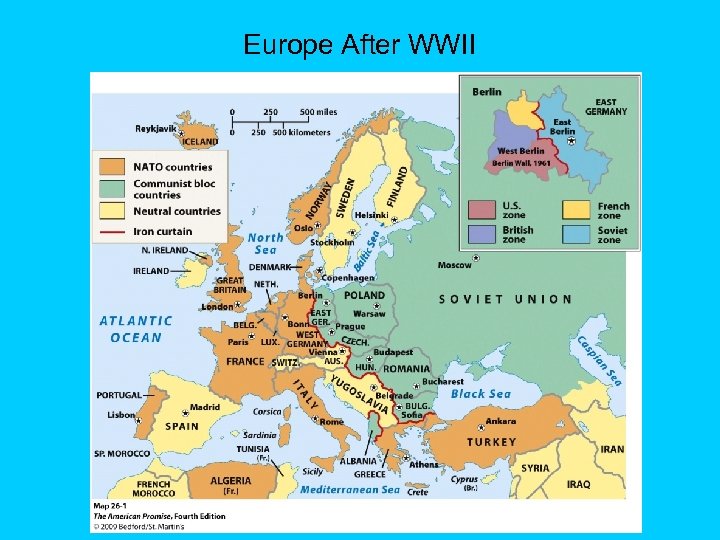 Europe After WWII
 Manhattan Project • the effort, led by the U. S. with participation from Britain and Canada, which led to the development of the first atomic bomb during WWII.
 It’s name • The Army Corp of Engineers’ component of the project was designated the Manhattan District or Manhattan Engineer District, but "Manhattan" gradually superseded the official codename for the project
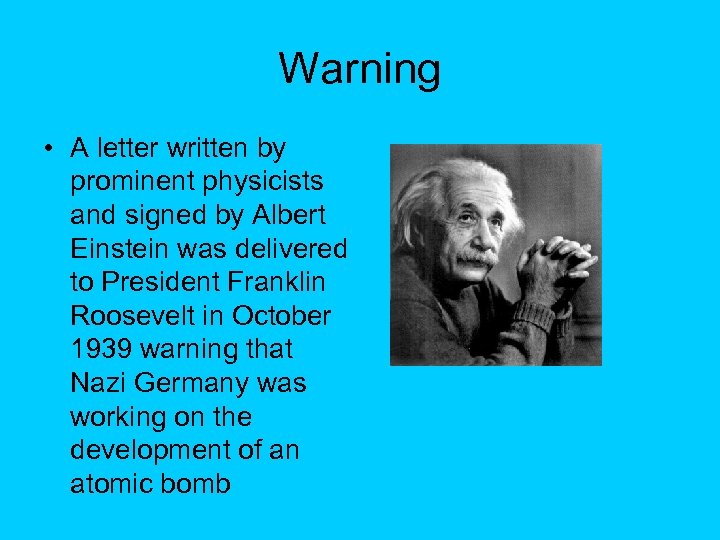 Warning • A letter written by prominent physicists and signed by Albert Einstein was delivered to President Franklin Roosevelt in October 1939 warning that Nazi Germany was working on the development of an atomic bomb
 Research and production • began as a small research program but eventually employed more than 130, 000 people at a cost of nearly $2 billion • took place at more than 30 sites, some secret, including universities across the United States, Canada, and the United Kingdom
 Atomic bombings of Hiroshima and Nagasaki • Initial blast at Hiroshima killed 70, 000 and 40, 000 at Nagasaki • Estimates of total deaths by the end of 1945 from burns, radiation and related disease, the effects of which were aggravated by lack of medical resources, range from 90, 000 to 166, 000. [
 “Little Boy” • 43 seconds to fall from the aircraft to the predetermined detonation height about 1, 900 feet • the aircraft traveled 11. 5 miles away before it felt the shock waves from the blast.
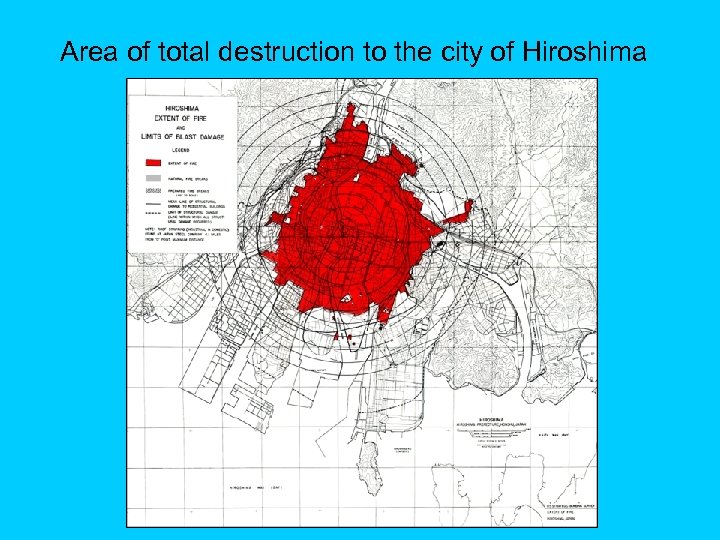 Area of total destruction to the city of Hiroshima
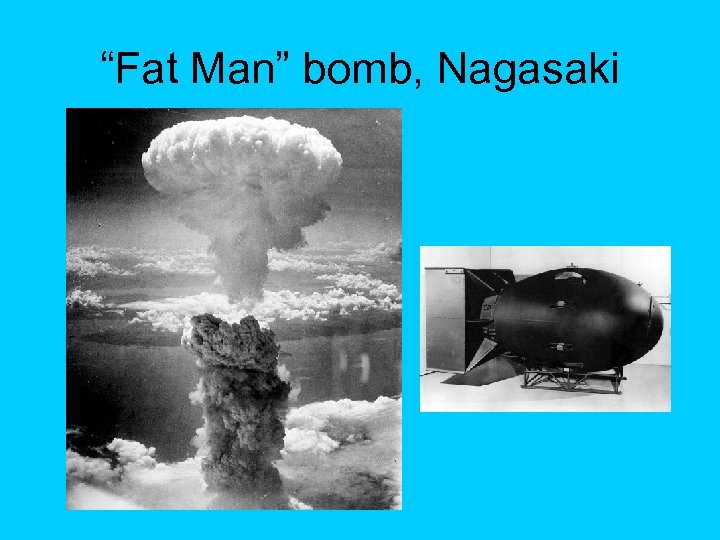 “Fat Man” bomb, Nagasaki
 From the Grand Alliance to Containment • The Truman Doctrine and the Marshall Plan • Building a National Security State • The Cold War Begins • Superpower Rivalry around the Globe
 Marshall Plan • General George C. Marshall, Secty of State, • “European Recovery Plan”, US spent $13 billion to restore the economies of 16 Western European nations [which in turn helped the US economy]; • Soviet Union did not participate because it objected to free enterprise
 Truman Doctrine • Truman’s claim that American security depended on stopping any Communist government from taking over any noncommunist government, anywhere in the world. This approach became the cornerstone of American foreign policy during the Cold War.
 Containment • The foreign policy of the US to hold in check the power and influence of the Soviet Union and others espousing communism.
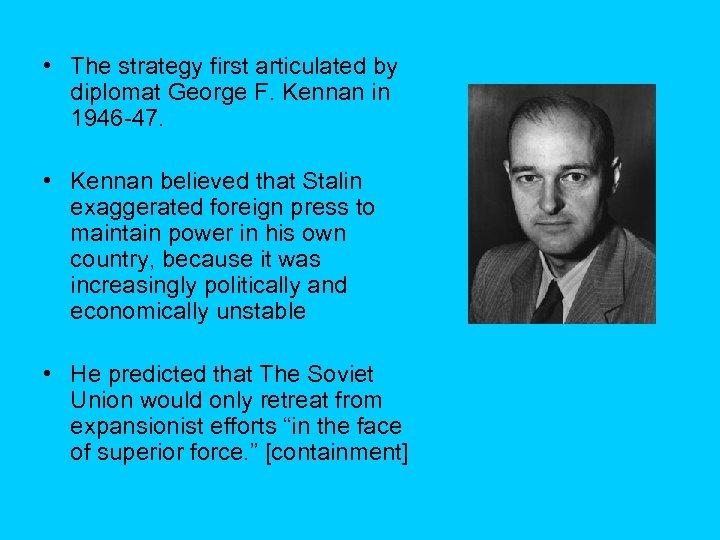 • The strategy first articulated by diplomat George F. Kennan in 1946 -47. • Kennan believed that Stalin exaggerated foreign press to maintain power in his own country, because it was increasingly politically and economically unstable • He predicted that The Soviet Union would only retreat from expansionist efforts “in the face of superior force. ” [containment]
 Truman containment policy had sixpronged defense strategy: 1. 2. 3. 4. 5. Development of atomic weapons Strengthen traditional military power Military alliances with other nations Military and economic aid to friendly nations An espionage network and secret means to subvert Soviet expansion 6. a propaganda offensive to win popular admiration for the US around the world.
 What was the Cold War? • Cold War: the hostile and tense relationship between the Soviet Union and the US (and other Western nations) from 1947 until 1989 • “cold” because it stopped short of armed conflict, warded off by the strategy of Nuclear Deterrence
 “Iron Curtain” • Term coined by Winston Churchill in 1946 • “From Stettin in the Baltic to Trieste in the Adriatic, an iron curtain has descended across the Continent. ”
 Deterrence • the strategy of the US that it would maintain a nuclear arsenal so substantial that the Soviet Union would refrain from attacking the US and its allies out of fear that the US would retaliate in devastating proportions. The Soviets pursued a similar strategy.
 Superpower Rivalry Around the Globe • “third world” a term referring to about forty countries which had won independence but were not in the Western (first) world, nor the Soviet (second) world. • 1949, communists under Mao Zedong took China, chasing Nationalists under Chang Kai-shek to Tiawan • People’s Republic of China under Mao signed a treaty with Soviets
 Rivalry, cont’ • Japan rebuilt with American dollars, sides with US • State of Israel established in Palestine, endorsed by US
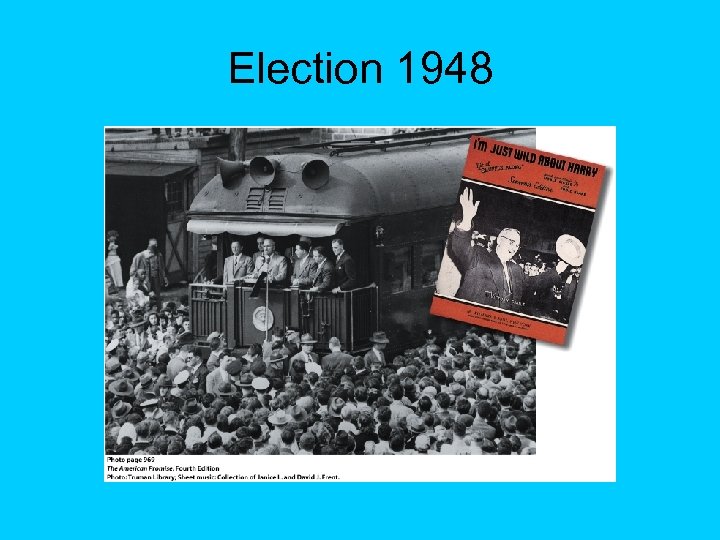 Election 1948
 Truman and the Fair Deal at Home • Reconverting to a Peacetime Economy • Blacks and Mexican Americans Push for Their Civil Rights • The Fair Deal Flounders • The Domestic Chill: Mc. Carthyism
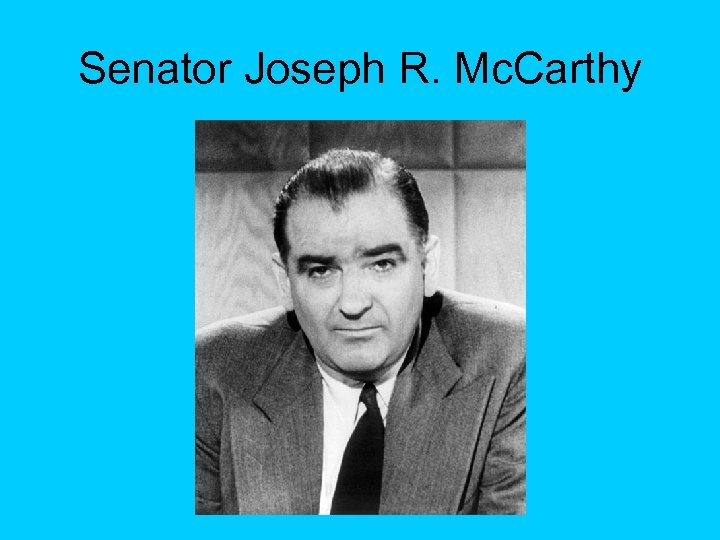 Senator Joseph R. Mc. Carthy
 Second “Red Scare” • “Red Scare” happens after a war • After the collapse of the Soviet-American alliance • With suspicions of espionage • “red baiting” = attempts to discredit people by associating them with communism
 The Cold War Becomes Hot: Korea • A Military Implementation of Containment • First time Americans go to battle for containment • A militarization of American foreign policy
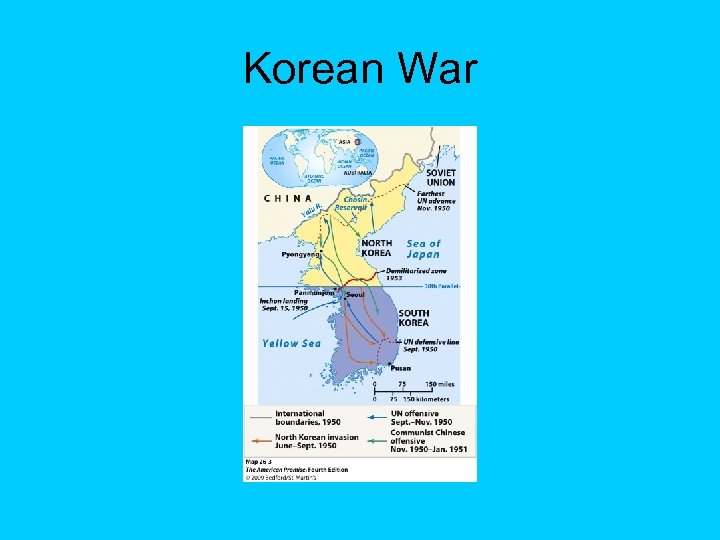 Korean War
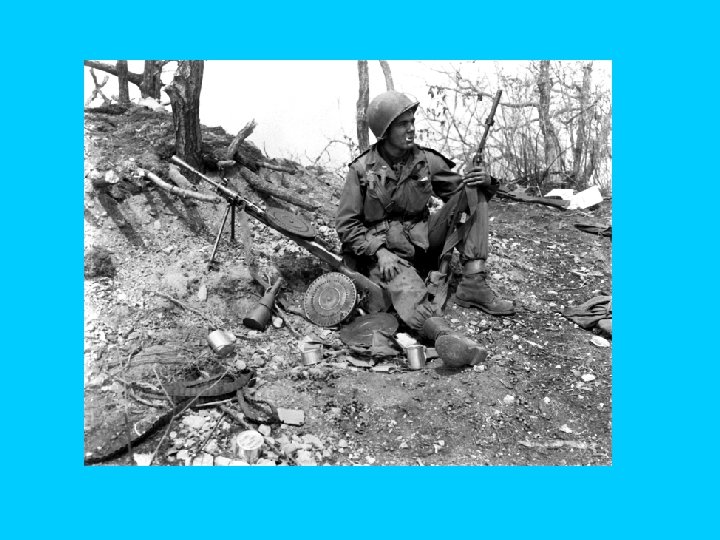
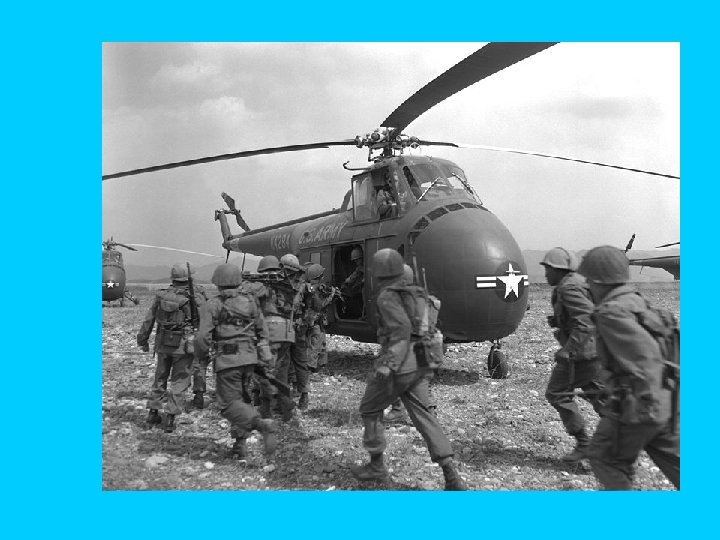
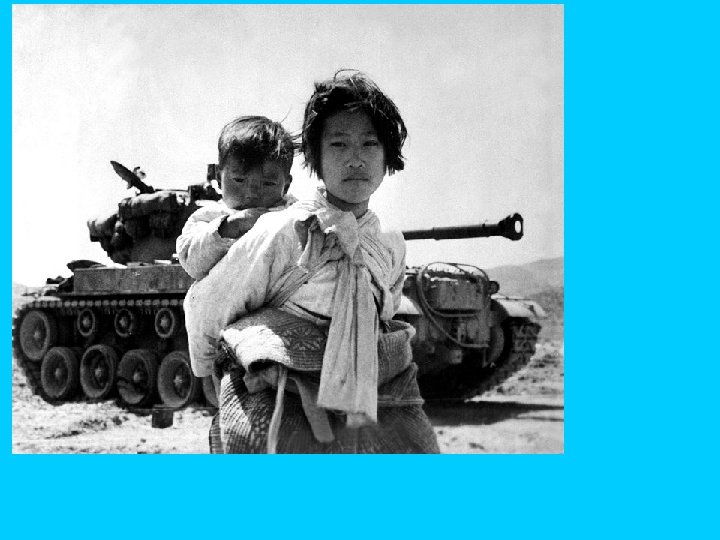
 Costs of the War • Total civilians killed/wounded: – 2. 5 million South Korea: 990, 968 – 373, 599 killed – 229, 625 wounded – 387, 744 abducted/missing • North Korea: 1, 550, 000 • US: 36, 000 killed, 100, 000 wounded
 Consequences of the Cold War • Shifted priorities of the federal government from domestic to foreign affairs • Increased the power of the president • Defense contracts encouraged economic population booms in the West and Southwest • The Nuclear Arms races consumed dollars and resources, skewed the economy toward dependence on military projects • Anti-communist hysteria which stifled debate, politically or socially