


 Скачать презентацию THE TRAINING SERIES Workshop 1 Opportunities in Family-Centered
1c97f2e63b6c1d5f5f100fb880998e6d.ppt
- Количество слайдов: 89
 THE TRAINING SERIES Workshop #1: Opportunities in Family-Centered Practice
 Workshop Goal Safely maximize POSITIVE OUTCOMES for children and their families by using a non-adversarial FAMILY-CENTERED APPROACH to the assessment, planning, delivery and coordination of services.
 Goals of the 5 Sessions 1. Why does the 2012 Goal ask us to re-focus on family-centered practice? 2. How is the system going to help me do my job in a family-centered way? 3. How can I use family-centered practice to improve my casework or supervision? 4. What’s happening locally to promote family-centered practice? 5. What information and ideas will help me back on the job?
 Opportunities in Family-Centered Practice Why does the 2012 Goal ask us to re-focus on family-centered practice?
 Session 1 Learning Objectives 1. Describe two strategies for reaching the 2012 Goal. 2. Describe local initiatives that support the 2012 Goal and family-centered practice. 3. Use the Culture of Success Model to explain interrelationships vs practice & outcome. 4. Describe why the time is right for family-centered practice and the 2012 Goal. 5. Compare traditional & family-centered approaches. 6. Use the Best Interests Model to make good casework decisions.
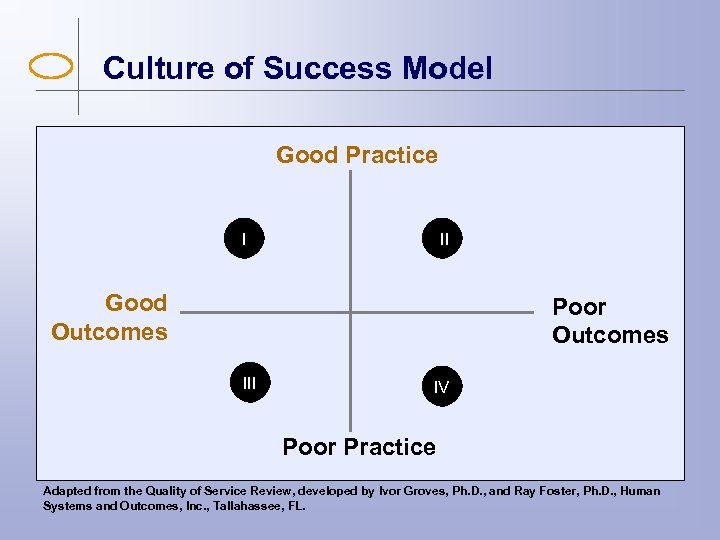 Culture of Success Model Good Practice I II Good Outcomes Poor Outcomes III IV Poor Practice Adapted from the Quality of Service Review, developed by Ivor Groves, Ph. D. , and Ray Foster, Ph. D. , Human Systems and Outcomes, Inc. , Tallahassee, FL.
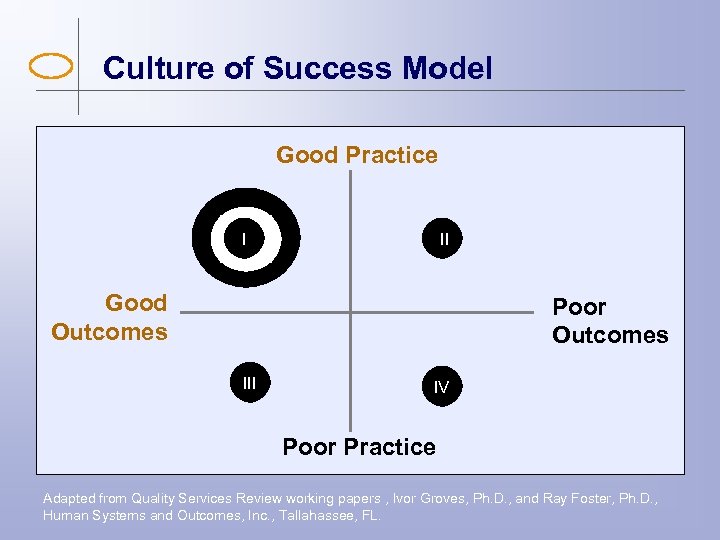 Culture of Success Model Good Practice I II Good Outcomes Poor Outcomes III IV Poor Practice Adapted from Quality Services Review working papers , Ivor Groves, Ph. D. , and Ray Foster, Ph. D. , Human Systems and Outcomes, Inc. , Tallahassee, FL.
 Immediate Interactions Create a culture of success within ourselves and in our interactions with: § Families § Our units § Throughout our agencies § Across our formal and informal providers
 Subsequent Success Interactions As we get traction, extend the culture of success in our interactions with: § Courts § Law enforcement § Media § Public
 Critical Success Factors 1. Effective implementation of a family-centered practice model 2. Support from system leadership 3. Alignment of system practices
 The Historical Context for Success The 2012 Goal
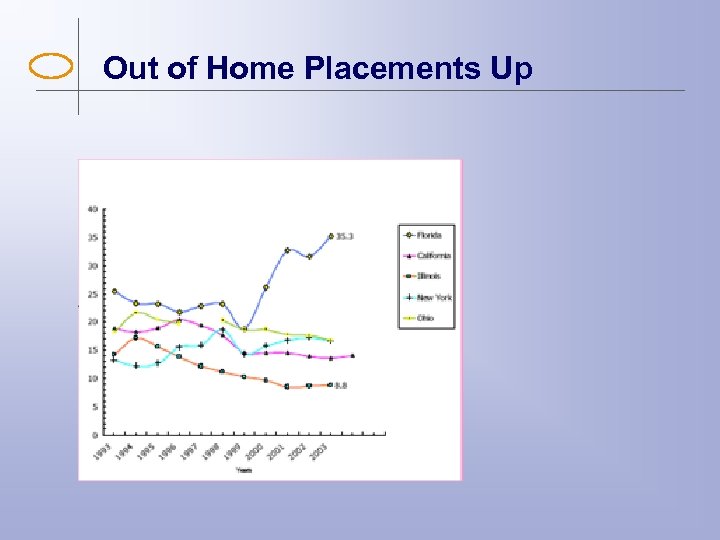 Out of Home Placements Up Slide: IV-E Waiver (1)
 Foster Care Research Findings § § Increased criminal activity Increased unemployment Increased teenaged pregnancy Decreased school performance
 2012 Goal 50% reduction in out of home placements compared to 2007 while maintaining child safety
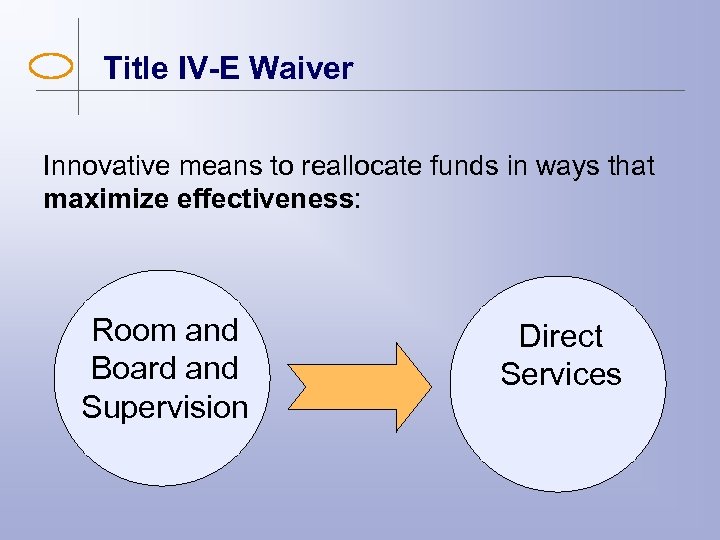 Title IV-E Waiver Innovative means to reallocate funds in ways that maximize effectiveness: Room and Board and Supervision Direct Services
 2007 Results 20% reduction in out of home placements and child safety maintained
 What’s Next? CULTURE OF SUCCESS Opportunities to use family-centered practice to meet the best interests of children and achieve the 2012 goal
 Family-Centered Approach Case Work Practices § First concern: CHILD SAFETY! § Early provision of intensive services § Focus on family system § Building on family strengths § Collaboration with the family § Strong use of informal support systems
 Family-Centered Approach Requirements: § Staff education/training § DCF and CBC leaders need to step up § Teamwork vs. silos § Shared risk
 System Requirements Training and Education – 3 Workshops 1. Family Centered Practice: Philosophy 2. Engaging the Family 3. Case Planning Initiatives for Family Centered Practice
 Results Effective implementation of family-centered practice to help ensure that the best interests of children and their families are met safely — and, ideally, that the 2012 goal is achieved.
 The Best Interests Model Support for Good Decisions
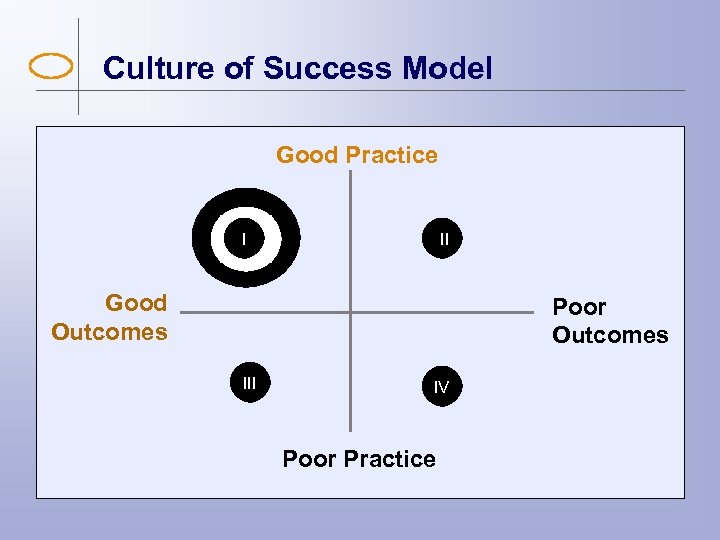 Culture of Success Model Good Practice I II Good Outcomes Poor Outcomes III IV Poor Practice
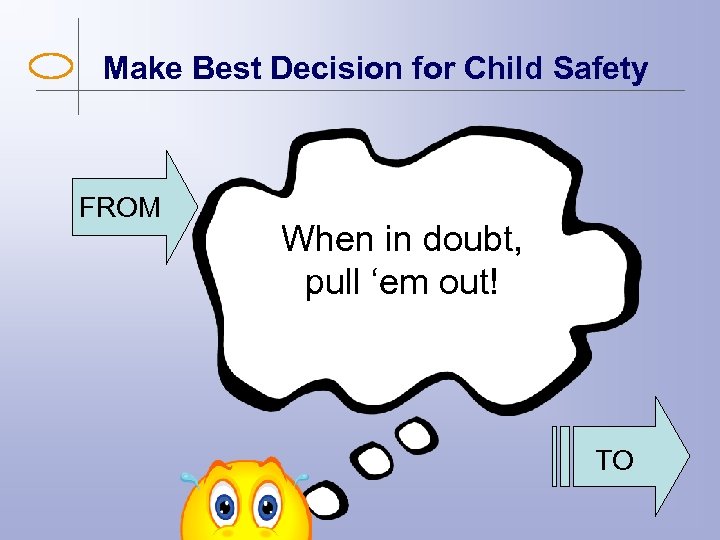 Make Best Decision for Child Safety FROM When in doubt, pull ‘em out! TO
 Make Best Decision for Child Safety When in doubt, FIND IT OUT! http: //cbcta. fmhi. usf. edu/flcwp/co nfvids/daytonafs. html
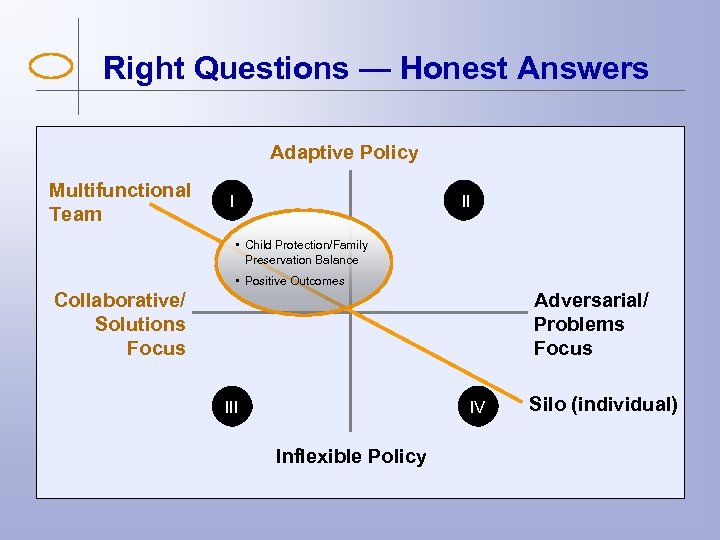
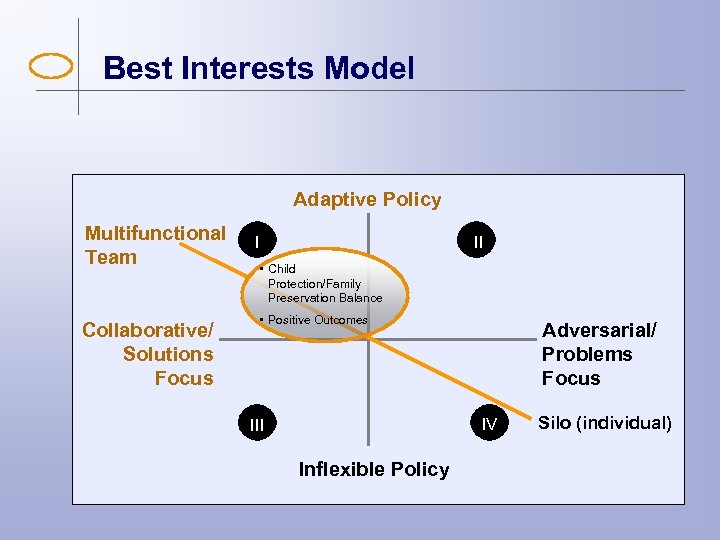
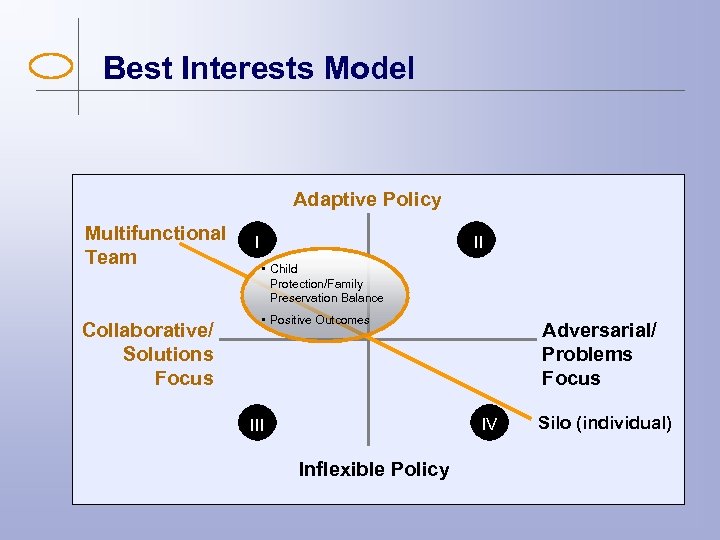 Best Interests Model Adaptive Policy Multifunctional Team Collaborative/ Solutions Focus I II • Child Protection/Family Preservation Balance • Positive Outcomes Adversarial/ Problems Focus IV III Inflexible Policy Silo (individual)
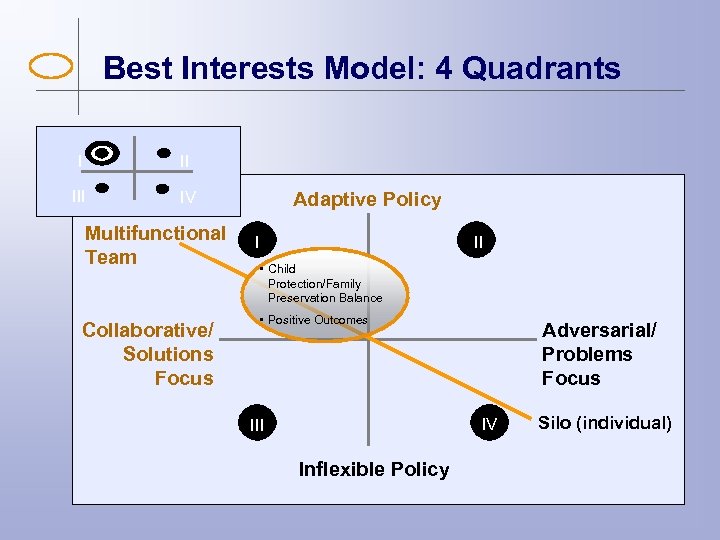 Best Interests Model: 4 Quadrants I II IV Multifunctional Team Collaborative/ Solutions Focus Adaptive Policy I II • Child Protection/Family Preservation Balance • Positive Outcomes Adversarial/ Problems Focus IV III Inflexible Policy Silo (individual)
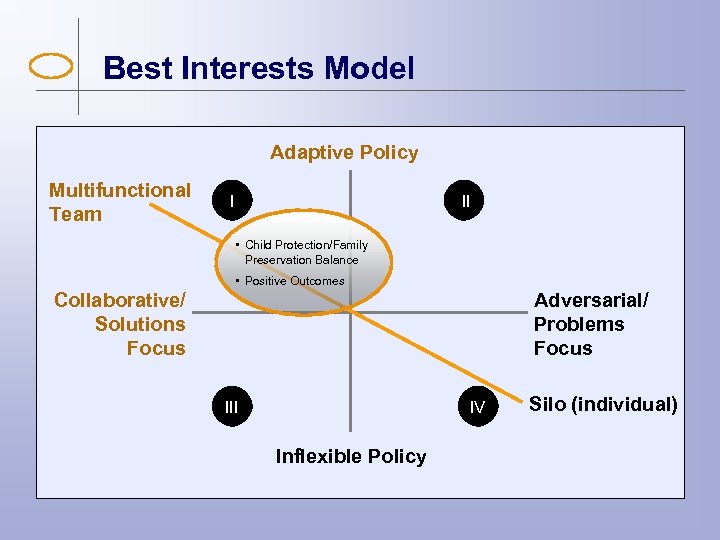 Best Interests Model Adaptive Policy Multifunctional Team I II • Child Protection/Family Preservation Balance • Positive Outcomes Collaborative/ Solutions Focus Adversarial/ Problems Focus IV III Inflexible Policy Silo (individual)
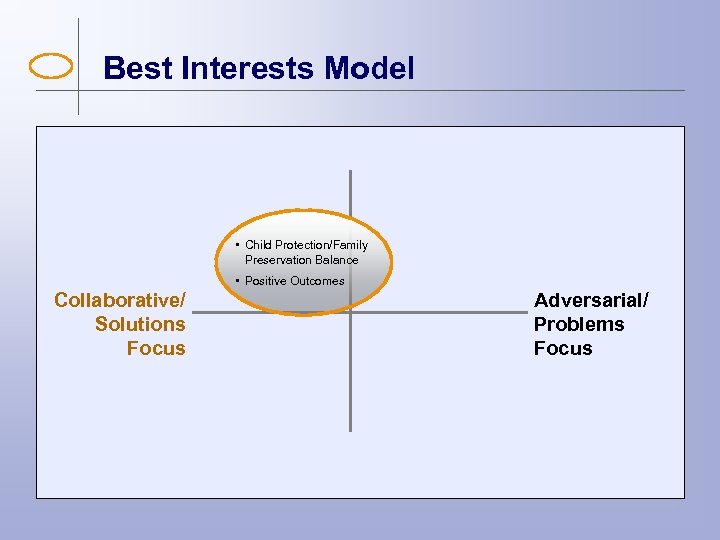 Best Interests Model • Child Protection/Family Preservation Balance • Positive Outcomes Collaborative/ Solutions Focus Adversarial/ Problems Focus
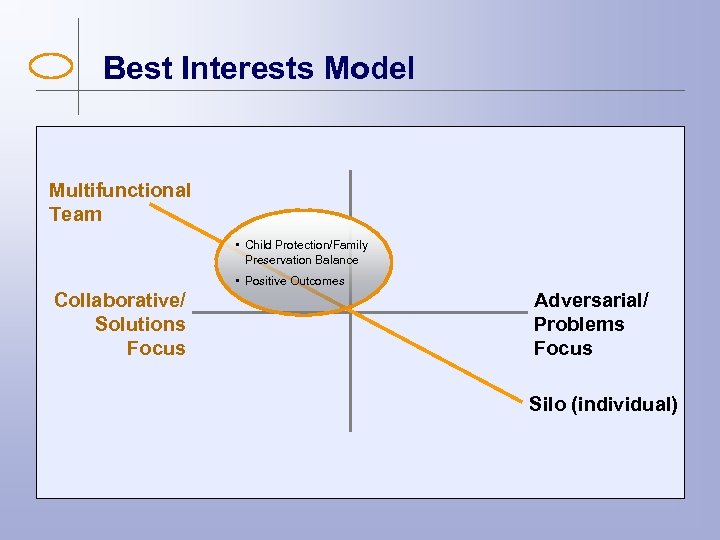 Best Interests Model Multifunctional Team • Child Protection/Family Preservation Balance • Positive Outcomes Collaborative/ Solutions Focus Adversarial/ Problems Focus Silo (individual)
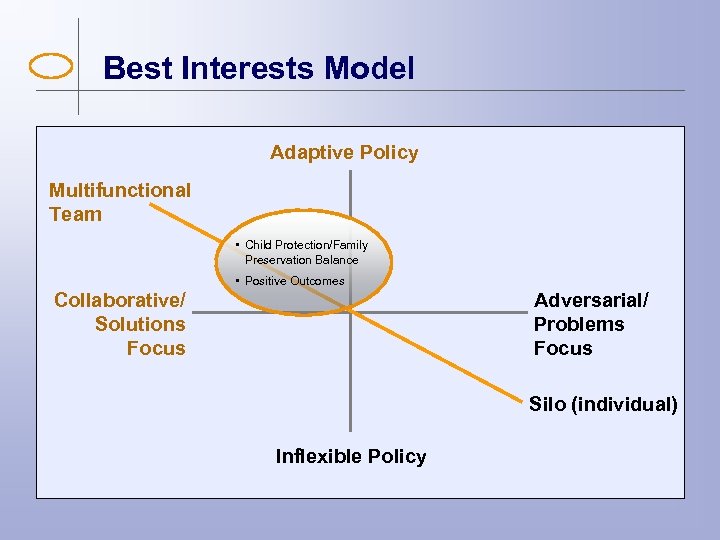 Best Interests Model Adaptive Policy Multifunctional Team • Child Protection/Family Preservation Balance • Positive Outcomes Collaborative/ Solutions Focus Adversarial/ Problems Focus Silo (individual) Inflexible Policy
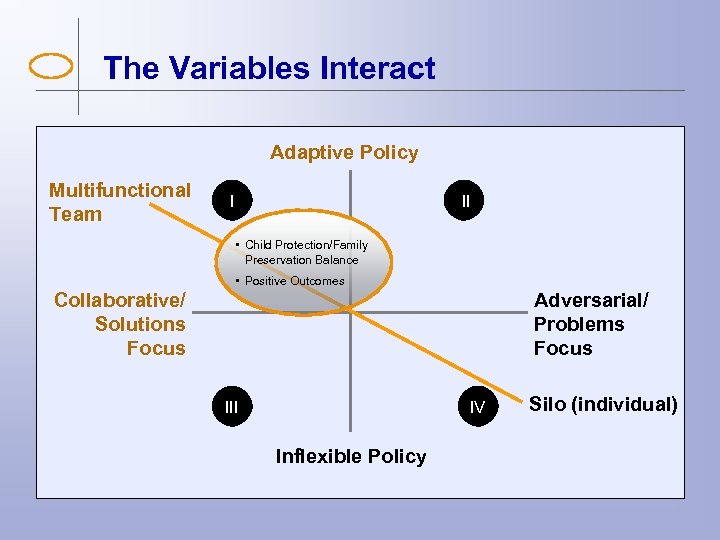 The Variables Interact Adaptive Policy Multifunctional Team I II • Child Protection/Family Preservation Balance • Positive Outcomes Collaborative/ Solutions Focus Adversarial/ Problems Focus IV III Inflexible Policy Silo (individual)
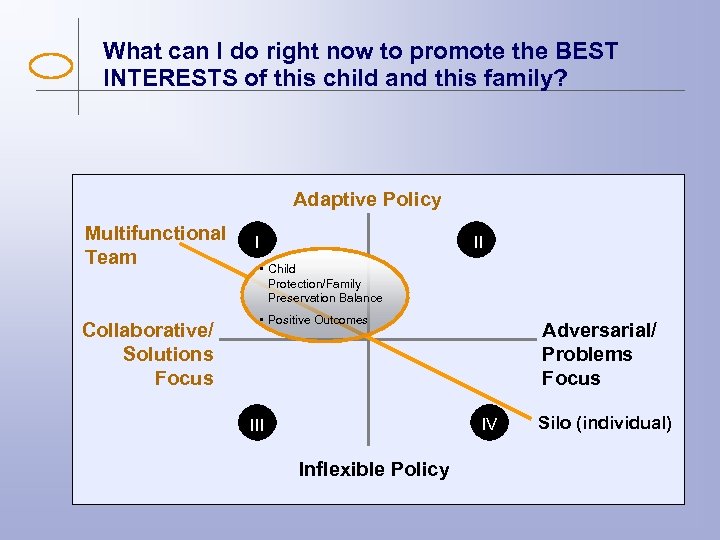
 Right Questions — Honest Answers Adaptive Policy Multifunctional Team I II • Child Protection/Family Preservation Balance • Positive Outcomes Collaborative/ Solutions Focus Adversarial/ Problems Focus IV III Inflexible Policy Silo (individual)
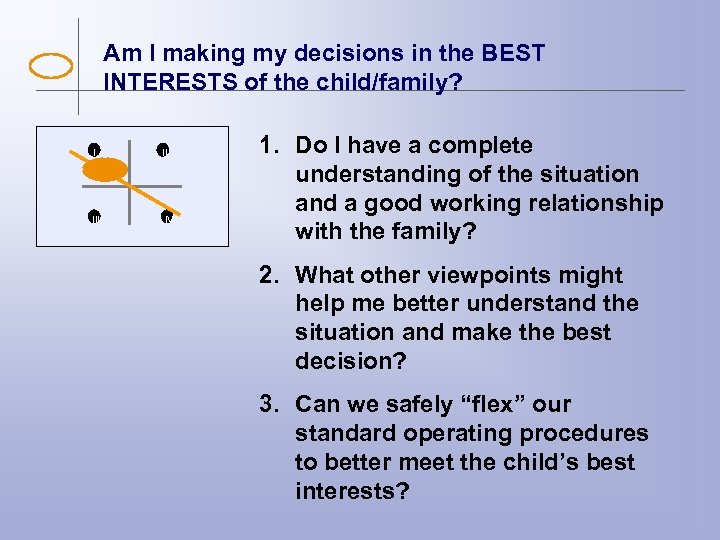
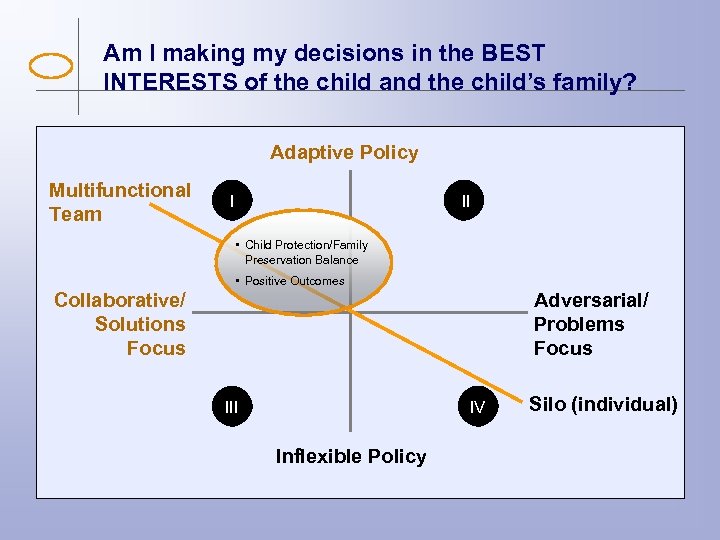 Am I making my decisions in the BEST INTERESTS of the child and the child’s family? Adaptive Policy Multifunctional Team I II • Child Protection/Family Preservation Balance • Positive Outcomes Collaborative/ Solutions Focus Adversarial/ Problems Focus IV III Inflexible Policy Silo (individual)
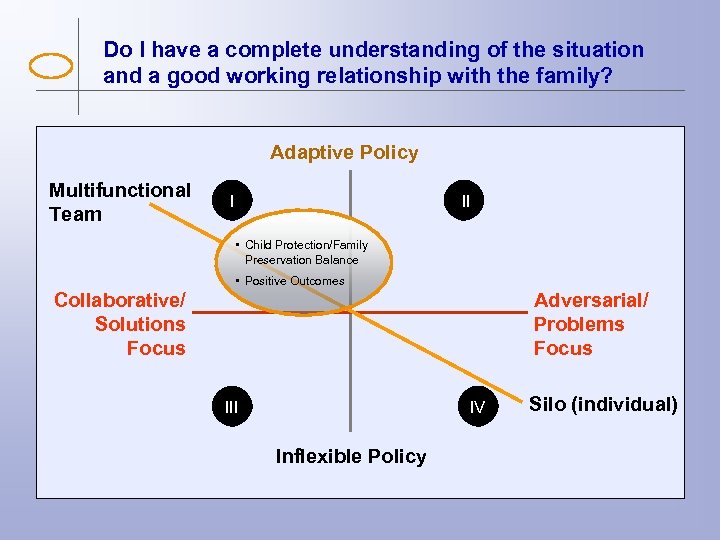 Do I have a complete understanding of the situation and a good working relationship with the family? Adaptive Policy Multifunctional Team I II • Child Protection/Family Preservation Balance • Positive Outcomes Collaborative/ Solutions Focus Adversarial/ Problems Focus IV III Inflexible Policy Silo (individual)
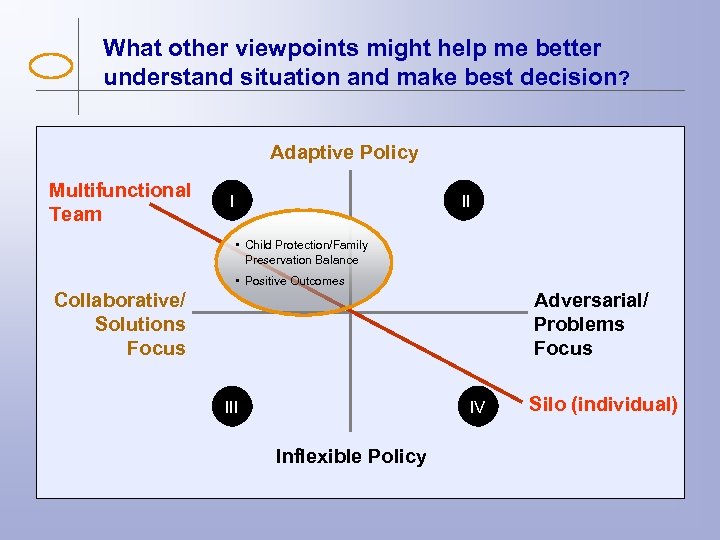 What other viewpoints might help me better understand situation and make best decision? Adaptive Policy Multifunctional Team I II • Child Protection/Family Preservation Balance • Positive Outcomes Collaborative/ Solutions Focus Adversarial/ Problems Focus IV III Inflexible Policy Silo (individual)
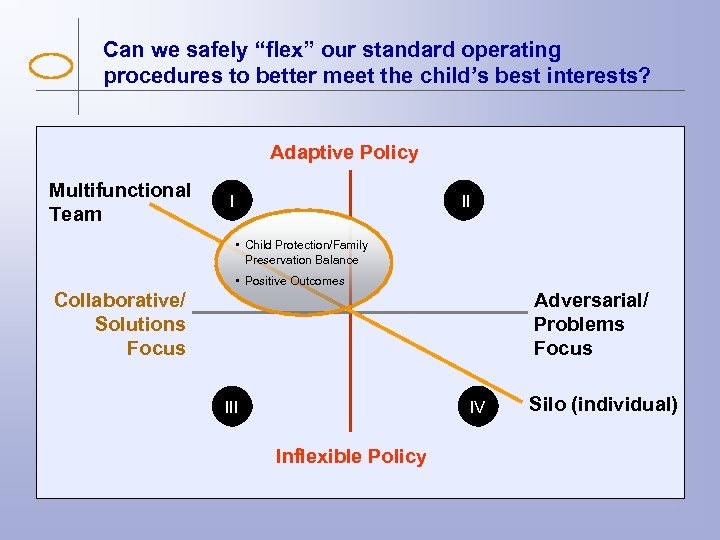 Can we safely “flex” our standard operating procedures to better meet the child’s best interests? Adaptive Policy Multifunctional Team I II • Child Protection/Family Preservation Balance • Positive Outcomes Collaborative/ Solutions Focus Adversarial/ Problems Focus IV III Inflexible Policy Silo (individual)
 Activity 1 -2 Making the BEST Decisions
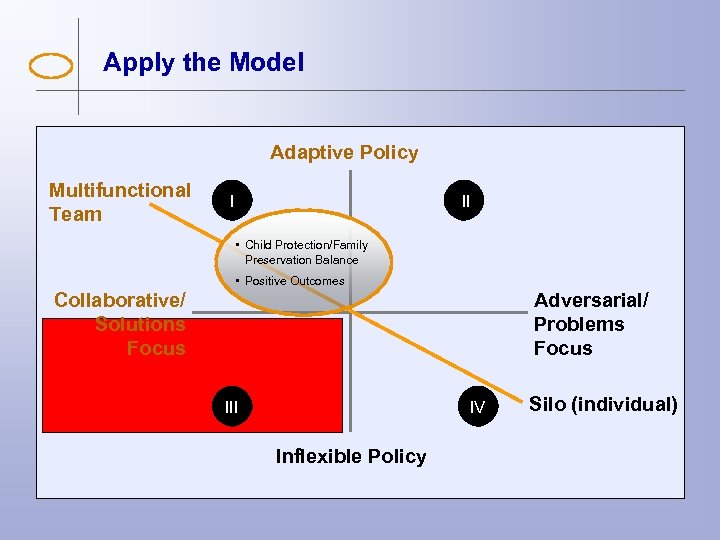 Apply the Model Adaptive Policy Multifunctional Team I II • Child Protection/Family Preservation Balance • Positive Outcomes Collaborative/ Solutions Focus Adversarial/ Problems Focus IV III Inflexible Policy Silo (individual)
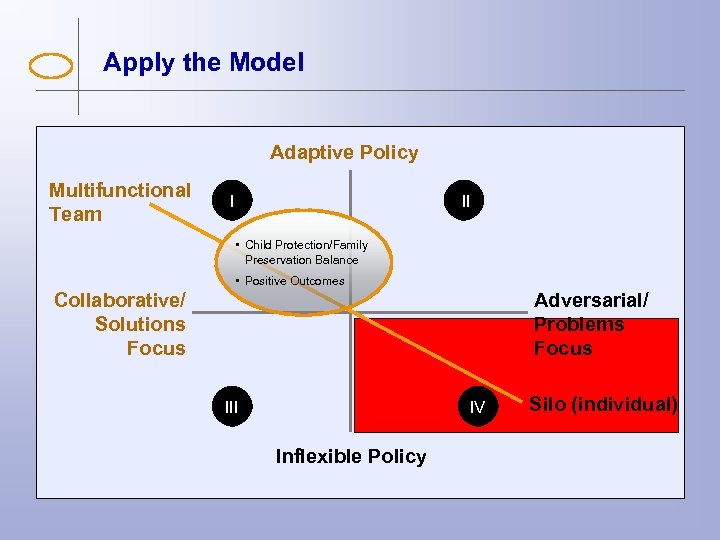 Apply the Model Adaptive Policy Multifunctional Team I II • Child Protection/Family Preservation Balance • Positive Outcomes Collaborative/ Solutions Focus Adversarial/ Problems Focus IV III Inflexible Policy Silo (individual)
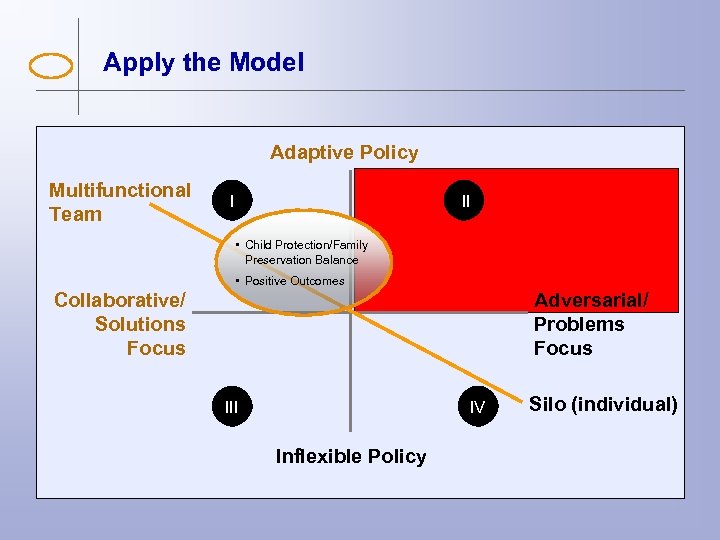 Apply the Model Adaptive Policy Multifunctional Team I II • Child Protection/Family Preservation Balance • Positive Outcomes Collaborative/ Solutions Focus Adversarial/ Problems Focus IV III Inflexible Policy Silo (individual)
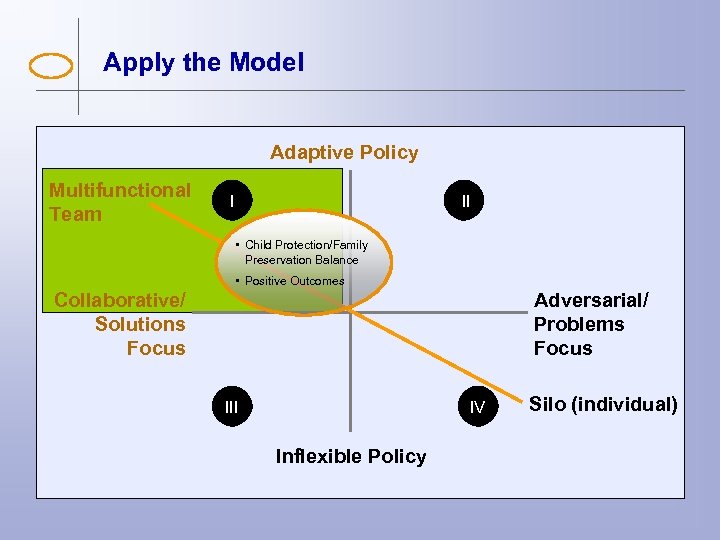 Apply the Model Adaptive Policy Multifunctional Team I II • Child Protection/Family Preservation Balance • Positive Outcomes Collaborative/ Solutions Focus Adversarial/ Problems Focus IV III Inflexible Policy Silo (individual)
 Opportunities in Family-Centered Practice How is the system going to help me do my job in a family-centered way?
 Session 2 Learning Objectives 1. Describe research findings regarding the impact of foster care on children. 2. Describe the system opportunities/challenges that affect family-centered practices implementation. 3. Describe the potential impacts of “worker passion, ” IV-E, and worker bias. 4. Describe system initiatives supporting a Culture of Success & effective family-centered practices. 5. Describe why it’s possible to achieve a balance that ensures safety and promotes family preservation.
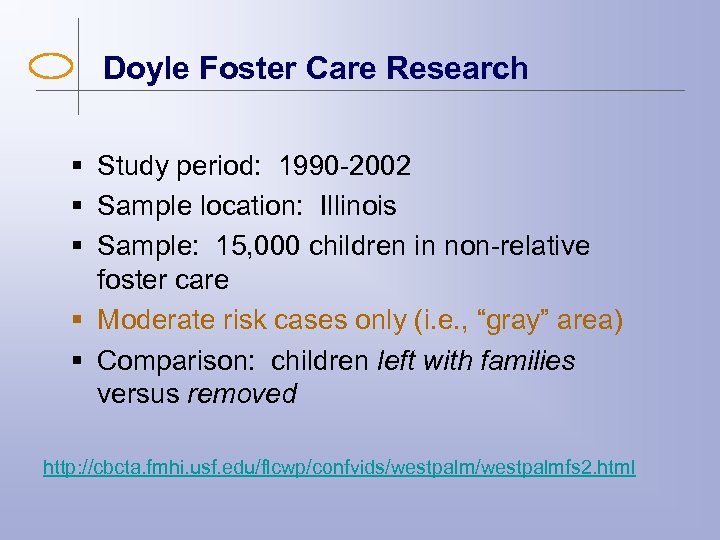 Doyle Foster Care Research § Study period: 1990 -2002 § Sample location: Illinois § Sample: 15, 000 children in non-relative foster care § Moderate risk cases only (i. e. , “gray” area) § Comparison: children left with families versus removed http: //cbcta. fmhi. usf. edu/flcwp/confvids/westpalmfs 2. html
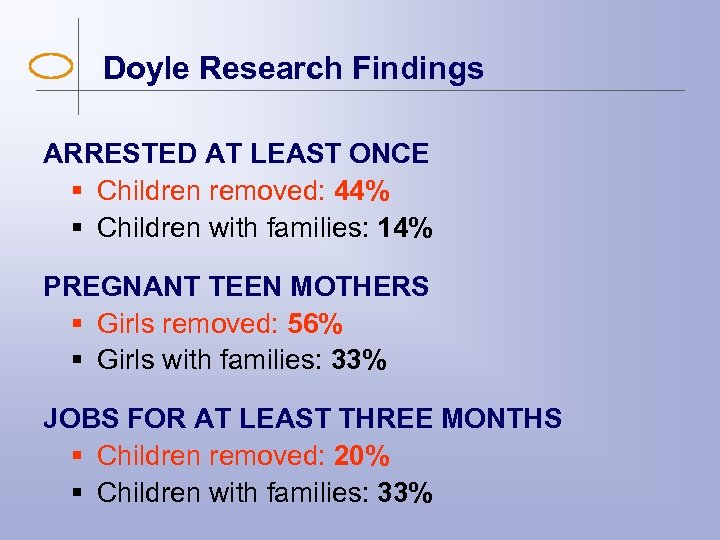 Doyle Research Findings ARRESTED AT LEAST ONCE § Children removed: 44% § Children with families: 14% PREGNANT TEEN MOTHERS § Girls removed: 56% § Girls with families: 33% JOBS FOR AT LEAST THREE MONTHS § Children removed: 20% § Children with families: 33%
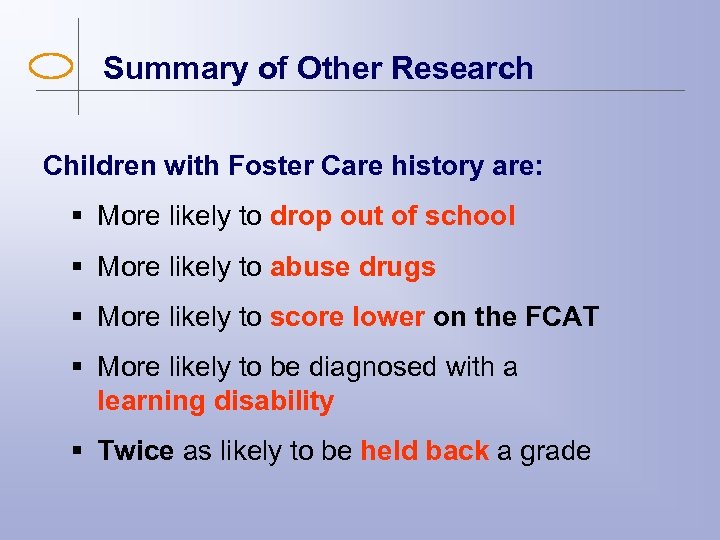 Summary of Other Research Children with Foster Care history are: § More likely to drop out of school § More likely to abuse drugs § More likely to score lower on the FCAT § More likely to be diagnosed with a learning disability § Twice as likely to be held back a grade
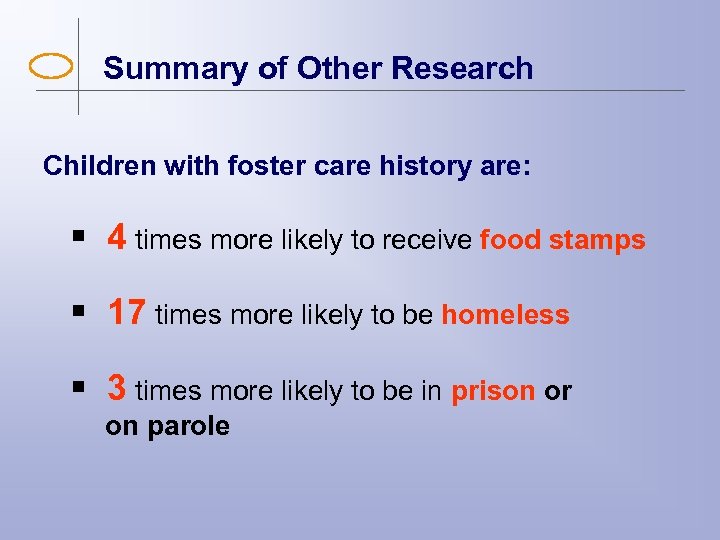 Summary of Other Research Children with foster care history are: § 4 times more likely to receive food stamps § 17 times more likely to be homeless § 3 times more likely to be in prison or on parole
 Factors that Impact Our Worker Passion Worker Bias IV-E Waiver
 Worker Passion § What situations or circumstances bring out a sense of passion for the work you do? § What effect does that work passion have on the results of your work? § How might your work passion impact your use of a family-centered approach?
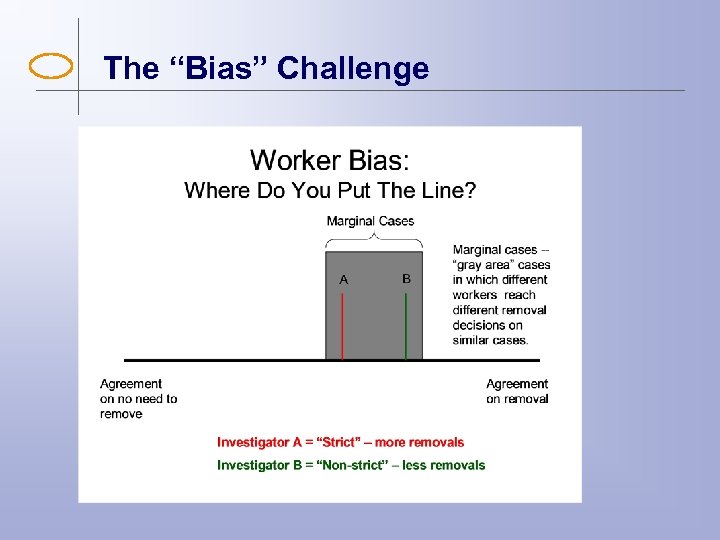 The “Bias” Challenge
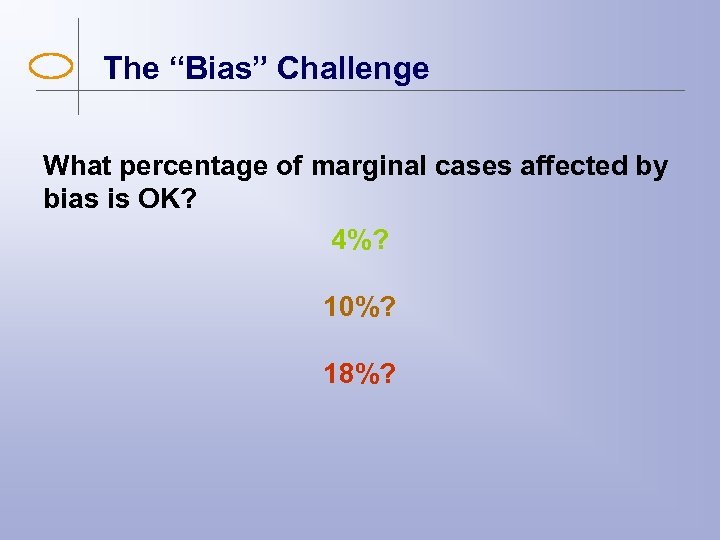 The “Bias” Challenge What percentage of marginal cases affected by bias is OK? 4%? 10%? 18%?
 IV-E Waiver § Title IV-E of the Social Security Act is the federal funding source for foster care § IV-E funding is designated for out of home room and board and program administration § Florida received a waiver in 2006 – the only state to do so § Waiver permits state to determine how to spend funds, rather than room and board
 IV-E Waiver Driving system change in reducing child removals More funds for intensive early services with families (prevent removal) More funds for services to reduce foster care length of stay and number of child placements
 Restoring Balance The time is right for family-centered practice
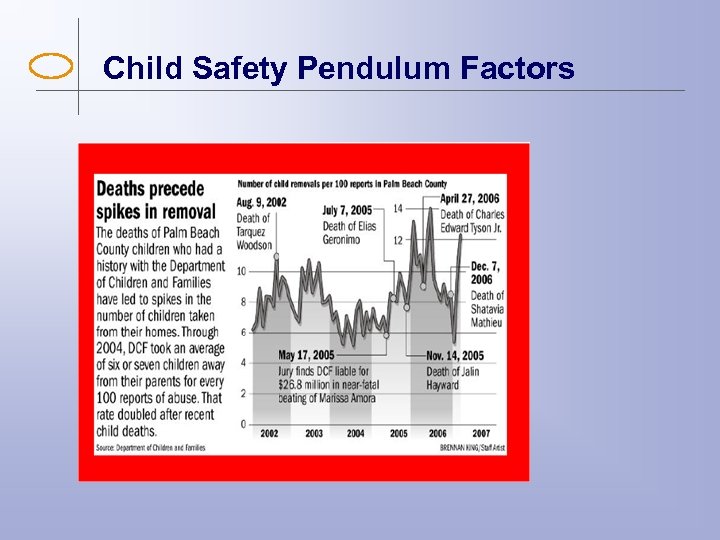 Child Safety Pendulum Factors
 Other Pendulum Factors § Little respect for government workers, especially child welfare § Insufficient family preservation services § DCF and CBC working relationship Result: Pendulum swings to “child safety” extreme rather than a balanced approach.
 Restoring the Balance § Leadership buy-in § Cost of NOT changing is too high § IV-E Waiver innovations § Distributed system of care § Research findings on foster care § Federal Children and Family Service Reviews
 System Must Step Up System reactions to child deaths create a “Show Me” culture rather than a “Culture of Success. ” For culture change to occur, leadership must back up what they say with action.
 System Must Step Up NEEDED: § Education and training § Leadership to define and support policies and resource priorities § Shared risk § Teamwork Change needs to be widespread, but it HAS started! You can step up, too!
 Opportunities in Family-Centered Practice How can I use family-centered practice to improve my casework or supervision?
 Session 3 Learning Objectives 1. Recognize differences vs “adversarial” and “family-centered” approaches. 2. Summarize the key concepts, assumptions, and service strategies of family-centered practice. 3. Use the Best Interests Model and familycentered practice principles to make decisions in a case. 4. Give specific examples of how you might apply family centered practice in your work.
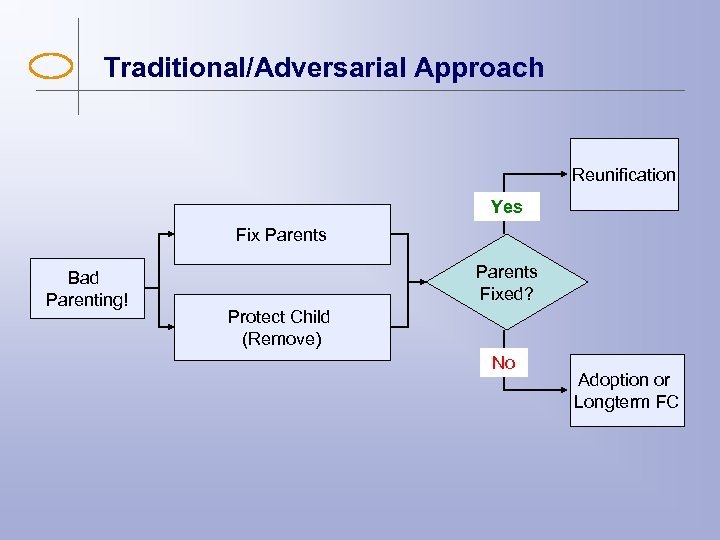 Traditional/Adversarial Approach Reunification Yes Fix Parents Bad Parenting! Parents Fixed? Protect Child (Remove) No Adoption or Longterm FC
 Traditional/Adversarial: Consequences § Child suffers removal trauma and foster care trauma § Child safety is not guaranteed in foster care § Parents feel threatened and are labeled § Time makes reunification more difficult § Workers feel stress, frustration; high turnover § Good intentions don’t necessarily lead to good outcomes.
 Traditional/Adversarial: Consequences Would we have MORE SUCCESS — and do LESS HARM to children— if we focused on STRENGTHENING families rather than blaming the parents?
 Core Values 1. Children should, first and foremost, be protected from abuse and neglect 2. Children should live with their families, and when that cannot be achieved through the supports and services, should live near their home with family connections—and in particular, sibling relationships—maintained. 3. A child’s home should be safe, stable and permanent.
 Core Values 4. A child should achieve success in school and their medical, emotional, behavioral, developmental and educational needs should be met. 5. There is an intrinsic value and human worth in every child and family. 6. Families and individual members are most likely to resolve issues of concern by involving them in the change process and building on their strengths.
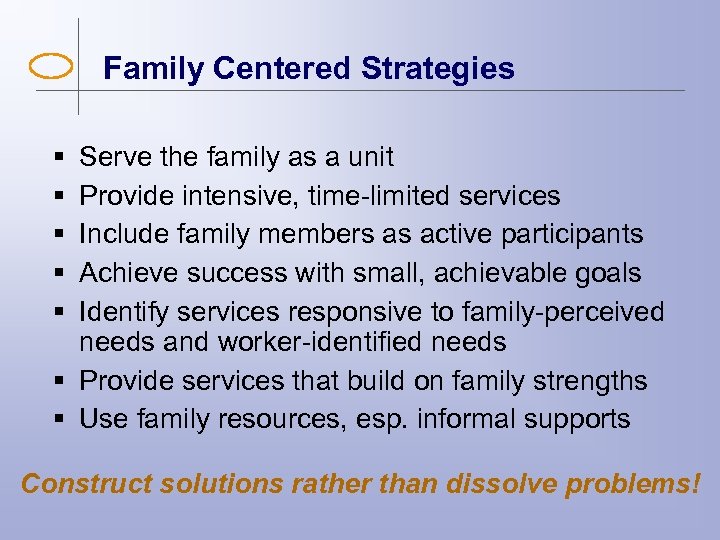
 Family Centered Strategies § § § Serve the family as a unit Provide intensive, time-limited services Include family members as active participants Achieve success with small, achievable goals Identify services responsive to family-perceived needs and worker-identified needs § Provide services that build on family strengths § Use family resources, esp. informal supports Construct solutions rather than dissolve problems!
 Family Centered Assumptions § Services should support everyday needs. § Services should build on informal supports and natural community resources. § Every family is UNIQUE, with needs that change over time.
 Activity 3 -1 Applying Family-Centered Practice to Case Work
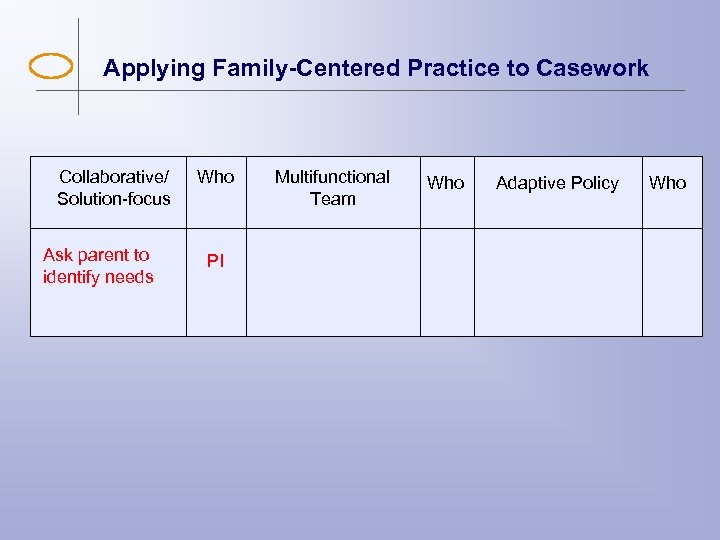 Applying Family-Centered Practice to Casework Collaborative/ Solution-focus Ask parent to identify needs Who PI Multifunctional Team Who Adaptive Policy Who
 Opportunities in Family-Centered Practice What’s happening locally to promote family-centered practice?
 Session 4 Learning Objectives 1. Describe specific local, circuit or regional initiatives—or system responses by the child welfare community for implementing family-centered practice. 2. Describe other local, circuit or regional initiatives—or system responses by the child welfare community—that will move us toward accomplishing the 2012 goal.
 Opportunities in Family-Centered Practice What information and ideas about the 2012 Goal and family-centered practice will help me back on the job?
 Workshop Goal Safely maximize POSITIVE OUTCOMES for children and their families by using a non-adversarial FAMILY-CENTERED APPROACH to the assessment, planning, delivery and coordination of services.
 Session 5 Learning Objectives 1. Describe research findings regarding the impact of foster care on children. 2. Use the Culture of Success Model to explain interrelationships vs practice & outcome. 3. Compare traditional & family-centered approaches. 4. Use Best Interests Model to make good decisions. 5. Summarize the key concepts, assumptions, and service strategies of family-centered practice. 6. Describe local initiatives that support the 2012 Goal and family-centered practice.
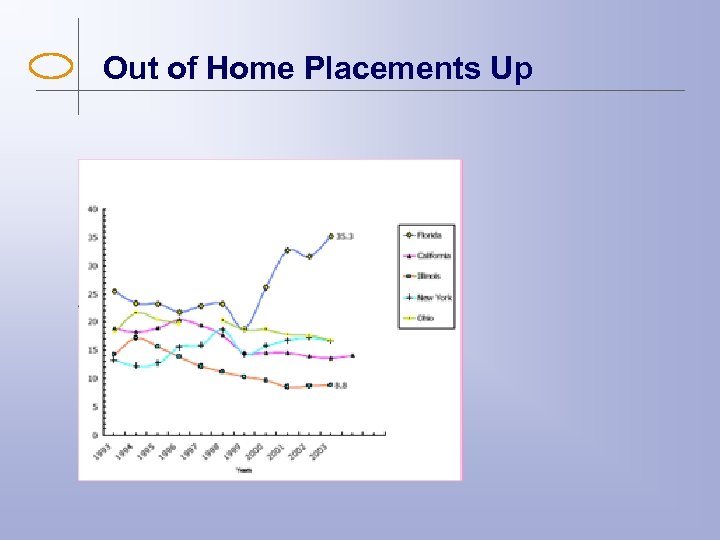 Out of Home Placements Up Slide: IV-E Waiver (1)
 Foster Care Research Findings § Increased criminal activity § Increased unemployment § Increased teenaged pregnancy § Decreased school performance § 4 times more likely to receive food stamps § 17 times more likely to be homeless
 2012 Goal Safely reduce the number of children in foster care by 50% by 2012.
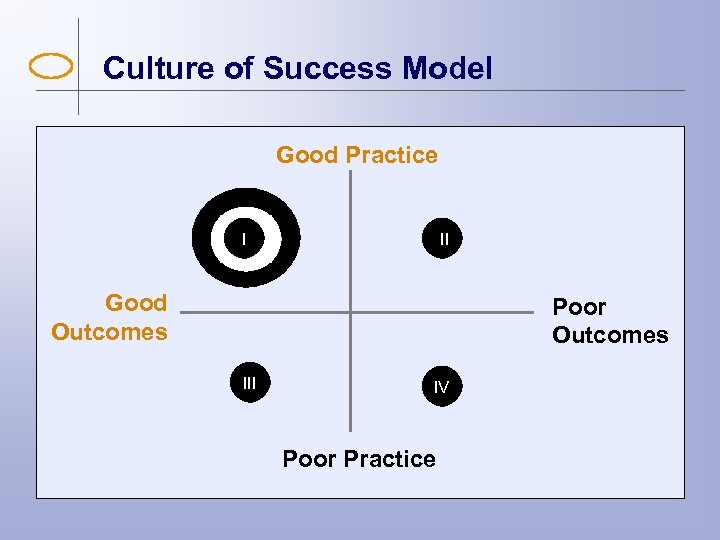 Culture of Success Model Good Practice I II Good Outcomes Poor Outcomes III IV Poor Practice
 Family Centered Strategies § § § Serve the family as a unit Provide intensive, time-limited services Include family members as active participants Achieve success with small, achievable goals Identify services responsive to family-perceived needs and worker-identified needs § Provide services that build on family strengths § Use family resources, esp. informal supports Construct solutions rather than dissolve problems!
 Best Interests Model Adaptive Policy Multifunctional Team Collaborative/ Solutions Focus I II • Child Protection/Family Preservation Balance • Positive Outcomes Adversarial/ Problems Focus IV III Inflexible Policy Silo (individual)
 What can I do right now to promote the BEST INTERESTS of this child and this family? Adaptive Policy Multifunctional Team Collaborative/ Solutions Focus I II • Child Protection/Family Preservation Balance • Positive Outcomes Adversarial/ Problems Focus IV III Inflexible Policy Silo (individual)
 Am I making my decisions in the BEST INTERESTS of the child/family? I II IV 1. Do I have a complete understanding of the situation and a good working relationship with the family? 2. What other viewpoints might help me better understand the situation and make the best decision? 3. Can we safely “flex” our standard operating procedures to better meet the child’s best interests?
 Restoring the Balance § Leadership buy-in § Cost of NOT changing is too high § IV-E Waiver innovations § Distributed system of care § Research findings on foster care § Federal Children and Family Service Reviews
 System Must Step Up § System reactions to child deaths create a “Show Me” culture rather than a “Culture of Success. ” § Leadership must back up what they say with action for culture change to occur
 System Must Step Up NEEDED: § Education and training § Leadership to define and support policies and resource priorities § Shared risk § Teamwork Change needs to be widespread, but it HAS started! You can step up, too!
 Training and Education TWO WORKSHOPS: 1. Opportunities in Family Centered Practice 2. Effective Family-Centered Casework: Tools and Applications
 And Now. . . Please help us make this workshop even better for your colleagues!