


 Скачать презентацию The TIME Randomized Trial Effect of Timing of
9d2622f885640bb38fc73efd2558b4aa.ppt
- Количество слайдов: 15
 The TIME Randomized Trial: Effect of Timing of Intracoronary Delivery of Autologous Bone Marrow Mononuclear Cells on Left Ventricular Function Following STEMI Jay H. Traverse, MD Principal Investigator, TIME Study Minneapolis Heart Institute at Abbott Northwestern Hospital University of Minnesota Medical School Cardiovascular Cell Therapy Research Network (CCTRN) 2012 Scientific Sessions of the AHA
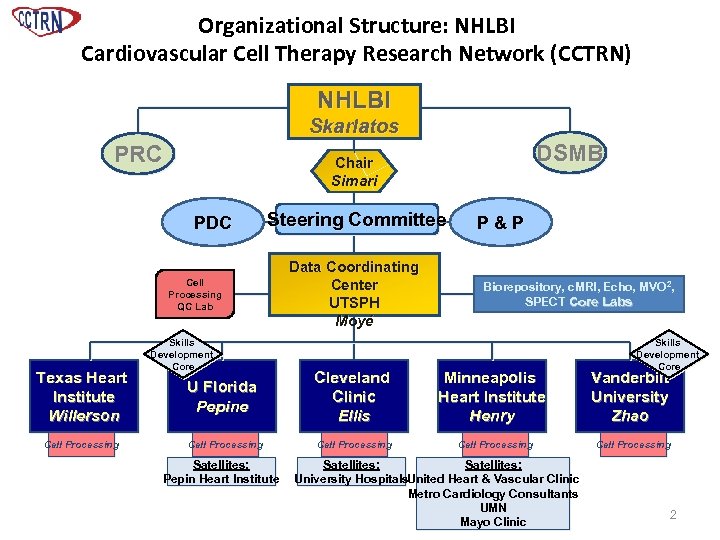 Organizational Structure: NHLBI Cardiovascular Cell Therapy Research Network (CCTRN) NHLBI Skarlatos PRC PDC Steering Committee Cell Processing QC Lab Texas Heart Institute Willerson Cell Processing DSMB Chair Simari Skills Development Core Data Coordinating Center UTSPH Moyé P&P Biorepository, c. MRI, Echo, MVO 2, SPECT Core Labs Skills Development Core U Florida Pepine Cleveland Clinic Ellis Minneapolis Heart Institute Henry Vanderbilt University Zhao Cell Processing Satellites: Pepin Heart Institute Satellites: University Hospitals. United Heart & Vascular Clinic Metro Cardiology Consultants UMN Mayo Clinic 2
 Rationale for TIME • Optimal timing for cell delivery post-AMI is unknown and has not been directly tested in a prospective clinical trial. • Biochemical and structural changes in myocardium and bone marrow in first week (cytokines, inflammation, ROS) may create optimal window for cell delivery. • Almost all BMC trials delivered cells ≤ 7 days post-AMI. o REPAIR-AMI subgroup suggested later delivery preferable to earlier • Late. TIME showed no benefit when BMCs delivered 2 -3 weeks post-MI. 3
 TIME Study Design • Study Aim: assess the effect of autologous BMCs and timing of delivery at Day 3 vs. Day 7 post MI on measures of LV function • Target Population: 120 patients w/first anterior MI, reperfused by PCI + stent, with residual LV dysfunction (EF≤ 45%) • Treatment: 150 x 106 autologous BMCs or placebo delivered by intracoronary infusion (Stop Flow) • Primary Endpoints: change in global and regional LV function from baseline to 6 months by cardiac MRI • Secondary Endpoints: change in infarct size and LV volumes • Subgroups: age, LVEF 4
 Cell Processing • • • Local, automated Sepax System – Automated processing – Includes cell washing – Closed system – Sterile disposable set Validated by extensive pre-clinical testing Sepax vs. Manual Ficoll • BMC Ficoll Manual • Sepax No difference in cell recovery, migration or CFU ability Equivalent perfusion in hindlimb ischemia model 5
 Baseline Characteristics 6
 Infarct Size and Treatment Times 3 Days BMC (N=43) Placebo (N=24) 7 Days BMC (N=36) Placebo (N=17) 7
 Cell Characteristics 8
 Primary Endpoint: Global No difference in the change in LVEF between BMC (n=75) and Placebo (n=37) groups from baseline to 6 months 9
 Effect of Delivery Timing on the Change from Baseline to Six Months for LVEF Results for both infarct zone and border zone wall motion were also not significant by therapy group for 3 days, 7 days, or overall. 10
 Primary Endpoint: Regional No difference in the change of regional wall motion in the infarct and border zone between baseline and 6 months 11
 Secondary Endpoints: Infarct Size and LV Volumes 12
 Clinical/Safety Outcomes at 6 -month Endpoint Window 13
 Conclusions • Intracoronary delivery of autologous BMCs 3 or 7 days following primary PCI + stenting after moderate to large acute MIs is safe. • No improvement in global and regional LV function is observed at 6 months by c. MRI in response to intracoronary BMC delivery. • Young patients at Day 7 randomized to BMCs had significant improvement with LVEF compared with placebo. 14
 Acknowledgements • • National Heart Lung & Blood Institute • • • University of Texas School of Public Health Biosafe Boston Scientific The clinical centers (Cleveland Clinic, Minneapolis Heart Institute, Texas Heart Institute, University of Florida, and Vanderbilt University), their satellites (University Hospitals, United Heart & Vascular Clinic, Metropolitan Cardiology Consultants, University of Minnesota, Mayo Clinic, De. Bakey VA, and Pepin Heart Institute) and their research teams Center for Cell & Gene Therapy, Baylor College of Medicine The University of Florida c. MRI and Cleveland Clinic Echo Core Labs The University of Minnesota and University of Florida Biorepositories Simari Lab, Mayo Clinic 15