


 Скачать презентацию The Tilarginine Acetate Injection in a Randomized International
bcafe9bb3cba8c9396b0bbb071ad3a34.ppt
- Количество слайдов: 34
 The Tilarginine Acetate Injection in a Randomized International Study in Unstable Acute Myocardial Infarction Patients with Cardiogenic Shock (TRIUMPH) Judith S. Hochman on behalf of TRIUMPH Investigators TRIUMPH was supported by Argi. NOx Pharmaceuticals, Inc. New York University received a research grant from Argi. NOx for TRIUMPH Judith S. Hochman, MD served as a consultant to Datascope TRIUMPH report can be found at jama. ama-assn. org
 Background n The incidence of cardiogenic shock complicating STEMI has remained stable at ~8% n Despite the reduction in mortality resulting from early revascularization, early mortality rates remain high (50% at 30 days)
 Background n A systemic inflammatory response syndrome (SIRS) may be triggered by a large MI, with elevation of inflammatory cytokines (e. g. , IL-6), as seen in septic shock n High cytokine levels are associated with the development of cardiogenic shock n Inflammatory cytokines increase expression of inducible nitric oxide synthase (i. NOS) leading to high levels of nitric oxide (NO)
 Background n Experimental data demonstrate that high levels of nitric oxide: n Reduce contractility n Reduce catecholamine responsivity n Induce inappropriate systemic vasodilation n Excess NO may play a role in the genesis and persistence of cardiogenic shock n Preliminary studies suggested a beneficial effect of isoform non-selective NOS inhibition on hemodynamics, renal function, and survival in persistent cardiogenic shock
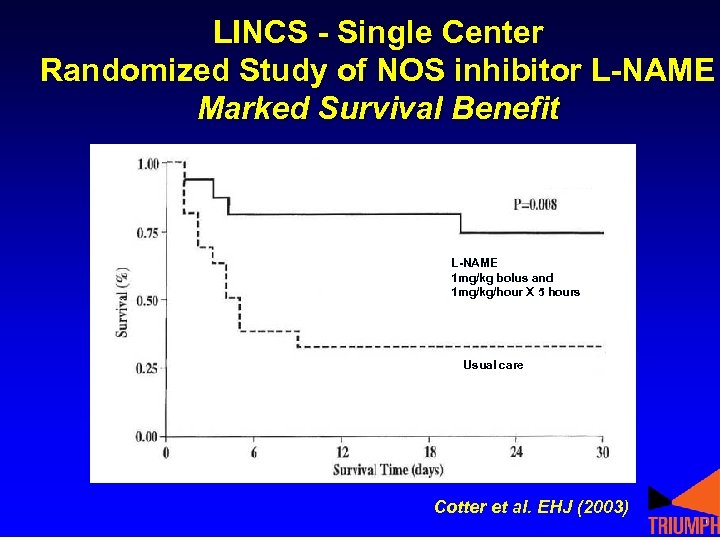 LINCS - Single Center Randomized Study of NOS inhibitor L-NAME Marked Survival Benefit L-NAME 1 mg/kg bolus and 1 mg/kg/hour X 5 hours Usual care Cotter et al. EHJ (2003)
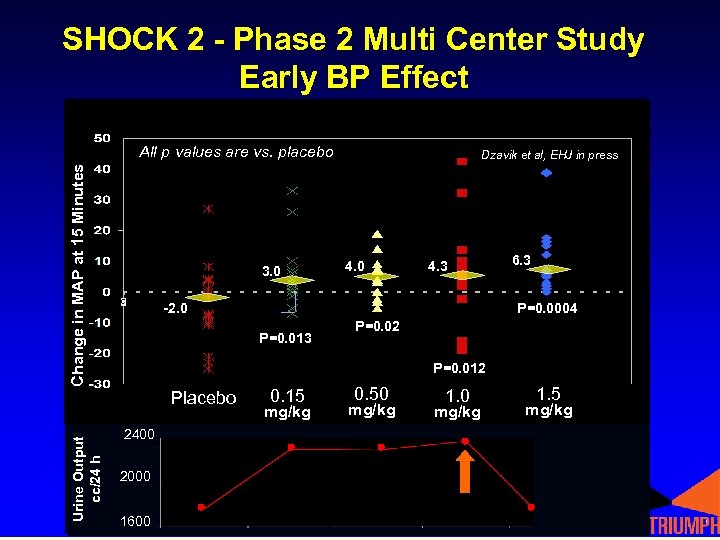 SHOCK 2 - Phase 2 Multi Center Study Early BP Effect Change in MAP at 15 Minutes All p values are vs. placebo 3. 0 4. 3 -2. 0 6. 3 P=0. 0004 P=0. 013 P=0. 02 P=0. 012 Placebo Urine Output cc/24 h Dzavik et al, EHJ in press 2400 2000 1600 0. 15 mg/kg 0. 50 mg/kg 1. 5 mg/kg
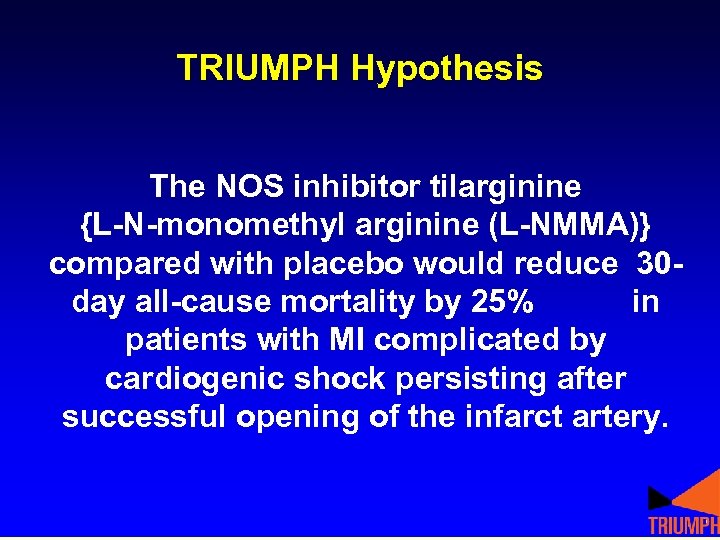 TRIUMPH Hypothesis The NOS inhibitor tilarginine {L-N-monomethyl arginine (L-NMMA)} compared with placebo would reduce 30 day all-cause mortality by 25% in patients with MI complicated by cardiogenic shock persisting after successful opening of the infarct artery.
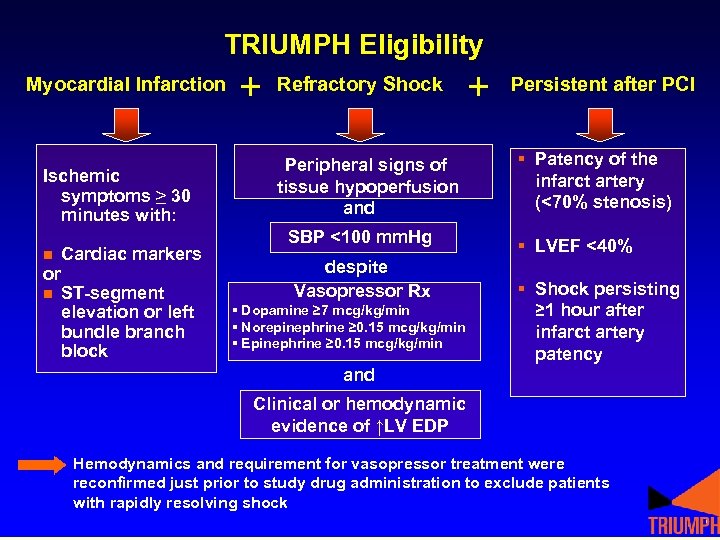 TRIUMPH Eligibility Myocardial Infarction Ischemic symptoms ≥ 30 minutes with: n or n Cardiac markers ST-segment elevation or left bundle branch block + Refractory Shock Peripheral signs of tissue hypoperfusion and SBP <100 mm. Hg despite Vasopressor Rx § Dopamine ≥ 7 mcg/kg/min § Norepinephrine ≥ 0. 15 mcg/kg/min § Epinephrine ≥ 0. 15 mcg/kg/min + Persistent after PCI § Patency of the infarct artery (<70% stenosis) § LVEF <40% § Shock persisting ≥ 1 hour after infarct artery patency and Clinical or hemodynamic evidence of ↑LV EDP Hemodynamics and requirement for vasopressor treatment were reconfirmed just prior to study drug administration to exclude patients with rapidly resolving shock
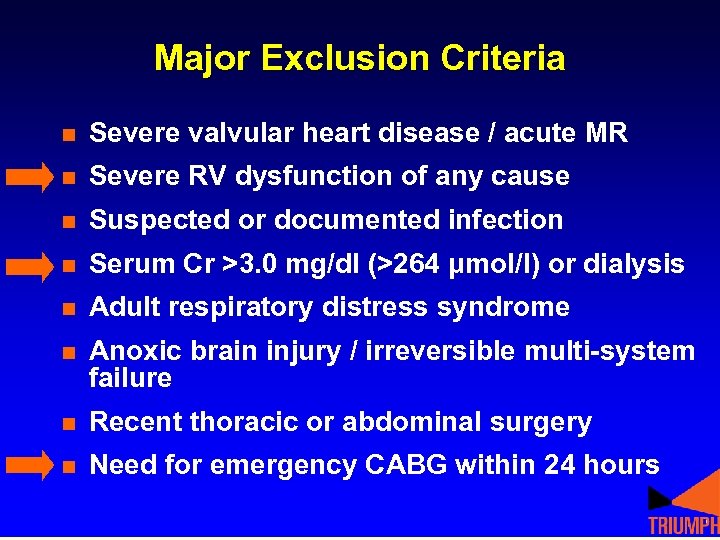 Major Exclusion Criteria n Severe valvular heart disease / acute MR n Severe RV dysfunction of any cause n Suspected or documented infection n Serum Cr >3. 0 mg/dl (>264 μmol/l) or dialysis n Adult respiratory distress syndrome n Anoxic brain injury / irreversible multi-system failure n Recent thoracic or abdominal surgery n Need for emergency CABG within 24 hours
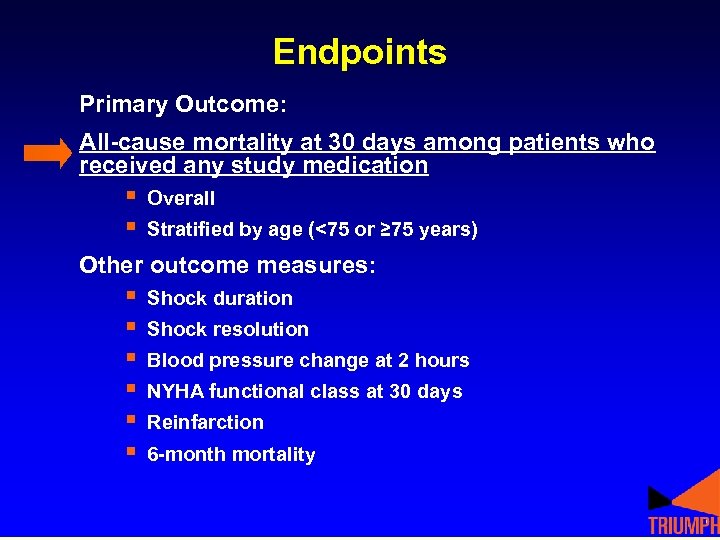 Endpoints Primary Outcome: All-cause mortality at 30 days among patients who received any study medication § § Overall Stratified by age (<75 or ≥ 75 years) Other outcome measures: § § § Shock duration Shock resolution Blood pressure change at 2 hours NYHA functional class at 30 days Reinfarction 6 -month mortality
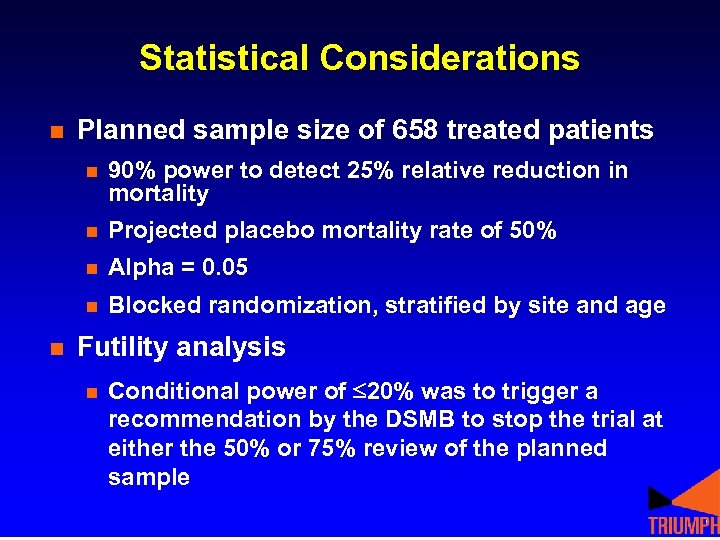 Statistical Considerations n Planned sample size of 658 treated patients n n Projected placebo mortality rate of 50% n Alpha = 0. 05 n n 90% power to detect 25% relative reduction in mortality Blocked randomization, stratified by site and age Futility analysis n Conditional power of 20% was to trigger a recommendation by the DSMB to stop the trial at either the 50% or 75% review of the planned sample
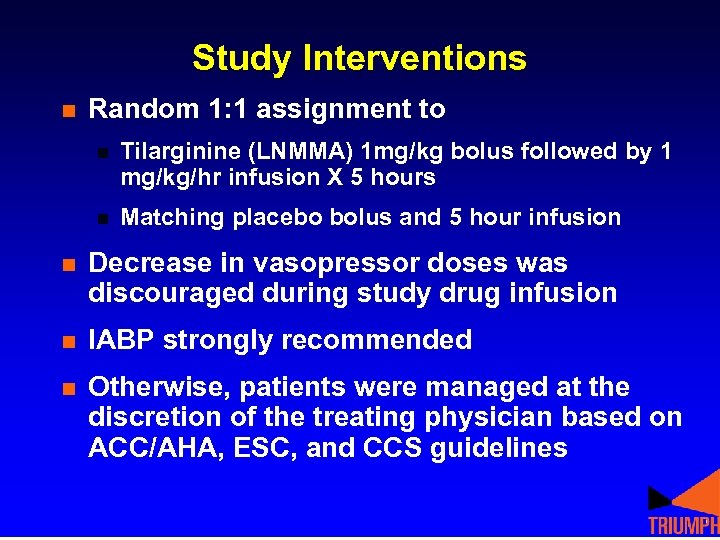 Study Interventions n Random 1: 1 assignment to n Tilarginine (LNMMA) 1 mg/kg bolus followed by 1 mg/kg/hr infusion X 5 hours n Matching placebo bolus and 5 hour infusion n Decrease in vasopressor doses was discouraged during study drug infusion n IABP strongly recommended n Otherwise, patients were managed at the discretion of the treating physician based on ACC/AHA, ESC, and CCS guidelines
 Study Termination n At the 50% review, the conditional power to meet the primary objective was <10% and the DSMB recommended termination n The sponsor quickly terminated trial operations, resulting in some missing baseline data n The academic leadership requested site investigators attempt to collect 6 month vital status
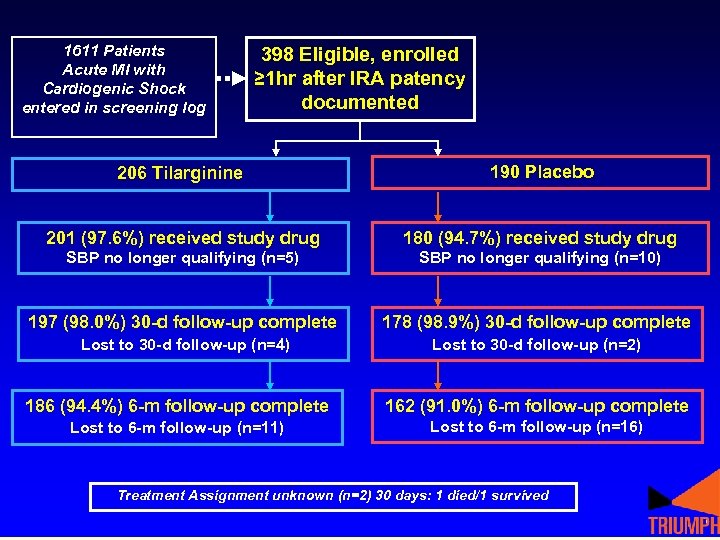 1611 Patients Acute MI with Cardiogenic Shock entered in screening log 398 Eligible, enrolled ≥ 1 hr after IRA patency documented 206 Tilarginine 190 Placebo 201 (97. 6%) received study drug 180 (94. 7%) received study drug SBP no longer qualifying (n=5) SBP no longer qualifying (n=10) 197 (98. 0%) 30 -d follow-up complete 178 (98. 9%) 30 -d follow-up complete Lost to 30 -d follow-up (n=4) Lost to 30 -d follow-up (n=2) 186 (94. 4%) 6 -m follow-up complete 162 (91. 0%) 6 -m follow-up complete Lost to 6 -m follow-up (n=11) Lost to 6 -m follow-up (n=16) Treatment Assignment unknown (n=2) 30 days: 1 died/1 survived
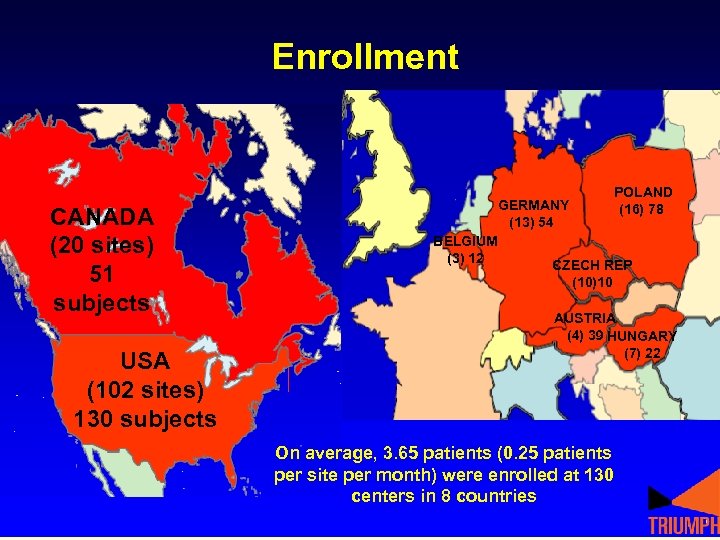 Enrollment CANADA (20 sites) 51 subjects USA (102 sites) 130 subjects POLAND GERMANY (16) 78 (13) 54 BELGIUM (3) 12 CZECH REP (10)10 AUSTRIA (4) 39 HUNGARY (7) 22 On average, 3. 65 patients (0. 25 patients per site per month) were enrolled at 130 centers in 8 countries
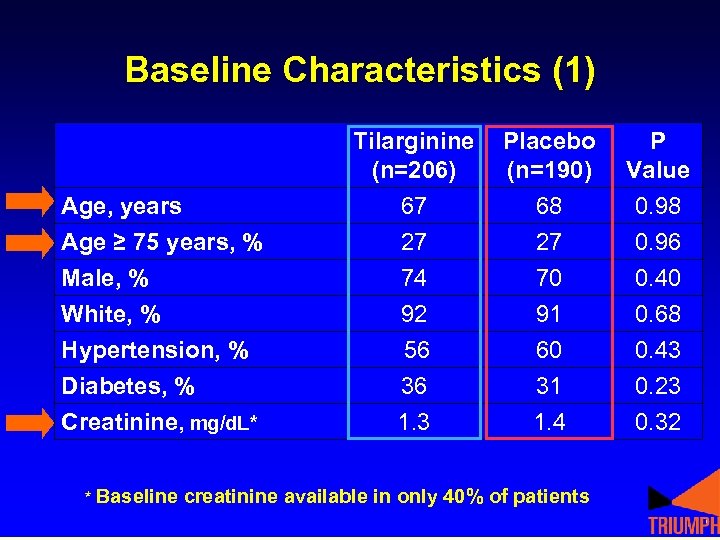 Baseline Characteristics (1) Age, years Age ≥ 75 years, % Male, % White, % Hypertension, % Diabetes, % Creatinine, mg/d. L* * Baseline Tilarginine (n=206) 67 27 74 92 56 36 1. 3 Placebo (n=190) 68 27 70 91 60 31 1. 4 creatinine available in only 40% of patients P Value 0. 98 0. 96 0. 40 0. 68 0. 43 0. 23 0. 32
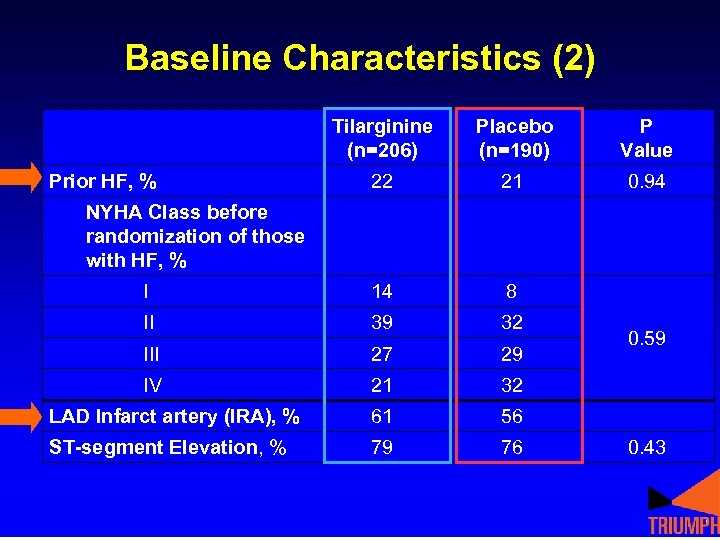 Baseline Characteristics (2) Tilarginine (n=206) Placebo (n=190) P Value 22 21 0. 94 I 14 8 II 39 32 III 27 29 IV 21 32 LAD Infarct artery (IRA), % 61 56 ST-segment Elevation, % 79 76 Prior HF, % NYHA Class before randomization of those with HF, % 0. 59 0. 43
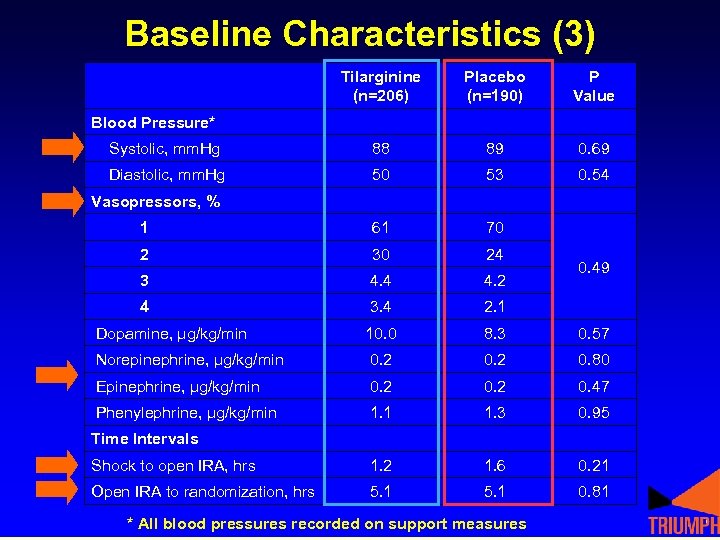 Baseline Characteristics (3) Tilarginine (n=206) Placebo (n=190) P Value Systolic, mm. Hg 88 89 0. 69 Diastolic, mm. Hg 50 53 0. 54 1 61 70 2 30 24 3 4. 4 4. 2 4 3. 4 2. 1 Dopamine, μg/kg/min 10. 0 8. 3 0. 57 Norepinephrine, μg/kg/min 0. 2 0. 80 Epinephrine, μg/kg/min 0. 2 0. 47 Phenylephrine, μg/kg/min 1. 1 1. 3 0. 95 Shock to open IRA, hrs 1. 2 1. 6 0. 21 Open IRA to randomization, hrs 5. 1 0. 81 Blood Pressure* Vasopressors, % 0. 49 Time Intervals * All blood pressures recorded on support measures
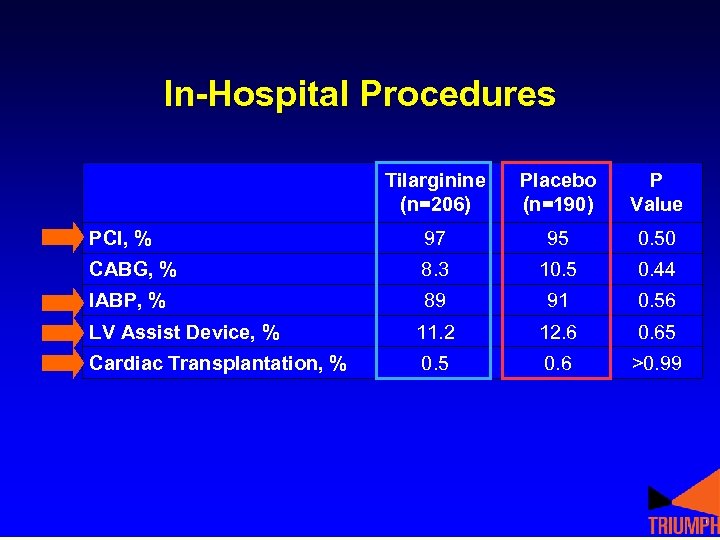 In-Hospital Procedures Tilarginine (n=206) Placebo (n=190) P Value PCI, % 97 95 0. 50 CABG, % 8. 3 10. 5 0. 44 IABP, % 89 91 0. 56 LV Assist Device, % 11. 2 12. 6 0. 65 Cardiac Transplantation, % 0. 5 0. 6 >0. 99
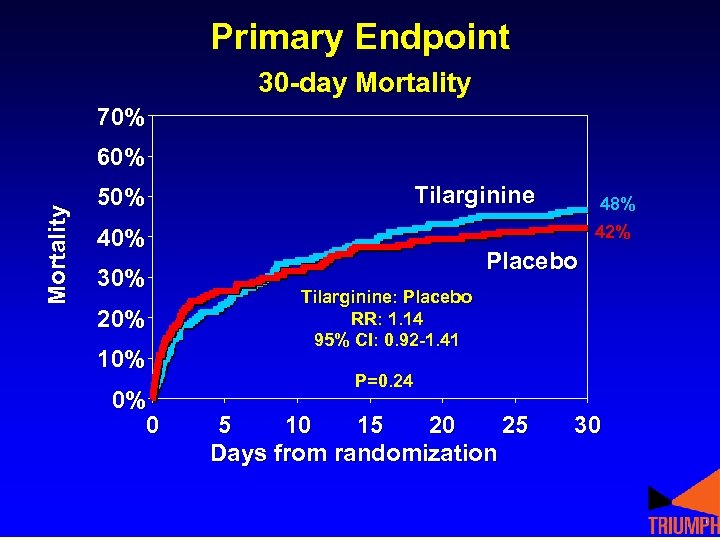 Primary Endpoint 30 -day Mortality 70% Mortality 60% Tilarginine 50% 42% 40% 30% 20% 10% 0% 0 48% Placebo Tilarginine: Placebo RR: 1. 14 95% CI: 0. 92 -1. 41 P=0. 24 5 10 15 20 25 Days from randomization 30
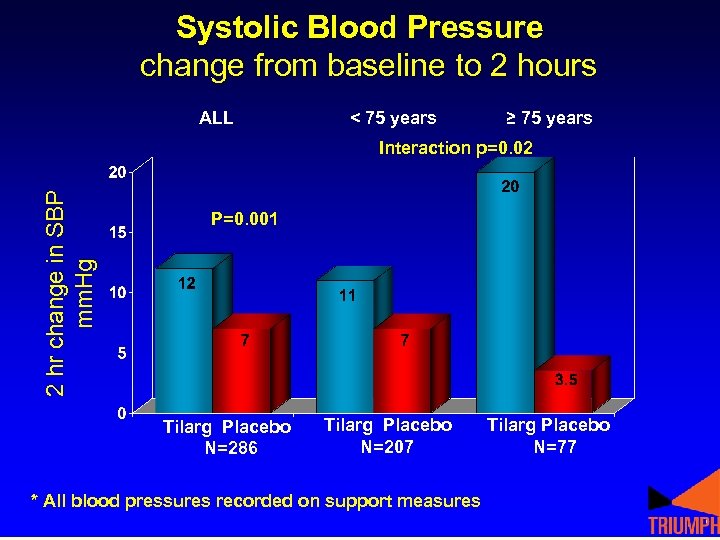 Systolic Blood Pressure change from baseline to 2 hours ALL < 75 years ≥ 75 years 2 hr change in SBP mm. Hg Interaction p=0. 02 P=0. 001 Tilarg Placebo N=286 Tilarg Placebo N=207 * All blood pressures recorded on support measures Tilarg Placebo N=77
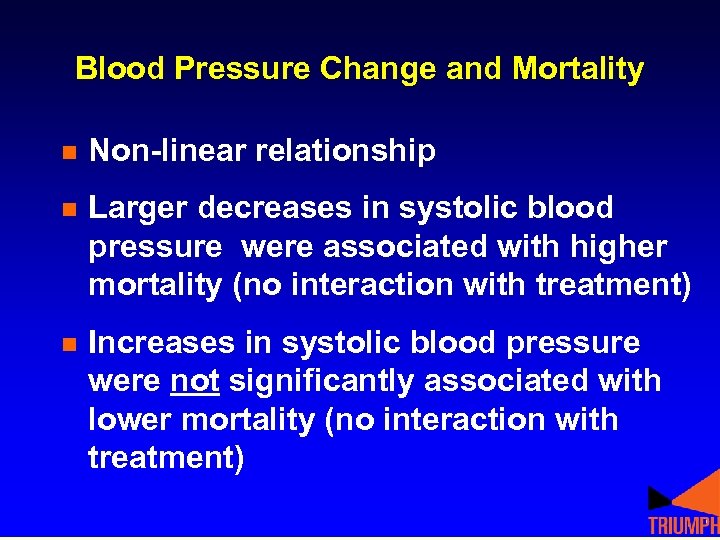 Blood Pressure Change and Mortality n Non-linear relationship n Larger decreases in systolic blood pressure were associated with higher mortality (no interaction with treatment) n Increases in systolic blood pressure were not significantly associated with lower mortality (no interaction with treatment)
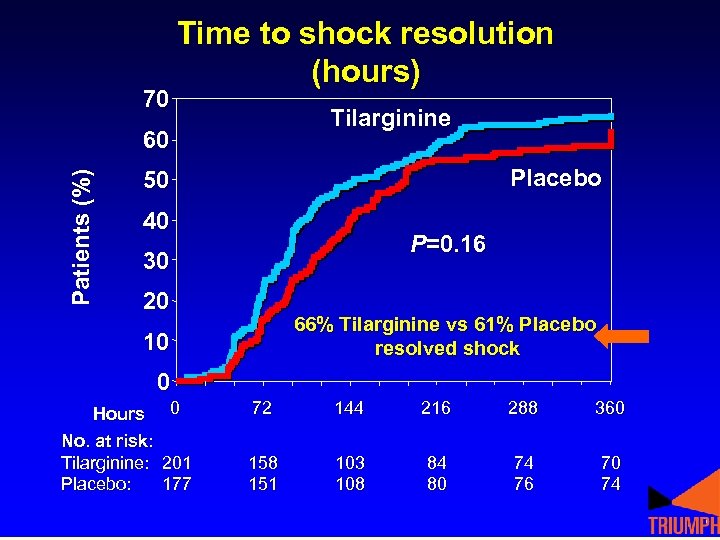 70 Time to shock resolution (hours) Tilarginine Patients (%) 60 Placebo 50 40 P=0. 16 30 20 66% Tilarginine vs 61% Placebo resolved shock 10 0 Hours 0 No. at risk: Tilarginine: 201 Placebo: 177 72 144 216 288 360 158 151 103 108 84 80 74 76 70 74
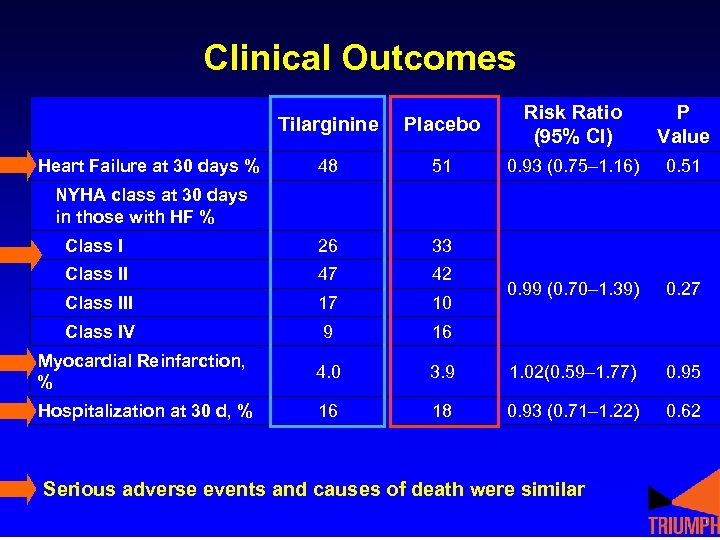 Clinical Outcomes Tilarginine Placebo Risk Ratio (95% CI) P Value 48 51 0. 93 (0. 75– 1. 16) 0. 51 Class I 26 33 Class II 47 42 Class III 17 10 0. 99 (0. 70– 1. 39) 0. 27 Class IV 9 16 Myocardial Reinfarction, % 4. 0 3. 9 1. 02(0. 59– 1. 77) 0. 95 Hospitalization at 30 d, % 16 18 0. 93 (0. 71– 1. 22) 0. 62 Heart Failure at 30 days % NYHA class at 30 days in those with HF % Serious adverse events and causes of death were similar
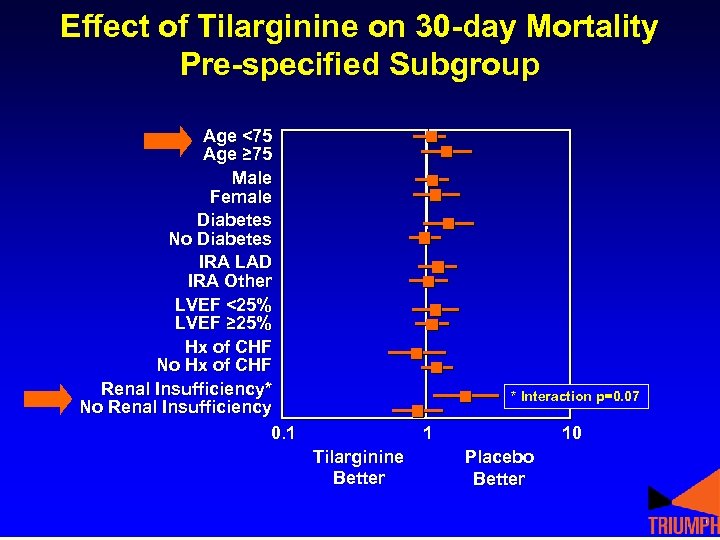 Effect of Tilarginine on 30 -day Mortality Pre-specified Subgroup Age <75 Age ≥ 75 Male Female Diabetes No Diabetes IRA LAD IRA Other LVEF <25% LVEF ≥ 25% Hx of CHF No Hx of CHF Renal Insufficiency* No Renal Insufficiency 0. 1 * Interaction p=0. 07 1 Tilarginine Better 10 Placebo Better
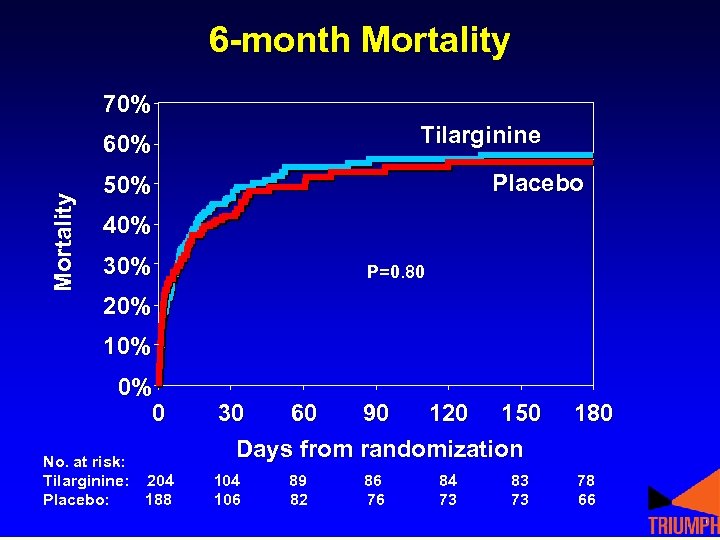 6 -month Mortality 70% Tilarginine Mortality 60% Placebo 50% 40% 30% P=0. 80 20% 10% 0% 0 No. at risk: Tilarginine: 204 Placebo: 188 30 60 90 120 150 Days from randomization 180 104 106 78 66 89 82 86 76 84 73 83 73
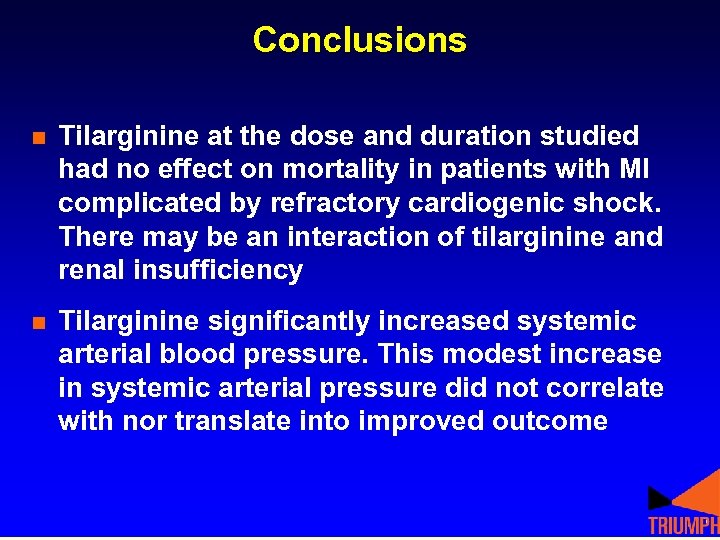 Conclusions n Tilarginine at the dose and duration studied had no effect on mortality in patients with MI complicated by refractory cardiogenic shock. There may be an interaction of tilarginine and renal insufficiency n Tilarginine significantly increased systemic arterial blood pressure. This modest increase in systemic arterial pressure did not correlate with nor translate into improved outcome
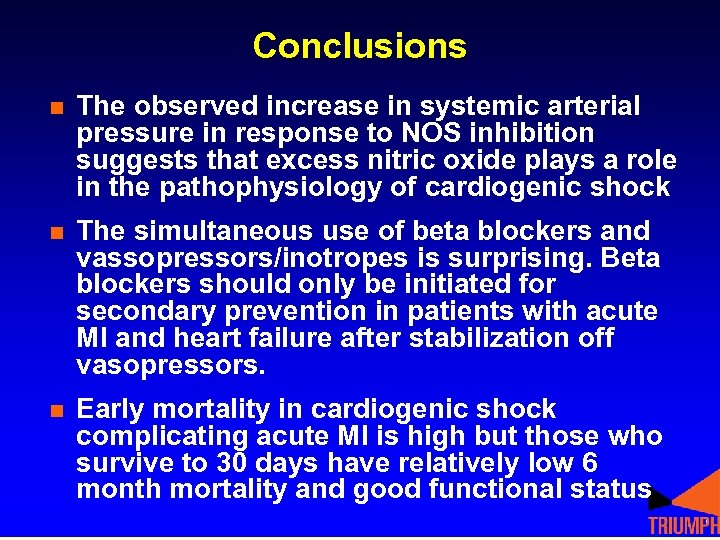 Conclusions n The observed increase in systemic arterial pressure in response to NOS inhibition suggests that excess nitric oxide plays a role in the pathophysiology of cardiogenic shock n The simultaneous use of beta blockers and vassopressors/inotropes is surprising. Beta blockers should only be initiated for secondary prevention in patients with acute MI and heart failure after stabilization off vasopressors. n Early mortality in cardiogenic shock complicating acute MI is high but those who survive to 30 days have relatively low 6 month mortality and good functional status
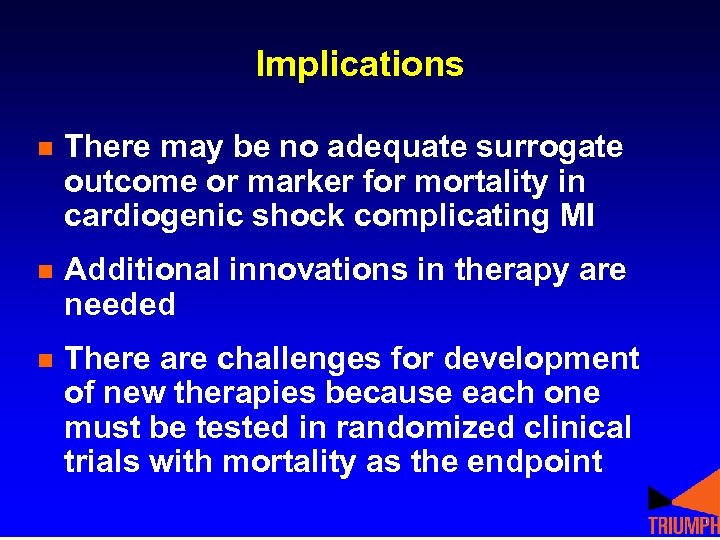 Implications n There may be no adequate surrogate outcome or marker for mortality in cardiogenic shock complicating MI n Additional innovations in therapy are needed n There are challenges for development of new therapies because each one must be tested in randomized clinical trials with mortality as the endpoint
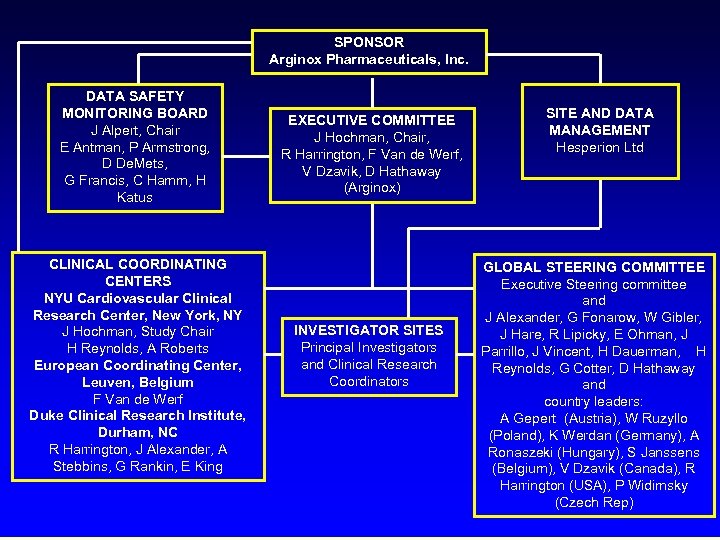 SPONSOR Arginox Pharmaceuticals, Inc. DATA SAFETY MONITORING BOARD J Alpert, Chair E Antman, P Armstrong, D De. Mets, G Francis, C Hamm, H Katus CLINICAL COORDINATING CENTERS NYU Cardiovascular Clinical Research Center, New York, NY J Hochman, Study Chair H Reynolds, A Roberts European Coordinating Center, Leuven, Belgium F Van de Werf Duke Clinical Research Institute, Durham, NC R Harrington, J Alexander, A Stebbins, G Rankin, E King EXECUTIVE COMMITTEE J Hochman, Chair, R Harrington, F Van de Werf, V Dzavik, D Hathaway (Arginox) INVESTIGATOR SITES Principal Investigators and Clinical Research Coordinators SITE AND DATA MANAGEMENT Hesperion Ltd GLOBAL STEERING COMMITTEE Executive Steering committee and J Alexander, G Fonarow, W Gibler, J Hare, R Lipicky, E Ohman, J Parrillo, J Vincent, H Dauerman, H Reynolds, G Cotter, D Hathaway and country leaders: A Gepert (Austria), W Ruzyllo (Poland), K Werdan (Germany), A Ronaszeki (Hungary), S Janssens (Belgium), V Dzavik (Canada), R Harrington (USA), P Widimsky (Czech Rep)
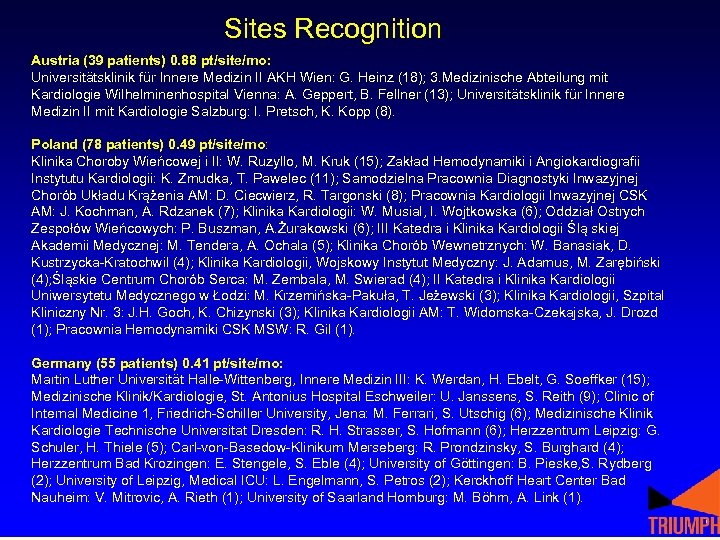 Sites Recognition Austria (39 patients) 0. 88 pt/site/mo: Universitätsklinik für Innere Medizin II AKH Wien: G. Heinz (18); 3. Medizinische Abteilung mit Kardiologie Wilhelminenhospital Vienna: A. Geppert, B. Fellner (13); Universitätsklinik für Innere Medizin II mit Kardiologie Salzburg: I. Pretsch, K. Kopp (8). Poland (78 patients) 0. 49 pt/site/mo: Klinika Choroby Wieńcowej i II: W. Ruzyllo, M. Kruk (15); Zakład Hemodynamiki i Angiokardiografii Instytutu Kardiologii: K. Zmudka, T. Pawelec (11); Samodzielna Pracownia Diagnostyki Inwazyjnej Chorób Układu Krążenia AM: D. Ciecwierz, R. Targonski (8); Pracownia Kardiologii Inwazyjnej CSK AM: J. Kochman, A. Rdzanek (7); Klinika Kardiologii: W. Musial, I. Wojtkowska (6); Oddział Ostrych Zespołów Wieńcowych: P. Buszman, A. Żurakowski (6); III Katedra i Klinika Kardiologii Ślą skiej Akademii Medycznej: M. Tendera, A. Ochala (5); Klinika Chorób Wewnetrznych: W. Banasiak, D. Kustrzycka-Kratochwil (4); Klinika Kardiologii, Wojskowy Instytut Medyczny: J. Adamus, M. Zarębiński (4); Śląskie Centrum Chorób Serca: M. Zembala, M. Swierad (4); II Katedra i Klinika Kardiologii Uniwersytetu Medycznego w Łodzi: M. Krzemińska-Pakuła, T. Jeżewski (3); Klinika Kardiologii, Szpital Kliniczny Nr. 3: J. H. Goch, K. Chizynski (3); Klinika Kardiologii AM: T. Widomska-Czekajska, J. Drozd (1); Pracownia Hemodynamiki CSK MSW: R. Gil (1). Germany (55 patients) 0. 41 pt/site/mo: Martin Luther Universität Halle-Wittenberg, Innere Medizin III: K. Werdan, H. Ebelt, G. Soeffker (15); Medizinische Klinik/Kardiologie, St. Antonius Hospital Eschweiler: U. Janssens, S. Reith (9); Clinic of Internal Medicine 1, Friedrich-Schiller University, Jena: M. Ferrari, S. Utschig (6); Medizinische Klinik Kardiologie Technische Universitat Dresden: R. H. Strasser, S. Hofmann (6); Herzzentrum Leipzig: G. Schuler, H. Thiele (5); Carl-von-Basedow-Klinikum Merseberg: R. Prondzinsky, S. Burghard (4); Herzzentrum Bad Krozingen: E. Stengele, S. Eble (4); University of Göttingen: B. Pieske, S. Rydberg (2); University of Leipzig, Medical ICU: L. Engelmann, S. Petros (2); Kerckhoff Heart Center Bad Nauheim: V. Mitrovic, A. Rieth (1); University of Saarland Homburg: M. Böhm, A. Link (1).
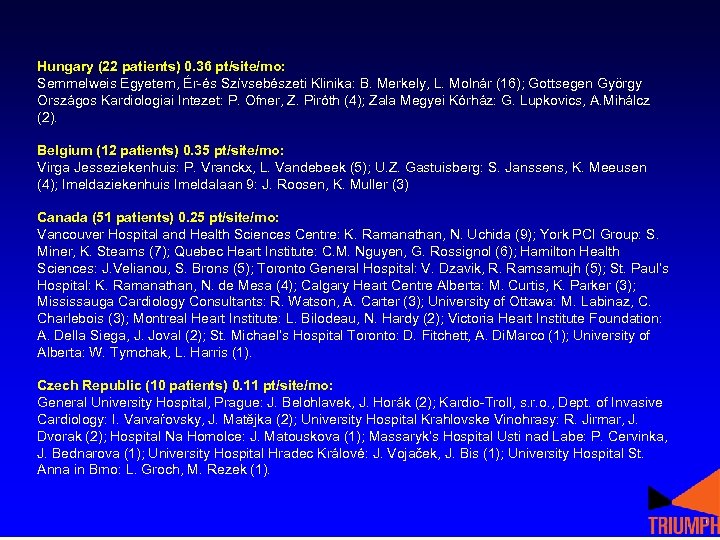 Hungary (22 patients) 0. 36 pt/site/mo: Semmelweis Egyetem, Ér-és Szívsebészeti Klinika: B. Merkely, L. Molnár (16); Gottsegen György Országos Kardiologiai Intezet: P. Ofner, Z. Piróth (4); Zala Megyei Kórház: G. Lupkovics, A. Mihálcz (2). Belgium (12 patients) 0. 35 pt/site/mo: Virga Jesseziekenhuis: P. Vranckx, L. Vandebeek (5); U. Z. Gastuisberg: S. Janssens, K. Meeusen (4); Imeldaziekenhuis Imeldalaan 9: J. Roosen, K. Muller (3) Canada (51 patients) 0. 25 pt/site/mo: Vancouver Hospital and Health Sciences Centre: K. Ramanathan, N. Uchida (9); York PCI Group: S. Miner, K. Stearns (7); Quebec Heart Institute: C. M. Nguyen, G. Rossignol (6); Hamilton Health Sciences: J. Velianou, S. Brons (5); Toronto General Hospital: V. Dzavik, R. Ramsamujh (5); St. Paul’s Hospital: K. Ramanathan, N. de Mesa (4); Calgary Heart Centre Alberta: M. Curtis, K. Parker (3); Mississauga Cardiology Consultants: R. Watson, A. Carter (3); University of Ottawa: M. Labinaz, C. Charlebois (3); Montreal Heart Institute: L. Bilodeau, N. Hardy (2); Victoria Heart Institute Foundation: A. Della Siega, J. Joval (2); St. Michael’s Hospital Toronto: D. Fitchett, A. Di. Marco (1); University of Alberta: W. Tymchak, L. Harris (1). Czech Republic (10 patients) 0. 11 pt/site/mo: General University Hospital, Prague: J. Belohlavek, J. Horák (2); Kardio-Troll, s. r. o. , Dept. of Invasive Cardiology: I. Varvaŕovsky, J. Matĕjka (2); University Hospital Krahlovske Vinohrasy: R. Jirmar, J. Dvorak (2); Hospital Na Homolce: J. Matouskova (1); Massaryk’s Hospital Usti nad Labe: P. Cervinka, J. Bednarova (1); University Hospital Hradec Králové: J. Vojaček, J. Bis (1); University Hospital St. Anna in Brno: L. Groch, M. Rezek (1).
 United States (131 patients) 0. 16 pt/site/mo: Newark Beth Israel Medical Center: D. Baran, A. Gonzales (8); The Sanger Clinic: T. Frank, C. Dellinger (8); University of Southern California: A. Mehra (8); Washington Hospital Center: J. Panza, M. Mc. Nulty, S. Glaes (7); University of Kansas Hospital: P. N. Tadros, C. Reitz (6); Allegheny General Hospital: D. Lasorda, C. Harter (4); John H. Stroger, Jr. Hospital of Cook County: S. Nathan, G. Peacock (4); LDS Hospital: J. B. Muhlestein, P. Kennedy (4); University of Massachusetts Medical School: J. Gore, S. Ball (4); Central Arkansas Cardiovascular Research Group: L. Garza, F. Katkhordeh (4); Baylor Heart Clinic: V. Thohan, E. Bavouset (3); Duke University Medical Center: P. Berger, J. Hervey (3); Fletcher Allen Healthcare: P. Gogo, F. Straight (3); Health First Clinical Research Institute: S. Karas, N. Parker (3); Iowa Health, Des Moines: D. Ver. Steeg, K. Barkema (3); Los Angeles Cardiology Associates: D. Shavelle, S. Mullin (3); Mercy General Hospital: W. Marquardt, S. Bordash (3); Stanford University School of Medicine: M. B. Fowler, D. J. Christopherson (3); University of Kentucky: S. Steinhubl, L. Withrow (3); William Beaumont Hospital: S. Dixon, J. Wegner (3); Asheville Cardiology Associates: M. Unks, S. Lingelbach (2); Brigham and Women’s Hospital: J. Kirshenbaum, M. Lopez (2); Cooper Health System: S. Hollenberg, J. E. Parrillo (2); Emory Crawford Long Hospital: H. A. Liberman, R. Cook (2); Florida Cardiovascular Research Center: J. Kieval, J. Friderich (2); Saint Louis University: M. Lim, N. Elmore (2); University of Michigan Health Systems: E. Bates, A. Luciano (2); University of Texas Medical School: R. W. Smalling, M. Vooletich (2); Beth Israel Deaconess Medical Center: D. Cutlip, T. Bishop (1); Mayo Clinic Rochester: M. Bell, M. Grant (1); Maine Medical Center: M. E. Kellett, C. Berg (1); Penn State Hershey Medical Center: I. Gilchrist, L. Seiders (1); Washington University School of Medicine at Barnes Jewish Hospital: R. Bach, M. Palazzolo (1); Orlando Regional Medical Center: P. Giordano, R. Colern (1); Baylor College of Medicine: N. Lakkis, J. Bobek (1); Cedars-Sinai Medical Center: B. Cercek, L. Defensor (1); South Denver Cardiology Associates: J. Burchenal, D. Erickson (1); Mid. West Cardiology Research Foundation: S. Yakubov, K. Pethtel (1); Northeast Cardiology Associates: A. Wiseman, C. Adams (1); Lehigh Valley Hospital: M. Matsumura, L. Phillips (1); Mt. Sinai Medical Center, Florida: G. Lamas, B. E. Restrepo (1); Johnson City Medical Center: M. Chang, W. Fields (1); Ochsner Clinic Foundation: S. Ramee, B. Hirstius (1); University of Rochester Medical Center: L. Chen, J. Schrack (1); Mount Sinai Medical Center, New York: M. Farkouh, E. J. Fernandez (1); Fallon Cardiology: E. Ramsaran, P. Sigel (1); Forsyth Medical Center: D. Smull, W. Hobbs (1); Iowa Heart Center: A. Chawla, J. Gehrke (1); Bryant LGH Heart Institute: S. Krueger, C. Orosco (1); The Miriam Hospital: P. Gordon, N. Wright (1); Lahey Clinic: S. Waxman, P. Baum (1); University of Iowa Hospital: P. Horwitz, A. Ollinger (1); Trinity Medical Center: S. Puri, C. Antonio (1); Watson Clinic, LLP: K. Browne, K. Prisoc (1); Munroe Regional Medical Center: E. Santoian, S. Williams (1); UNC Chapel Hill School of Medicine: V. Menon, M. Cohen, K. Wood (1).
 JAMA, Published online March 26, 2007 TRIUMPH report can be found at jama. ama-assn. org