



 The th 9 of June Good morning!!!
 Stars and stripes Famous Attractive Hair Eyes About Slim Actor – actress Singer Sportsman- sportswoman Musician Politician TV presenter
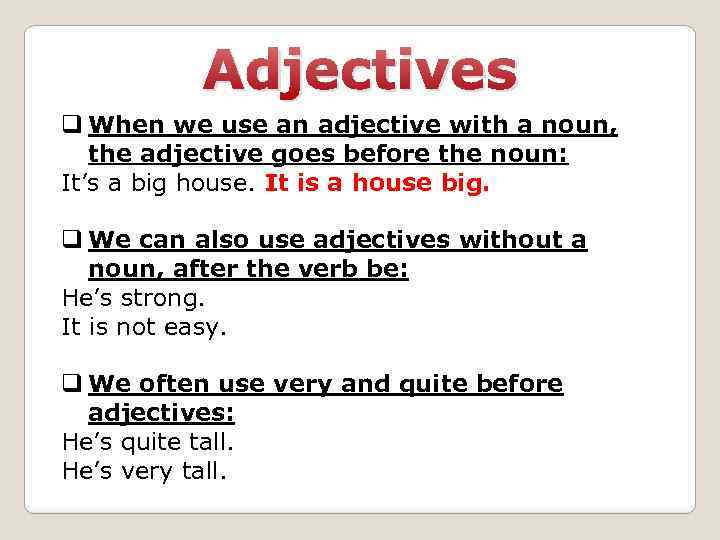 Adjectives q When we use an adjective with a noun, the adjective goes before the noun: It’s a big house. It is a house big. q We can also use adjectives without a noun, after the verb be: He’s strong. It is not easy. q We often use very and quite before adjectives: He’s quite tall. He’s very tall.
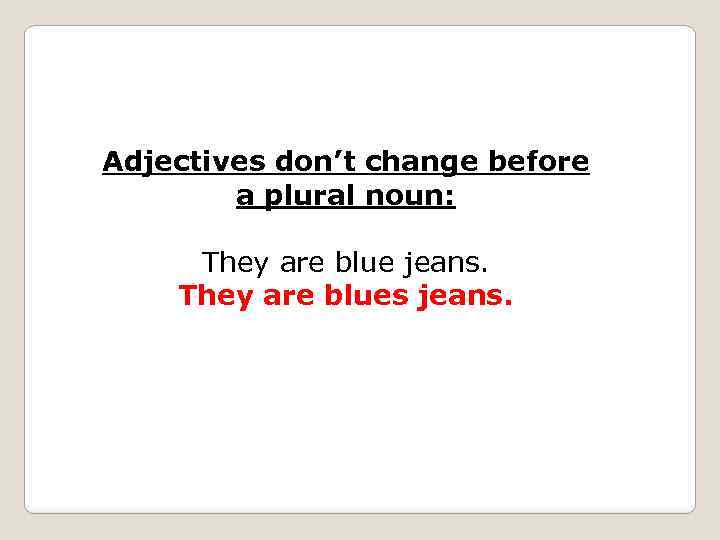 Adjectives don’t change before a plural noun: They are blue jeans. They are blues jeans.
 After 300 metres, turn right Hungry Hot Angry Tired Sad Thirsty Cold Worried Bored Happy Stressed
 Imperatives Turn right Slow down Don’t worry Be careful Turn the air conditioning on Open your window Lets stop at that service station Give me my IPod Be quite Don’t park here Come on Lets go
 Imperatives, let’s Use imperatives to give orders or instructions. • + imperative – verb (infinitive) • Open the door! • Turn right! • - Imperative – don’t + verb • Don’t worry! • Don’t stop!
 • Add please to be polite: Open the door, please! • Use be + adjective in imperatives: Be quite! Be careful, please! • Don’t use a pronoun with imperatives: Don’t worry!
 Let’s + verb to make suggestions Let’s go home! Let’s not + verb to make a negative suggestion Let’s not wait!