


 Скачать презентацию The Telegraph and The Civil War Myers Wigwag
d72535a7e4fa9112eee46bbf6610c724.ppt
- Количество слайдов: 24
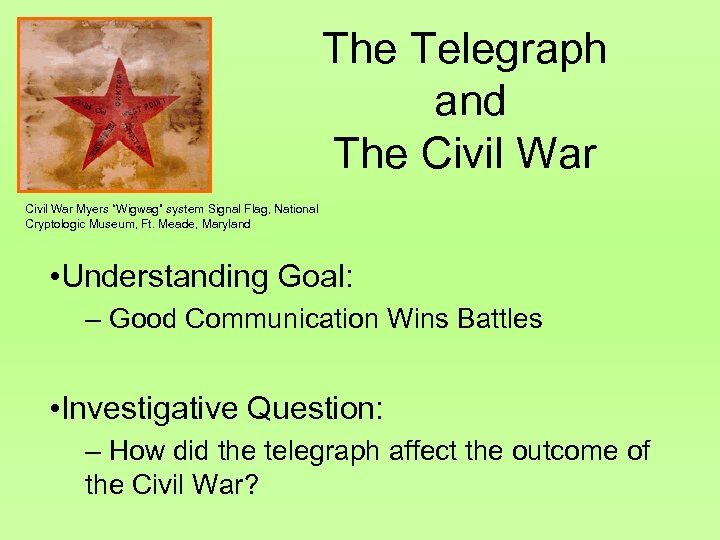 The Telegraph and The Civil War Myers “Wigwag” system Signal Flag, National Cryptologic Museum, Ft. Meade, Maryland • Understanding Goal: – Good Communication Wins Battles • Investigative Question: – How did the telegraph affect the outcome of the Civil War?
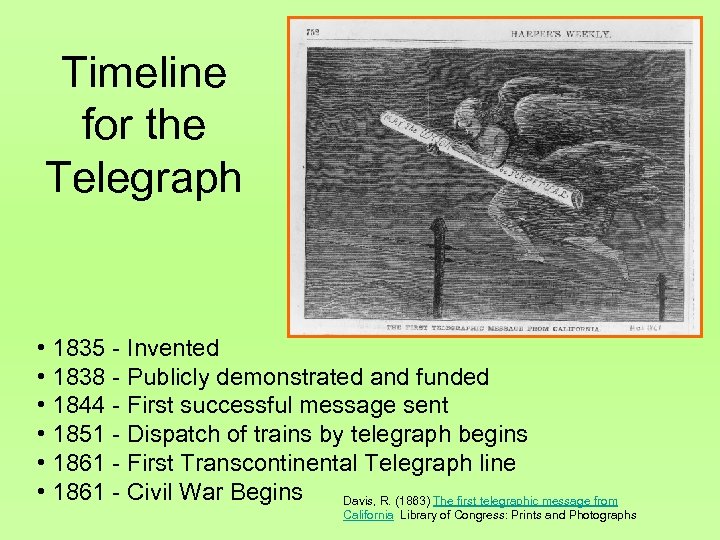 Timeline for the Telegraph • 1835 - Invented • 1838 - Publicly demonstrated and funded • 1844 - First successful message sent • 1851 - Dispatch of trains by telegraph begins • 1861 - First Transcontinental Telegraph line • 1861 - Civil War Begins Davis, R. (1863) The first telegraphic message from California Library of Congress: Prints and Photographs
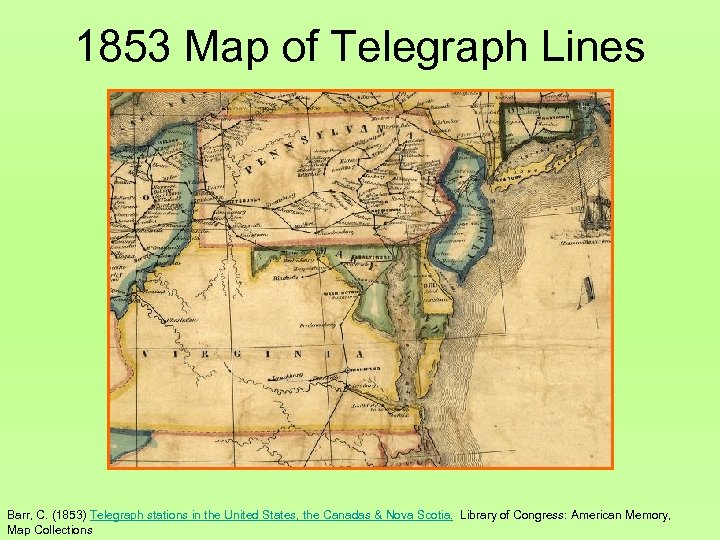 1853 Map of Telegraph Lines Barr, C. (1853) Telegraph stations in the United States, the Canadas & Nova Scotia. Library of Congress: American Memory, Map Collections
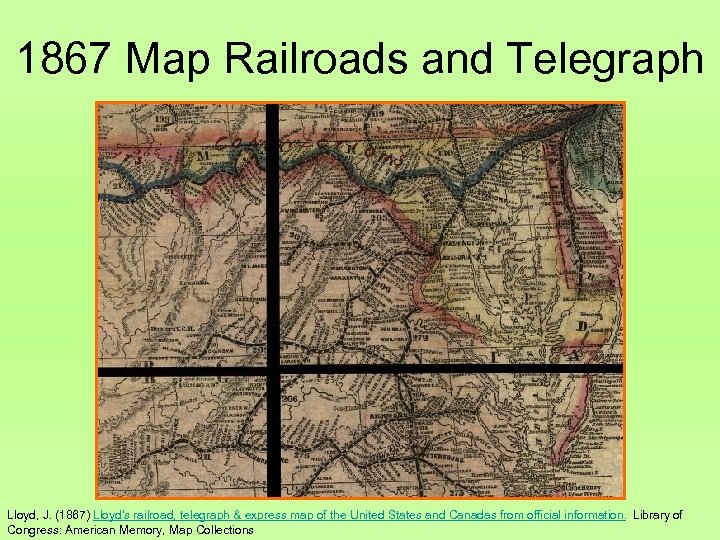 1867 Map Railroads and Telegraph Lloyd, J. (1867) Lloyd's railroad, telegraph & express map of the United States and Canadas from official information. Library of Congress: American Memory, Map Collections
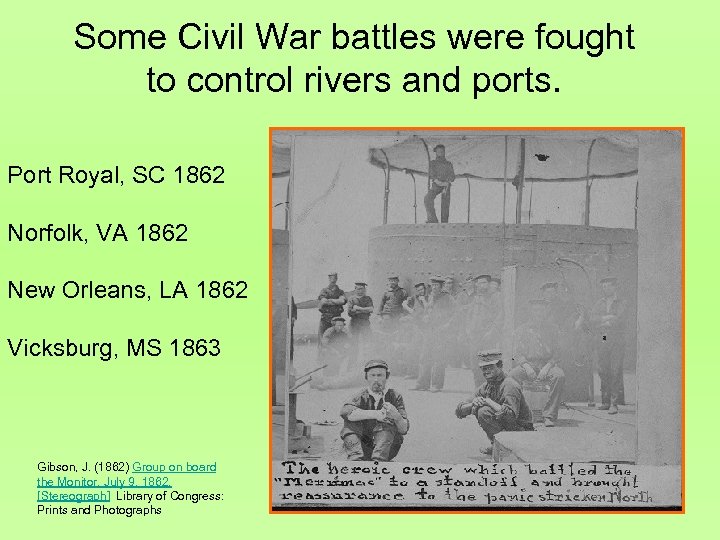 Some Civil War battles were fought to control rivers and ports. Port Royal, SC 1862 Norfolk, VA 1862 New Orleans, LA 1862 Vicksburg, MS 1863 Gibson, J. (1862) Group on board the Monitor, July 9, 1862. [Stereograph] Library of Congress: Prints and Photographs
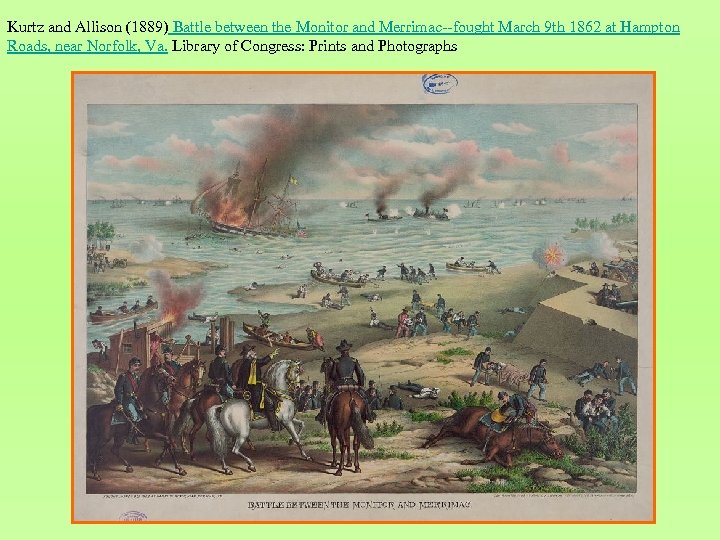 Kurtz and Allison (1889) Battle between the Monitor and Merrimac--fought March 9 th 1862 at Hampton Roads, near Norfolk, Va. Library of Congress: Prints and Photographs
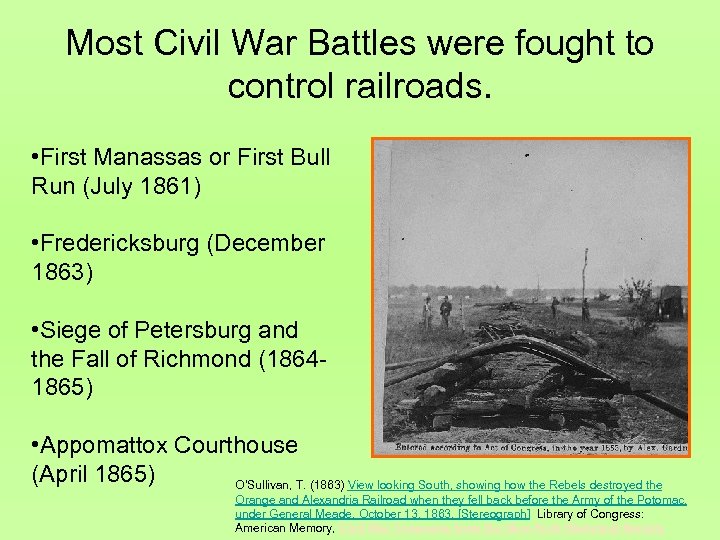 Most Civil War Battles were fought to control railroads. • First Manassas or First Bull Run (July 1861) • Fredericksburg (December 1863) • Siege of Petersburg and the Fall of Richmond (18641865) • Appomattox Courthouse (April 1865) O’Sullivan, T. (1863) View looking South, showing how the Rebels destroyed the Orange and Alexandria Railroad when they fell back before the Army of the Potomac, under General Meade, October 13, 1863. [Stereograph] Library of Congress: American Memory, Civil War Treasures from the New-York Historical Society
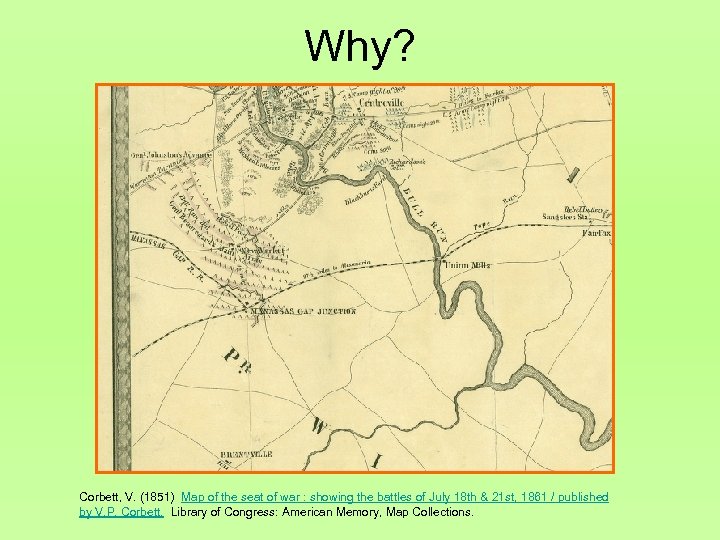 Why? Corbett, V. (1851) Map of the seat of war : showing the battles of July 18 th & 21 st, 1861 / published by V. P. Corbett. Library of Congress: American Memory, Map Collections.
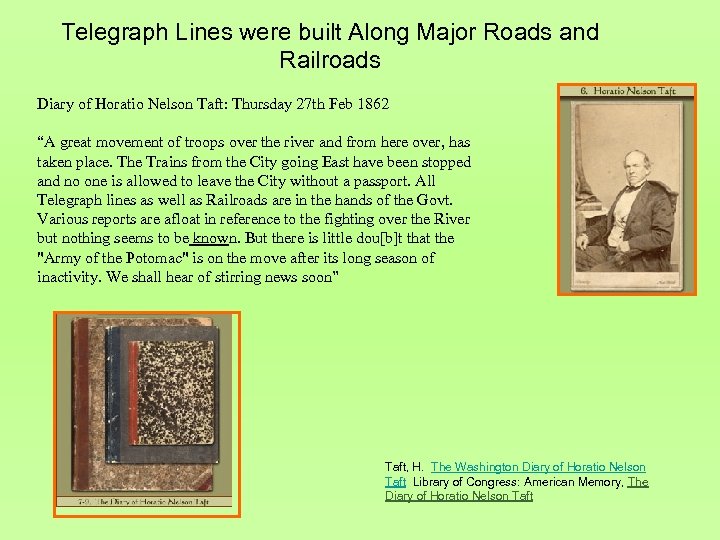 Telegraph Lines were built Along Major Roads and Railroads Diary of Horatio Nelson Taft: Thursday 27 th Feb 1862 “A great movement of troops over the river and from here over, has taken place. The Trains from the City going East have been stopped and no one is allowed to leave the City without a passport. All Telegraph lines as well as Railroads are in the hands of the Govt. Various reports are afloat in reference to the fighting over the River but nothing seems to be known. But there is little dou[b]t that the "Army of the Potomac" is on the move after its long season of inactivity. We shall hear of stirring news soon” Taft, H. The Washington Diary of Horatio Nelson Taft Library of Congress: American Memory, The Diary of Horatio Nelson Taft
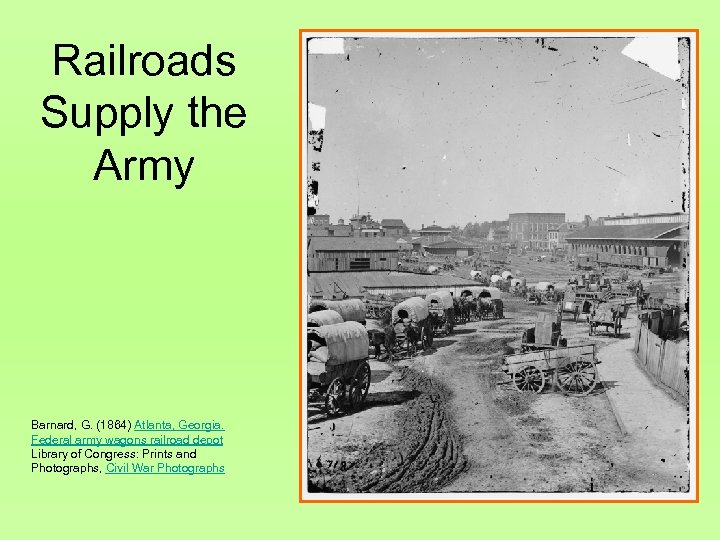 Railroads Supply the Army Barnard, G. (1864) Atlanta, Georgia. Federal army wagons railroad depot Library of Congress: Prints and Photographs, Civil War Photographs
![Gardner, A. (1863) [Aquia Creek Landing, Va. View of the Federal supply depot] Library](https://present5.com/presentation/d72535a7e4fa9112eee46bbf6610c724/image-11.jpg "Gardner, A. (1863) [Aquia Creek Landing, Va. View of the Federal supply depot] Library") Gardner, A. (1863) [Aquia Creek Landing, Va. View of the Federal supply depot] Library of Congress: American Memory, Selected Civil War Photographs, 1861 -1865.
Gardner, A. (1863) [Aquia Creek Landing, Va. View of the Federal supply depot] Library of Congress: American Memory, Selected Civil War Photographs, 1861 -1865.
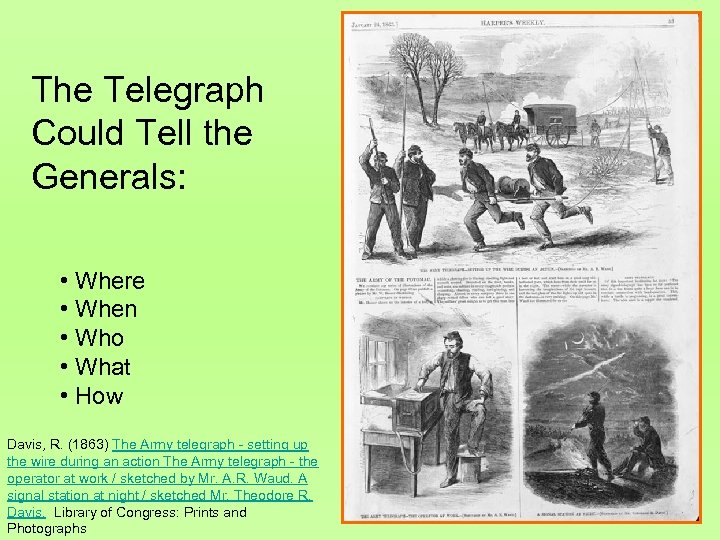 The Telegraph Could Tell the Generals: • Where • When • Who • What • How Davis, R. (1863) The Army telegraph - setting up the wire during an action The Army telegraph - the operator at work / sketched by Mr. A. R. Waud. A signal station at night / sketched Mr. Theodore R. Davis. Library of Congress: Prints and Photographs
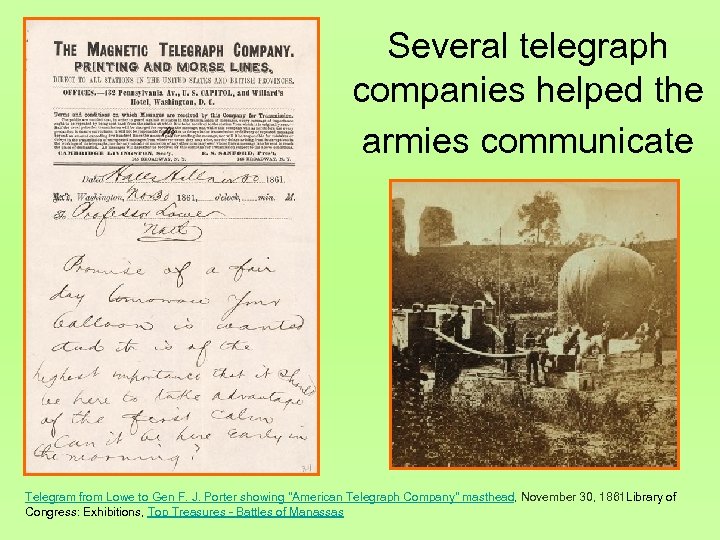 Several telegraph companies helped the armies communicate Telegram from Lowe to Gen F. J. Porter showing "American Telegraph Company" masthead, November 30, 1861 Library of Congress: Exhibitions, Top Treasures - Battles of Manassas
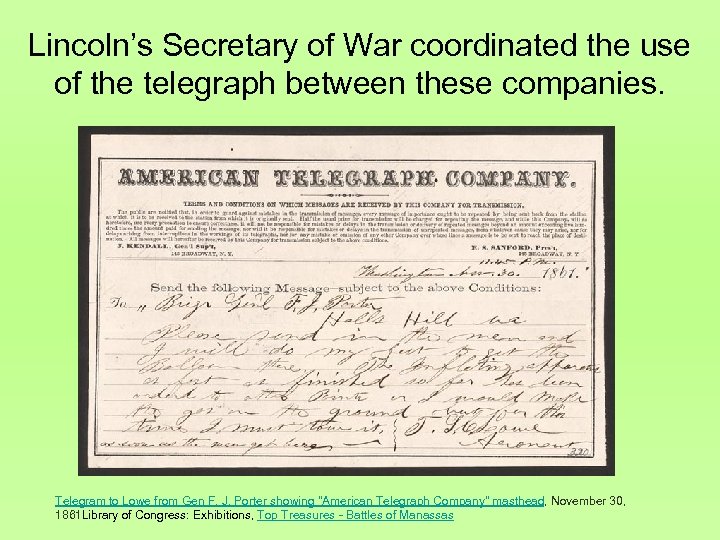 Lincoln’s Secretary of War coordinated the use of the telegraph between these companies. Telegram to Lowe from Gen F. J. Porter showing "American Telegraph Company" masthead, November 30, 1861 Library of Congress: Exhibitions, Top Treasures - Battles of Manassas
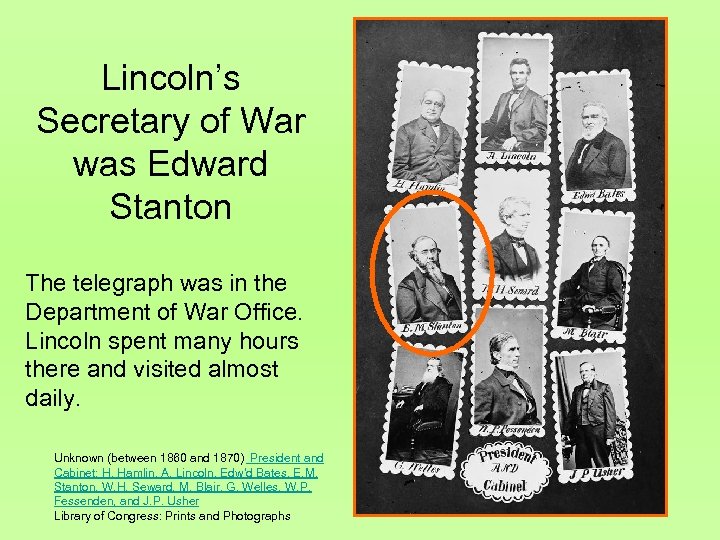 Lincoln’s Secretary of War was Edward Stanton The telegraph was in the Department of War Office. Lincoln spent many hours there and visited almost daily. Unknown (between 1860 and 1870) President and Cabinet: H. Hamlin, A. Lincoln, Edw'd Bates, E. M. Stanton, W. H. Seward, M. Blair, G. Welles, W. P. Fessenden, and J. P. Usher Library of Congress: Prints and Photographs
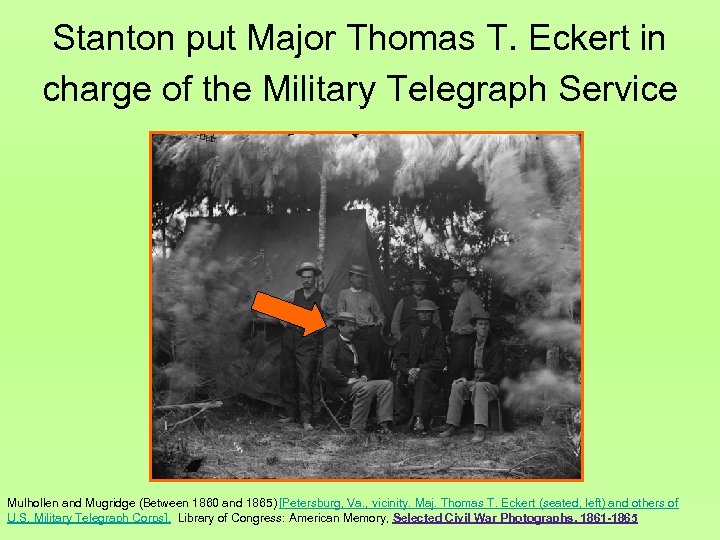 Stanton put Major Thomas T. Eckert in charge of the Military Telegraph Service Mulhollen and Mugridge (Between 1860 and 1865) [Petersburg, Va. , vicinity. Maj. Thomas T. Eckert (seated, left) and others of U. S. Military Telegraph Corps]. Library of Congress: American Memory, Selected Civil War Photographs, 1861 -1865
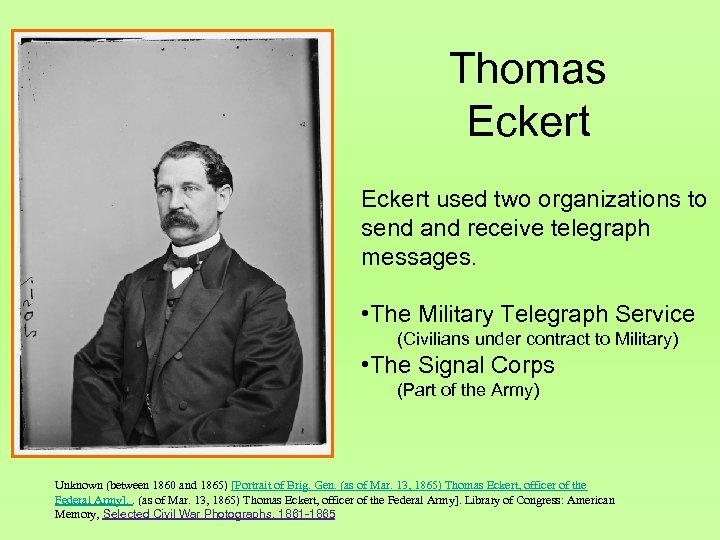 Thomas Eckert used two organizations to send and receive telegraph messages. • The Military Telegraph Service (Civilians under contract to Military) • The Signal Corps (Part of the Army) Unknown (between 1860 and 1865) [Portrait of Brig. Gen. (as of Mar. 13, 1865) Thomas Eckert, officer of the Federal Army]. Library of Congress: American Memory, Selected Civil War Photographs, 1861 -1865
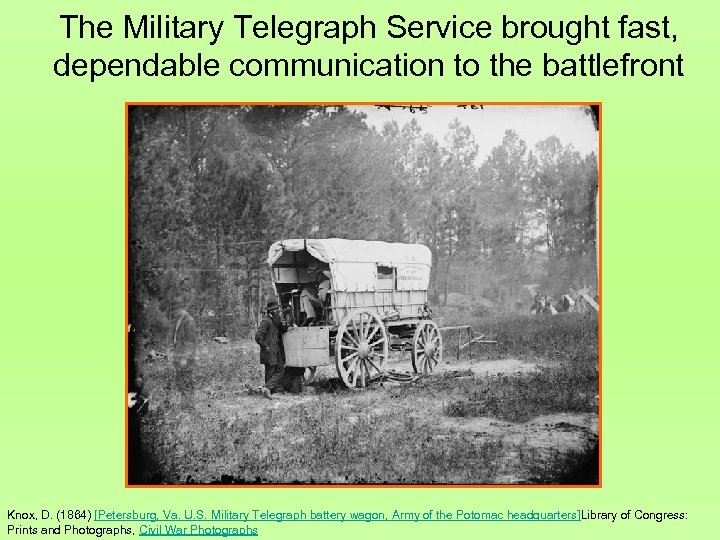 The Military Telegraph Service brought fast, dependable communication to the battlefront Knox, D. (1864) [Petersburg, Va. U. S. Military Telegraph battery wagon, Army of the Potomac headquarters]Library of Congress: Prints and Photographs, Civil War Photographs
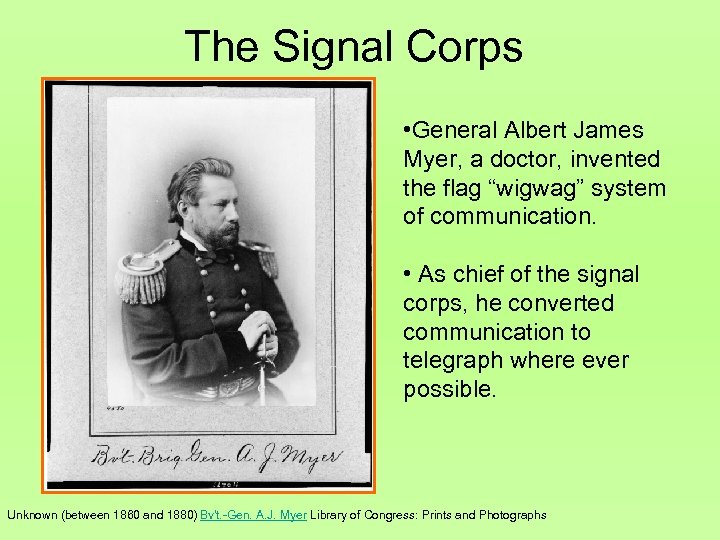 The Signal Corps • General Albert James Myer, a doctor, invented the flag “wigwag” system of communication. • As chief of the signal corps, he converted communication to telegraph where ever possible. Unknown (between 1860 and 1880) Bv't. -Gen. A. J. Myer Library of Congress: Prints and Photographs
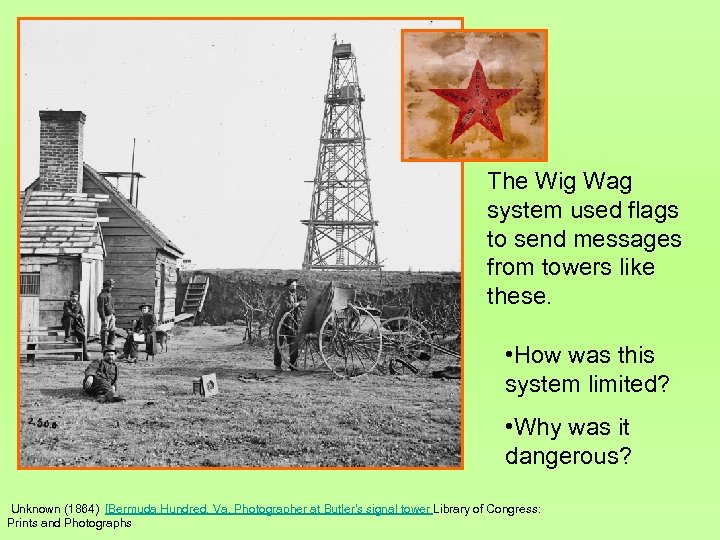 The Wig Wag system used flags to send messages from towers like these. • How was this system limited? • Why was it dangerous? Unknown (1864) [Bermuda Hundred, Va. Photographer at Butler's signal tower Library of Congress: Prints and Photographs
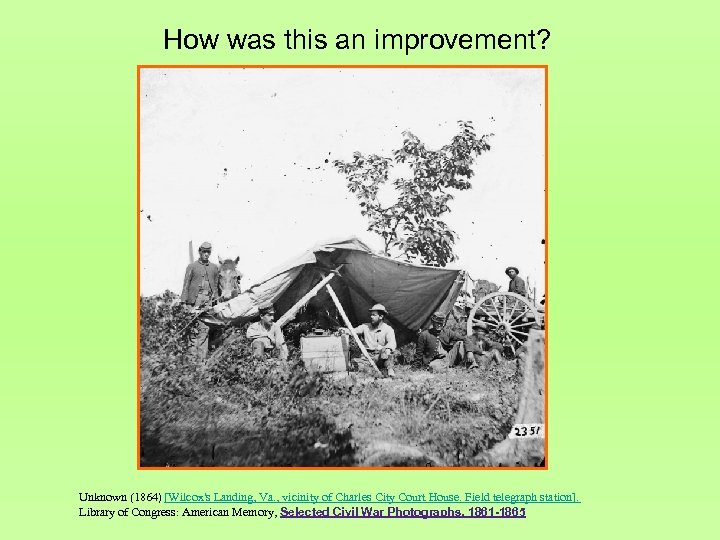 How was this an improvement? Unknown (1864) [Wilcox's Landing, Va. , vicinity of Charles City Court House. Field telegraph station]. Library of Congress: American Memory, Selected Civil War Photographs, 1861 -1865
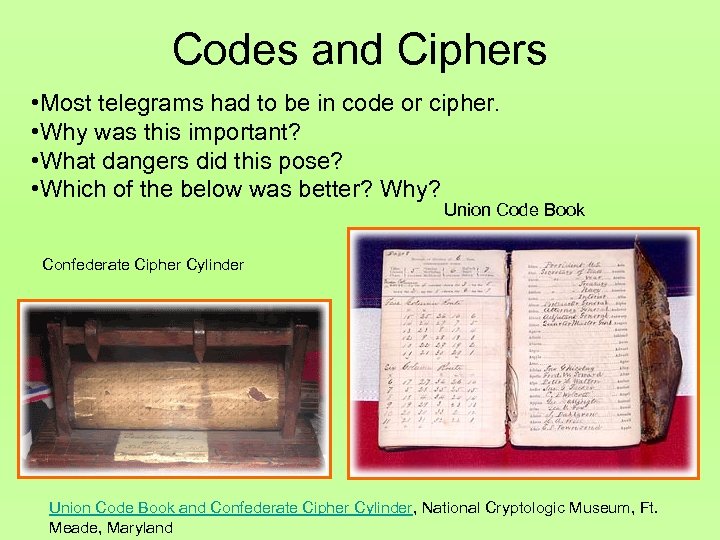 Codes and Ciphers • Most telegrams had to be in code or cipher. • Why was this important? • What dangers did this pose? • Which of the below was better? Why? Union Code Book Confederate Cipher Cylinder Union Code Book and Confederate Cipher Cylinder, National Cryptologic Museum, Ft. Meade, Maryland
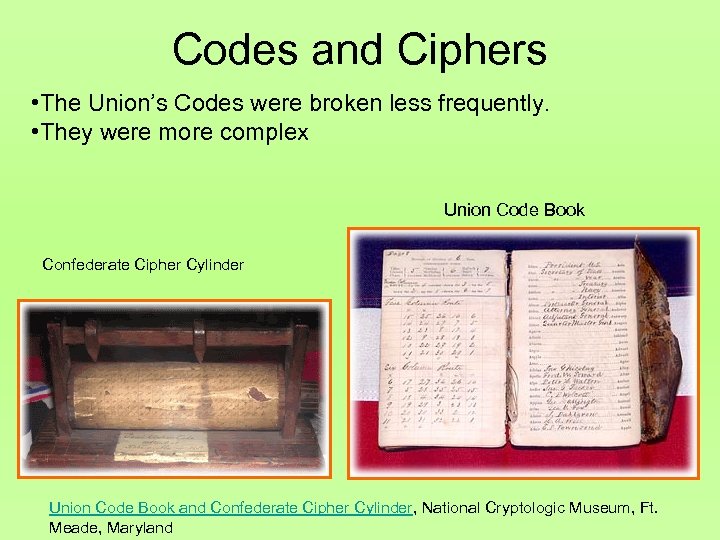 Codes and Ciphers • The Union’s Codes were broken less frequently. • They were more complex Union Code Book Confederate Cipher Cylinder Union Code Book and Confederate Cipher Cylinder, National Cryptologic Museum, Ft. Meade, Maryland
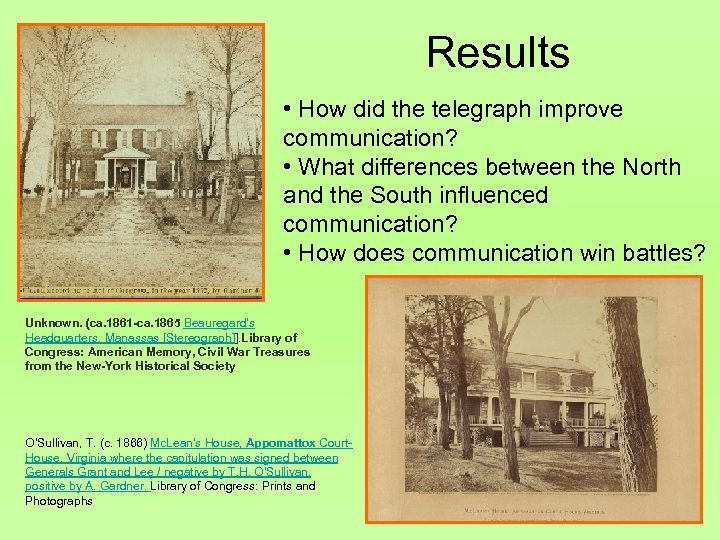 Results • How did the telegraph improve communication? • What differences between the North and the South influenced communication? • How does communication win battles? Unknown. (ca. 1861 -ca. 1865 Beauregard's Headquarters, Manassas [Stereograph]]. Library of Congress: American Memory, Civil War Treasures from the New-York Historical Society O’Sullivan, T. (c. 1866) Mc. Lean's House, Appomattox Court. House, Virginia where the capitulation was signed between Generals Grant and Lee / negative by T. H. O'Sullivan, positive by A. Gardner. Library of Congress: Prints and Photographs