 Скачать презентацию The Technical Decision for Transportation Management System by
4efeddbdc485ddc9c22550f0646eef07.ppt
- Количество слайдов: 17



The Technical Decision for Transportation Management System by KUANG YANG KOU ASSOCIATE PROFESSOR DEPARTMENT OF TRAFFIC SCIENCE IN CENTRAL POLICE UNIVERSITY 1
Background: 1. Impact: economy, air quality, energy use, land use, and quality of life. 2. Resource: finance ; fund. 3. Management:effective way balanced transportation systems that serve the diverse population equally. 2
Objectives: 1. Develop monitoring systems that provides data on which subsequent analyses, evaluations, and objective decision-making is based. 2. Create performance evaluations that assemble all the benefits, costs, and impacts of alternatives, so that informed judgments can be made concerning the merits of alternative actions. 3. Identify improvement strategies comprising of broad transportation choices available for evaluation. 4. Create a state-of-the-art decision support tools for prioritizing, programming, and implementing projects. 3
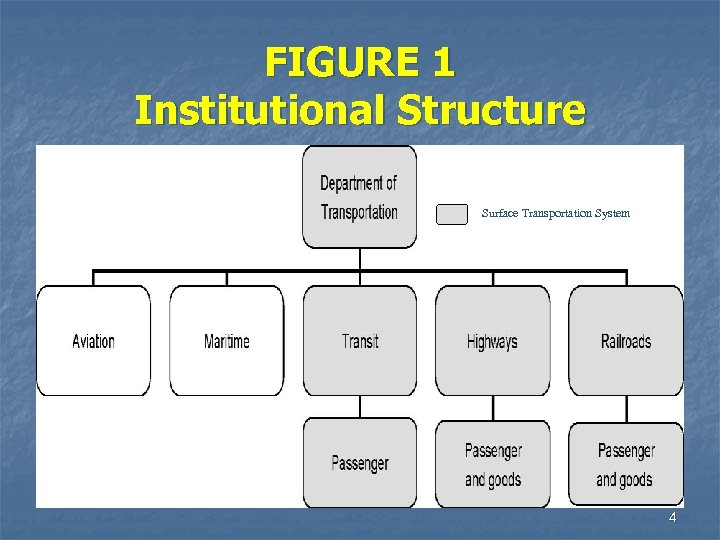
FIGURE 1 Institutional Structure Surface Transportation System 4
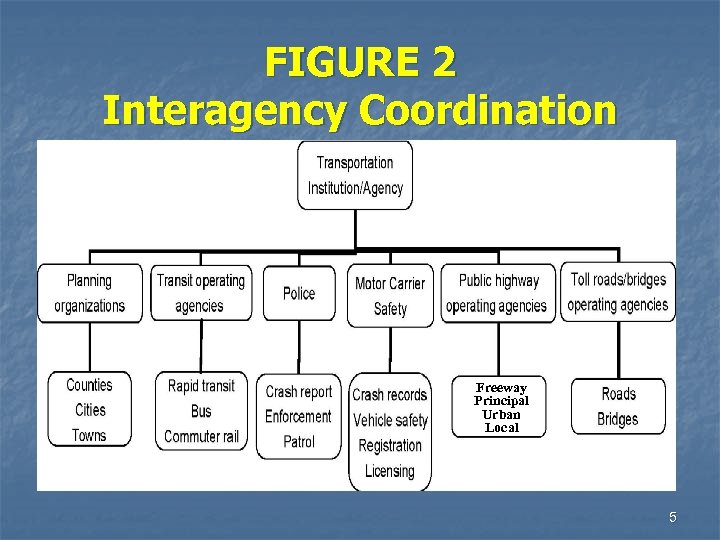
FIGURE 2 Interagency Coordination Freeway Principal Urban Local 5
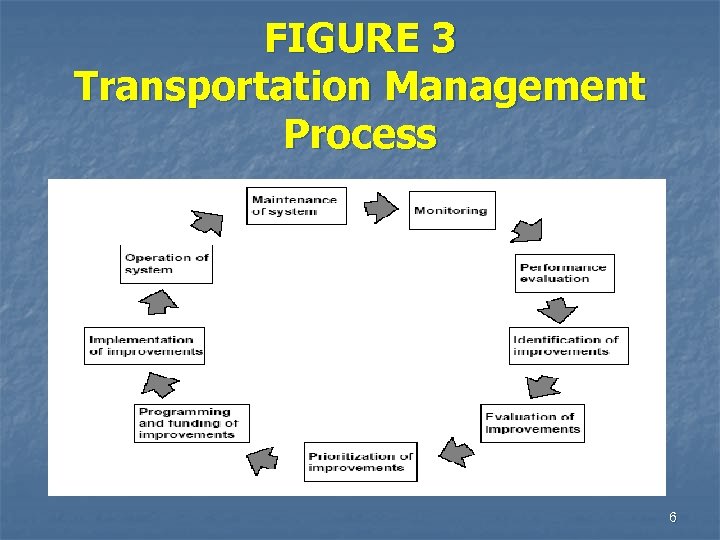
FIGURE 3 Transportation Management Process 6
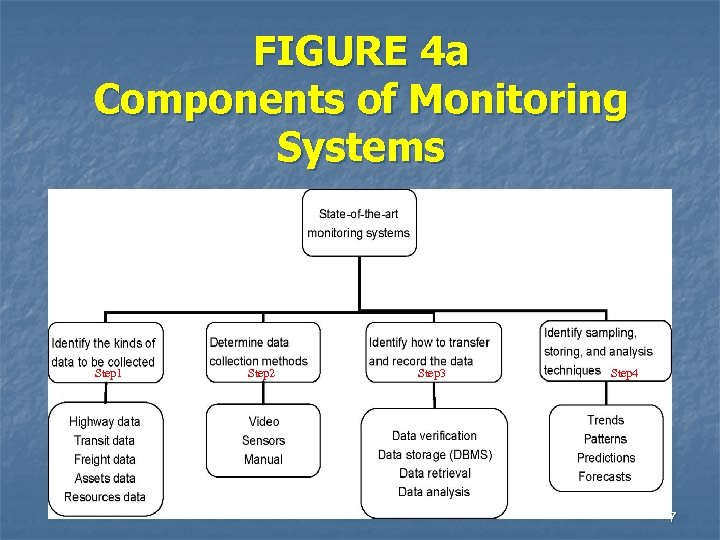
FIGURE 4 a Components of Monitoring Systems Step 1 Step 2 Step 3 Step 4 7
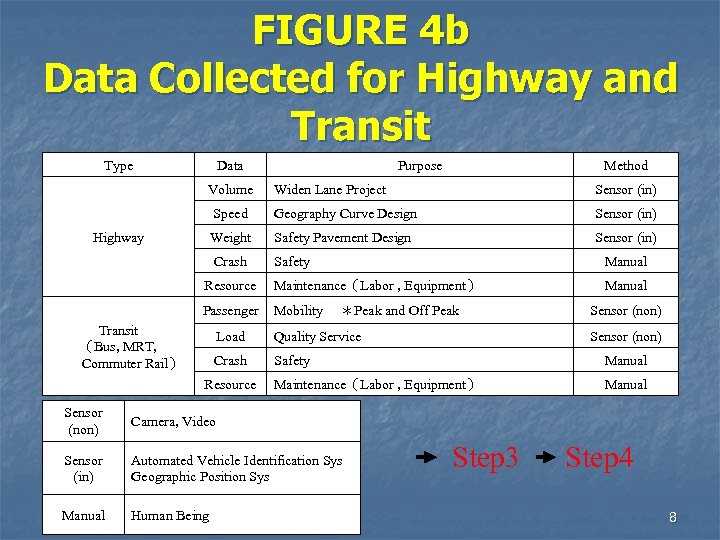
FIGURE 4 b Data Collected for Highway and Transit Type Data Volume Purpose Method Sensor (in) Speed Geography Curve Design Sensor (in) Weight Highway Widen Lane Project Safety Pavement Design Sensor (in) Crash Safety Manual Resource Maintenance(Labor , Equipment) Manual Passenger Mobility Transit (Bus, MRT, Commuter Rail) *Peak and Off Peak Sensor (non) Load Quality Service Crash Safety Manual Maintenance(Labor , Equipment) Manual Resource Sensor (non) Camera, Video Sensor (in) Automated Vehicle Identification Sys Geographic Position Sys Manual Human Being Sensor (non) Step 3 Step 4 8
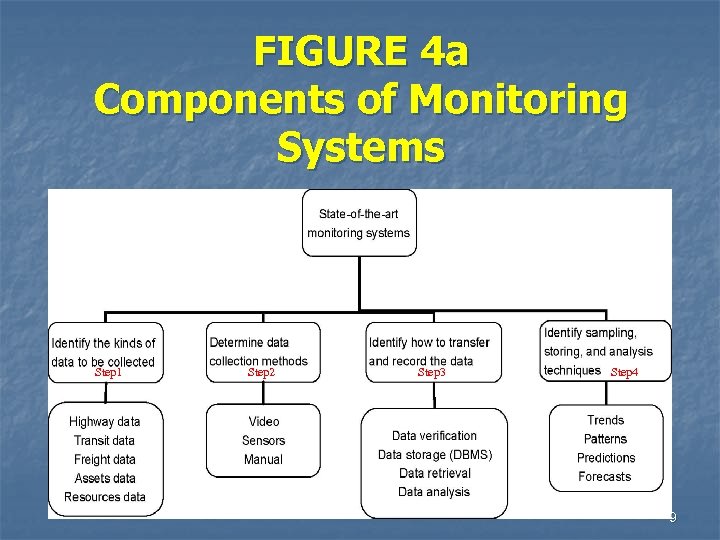
FIGURE 4 a Components of Monitoring Systems Step 1 Step 2 Step 3 Step 4 9
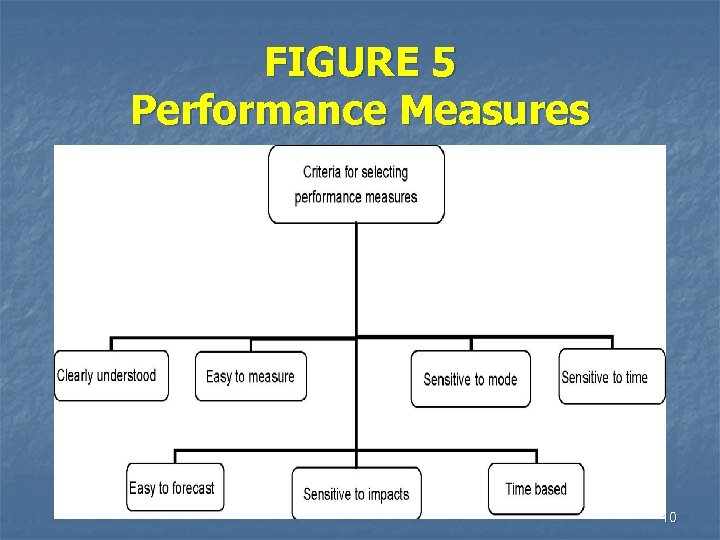
FIGURE 5 Performance Measures 10
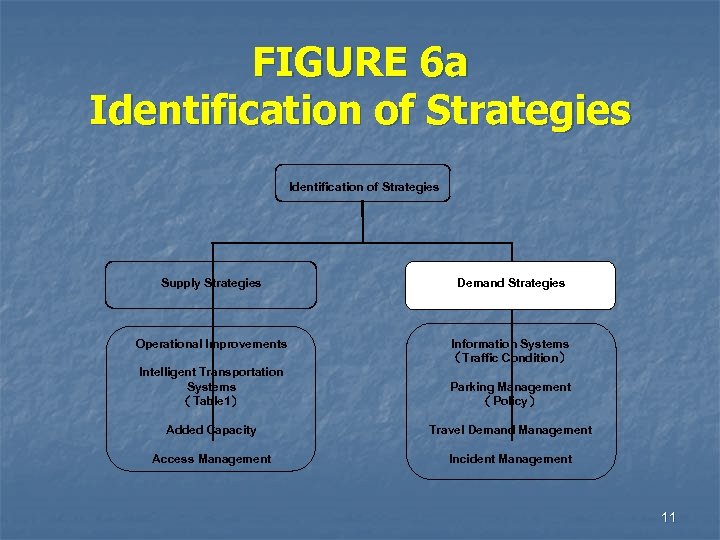
FIGURE 6 a Identification of Strategies Supply Strategies Demand Strategies Operational Improvements Information Systems (Traffic Condition) Intelligent Transportation Systems (Table 1) Parking Management (Policy) Added Capacity Travel Demand Management Access Management Incident Management 11
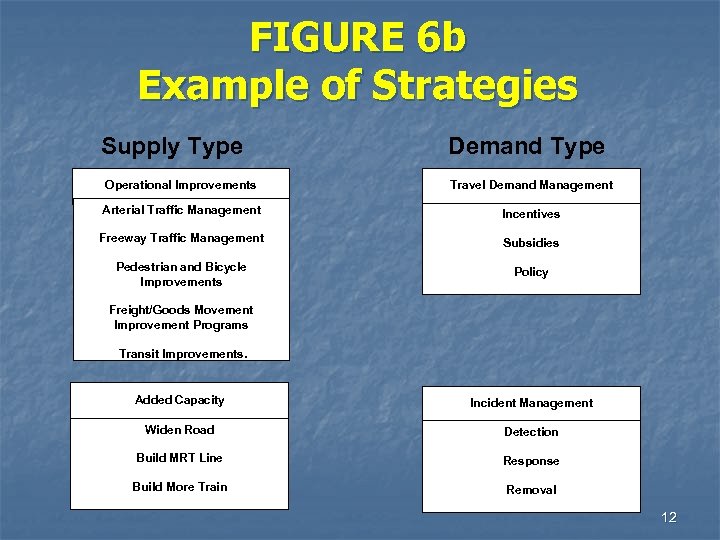
FIGURE 6 b Example of Strategies Supply Type Demand Type Operational Improvements Travel Demand Management Arterial Traffic Management Incentives Freeway Traffic Management Subsidies Pedestrian and Bicycle Improvements Policy Freight/Goods Movement Improvement Programs Transit Improvements. Added Capacity Incident Management Widen Road Detection Build MRT Line Response Build More Train Removal 12
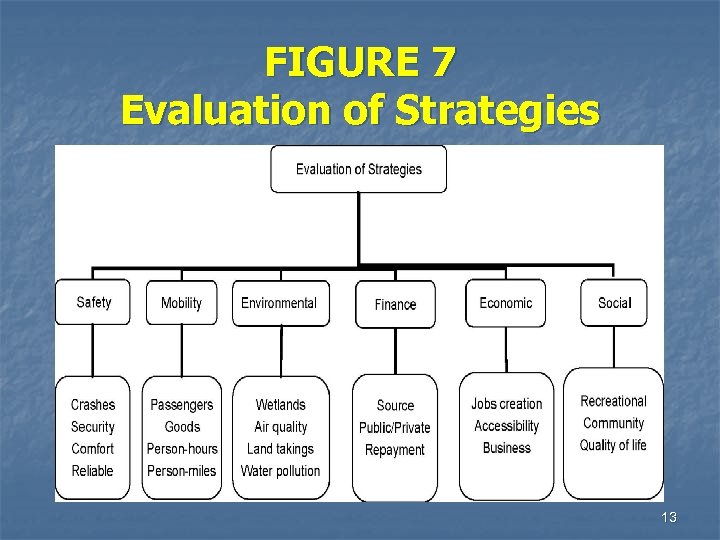
FIGURE 7 Evaluation of Strategies 13
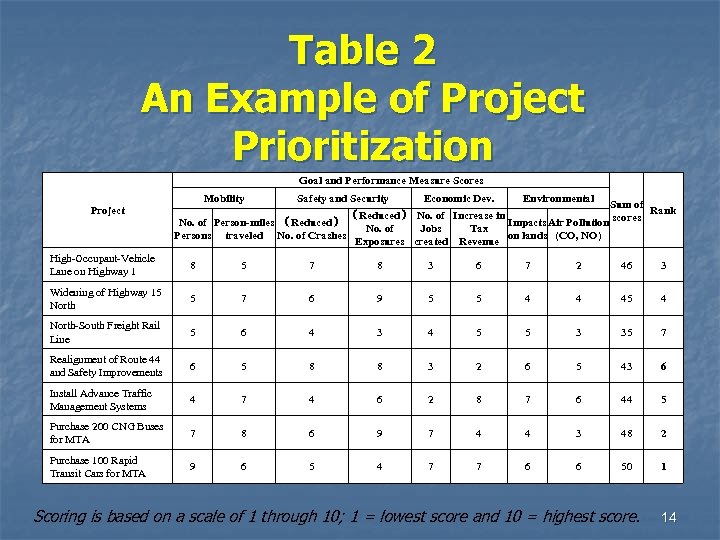
Table 2 An Example of Project Prioritization Goal and Performance Measure Scores Mobility Project Safety and Security Economic Dev. Environmental Sum of Rank (Reduced) No. of Increase in No. of Person-miles (Reduced) Impacts Air Pollution scores No. of Jobs Tax Persons traveled No. of Crashes on lands (CO, NO) Exposures created Revenue High-Occupant-Vehicle Lane on Highway 1 8 5 7 8 3 6 7 2 46 3 Widening of Highway 15 North 5 7 6 9 5 5 4 4 45 4 North-South Freight Rail Line 5 6 4 3 4 5 5 3 35 7 Realignment of Route 44 and Safety Improvements 6 5 8 8 3 2 6 5 43 6 Install Advance Traffic Management Systems 4 7 4 6 2 8 7 6 44 5 Purchase 200 CNG Buses for MTA 7 8 6 9 7 4 4 3 48 2 Purchase 100 Rapid Transit Cars for MTA 9 6 5 4 7 7 6 6 50 1 Scoring is based on a scale of 1 through 10; 1 = lowest score and 10 = highest score. 14
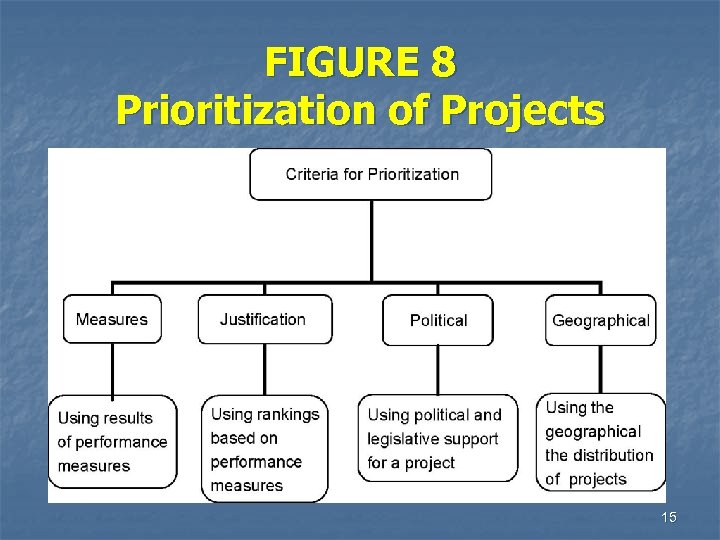
FIGURE 8 Prioritization of Projects 15
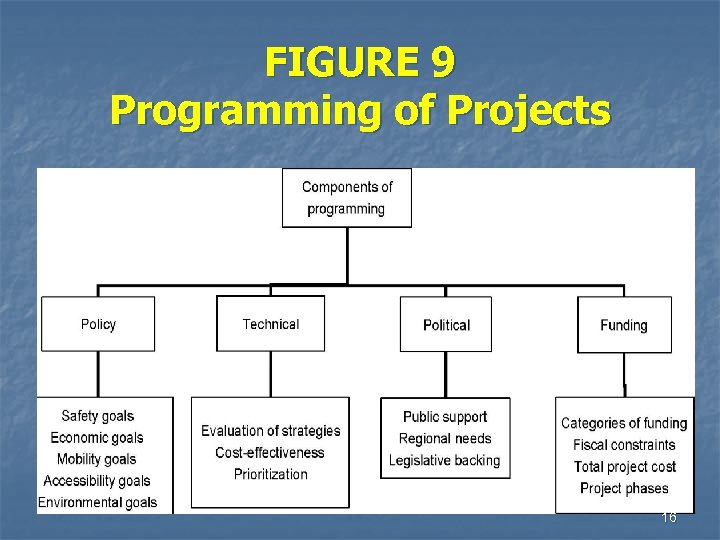
FIGURE 9 Programming of Projects 16
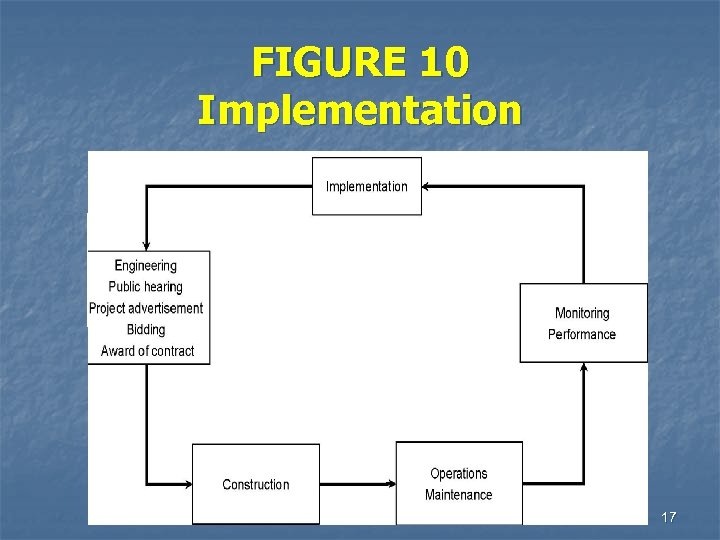
FIGURE 10 Implementation 17
Скачать презентацию The Technical Decision for Transportation Management System by
4efeddbdc485ddc9c22550f0646eef07.ppt