


 Скачать презентацию The Structure of Lexicon Tatyana A Gunina Natalya
The Structure of Lexicon.ppt
- Количество слайдов: 21
 The Structure of Lexicon Tatyana A. Gunina Natalya V. Khryapinskaya Irina F. Tedeyeva
 Presentation outline § § § § What is a lexeme? What is a semantic structure ? How is lexicon structured? What is a semantic field? Neatness vs. fuzziness? Is the stylistic factor important? In vino veritas, or truth comes out from wine!
 Presentation outline § § § § What is a lexeme? What is a semantic structure ? How is lexicon structured? What is a semantic field? Neatness vs. fuzziness? Is the stylistic factor important? In vino veritas, or truth comes out from wine!
 What is a lexeme? “A lexeme is a fundamental unit of the vocabulary of a language” [Mid-20 th century. Coined from lexicon + -eme. ]
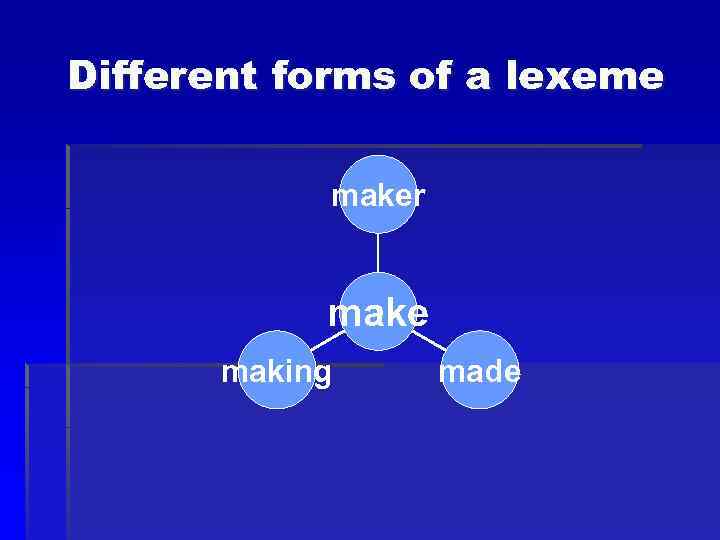 Different forms of a lexeme maker make making made
 What is a semantic structure? It is a network of meaning relationships which bind lexemes together
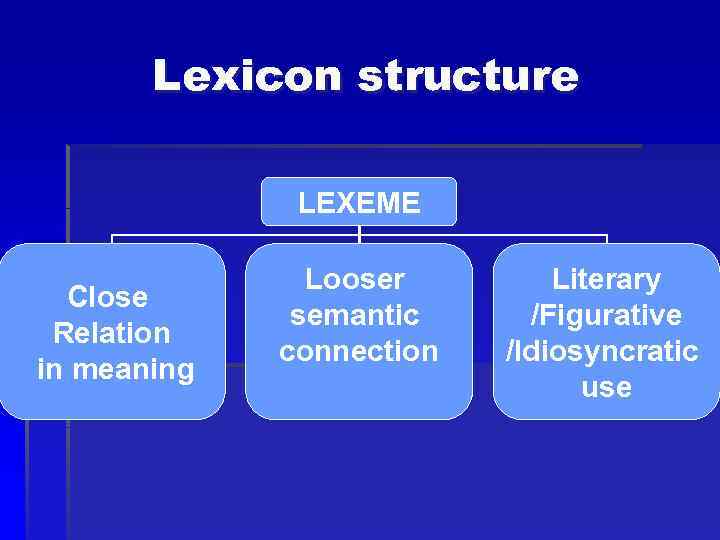 Lexicon structure LEXEME Close Relation in meaning Looser semantic connection Literary /Figurative /Idiosyncratic use
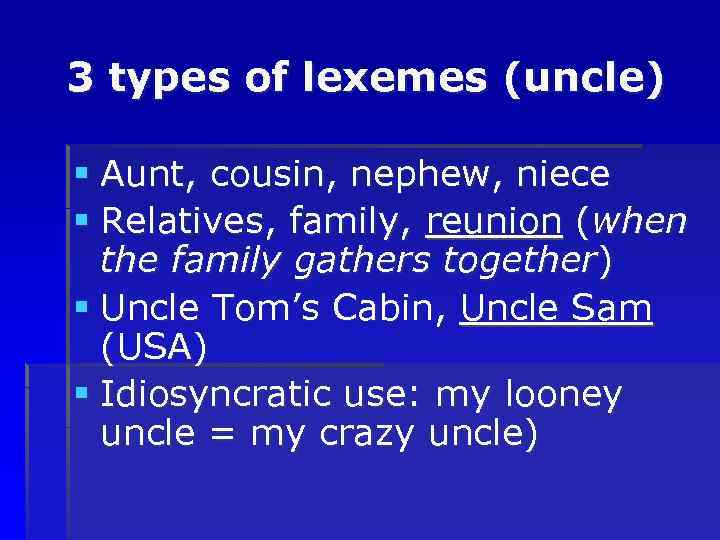 3 types of lexemes (uncle) § Aunt, cousin, nephew, niece § Relatives, family, reunion (when the family gathers together) § Uncle Tom’s Cabin, Uncle Sam (USA) § Idiosyncratic use: my looney uncle = my crazy uncle)
 Presentation outline § § § § What is a lexeme? What is a semantic structure ? How is lexicon structured? What is a semantic field? Neatness vs. fuzziness? Is the stylistic factor important? In vino veritas, or truth comes out from wine!
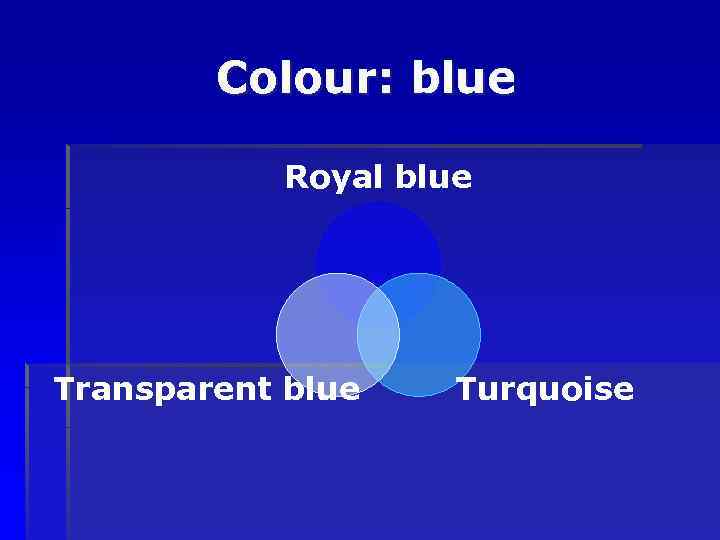
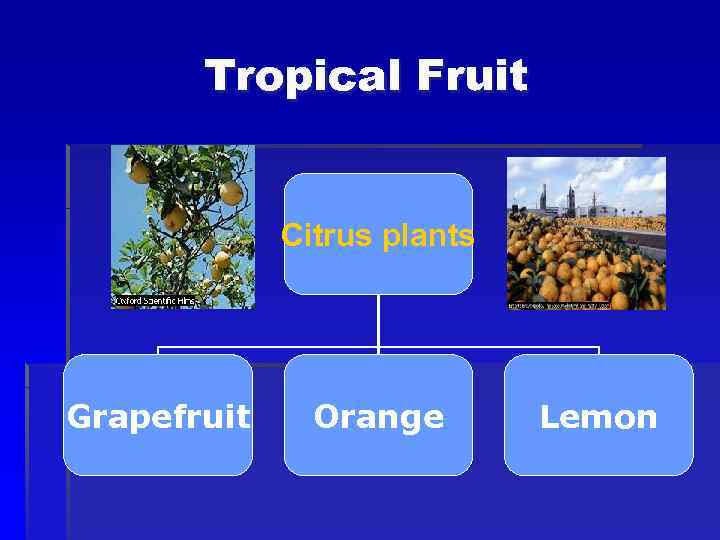
 What is a semantic field? It is a named area of meaning in which lexemes interrelate and define each other in specific ways
 Colour: blue Royal blue Transparent blue Turquoise
 Tropical Fruit Citrus plants Grapefruit Orange Lemon
 Neatness vs fuzziness § § § NOISE: murmur , din , blare , clamour clatter, hubbub , racket sound , uproar talk and rumours atmospheric noise big noise
 Presentation outline § § § § What is a lexeme? What is a semantic structure ? How is lexicon structured? What is a semantic field? Neatness vs. fuzziness? Is the stylistic factor important? In vino veritas, or truth comes out from wine!
 What is wrong with a stylistic factor, or what is so special in the vocabulary of wine? § Figurative lexeme application § Numerous associations § Subjectivity of topic
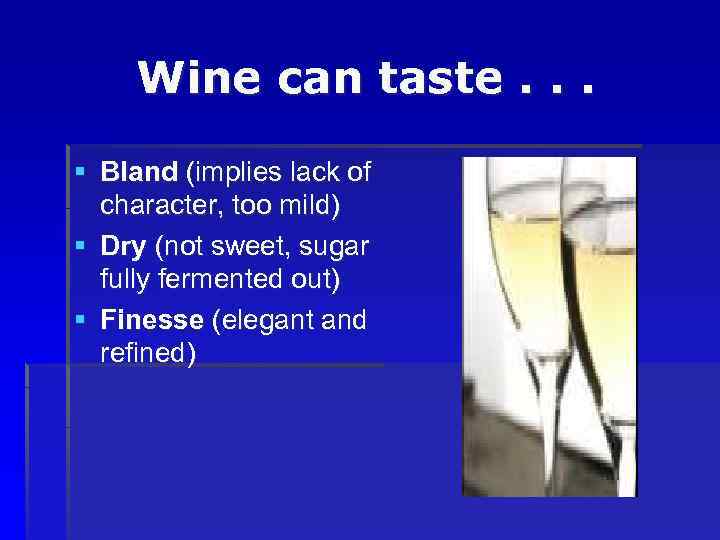 Wine can taste. . . § Bland (implies lack of character, too mild) § Dry (not sweet, sugar fully fermented out) § Finesse (elegant and refined)
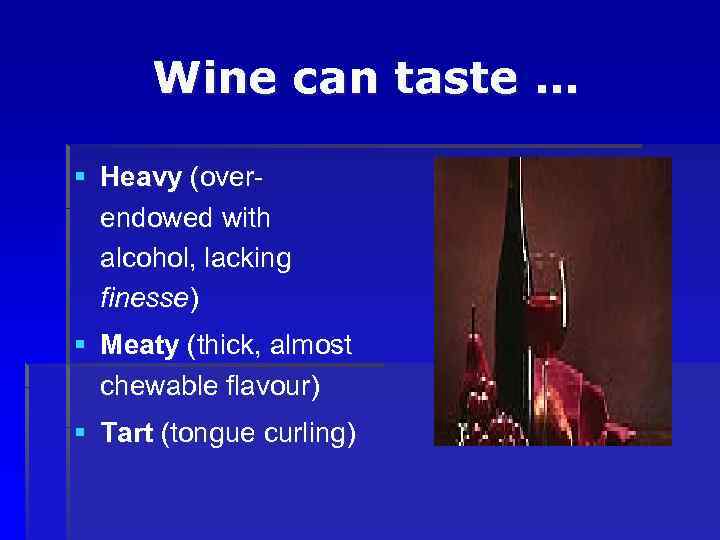 Wine can taste … § Heavy (overendowed with alcohol, lacking finesse) § Meaty (thick, almost chewable flavour) § Tart (tongue curling)
 IN VINO VERITAS, OR TRUTH COMES OUT FROM WINE!
 Conclusions § A lexeme: a fundamental vocabulary unit § A semantic structure as a lexeme network § A semantic field as an area of lexemes’ interrelation § The vocabulary of wine: figurative, ambiguous, subjective, and. . .
 LOVELY!
 Thank you!