


 Скачать презентацию The Stealth Geriatrician How to learn what you
d1319e6ae7a1aa1dfc239566eb2cda6e.ppt
- Количество слайдов: 35
 The Stealth Geriatrician: How to learn what you need to know from your patients Tiffany Shubert, MPT Anthony Caprio, MD
 Course Objectives n n Identify four key risk factors for falling in older adults Perform a comprehensive geriatric functional assessment Evaluate the need for referral “Build a Team” – Determine disciplines and community resources to aid in patient health management
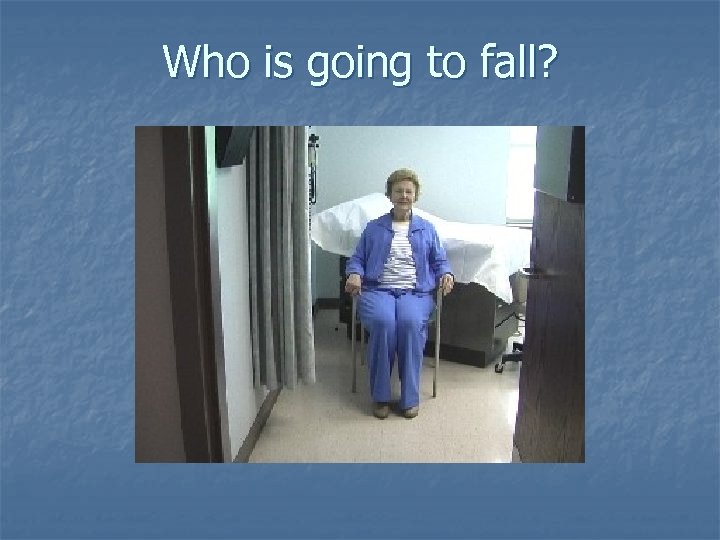 Who is going to fall?
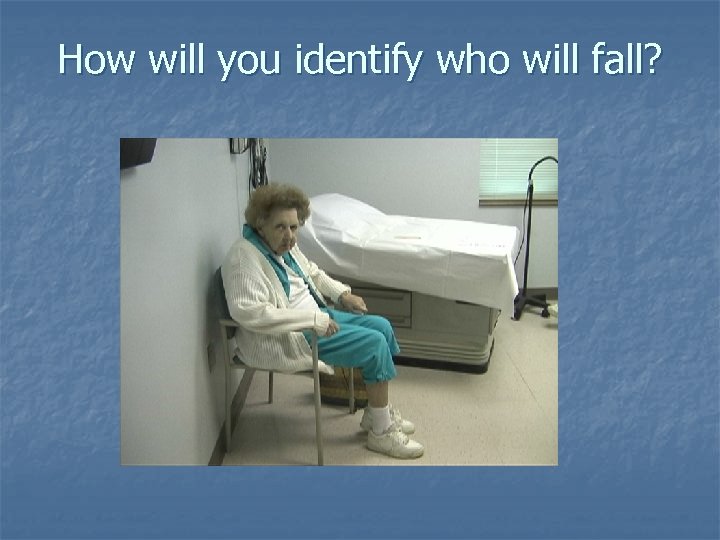 How will you identify who will fall?
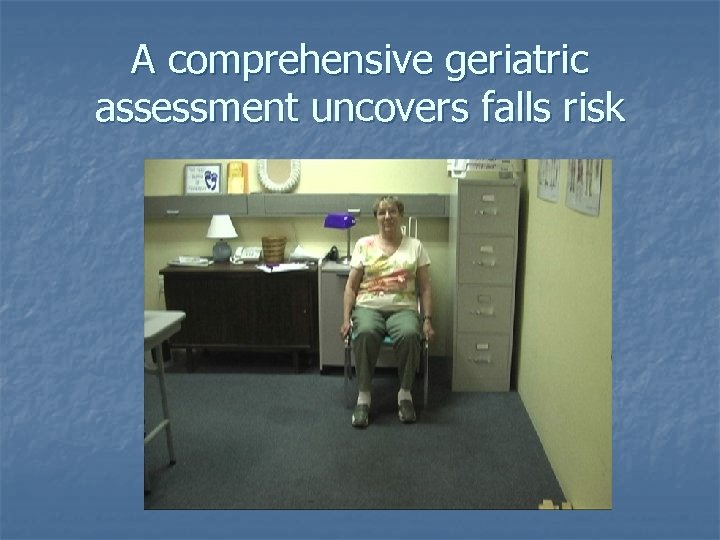 A comprehensive geriatric assessment uncovers falls risk
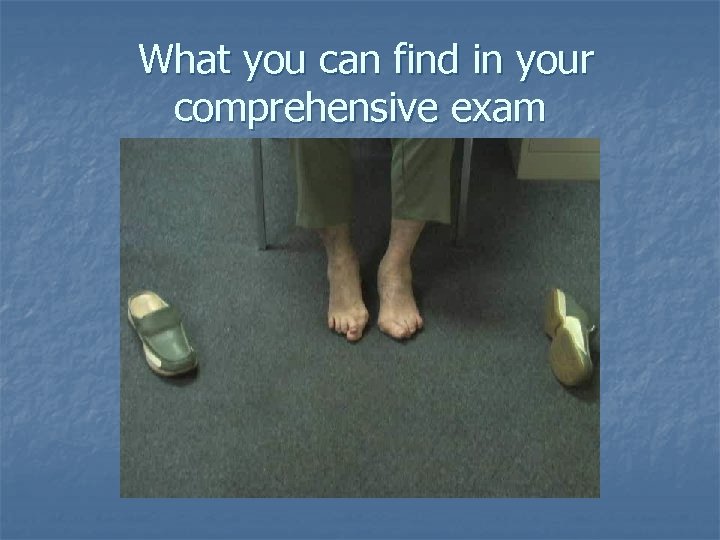 What you can find in your comprehensive exam If you take their shoes off!
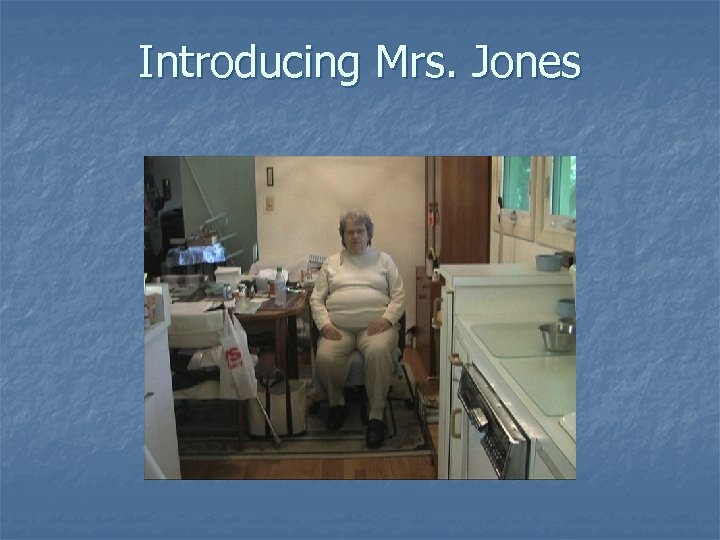 Introducing Mrs. Jones
 Chief Complaint n It depends on who you ask: n Patient: “No complaints, I feel fine” n Daughter: “Difficulty getting around the house, I am afraid she may fall” n MD: “Blood pressure should be better controlled”
 History of Present Illness n What do you want to know? n Changes in medications n Trips to the opthamologist n Trips to the ER n Changes in mood/activity levels n Previous falls n Consult with family members
 Past Medical History Hypertension Paroxysmal Atrial Fibrillation Chronic Renal Insufficiency Anxiety/Depression “Dizziness” Osteoporosis
 Medication List n n n Metoprolol Hydrochlorothiazide Digoxin Warfarin Sertraline n n n Diazepam Zolpidem Meclizine Fosinopril Alendronate
 Medication Review n > 4 Drugs = Increased risk of falls n Red Flags – Classes that increase falls risk n Benzodiazepines (short and long-acting agents) n Antidepressants (tricyclics and SSRIs) n Antipsychotics n Anticonvulsants n Opioids n Antispasmodics n Over the counter medications
 Social History n What do you want to know? n Living Situation n Type of house? Stairs? ADLs, IADLs Social Supports n Economic Status n Smoke/Drink n Current Activity Level n Fear of Falling n
 Review of Systems n Systems vs. Syndromes Organ-based review may give you limited information n Geriatric syndromes encompass multiple organ systems n n Falls Dizziness, Vision, hearing n Cardiovascular n Orthopedic problems, arthritis, neuropathy n Depression, cognitive impairment n
 Activities of Daily Living: Ask or Observe n ADLs n IADLS n Transferring n Transportation n Toileting n Use the phone n Bathing n Buy groceries n Dressing n Meal preparation n Continence n Housework n Feeding n Medication n Pay bills
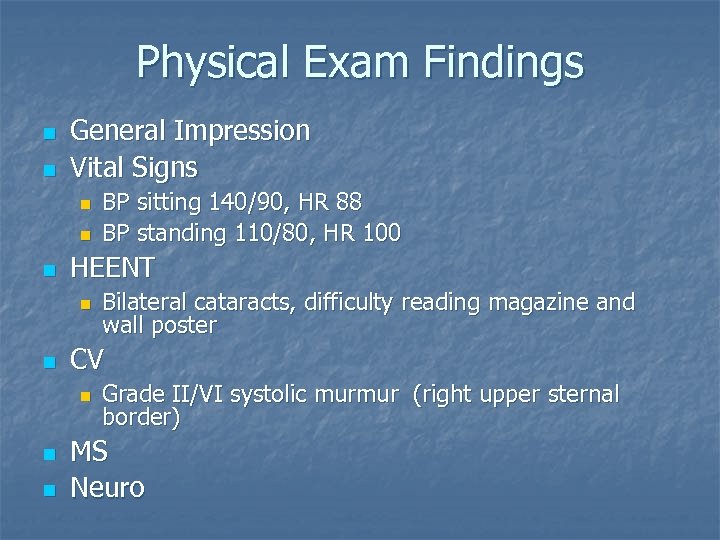 Physical Exam Findings n n General Impression Vital Signs n n n HEENT n n n Bilateral cataracts, difficulty reading magazine and wall poster CV n n BP sitting 140/90, HR 88 BP standing 110/80, HR 100 Grade II/VI systolic murmur (right upper sternal border) MS Neuro
 Pain n Pain assessment n Pain management
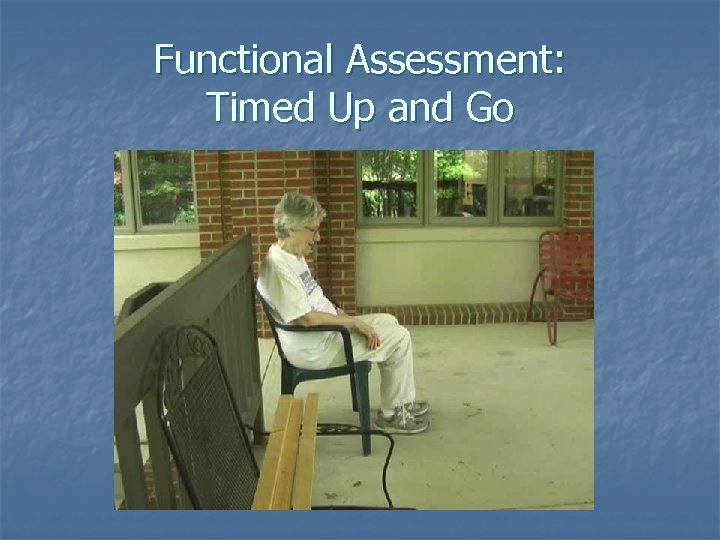 Functional Assessment: Timed Up and Go
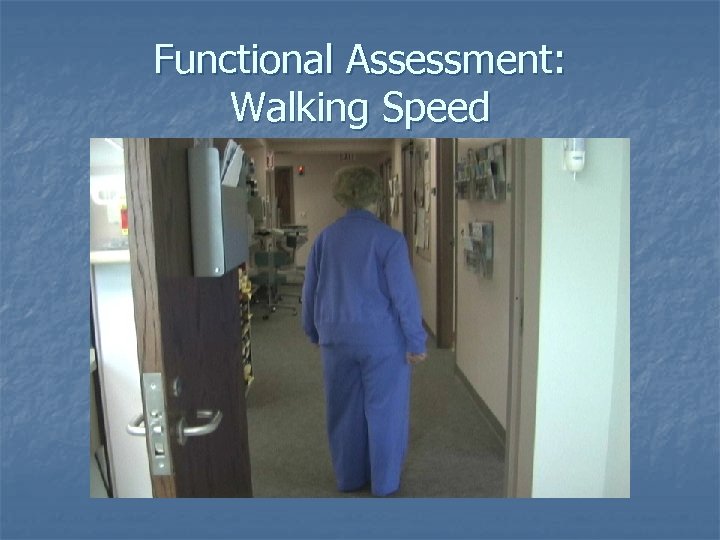 Functional Assessment: Walking Speed
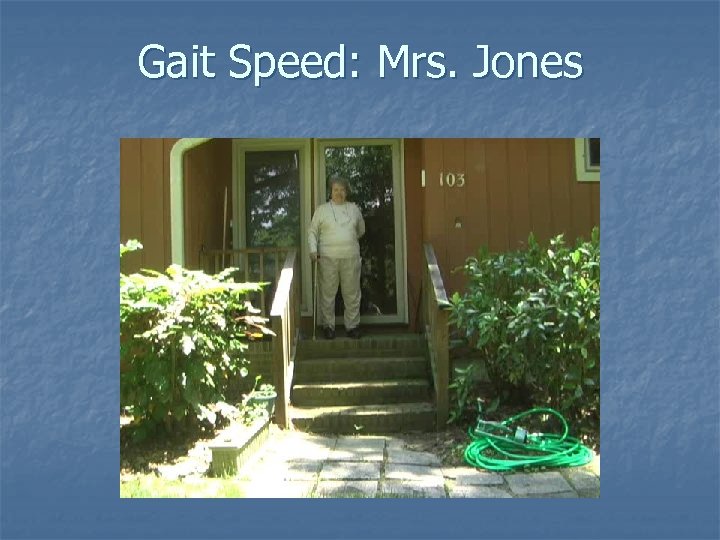 Gait Speed: Mrs. Jones
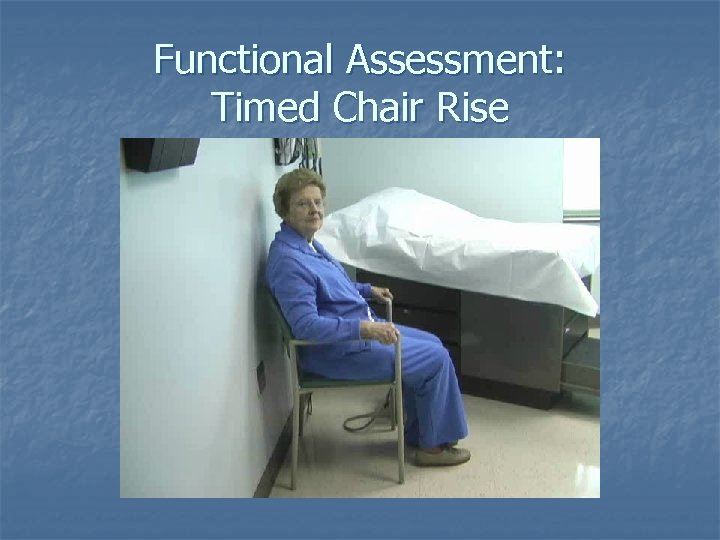 Functional Assessment: Timed Chair Rise
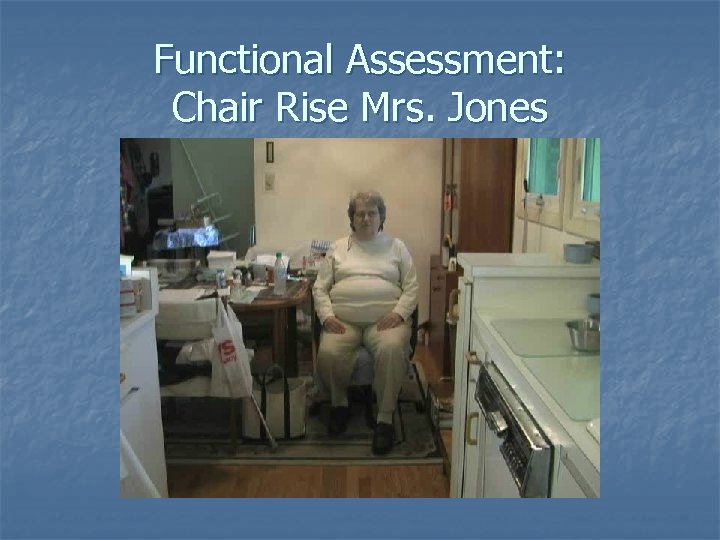 Functional Assessment: Chair Rise Mrs. Jones
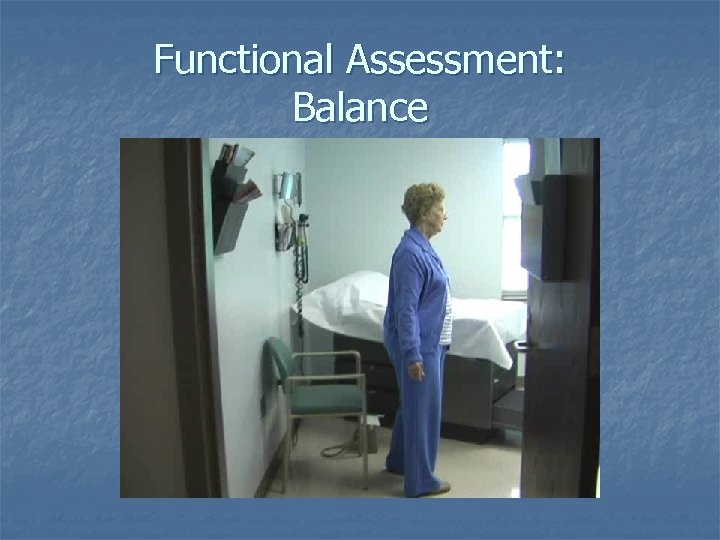 Functional Assessment: Balance
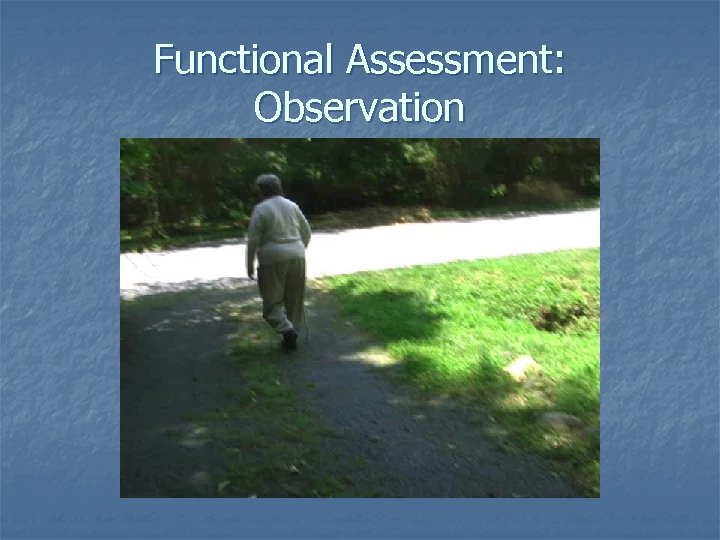 Functional Assessment: Observation
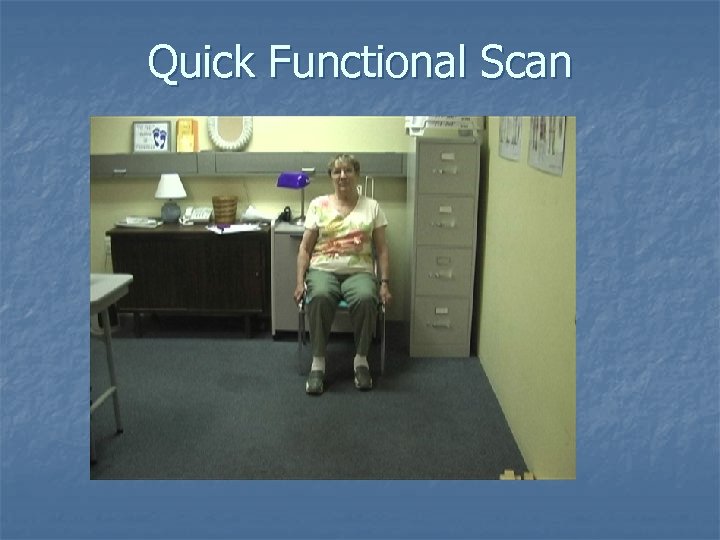 Quick Functional Scan
 Functional Assessment n What Do You Learn? n How Do You Assess? n Referral
 Cognitive Assessment n Mini Mental State Exam n Clock Draw Test
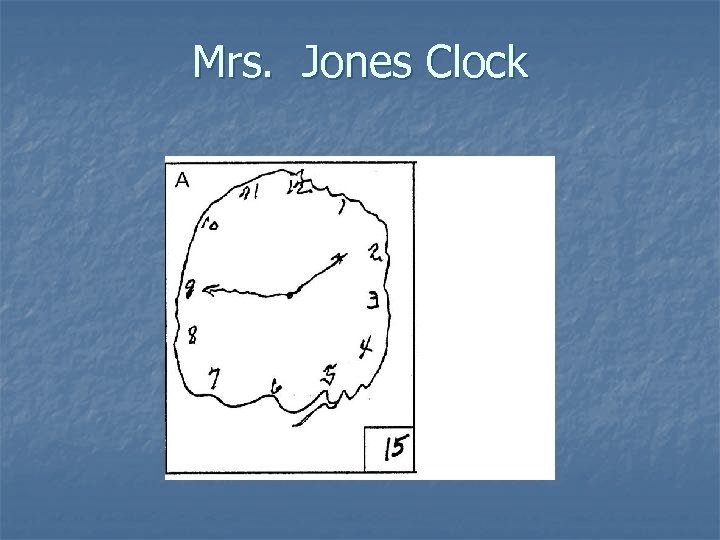 Mrs. Jones Clock
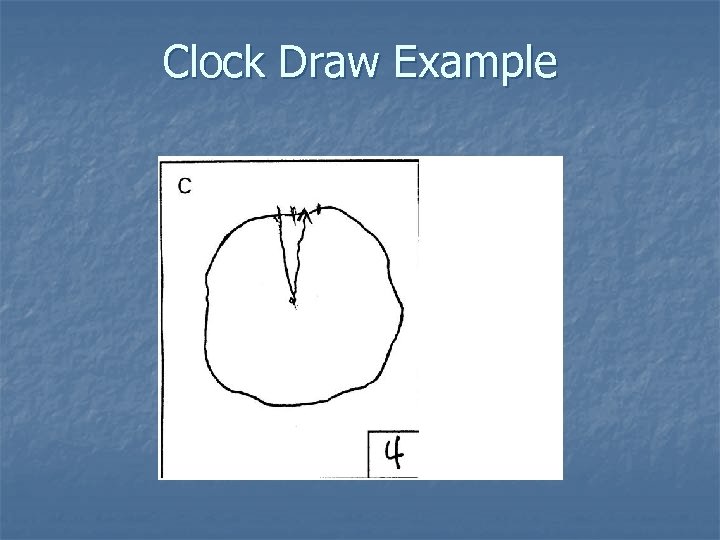 Clock Draw Example
 Home Safety Evaluation n Use an environmental assessment sheet n Occupational therapy n Financial difficulties may be culprit
 Labs n Volume depletion n Drug effects and levels n n n B 12, TSH Occult Infections n n PT/INR Digoxin Neuropathy n n CBC (anemia) Chemistries (BUN, Cr, Na) UA, CBC Vitamin D level
 Assessment: Mrs. Jones n What are the problems? n History of falls n 3 of the 4 risk factors for falls n Leg muscle weakness, poor walking, polypharmacy n Orthostatic Hypotension n Osteoporosis
 Plan: Mrs. Jones n What will you do about it? Fix orthostasis n Address osteoporosis n Modify medications n n Who will you refer to? Occupational Therapy for a home safety eval n Physical Therapy for leg strengthening, gait training, and assessment for assistive device n Consult with pharmacy about current medication list and insurance coverage n
 Synthesis n n Evaluating major risk factors for falls is fundamental to a geriatric assessment A functional assessment will identify individuals at risk for falls A functional assessment can (and should) be done with your older patients Refer to other disciplines to best manage complex older adults
 Practice n Today – work with Carol Woods Residents n n Physical, Cognitive, and Medication Assessment On the wards Perform at least one mini-Mental and clock draw n Shadow a physical therapist and perform 1 -2 functional assessments n Identify which of your patients are at risk for falls n