


 Скачать презентацию The Spectacular Spectrum College Students and a New
acdf7d769b47bcedf46e7ee07e121a7c.ppt
- Количество слайдов: 32
 The Spectacular Spectrum: College Students and a New Way of Understanding Jane Thierfeld Brown, Ed. D
 What’s it Like to Think Like Me? • Distractible • Unable to “know” what other’s want from me • Highly knowledgeable about certain topics • Concrete – black and white • Excellent memory from a long time ago • Problems generalizing across settings • Rule-bound Wolf, Thierfeld Brown, King, Bork, 2012 College. Autism. Spectrum. com Do Not Reproduce
 What’s It Like to Learn Like Me? • • • Disorganized Concept of time Singular learning style Sequencing Executive functioning problems • Poor judgment and decision making • Inflexible thinking Wolf, Thierfeld Brown, King, Bork, 2012 College. Autism. Spectrum. com Do Not Reproduce
 I… • Could have written the textbook • Don’t turn in my homework • Jump out of my chair to correct my professors • Can’t speak when called on in class • Want you to get to know me Wolf, Thierfeld Brown, King, Bork, 2012 College. Autism. Spectrum. com Do Not Reproduce
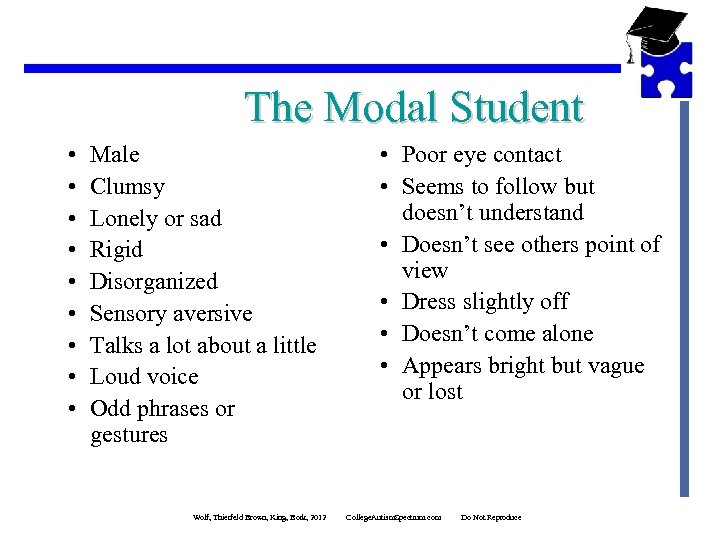 The Modal Student • • • Male Clumsy Lonely or sad Rigid Disorganized Sensory aversive Talks a lot about a little Loud voice Odd phrases or gestures Wolf, Thierfeld Brown, King, Bork, 2012 • Poor eye contact • Seems to follow but doesn’t understand • Doesn’t see others point of view • Dress slightly off • Doesn’t come alone • Appears bright but vague or lost College. Autism. Spectrum. com Do Not Reproduce
 Are the numbers going up? • • • Spike in last decade Textbooks used to say 4/10, 000 Current estimate 1/88 Is it real? Why? Wolf, Thierfeld Brown, King, Bork, 2012 College. Autism. Spectrum. com Do Not Reproduce
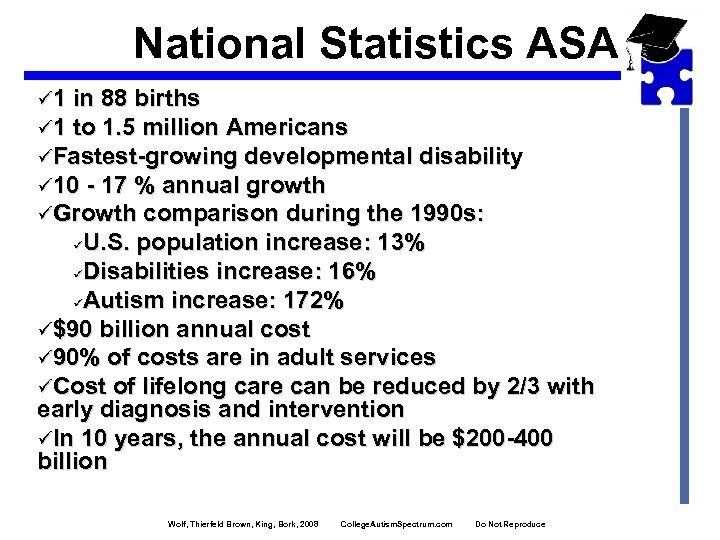 National Statistics ASA ü 1 in 88 births ü 1 to 1. 5 million Americans üFastest-growing developmental disability ü 10 - 17 % annual growth üGrowth comparison during the 1990 s: U. S. population increase: 13% üDisabilities increase: 16% üAutism increase: 172% ü$90 billion annual cost ü 90% of costs are in adult services üCost of lifelong care can be reduced by 2/3 with early diagnosis and intervention üIn 10 years, the annual cost will be $200 -400 billion ü Wolf, Thierfeld Brown, King, Bork, 2008 College. Autism. Spectrum. com Do Not Reproduce
 What is causing the increase? • • • Environmental factors Broader criteria Diagnostic substitution Sampling differences Changing nomenclature Perceived advantages Wolf, Thierfeld Brown, King, Bork, 2012 College. Autism. Spectrum. com Do Not Reproduce
 Core of ASD • Cognitive • Behavioral • Interpersonal Wolf, Thierfeld Brown, King, Bork, 2012 College. Autism. Spectrum. com Do Not Reproduce
 Cognitive Disability • • Integrate and synthesize Parts vs. wholes Executive dysfunction “Theory of Mind” Wolf, Thierfeld Brown, King, Bork, 2012 College. Autism. Spectrum. com Do Not Reproduce
 Behavioral Disability • Rigid, stereotyped behavior and/or mannerisms • Unusual, repetitive preoccupation with objects or ideas • Often mechanical in nature, maps, weather, trains, schedules • Special interests may become real talents and assets Wolf, Thierfeld Brown, King, Bork, 2012 College. Autism. Spectrum. com Do Not Reproduce
 Interpersonal Disability • Core social skills • Lack social awareness, naïve, indifferent or anxious • Approach often awkward & effortful • “Intuitive social knowledge” (Tanguay, 2001) • Bully magnets Wolf, Thierfeld Brown, King, Bork, 2012 College. Autism. Spectrum. com Do Not Reproduce
 Communication • Processing incoming information • Reading between the lines • Determining implicit as well as explicit directions • Asking too many questions Wolf, Thierfeld Brown, King, Bork, 2012 College. Autism. Spectrum. com Do Not Reproduce
 Social Dyslexia • Richard Howlin, Asperger Society of Michigan 2003 newsletter • Inability to read social interactions • Systematizers vs. Empathizers (Baron Cohen) Wolf, Thierfeld Brown, King, Bork, 2012 College. Autism. Spectrum. com Do Not Reproduce
 Sensory Integration Dysfunction §Lights §Music §General dorm or noise §Fire alarms §Touch §Behaviors/causes/misinterpretation Wolf, Thierfeld Brown, King, Bork, 2008 College. Autism. Spectrum. com Do Not Reproduce
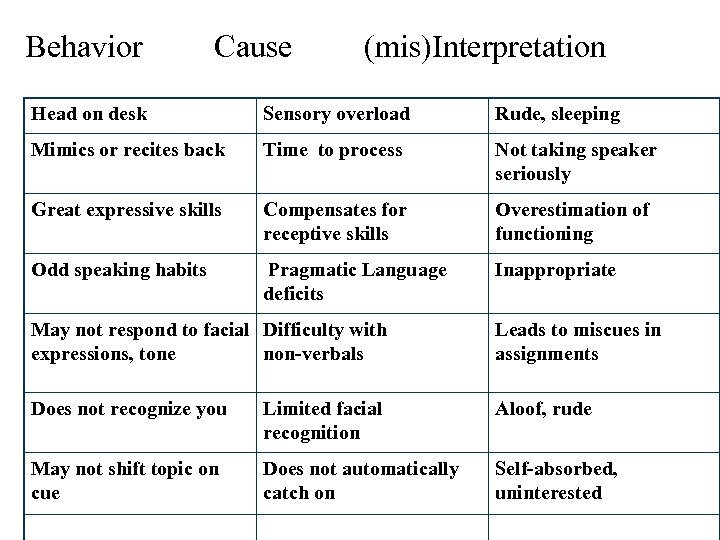 Behavior Cause (mis)Interpretation Head on desk Sensory overload Rude, sleeping Mimics or recites back Time to process Not taking speaker seriously Great expressive skills Compensates for receptive skills Overestimation of functioning Odd speaking habits Pragmatic Language deficits Inappropriate May not respond to facial Difficulty with expressions, tone non-verbals Leads to miscues in assignments Does not recognize you Limited facial recognition Aloof, rude May not shift topic on cue Does not automatically catch on Self-absorbed, uninterested
 Facial Expressions • A code we use to decipher the inside of others. • Peter Vermeulen Wolf, Thierfeld Brown, King, Bork, 2012 College. Autism. Spectrum. com Do Not Reproduce
 Vermeulen, p. 131 “ Just as with objects, we see faces in a context. The meaning we give to a facial expression is context sensitive. ” Wolf, Thierfeld Brown, King, Bork, 2012 College. Autism. Spectrum. com Do Not Reproduce
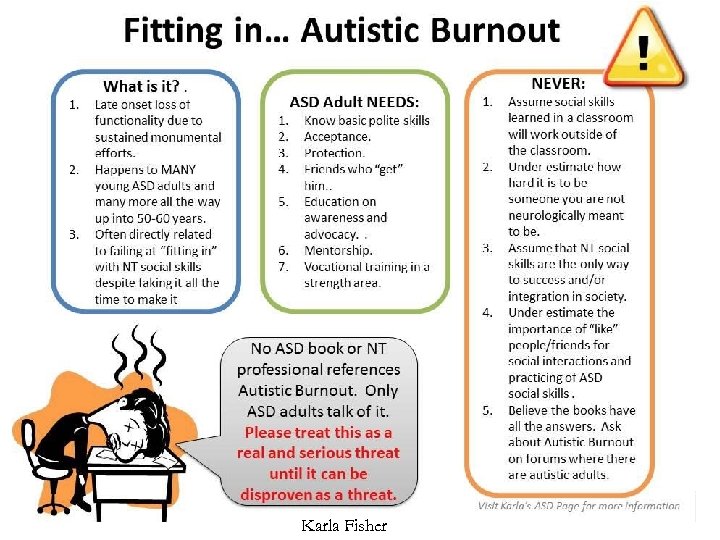 Karla Fisher
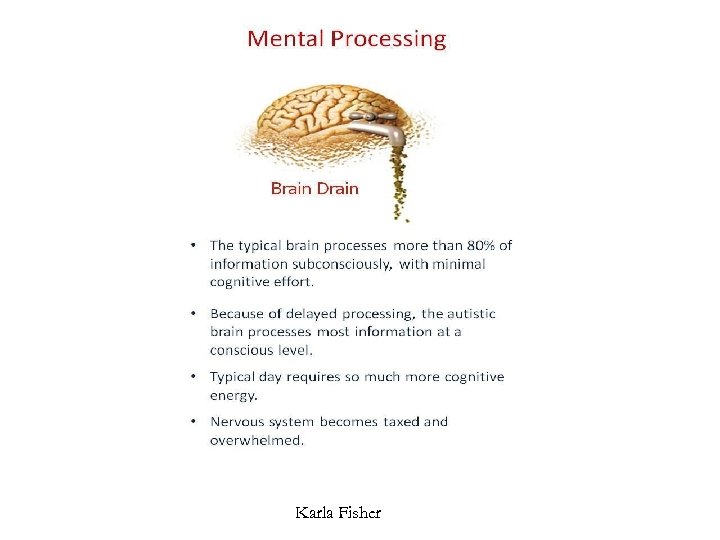 Karla Fisher
 Beware of your assumptions: Myth vs. Reality • People with AS lack empathy for others • People with AS have flat emotions • People with AS fidget when restless. • In general, NT’s have very little empathy for people with AS • The emotions of people with AS are anything but flat; not seeing them doesn’t mean they aren’t there or aren’t felt. • Behaviors function to regulate the environment
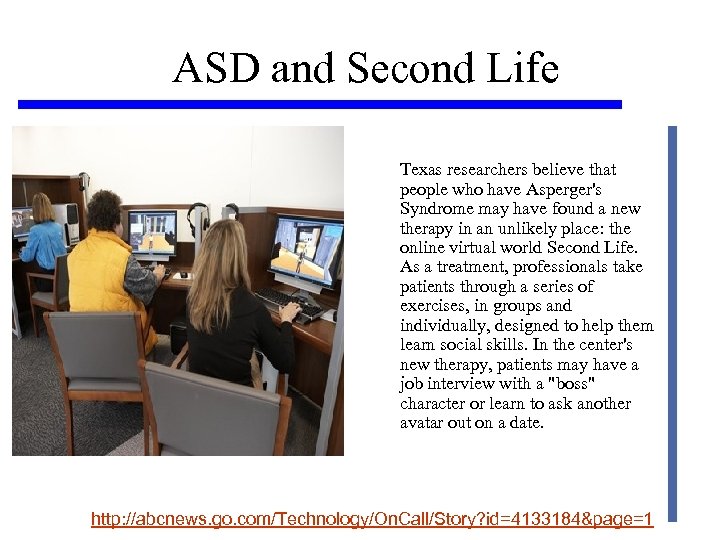 ASD and Second Life Texas researchers believe that people who have Asperger's Syndrome may have found a new therapy in an unlikely place: the online virtual world Second Life. As a treatment, professionals take patients through a series of exercises, in groups and individually, designed to help them learn social skills. In the center's new therapy, patients may have a job interview with a "boss" character or learn to ask another avatar out on a date. http: //abcnews. go. com/Technology/On. Call/Story? id=4133184&page=1
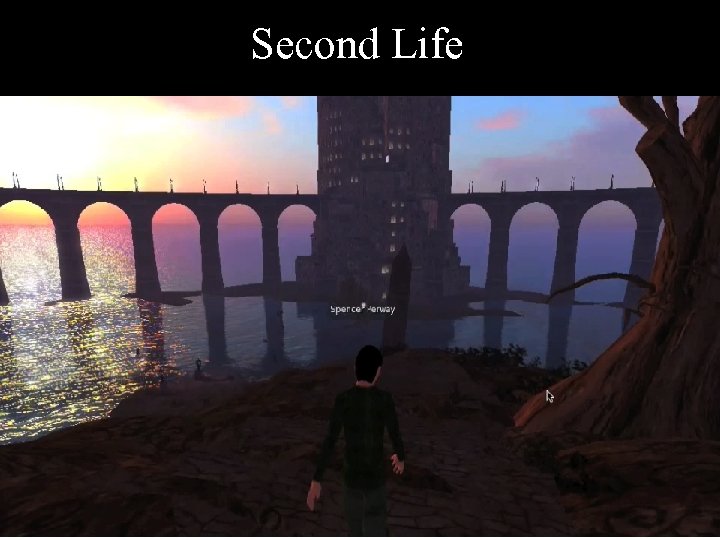 Second Life
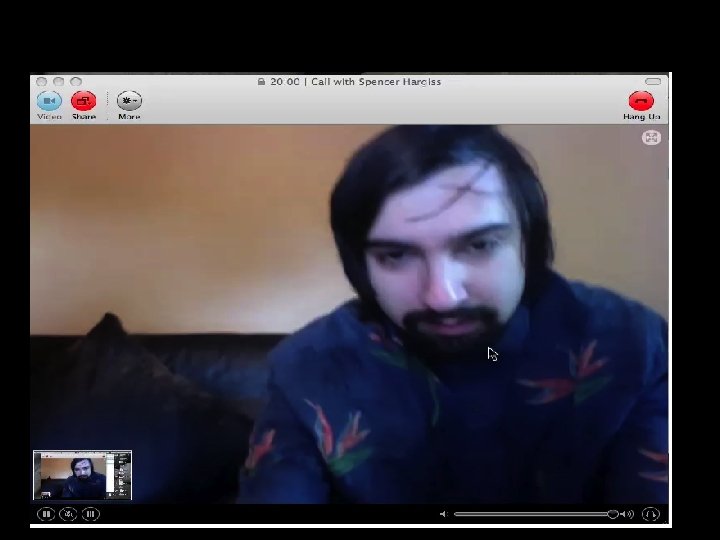
 Benefits of video conferencing For Students: • Computer screen interface less stressful than face to face for ASD • Buy-in for students who already love technology Wolf, Thierfeld Brown, King, Bork, 2012 College. Autism. Spectrum. com Do Not Reproduce
 Benefits for Students cont. • Can have appointments with provider at more preferred times • Decreased demand to process interactions quickly over computer screen Wolf, Thierfeld Brown, King, Bork, 2012 College. Autism. Spectrum. com Do Not Reproduce
 Benefits of video conferencing For Providers: • Less travel time, cost effective • Maintain more consistent contact with student • Ability to assess co-curricular life while maintaining appropriate boundaries Wolf, Thierfeld Brown, King, Bork, 2012 College. Autism. Spectrum. com Do Not Reproduce
 Benefits for Providers cont: • Can include parents, other support persons • Support student from strength based perspective • Real-time sharing and editing of documents Wolf, Thierfeld Brown, King, Bork, 2008 College. Autism. Spectrum. com Do Not Reproduce
 Leave with a challenge… The student is not the only locus of change 29 Wolf, Thierfeld Brown, King, Bork, 2012 College. Autism. Spectrum. com Do Not Reproduce
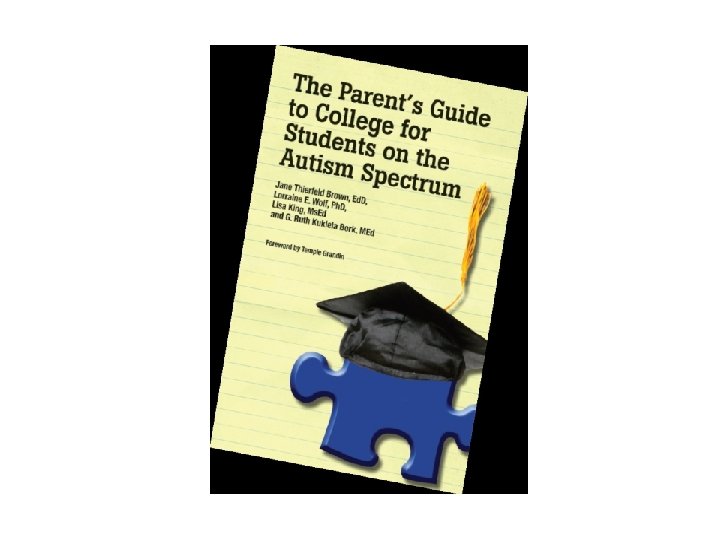
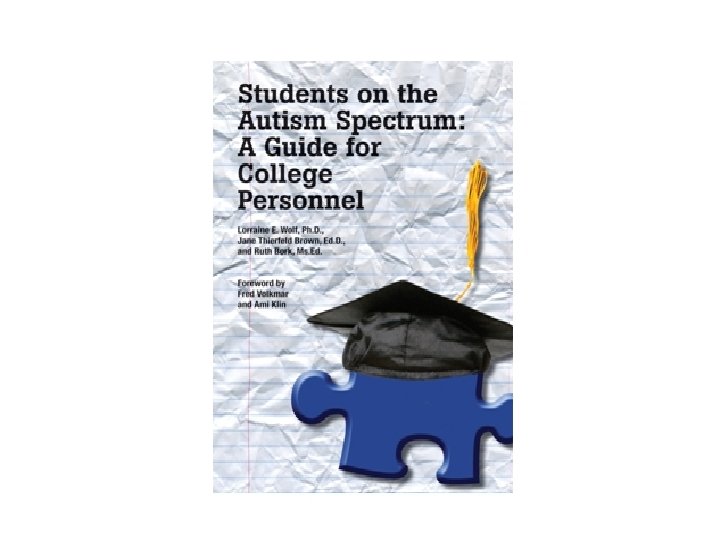
 Questions and Comments Thank you for coming. Jane Thierfeld Brown, Ed. D www. collegeautismspectrum. com Yale Child Study UConn UCEDD UConn Law Wolf, Thierfeld Brown, King, Bork, 2012 College. Autism. Spectrum. com Do Not Reproduce