


 Скачать презентацию THE SOCIAL EMOTIONAL NEEDS OF GIFTED LEARNERS
level 3 theme 2 The Social & Emotional Needs of Gifted Learners.ppt
- Количество слайдов: 22
 THE SOCIAL & EMOTIONAL NEEDS OF GIFTED LEARNERS © 2011 by The Johns Hopkins University. All rights reserved.
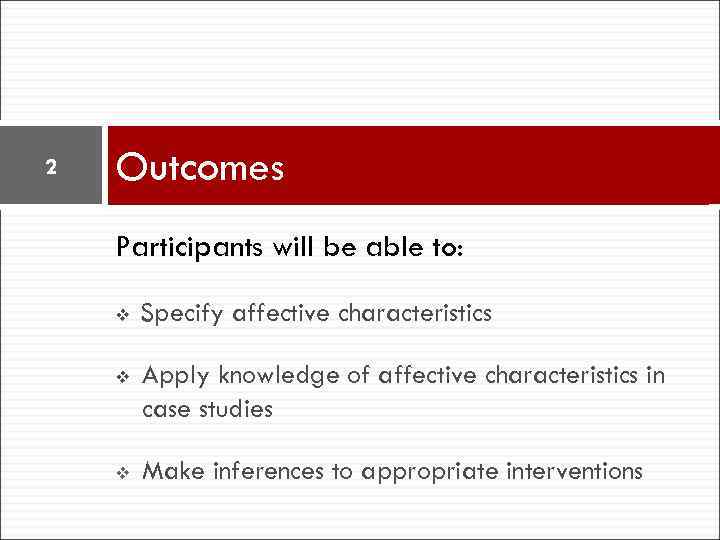 2 Outcomes Participants will be able to: v Specify affective characteristics v Apply knowledge of affective characteristics in case studies v Make inferences to appropriate interventions
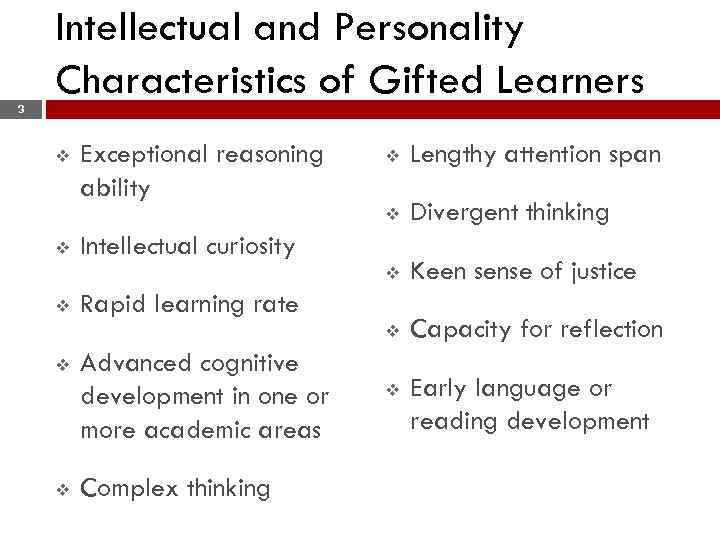 Intellectual and Personality Characteristics of Gifted Learners 3 v v Divergent thinking Keen sense of justice v v Lengthy attention span v v Exceptional reasoning ability v v v Capacity for reflection v Early language or reading development Intellectual curiosity Rapid learning rate Advanced cognitive development in one or more academic areas Complex thinking
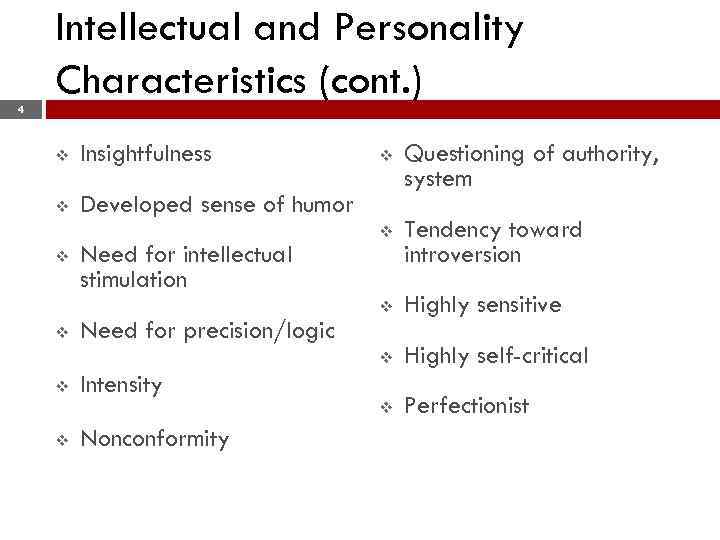 Intellectual and Personality Characteristics (cont. ) 4 v Insightfulness v Developed sense of humor v v Need for precision/logic v Tendency toward introversion v Highly sensitive Highly self-critical v v Need for intellectual stimulation Questioning of authority, system v v v Perfectionist Intensity Nonconformity
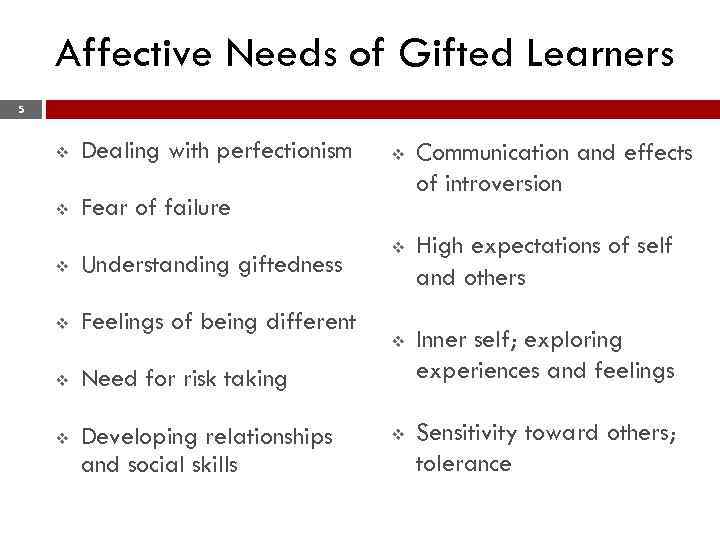 Affective Needs of Gifted Learners 5 v Dealing with perfectionism v Fear of failure v Understanding giftedness v Feelings of being different v Developing relationships and social skills Communication and effects of introversion v High expectations of self and others v Inner self; exploring experiences and feelings v Sensitivity toward others; tolerance Need for risk taking v v
 6 Social/Emotional Issues What impact do affective needs of gifted learners have on their academic and social experiences?
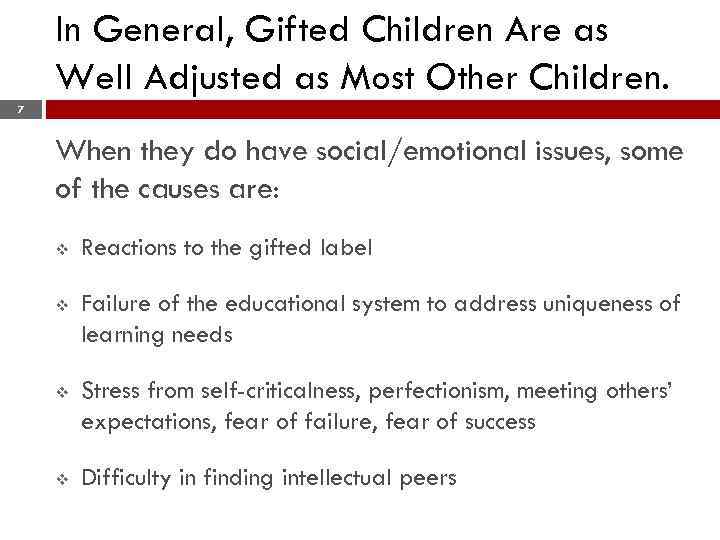 In General, Gifted Children Are as Well Adjusted as Most Other Children. 7 When they do have social/emotional issues, some of the causes are: v Reactions to the gifted label v Failure of the educational system to address uniqueness of learning needs v Stress from self-criticalness, perfectionism, meeting others’ expectations, fear of failure, fear of success v Difficulty in finding intellectual peers
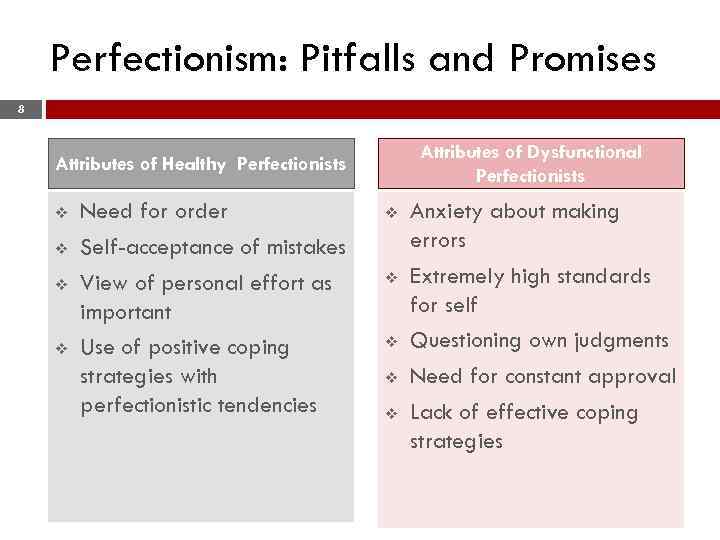 Perfectionism: Pitfalls and Promises 8 Attributes of Dysfunctional Perfectionists Attributes of Healthy Perfectionists v v Need for order Self-acceptance of mistakes View of personal effort as important Use of positive coping strategies with perfectionistic tendencies v v v Anxiety about making errors Extremely high standards for self Questioning own judgments Need for constant approval Lack of effective coping strategies
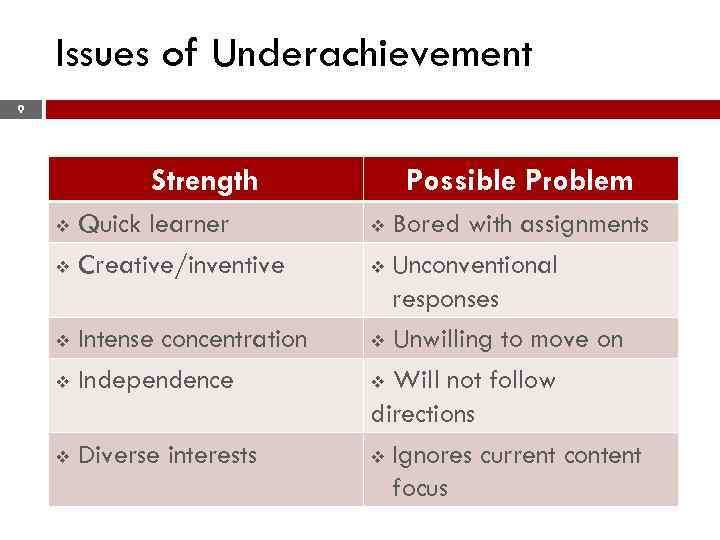 Issues of Underachievement 9 Strength Quick learner v Creative/inventive v Intense concentration v Independence v v Diverse interests Possible Problem Bored with assignments v Unconventional responses v Unwilling to move on v Will not follow directions v Ignores current content focus v
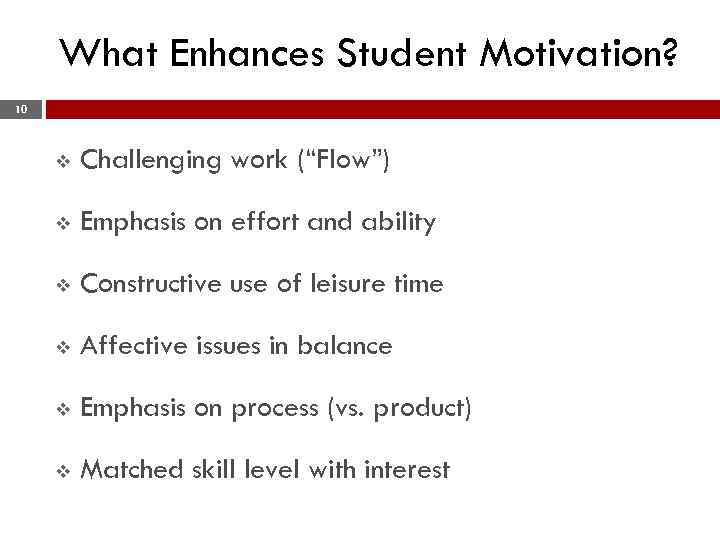 What Enhances Student Motivation? 10 v Challenging work (“Flow”) v Emphasis on effort and ability v Constructive use of leisure time v Affective issues in balance v Emphasis on process (vs. product) v Matched skill level with interest
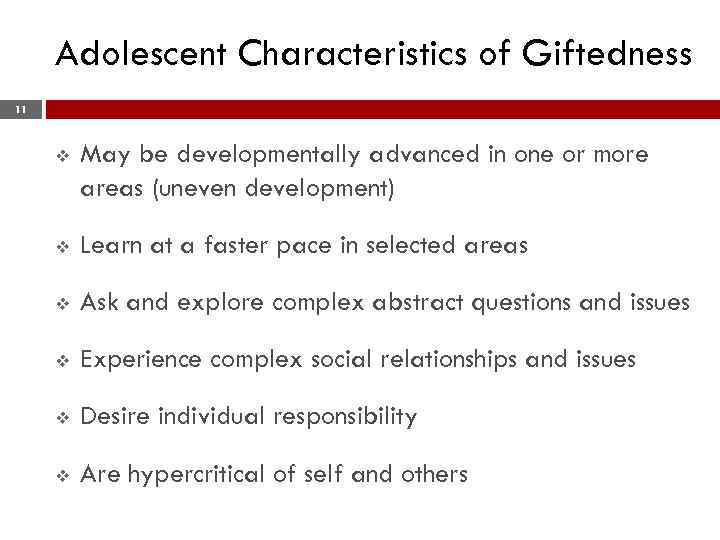 Adolescent Characteristics of Giftedness 11 v May be developmentally advanced in one or more areas (uneven development) v Learn at a faster pace in selected areas v Ask and explore complex abstract questions and issues v Experience complex social relationships and issues v Desire individual responsibility v Are hypercritical of self and others
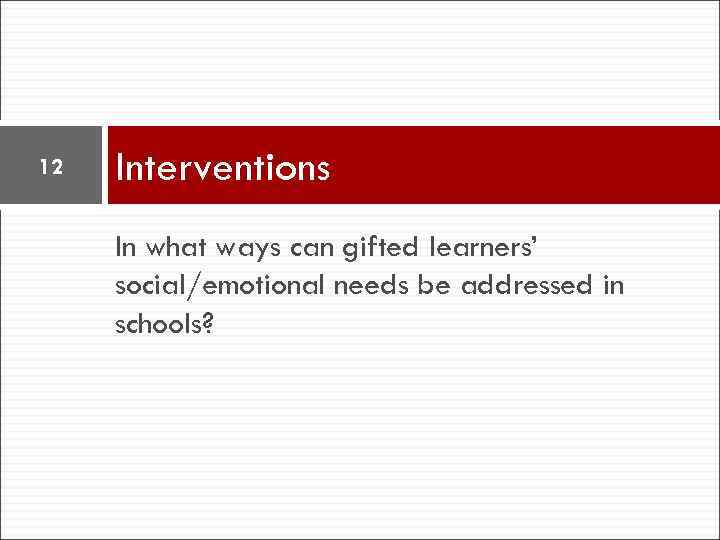 12 Interventions In what ways can gifted learners’ social/emotional needs be addressed in schools?
 Best Practices of Counseling the Gifted 13 v Academic: goal setting, blueprints, academic rigor, stress management v Personal/Social: stress reduction, social skills, identity/self-concept v Career: “over choice, ” exploration/discovery, flexible planning, future contributions, “right” colleges/careers
 Best Practices of Counseling (cont. ) 14 v G/T Specific: self/other expectations, perfectionism, control, managing “stigma”, hiding gifts, understanding giftedness v Counseling Relationship: core conditions, freedom to discuss being gifted, counselor knowledge of G/T v Strategies: individual dialogue, small group, classroom guidance, journaling, bibliotherapy/cinematherapy, partnerships, etc.
 15 Affective Components of a Gifted Program v Self-assessment v Philosophy of life v Bibliotherapy (literature and biography) v Journal of crystallizing experiences v Talent development plan v Seminars on gifted issues (e. g. , perfectionism, relationships, identity)
 Some of My Best Friends Are Books: Halsted’s Grades 6– 8 Bibliotherapy Themes 16 v Achievement v Intensity v Aloneness v Introversion v Arrogance v Moral concerns v Creativity v Perfectionism v Differentness v Relationship with others v Drive to understand v Sensitivity v Identity v Using ability
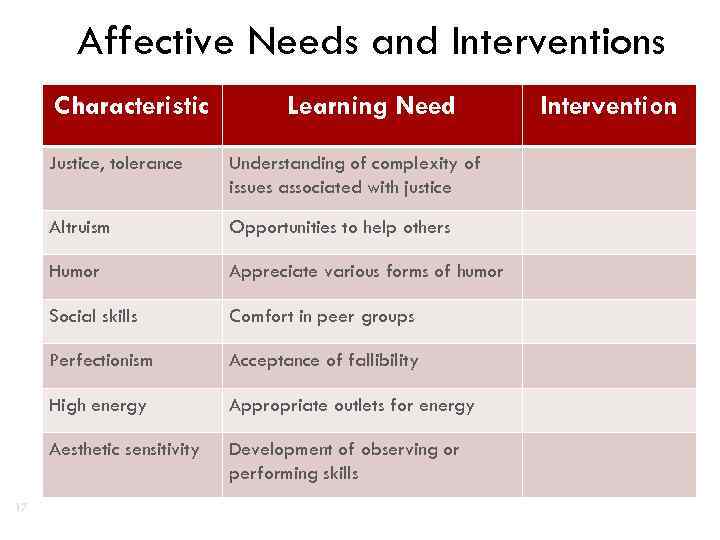 Affective Needs and Interventions Characteristic Learning Need Justice, tolerance Altruism Opportunities to help others Humor Appreciate various forms of humor Social skills Comfort in peer groups Perfectionism Acceptance of fallibility High energy Appropriate outlets for energy Aesthetic sensitivity 17 Understanding of complexity of issues associated with justice Development of observing or performing skills Intervention
 Application #1: Milton Case Study 18 v Examine case study data. v What affective characteristics does the student exhibit? v What interventions might be planned for the student by teachers and others in the school environment?
 Application #2: Myth Activity 19 How would you combat the following myths about gifted learners among your faculty: v Gifted students have poor social adjustment. v Gifted students are aloof and conceited. students can best deal with social emotional development in settings where they are the only gifted learner.
 20 20 Discussion Questions v In what ways are gifted learners socially “at risk” in a general education environment? v What are some practical suggestions for teachers in supporting the social and emotional needs of gifted students?
 21 Session Reflection How do affective characteristics of gifted students impact on school performance? Think of a student you know for whom these characteristics hinder or help.
 22 “I was different. I was always different. Why didn’t anybody notice me. ” –John Lennon