


 Скачать презентацию The Social Determinants of Health One Sky Center
5a0b02f5710586d607f34f2fae9a3d3a.ppt
- Количество слайдов: 42
 The Social Determinants of Health One Sky Center Association of American Indian Physicians 39 th Annual Meeting R Dale Walker, MD Patricia Silk Walker, Ph. D Michelle Singer August 8, 2010 Santa Ana Pueblo, New Mexico
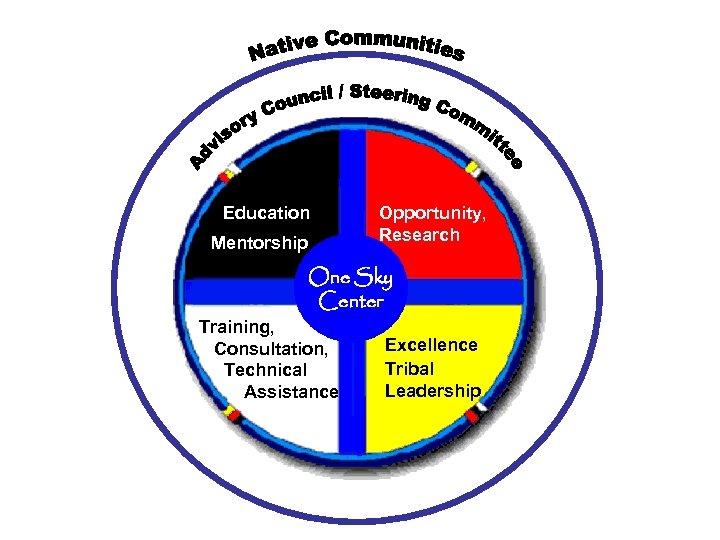 Education Mentorship Opportunity, Research One Sky Center Training, Consultation, Technical Assistance Excellence Tribal Leadership 2
 Goals for Today • • • Review An Environmental Scan for Natives Discuss Fragmentation and Integration Present Some Behavioral Health Care Issues Define Social Determinants of Health Present Examples of Treatment and Prevention Summarize Critical Issues for Native Peoples 3
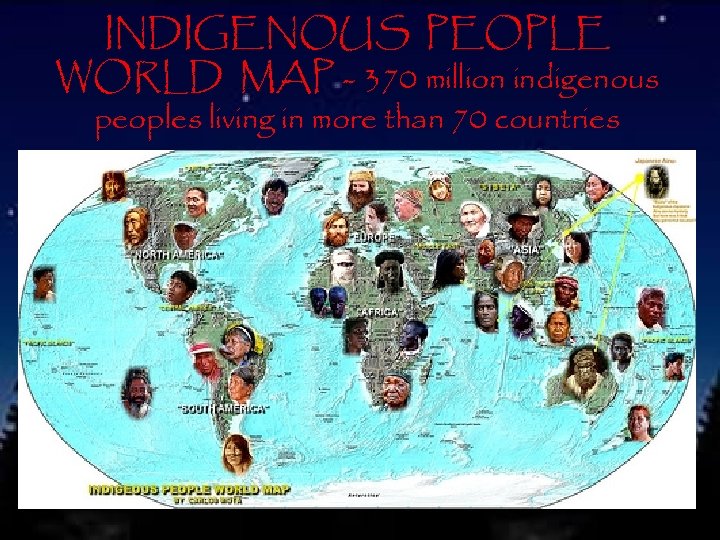
 WHO ARE INDIGENOUS PEOPLES? “Indigenous peoples remain on the margins of society: they are poorer, less educated, die at a younger age, are much more likely to commit suicide, and are generally in worse health than the rest of the population. " (Source: The Indigenous World 2006, International Working Group on Indigenous Affairs (IWGIA) WHO 4
 INDIGENOUS PEOPLE WORLD MAP - 370 million indigenous peoples living in more than 70 countries 5
 6
6
 7
7
 8
8
 9
9
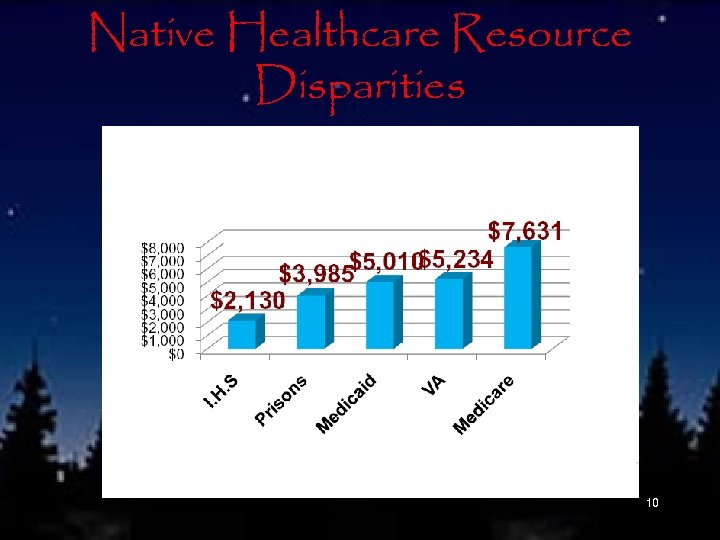 Native Healthcare Resource Disparities 10
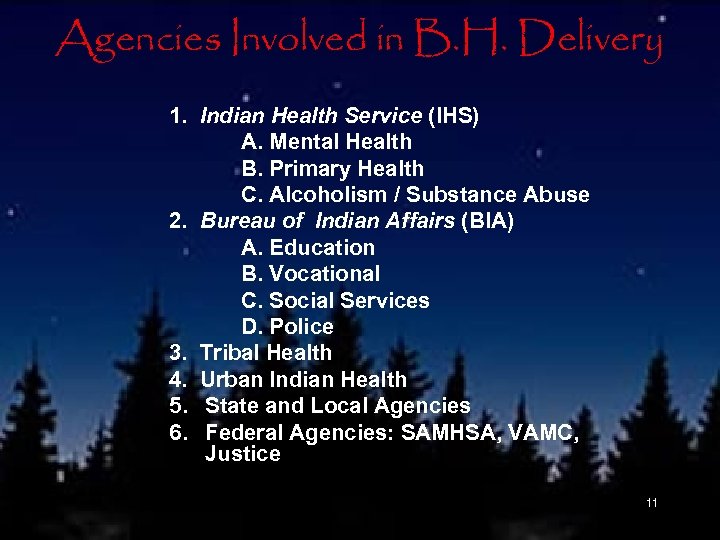 Agencies Involved in B. H. Delivery 1. Indian Health Service (IHS) A. Mental Health B. Primary Health C. Alcoholism / Substance Abuse 2. Bureau of Indian Affairs (BIA) A. Education B. Vocational C. Social Services D. Police 3. Tribal Health 4. Urban Indian Health 5. State and Local Agencies 6. Federal Agencies: SAMHSA, VAMC, Justice 11
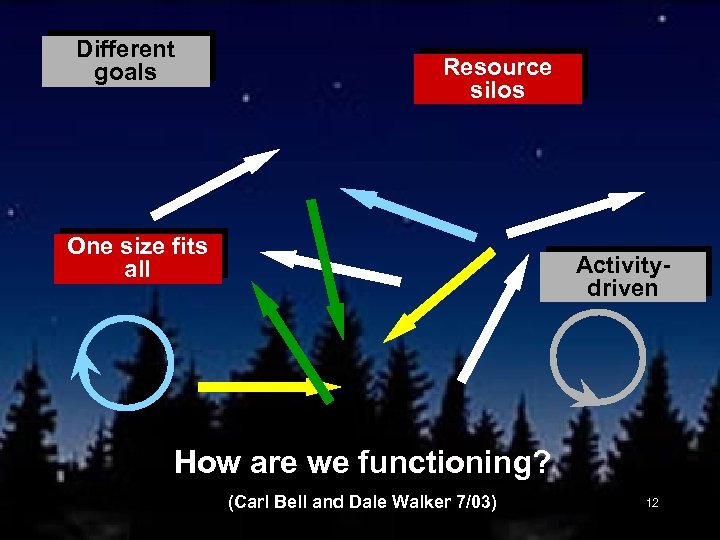 Different goals Resource silos One size fits all Activitydriven How are we functioning? (Carl Bell and Dale Walker 7/03) 12
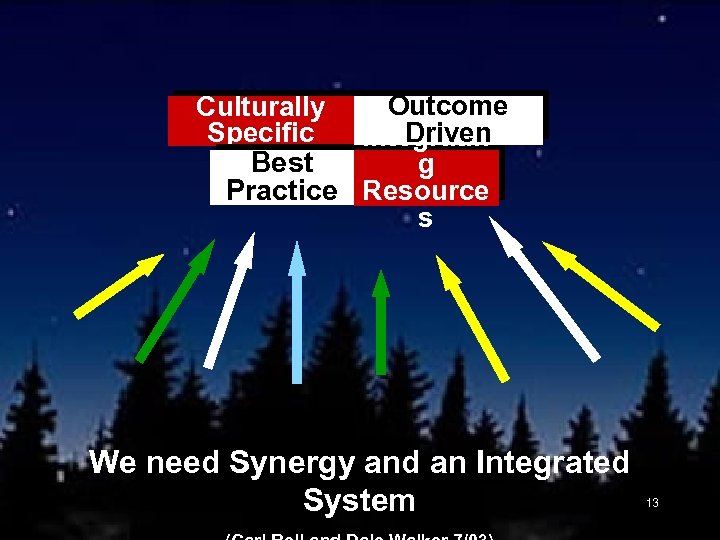 Outcome Culturally Driven Specific Integratin Best g Practice Resource s We need Synergy and an Integrated System 13
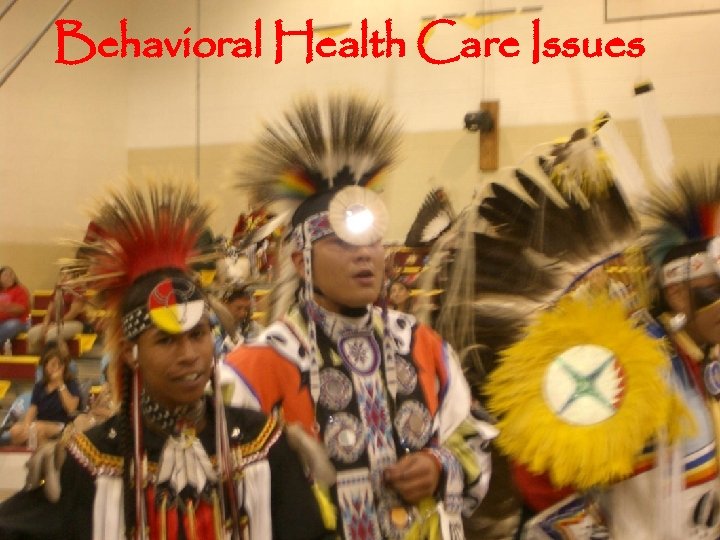 Behavioral Health Care Issues 14
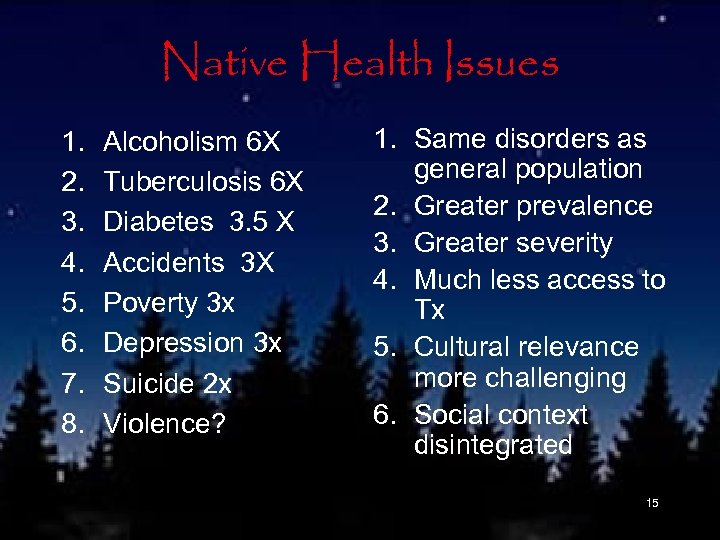 Native Health Issues 1. 2. 3. 4. 5. 6. 7. 8. Alcoholism 6 X Tuberculosis 6 X Diabetes 3. 5 X Accidents 3 X Poverty 3 x Depression 3 x Suicide 2 x Violence? 1. Same disorders as general population 2. Greater prevalence 3. Greater severity 4. Much less access to Tx 5. Cultural relevance more challenging 6. Social context disintegrated 15
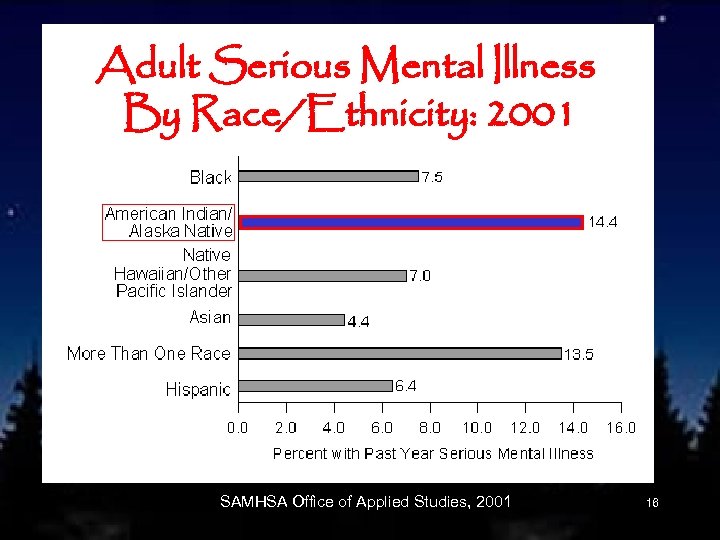 Adult Serious Mental Illness By Race/Ethnicity: 2001 SAMHSA Office of Applied Studies, 2001 16
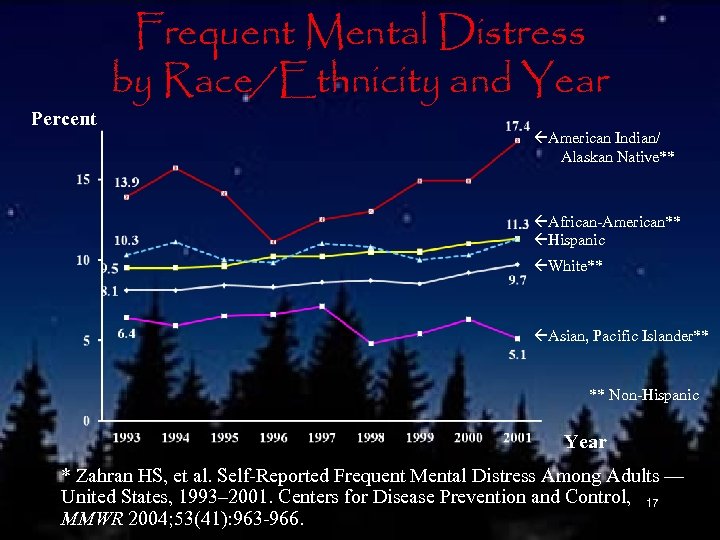 Percent Frequent Mental Distress by Race/Ethnicity and Year American Indian/ Alaskan Native** African-American** Hispanic White** Asian, Pacific Islander** ** Non-Hispanic Year * Zahran HS, et al. Self-Reported Frequent Mental Distress Among Adults — United States, 1993– 2001. Centers for Disease Prevention and Control, 17 MMWR 2004; 53(41): 963 -966.
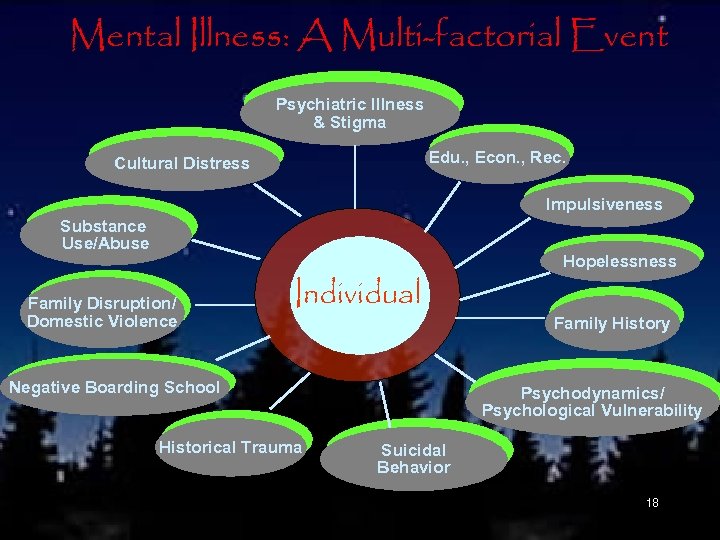 Mental Illness: A Multi-factorial Event Psychiatric Illness & Stigma Edu. , Econ. , Rec. Cultural Distress Impulsiveness Substance Use/Abuse Family Disruption/ Domestic Violence Individual Negative Boarding School Historical Trauma Hopelessness Family History Psychodynamics/ Psychological Vulnerability Suicidal Behavior 18
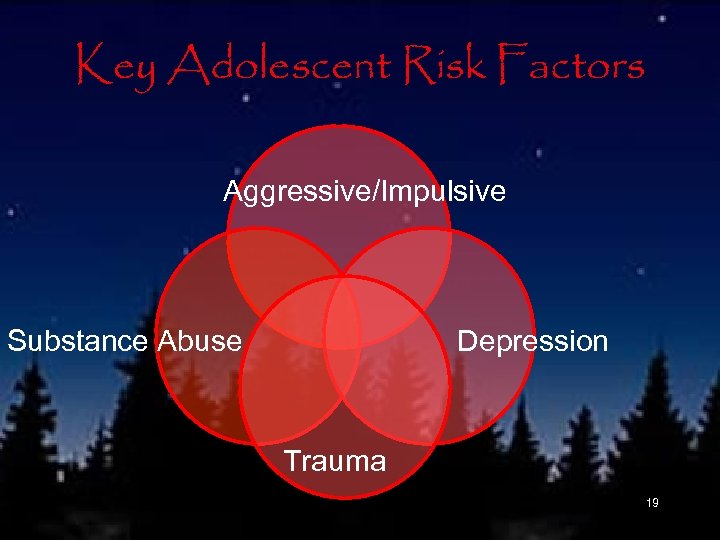 Key Adolescent Risk Factors Aggressive/Impulsive Substance Abuse Depression Trauma 19
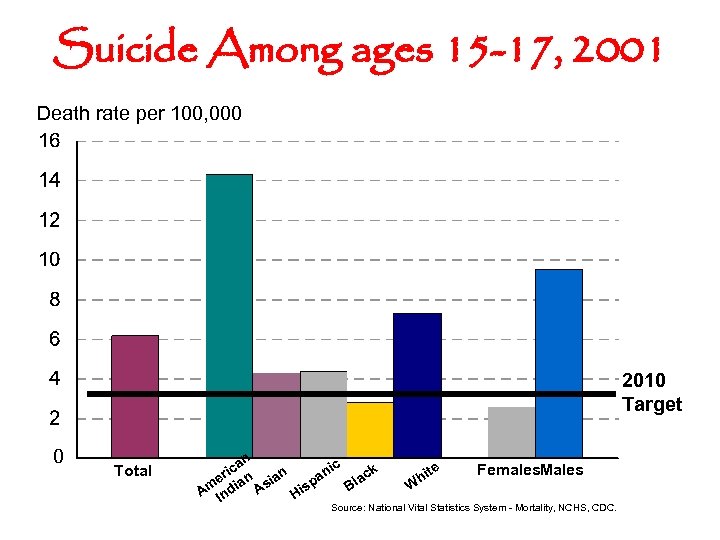 Suicide Among ages 15 -17, 2001 Death rate per 100, 000 2010 Target 0 Total an ic k ric n ian an e ia s lac p s B Am Ind A Hi W te hi Females. Males Source: National Vital Statistics System - Mortality, NCHS, CDC. 20
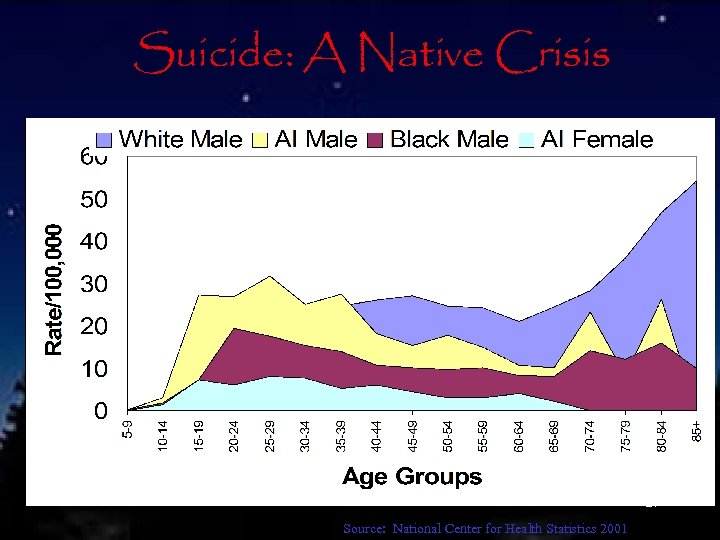 Suicide: A Native Crisis 21 Source: National Center for Health Statistics 2001
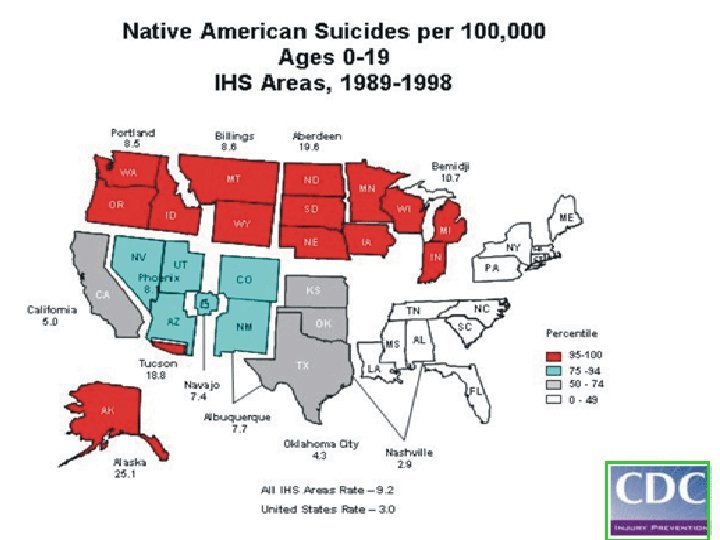 22
22
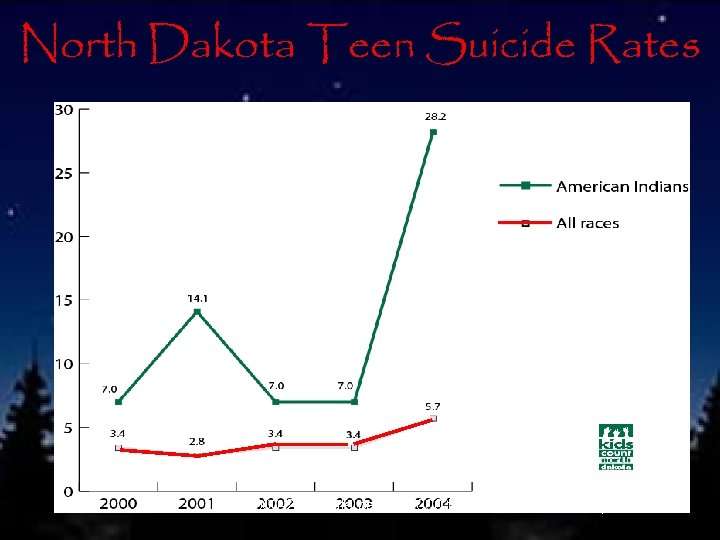 North Dakota Teen Suicide Rates (2000 -2004 rate per 100, 000 teens 13 -19 years old) 23
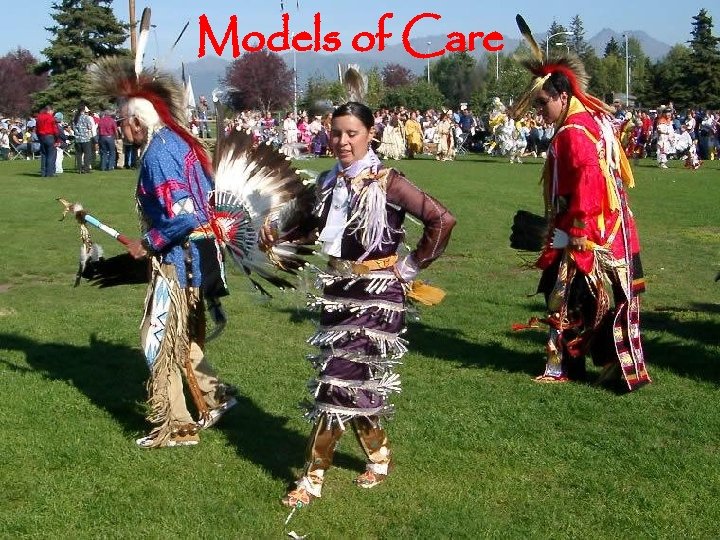 Models of Care 24
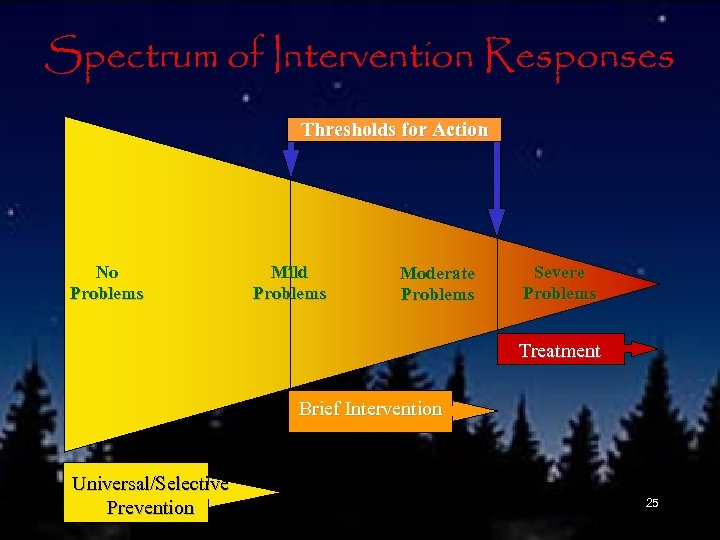 Spectrum of Intervention Responses Thresholds for Action No Problems Mild Problems Moderate Problems Severe Problems Treatment Brief Intervention Universal/Selective Prevention 25
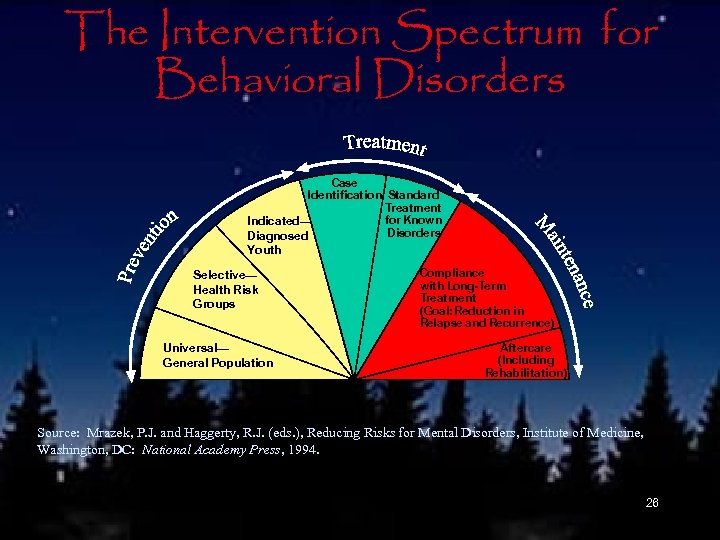 The Intervention Spectrum for Behavioral Disorders Case Identification Standard Treatment for Known Indicated— Disorders Diagnosed Youth Selective— Health Risk Groups Universal— General Population Compliance with Long-Term Treatment (Goal: Reduction in Relapse and Recurrence) Aftercare (Including Rehabilitation) Source: Mrazek, P. J. and Haggerty, R. J. (eds. ), Reducing Risks for Mental Disorders, Institute of Medicine, Washington, DC: National Academy Press, 1994. 26
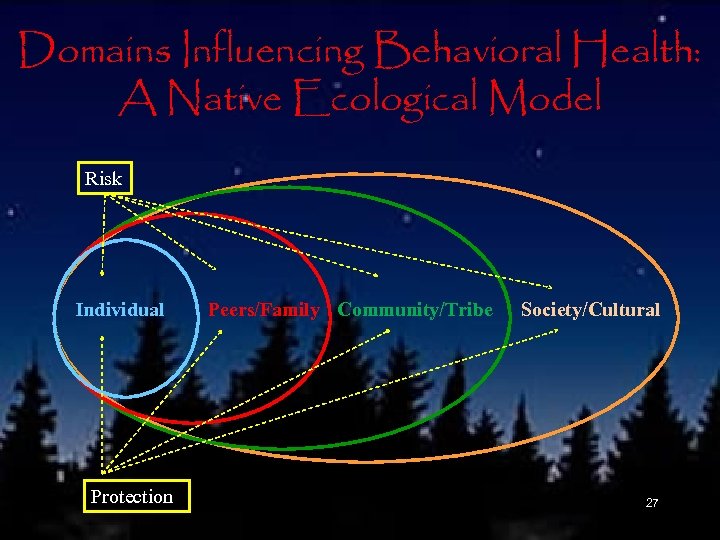 Domains Influencing Behavioral Health: A Native Ecological Model Risk Individual Protection Peers/Family Community/Tribe Society/Cultural 27
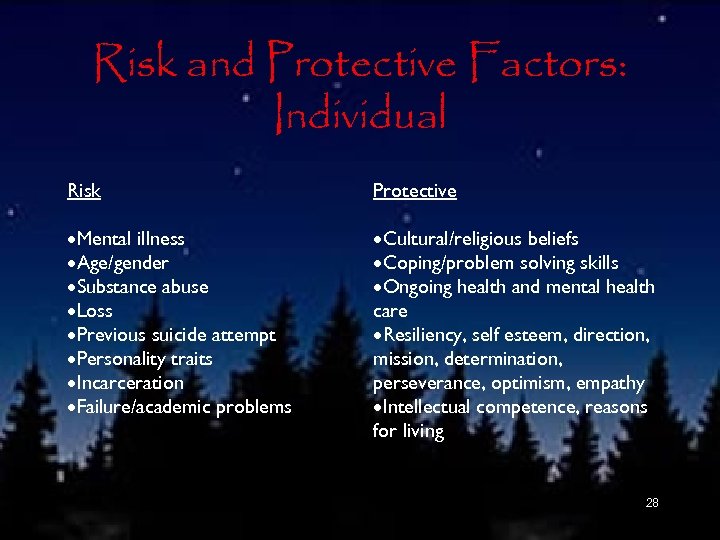 Risk and Protective Factors: Individual Risk Protective ·Mental illness ·Age/gender ·Substance abuse ·Loss ·Previous suicide attempt ·Personality traits ·Incarceration ·Failure/academic problems ·Cultural/religious beliefs ·Coping/problem solving skills ·Ongoing health and mental health care ·Resiliency, self esteem, direction, mission, determination, perseverance, optimism, empathy ·Intellectual competence, reasons for living 28
 Individual Intervention • Identify risk and protective factors counseling skill building improve coping support groups • Increase community awareness • Access to hotlines other help resources 29
 Effective Interventions for Adults • • • Cognitive/Behavioral Approaches Motivational Interventions Psychopharmacological Interventions Modified Therapeutic Communities Assertive Community Treatment Vocational Services Dual Recovery/Self-Help Programs Consumer Involvement Therapeutic Relationships 30
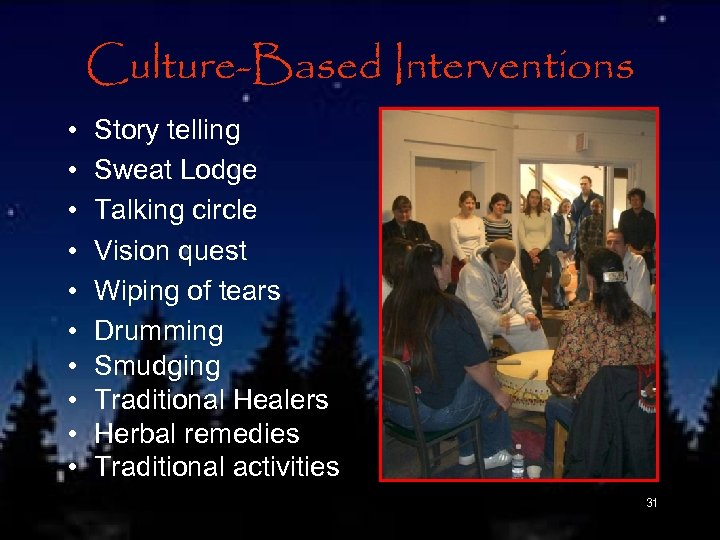 Culture-Based Interventions • • • Story telling Sweat Lodge Talking circle Vision quest Wiping of tears Drumming Smudging Traditional Healers Herbal remedies Traditional activities 31
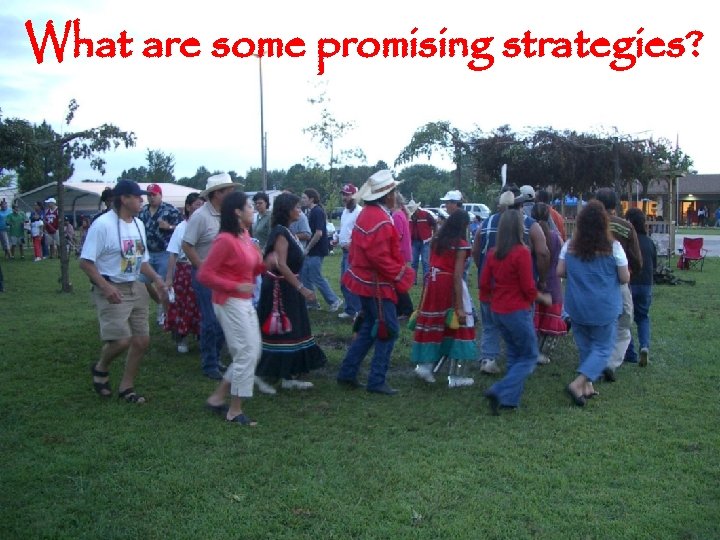 What are some promising strategies? 32
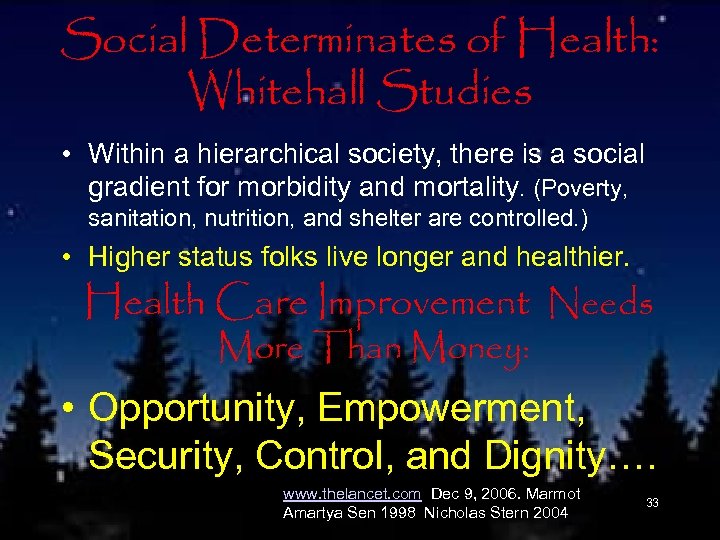 Social Determinates of Health: Whitehall Studies • Within a hierarchical society, there is a social gradient for morbidity and mortality. (Poverty, sanitation, nutrition, and shelter are controlled. ) • Higher status folks live longer and healthier. Health Care Improvement Needs More Than Money: • Opportunity, Empowerment, Security, Control, and Dignity…. www. thelancet. com Dec 9, 2006. Marmot Amartya Sen 1998 Nicholas Stern 2004 33
 . Socio-cultural Socio-economic biological Science & technology ageing Health ICT behavioral environmental health HEALTH & Human SOCIAL rights JUSTICE GENDER
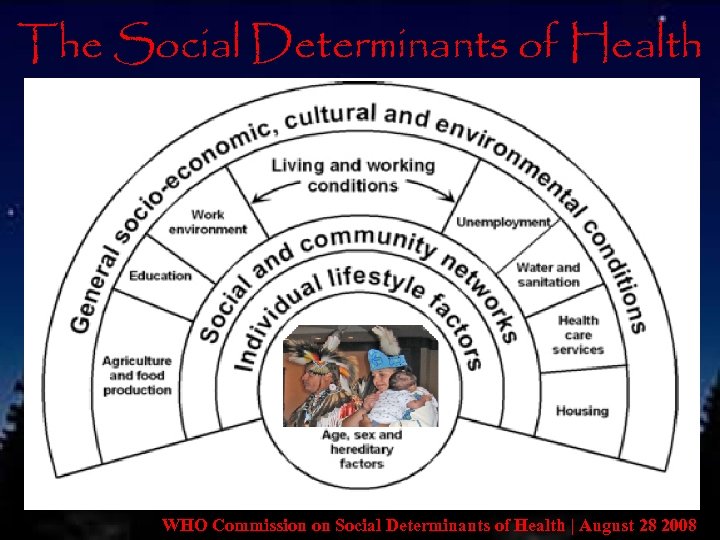 The Social Determinants of Health • The conditions in which people are born, grow, live, work and age. • Shaped by the distribution of money, power and resources at global, national and local levels. • Are mostly responsible for health inequities the unfair and avoidable differences in health status seen within and between countries. 35 WHO Commission on Social Determinants of Health | August 28 2008
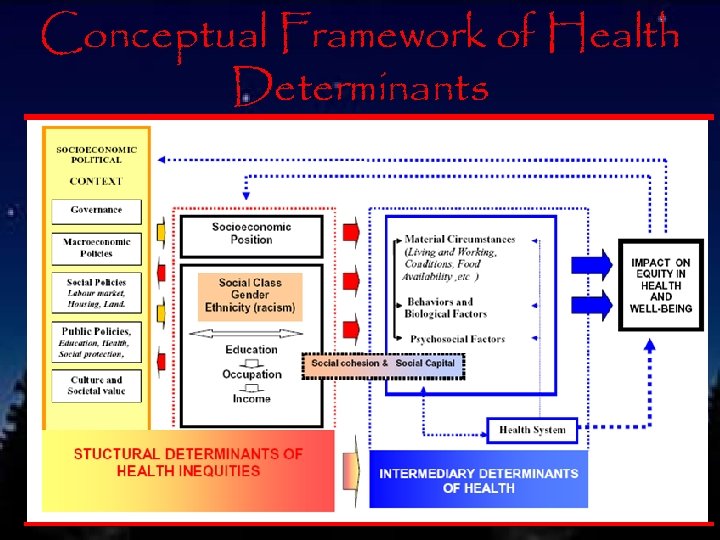 Conceptual Framework of Health Determinants 36
 Critical Elements for Native Peoples • • • Self determination Ecology and environment Economic prosperity, fairness and equity Leadership and capacity strengthening Racism / dominance / imperialism Healing, services, systems, structures Cultural sustainability, protection, stewardship Land Human rights 37
 An Ideal Intervention • Broadly based: Includes individual, family, community, tribe, and society • Comprehensive: Prevention: Universal, Selective, Indicated Treatment Maintenance • Addresses opportunity, empowerment, security, dignity 38
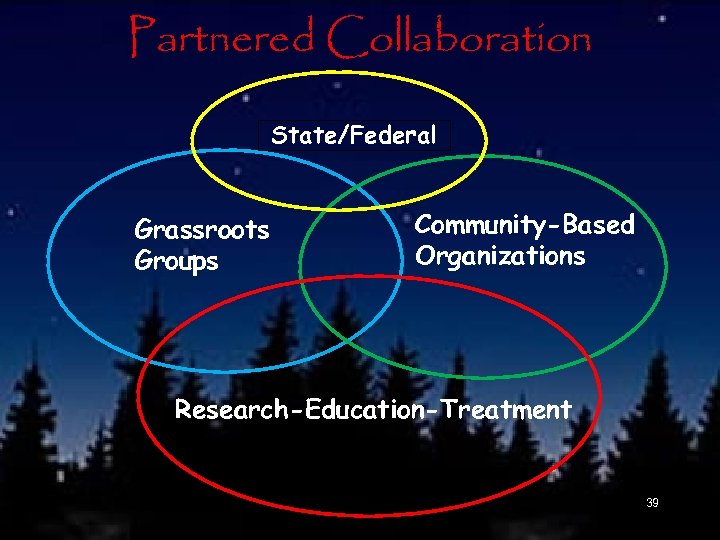 Partnered Collaboration State/Federal Grassroots Groups Community-Based Organizations Research-Education-Treatment 39
 Six Key Principles Evidence-based predictors of change • • • Leadership Mobilization Community driven Public health approach Strength based Culturally informed Proactive 40
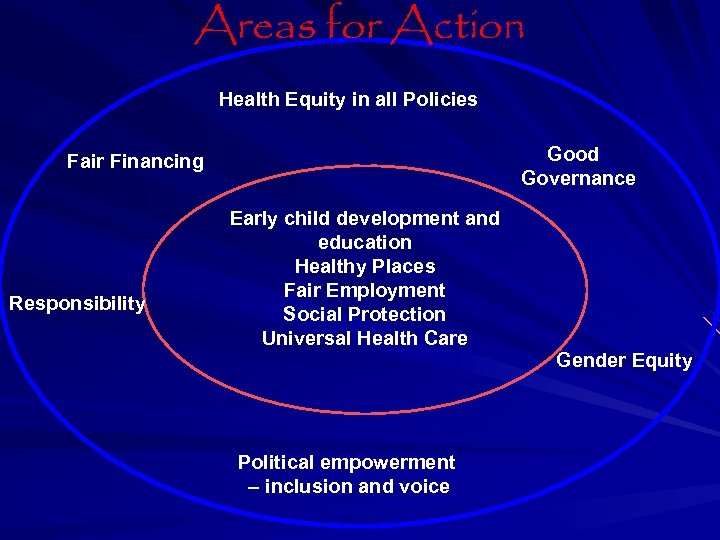 Areas for Action Health Equity in all Policies Good Governance Fair Financing Responsibility Early child development and education Healthy Places Fair Employment Social Protection Universal Health Care Political empowerment – inclusion and voice Gender Equity
 Contact us at 503 -494 -3703 E-mail Dale Walker, MD onesky@ohsu. edu Or visit our website: www. oneskycenter. org 42