 Скачать презентацию The Seventies CRyan WHistory FACTS about this
d8f4496cb6d398b740cb058be4a6a274.ppt
- Количество слайдов: 91



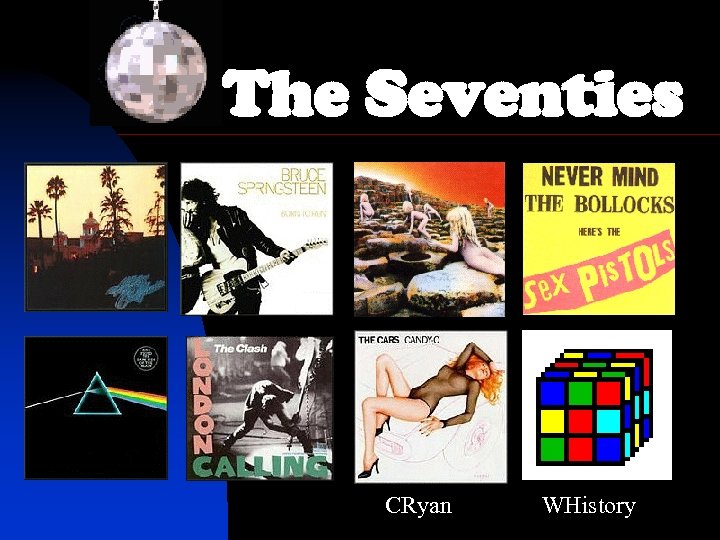
The Seventies CRyan WHistory
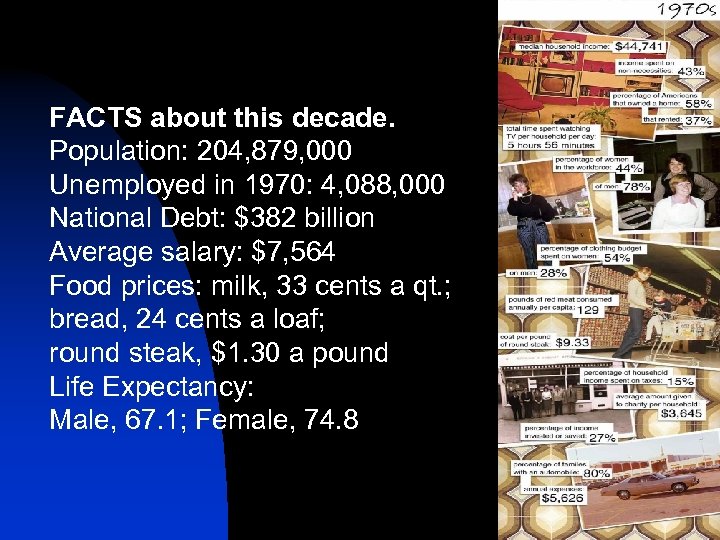
FACTS about this decade. Population: 204, 879, 000 Unemployed in 1970: 4, 088, 000 National Debt: $382 billion Average salary: $7, 564 Food prices: milk, 33 cents a qt. ; bread, 24 cents a loaf; round steak, $1. 30 a pound Life Expectancy: Male, 67. 1; Female, 74. 8
Major Trends n n n Growing disillusionment of gov’t Advances in civil rights Increased influence of women’s movement Heightened concern for environment Increased space exploration Technological advancements
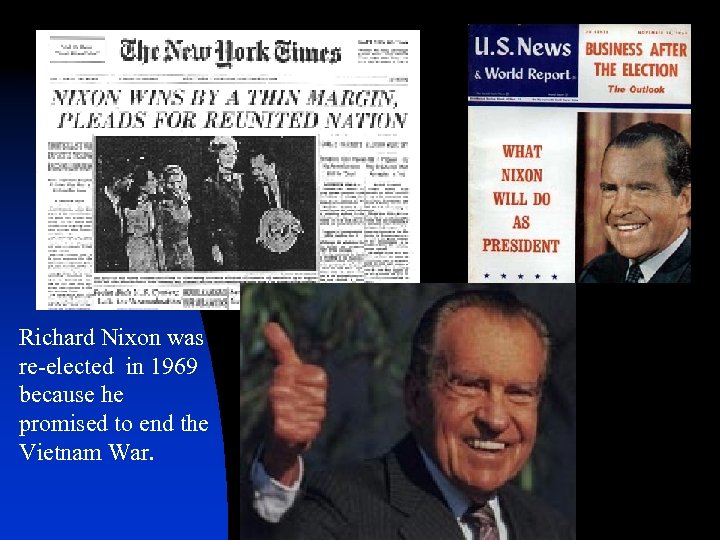
Richard Nixon was re-elected in 1969 because he promised to end the Vietnam War.
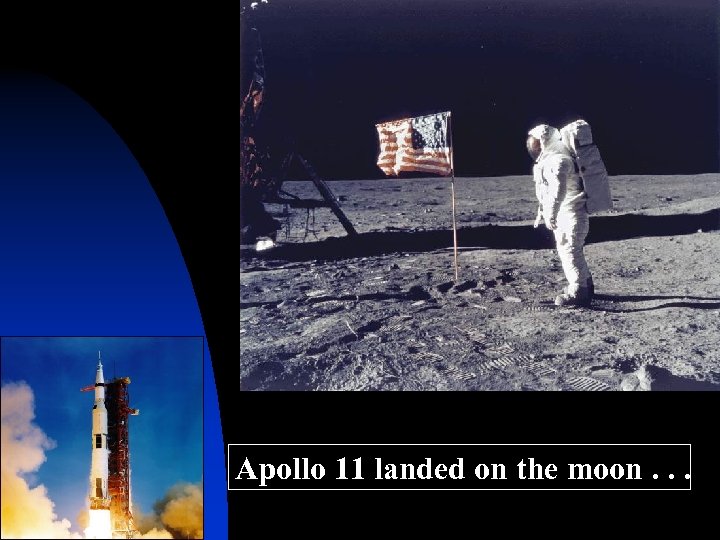
Apollo 11 landed on the moon. . .
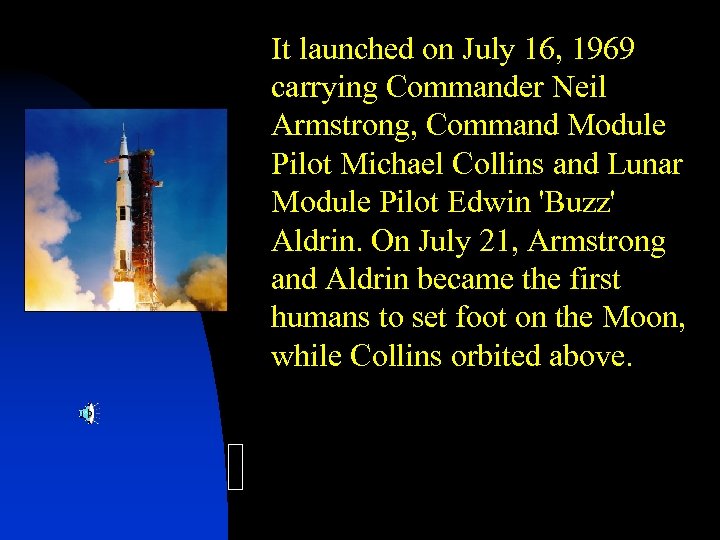
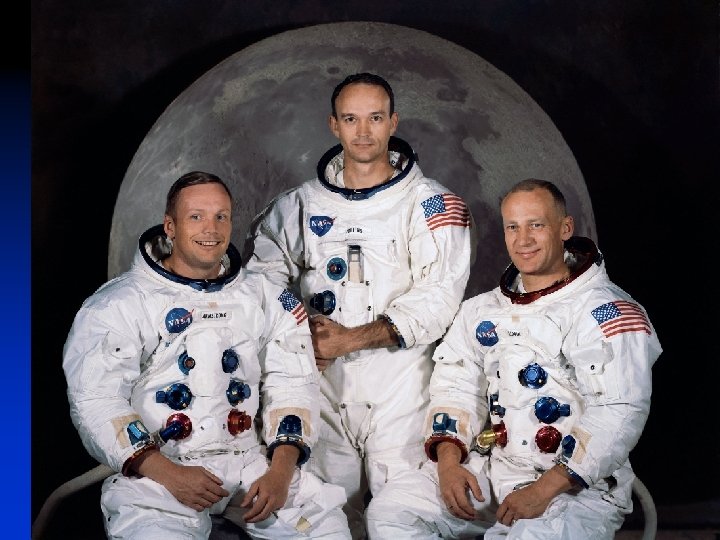
It launched on July 16, 1969 carrying Commander Neil Armstrong, Command Module Pilot Michael Collins and Lunar Module Pilot Edwin 'Buzz' Aldrin. On July 21, Armstrong and Aldrin became the first humans to set foot on the Moon, while Collins orbited above.
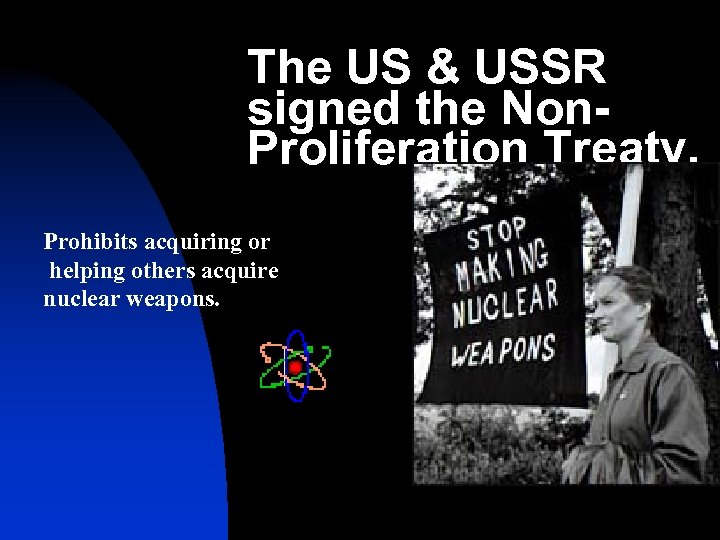
The US & USSR signed the Non. Proliferation Treaty. Prohibits acquiring or helping others acquire nuclear weapons.
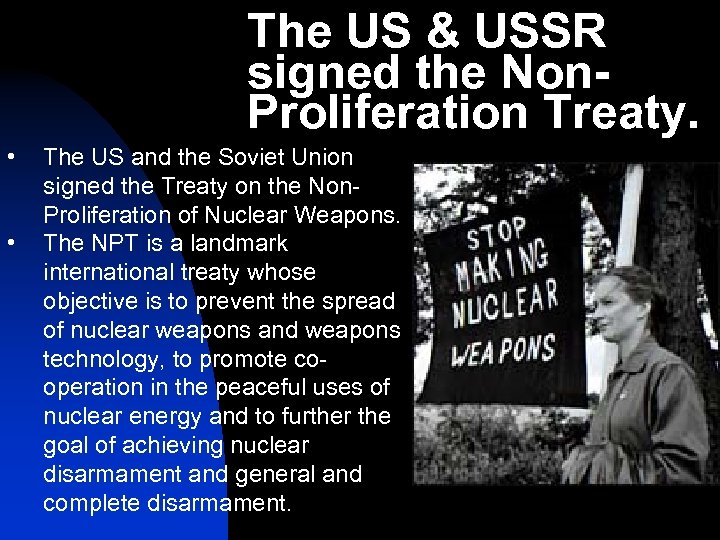
The US & USSR signed the Non. Proliferation Treaty. • • The US and the Soviet Union signed the Treaty on the Non. Proliferation of Nuclear Weapons. The NPT is a landmark international treaty whose objective is to prevent the spread of nuclear weapons and weapons technology, to promote cooperation in the peaceful uses of nuclear energy and to further the goal of achieving nuclear disarmament and general and complete disarmament.
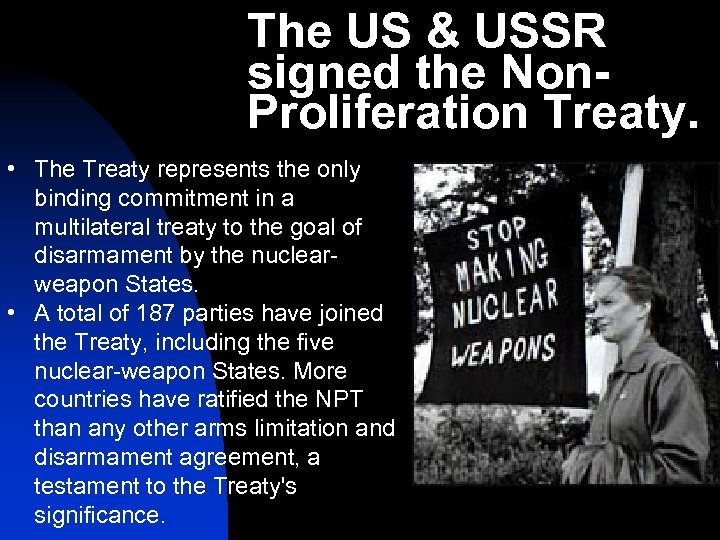
The US & USSR signed the Non. Proliferation Treaty. • The Treaty represents the only binding commitment in a multilateral treaty to the goal of disarmament by the nuclearweapon States. • A total of 187 parties have joined the Treaty, including the five nuclear-weapon States. More countries have ratified the NPT than any other arms limitation and disarmament agreement, a testament to the Treaty's significance.
The International Atomic Energy Agency (IAEA) n n n A safeguard system Verifies compliance through inspections conducted by the IAEA Promotes international cooperation and equal access in the field of peaceful nuclear technology
n n n To further the goal of non-proliferation and as a confidence-building measure between States parties, the Treaty establishes a safeguards system under the responsibility of the International Atomic Energy Agency (IAEA). Safeguards are used to verify compliance with the Treaty through inspections conducted by the IAEA. The Treaty promotes co-operation in the field of peaceful nuclear technology and equal access to this technology for all States parties, while safeguards & prevents the diversion of fissile material for weapons use.
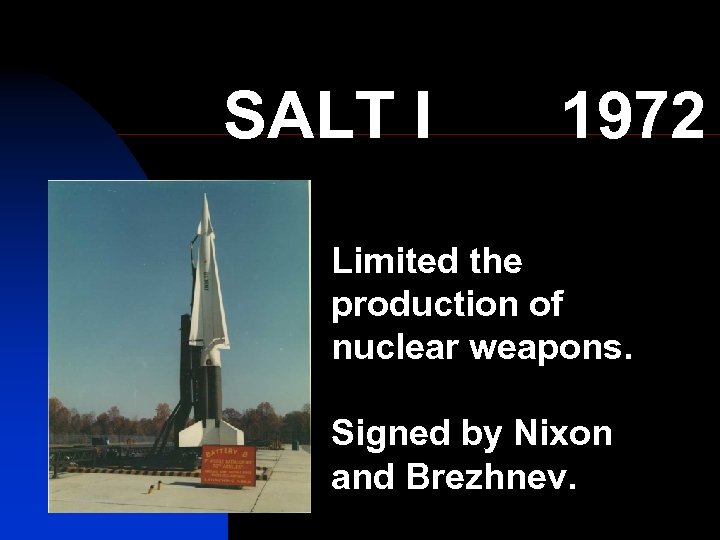
SALT I 1972 Limited the production of nuclear weapons. Signed by Nixon and Brezhnev.
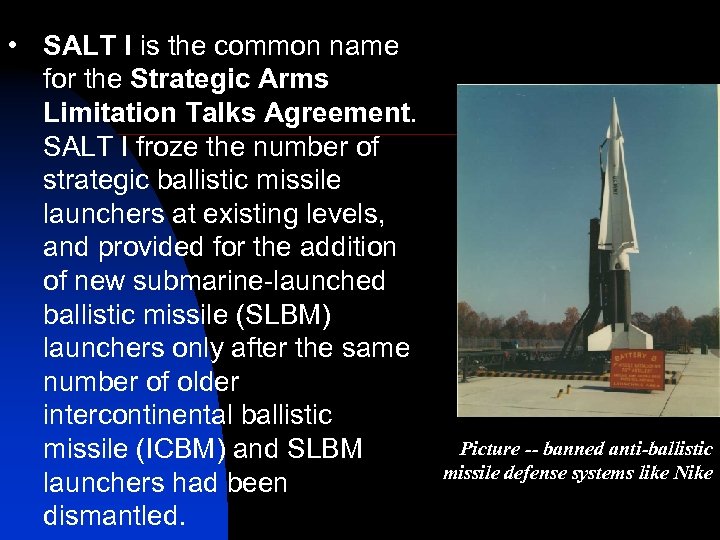
• SALT I is the common name for the Strategic Arms Limitation Talks Agreement. SALT I froze the number of strategic ballistic missile launchers at existing levels, and provided for the addition of new submarine-launched ballistic missile (SLBM) launchers only after the same number of older intercontinental ballistic missile (ICBM) and SLBM launchers had been dismantled. Picture -- banned anti-ballistic missile defense systems like Nike
Chilean Coup of 1973
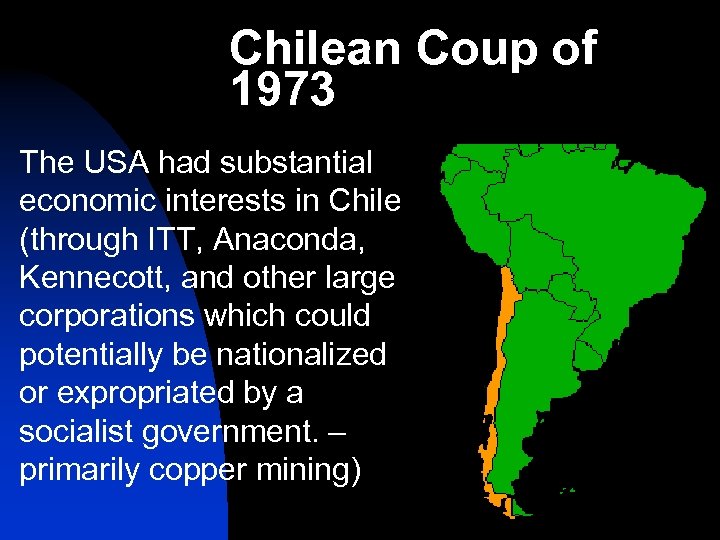
Chilean Coup of 1973 The USA had substantial economic interests in Chile (through ITT, Anaconda, Kennecott, and other large corporations which could potentially be nationalized or expropriated by a socialist government. – primarily copper mining)
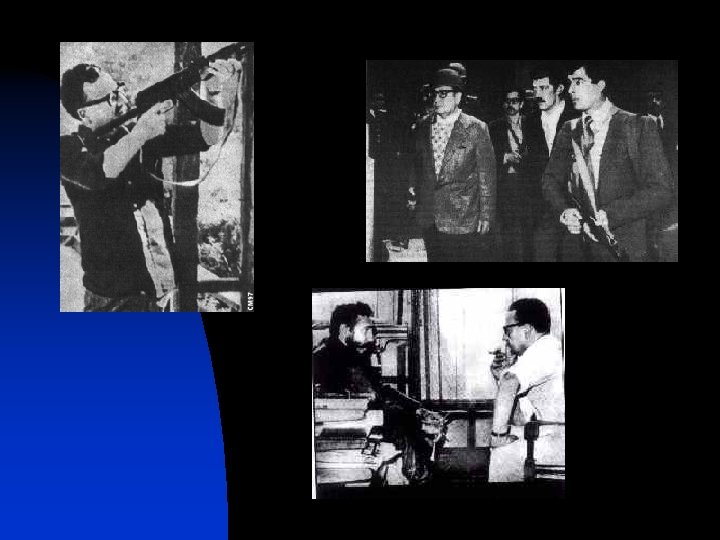
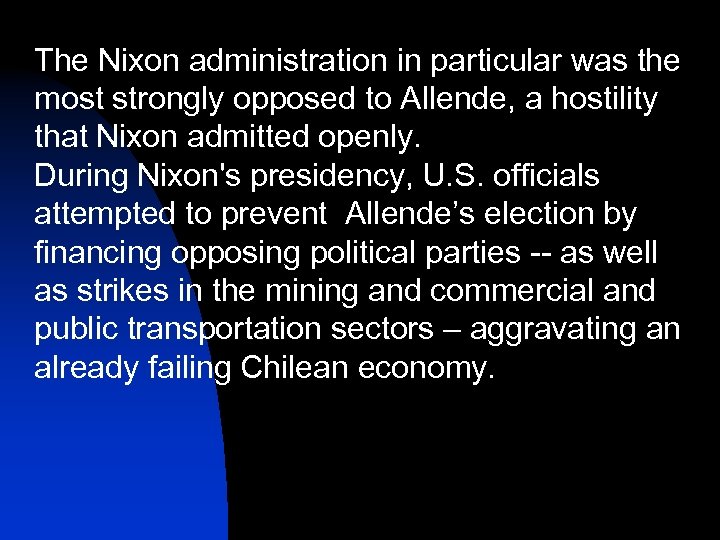
The Nixon administration in particular was the most strongly opposed to Allende, a hostility that Nixon admitted openly. During Nixon's presidency, U. S. officials attempted to prevent Allende’s election by financing opposing political parties -- as well as strikes in the mining and commercial and public transportation sectors – aggravating an already failing Chilean economy.
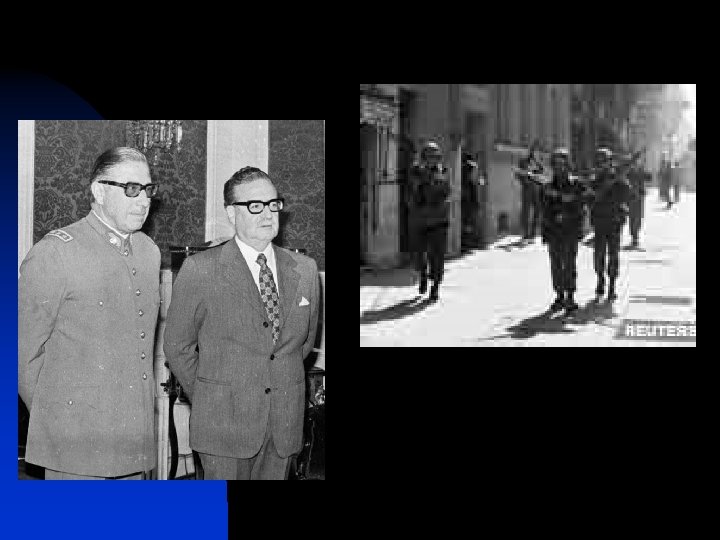
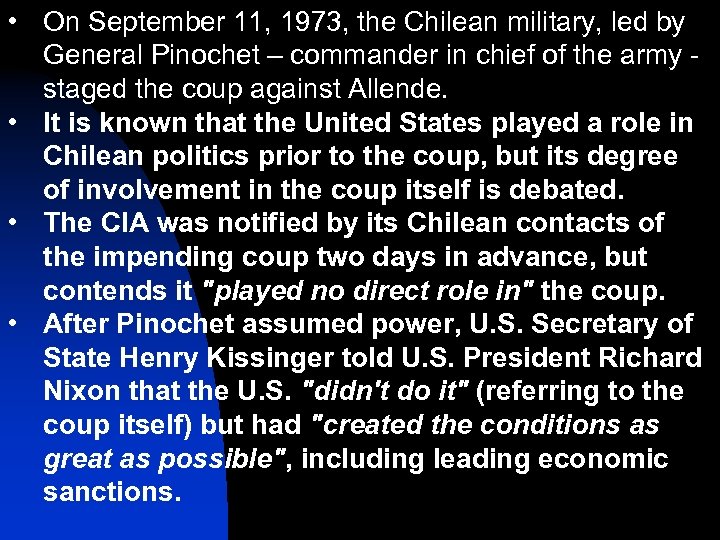
• On September 11, 1973, the Chilean military, led by General Pinochet – commander in chief of the army - staged the coup against Allende. • It is known that the United States played a role in Chilean politics prior to the coup, but its degree of involvement in the coup itself is debated. • The CIA was notified by its Chilean contacts of the impending coup two days in advance, but contends it "played no direct role in" the coup. • After Pinochet assumed power, U. S. Secretary of State Henry Kissinger told U. S. President Richard Nixon that the U. S. "didn't do it" (referring to the coup itself) but had "created the conditions as great as possible", including leading economic sanctions.
"I don't see why we need to stand by and watch a country go communist due to the irresponsibility of its own people. The issues are much too important for the Chilean voters to be left to decide for themselves. " — Henry Kissinger Pinoche would remain the military dictator of Chile from 1973 through 1990
Yom Kippur War (1973 Arab-Israeli War) October 6 – 26, 1973 between Israel and a coalition of Arab states led by Egypt and Syria
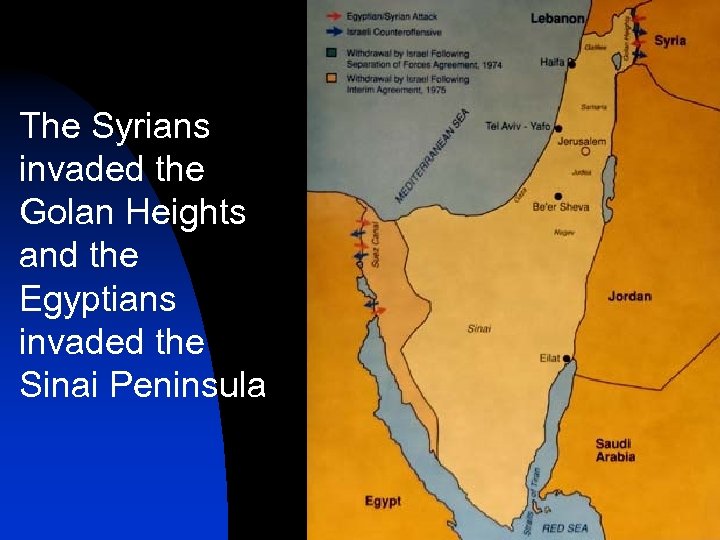
The Syrians invaded the Golan Heights and the Egyptians invaded the Sinai Peninsula
• The war began on the day of Yom Kippur (Jewish Day of Atonement - it is considered the holiest day of the Jewish year) with a surprise joint attack by Egypt and Syria. • They invaded the Sinai and Golan Heights, respectively, which had been captured by Israel in 1967 during the Six-Day War. • The Egyptians and Syrians advanced during the first 24 – 48 hours, after which momentum began to swing in Israel's favor. • By the second week of the war, the Syrians had been pushed entirely out of the Golan Heights – the Israelis had crossed the Suez Canal (where the old ceasefireline had been), and cut off an entire Egyptian army just as a United Nations cease-fire came into effect.
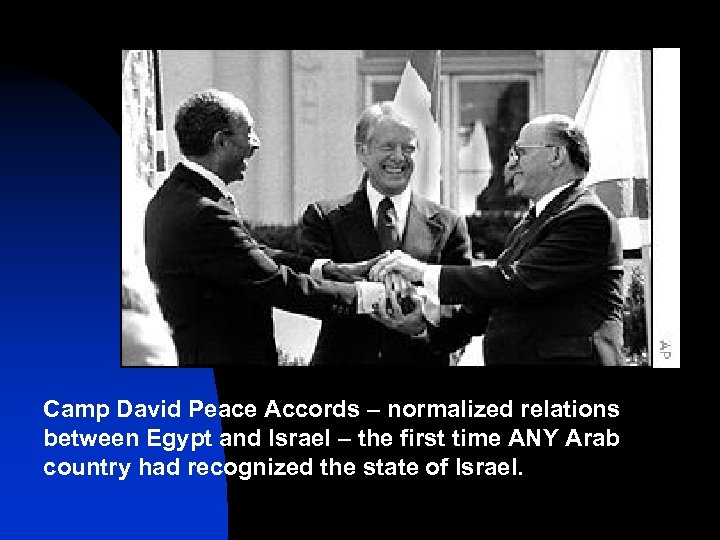
Camp David Peace Accords – normalized relations between Egypt and Israel – the first time ANY Arab country had recognized the state of Israel.
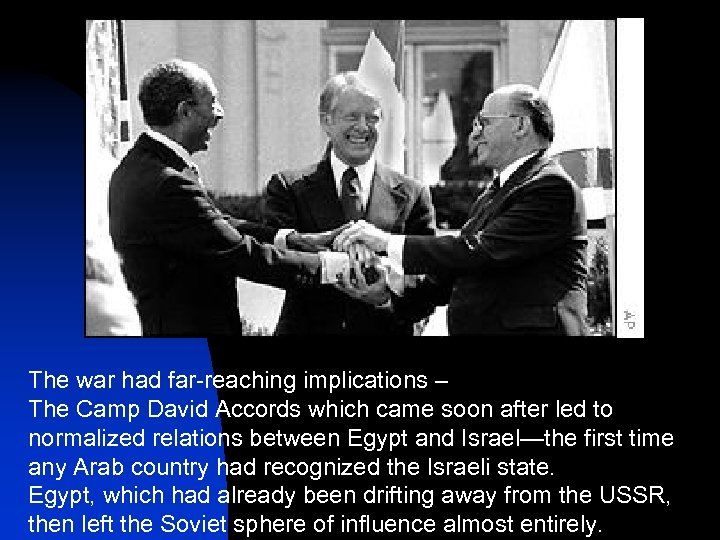
The war had far-reaching implications – The Camp David Accords which came soon after led to normalized relations between Egypt and Israel—the first time any Arab country had recognized the Israeli state. Egypt, which had already been drifting away from the USSR, then left the Soviet sphere of influence almost entirely.
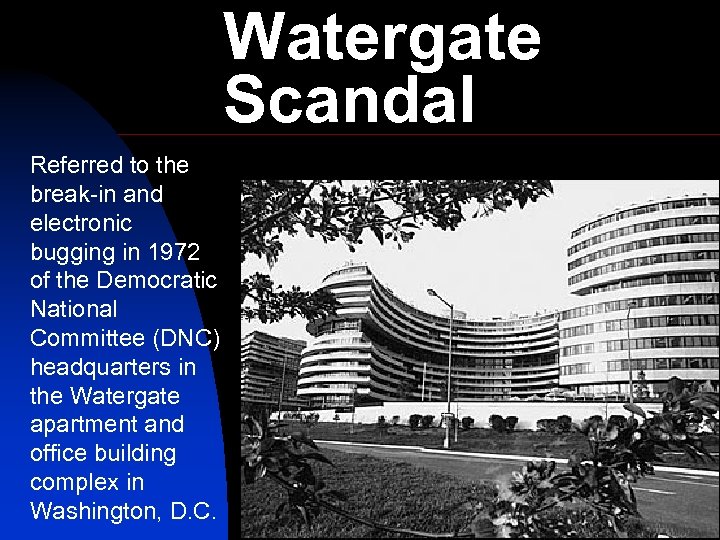
Watergate Scandal Referred to the break-in and electronic bugging in 1972 of the Democratic National Committee (DNC) headquarters in the Watergate apartment and office building complex in Washington, D. C.
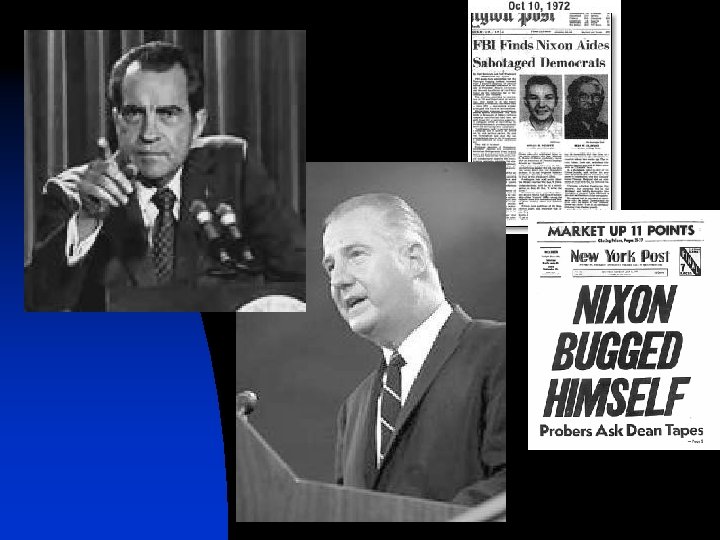
• Nixon’s Vice President – Spiro Agnew had resigned when it was announced he was being investigated for extortion, bribery and income-tax violations while governor of Maryland. • During the Watergate investigation, more than 30 Nixon administration officials, campaign officials, and financial contributors pleaded guilty or were found guilty of breaking the law. • It was made public that the White House had a system of audio surveillance that was used to record conversations and telephone calls – these tapes were instrumental in detailing Nixon’s involvement with the subsequent cover-up.
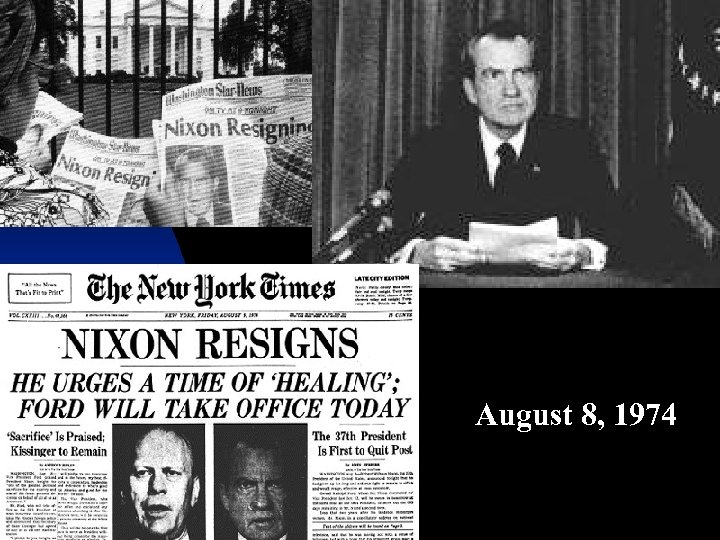
August 8, 1974
• The worst political scandal in U. S. history. It led to the resignation of a president, Richard M. Nixon, after he became implicated in an attempt to cover up the scandal. • Nixon, facing possible indictment after his resignation, received from his successor, Gerald Ford, a full pardon "for all offenses … which he … has committed or may have committed. "
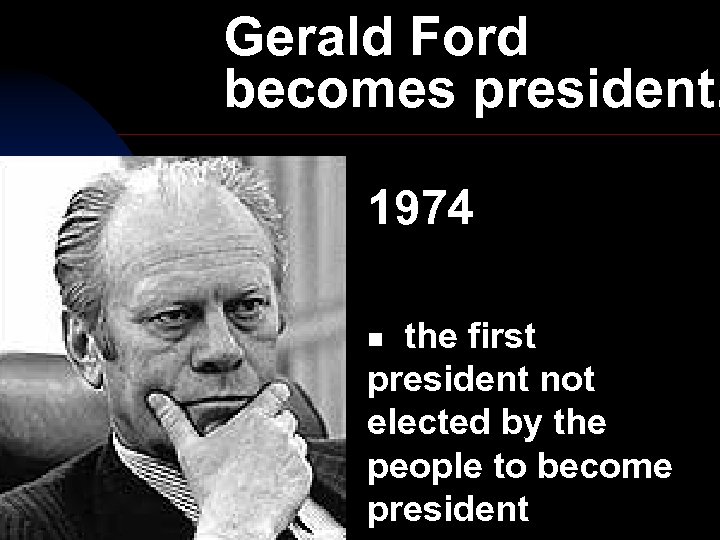
Gerald Ford becomes president. 1974 the first president not elected by the people to become president n
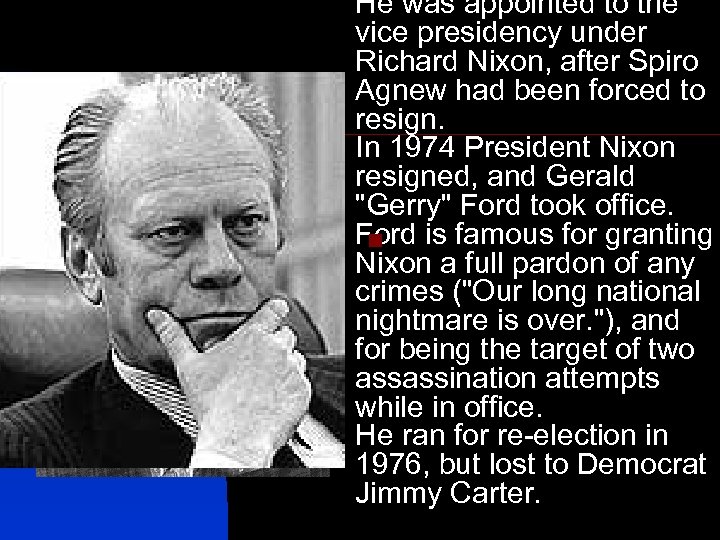
He was appointed to the vice presidency under Richard Nixon, after Spiro Agnew had been forced to resign. In 1974 President Nixon resigned, and Gerald "Gerry" Ford took office. Ford is famous for granting n Nixon a full pardon of any crimes ("Our long national nightmare is over. "), and for being the target of two assassination attempts while in office. He ran for re-election in 1976, but lost to Democrat Jimmy Carter.
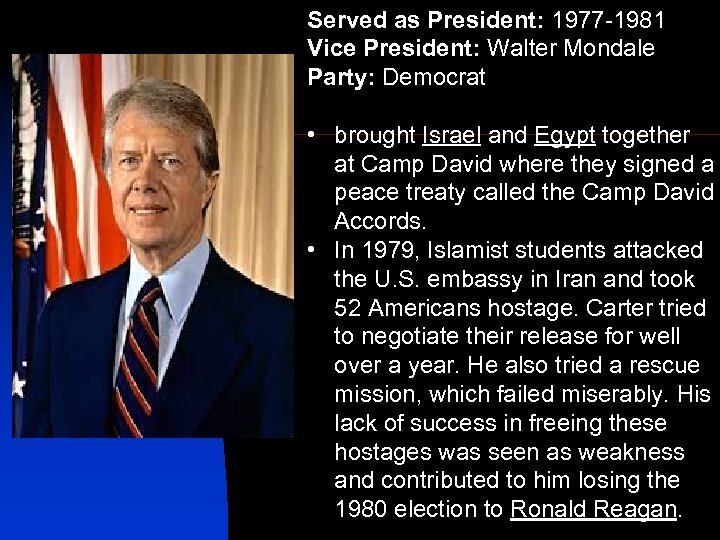
Served as President: 1977 -1981 Vice President: Walter Mondale Party: Democrat • brought Israel and Egypt together at Camp David where they signed a peace treaty called the Camp David Accords. • In 1979, Islamist students attacked the U. S. embassy in Iran and took 52 Americans hostage. Carter tried to negotiate their release for well over a year. He also tried a rescue mission, which failed miserably. His lack of success in freeing these hostages was seen as weakness and contributed to him losing the 1980 election to Ronald Reagan.
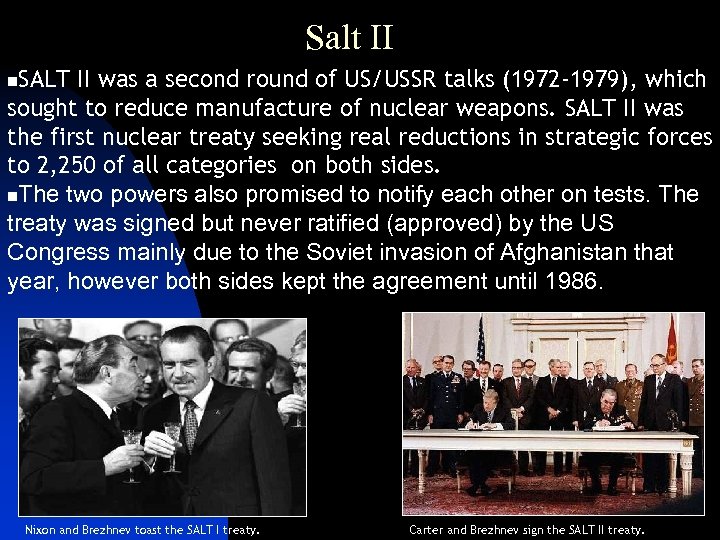
Salt II SALT II was a second round of US/USSR talks (1972 -1979), which sought to reduce manufacture of nuclear weapons. SALT II was the first nuclear treaty seeking real reductions in strategic forces to 2, 250 of all categories on both sides. n. The two powers also promised to notify each other on tests. The treaty was signed but never ratified (approved) by the US Congress mainly due to the Soviet invasion of Afghanistan that year, however both sides kept the agreement until 1986. n 35 Nixon and Brezhnev toast the SALT I treaty. Carter and Brezhnev sign the SALT II treaty.
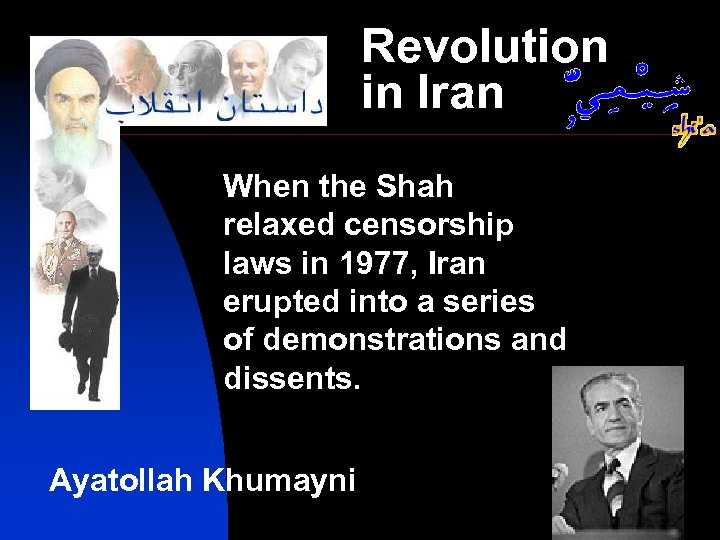
Revolution in Iran When the Shah relaxed censorship laws in 1977, Iran erupted into a series of demonstrations and dissents. Ayatollah Khumayni
Revolution in Iran When the Shah relaxed censorship laws in 1977, Iran erupted into a series of demonstrations and dissents. The writings of Ayatollah Khumayni began to circulate widely, and the amount of protest material in general began to flood the country. All through the 1960's and 1970's, Iranians were deeply discontent with the dictatorship of the Shah, but the flood of protest material fanned this discontent into a raging passion. People demanded more reforms, more human rights, more freedom, and more democracy.
Revolution in Iran • The writings of Ayatollah Khumayni began to circulate widely, and the amount of protest material in general began to flood the country. • Iranians were deeply discontent with the dictatorship of the Shah • People demanded more reforms, more human rights, more freedom, and more democracy.
Revolution in Iran • A group of students protested the visit of Jimmy Carter, the American President, and the governments attacks on Ayatollah Khumayni. • In particular, they demanded that Khumayni be allowed to return to the country. • The police, in an ill-conceived moment, opened fire on the students and killed seventy.
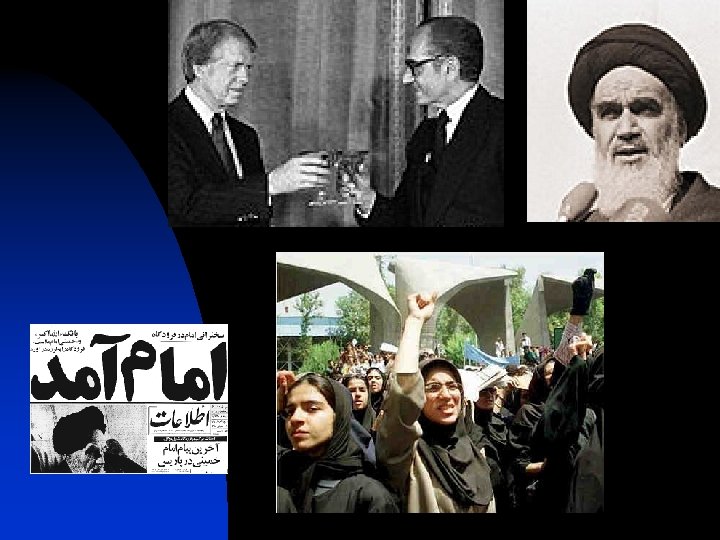
Revolution in Iran • The spark that erupted into revolution was a protest in Qumm on January 9, 1978. • A group of students protested the visit of Jimmy Carter, the American President, and the governments attacks on Ayatollah Khumayni. • In particular, they demanded that Khumayni be allowed to return to the country. • The police, in an ill-conceived moment, opened fire on the students and killed seventy.
Revolution in Iran • So forty days after the massacre at Qumm, Iranians took to the streets to commemorate the dead students and, by extension, to protest the government. • Again, Iranian police opened fire on the crowd. • Over one hundred people were killed in Tabriz on February 18, the fortieth day after the Qumm massacre.
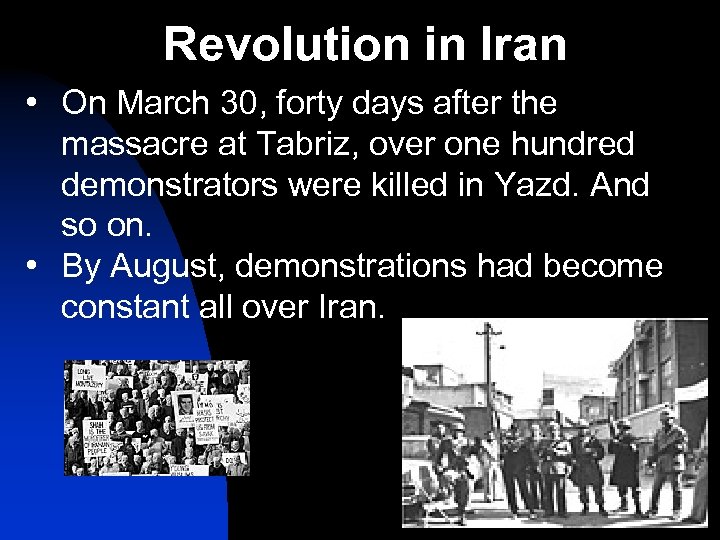
Revolution in Iran • On March 30, forty days after the massacre at Tabriz, over one hundred demonstrators were killed in Yazd. And so on. • By August, demonstrations had become constant all over Iran.
Revolution in Iran • The demonstrations became massive, in the millions, and it was clear that the demonstrators, not the government, was in charge. • They seized government buildings, shut down businesses with massive strikes, assassinated government officials.
Revolution in Iran • On January 16, 1979, the Shah left Iran for good. • On February 1, Khumayni returned to Iran to a welcoming crowd of several million people. • On February 12, the Prime Minister of Iran fled. • The Revolution was over and Khumayni declared a new Islamic Republic.
Revolution in Iran • When the Shah was allowed into the United States for medical treatment for his cancer, the Iranian people took to the streets. • The United States supported the Shah, and the Iranian people knew it. They felt the only response they could give in reaction to the United States not returning the Shah, was to take out their frustration towards the United States by demonstrating against the United States Embassy. • On November 4, 1979, Iranian "student" militants seized U. S. Embassy in Tehran and took the embassy personnel hostage. They demanded that U. S. return deposed Shah Mohammad Reza Pahlav. Washington refuses. • This was the Iranian Hostage Crisis.
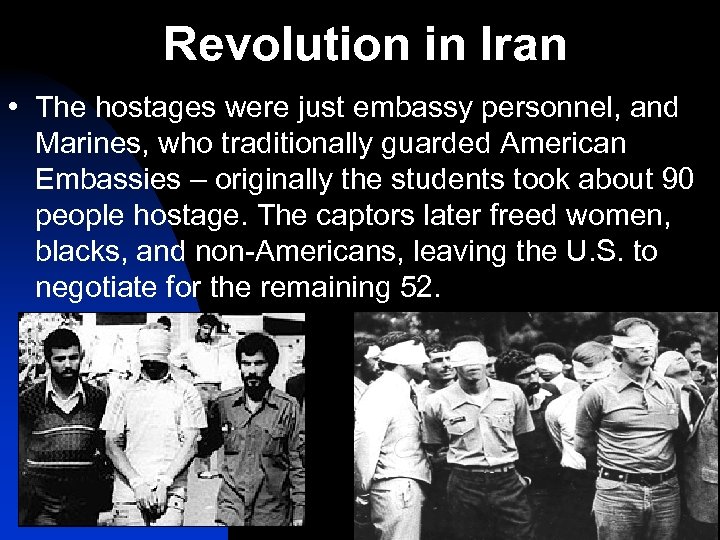
Revolution in Iran • The hostages were just embassy personnel, and Marines, who traditionally guarded American Embassies – originally the students took about 90 people hostage. The captors later freed women, blacks, and non-Americans, leaving the U. S. to negotiate for the remaining 52.
Revolution in Iran • To be an Embassy Guard, you had to be the cream of the crop, someone with great maturity for your age, intelligence, and potential to advance in the ranks of the Marine Corps in a diplomatic manner. • These men, the Embassy personnel, and these Marines, were America's finest.
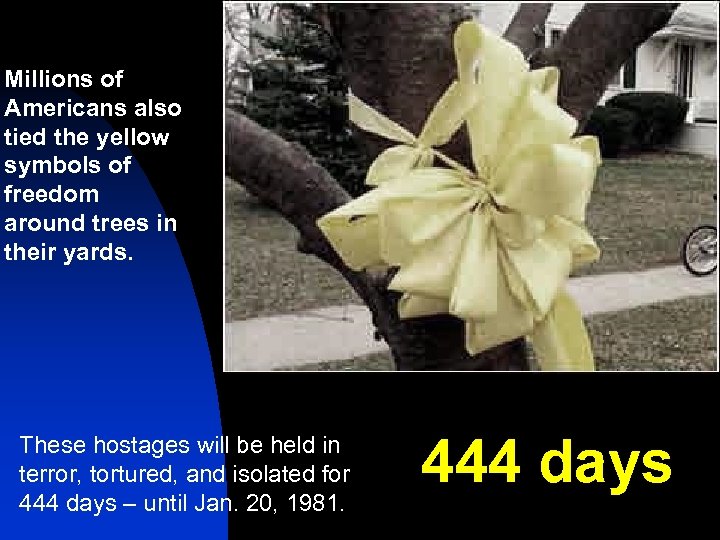
Millions of Americans also tied the yellow symbols of freedom around trees in their yards. These hostages will be held in terror, tortured, and isolated for 444 days – until Jan. 20, 1981. 444 days
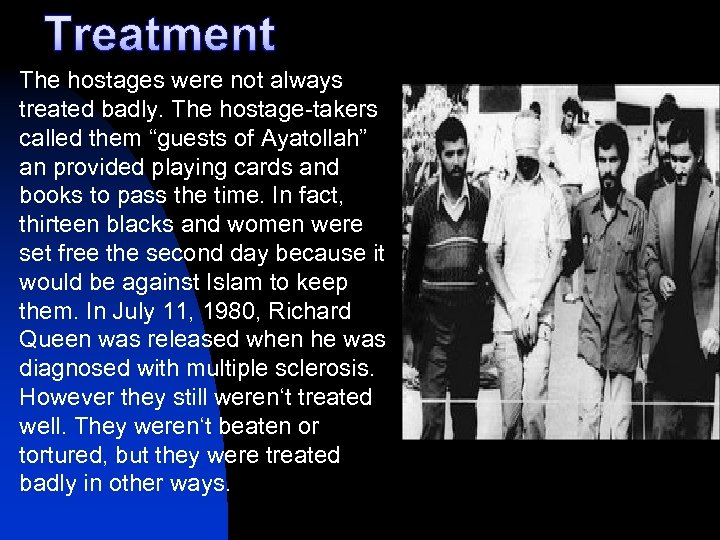
Treatment The hostages were not always treated badly. The hostage-takers called them “guests of Ayatollah” an provided playing cards and books to pass the time. In fact, thirteen blacks and women were set free the second day because it would be against Islam to keep them. In July 11, 1980, Richard Queen was released when he was diagnosed with multiple sclerosis. However they still weren‘t treated well. They weren‘t beaten or tortured, but they were treated badly in other ways.
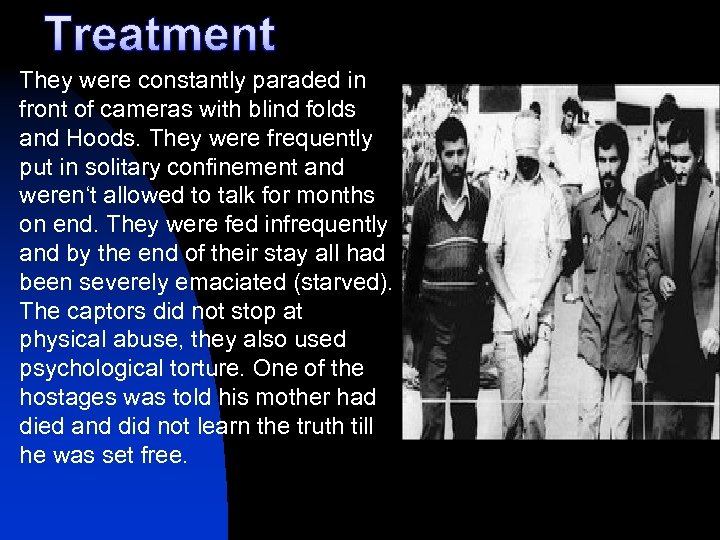
Treatment They were constantly paraded in front of cameras with blind folds and Hoods. They were frequently put in solitary confinement and weren‘t allowed to talk for months on end. They were fed infrequently and by the end of their stay all had been severely emaciated (starved). The captors did not stop at physical abuse, they also used psychological torture. One of the hostages was told his mother had died and did not learn the truth till he was set free.
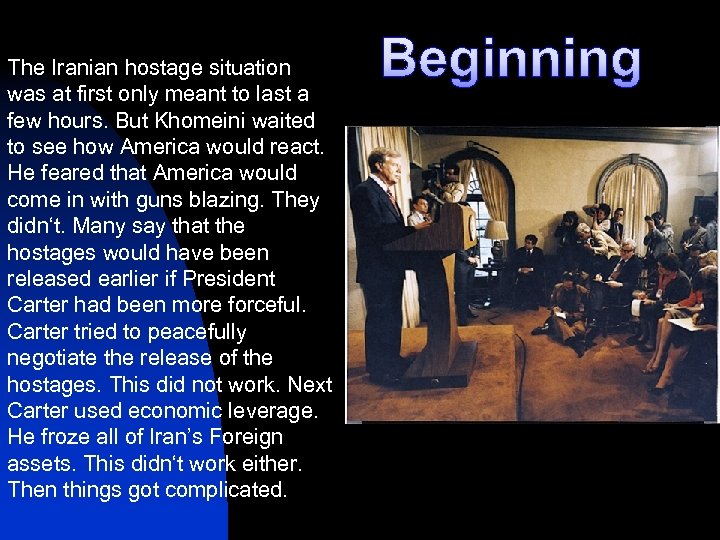
The Iranian hostage situation was at first only meant to last a few hours. But Khomeini waited to see how America would react. He feared that America would come in with guns blazing. They didn‘t. Many say that the hostages would have been released earlier if President Carter had been more forceful. Carter tried to peacefully negotiate the release of the hostages. This did not work. Next Carter used economic leverage. He froze all of Iran’s Foreign assets. This didn‘t work either. Then things got complicated. Beginning
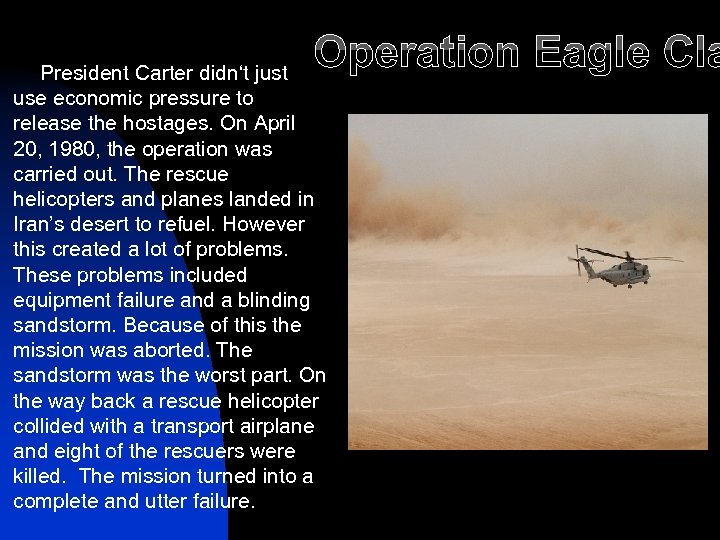
Operation Eagle Cla President Carter didn‘t just use economic pressure to release the hostages. On April 20, 1980, the operation was carried out. The rescue helicopters and planes landed in Iran’s desert to refuel. However this created a lot of problems. These problems included equipment failure and a blinding sandstorm. Because of this the mission was aborted. The sandstorm was the worst part. On the way back a rescue helicopter collided with a transport airplane and eight of the rescuers were killed. The mission turned into a complete and utter failure.
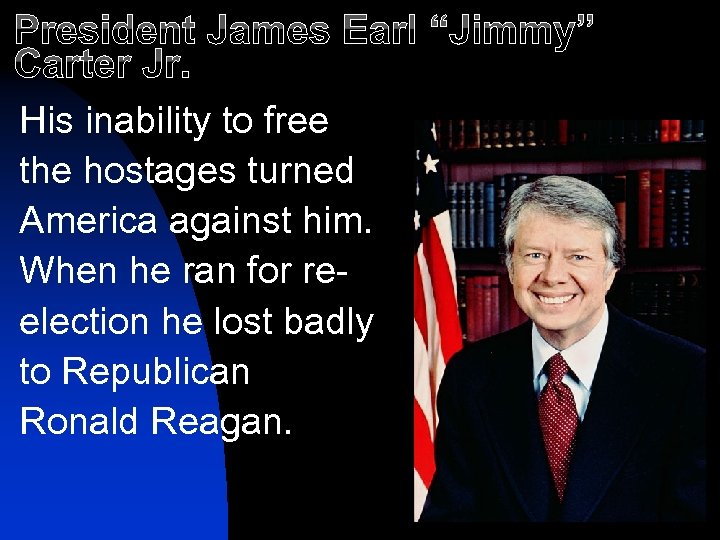
President James Earl “Jimmy” Carter Jr. His inability to free the hostages turned America against him. When he ran for reelection he lost badly to Republican Ronald Reagan.
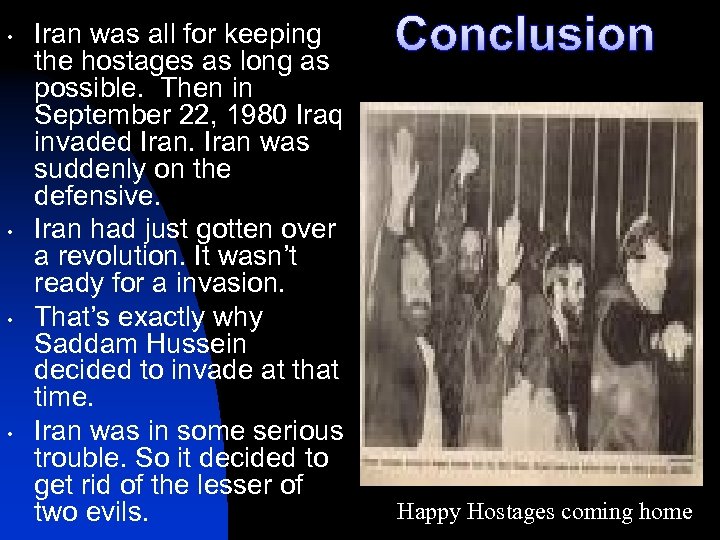
• • Iran was all for keeping the hostages as long as possible. Then in September 22, 1980 Iraq invaded Iran was suddenly on the defensive. Iran had just gotten over a revolution. It wasn’t ready for a invasion. That’s exactly why Saddam Hussein decided to invade at that time. Iran was in some serious trouble. So it decided to get rid of the lesser of two evils. Conclusion Happy Hostages coming home
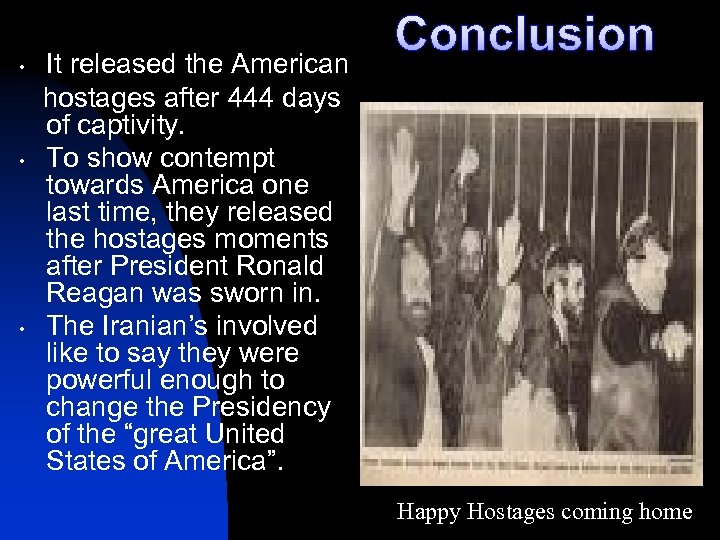
It released the American hostages after 444 days of captivity. • To show contempt towards America one last time, they released the hostages moments after President Ronald Reagan was sworn in. • The Iranian’s involved like to say they were powerful enough to change the Presidency of the “great United States of America”. Conclusion • Happy Hostages coming home
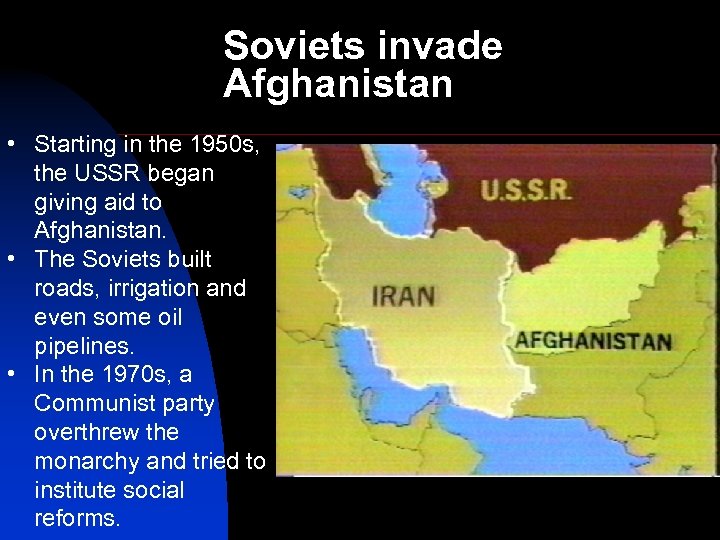
Soviets invade Afghanistan • Starting in the 1950 s, the USSR began giving aid to Afghanistan. • The Soviets built roads, irrigation and even some oil pipelines. • In the 1970 s, a Communist party overthrew the monarchy and tried to institute social reforms.
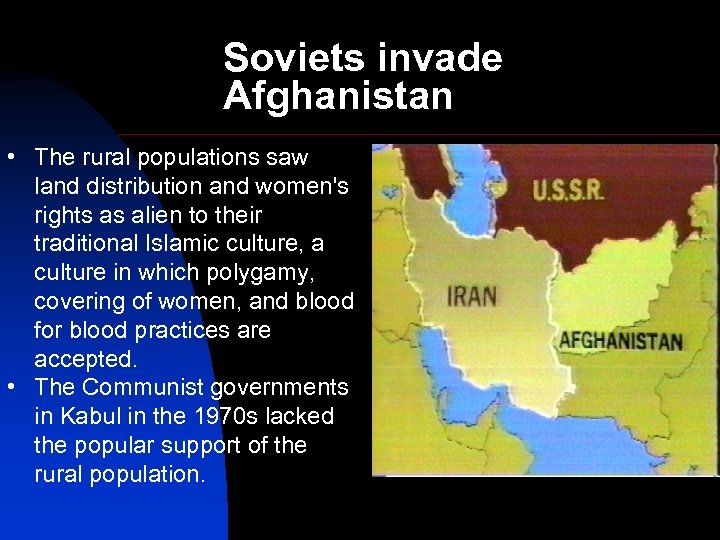
Soviets invade Afghanistan • The rural populations saw land distribution and women's rights as alien to their traditional Islamic culture, a culture in which polygamy, covering of women, and blood for blood practices are accepted. • The Communist governments in Kabul in the 1970 s lacked the popular support of the rural population.
Why? To expand Soviet influence in Asia n To preserve the Communist government n Protect Soviet interests from Iran and western nations n
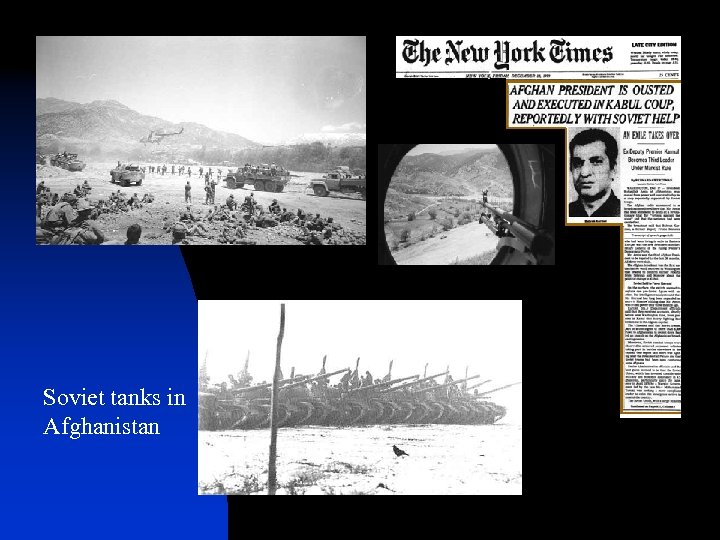
Soviet tanks in Afghanistan
Soviets invade Afghanistan • The Soviets brought in over one hundred thousand soldiers, secured Kabul quickly and installed Babrak Karmal as their puppet leader. • However, they were met with fierce resistance when they ventured out of their strongholds into the countryside.
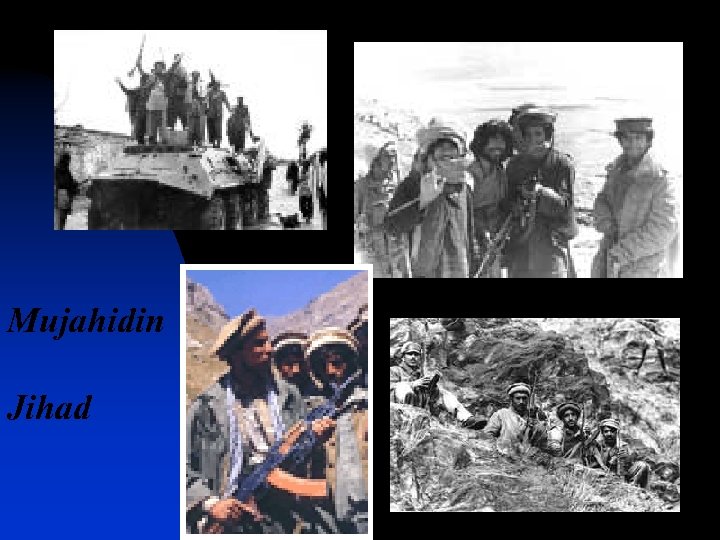
Mujahidin Jihad
Soviets invade Afghanistan • Resistance fighters, called mujahidin, saw the Christian or atheist Soviets controlling Afghanistan as a defilement of Islam as well as of their traditional culture. • Proclaiming a "jihad"(holy war), they gained the support of the Islamic world.
Soviets invade Afghanistan • The US gave them weapons and money. • The mujahidin employed guerrilla tactics against the Soviets. • Osama bin Laden became the head of al-Qaeda (non-Afghani, Arab Muslim fighters) leading guerilla warfare against the Soviet Army. • They would attack or raid quickly, then disappear into the mountains, causing great destruction without pitched battles. • The fighters used whatever weapons they could take from the Soviets or were given by the US.
Soviets invade Afghanistan • • • The tide of the war would be turned by the introduction of US-made shoulder-launched antiaircraft missiles in 1987. With these missiles, the mujahidin shot down Soviet planes and helicopters every day, increasing the monetary and human cost of the war, and making Soviet strike tactics ineffective. Demoralized and with no victory in sight, the USSR's forces are forced to leave Afghanistan.
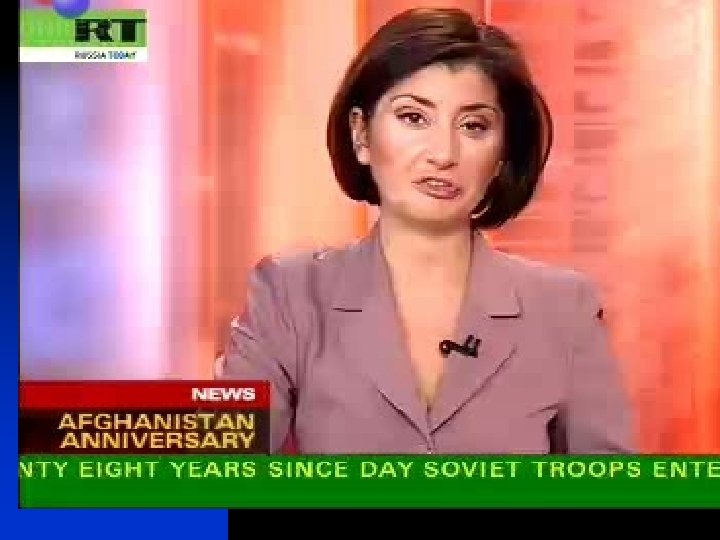
Soviets invade Afghanistan • In 1989, Soviet forces pulled out of Afghanistan. • Fifteen thousand Soviet soldiers and countless Afghans had been killed in the decade-long war. • Billions of dollars had been spent each year to support troops in Afghanistan. • Unable to defeat the mujahidin and pressed by world opinion to leave Afghanistan, Soviet leader Gorbachev decided that the USSR had to get out.
Effects of the war on Afghanistan n n Several million Afghan refugees Millions more died from starvation and Soviet bombing raids A generation that knows only war, hatred, and fear Country in barren and in ruin Thousands of miniature land mines were dropped by Soviet planes
Soviets invade Afghanistan • The war had far-reaching effects on Afghanistan, the Soviets, and the US. • Several million Afghans had either fled to neighboring Pakistan for refuge or had become internal refugees. • In addition, millions more had died from starvation or from the Soviet bombings and raids.
Soviets invade Afghanistan • Among the survivors were a generation that had known only war, hatred, and fear. • Homes, animals, and precious irrigation systems were destroyed, leaving the country barren and in ruin. • Also, thousands of miniature land mines dropped by the Soviet planes continued to pose a hazard to the Afghan people long after the war with the USSR ended.
Effects on U. S. S. R. n n n Lost 15, 000 troops Degradation of Soviet image – no longer invincible Billions spent on the ten year weakened an already unsteady Soviet economy
Long Term Consequence n The establishment of a weak state full of religious fanaticism and a hatred of richer nations; in short, a breeding ground for terrorism.
Long Term Consequence • Though supplying the Afghan resistance with American guns and anti-aircraft missiles seemed like a good idea for the US in the 1980 s, and was the reason for the Soviets’ defeat, now as the US invades, they are met with their own guns.
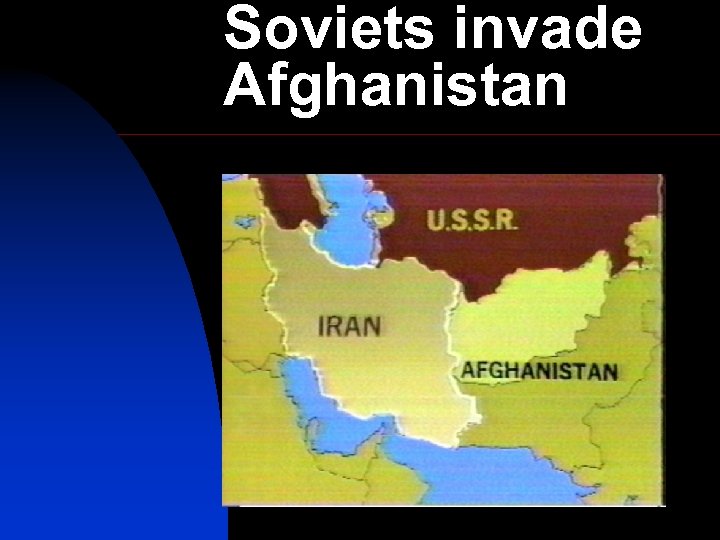
Soviets invade Afghanistan
Why? To expand Soviet influence in Asia n To preserve the Communist government n Protect Soviet interests from Iran and western nations n
Soviets invade Afghanistan Starting in the 1950 s, the USSR began giving aid to Afghanistan. The Soviets built roads, irrigation and even some oil pipelines. In the 1970 s, a Communist party overthrew the monarchy and tried to institute social reforms. The rural populations saw land distribution and women's rights as alien to their traditional Islamic culture, a culture in which polygamy, covering of women, and blood for blood practices are accepted. The Communist governments in Kabul in the 1970 s lacked the popular support of the rural population.
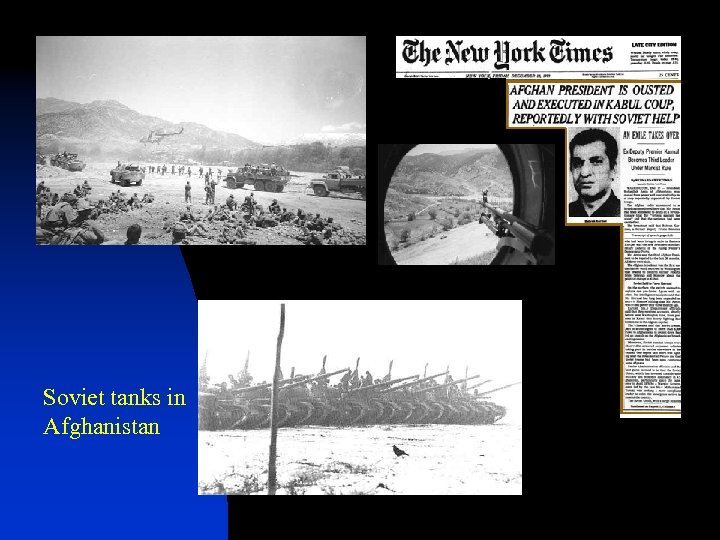
Soviet tanks in Afghanistan
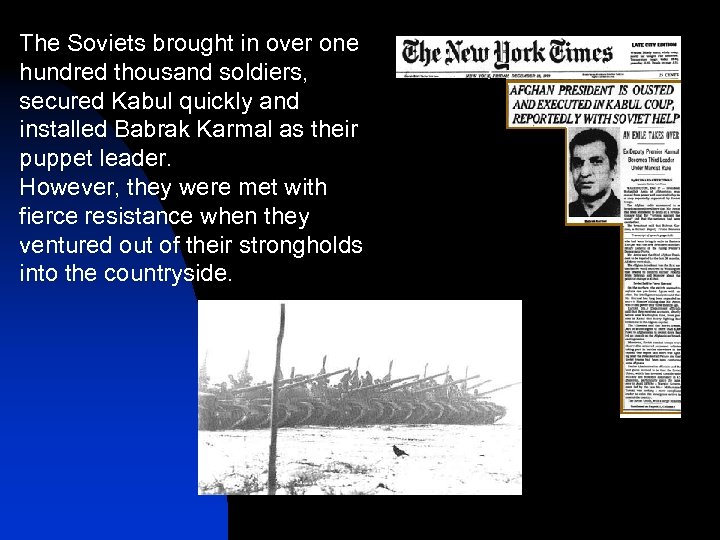
The Soviets brought in over one hundred thousand soldiers, secured Kabul quickly and installed Babrak Karmal as their puppet leader. However, they were met with fierce resistance when they ventured out of their strongholds into the countryside.
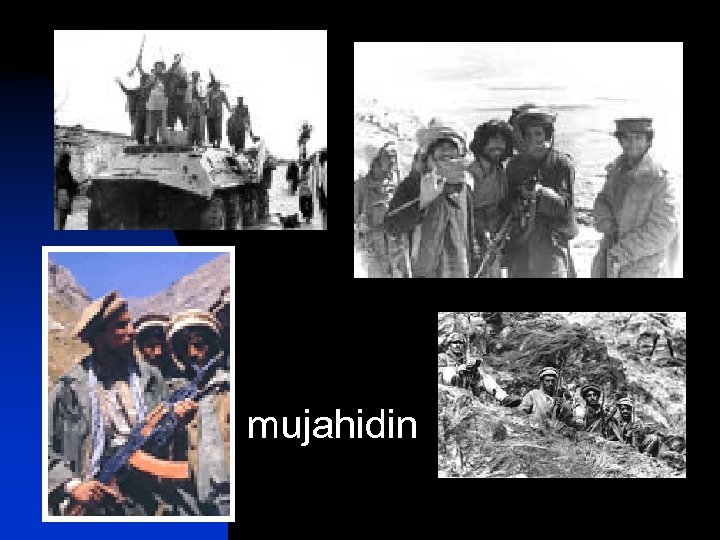
mujahidin
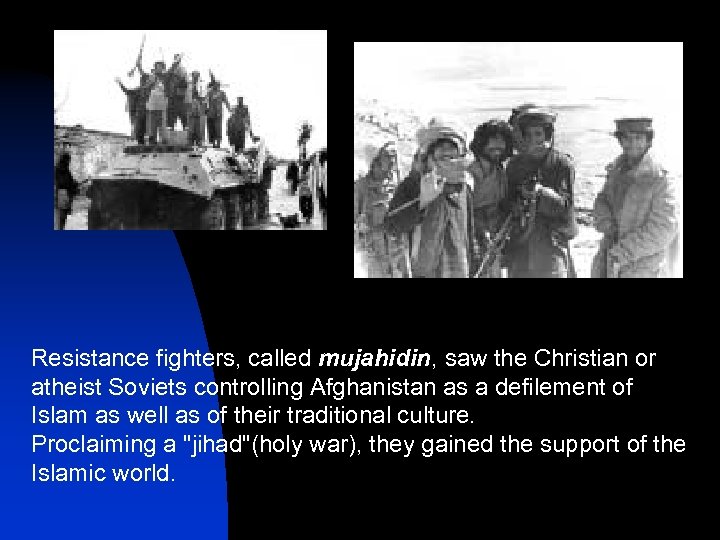
Resistance fighters, called mujahidin, saw the Christian or atheist Soviets controlling Afghanistan as a defilement of Islam as well as of their traditional culture. Proclaiming a "jihad"(holy war), they gained the support of the Islamic world.
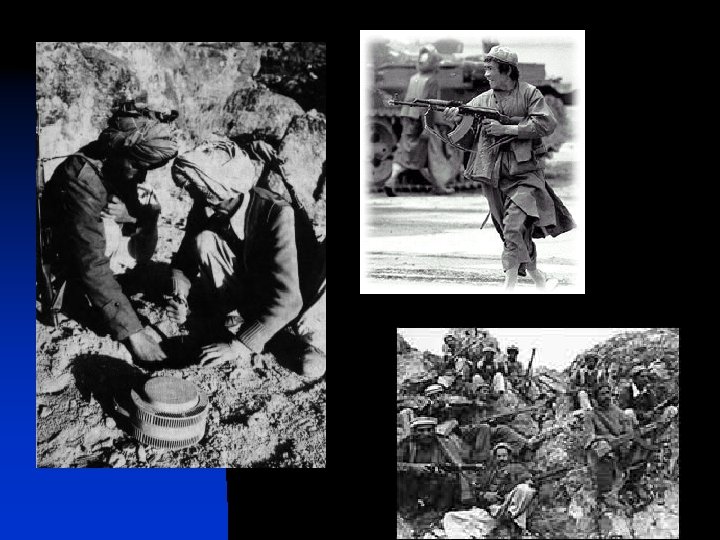
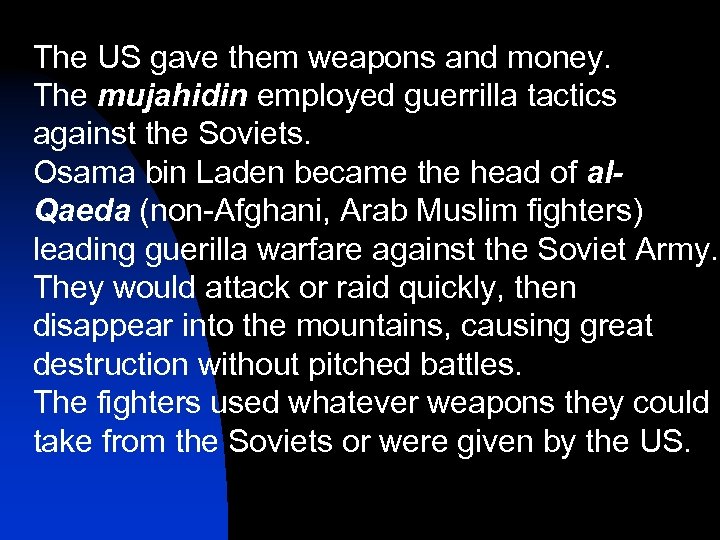
The US gave them weapons and money. The mujahidin employed guerrilla tactics against the Soviets. Osama bin Laden became the head of al. Qaeda (non-Afghani, Arab Muslim fighters) leading guerilla warfare against the Soviet Army. They would attack or raid quickly, then disappear into the mountains, causing great destruction without pitched battles. The fighters used whatever weapons they could take from the Soviets or were given by the US.
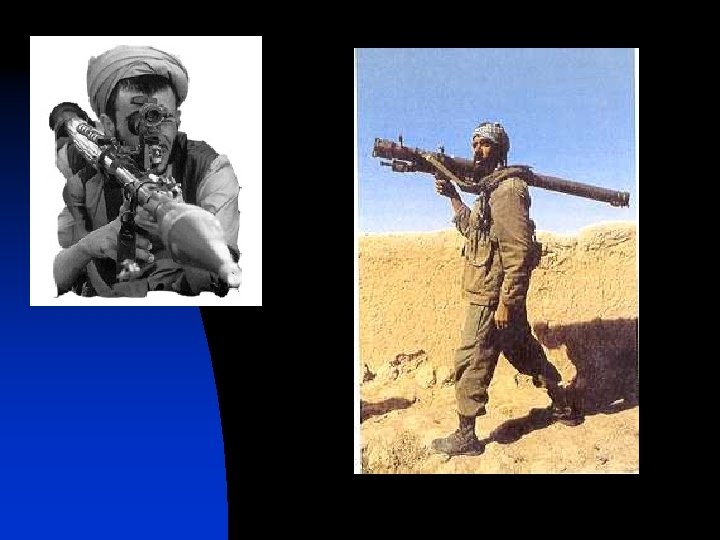
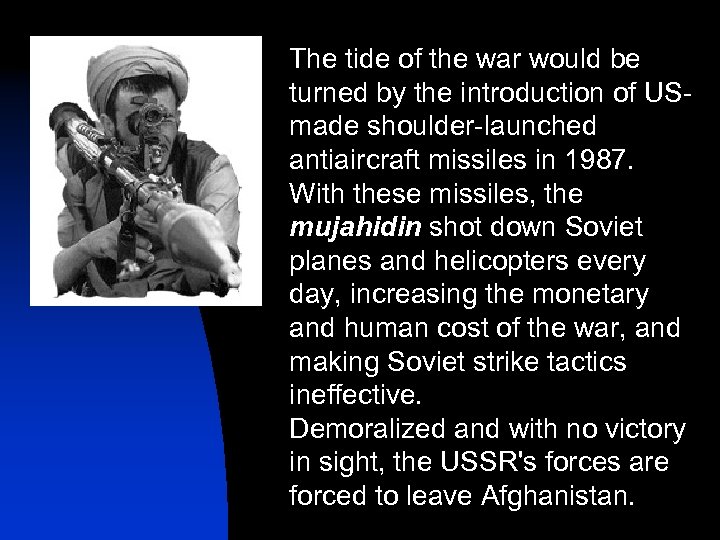
The tide of the war would be turned by the introduction of USmade shoulder-launched antiaircraft missiles in 1987. With these missiles, the mujahidin shot down Soviet planes and helicopters every day, increasing the monetary and human cost of the war, and making Soviet strike tactics ineffective. Demoralized and with no victory in sight, the USSR's forces are forced to leave Afghanistan.
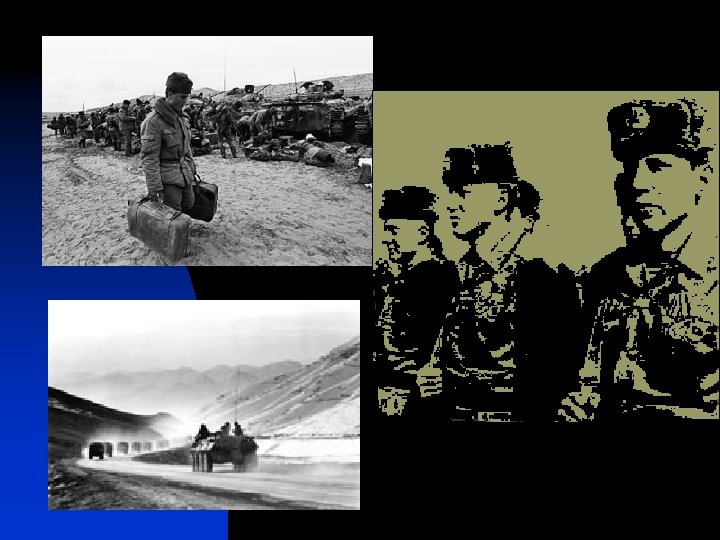
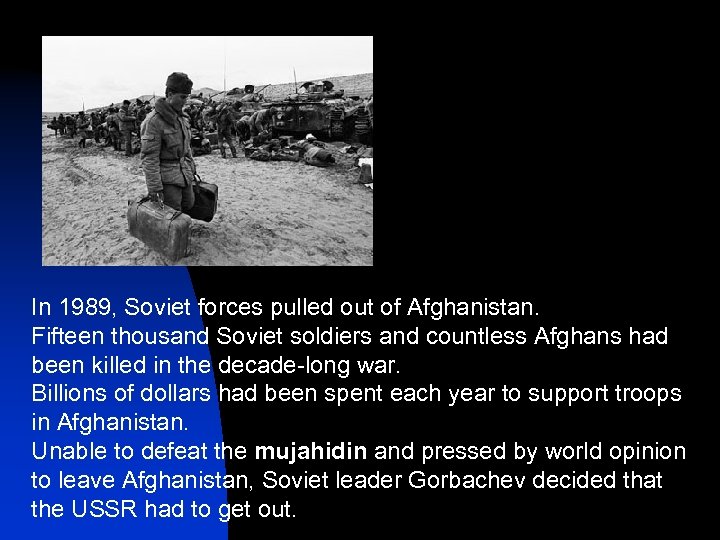
In 1989, Soviet forces pulled out of Afghanistan. Fifteen thousand Soviet soldiers and countless Afghans had been killed in the decade-long war. Billions of dollars had been spent each year to support troops in Afghanistan. Unable to defeat the mujahidin and pressed by world opinion to leave Afghanistan, Soviet leader Gorbachev decided that the USSR had to get out.
Effects of the war on Afghanistan n n Several million Afghan refugees Millions more died from starvation and Soviet bombing raids A generation that knows only war, hatred, and fear Country in barren and in ruin Thousands of miniature land mines were dropped by Soviet planes
Effects on U. S. S. R. n n n Lost 15, 000 troops Degradation of Soviet image – no longer invincible Billions spent on the ten year weakened an already unsteady Soviet economy
Long Term Consequence n The establishment of a weak state full of religious fanaticism and a hatred of richer nations; in short, a breeding ground for terrorism.
Long Term Consequence n Though supplying the Afghan resistance with American guns and anti-aircraft missiles seemed like a good idea for the US in the 1980 s, and was the reason for the Soviets’ defeat, now as the US invades, they are met with their own guns.
 Скачать презентацию The Seventies CRyan WHistory FACTS about this
d8f4496cb6d398b740cb058be4a6a274.ppt