


 Скачать презентацию The Scientific Pursuit of Happiness Positive Psychology UCF
45139e44735b6cdfb0628f95528aab40.ppt
- Количество слайдов: 84
 The Scientific Pursuit of Happiness Positive Psychology UCF: W. Steven Saunders, Psy. D.
 A starting place • Martin Seligman • APA President 1996 • Psychology split into two camps: • Academics more interested in science. • Clinicians interested in practice of psychotherapy. • Hoped to bring science and practice together.
 Nikki and the weeds • • • Seligman’s inspiration. Weeding garden. 5 -year old daughter throwing weeds. Seligman irritated, yelled at Nikki. “Daddy. From when I was 3 until I was 5, I was a whiner. I whined every day. On my 5 th birthday, I decided I wasn’t going to whine anymore. That was the hardest thing I’ve ever done. If I can stop whining, you can stop being such a grouch. ”
 An epiphany • Seligman resolved to change. • His purpose in life was not to correct his daughter’s shortcomings. • Instead, raising her to nurture the strength she displayed (social intelligence). • Can psychological science be about identifying and nurturing strengths? • His mission as APA president.
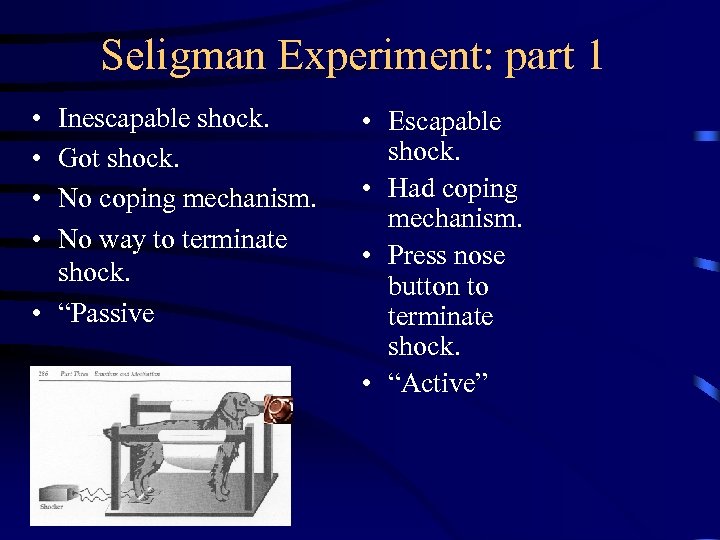 Seligman Experiment: part 1 • • Inescapable shock. Got shock. No coping mechanism. No way to terminate shock. • “Passive • Escapable shock. • Had coping mechanism. • Press nose button to terminate shock. • “Active”
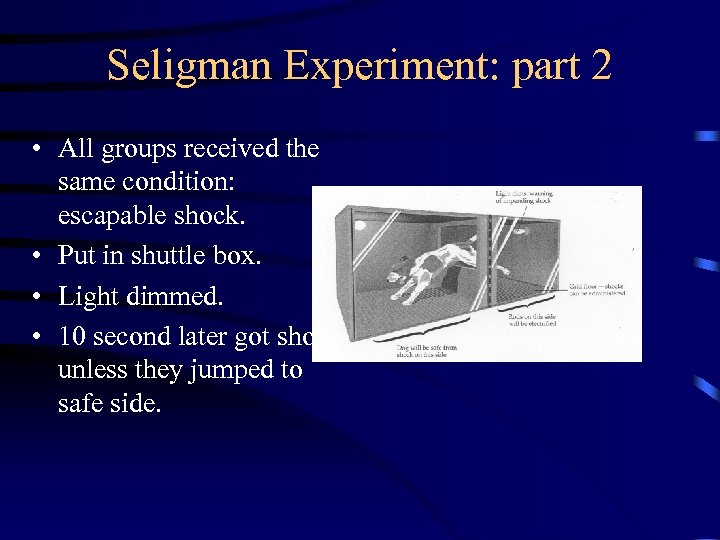 Seligman Experiment: part 2 • All groups received the same condition: escapable shock. • Put in shuttle box. • Light dimmed. • 10 second later got shock unless they jumped to safe side.
 Shuttle box behavior • Dogs in the escapable shock quickly learned to jump to safe side. • Dogs in inescapable shock did not jump to safe side. Agitated at first but later laid down and took the shock. • Dogs in inescapable shock group learned helplessness
 Parallels with Reactive Depression • Triggered by traumatic life event (ex. death of loved one). • Passivity • Difficulty in learning responses that bring relief. • Physical symptoms. • Stress related disorders.
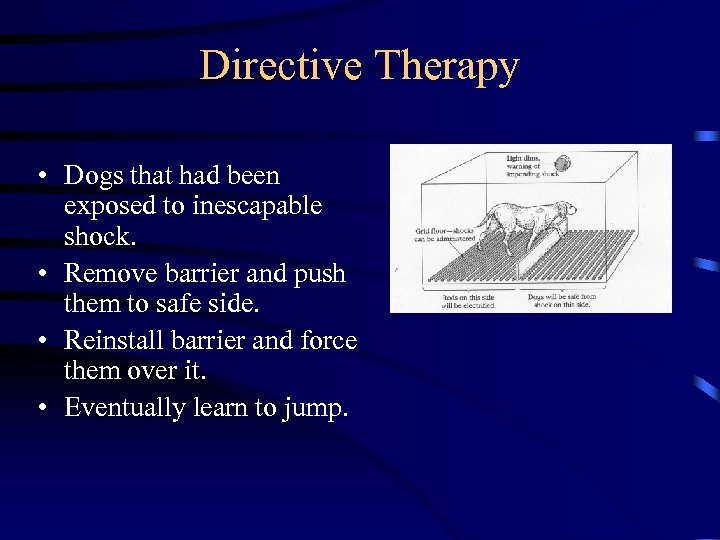 Directive Therapy • Dogs that had been exposed to inescapable shock. • Remove barrier and push them to safe side. • Reinstall barrier and force them over it. • Eventually learn to jump.
 Parallels to Treating People • Encourage depressed people to get back into life. Ex: not willing to leave home. • Small steps. (Go out to movie, then mall. ) • Increase difficulty. • Show them they do have control over their lives. • Motivational, learning and emotional gains.
 Prevention of Helplessness • Seligman suggests the best prevention for helplessness is early experience with mastery. • Based on life histories of people who were resilient in situations likely to cause helplessness. • Self-efficacy, competence already in existence. Served as a buffer.
 Human strengths • Despite all the difficulties of life, majority of people manage to live with dignity and purpose. • Positive psychology adopts a more optimistic perspective on human potential, motives, and capacities. • Humanistic psychology with scientific methods.
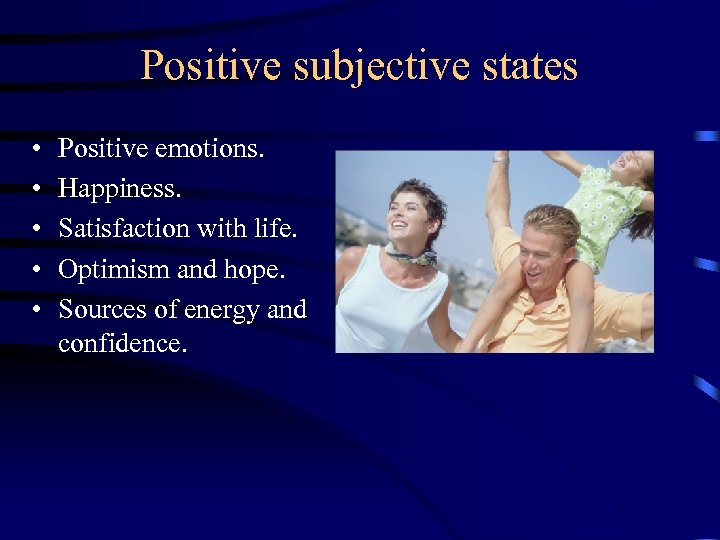 Positive subjective states • • • Positive emotions. Happiness. Satisfaction with life. Optimism and hope. Sources of energy and confidence.
 Positive individual traits • Character strengths and virtues: Wisdom, Courage, Humanity, Justice, Temperance and Transcendence. • Creativity and excellence. • FLOW by Mihalyi Csikszentmihalyi
 Positive institutions • Develop and sustain institutions that enrich human potential. • Healthy families • Work environments. • Schools. • Whole communities. • Reduce high risk behavior by punishing or supporting alternatives.
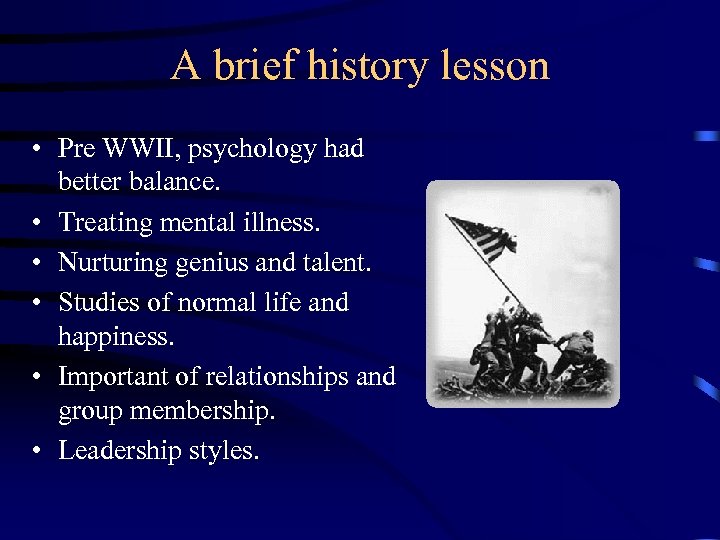 A brief history lesson • Pre WWII, psychology had better balance. • Treating mental illness. • Nurturing genius and talent. • Studies of normal life and happiness. • Important of relationships and group membership. • Leadership styles.
 After the war • • • Focus on treatments for mental illness. GI’s coming home with “combat fatigue”. In treatment at VA hospitals. Now called PTSD. Money went towards developing new treatments. • 1955, introduction of drugs for the treatment of depression and psychosis.
 Education programs • After war, seemed more appropriate to focus on helping children with developmental disabilities. • Gifted programs encouraged but not funded. • Exceptional children are on both ends of the spectrum. • Nurture genius and talents as well.
 Expand focus • Positive psychology supports efforts to eliminate social problems such as drug abuse, criminal behavior and mental illness. • Study the protective factors as well as the risk factors. • Positive emotions and traits that could be used to combat problems.
 Risk and protective factors • Drug abuse risk factors: Family history, peer influence, unemployment. • Protective factors: Strong family values, positive peer influence, employment counseling. • Most people do not abuse alcohol. • Most gamblers can control themselves. • Positive gambling ads. • Message of hope rather than fear.
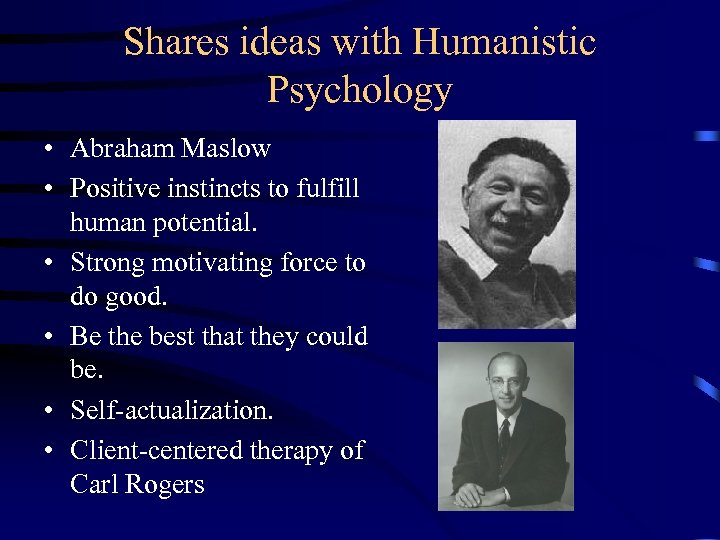 Shares ideas with Humanistic Psychology • Abraham Maslow • Positive instincts to fulfill human potential. • Strong motivating force to do good. • Be the best that they could be. • Self-actualization. • Client-centered therapy of Carl Rogers
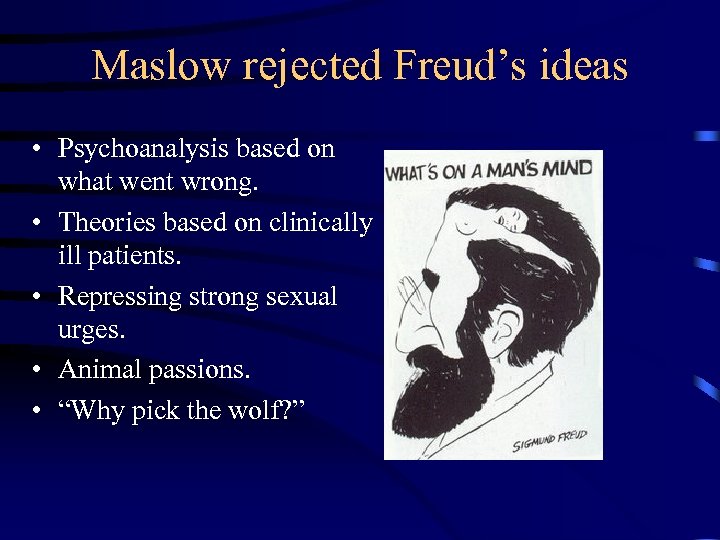 Maslow rejected Freud’s ideas • Psychoanalysis based on what went wrong. • Theories based on clinically ill patients. • Repressing strong sexual urges. • Animal passions. • “Why pick the wolf? ”
 Why live in social groups? • Freud: social groups control innate aggression. • Maslow: need for belongingness. • Current view: social behavior highly adaptive. • Evolutionary advantage. • Improve survival rate. • Social behavior in our genes.
 Humanistic Psychology • Positive side • Optimistic view of humankind. • Human abilities. • Growth potential. • Healthy personality. • Pyramid of needs • Negative side • Non-scientific. • Philosophy rather than psychology. • Need evidence to support beliefs. • Self-actualizers rare. • Practical applications.
 Positive Psychology emphasis on research. • Most people adapt and adjust to life in creative ways. • Resilience: Bounce back after loss. • Go beyond recovery. • Life takes on new meaning and focus. • Study this strength and resilience using scientific method. • What makes life worth living.
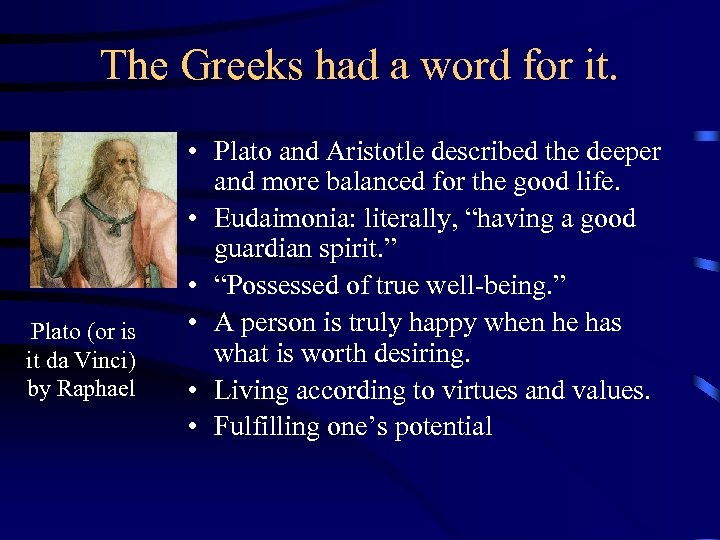 The Greeks had a word for it. Plato (or is it da Vinci) by Raphael • Plato and Aristotle described the deeper and more balanced for the good life. • Eudaimonia: literally, “having a good guardian spirit. ” • “Possessed of true well-being. ” • A person is truly happy when he has what is worth desiring. • Living according to virtues and values. • Fulfilling one’s potential
 More than Maslow • Fulfilling one’s potential sounds a lot like self-actualization. • Maslow believed only a few people could reach self-actualization. Elitist. • Positive psychology has wider view. • “Average” individuals hold potential. • Study regular people with large samples.
 Prevention over treatment • Positive psychology seeks to shift some of the focus from treatment to prevention. • Help more people if we can prevent problems before they exist (primary). • Or intervene before they get worse (secondary). • Treatment (tertiary).
 Saving the drowning • Women driving down a road near a river with a strong current. • Sees teenager in danger of drowning. Stops car. • She pulls teen to shore when another appears in the torrent. Then another and another. • She keeps pulling people out for two hours. • Other people stop cars to help her save teens. • Finally the woman starts walking up stream. • “Where are you going? ” the people ask. “Don’t you see there are more to be saved? ” • Her reply?
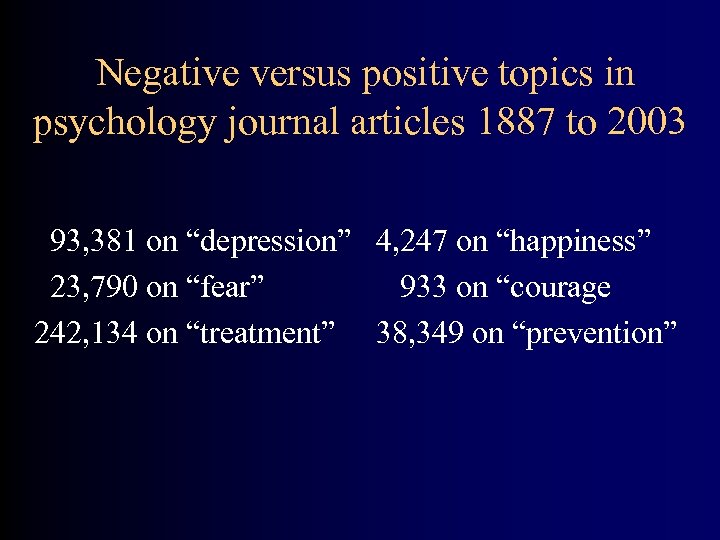 Negative versus positive topics in psychology journal articles 1887 to 2003 93, 381 on “depression” 4, 247 on “happiness” 23, 790 on “fear” 933 on “courage 242, 134 on “treatment” 38, 349 on “prevention”
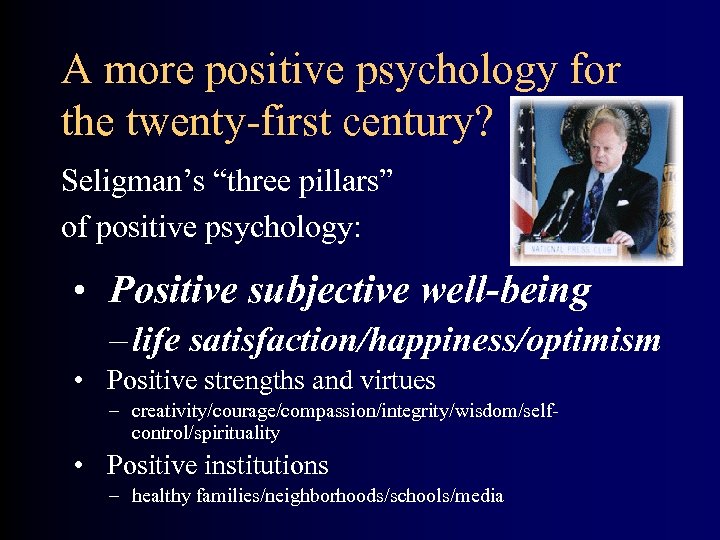 A more positive psychology for the twenty-first century? Seligman’s “three pillars” of positive psychology: • Positive subjective well-being – life satisfaction/happiness/optimism • Positive strengths and virtues – creativity/courage/compassion/integrity/wisdom/selfcontrol/spirituality • Positive institutions – healthy families/neighborhoods/schools/media
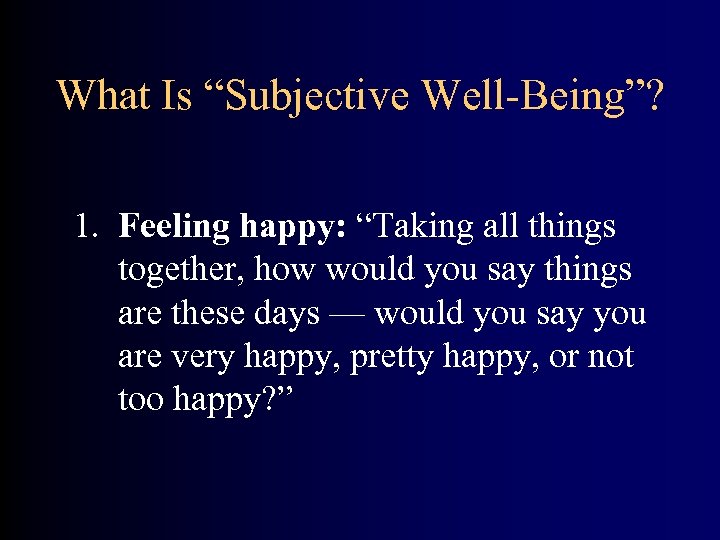 What Is “Subjective Well-Being”? 1. Feeling happy: “Taking all things together, how would you say things are these days — would you say you are very happy, pretty happy, or not too happy? ”
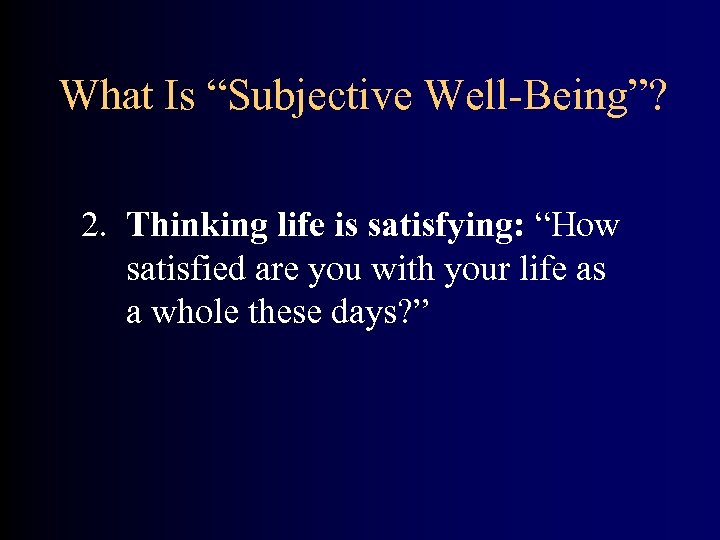 What Is “Subjective Well-Being”? 2. Thinking life is satisfying: “How satisfied are you with your life as a whole these days? ”
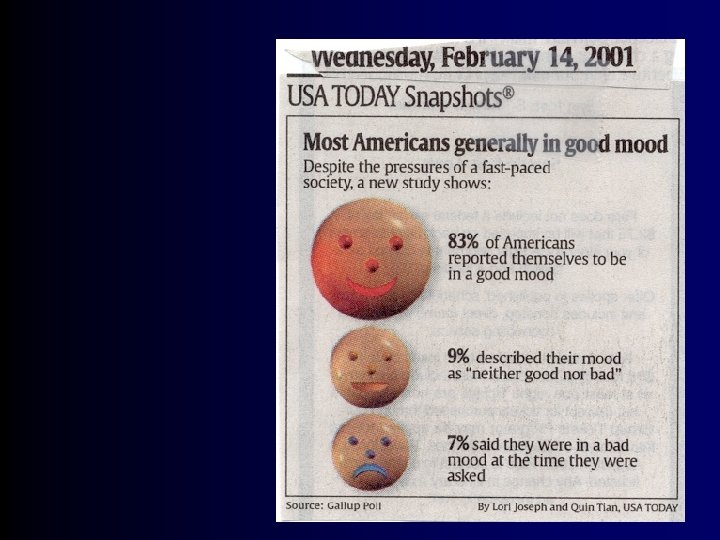
 How Happy Are People? 1. Self-reports are mostly positive
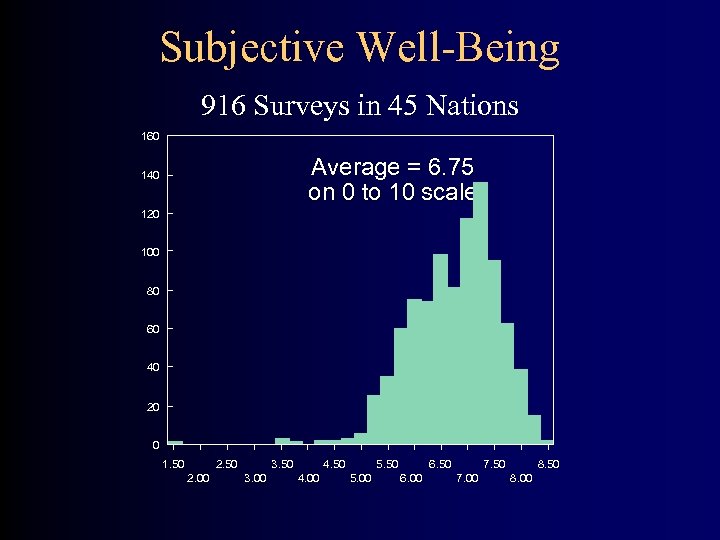 Subjective Well-Being 916 Surveys in 45 Nations 160 Average = 6. 75 on 0 to 10 scale 140 120 100 80 60 40 20 0 1. 50 2. 00 3. 50 3. 00 4. 50 4. 00 5. 50 5. 00 6. 50 6. 00 7. 50 7. 00 8. 50 8. 00
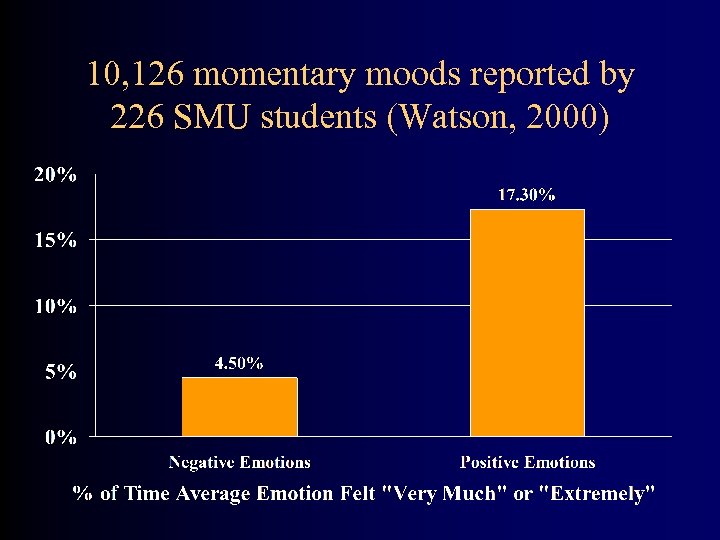 10, 126 momentary moods reported by 226 SMU students (Watson, 2000)
 Students’ language use in natural conversation (>10, 000 slices) Matthias Mehl and James Pennebaker at University of Texas
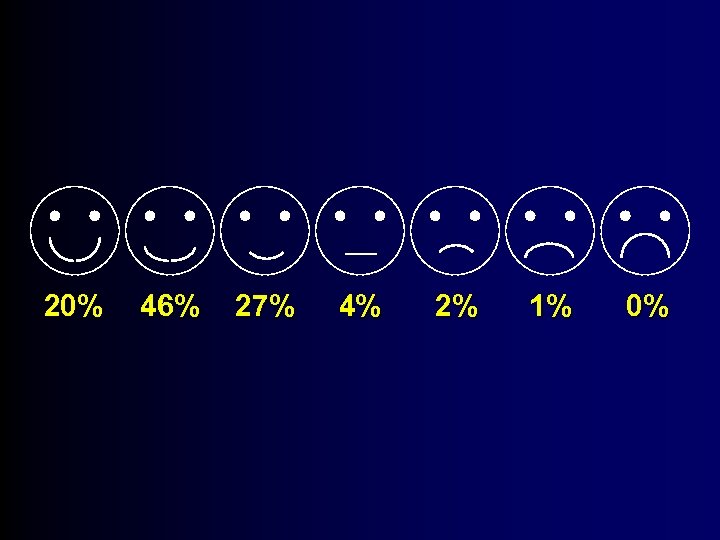 20% 46% 27% 4% 2% 1% 0%
 Can we trust these self-reports? • Are happy people “in denial”? • The happiness thermometers may read a little high, yet. . . • Self-report measures are: – reliable – correlated with experience samplings – correlated with positive indicators – correlated with others’ reports – the only measures of subjective well-being
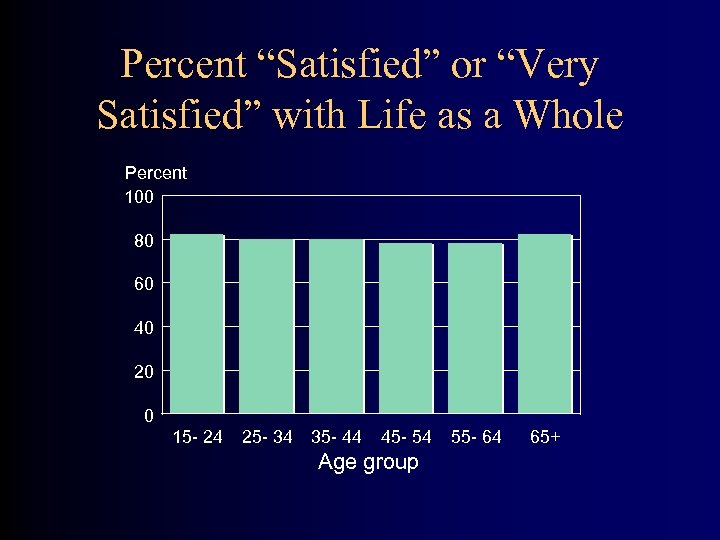
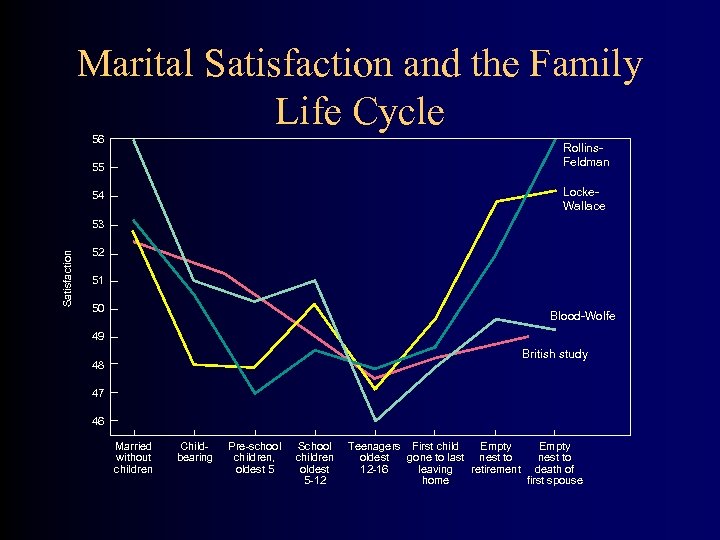
 Who Is Happy? 1. Young, middle-aged, or old?
 Percent “Satisfied” or “Very Satisfied” with Life as a Whole Percent 100 80 60 40 20 0 15 - 24 25 - 34 35 - 44 45 - 54 55 - 64 Age group 65+
 1. Young, Middle-Aged, or Old? A. Changing emotions B. Threats to well-being? Mid-life crises and empty nests
 Marital Satisfaction and the Family Life Cycle 56 Rollins. Feldman 55 Locke. Wallace 54 Satisfaction 53 52 51 50 Blood-Wolfe 49 British study 48 47 46 Married without children Childbearing Pre-school children, oldest 5 School children oldest 5 -12 Teenagers First child Empty oldest gone to last nest to 12 -16 leaving retirement death of home first spouse
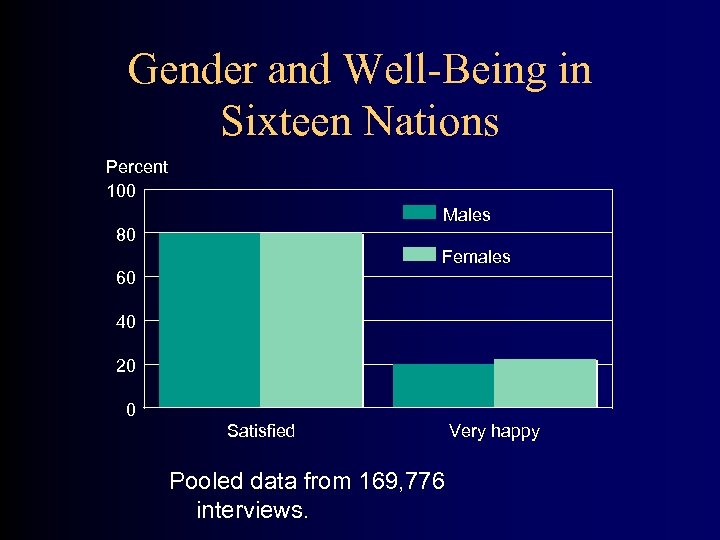
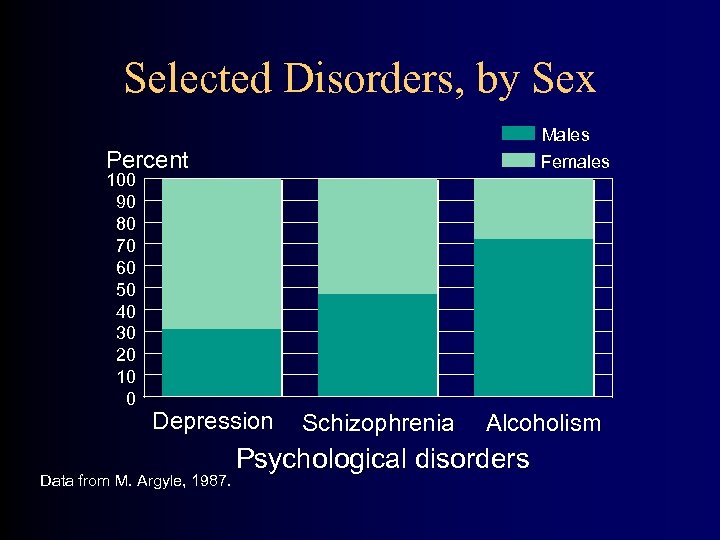
 Who Is Happy? 2. Women or men?
 Gender and Well-Being in Sixteen Nations Percent 100 Males 80 Females 60 40 20 0 Satisfied Pooled data from 169, 776 interviews. Very happy
 Selected Disorders, by Sex Males Females Percent 100 90 80 70 60 50 40 30 20 10 0 Depression Data from M. Argyle, 1987. Schizophrenia Alcoholism Psychological disorders
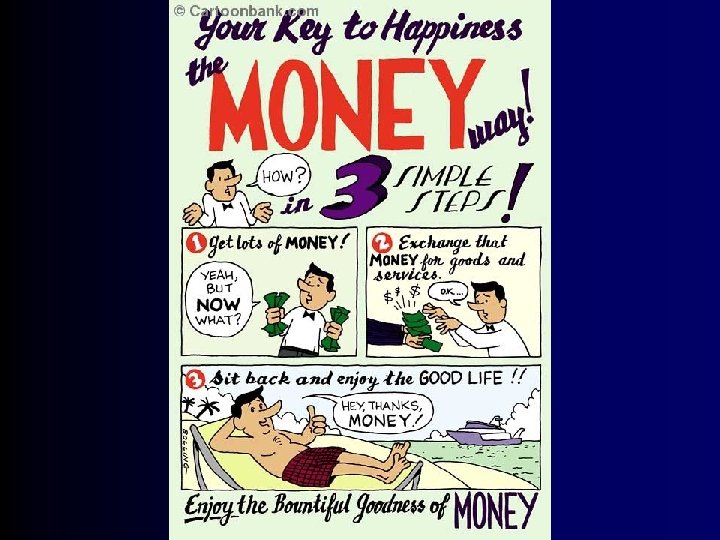
 Well-Being and Being Well-Off A. The presumption that money buys happiness
 % “Very important or essential” Be very well off financially Develop a meaningful philosophy of life
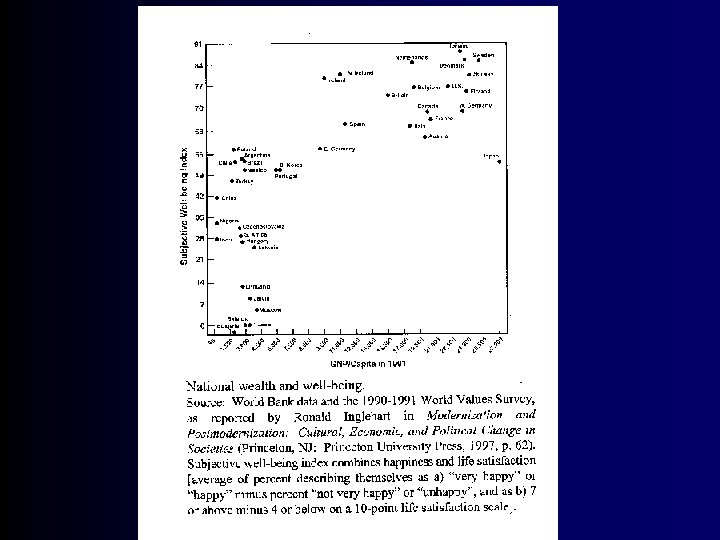
 B. Does Money Buy Happiness? 1. Are people happier if they live in rich countries?
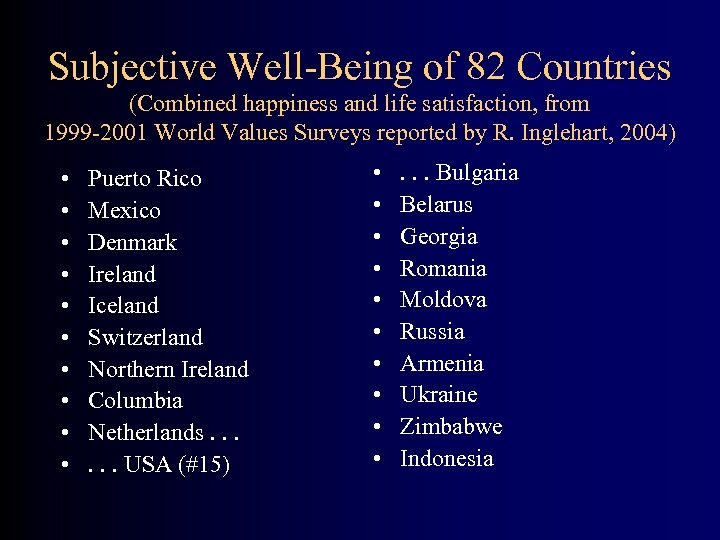 Subjective Well-Being of 82 Countries (Combined happiness and life satisfaction, from 1999 -2001 World Values Surveys reported by R. Inglehart, 2004) • • • Puerto Rico Mexico Denmark Ireland Iceland Switzerland Northern Ireland Columbia Netherlands. . . USA (#15) • • • . . . Bulgaria Belarus Georgia Romania Moldova Russia Armenia Ukraine Zimbabwe Indonesia
 B. Does Money Buy Happiness? 2. Within a country, are the richest the happiest?
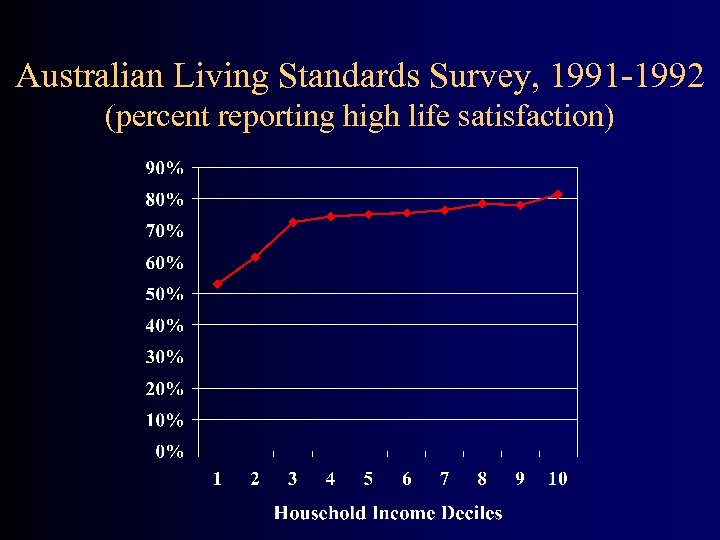 Australian Living Standards Survey, 1991 -1992 (percent reporting high life satisfaction)
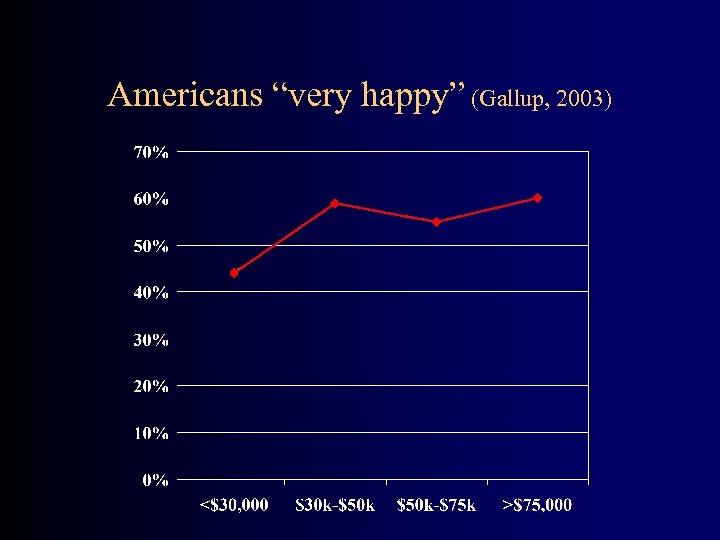 Americans “very happy” (Gallup, 2003)
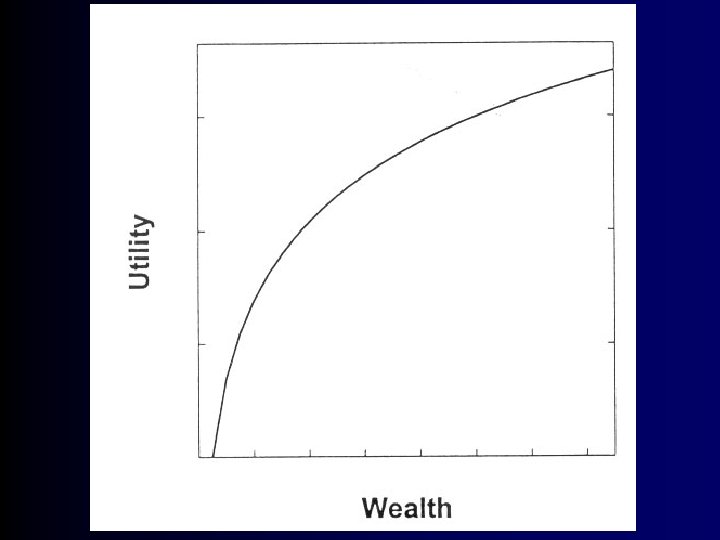
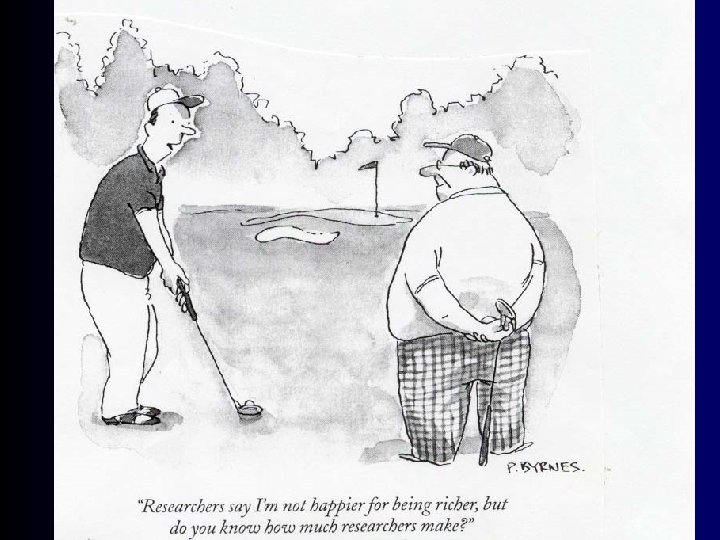
 B. Does Money Buy Happiness? 3. Does the happiness of a people rise with their affluence?
 Personal income (in 1995 $)
 % Homes with Air Conditioning Percent 100 80 73 60 40 20 15 0 1960 1997
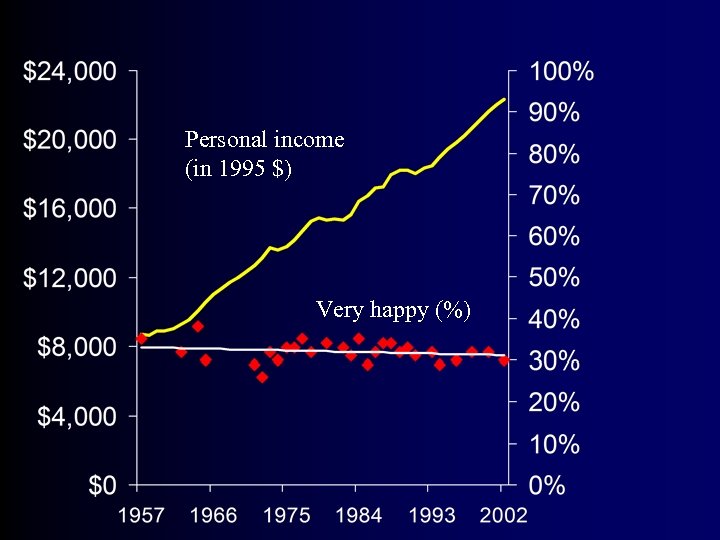 Personal income (in 1995 $) Very happy (%)
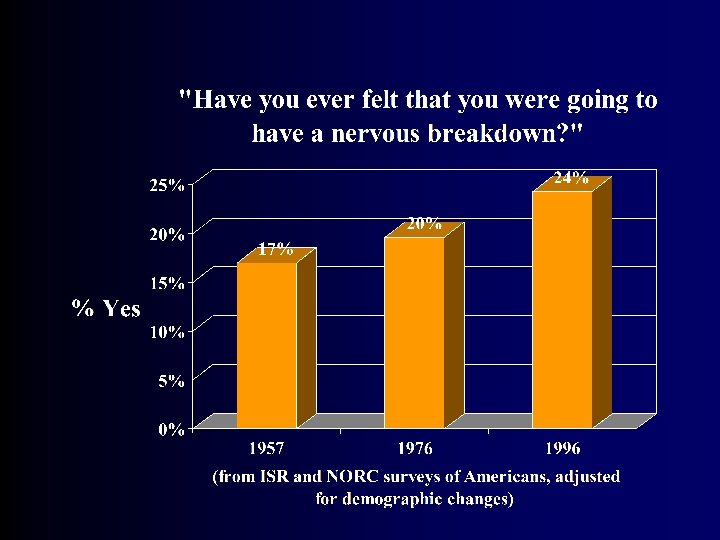
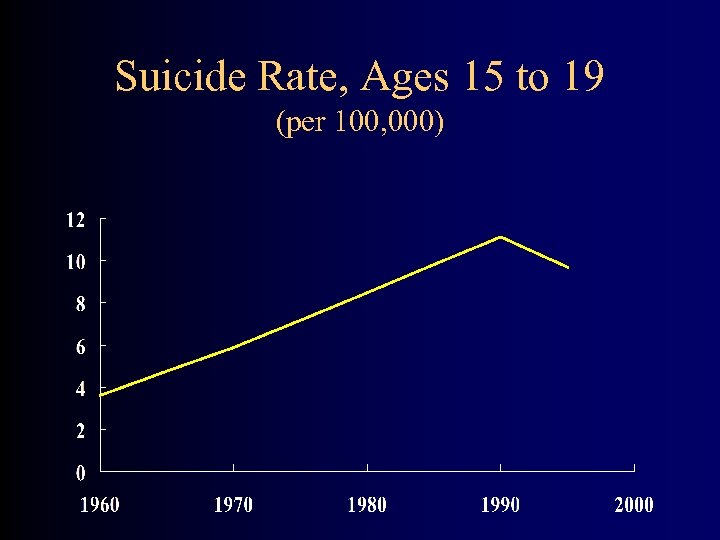 Suicide Rate, Ages 15 to 19 (per 100, 000)
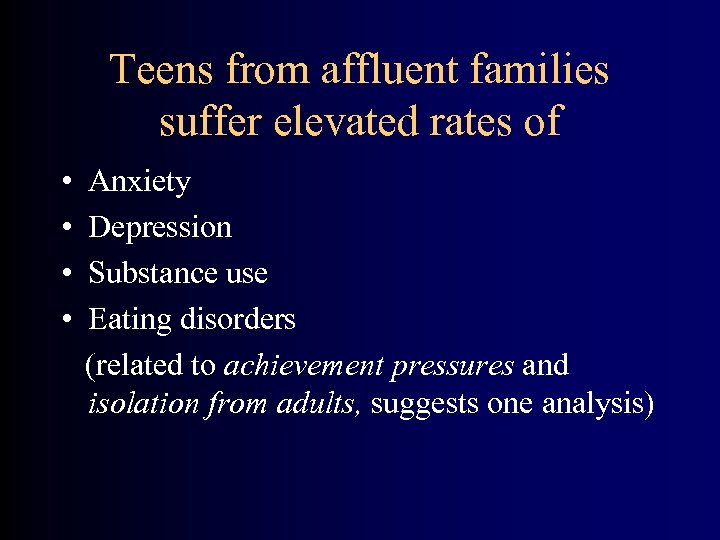 Teens from affluent families suffer elevated rates of • • Anxiety Depression Substance use Eating disorders (related to achievement pressures and isolation from adults, suggests one analysis)
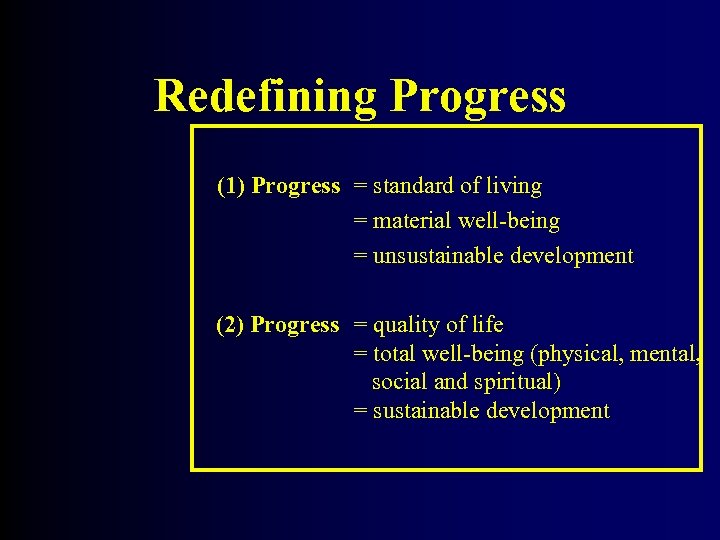 Redefining Progress (1) Progress = standard of living = material well-being = unsustainable development (2) Progress = quality of life = total well-being (physical, mental, social and spiritual) = sustainable development
 The Traits of Happy People
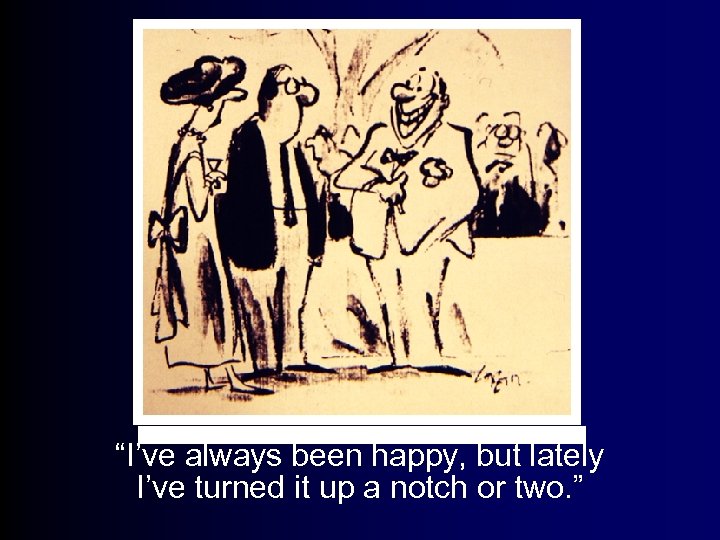 “I’ve always been happy, but lately I’ve turned it up a notch or two. ”
 The Traits of Happy People A. Self-esteem: Happy people like themselves – Self-serving bias – Self-esteem and happiness in stigmatized groups
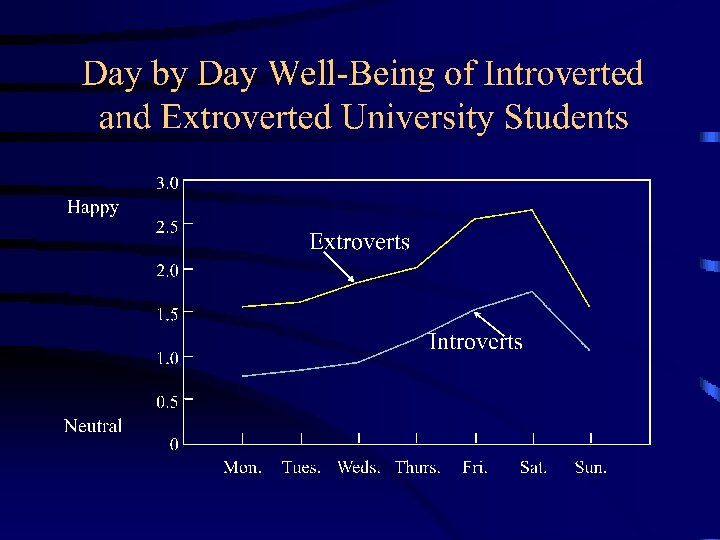
 The Traits of Happy People B. Personal control: Happy people believe they choose their destinies C. Optimism: Happy people are hope-filled D. Extraversion: Happy people are outgoing
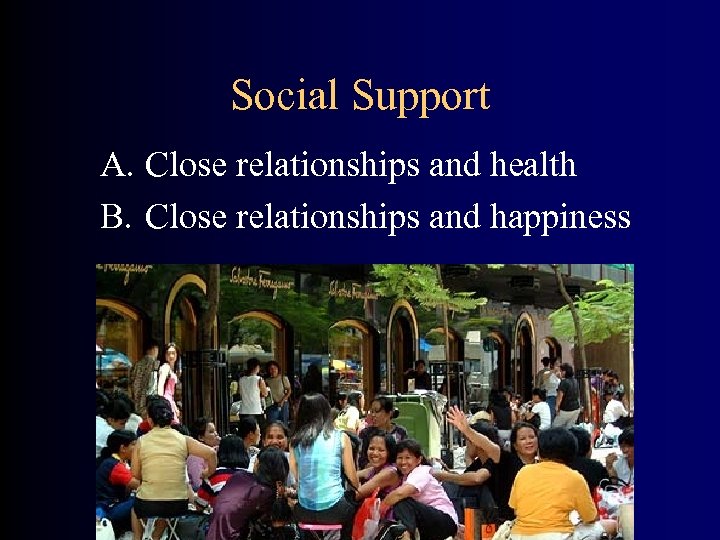 Social Support A. Close relationships and health B. Close relationships and happiness
 Love and Marriage A. Marriage and well-being
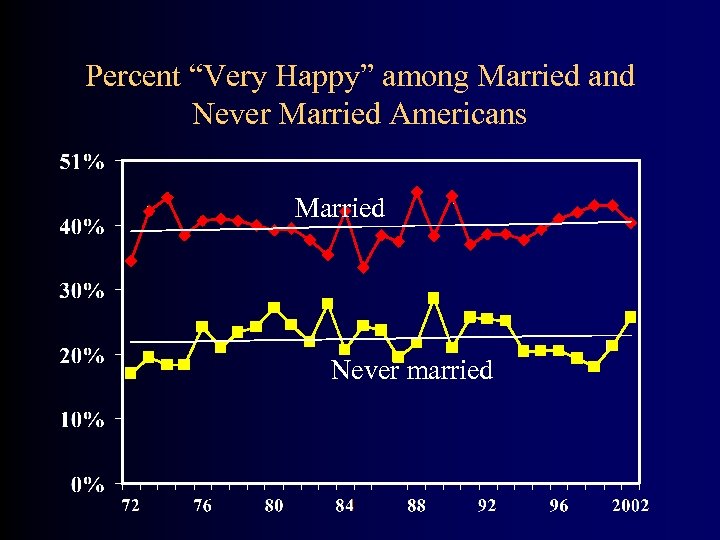 Percent “Very Happy” among Married and Never Married Americans Married Never married
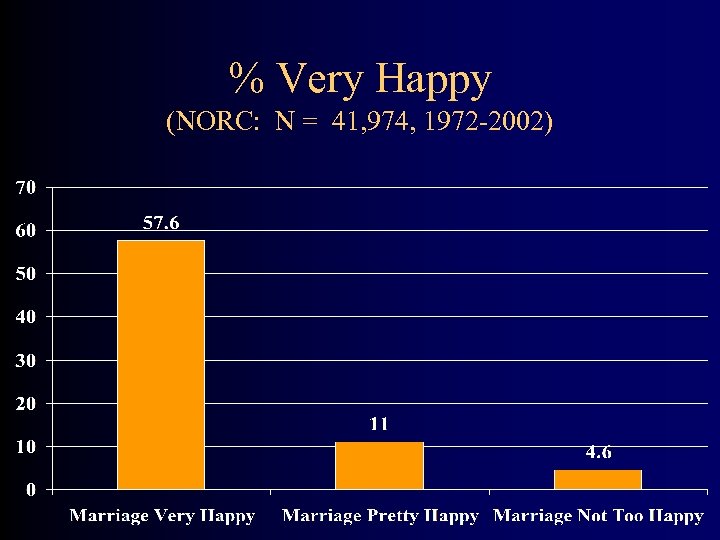 % Very Happy (NORC: N = 41, 974, 1972 -2002)

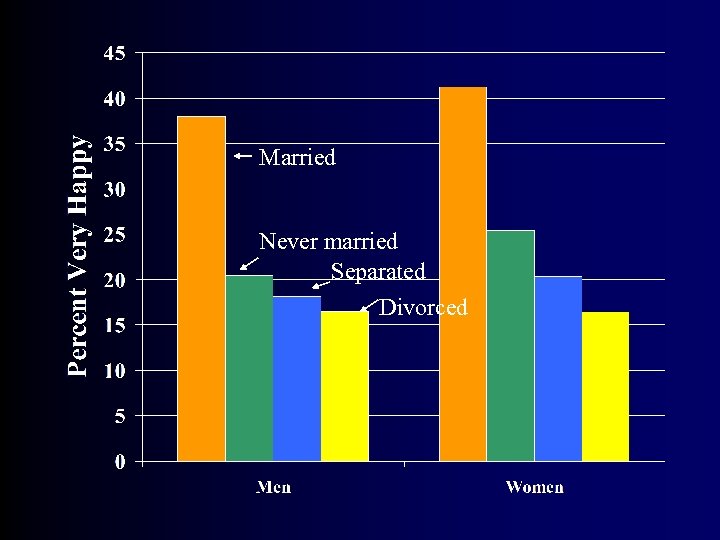 Married Never married Separated Divorced
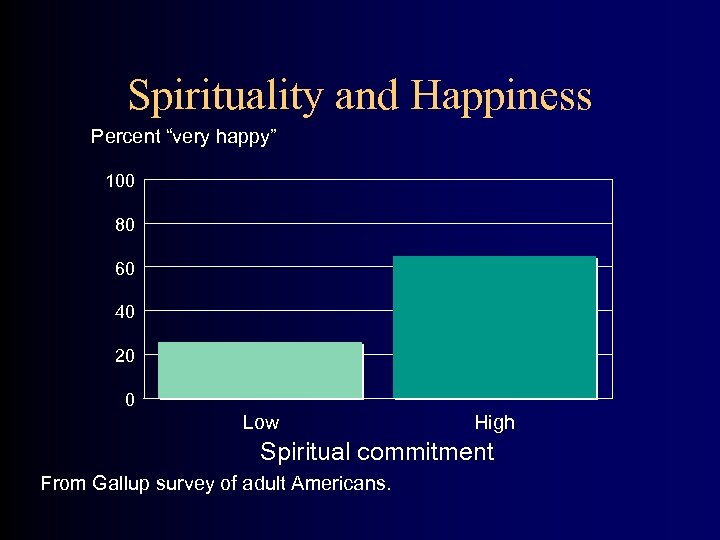 Spirituality and Happiness Percent “very happy” 100 80 60 40 20 0 Low High Spiritual commitment From Gallup survey of adult Americans.
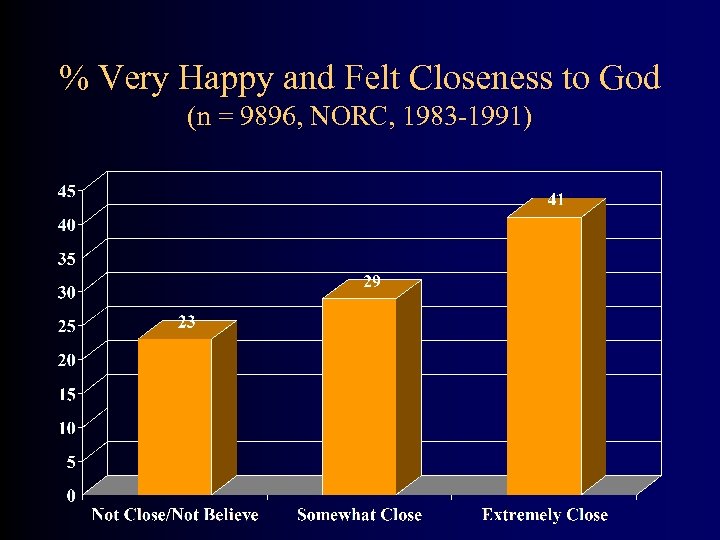 % Very Happy and Felt Closeness to God (n = 9896, NORC, 1983 -1991)
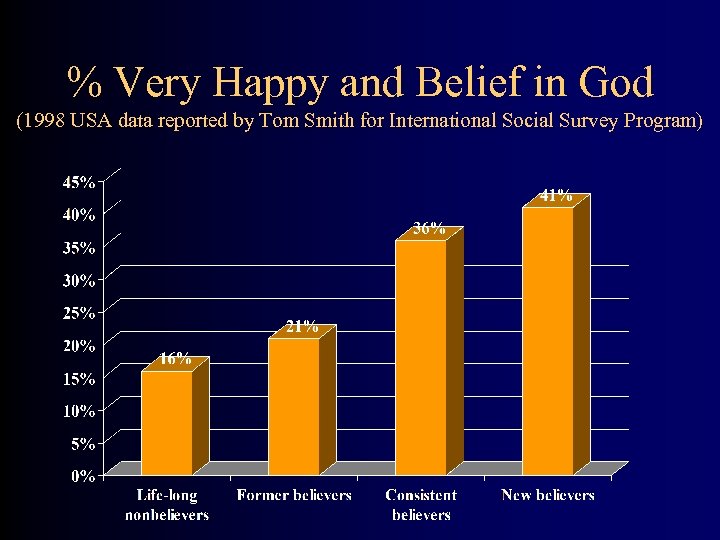 % Very Happy and Belief in God (1998 USA data reported by Tom Smith for International Social Survey Program)
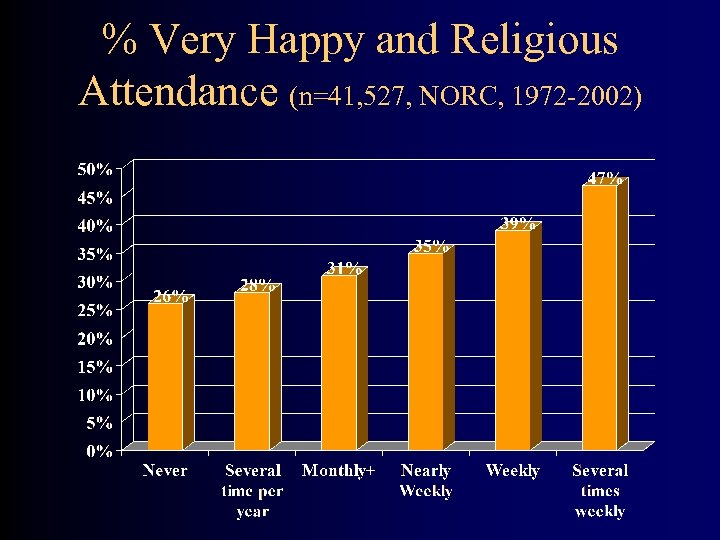 % Very Happy and Religious Attendance (n=41, 527, NORC, 1972 -2002)
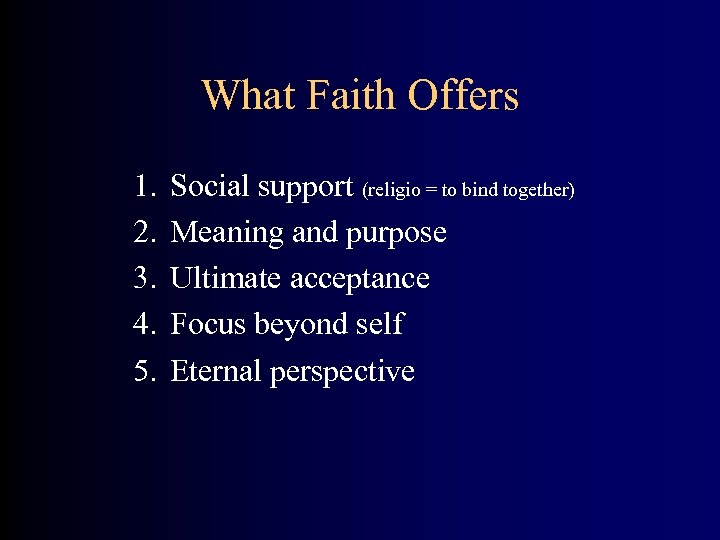 What Faith Offers 1. 2. 3. 4. 5. Social support (religio = to bind together) Meaning and purpose Ultimate acceptance Focus beyond self Eternal perspective
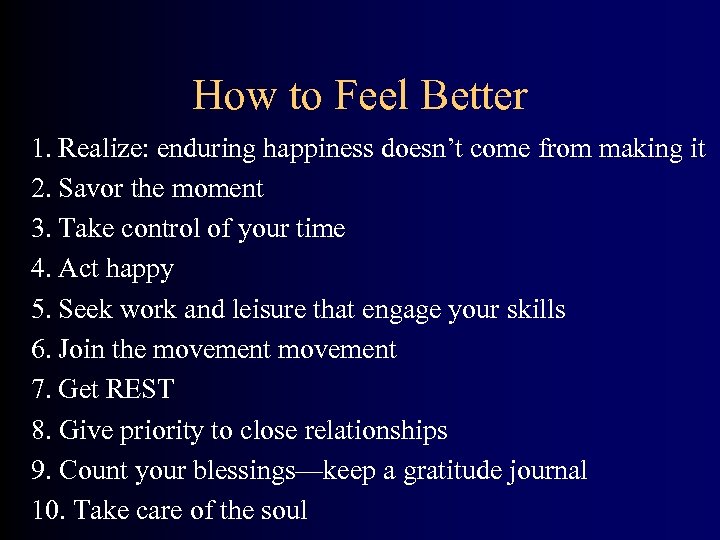 How to Feel Better 1. Realize: enduring happiness doesn’t come from making it 2. Savor the moment 3. Take control of your time 4. Act happy 5. Seek work and leisure that engage your skills 6. Join the movement 7. Get REST 8. Give priority to close relationships 9. Count your blessings—keep a gratitude journal 10. Take care of the soul