


 Скачать презентацию The Scientific Method Universal approach to solving
6599ac75296b29dc9f36193113b4d362.ppt
- Количество слайдов: 10
 The Scientific Method • Universal approach to solving scientific problems

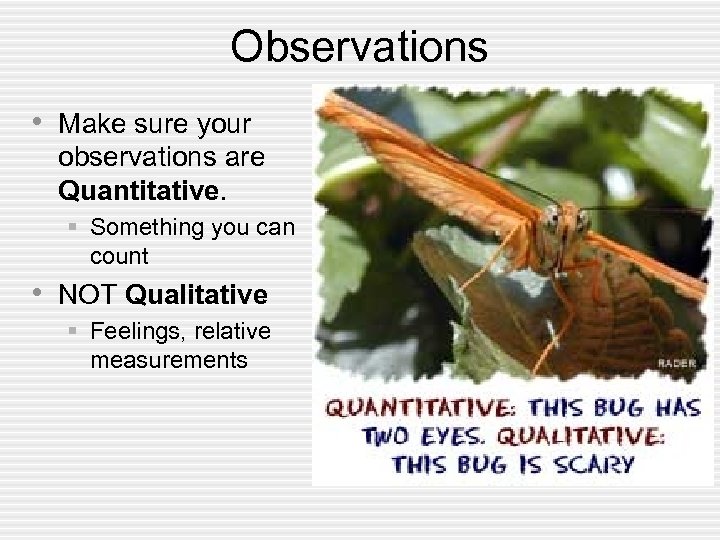 Observations • Make sure your observations are Quantitative. § Something you can count • NOT Qualitative § Feelings, relative measurements
 Give me an example of quantitative observation of this picture of the cast of House M. D.
 Constructing an Experiment • Tests ONLY 1 variable at a time • Independent Variable § What you change in the experiment • Dependent Variable § What change because of the independent Variable § What you measure • Controls (constants) controlled variables § What stays the same in the whole experiment
 2 Groups in an Experiment 1. Control Group § The group that you do nothing new to 2. Experimental Group § § The group with the independent variable The group you change
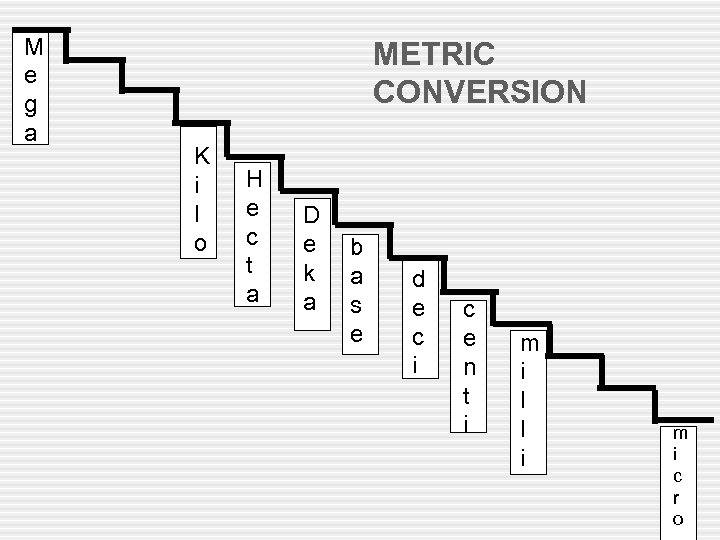 M e g a METRIC CONVERSION K i l o H e c t a D e k a b a s e d e c i c e n t i m i l l i m i c r o
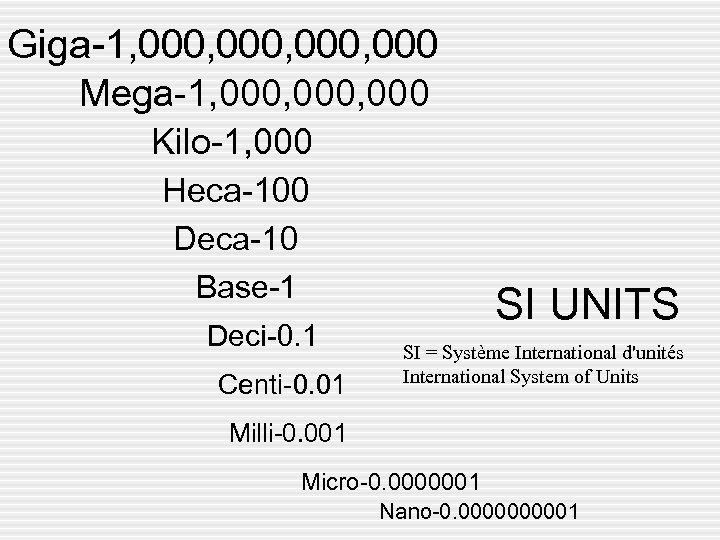 Giga-1, 000, 000 Mega-1, 000, 000 Kilo-1, 000 Heca-100 Deca-10 Base-1 Deci-0. 1 Centi-0. 01 SI UNITS SI = Système International d'unités International System of Units Milli-0. 001 Micro-0. 0000001 Nano-0. 000001
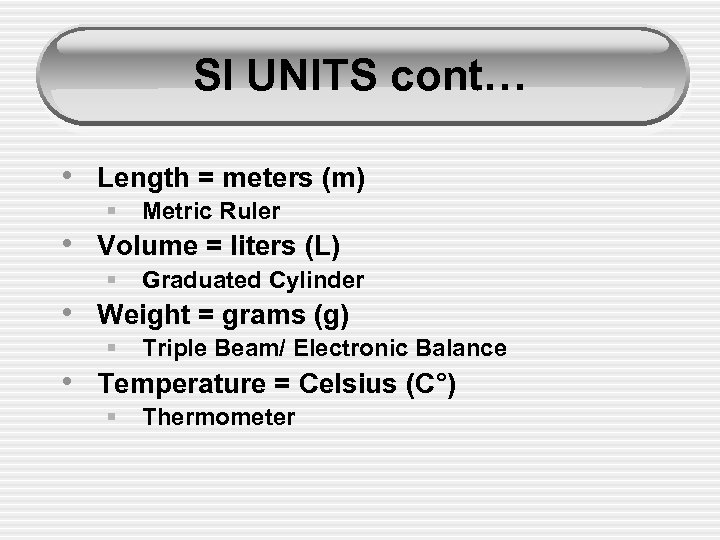 SI UNITS cont… • Length = meters (m) § Metric Ruler • Volume = liters (L) § Graduated Cylinder • Weight = grams (g) § Triple Beam/ Electronic Balance • Temperature = Celsius (C°) § Thermometer
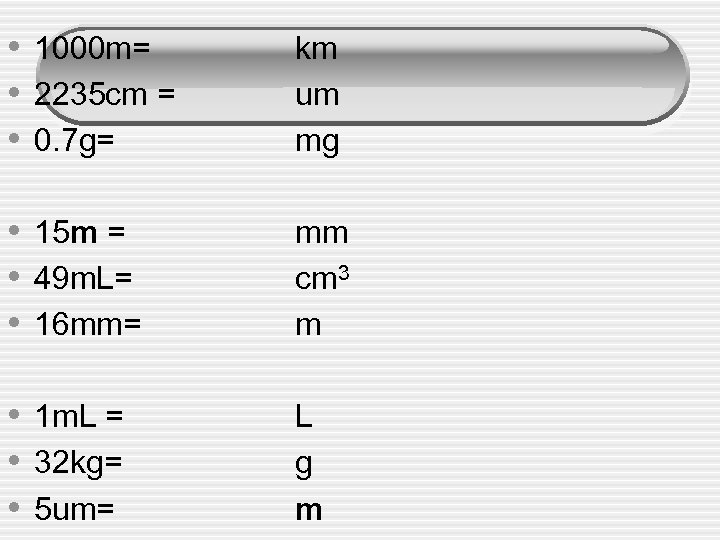 • 1000 m= • 2235 cm = • 0. 7 g= km um mg • 15 m = • 49 m. L= • 16 mm= mm cm 3 m • 1 m. L = • 32 kg= • 5 um= L g m