 Скачать презентацию The Running Time Advisor A Resource Signal-based Approach
a440a0734515a015ef082888abe24194.ppt
- Количество слайдов: 49



The Running Time Advisor A Resource Signal-based Approach to Predicting Task Running Time and Its Applications Peter A. Dinda Carnegie Mellon University http: //www. cs. cmu. edu/~pdinda
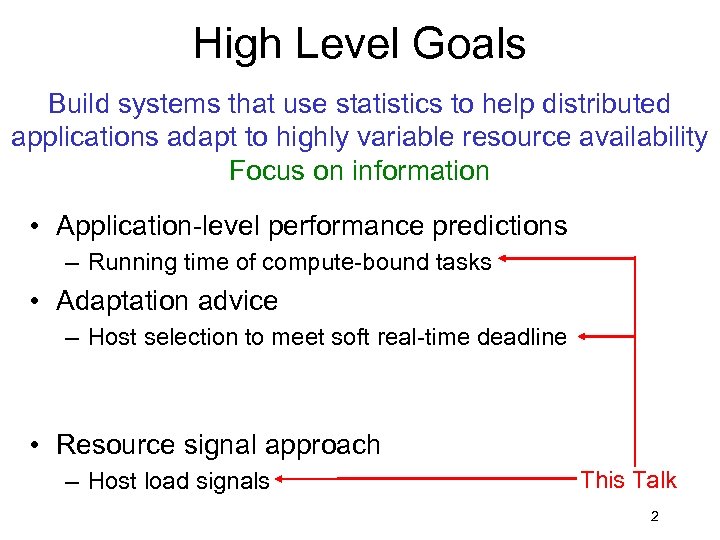
High Level Goals Build systems that use statistics to help distributed applications adapt to highly variable resource availability Focus on information • Application-level performance predictions – Running time of compute-bound tasks • Adaptation advice – Host selection to meet soft real-time deadline • Resource signal approach – Host load signals This Talk 2
Outline • Bird’s eye view • • • Adapting to highly variable resource availability Dv/Quake. Viz Real-time scheduling advisor Running time advisor Confidence intervals Performance results (feasible, practical, useful) • Prototype system • Host load prediction • Traces, structure, linear models, evaluation • RPS Toolkit • Conclusion 3
A Universal Challenge in High Performance Distributed Applications Highly variable resource availability • • Shared resources No reservations No globally respected priorities Competition from other users - “background workload” Running time can vary drastically Adaptation 4
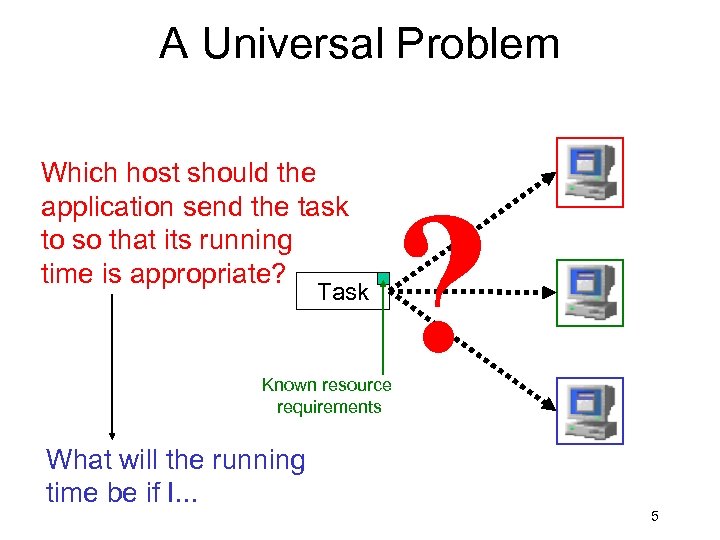
A Universal Problem Which host should the application send the task to so that its running time is appropriate? Task Known resource requirements ? What will the running time be if I. . . 5
DV Framework For Distributed Interactive Visualization • Large datasets (e. g. , earthquake simulations) • Distributed VTK visualization pipelines • Active frames • • Encapsulate data, computation, path through pipeline Launched from server by user interaction Annotated with deadline Dynamically chose on which host each pipeline stage will execute and what quality settings to use http: //www. cs. cmu. edu/~dv 6
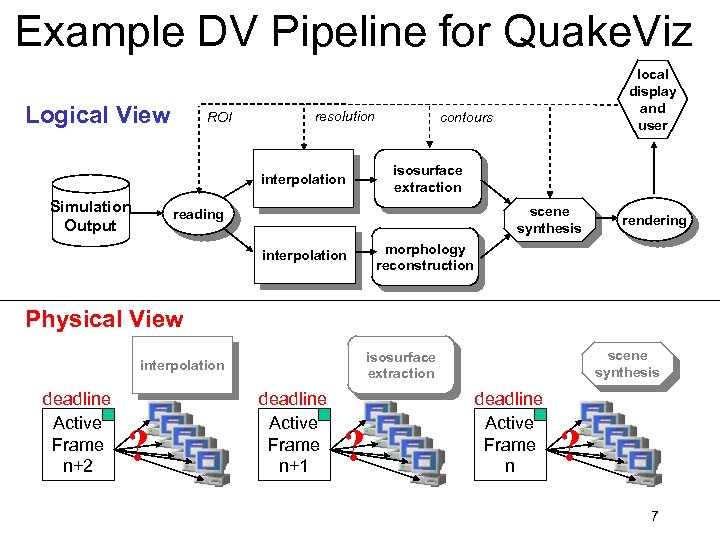
Example DV Pipeline for Quake. Viz Logical View ROI resolution interpolation Simulation Output local display and user contours isosurface extraction scene synthesis reading interpolation rendering morphology reconstruction Physical View deadline Active Frame n+2 ? scene synthesis isosurface extraction interpolation deadline Active Frame n+1 ? deadline Active Frame n ? 7
Real-time Scheduling Advisor • Distributed interactive applications • Examples: CMU Dv/Quake. Viz, BBN Open. Map • Assumptions • • • Sequential tasks initiated by user actions Aperiodic arrivals Resilient deadlines (soft real-time) Compute-bound tasks Known computational requirements • Best-effort semantics • Recommend host where deadline is likely to be met • Predict running time on that host • No guarantees 8
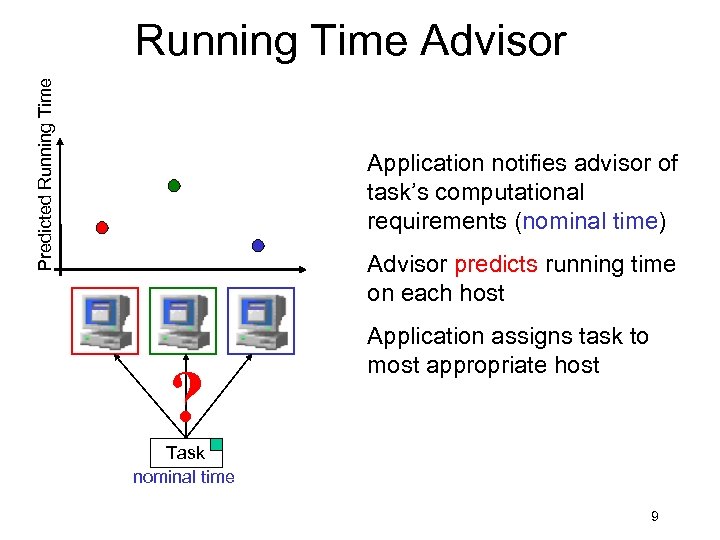
Predicted Running Time Advisor Application notifies advisor of task’s computational requirements (nominal time) Advisor predicts running time on each host ? Application assigns task to most appropriate host Task nominal time 9
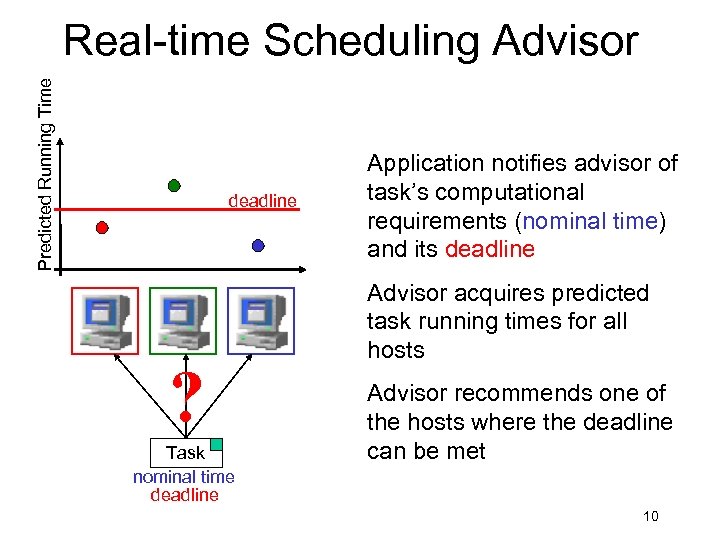
Predicted Running Time Real-time Scheduling Advisor deadline ? Task nominal time deadline Application notifies advisor of task’s computational requirements (nominal time) and its deadline Advisor acquires predicted task running times for all hosts Advisor recommends one of the hosts where the deadline can be met 10
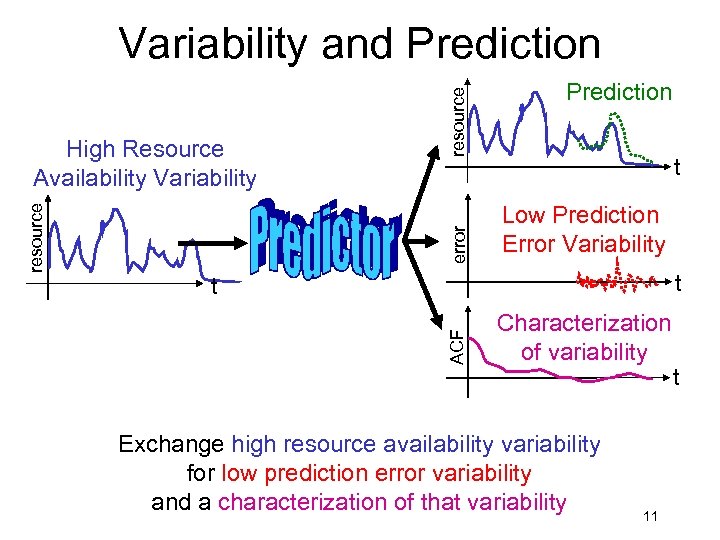
error Prediction t Low Prediction Error Variability t t ACF resource High Resource Availability Variability resource Variability and Prediction Characterization of variability Exchange high resource availability variability for low prediction error variability and a characterization of that variability 11 t
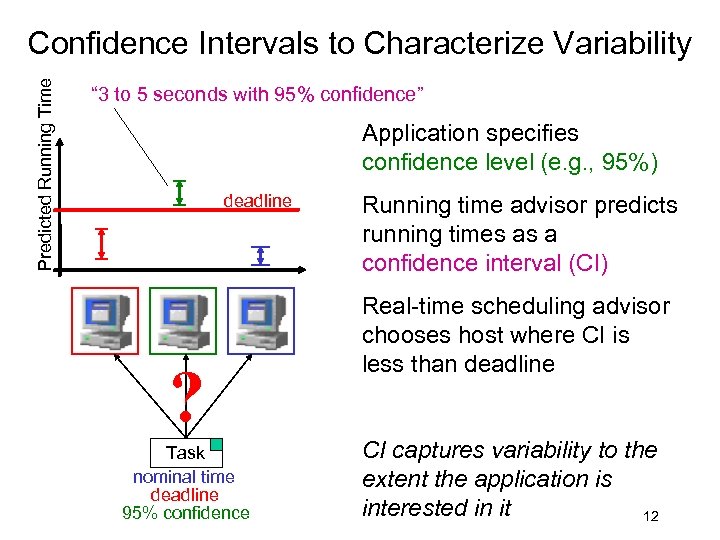
Predicted Running Time Confidence Intervals to Characterize Variability “ 3 to 5 seconds with 95% confidence” Application specifies confidence level (e. g. , 95%) deadline ? Task nominal time deadline 95% confidence Running time advisor predicts running times as a confidence interval (CI) Real-time scheduling advisor chooses host where CI is less than deadline CI captures variability to the extent the application is interested in it 12
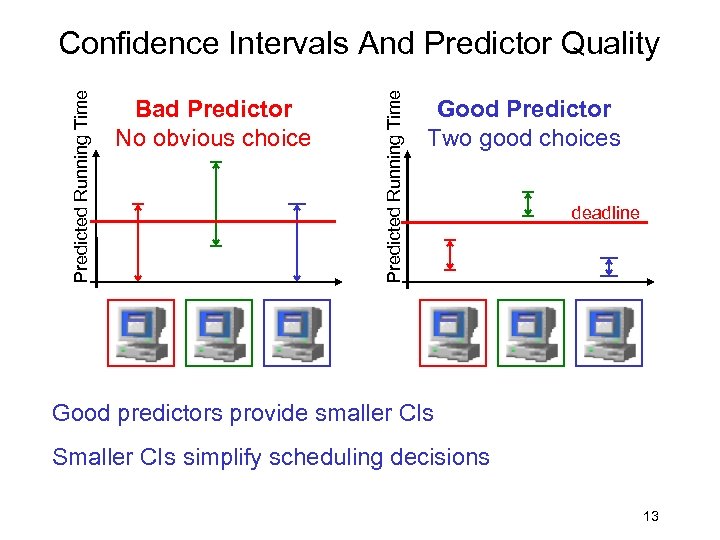
Bad Predictor No obvious choice Predicted Running Time Confidence Intervals And Predictor Quality Good Predictor Two good choices deadline Good predictors provide smaller CIs Smaller CIs simplify scheduling decisions 13
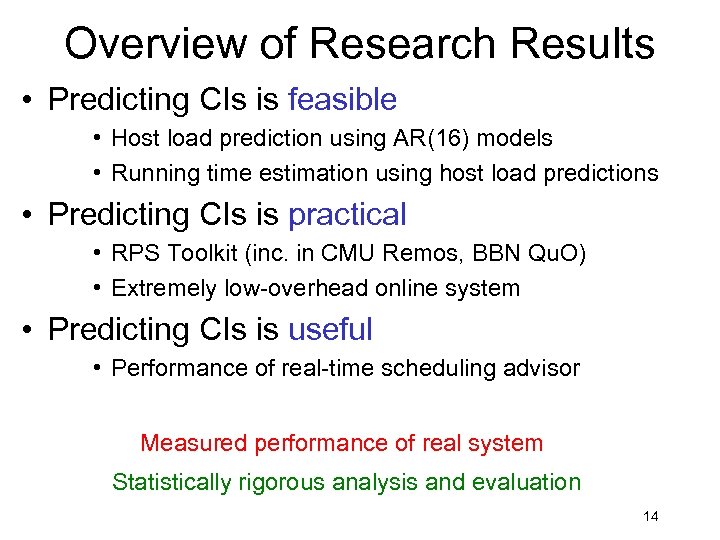
Overview of Research Results • Predicting CIs is feasible • Host load prediction using AR(16) models • Running time estimation using host load predictions • Predicting CIs is practical • RPS Toolkit (inc. in CMU Remos, BBN Qu. O) • Extremely low-overhead online system • Predicting CIs is useful • Performance of real-time scheduling advisor Measured performance of real system Statistically rigorous analysis and evaluation 14
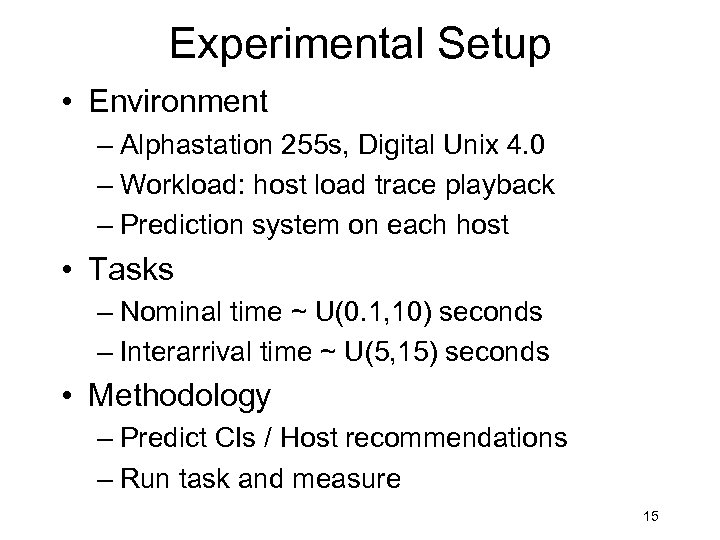
Experimental Setup • Environment – Alphastation 255 s, Digital Unix 4. 0 – Workload: host load trace playback – Prediction system on each host • Tasks – Nominal time ~ U(0. 1, 10) seconds – Interarrival time ~ U(5, 15) seconds • Methodology – Predict CIs / Host recommendations – Run task and measure 15

Predicting CIs is Feasible Near-perfect CIs on typical hosts 3000 randomized tasks 16
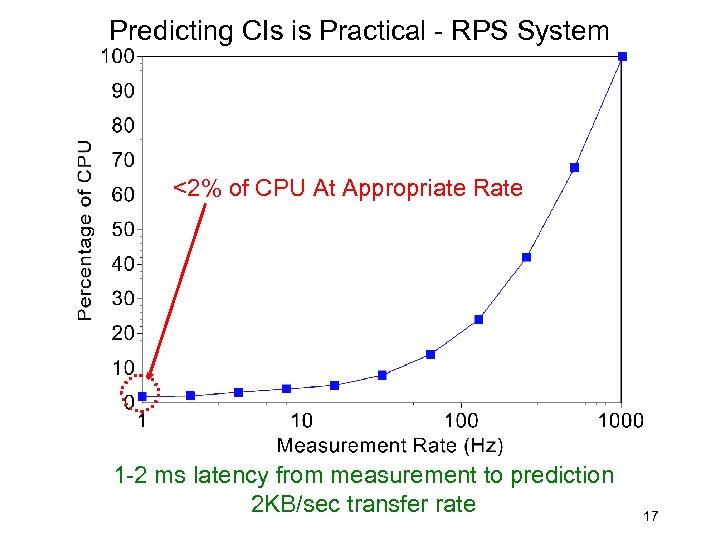
Predicting CIs is Practical - RPS System <2% of CPU At Appropriate Rate 1 -2 ms latency from measurement to prediction 2 KB/sec transfer rate 17
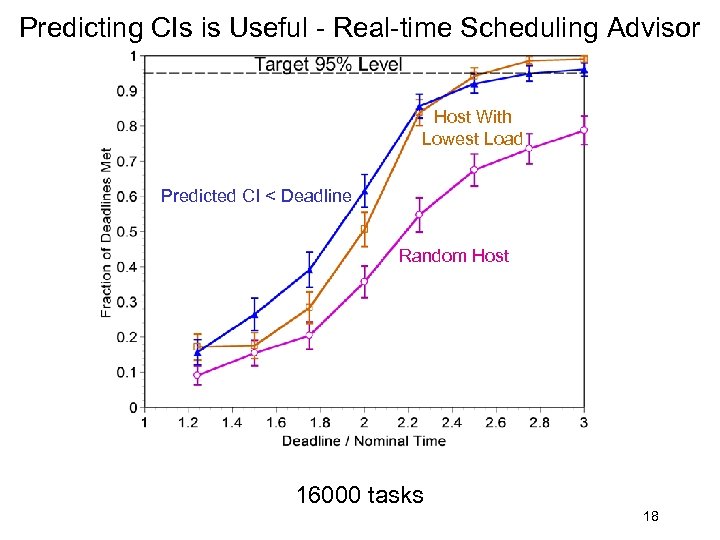
Predicting CIs is Useful - Real-time Scheduling Advisor Host With Lowest Load Predicted CI < Deadline Random Host 16000 tasks 18
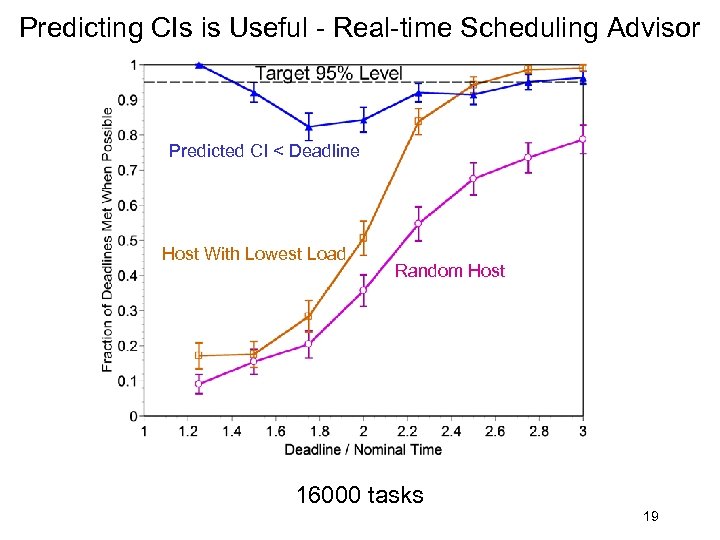
Predicting CIs is Useful - Real-time Scheduling Advisor Predicted CI < Deadline Host With Lowest Load Random Host 16000 tasks 19
Outline • Bird’s eye view • • • Adapting to highly variable resource availability Dv/Quake. Viz Real-time scheduling advisor Running time advisor Confidence intervals Performance results (feasible, practical, useful) • Prototype system • Host load prediction • Traces, structure, linear models, evaluation • RPS Toolkit • Conclusion 20
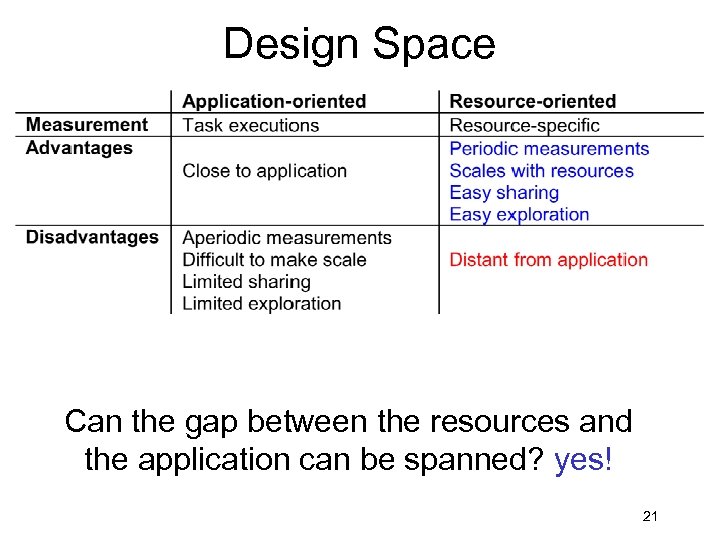
Design Space Can the gap between the resources and the application can be spanned? yes! 21
Resource Signals • Characteristics • Easily measured, time-varying scalar quantities • Strongly correlated with resource availability • Periodically sampled (discrete-time signal) • Examples • Host load (Digital Unix 5 second load average) • Network flow bandwidth and latency Leverage existing statistical signal analysis and prediction techniques 22
RPS Toolkit • Extensible toolkit for implementing resource signal prediction systems • Easy “buy-in” for users • C++ and sockets (no threads) • Prebuilt prediction components • Libraries (sensors, time series, communication) • Users have bought in • Incorporated in CMU Remos, BBN Qu. O • Research users: Bruce Lowekamp, Nancy Miller, Le. Monte Green http: //www. cs. cmu. edu/~pdinda/RPS. html 23
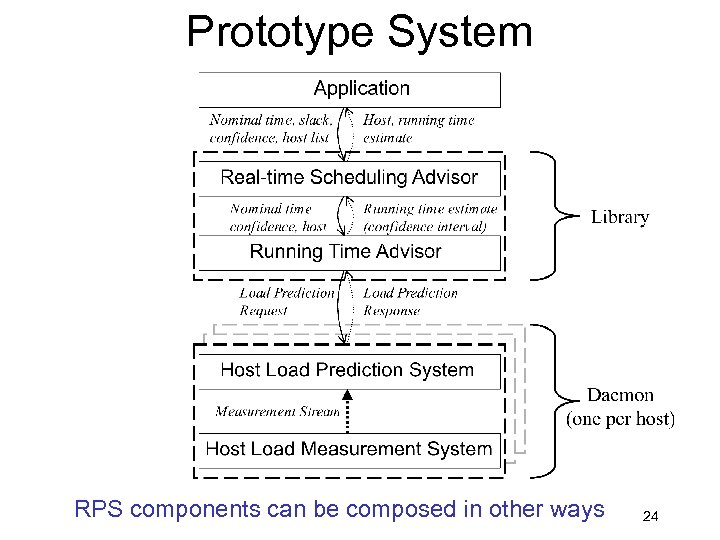
Prototype System RPS components can be composed in other ways 24
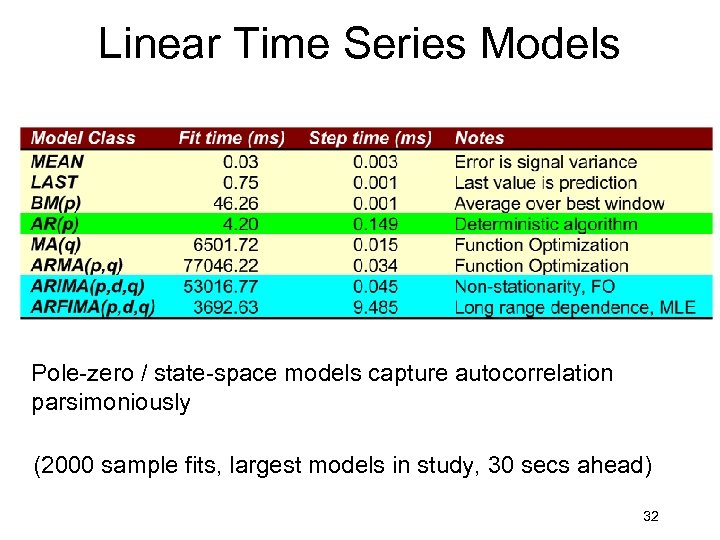
Research Results • Host load on real hosts has exploitable structure – Strong autocorrelation, self-similarity, epochal behavior – Trace database and host load trace playback • Host load is predictable using simple linear models – Recommendation: AR(16) models or better for 1 -30 sec predictions – RPS Toolkit for low overhead systems (<2% of CPU) • C++, ported to 5 OSes, incorporated in CMU Remos, BBN Qu. O • Running time CIs can be computed from load predictions – Load discounting, error covariances • Effective real-time scheduling advice can be based on CIs – Know if deadline will be met before running task 25
Outline • Bird’s eye view • • • Adapting to Highly variable resource availability Dv/Quake. Viz Real-time scheduling advisor Running time advisor Confidence intervals Performance results (feasible, practical, useful) • Prototype system • Host load prediction • Traces, structure, linear models, evaluation • RPS Toolkit • Conclusion 26
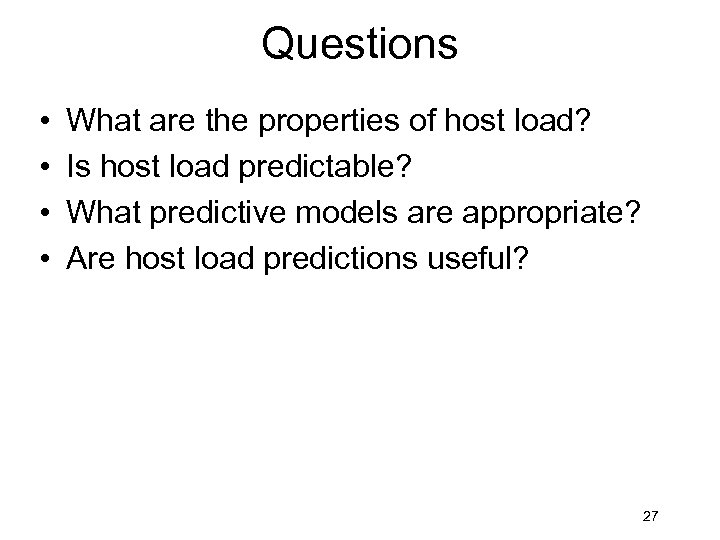
Questions • • What are the properties of host load? Is host load predictable? What predictive models are appropriate? Are host load predictions useful? 27
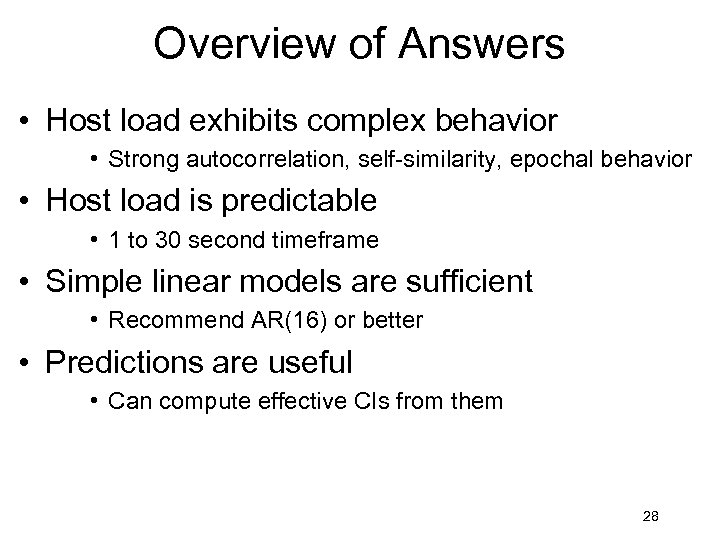
Overview of Answers • Host load exhibits complex behavior • Strong autocorrelation, self-similarity, epochal behavior • Host load is predictable • 1 to 30 second timeframe • Simple linear models are sufficient • Recommend AR(16) or better • Predictions are useful • Can compute effective CIs from them 28
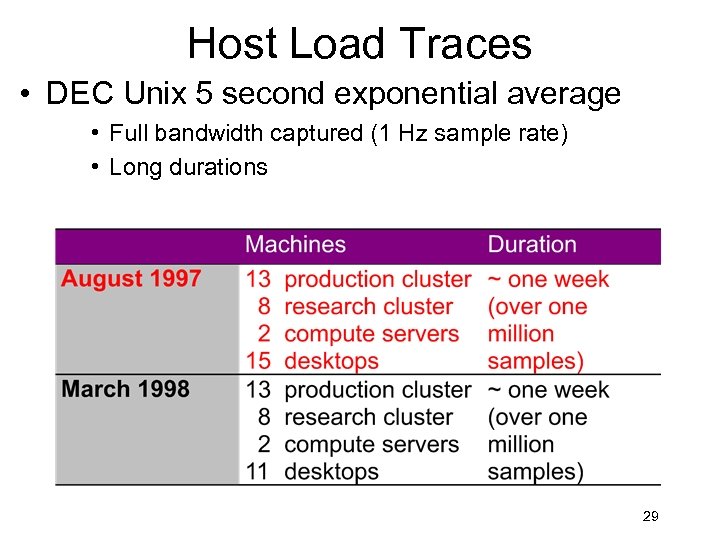
Host Load Traces • DEC Unix 5 second exponential average • Full bandwidth captured (1 Hz sample rate) • Long durations 29
If Host Load Was “Random” (White Noise). . . Time domain Frequency domain Autocorrelation Spectrogram 30
Host Load Has Exploitable Structure Time domain Frequency domain Autocorrelation Spectrogram 31
Linear Time Series Models Pole-zero / state-space models capture autocorrelation parsimoniously (2000 sample fits, largest models in study, 30 secs ahead) 32
Evaluation Methodology • Ran ~190, 000 randomly chosen testcases on the traces – Evaluate models independently of prediction/evaluation framework • No monitoring – ~30 testcases per trace, model class, parameter set • Data-mine results Offline and online systems implemented using RPS Toolkit 33
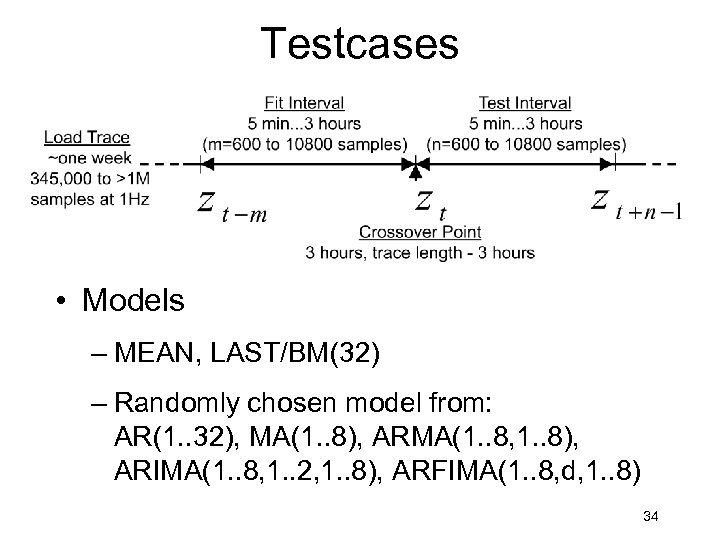
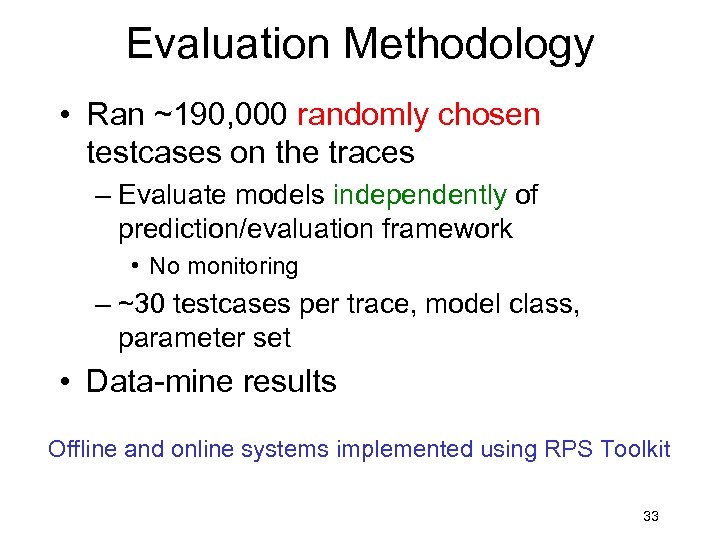
Testcases • Models – MEAN, LAST/BM(32) – Randomly chosen model from: AR(1. . 32), MA(1. . 8), ARMA(1. . 8, 1. . 8), ARIMA(1. . 8, 1. . 2, 1. . 8), ARFIMA(1. . 8, d, 1. . 8) 34
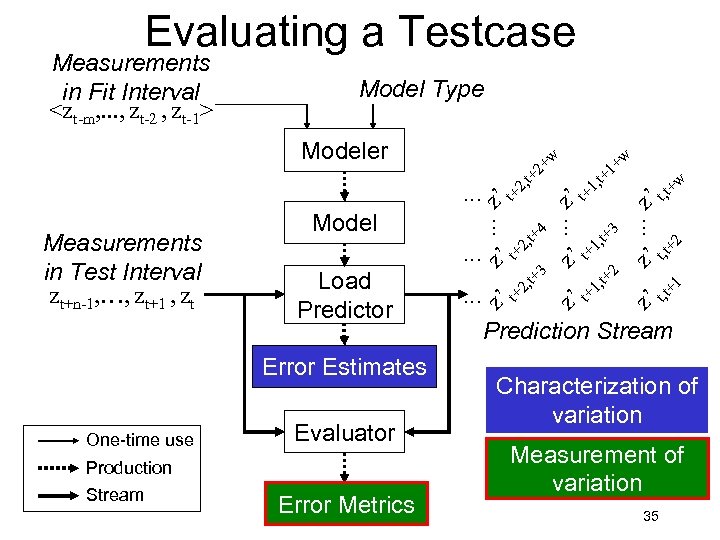
Evaluating a Testcase Model Type Modeler , t . . . Load Predictor Error Estimates One-time use Evaluator Production Stream . . . Measurements in Test Interval zt+n-1, …, zt+1 , zt Model Error Metrics z 4 , t+ ’ t+2 z 3 , t+ ’ t+2 w 1+ + , t ’ t+1 . . . ’ t+2 . . . z w 2+ + 3 , t+ 1 z ’ t+1 2 , t+ w ’ t, t+ z. . . Measurements in Fit Interval <zt-m, . . . , zt-2 , zt-1> 2 , t+ ’t z 1 , t+ ’t . . . z z z Prediction Stream Characterization of variation Measurement of variation 35
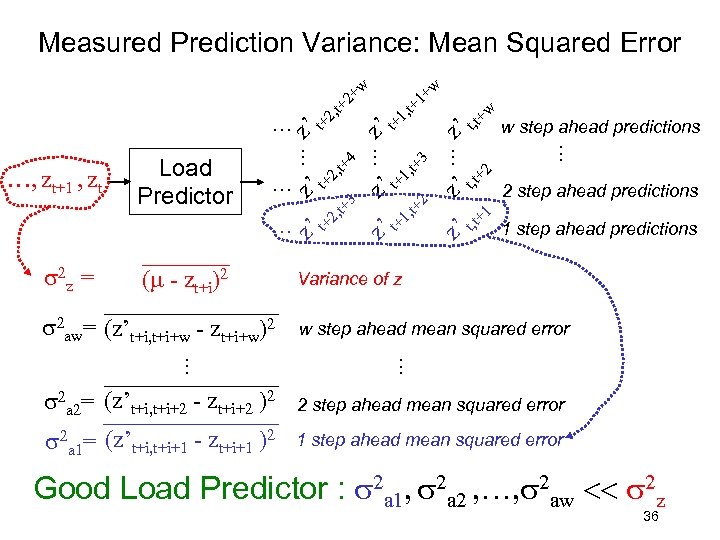
Measured Prediction Variance: Mean Squared Error z 4 t+ 1, 3 . . . z z 2 +3 , t+. . . z’ t+2 ’ t+1 z (m - zt+i)2 . . . s 2 aw= (z’t+i, t+i+w - zt+i+w)2 ’ t+ +w t, t w step ahead predictions z’ 2 ’ t, t+ z 1 , t+ z’ t . . . 1 ’ t+ w 2 step ahead predictions 1 step ahead predictions Variance of z w step ahead mean squared error . . . s 2 z = t+ 2, + +1 , t . . . …, zt+1 , zt Load Predictor . . . z’ t+2 w . . . + +2 , t s 2 a 2= (z’t+i, t+i+2 - zt+i+2 )2 2 step ahead mean squared error s 2 a 1= (z’t+i, t+i+1 - zt+i+1 )2 1 step ahead mean squared error Good Load Predictor : s 2 a 1, s 2 a 2 , …, s 2 aw << s 2 z 36
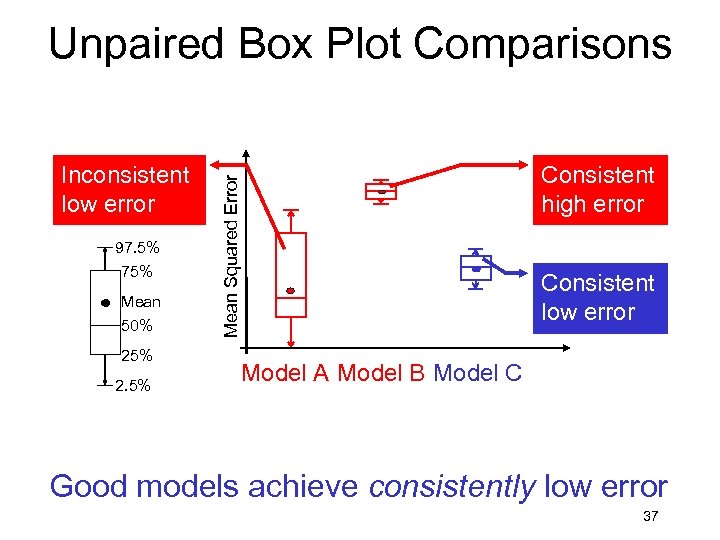
Unpaired Box Plot Comparisons 97. 5% 75% Mean 50% 25% 2. 5% Consistent high error Mean Squared Error Inconsistent low error Consistent low error Model A Model B Model C Good models achieve consistently low error 37
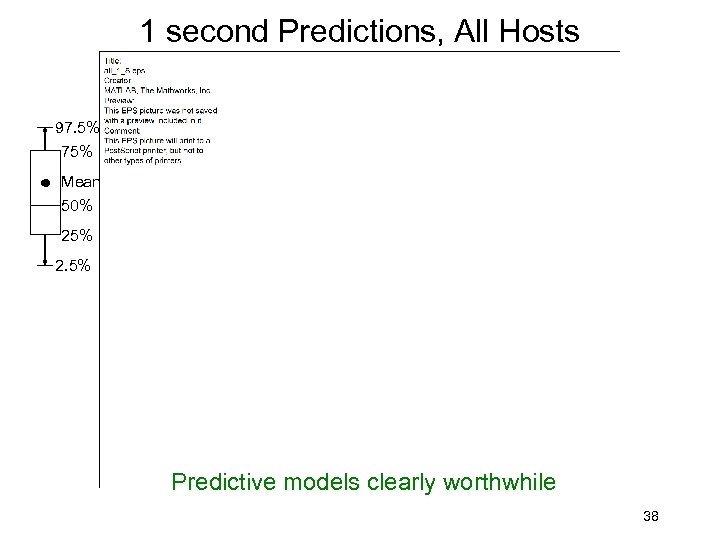
1 second Predictions, All Hosts 97. 5% 75% Mean 50% 25% 2. 5% Predictive models clearly worthwhile 38
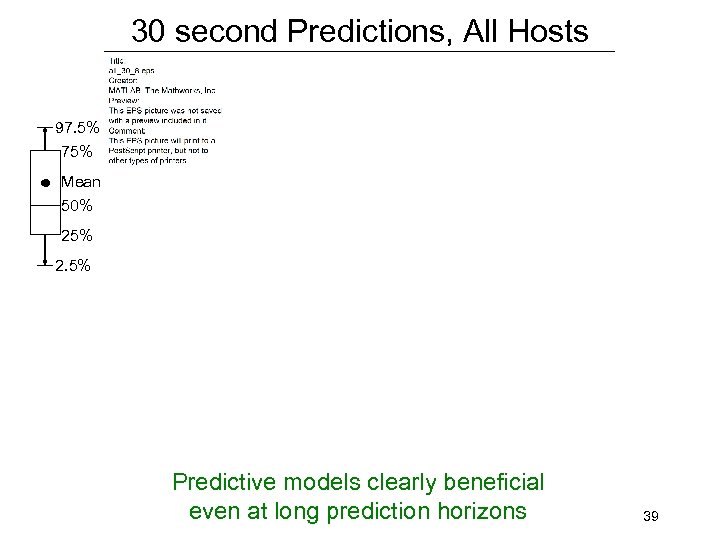
30 second Predictions, All Hosts 97. 5% 75% Mean 50% 25% 2. 5% Predictive models clearly beneficial even at long prediction horizons 39
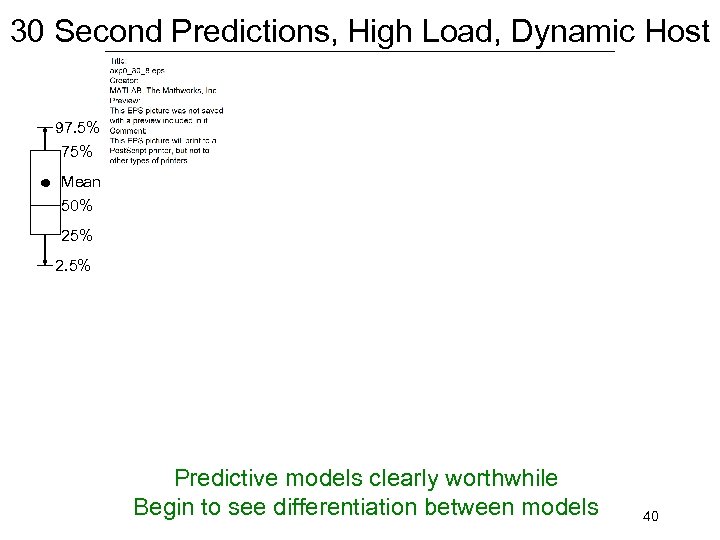
30 Second Predictions, High Load, Dynamic Host 97. 5% 75% Mean 50% 25% 2. 5% Predictive models clearly worthwhile Begin to see differentiation between models 40
Outline • Bird’s eye view • • • Adapting to highly variable resource availability Dv/Quake. Viz Real-time scheduling advisor Running time advisor Confidence intervals Performance results (feasible, practical, useful) • Prototype system • Host load prediction • Traces, structure, linear models, evaluation • RPS Toolkit • Conclusion 41
![Related Work • Distributed interactive applications • Quake. Viz/ Dv, Aeschlimann [PDPTA’ 99] •](https://present5.com/presentation/a440a0734515a015ef082888abe24194/image-42.jpg "Related Work • Distributed interactive applications • Quake. Viz/ Dv, Aeschlimann [PDPTA’ 99] •")
Related Work • Distributed interactive applications • Quake. Viz/ Dv, Aeschlimann [PDPTA’ 99] • Quality of service • Qu. O, Zinky, Bakken, Schantz [TPOS, April 97] • QRAM, Rajkumar, et al [RTSS’ 97] • Distributed soft real-time systems • Lawrence, Jensen [assorted] • Workload studies for load balancing • Mutka, et al [Perf. Eval ‘ 91] • Harchol-Balter, et al [SIGMETRICS ‘ 96] • Resource signal measurement systems • Remos [HPDC’ 98] • Network Weather Service [HPDC‘ 97, HPDC’ 99] • Host load prediction • Wolski, et al [HPDC’ 99] (NWS) • Samadani, et al [PODC’ 95] • Hailperin [‘ 93] • Application-level scheduling • Berman, et al [HPDC’ 96] • Stochastic Scheduling, Schopf [Supercomputing ‘ 99] 42

Conclusions • Help applications adapt to highly variable resource availability • Resource signal prediction • Predict running times as confidence intervals – Predicting CIs is feasible • Host load prediction using AR(16) models • Running time estimation using host load predictions – Predicting CIs is practical • RPS Toolkit (inc. in CMU Remos, BBN Qu. O) • Extremely low-overhead online system – Predicting CIs is useful • Performance of real-time scheduling advisor 43
Future Work • New resource signals – Network bandwidth and latency (Remos) • New prediction approaches – Wavelets, nonlinearity, cointegration • Resource scheduler models – Better Unix scheduler model – Network models • Adaptation advisors • Applications and workloads – DV/Quake. Viz, GIMP, Instrumentation 44
Tools/Venues for Future work • • • Resource signal methodolgy RPS Toolkit Remos Quake. Viz/DV Grid Forum 45
Future Work (Long Term) • Experimental computer science research • • • Application-oriented view Measurement studies and analysis Statistical approach Application services Systems building systems X applications X statistics 46
Teaching • “Signals, systems, and statistics for computer scientists” • “Performance data analysis” • “Introduction to computer systems” 47
Response of Typical AR(16) 48

Response of AR(1024) 49
Скачать презентацию The Running Time Advisor A Resource Signal-based Approach
a440a0734515a015ef082888abe24194.ppt