


 Скачать презентацию The role of registries within a spatial data
4e21b79bcdec2aee6105ba65f5232cd1.ppt
- Количество слайдов: 26
 The role of registries within a spatial data infrastructure Simon Cox Research Scientist 16 April 2008 Rob Atkinson Spatial Architect
 Outline • Spatial Data Infrastructure ~ Cyberinfrastructure • Brief comment on state of SDI deployment • Analysis examples • Metadata • Concept identifiers • Expanded role for registries
 SDIs
SDIs
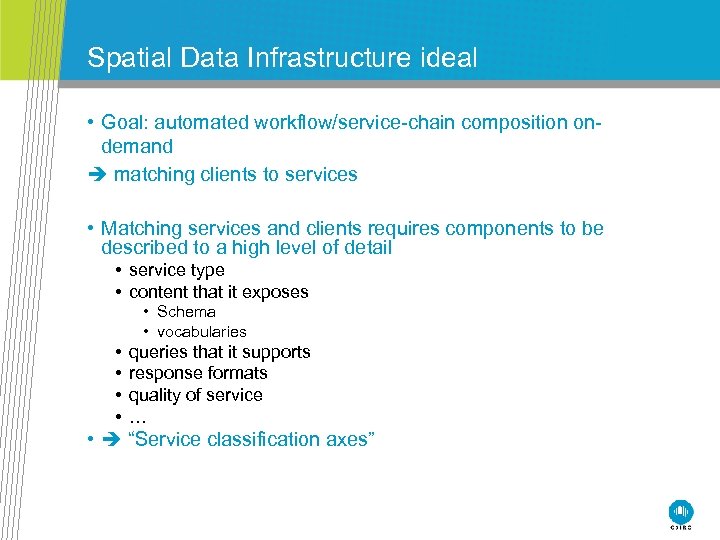 Spatial Data Infrastructure ideal • Goal: automated workflow/service-chain composition ondemand matching clients to services • Matching services and clients requires components to be described to a high level of detail • service type • content that it exposes • Schema • vocabularies • • queries that it supports response formats quality of service … • “Service classification axes”
 SDI reality • Some service instances • OGC-WFS, WMS, WCS, Open. DAP • Dataset metadata directories • Clearinghouses, GEON, ESIP, ASDD, Go-Geo … • Is this enough to achieve the goal? • No • Is the number of registered resources growing? • Not enough • Are the right resources being registered? • No • Why not? • Governance patterns not resolved • Metadata is insufficient, but creating it is too hard • Semantic interoperability requires community agreements • See Markup/Standards-based methodology paper
 Metadata
 Metadata capture • Everyone agrees that metadata is a good idea • But researchers are reluctant to provide it Why? • Not integrated with workflow • No perceived reward • Researchers don’t themselves rely on metadata-based discovery systems • Tedious to create • …
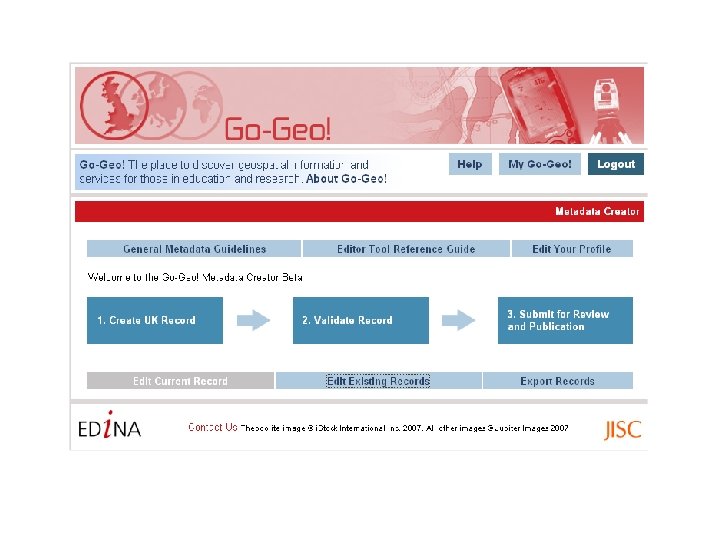
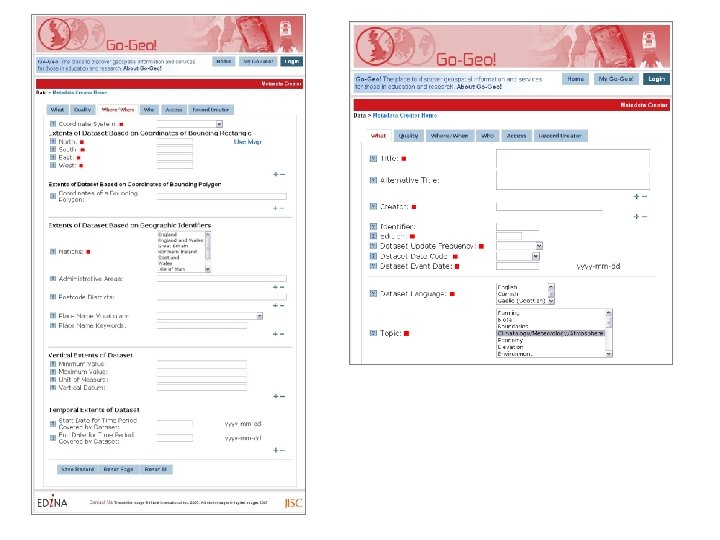
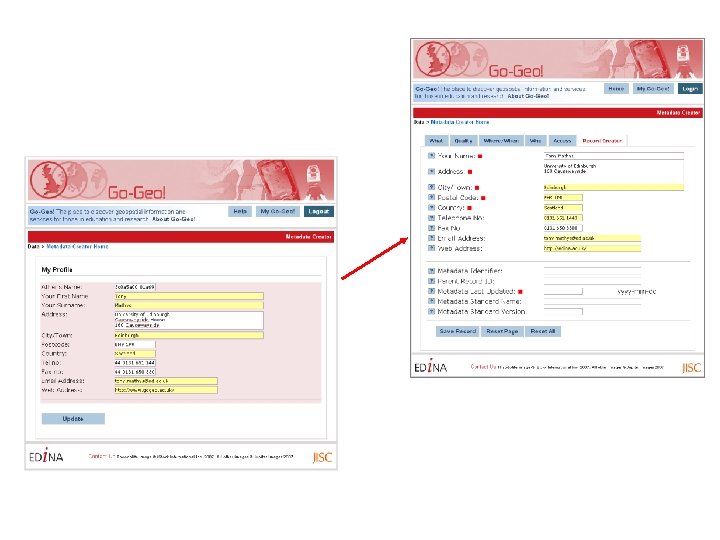
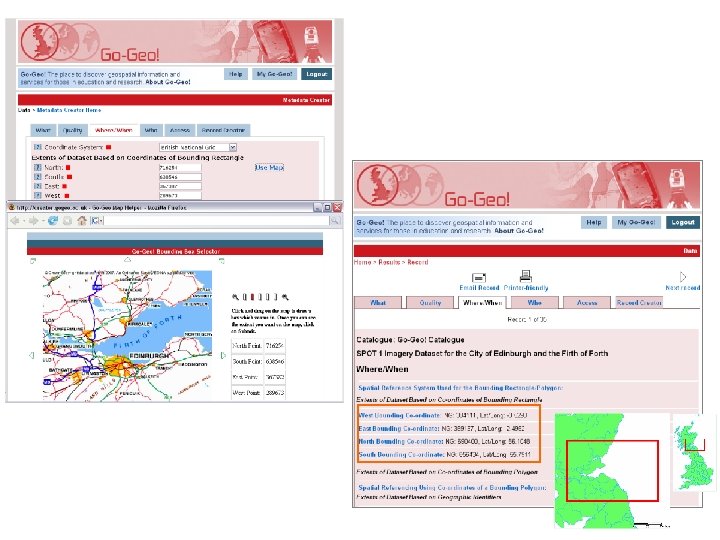
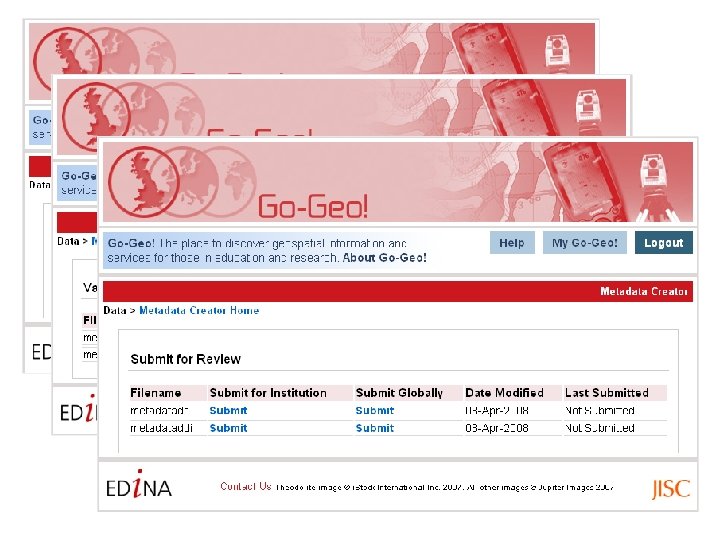
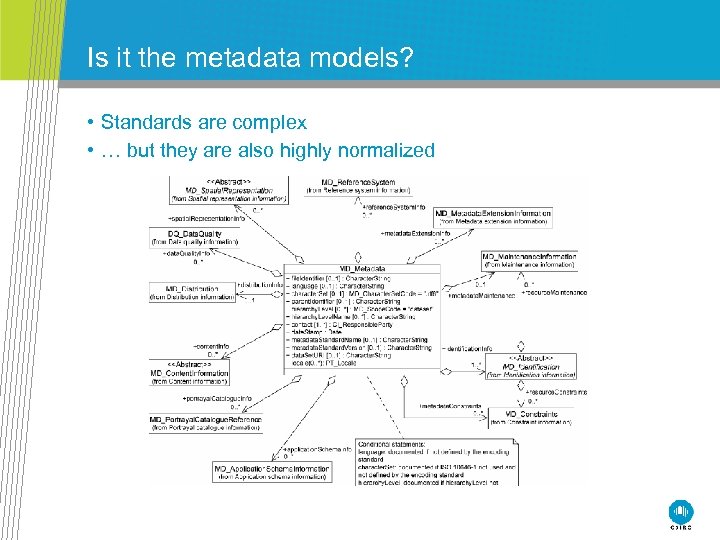 Is it the metadata models? • Standards are complex • … but they are also highly normalized
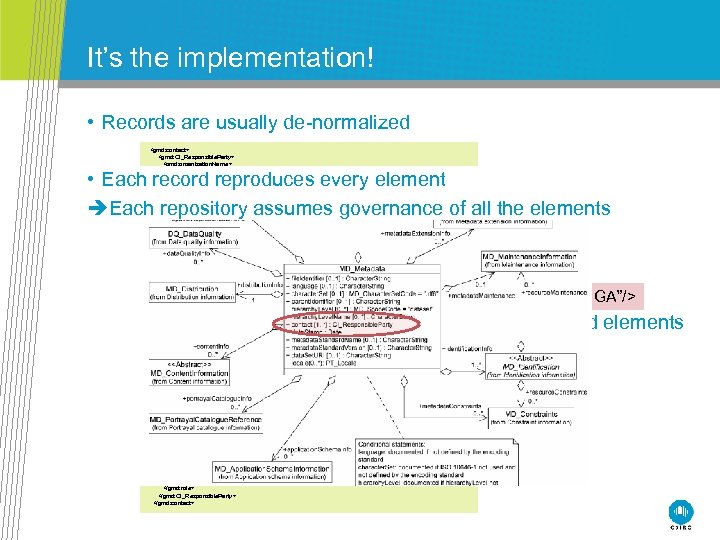 It’s the implementation! • Records are usually de-normalized
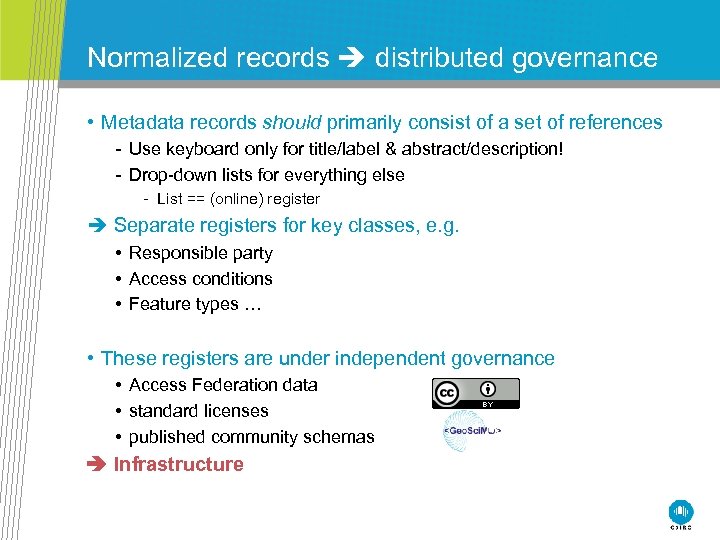 Normalized records distributed governance • Metadata records should primarily consist of a set of references - Use keyboard only for title/label & abstract/description! - Drop-down lists for everything else - List == (online) register Separate registers for key classes, e. g. • Responsible party • Access conditions • Feature types … • These registers are under independent governance • Access Federation data • standard licenses • published community schemas Infrastructure
 Identifiers
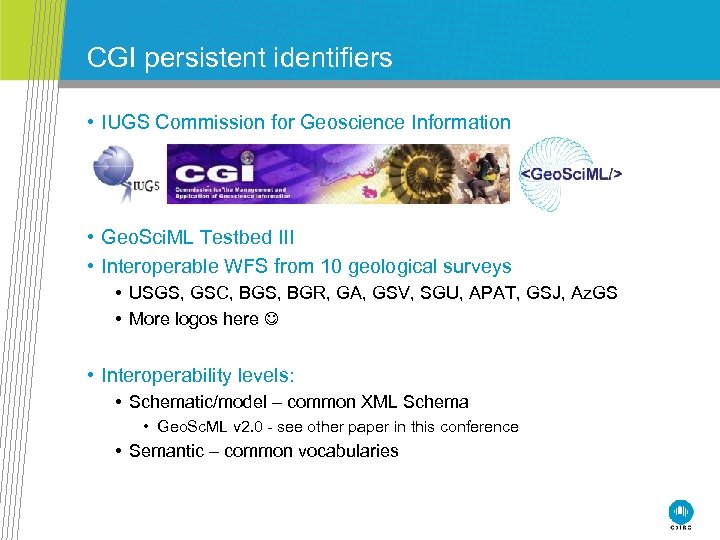 CGI persistent identifiers • IUGS Commission for Geoscience Information • Geo. Sci. ML Testbed III • Interoperable WFS from 10 geological surveys • USGS, GSC, BGS, BGR, GA, GSV, SGU, APAT, GSJ, Az. GS • More logos here • Interoperability levels: • Schematic/model – common XML Schema • Geo. Sc. ML v 2. 0 - see other paper in this conference • Semantic – common vocabularies
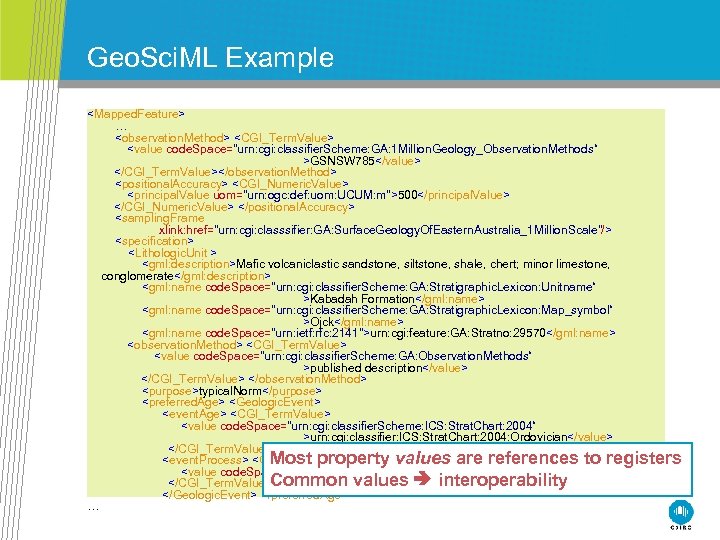 Geo. Sci. ML Example
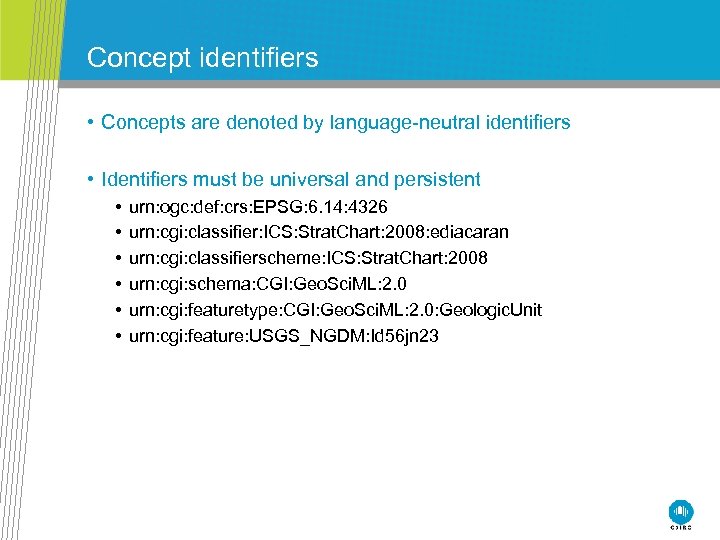 Concept identifiers • Concepts are denoted by language-neutral identifiers • Identifiers must be universal and persistent • • • urn: ogc: def: crs: EPSG: 6. 14: 4326 urn: cgi: classifier: ICS: Strat. Chart: 2008: ediacaran urn: cgi: classifierscheme: ICS: Strat. Chart: 2008 urn: cgi: schema: CGI: Geo. Sci. ML: 2. 0 urn: cgi: featuretype: CGI: Geo. Sci. ML: 2. 0: Geologic. Unit urn: cgi: feature: USGS_NGDM: Id 56 jn 23
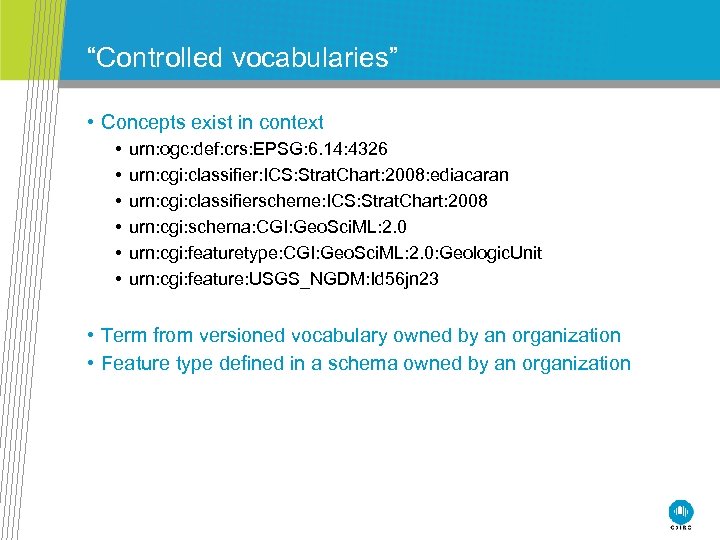 “Controlled vocabularies” • Concepts exist in context • • • urn: ogc: def: crs: EPSG: 6. 14: 4326 urn: cgi: classifier: ICS: Strat. Chart: 2008: ediacaran urn: cgi: classifierscheme: ICS: Strat. Chart: 2008 urn: cgi: schema: CGI: Geo. Sci. ML: 2. 0 urn: cgi: featuretype: CGI: Geo. Sci. ML: 2. 0: Geologic. Unit urn: cgi: feature: USGS_NGDM: Id 56 jn 23 • Term from versioned vocabulary owned by an organization • Feature type defined in a schema owned by an organization
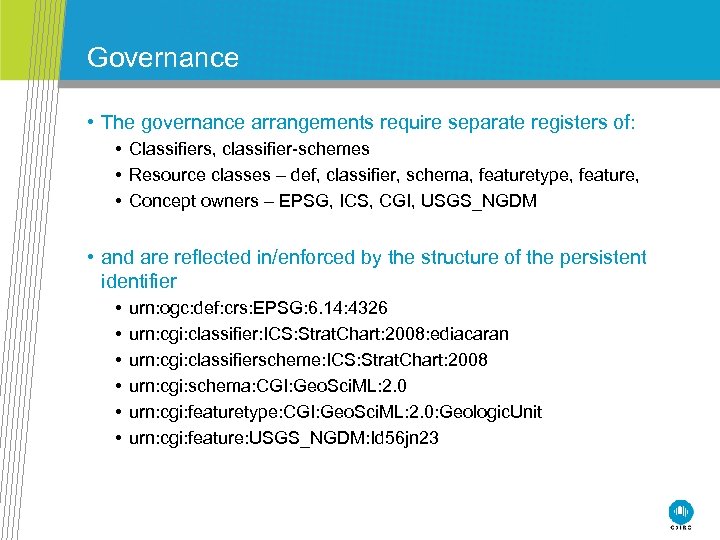 Governance • The governance arrangements require separate registers of: • Classifiers, classifier-schemes • Resource classes – def, classifier, schema, featuretype, feature, • Concept owners – EPSG, ICS, CGI, USGS_NGDM • and are reflected in/enforced by the structure of the persistent identifier • • • urn: ogc: def: crs: EPSG: 6. 14: 4326 urn: cgi: classifier: ICS: Strat. Chart: 2008: ediacaran urn: cgi: classifierscheme: ICS: Strat. Chart: 2008 urn: cgi: schema: CGI: Geo. Sci. ML: 2. 0 urn: cgi: featuretype: CGI: Geo. Sci. ML: 2. 0: Geologic. Unit urn: cgi: feature: USGS_NGDM: Id 56 jn 23
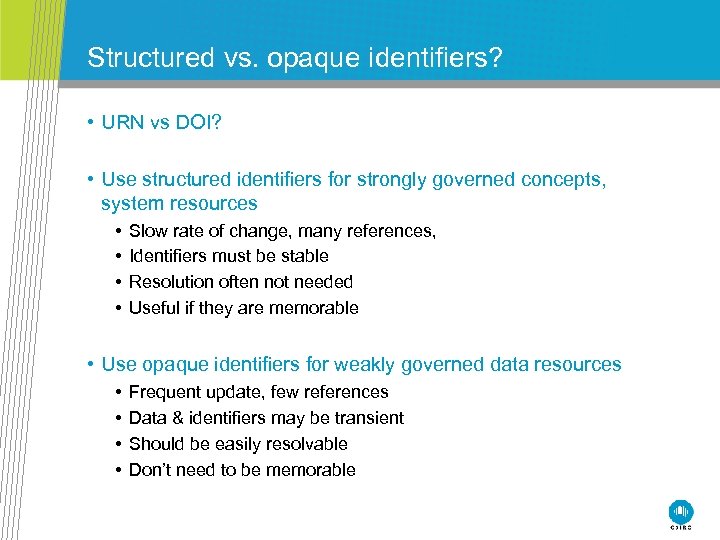 Structured vs. opaque identifiers? • URN vs DOI? • Use structured identifiers for strongly governed concepts, system resources • • Slow rate of change, many references, Identifiers must be stable Resolution often not needed Useful if they are memorable • Use opaque identifiers for weakly governed data resources • • Frequent update, few references Data & identifiers may be transient Should be easily resolvable Don’t need to be memorable
 Summary
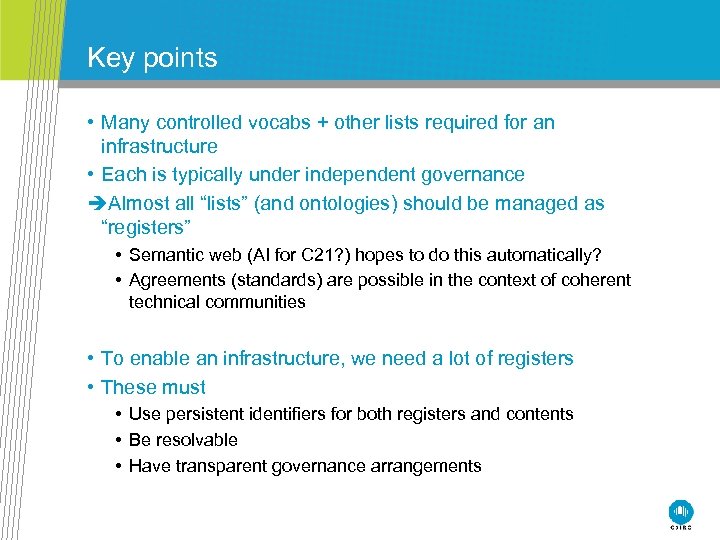 Key points • Many controlled vocabs + other lists required for an infrastructure • Each is typically under independent governance Almost all “lists” (and ontologies) should be managed as “registers” • Semantic web (AI for C 21? ) hopes to do this automatically? • Agreements (standards) are possible in the context of coherent technical communities • To enable an infrastructure, we need a lot of registers • These must • Use persistent identifiers for both registers and contents • Be resolvable • Have transparent governance arrangements
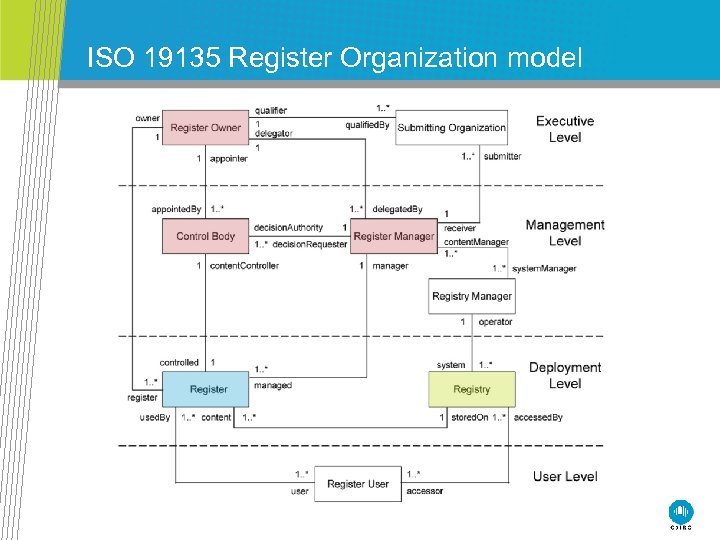 ISO 19135 Register Organization model
 Exploration & Mining Simon Cox Research Scientist Land & Water Rob Atkinson Spatial Architect Phone: 08 6436 8639 Email: Simon. Cox@csiro. au Web: www. seegrid. csiro. au Phone: 02 4226 4339 Email: Rob. Atkinson@csiro. au Thank you Contact Us Phone: 1300 363 400 or +61 3 9545 2176 Email: enquiries@csiro. au Web: www. csiro. au