


 Скачать презентацию The Role of Occupational Hygiene in OH Management
3bcf442ce155a30f11b7e28a10e67960.ppt
- Количество слайдов: 35
 The Role of Occupational Hygiene in OH Management Dr Brian Davies AM Davies, OHS Unit, October 2006
 What is Occupational Hygiene ? 'Occupational Hygiene is the discipline of anticipating, recognising, evaluating and controlling health hazards in the working environment with the objective of protecting worker health and well-being and safeguarding the community at large. ' (Source IOHA) 2
 The Scope of Occupational Hygiene • Recognition of health problems created within the industrial environment (chemical, physical & biological) • Evaluation in terms of long and short term effects • Development of corrective measures to control problems 3
 Functions Performed by Hygienists • Examination and evaluation of the work environment • Interpretation of gathered data • Preparation of control measures • Education • Ongoing audits • Research 4
 Occupational Hygienists • Are trained to recognise conditions that give rise to potential health problems – What health effects are possible in the workplace? • Need to understand the process – What is causing the health effect? – How are people being exposed? 5
 Occupational Hygienists • Develop appropriate and cost effective monitoring programmes to establish worker exposures – What type of monitoring programme is required? – Number of samples to give an accurate estimate of exposure? • Participate in the development of control technologies – Control technologies need to be effective & practical 6
 Occupational Hygienists • Develop and participate in education programmes – Use of monitoring data is important in getting over a message to the workforce • Need to have the appropriate skills to undertake the above tasks – How do we develop these skills? – University & professional training 7
 Training Occupational Hygienists • University post graduate programmes – Provide theoretical understanding but not always the practical experience • Professional training – BP/Petroskills/UOW pilot course to impart practical knowledge (October 2006) – Currently being developed into modular programme (first two modules available early 2007) 8
 Training Occupational Hygienists • Certification – Professional societies/Accreditation bodies (BOHS/ABIH/AIOH) • Mentoring – Overview by an experienced OH • CES at Occupational Hygiene conferences 9
 Development of the Profession • International Occupational Hygiene Association – Represents 25 associations in 23 countries – Co-operation in Occupational Hygiene Programme (establishment of local societies) – Accreditation of certification schemes – NGO status with WHO & ILO 10
 Links to Other Professions • In the industrial environment there few (if any) professionals who are skilled in all aspects necessary to protect worker health • Need for all professionals to work as a team to address issues 11
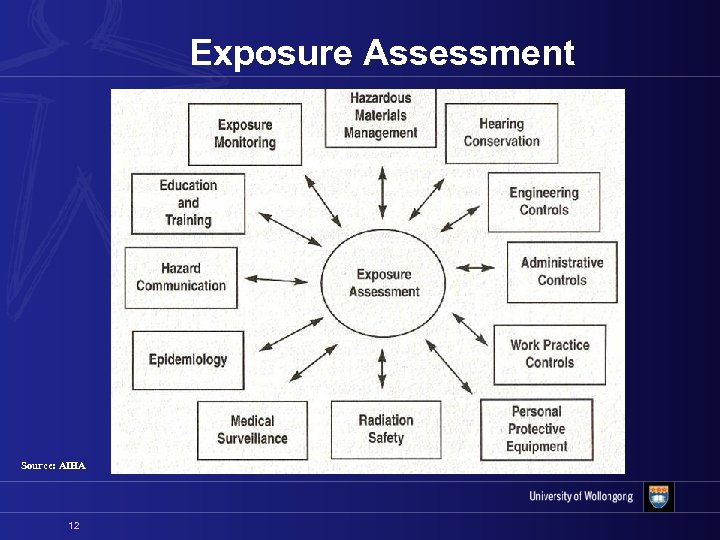 Exposure Assessment Source: AIHA 12
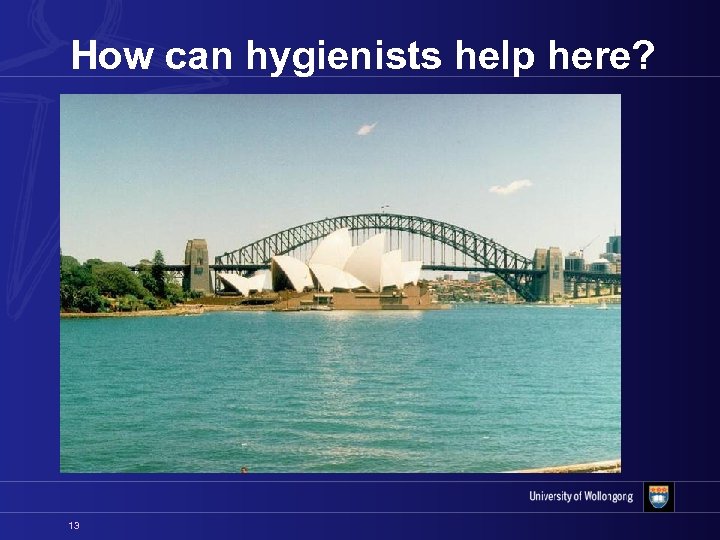 How can hygienists help here? 13
 Sydney Harbour Bridge • • 14 Old paint containing lead Organic vapours Hand- arm vibration Noise
 Sydney Opera House • Vapours from ceramic resins • Noise 15
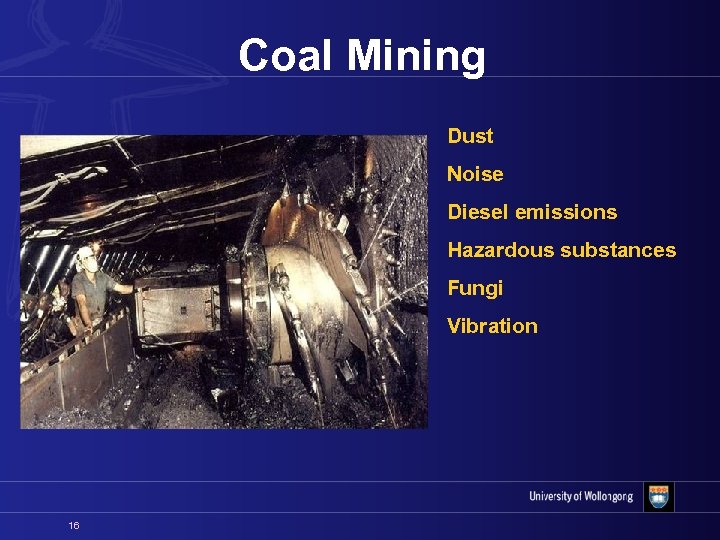 Coal Mining Dust Noise Diesel emissions Hazardous substances Fungi Vibration 16
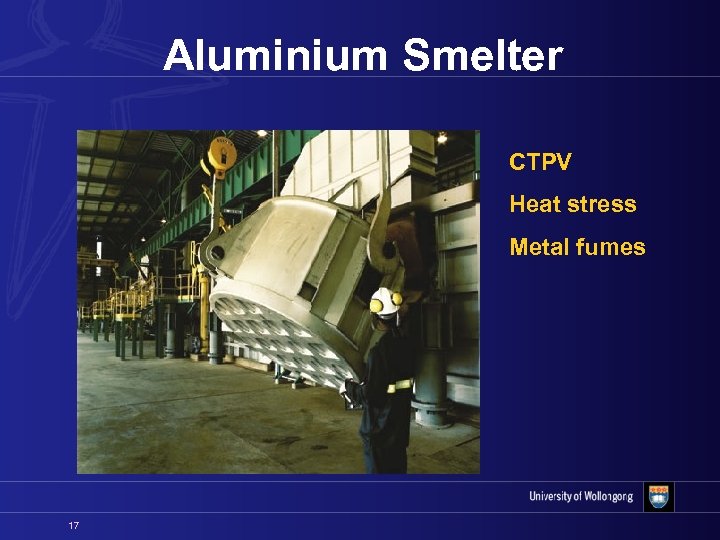 Aluminium Smelter CTPV Heat stress Metal fumes 17
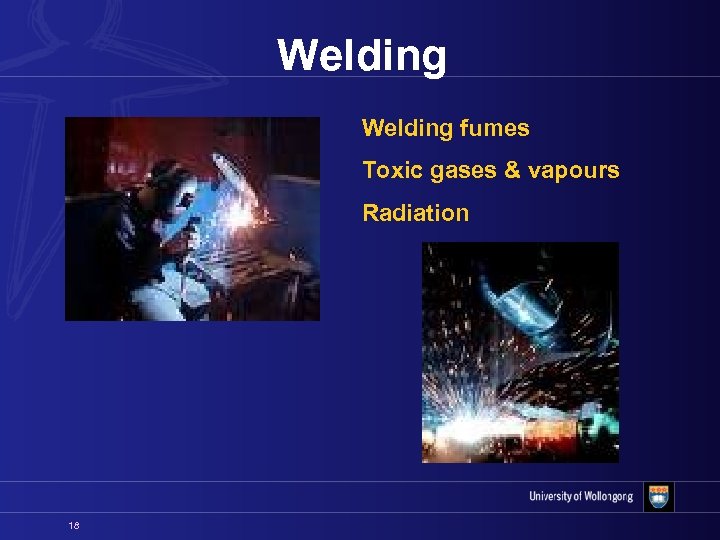 Welding fumes Toxic gases & vapours Radiation 18
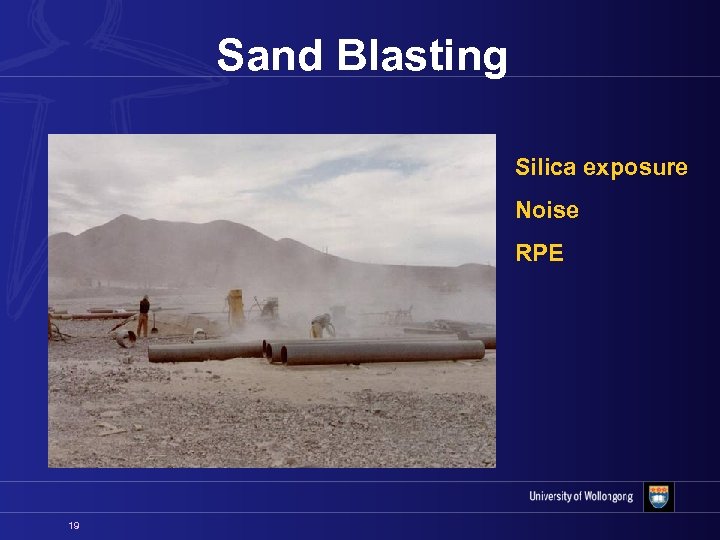 Sand Blasting Silica exposure Noise RPE 19
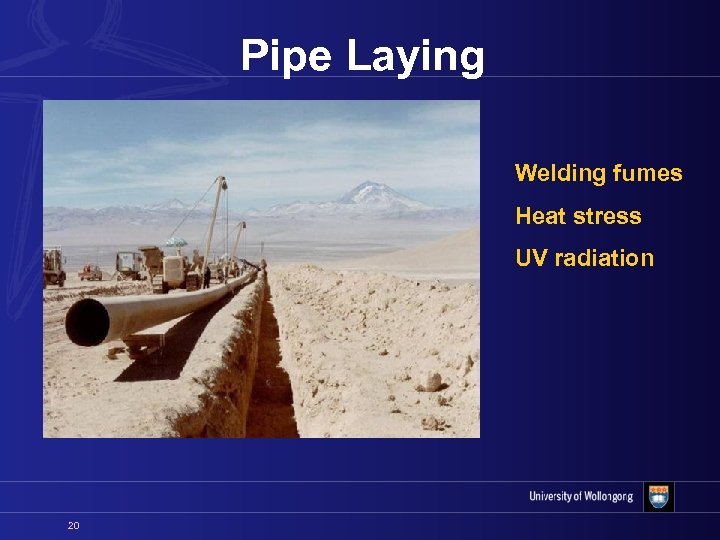 Pipe Laying Welding fumes Heat stress UV radiation 20
 Aviation Industry Composites Cu Beryllium Hazardous substances Noise Confined spaces-fuel vapours 21
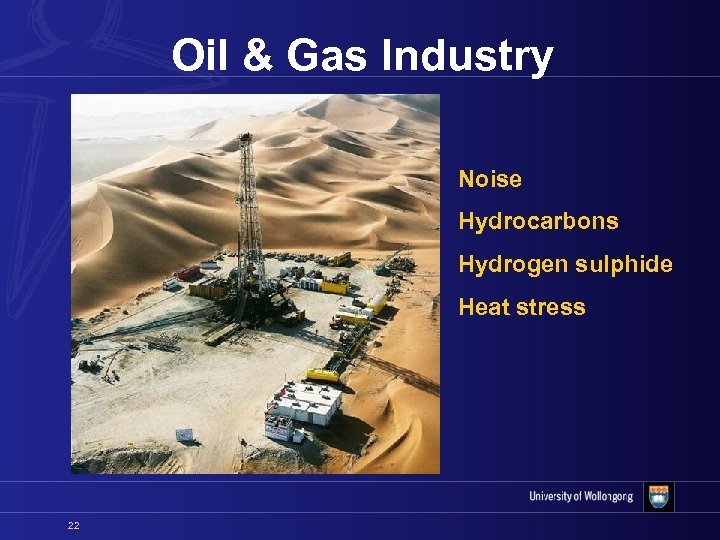 Oil & Gas Industry Noise Hydrocarbons Hydrogen sulphide Heat stress 22
 Monitoring Programmes • What are they? • What programmes are effective? • What actually is overexposure? 23
 What is Monitoring? Process of conducting measurement (s) of the concentrations of airborne contaminants. To estimate risk the following are required; 1) a reliable estimate of exposure 2) an exposure limit for the contaminant 24
 Occupational Exposure Limits • Regulatory limits (HSE EH 40, MAK) • Professional societies - eg ACGIH (TLV list), AIOH - (DP & Heat Stress) • Corporate limits 25
 Why Monitor Workplaces? • To establish the level of risk of adverse heath effects in a workplace • To meet regulatory or corporate requirements • To develop appropriate control measures 26
 Why Monitor Workplaces? • To measure the effectiveness of control measures • For research purposes such as epidemiology • To dispel anxiety 27
 Points to Consider • For a health hazard to exist there has to be both a toxic agent and the possibility of exposure – Is monitoring warranted ? – Can the issue be resolved without monitoring? • Need to know what you are looking for in order to develop an effective monitoring programme 28
 Points to Consider • What is the overall intention of the monitoring programme? – Statutory or corporate compliance – Settlement of industrial issues – Ongoing risk management – Epidemiology 29
 Limitations of Data • Single worker, single day samples: –Errors of space (location) and time –Validity to ”real” exposure questionable? • Accounting for as many influencing factors as possible improves validity of result 30
 Statistically Based Monitoring • What constitutes statistically valid monitoring and data treatment – Defined SEG’s – Predetermined sampling plan – Statistical treatment of data 31
 What is overexposure ? • Which exposure standard should be used? – TWA, STEL, Ceiling (Peak) • Which metric should be used? – GM, MVUE, 95%UCL, 95%ile – Significance based on toxicity 32
 How do we link all this together? • Hygienists need to – Decide what needs to be monitored – Decide how to monitor – Decide how to interpret the data – Decide how to present data to the workforce and management – Assist in the development of solutions 33
 Summary • Occupational hygienists are part of a team necessary to protect worker health and all contribute to this goal • They fill the role of identifying, measuring & controlling worker exposures • There is a shortage of trained experienced hygienists but industry is moving to address this issue 34
 Acknowledgements • Dr Nasser Al-Maskery • University of Wollongong 35