 Скачать презентацию The role of marine plankton in the global
d52597e13fdd3d16f8f3b3de0c7fd826.ppt
- Количество слайдов: 25



The role of marine plankton in the global climate Bas Kooijman Dept Theoretical Biology http: //www. bio. vu. nl/thb/ Climate Center Vrije Universiteit Tuesday 15 Oct 2002
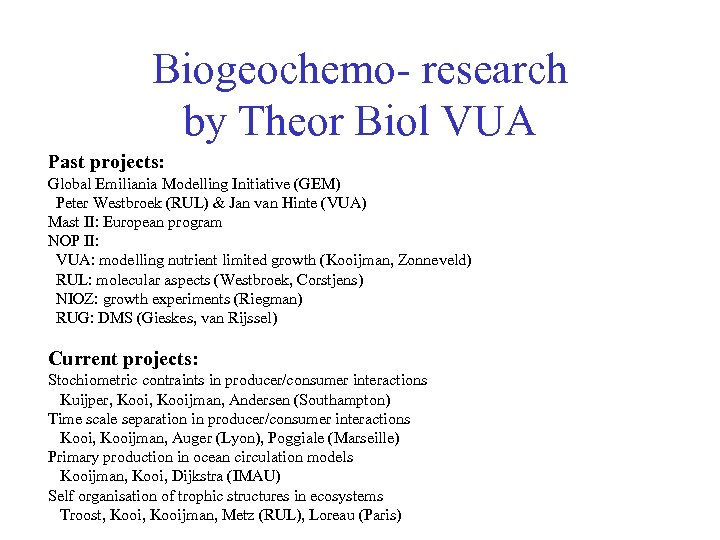
Biogeochemo- research by Theor Biol VUA Past projects: Global Emiliania Modelling Initiative (GEM) Peter Westbroek (RUL) & Jan van Hinte (VUA) Mast II: European program NOP II: VUA: modelling nutrient limited growth (Kooijman, Zonneveld) RUL: molecular aspects (Westbroek, Corstjens) NIOZ: growth experiments (Riegman) RUG: DMS (Gieskes, van Rijssel) Current projects: Stochiometric contraints in producer/consumer interactions Kuijper, Kooijman, Andersen (Southampton) Time scale separation in producer/consumer interactions Kooi, Kooijman, Auger (Lyon), Poggiale (Marseille) Primary production in ocean circulation models Kooijman, Kooi, Dijkstra (IMAU) Self organisation of trophic structures in ecosystems Troost, Kooijman, Metz (RUL), Loreau (Paris)
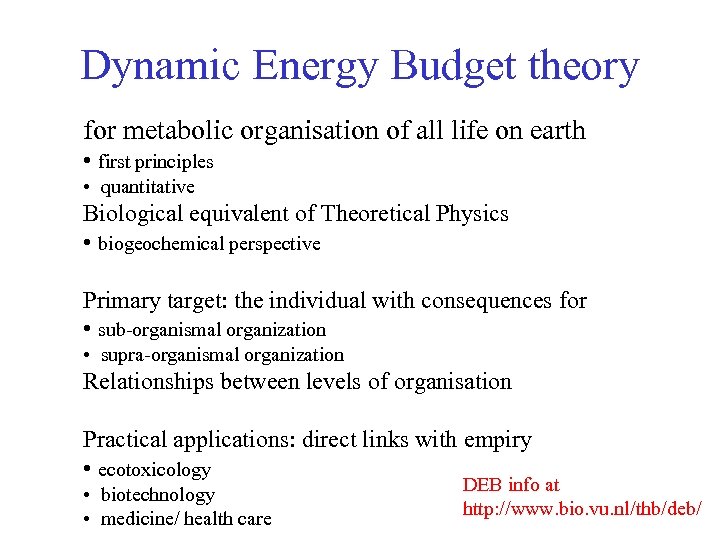
Dynamic Energy Budget theory for metabolic organisation of all life on earth • first principles • quantitative Biological equivalent of Theoretical Physics • biogeochemical perspective Primary target: the individual with consequences for • sub-organismal organization • supra-organismal organization Relationships between levels of organisation Practical applications: direct links with empiry • ecotoxicology • biotechnology • medicine/ health care DEB info at http: //www. bio. vu. nl/thb/deb/
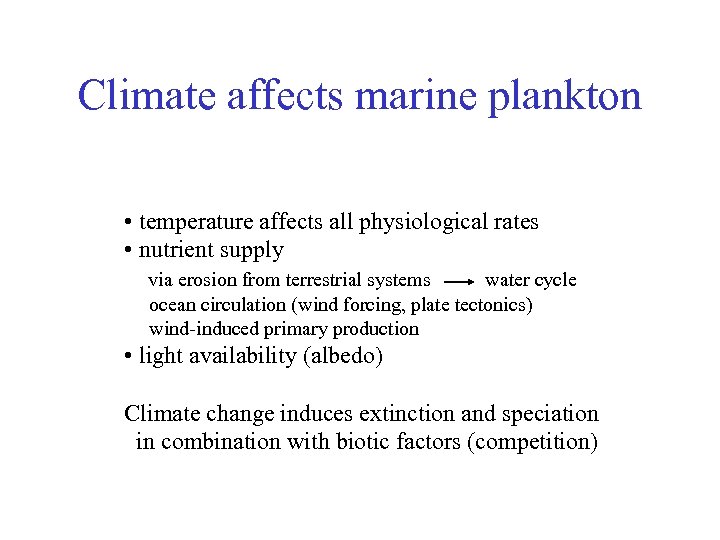
Climate affects marine plankton • temperature affects all physiological rates • nutrient supply via erosion from terrestrial systems water cycle ocean circulation (wind forcing, plate tectonics) wind-induced primary production • light availability (albedo) Climate change induces extinction and speciation in combination with biotic factors (competition)
Marine plankton affects climate • organic carbon pump transport of atmospheric CO 2 to deep ocean (1000 year memory) linked to nutrient cycling, terrestrial ecosystems • calcification (inorganic carbon pump) precipitation of CO 2 in Ca. CO 3 burial by plate tectonics • albedo emission of DMS cloud formation, effects on radiation Half rules: Half of evaporation is from land (plants compensate land/sea difference) Half of present primary production is from marine plankton Half of carbonate precipitation is by reefs (corals), the rest by plankton (forams and coccolithophores)
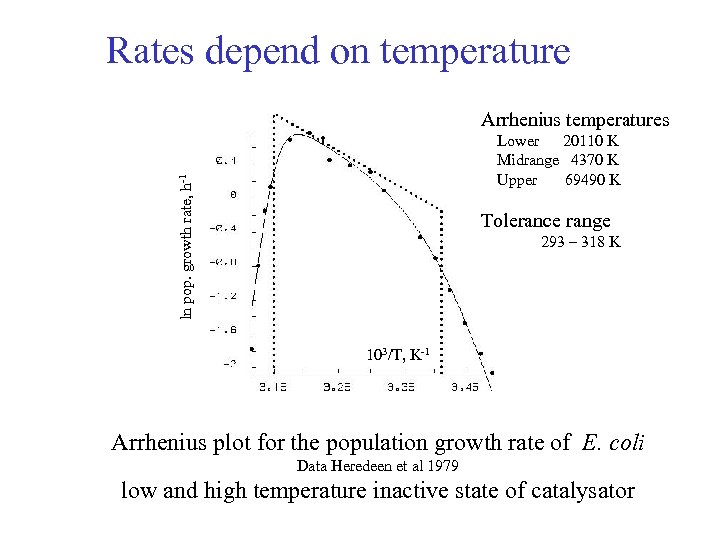
Rates depend on temperature Arrhenius temperatures ln pop. growth rate, h-1 Lower 20110 K Midrange 4370 K Upper 69490 K Tolerance range 293 – 318 K 103/T, K-1 Arrhenius plot for the population growth rate of E. coli Data Heredeen et al 1979 low and high temperature inactive state of catalysator
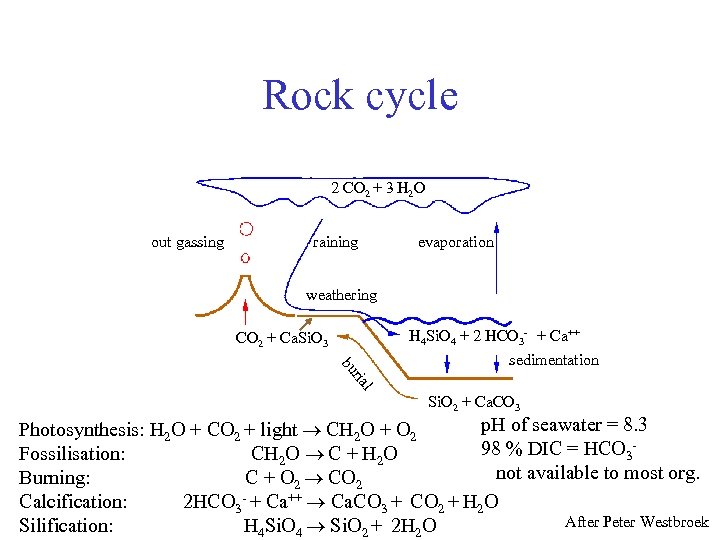
Rock cycle 2 CO 2 + 3 H 2 O out gassing raining evaporation weathering CO 2 + Ca. Si. O 3 ria bu H 4 Si. O 4 + 2 HCO 3 - + Ca++ sedimentation l Si. O 2 + Ca. CO 3 p. H of seawater = 8. 3 Photosynthesis: H 2 O + CO 2 + light CH 2 O + O 2 98 % DIC = HCO 3 Fossilisation: CH 2 O C + H 2 O not available to most org. Burning: C + O 2 CO 2 Calcification: 2 HCO 3 - + Ca++ Ca. CO 3 + CO 2 + H 2 O After Peter Westbroek Silification: H 4 Si. O 4 Si. O 2 + 2 H 2 O
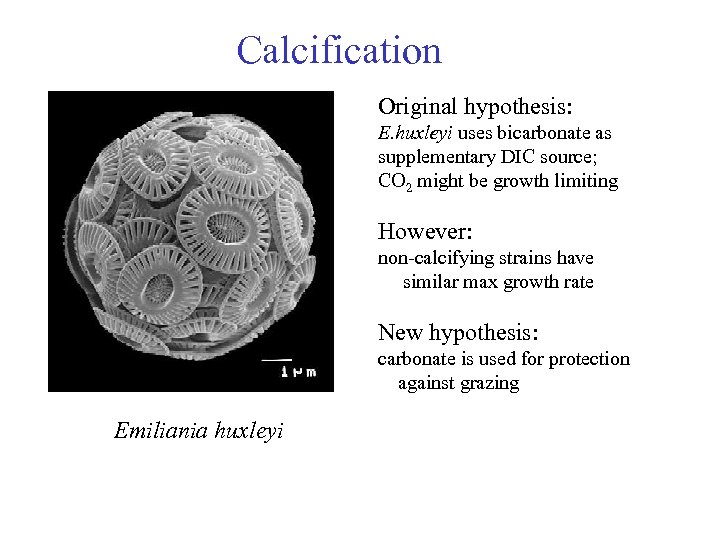
Calcification Original hypothesis: E. huxleyi uses bicarbonate as supplementary DIC source; CO 2 might be growth limiting However: non-calcifying strains have similar max growth rate New hypothesis: carbonate is used for protection against grazing Emiliania huxleyi
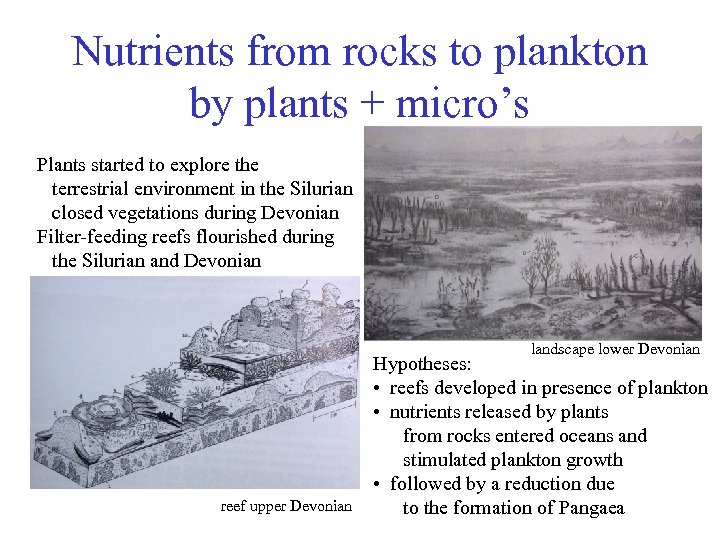
Nutrients from rocks to plankton by plants + micro’s Plants started to explore the terrestrial environment in the Silurian closed vegetations during Devonian Filter-feeding reefs flourished during the Silurian and Devonian landscape lower Devonian reef upper Devonian Hypotheses: • reefs developed in presence of plankton • nutrients released by plants from rocks entered oceans and stimulated plankton growth • followed by a reduction due to the formation of Pangaea
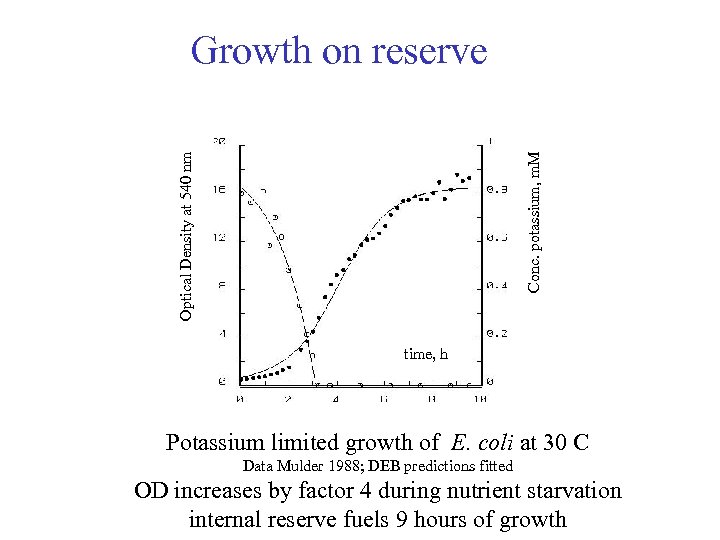
Optical Density at 540 nm Conc. potassium, m. M Growth on reserve time, h Potassium limited growth of E. coli at 30 C Data Mulder 1988; DEB predictions fitted OD increases by factor 4 during nutrient starvation internal reserve fuels 9 hours of growth
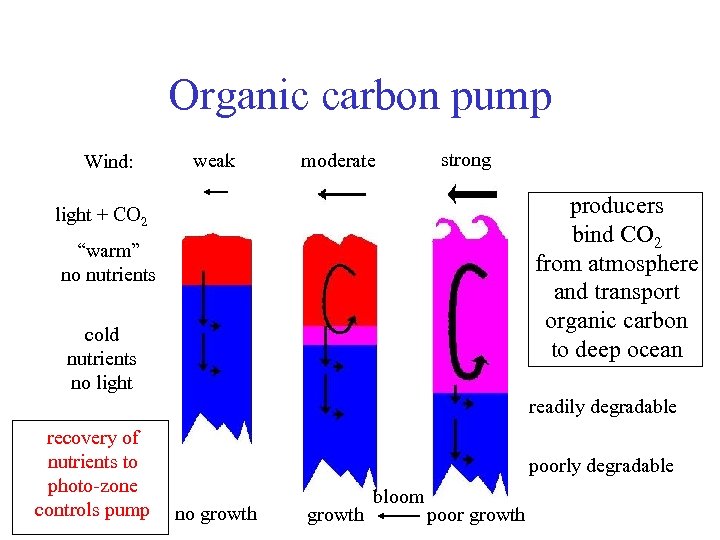
Organic carbon pump Wind: weak moderate strong producers bind CO 2 from atmosphere and transport organic carbon to deep ocean light + CO 2 “warm” no nutrients cold nutrients no light readily degradable recovery of nutrients to photo-zone controls pump poorly degradable no growth bloom poor growth
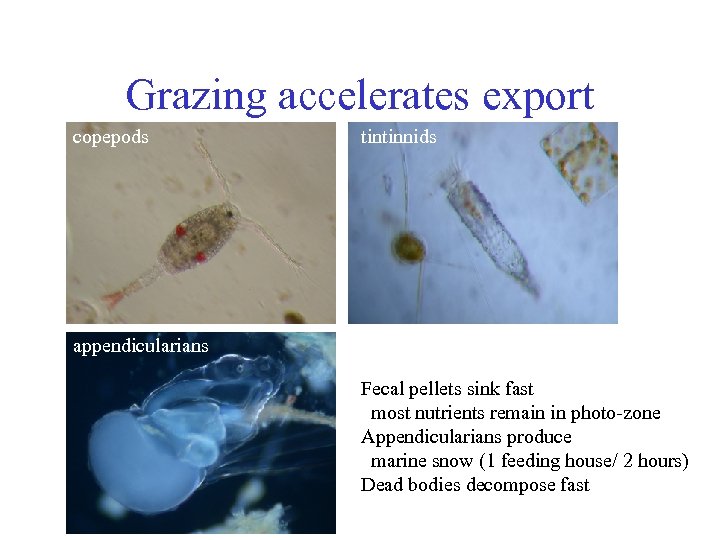
Grazing accelerates export copepods tintinnids appendicularians Fecal pellets sink fast most nutrients remain in photo-zone Appendicularians produce marine snow (1 feeding house/ 2 hours) Dead bodies decompose fast
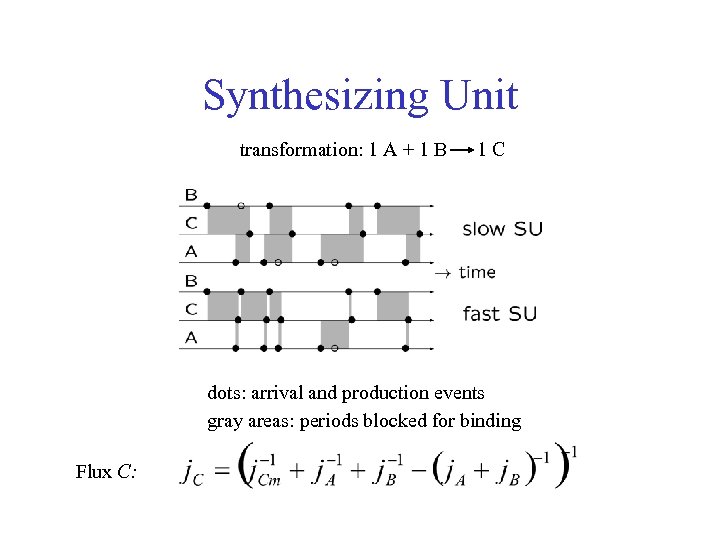
Synthesizing Unit transformation: 1 A + 1 B 1 C dots: arrival and production events gray areas: periods blocked for binding Flux C:
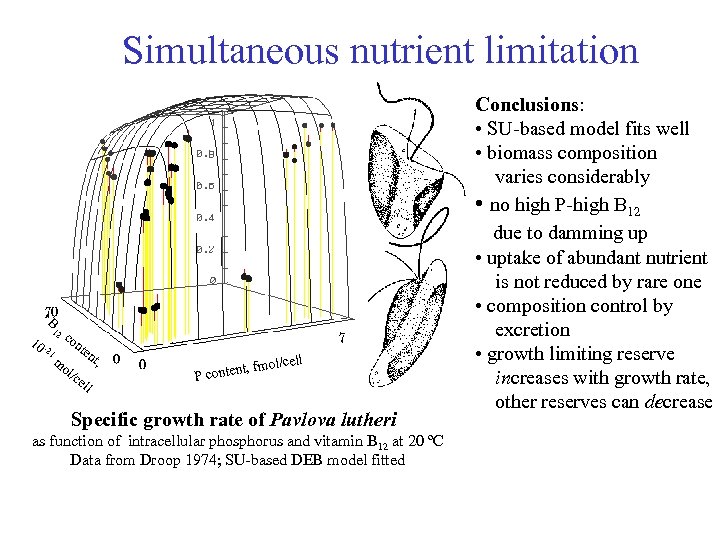
Simultaneous nutrient limitation B 10 - 12 21 co mo l/ nte ce nt, ll l/cell t, fmo P conten Specific growth rate of Pavlova lutheri as function of intracellular phosphorus and vitamin B 12 at 20 ºC Data from Droop 1974; SU-based DEB model fitted Conclusions: • SU-based model fits well • biomass composition varies considerably • no high P-high B 12 due to damming up • uptake of abundant nutrient is not reduced by rare one • composition control by excretion • growth limiting reserve increases with growth rate, other reserves can decrease
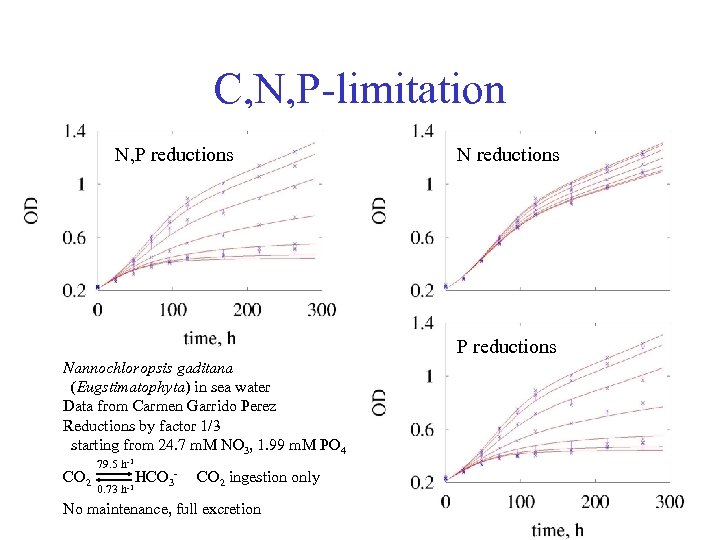
C, N, P-limitation N, P reductions N reductions P reductions Nannochloropsis gaditana (Eugstimatophyta) in sea water Data from Carmen Garrido Perez Reductions by factor 1/3 starting from 24. 7 m. M NO 3, 1. 99 m. M PO 4 CO 2 79. 5 h-1 0. 73 h-1 HCO 3 - CO 2 ingestion only No maintenance, full excretion
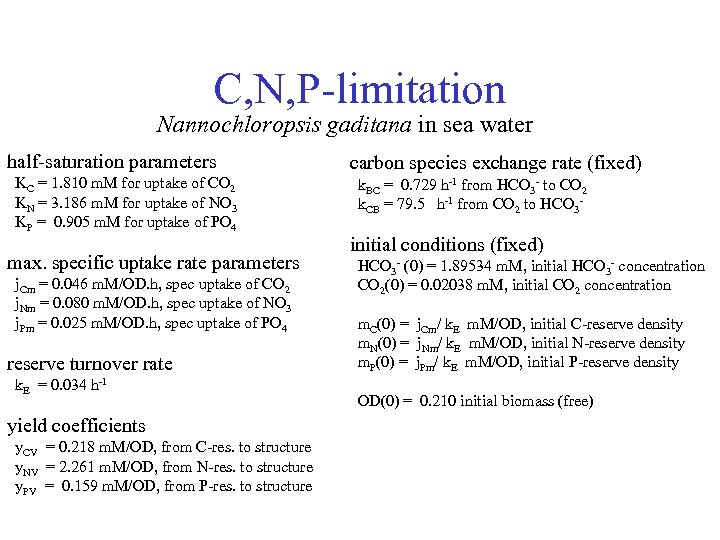
C, N, P-limitation Nannochloropsis gaditana in sea water half-saturation parameters KC = 1. 810 m. M for uptake of CO 2 KN = 3. 186 m. M for uptake of NO 3 KP = 0. 905 m. M for uptake of PO 4 max. specific uptake rate parameters j. Cm = 0. 046 m. M/OD. h, spec uptake of CO 2 j. Nm = 0. 080 m. M/OD. h, spec uptake of NO 3 j. Pm = 0. 025 m. M/OD. h, spec uptake of PO 4 reserve turnover rate k. E = 0. 034 h-1 yield coefficients y. CV = 0. 218 m. M/OD, from C-res. to structure y. NV = 2. 261 m. M/OD, from N-res. to structure y. PV = 0. 159 m. M/OD, from P-res. to structure carbon species exchange rate (fixed) k. BC = 0. 729 h-1 from HCO 3 - to CO 2 k. CB = 79. 5 h-1 from CO 2 to HCO 3 - initial conditions (fixed) HCO 3 - (0) = 1. 89534 m. M, initial HCO 3 - concentration CO 2(0) = 0. 02038 m. M, initial CO 2 concentration m. C(0) = j. Cm/ k. E m. M/OD, initial C-reserve density m. N(0) = j. Nm/ k. E m. M/OD, initial N-reserve density m. P(0) = j. Pm/ k. E m. M/OD, initial P-reserve density OD(0) = 0. 210 initial biomass (free)
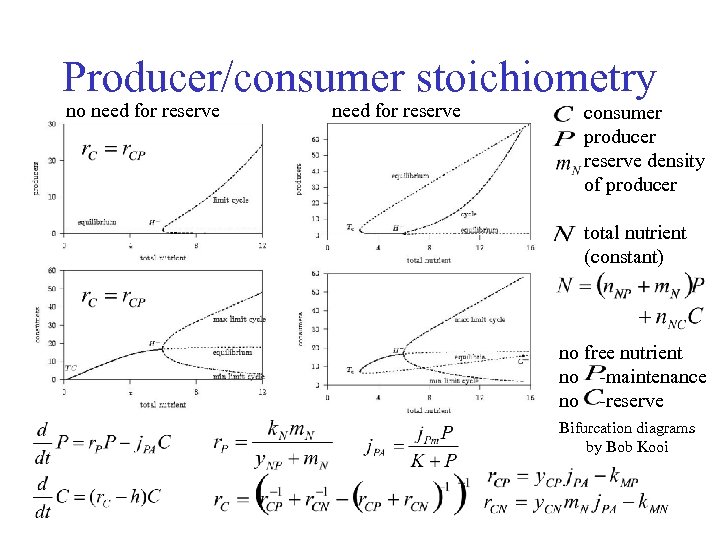
Producer/consumer stoichiometry no need for reserve consumer producer reserve density of producer total nutrient (constant) no free nutrient no -maintenance no -reserve Bifurcation diagrams by Bob Kooi
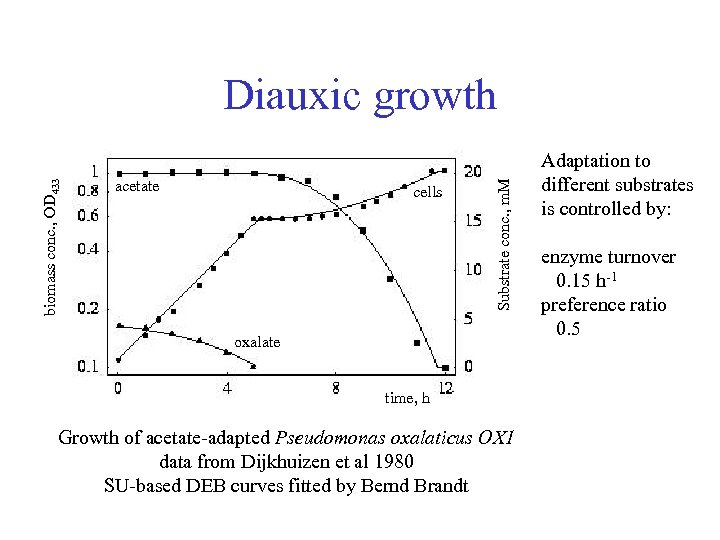
acetate cells Substrate conc. , m. M biomass conc. , OD 433 Diauxic growth oxalate time, h Growth of acetate-adapted Pseudomonas oxalaticus OX 1 data from Dijkhuizen et al 1980 SU-based DEB curves fitted by Bernd Brandt Adaptation to different substrates is controlled by: enzyme turnover 0. 15 h-1 preference ratio 0. 5
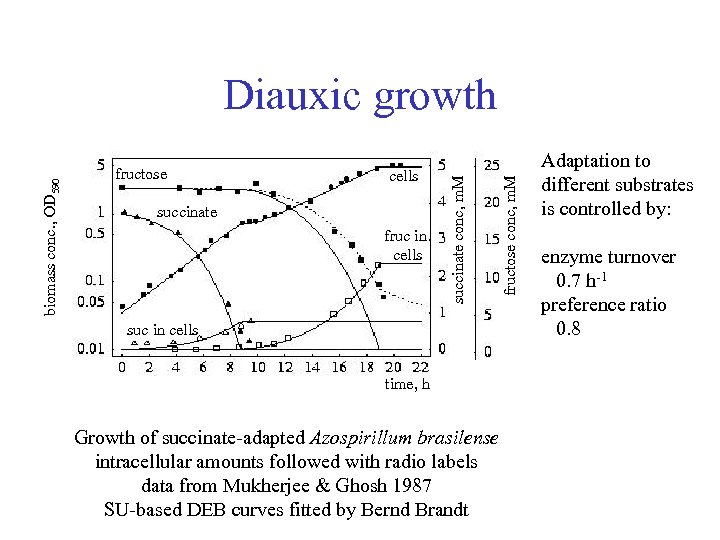
cells succinate fruc in cells suc in cells time, h Growth of succinate-adapted Azospirillum brasilense intracellular amounts followed with radio labels data from Mukherjee & Ghosh 1987 SU-based DEB curves fitted by Bernd Brandt fructose conc, m. M fructose succinate conc, m. M biomass conc. , OD 590 Diauxic growth Adaptation to different substrates is controlled by: enzyme turnover 0. 7 h-1 preference ratio 0. 8
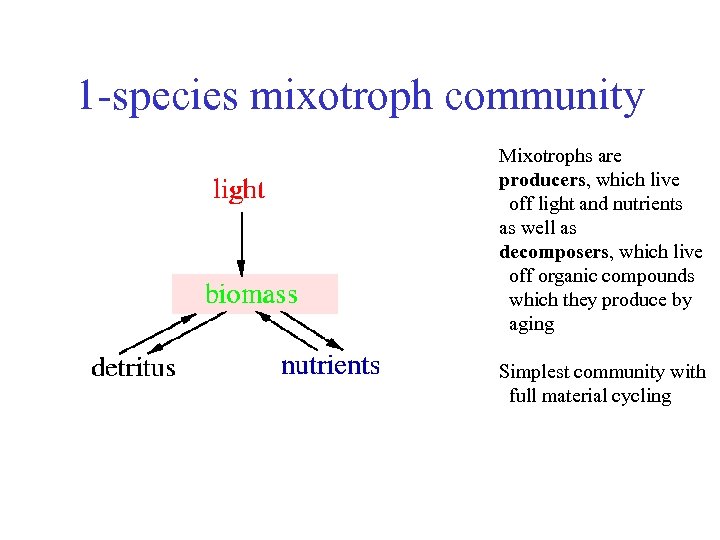
1 -species mixotroph community Mixotrophs are producers, which live off light and nutrients as well as decomposers, which live off organic compounds which they produce by aging Simplest community with full material cycling
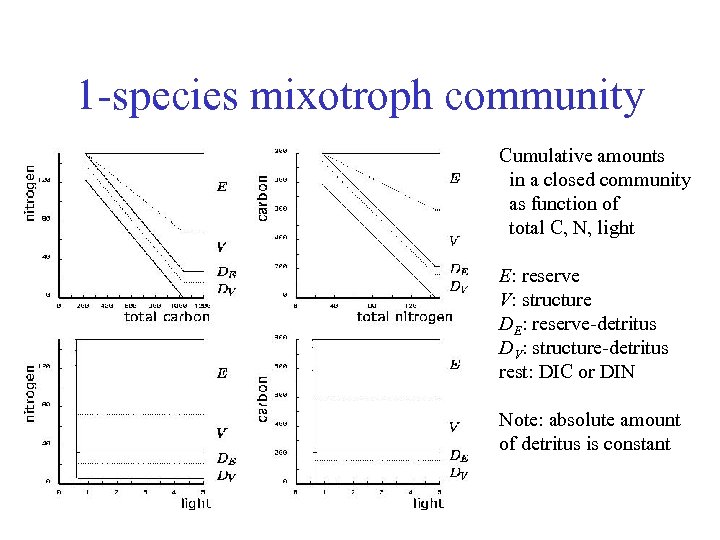
1 -species mixotroph community Cumulative amounts in a closed community as function of total C, N, light E: reserve V: structure DE: reserve-detritus DV: structure-detritus rest: DIC or DIN Note: absolute amount of detritus is constant
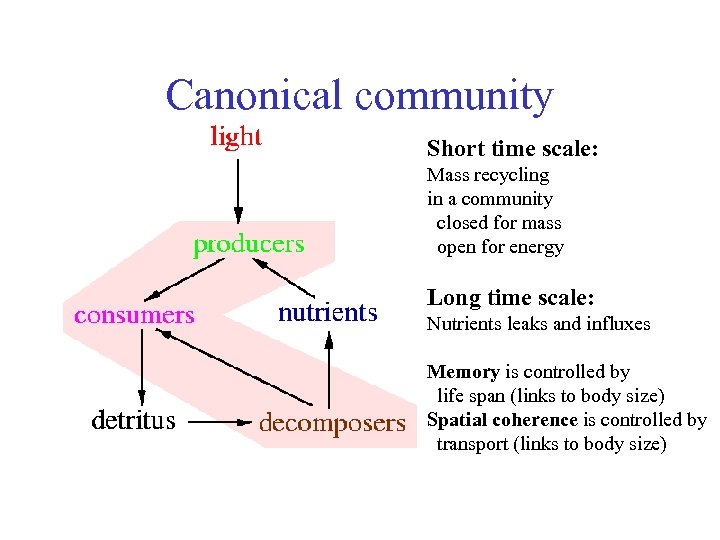
Canonical community Short time scale: Mass recycling in a community closed for mass open for energy Long time scale: Nutrients leaks and influxes Memory is controlled by life span (links to body size) Spatial coherence is controlled by transport (links to body size)
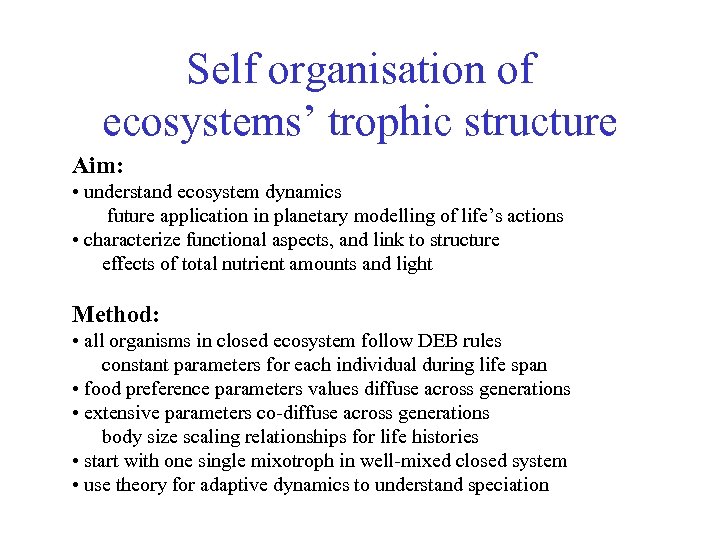
Self organisation of ecosystems’ trophic structure Aim: • understand ecosystem dynamics future application in planetary modelling of life’s actions • characterize functional aspects, and link to structure effects of total nutrient amounts and light Method: • all organisms in closed ecosystem follow DEB rules constant parameters for each individual during life span • food preference parameters values diffuse across generations • extensive parameters co-diffuse across generations body size scaling relationships for life histories • start with one single mixotroph in well-mixed closed system • use theory for adaptive dynamics to understand speciation
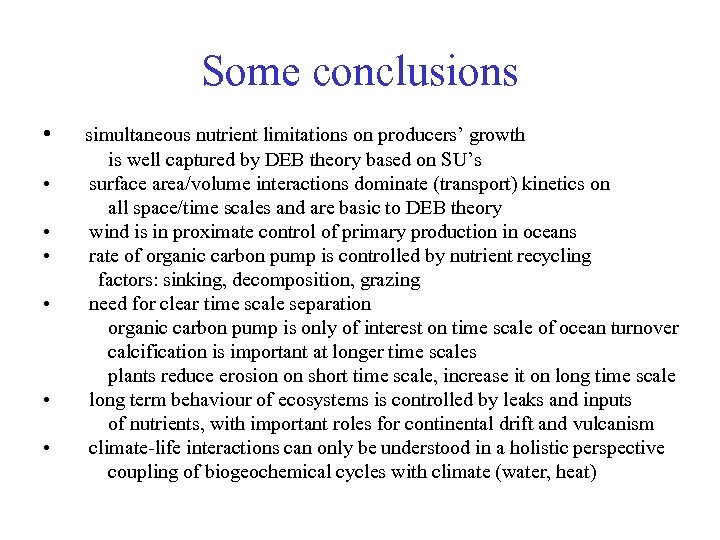
Some conclusions • • simultaneous nutrient limitations on producers’ growth is well captured by DEB theory based on SU’s surface area/volume interactions dominate (transport) kinetics on all space/time scales and are basic to DEB theory wind is in proximate control of primary production in oceans rate of organic carbon pump is controlled by nutrient recycling factors: sinking, decomposition, grazing need for clear time scale separation organic carbon pump is only of interest on time scale of ocean turnover calcification is important at longer time scales plants reduce erosion on short time scale, increase it on long time scale long term behaviour of ecosystems is controlled by leaks and inputs of nutrients, with important roles for continental drift and vulcanism climate-life interactions can only be understood in a holistic perspective coupling of biogeochemical cycles with climate (water, heat)
Further reading S. A. L. M. Kooijman 2002 Global aspects of metabolism; on the coevolution of life and its environment. In: J. Miller, P. J. Boston, S. H. Schneider and E. Crist, eds. , Scientists on Gaia. MIT Press, , Cambridge, Mass. , to appear. Downloadable from: http: //www. bio. vu. nl/thb/research/bib/Kooy 2002 a. html From which you can also download this slide collection Thank you for your attention
Скачать презентацию The role of marine plankton in the global
d52597e13fdd3d16f8f3b3de0c7fd826.ppt