


 Скачать презентацию The Role of Geography in Planning and Decision
f626575207e859bffa516eeefcf7734e.ppt
- Количество слайдов: 19
 The Role of Geography in Planning and Decision Making *What does it mean? *What are the desired outcomes and aims? Murray Fastier – Chritschurch College of Education, University of Canterbury
 What is Geographical Decision-Making? Decision-making is the process of evaluating the alternatives and choosing a course of action in order to solve a problem. Geographical decision making is the systematic process of evaluation the alternatives and choosing a course of action in order to solve a geographical problem, issue or need. Geographical decision-making typically involves trying to make sense of, and resolve complicated people – environmental relationships.
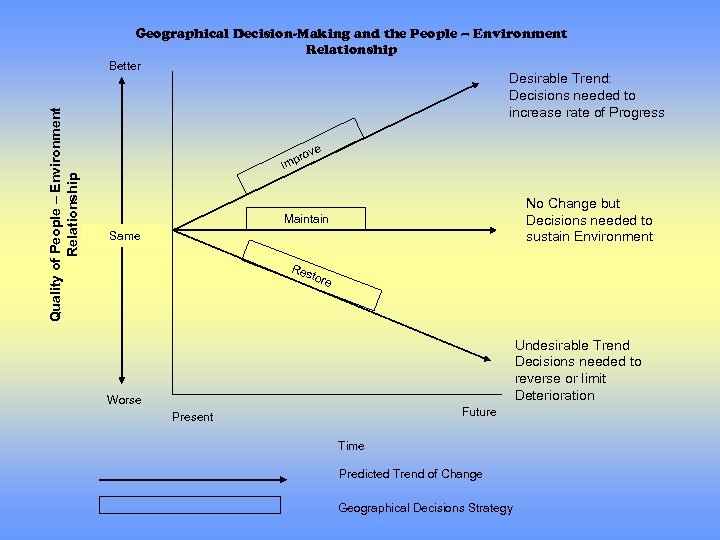 Geographical Decision-Making and the People – Environment Relationship Quality of People – Environment Relationship Better Desirable Trend: Decisions needed to increase rate of Progress e rov Imp No Change but Decisions needed to sustain Environment Maintain Same Res tore Undesirable Trend Decisions needed to reverse or limit Deterioration Worse Future Present Time Predicted Trend of Change Geographical Decisions Strategy
 Geography Decision Makers often works with Complex relationships of issues, options and evidence Uncertainty about the future Wide range of natural and cultural factors Rapidly changing situations Imperfect or incomplete evidence Conflicting viewpoints/value judgements Wide ranging impacts and implications More than one decision at a time Different scales local -global Short and long term timeframes
 Geography and Planning: is a PROCESS done BY PEOPLE for people is about reaching COMPROMISES provides a FRAMEWORK(S) for systematically gathering and presenting information includes EVALUATING and MONITORING the outcomes results in BETTER decisions
 A prime ingredient of planning is INFORMATION • Relevant • Source • Up to date Relies on INTERPRETATION • Values • Perceptions • Priorities • Time frames Involves ACTION implementing decisions • Plans • Concepts • model Deals with multiple objectives Social, Physical, Environmental, Economic, Political etc.
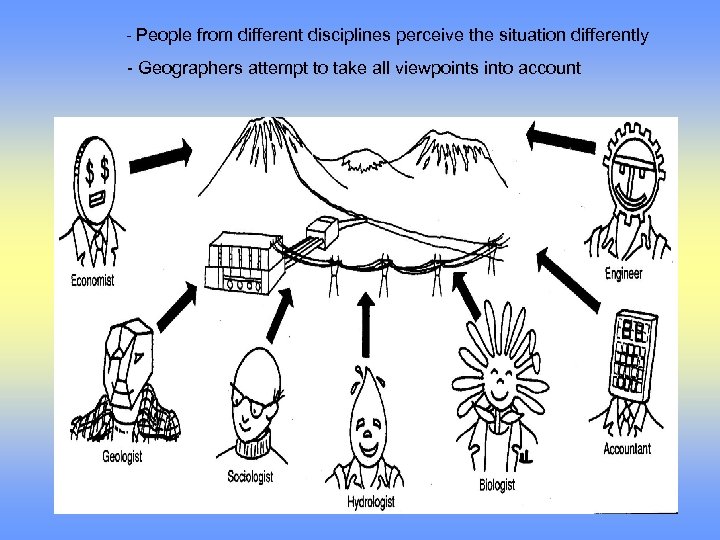 - People from different disciplines perceive the situation differently - Geographers attempt to take all viewpoints into account
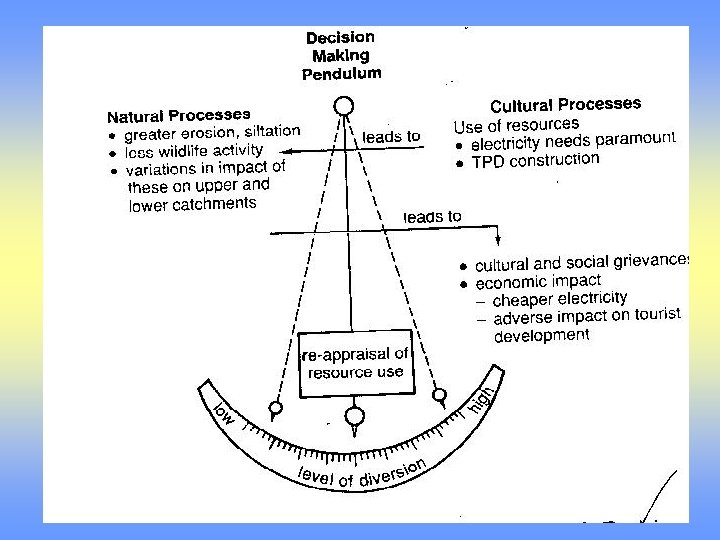
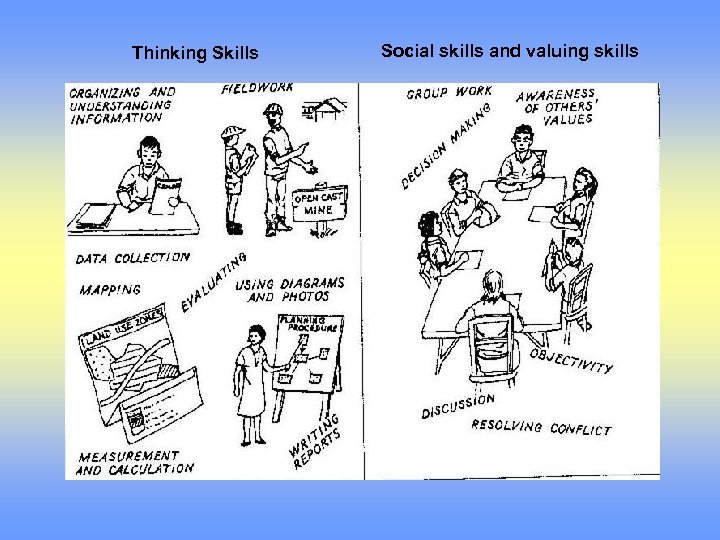 Thinking Skills Social skills and valuing skills
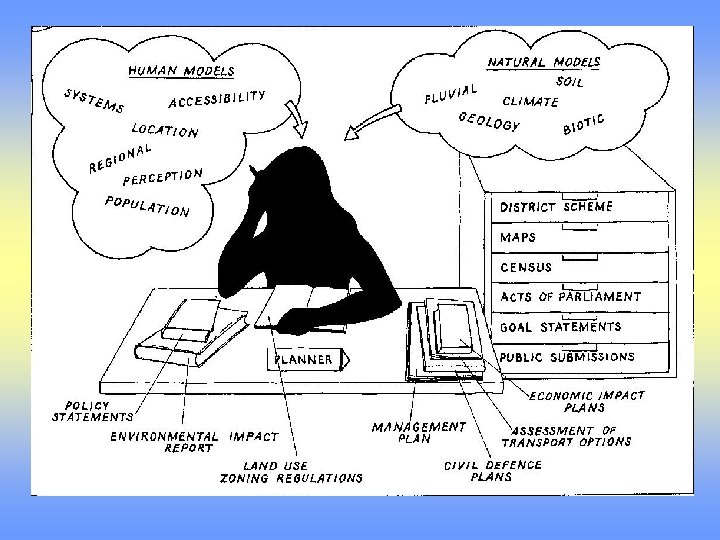
 Role of Geography in Planning and Decision Making Geography – is broad based able to see relationships is issues based interested in people and the environment relationships relevant skills and concepts Geographers can provide specialist Input into planning and decision making
 Acheivement Standard 90703 (3. 3) Level 3 Credits 3 Explain the contribution of geography to planning and decision-making processes • Achievement • Analyse the planning and decision-making processes. • Explain the contribution of geography to the planning and decisionmaking processes. • Achievement with Merit • Analyse, in detail, the planning and decision-making processes. • Explain, in detail, the contribution of geography to the planning and decision-making processes. • Achievement with Excellence • Comprehensively analyse the planning and decision-making processes. • Explain and evaluate the contribution of geography to the planning and decision-making processes.
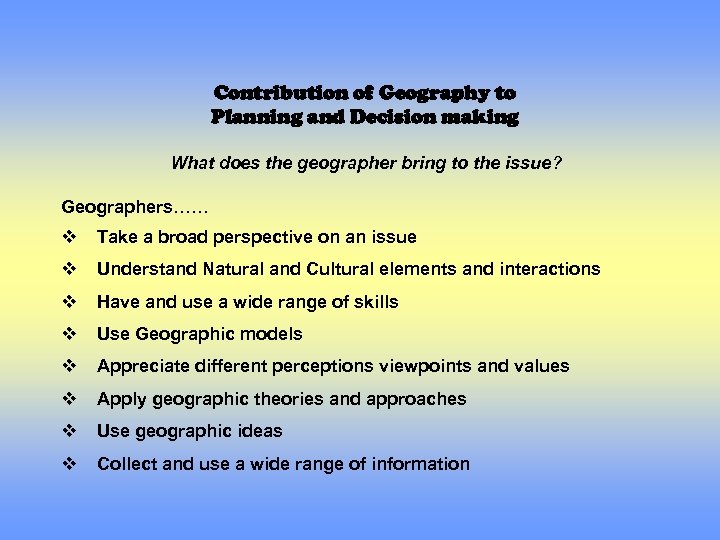 Contribution of Geography to Planning and Decision making What does the geographer bring to the issue? Geographers…… v Take a broad perspective on an issue v Understand Natural and Cultural elements and interactions v Have and use a wide range of skills v Use Geographic models v Appreciate different perceptions viewpoints and values v Apply geographic theories and approaches v Use geographic ideas v Collect and use a wide range of information
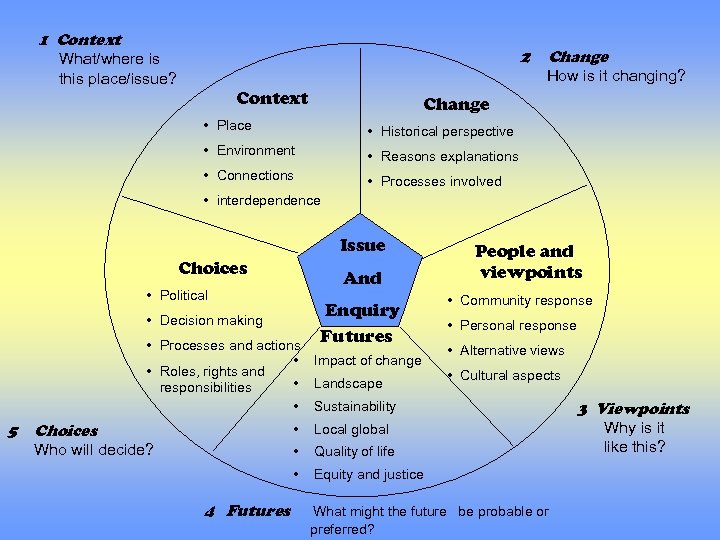 1 Context 2 Change What/where is this place/issue? How is it changing? Context Change • Place • Historical perspective • Environment • Reasons explanations • Connections • Processes involved • interdependence Issue Choices And • Political Enquiry Futures • Decision making • Processes and actions • Impact of change • Roles, rights and • Landscape responsibilities • Sustainability • 4 Futures • Personal response • Alternative views • Cultural aspects Quality of life • Who will decide? • Community response Local global • 5 Choices People and viewpoints Equity and justice What might the future be probable or preferred? 3 Viewpoints Why is it like this?
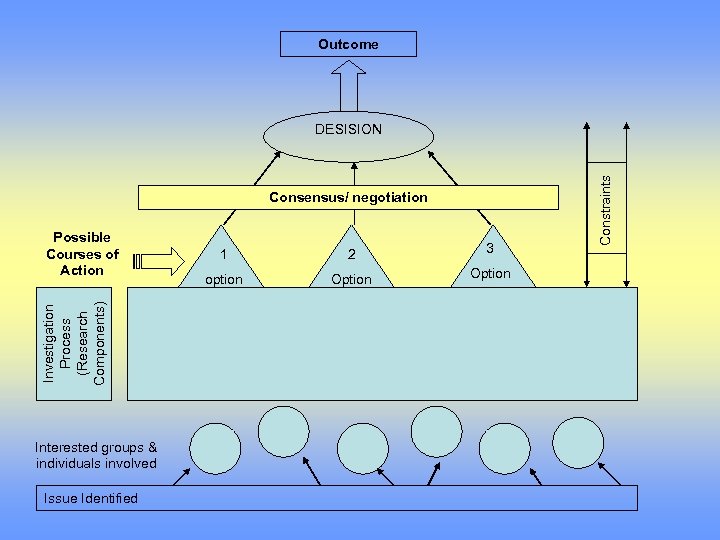 Outcome Consensus/ negotiation Investigation Process (Research Components) Possible Courses of Action Interested groups & individuals involved Issue Identified 1 2 3 option Option Constraints DESISION
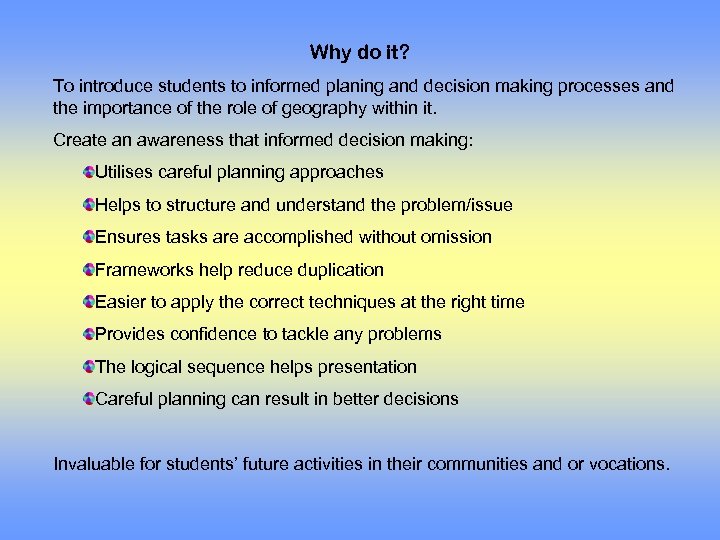 Why do it? To introduce students to informed planing and decision making processes and the importance of the role of geography within it. Create an awareness that informed decision making: Utilises careful planning approaches Helps to structure and understand the problem/issue Ensures tasks are accomplished without omission Frameworks help reduce duplication Easier to apply the correct techniques at the right time Provides confidence to tackle any problems The logical sequence helps presentation Careful planning can result in better decisions Invaluable for students’ future activities in their communities and or vocations.
 Enables students to appreciate the broader picture, to see local issues, needs case studies in terms of: - sustainability; - citizenship; - principles of the Treaty of Waitangi; - Kaitiakitanga; - interacting natural and cultural processes and - environmental polices and strategies. Although the study content will not be directly assessed in the external exams the methods, skills, issues, models, concepts, ability to analyse and synthesise etc will be indirectly assessed in Achievement Standard 3. 4.
 Formatting • Be realistic about 6, 000 words plus maps figure diagrams and references • An abstract (summary of issue, role of geography, background, student’s methods, findings predictions) • Contents page • Figures list • Introduction integrating the geographic significance and role of geography into description explanation and background of the issue • Body of report including research methods and findings re alternative courses of action based on evidence • Conclusion of findings • Recommendation(s) /decision containing a well developed argument for course of action and weakness / constraints of the other option. • Analysis of Geographer’s contribution including evaluation of the methodology and validity of findings.
 REFERENCES Akehurst, N, et al 2001, University Bursary and Scholarship Geography, ESA Year 13 Study Guide, ESA Publications Auckland. Hensman, J. M. and Hensman, J. R. (Eds), 1992, Planning and Decision. Making, New House, Auckland. Le Heron, R , Flaws, M. & Logie, J. (2003), The role of Geography - Getting the most out of the NZGS Planning and Decision making competition, New Zealand Journal of Geography. Brebner Print, Hamilton. Lennon, B. J. and Cleves, P. G. (1983), Techniques and Fieldwork, Bell and Hyman, London Ministry of Education, (1990), Syllabus for Schools: Geography Forms 5 -7, Learning Media, Ministry of Education, Wellington. Ministry of the Environment, (1993), People, Policies and Plans: Planning Resource Management in New Zealand at http: //. www. mfe. govt. nz Regional Councils TKI Treaty of Waitangi – consultation Kaitiakitanga Achievement Standards 3. 3, 3. 5 and 3. 6 Transit NZ