


 Скачать презентацию The role of civil society in the transition
a1beaab27f2ac2236fd9058be7fb42e2.ppt
- Количество слайдов: 26
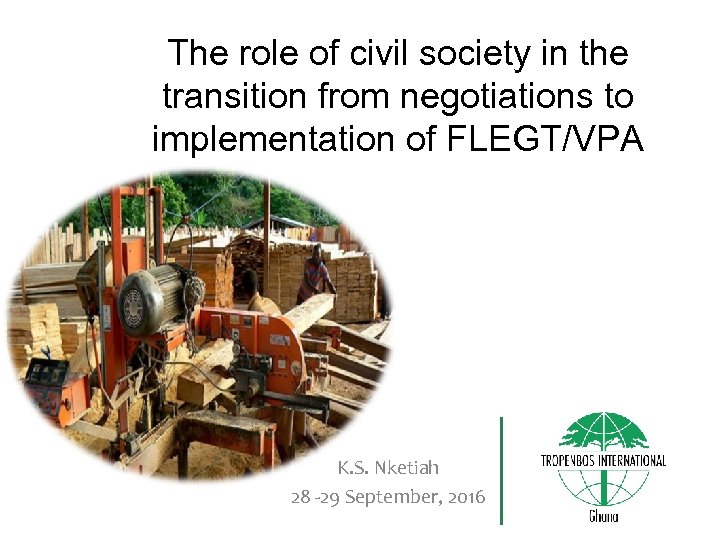 The role of civil society in the transition from negotiations to implementation of FLEGT/VPA K. S. Nketiah 28 -29 September, 2016
 Outline • FLEGT/VPA • Who constitute Civil Society? • Role of Civil Society in the FLEGT/VPA • Opportunities • Challenges • Strategies for meaningful engagement • Some lessons from Ghana
 The FLEGT/VPA - 1 • The FLEGT/VPA is a trade agreement in which timber producing countries commit to sell only legal timber and timber products to the EU market in particular • Legality is as defined according to the laws of the country • EU on its part, commits to support the producer country to put in place systems, processes and procedures to deliver legal timber • Good governance is envisaged in the process
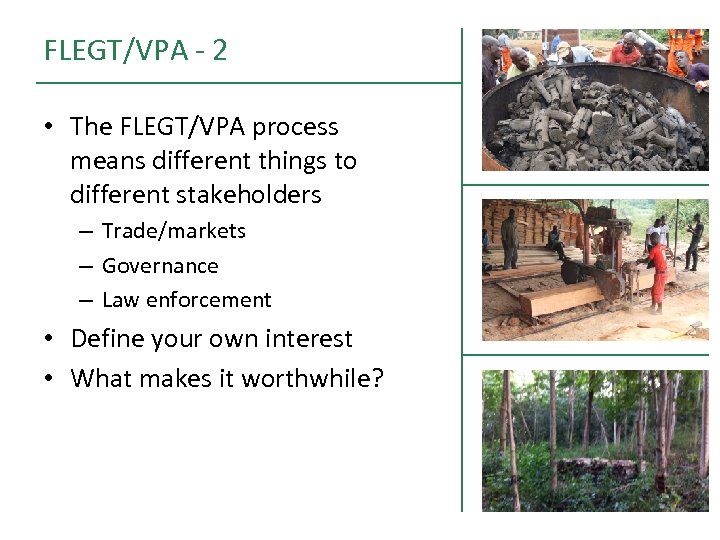 FLEGT/VPA - 2 • The FLEGT/VPA process means different things to different stakeholders – Trade/markets – Governance – Law enforcement • Define your own interest • What makes it worthwhile?
 The FLEGT/VPA - 3 • Inherent in the entire VPA process is the principle of consultation – To ensure adequacy, legitimacy and credibility – As well as collective ownership of the process • Also to harness the collective aspirations of the country • Participation is an aspect of good governance • The VPA process therefore thrives on consensus positions, especially with respect to country positions
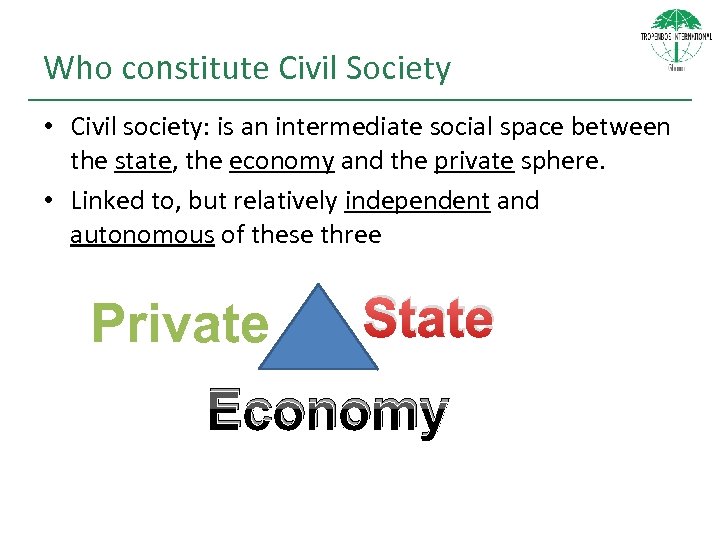 Who constitute Civil Society • Civil society: is an intermediate social space between the state, the economy and the private sphere. • Linked to, but relatively independent and autonomous of these three Private State Economy
 Who constitute Civil Society • CS includes formal and informal organisations, e. g. : – Non-Governmental Organisations – Associations based on kinship, – Social movements – Community based organisations – Labour unions, and – Professional associations
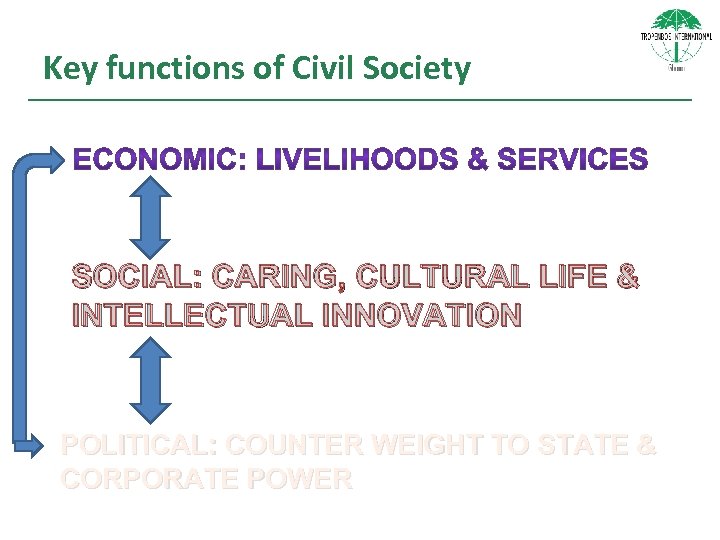 Key functions of Civil Society SOCIAL: CARING, CULTURAL LIFE & INTELLECTUAL INNOVATION POLITICAL: COUNTER WEIGHT TO STATE & CORPORATE POWER
 Summary of CS role in FLEGT/VPA • CS promotes pluralism and multiple interests • An essential pillar in promoting transparency, accountability and other aspects of ‘good governance’ • To fulfill these functions effectively, Civil Society must be strong
 What makes for effective Civil Society • Diversity in groups represented and goals they seek to achieve • There should be a sufficient number of CSOs • Connections within & across organisations and between associations, government and the market • Effective network structures will make the whole greater than the sum of the parts • It helps to have champions or coalitions that take the lead • Capacity building (also inherent in the process)
 From Negotiation to Implementation: Features • • • VPA signed and ratified Some commitments made Reforms to be carried out Systems to be developed Structures to be put in place – To ensure good governance – To ensure law enforcement – To ensure compliance • Ultimately, delivery of FLEGT-licensed timber
 Role of Civil Society: Negotiation Phase Getting the system right Getting on board all relevant stakeholders Contribute technical inputs Undertake sensitization and awareness creation Build capacity of other stakeholders Building networks and alliances It helps to have national consensus positions before formal negotiations • Take a cue from forerunners (e. g. Transparency issues) • •
 Role of Civil Society: Negotiation to Implementation • The transition: Institutional arrangements/structures for continuity • Know what commitments have been made • Supporting the process • Keeping the momentum • Ensuring interest and commitment of stakeholders • Ensure a transparent procurement system
 CSO Roles in VPA Implementation Institutional issues • Creation of the institutions and structures that will guarantee independence and transparency • This engenders trust and credibility • Agree amongst yourselves (CS) what role CS would want to play in the process during implementation
 CSO Roles in VPA Implementation Building the systems • Ensuring user friendliness of systems • Ensure that systems are robust • Ensuring participation of other stakeholders • Use donor-funded studies and projects by CSOs to support the system
 Strategies for meaningful Engagement • • Capacity building Building Alliances Fostering relationships with government Identify allies within and outside the system • On specific issues • Towards particular goals • Supporting the development of the systems • Set minimum standards for consultation • Remember it is a negotiation! It goes with ‘Give’ & ‘Take’
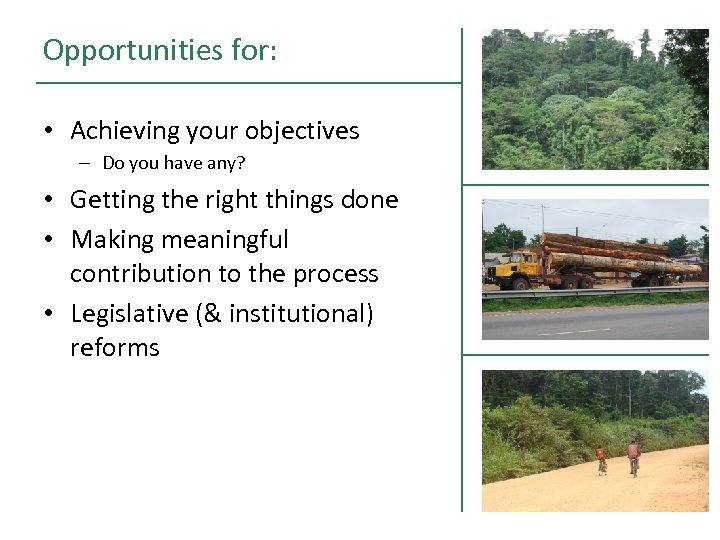 Opportunities for: • Achieving your objectives – Do you have any? • Getting the right things done • Making meaningful contribution to the process • Legislative (& institutional) reforms
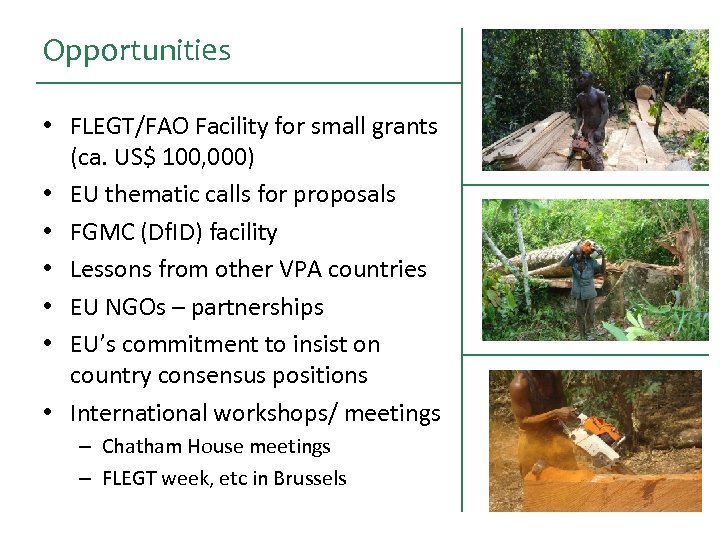 Opportunities • FLEGT/FAO Facility for small grants (ca. US$ 100, 000) • EU thematic calls for proposals • FGMC (Df. ID) facility • Lessons from other VPA countries • EU NGOs – partnerships • EU’s commitment to insist on country consensus positions • International workshops/ meetings – Chatham House meetings – FLEGT week, etc in Brussels
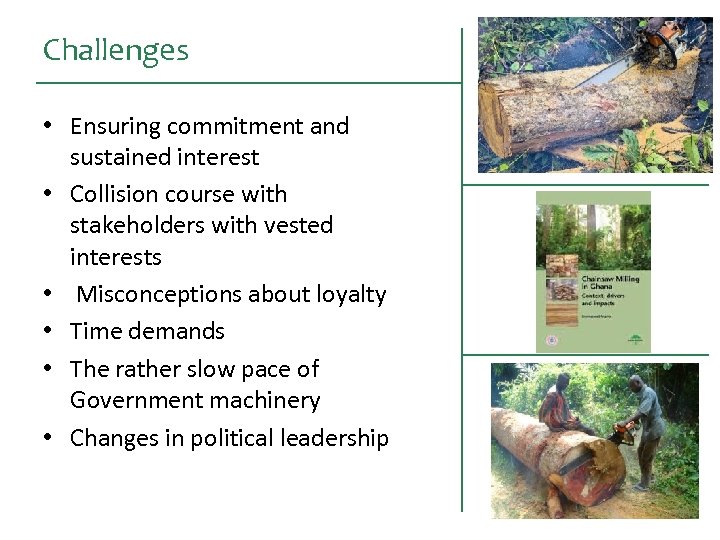 Challenges • Ensuring commitment and sustained interest • Collision course with stakeholders with vested interests • Misconceptions about loyalty • Time demands • The rather slow pace of Government machinery • Changes in political leadership
 Role of CS in Ghana VPA process Lessons from Ghana
 Evolution of CS role in the process • • Demanded to be consulted Secured a seat on the Steering Committee Agitated for more seats for CSO Mobilised other section of CSO to elect their rep Built capacity of constituency Communication strategy Led consultation with other stakeholders – Communities – National House of Chiefs
 Technical inputs • • • Members of the Steering Committee Governance vision Definition of legality (legal standard) Working Groups Ensuring the emphasis on the G in FLEGT – Legislative reforms • Defending community interest, e. g. FPIC • Ensuring a truly independent and credible system • Drawing attention to potential adverse impacts
 When the system is up and running • Role of TVC • Support and feedback mechanisms • ‘Independent’ monitors • Watchdog role (what is inspected versus expectation) • Insisting on transparency (c. f. transparency matrix) • Monitoring impacts on disadvantaged stakeholders
 Moving forward • Completion of the Legislative reforms – – Consolidated Forestry Act CS representation on the TVC Tree tenure reforms Domestic market regularisation • Monitoring and Watchdog role • Side meetings with the JMRM
 Reasons for success: Lessons from Ghana • Commitment of FWG – Informal meetings, capacity building, personal sacrifices • • • Strategic moves Open-mindedness of then chairman Access to legal resources Financial resources from Df. ID Support from the EU side Encouragement from European NGOs – Peer learning & sharing of lessons; capacity building; – Meetings with the EU
 Thank you for your attention