Скачать презентацию The Roaring Twenties From War to Peace
28eb285962d106c109b5d280d23c5931.ppt
- Количество слайдов: 66
 The Roaring Twenties From War to Peace
 The Century: America's Time 1920 -1929: Boom To Bust https: //www. youtube. com/watch? v=RN 7 ft y. Zig. Ys&list=PLv. Gg. Z 5 v 2 o_N 8 d. Dogxre. L 2 Nbnf. KHg. Hxq. Y&index=3
 Postwar Havoc
 Learning Focus What were the causes and effects of the first Red Scare? How did labor strife grow during the postwar years? How did the United States limit immigration after World War I?
 I. 100 % Americanism A. U. S. Problems After the War 1. Influenza epidemic spread to U. S. from Europe. 2. Farms and factories closed down as demand for products fell 3. Returning soldiers had trouble finding work. 4. Wartime patriotism turned to hatred of Germans
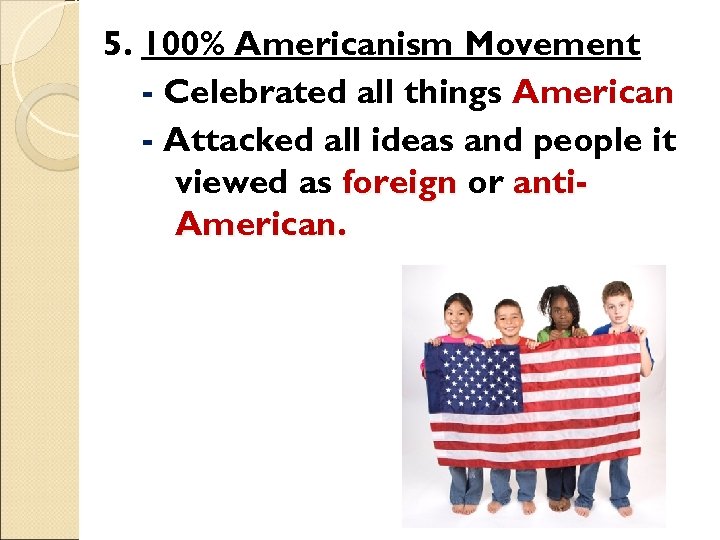 5. 100% Americanism Movement - Celebrated all things American - Attacked all ideas and people it viewed as foreign or anti. American.
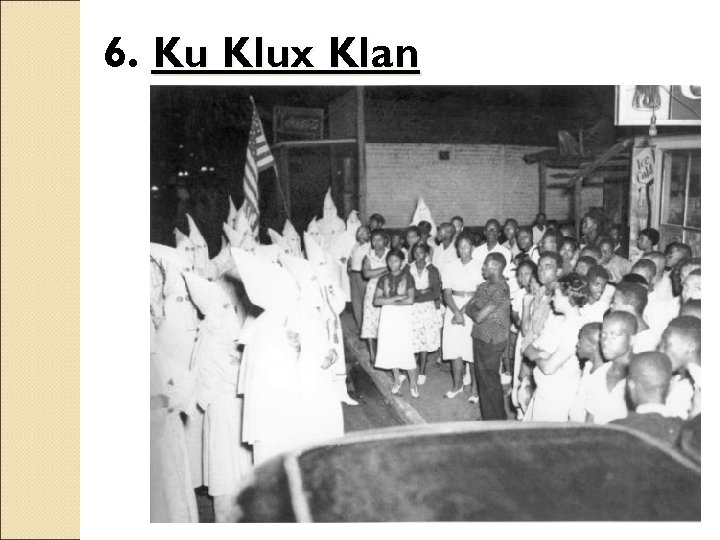 6. Ku Klux Klan
 - KKK Beliefs a. Blacks should be kept “in their place” b. Opposed saloons c. Opposed labor unions d. Disliked Roman Catholics & Jews e. Foreign-born people should return to their home country.
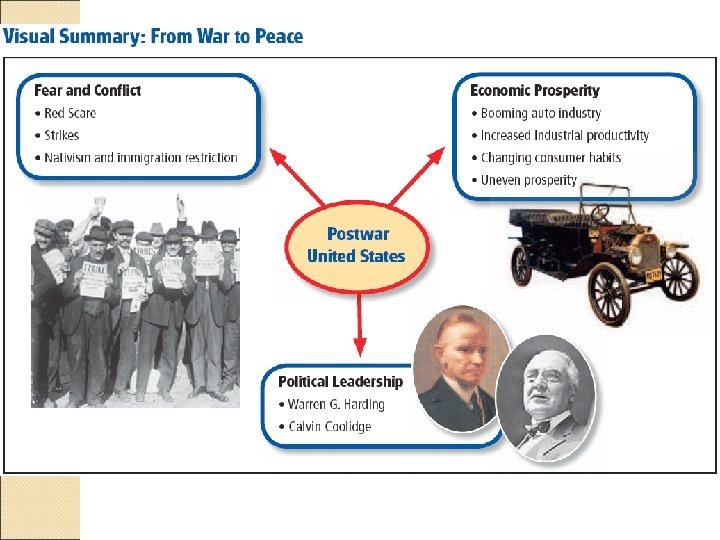
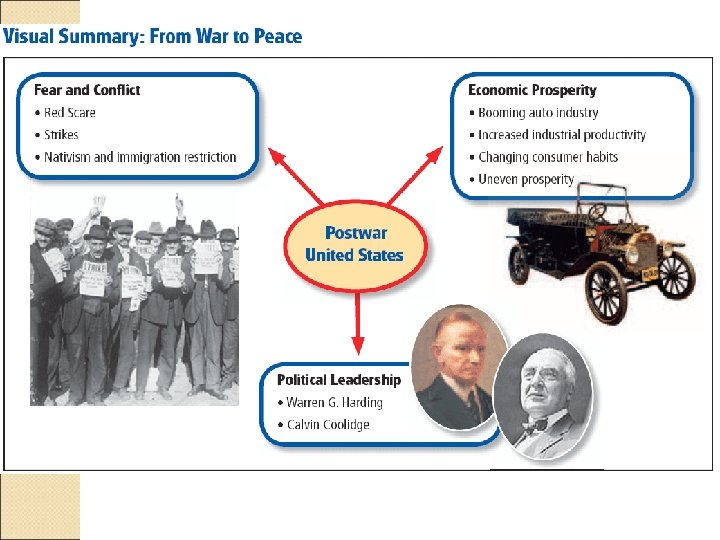
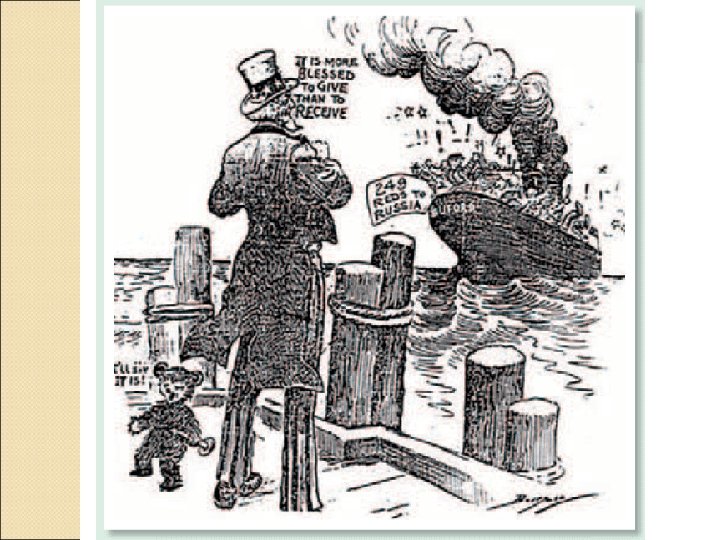
 II. The First Red Scare A. American Reaction 1. Frightened by COMMUNISM 2. Embraced CAPITALISM and feared a rise of the working class. 3. Americans hatred is now targeted at communists, known as REDS. 4. Communist parties in the U. S. supported a violent overthrow of the government.
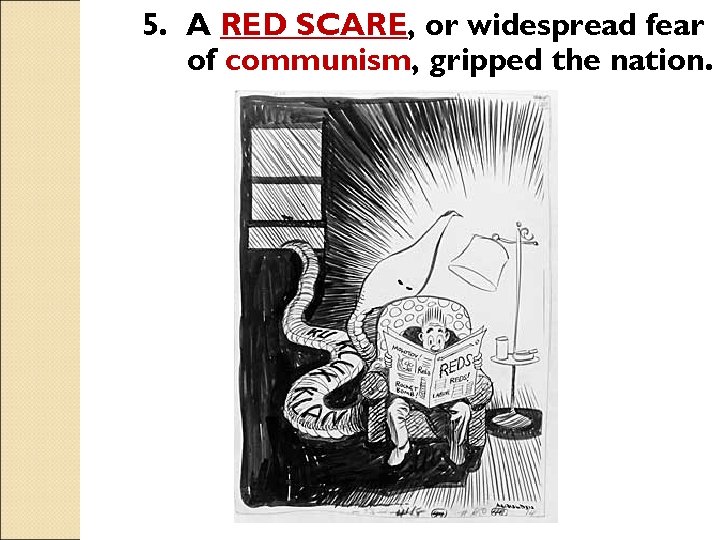 5. A RED SCARE, or widespread fear of communism, gripped the nation.
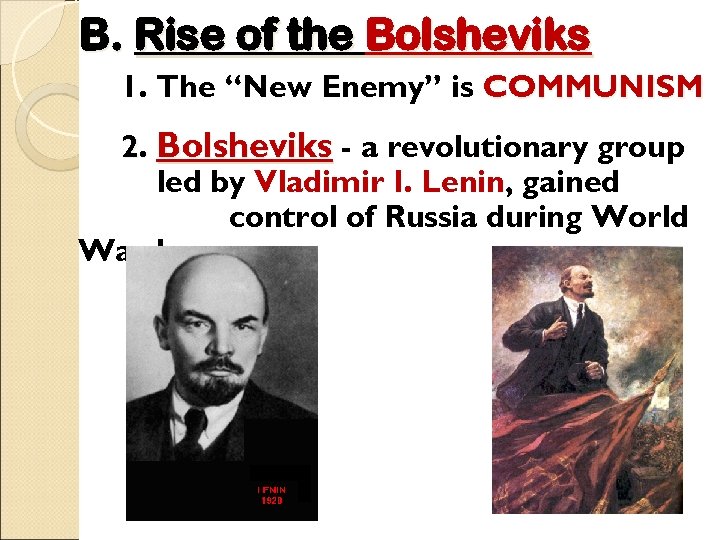 B. Rise of the Bolsheviks 1. The “New Enemy” is COMMUNISM 2. Bolsheviks - a revolutionary group led by Vladimir I. Lenin, gained control of Russia during World War I.
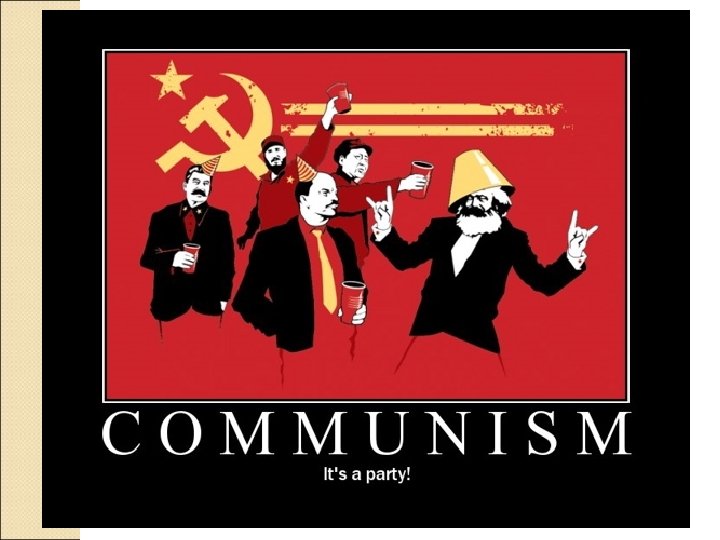
 3. Russia becomes part of a new nation called the Soviet Union 4. The Bolsheviks a. Wanted a Communist form of society - NO economic classes - NO ownership of private property b. Lenin believed all people should share equally in society’s wealth
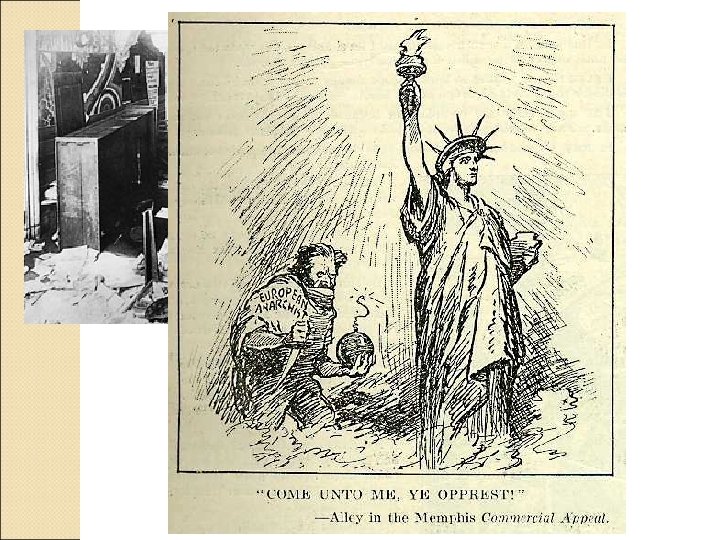
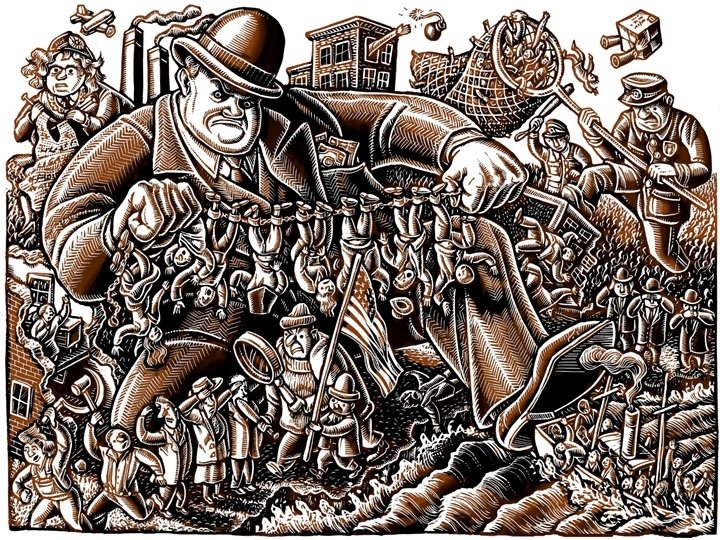
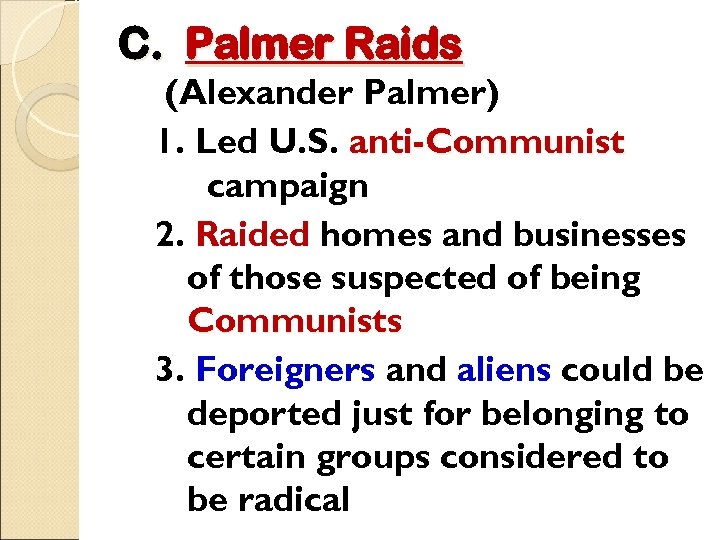 C. Palmer Raids (Alexander Palmer) 1. Led U. S. anti-Communist campaign 2. Raided homes and businesses of those suspected of being Communists 3. Foreigners and aliens could be deported just for belonging to certain groups considered to be radical
 III. Problems for Laborers Returning soldiers expected jobs that weren’t there. Unhappy workers and strikers were replaced. Wilson focused on his postwar peace plan, not labor.
 A. Strikes 1. Boston Police Strike - They had not had a raise since the beginning of WI. 2. Steel Mill Strike - Working conditions were extremely difficult and dangerous 3. Coal Miners’ Strike - Fighting against low wages and long workdays.
 B. Union Membership Decreases 1. Work force consisted of immigrants who were willing to work in poor conditions. 2. Immigrants spoke a many languages. 3. Farmers who had migrated to cities were used to relying on themselves. 4. Most unions excluded African Americans.
 C. Limiting Immigration 1921 - law established a quota, or set number, of immigrants to be allowed into the U. S. from various nations. National Origins Act of 1924 nearly eliminated immigration from Asian countries.
 Sacco & Vanzetti Two Italian immigrants who claimed to be anarchists and were convicted of robber and murder in Massachusetts. Evidence was weak but were still convicted and sentenced to die by electric chair. Historians believe that their convictions were based more on their radical political beliefs rather than the evidence against them on the charges.
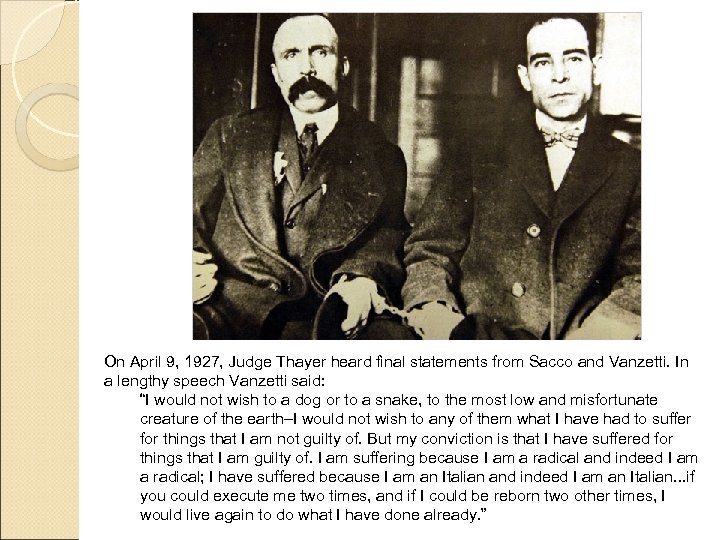 On April 9, 1927, Judge Thayer heard final statements from Sacco and Vanzetti. In a lengthy speech Vanzetti said: “I would not wish to a dog or to a snake, to the most low and misfortunate creature of the earth–I would not wish to any of them what I have had to suffer for things that I am not guilty of. But my conviction is that I have suffered for things that I am guilty of. I am suffering because I am a radical and indeed I am a radical; I have suffered because I am an Italian and indeed I am an Italian. . . if you could execute me two times, and if I could be reborn two other times, I would live again to do what I have done already. ”
 Implications on Civil Liberties Controversial even in the 1920’s Showed anti-immigration feelings and nativist feelings had pervaded the American mind-set post WWI. Many historians concluded the Sacco and Vanzetti prosecution, trial, and aftermath constituted a blatant disregard for political civil liberties. Others believe that the government was really prosecuting Sacco and Vanzetti for the robberymurders as a convenient excuse to put a stop to militant activities.
 A New Economic Era
 Learning Focus What role did the Ford Motor Company and Henry Ford play in revolutionizing American industry? How did both the auto industry and the nation change during the 1920 s? What were some qualities of the new consumer of the 1920 s? What were some weak parts of the economy in the 1920 s?
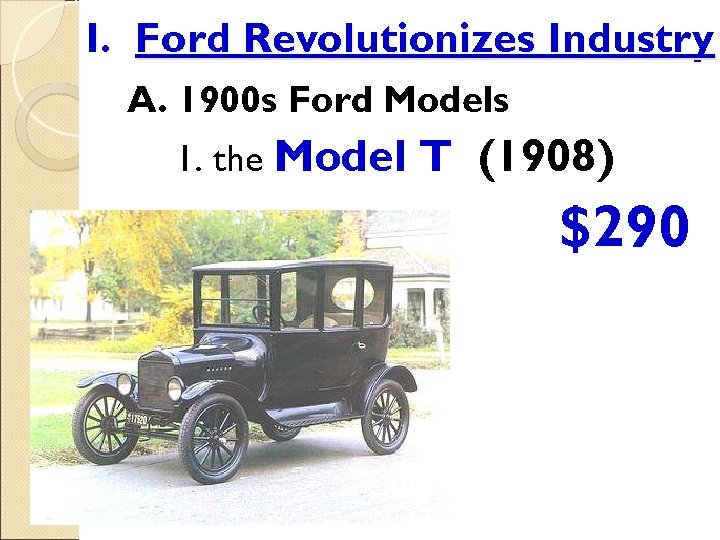 I. Ford Revolutionizes Industry A. 1900 s Ford Models 1. the Model T (1908) $290
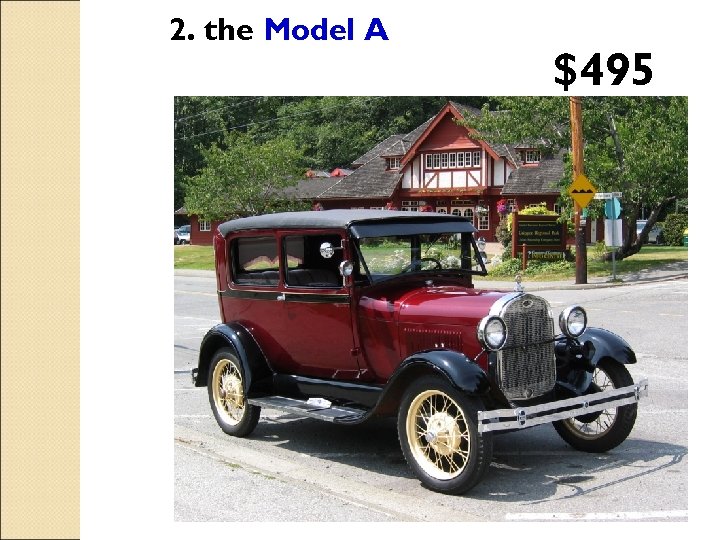 2. the Model A $495
 B. Ford’s Vision combined three main ideas. 1. Make cars simple and identical instead of doing highly expensive custom manufacturing. 2. Make the process smooth, using interchangeable parts and moving belts. 3. Determine how workers should move, and at what speed, to be the most productive. 1. Formed the first large-scale moving assembly line - item being built moves along a conveyor belt to workstations that usually require simple skills.
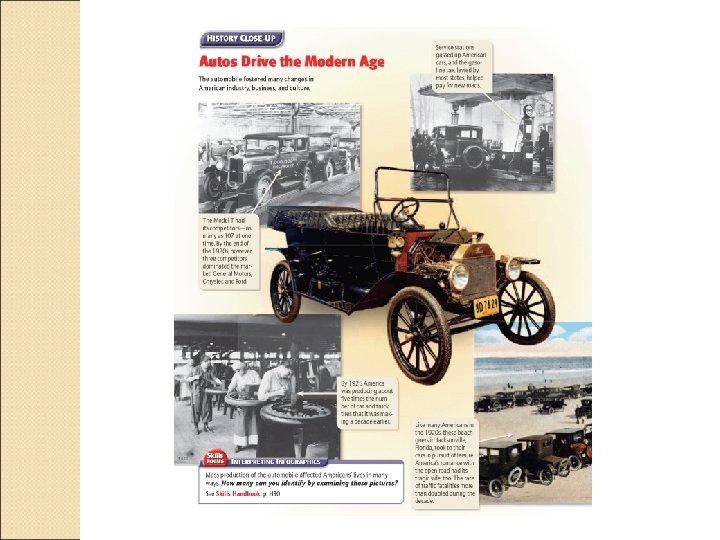
 2. Affects of the Automobile a. Road constrution b. Gasoline stations c. Repair shops d. Public garages e. Motels (Motor Hotels) f. Tourist camps g. Shopping centers 3. Auto industry symbolized the success of the free enterprise system.
 5. 1920 s productivity rose by 60%. American workers were producing more in less time. 6. Success of business led to a growth of welfare capitalism. - companies provide benefits to employees in an effort to promote worker satisfaction and loyalty.
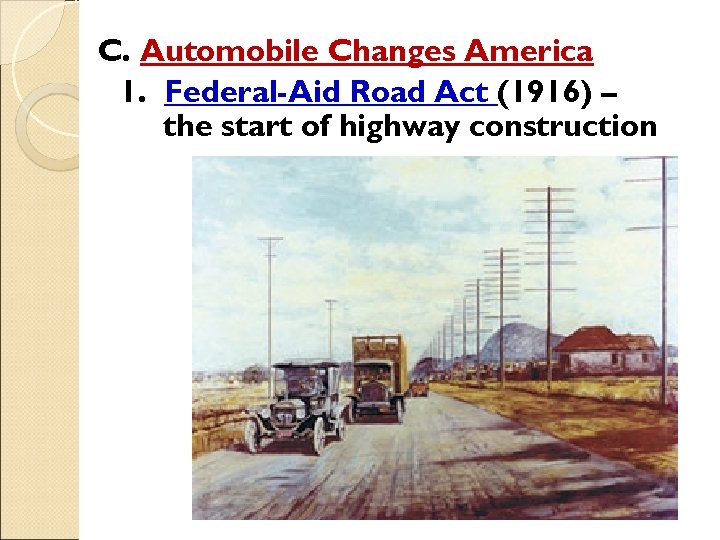 C. Automobile Changes America 1. Federal-Aid Road Act (1916) – the start of highway construction
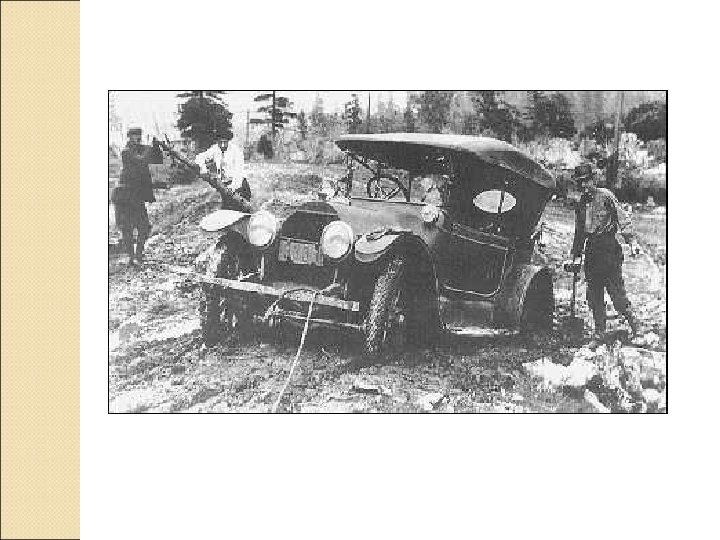
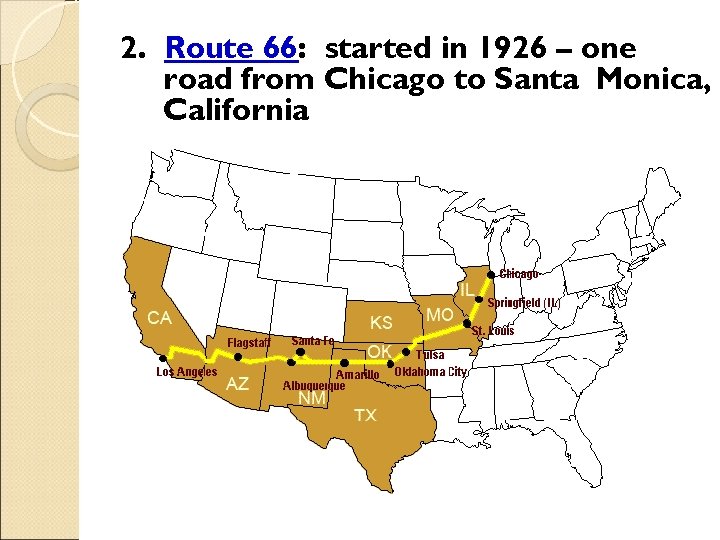 2. Route 66: started in 1926 – one road from Chicago to Santa Monica, California
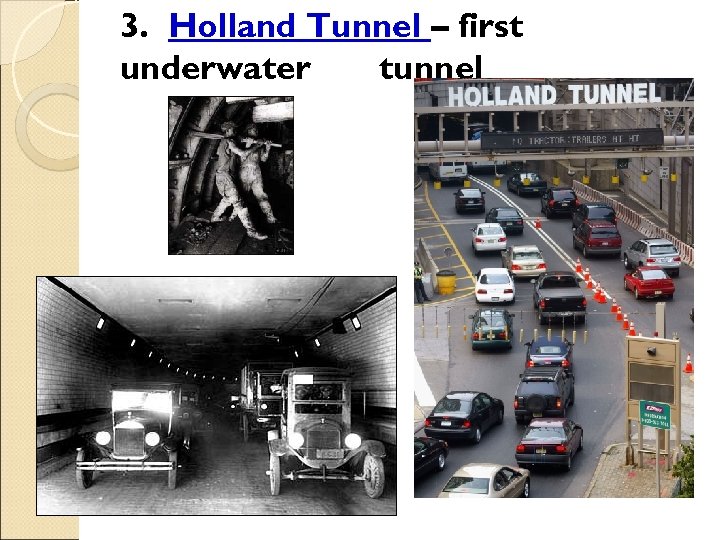 3. Holland Tunnel – first underwater tunnel
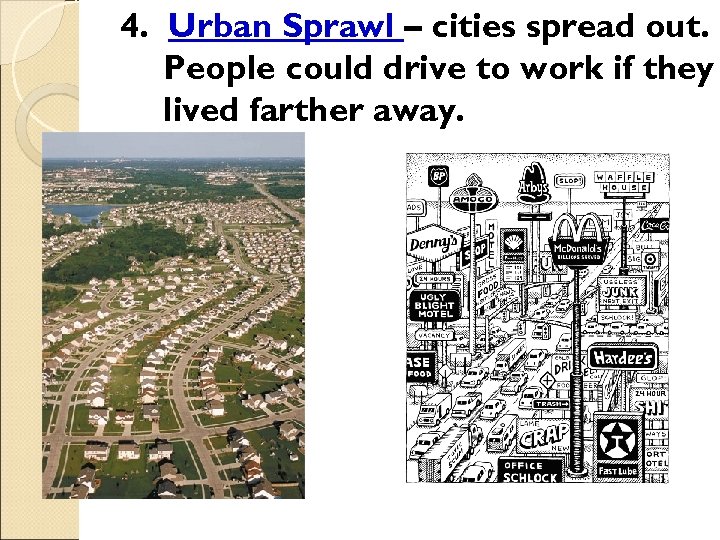 4. Urban Sprawl – cities spread out. People could drive to work if they lived farther away.
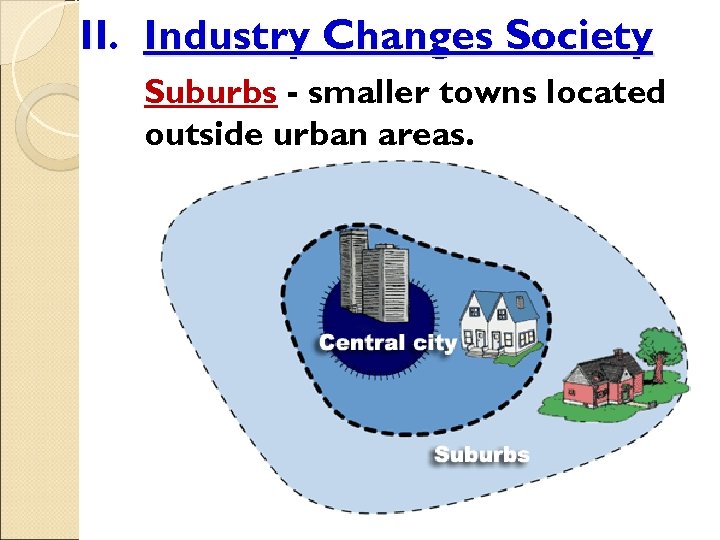 II. Industry Changes Society Suburbs - smaller towns located outside urban areas.
 III. The New Consumer A. New Products electrical appliances - vacuum cleaners - refrigerators - radio
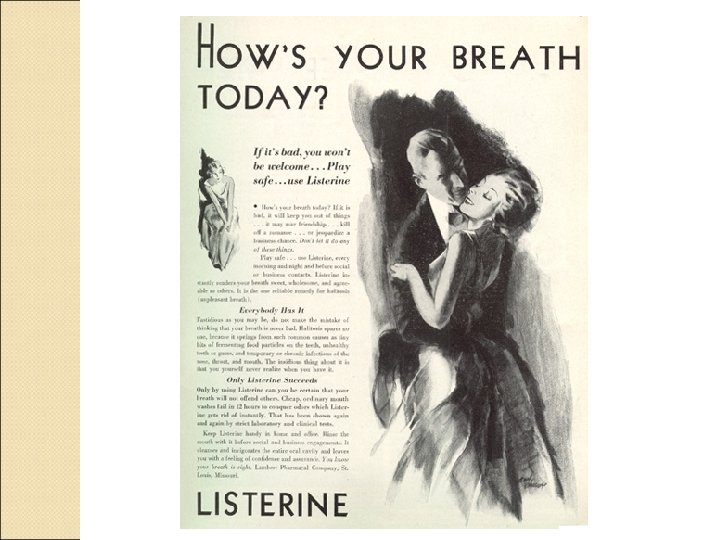
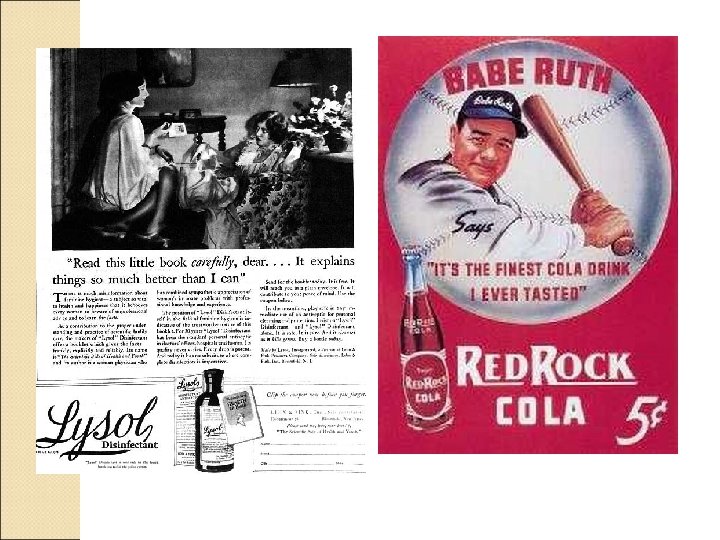
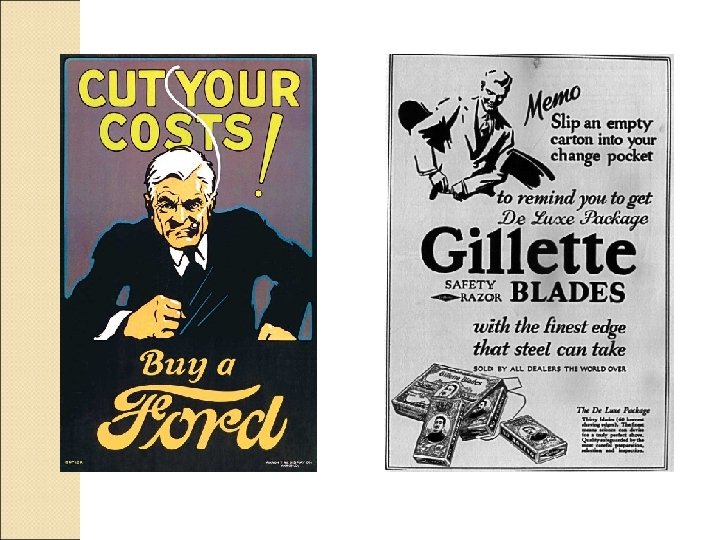
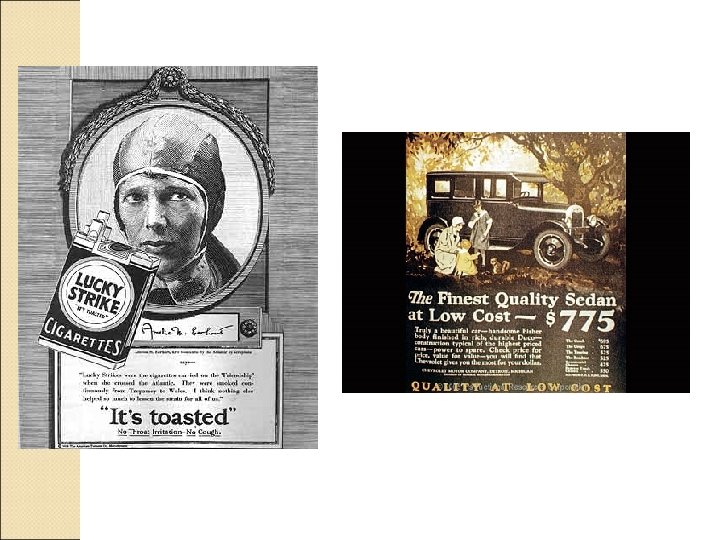
 B. Creating Demand 1. Persuasive advertising gained a major role in the economy. 2. Advertisers paid for space in publications.
 C. New Ways to Pay 1. Installment Buying – buy now, pay later 2. Americans bought on credit
 3. Before installment buying, borrowing money was not considered respectable. III. Weaknesses in the Economy 1. American Farmers experienced good times during WWI. 2. Demand for products was high. 3. After the war, demand slowed because European farmers returned to the fields. 4. U. S. prices plunged because of the increase in farm products.
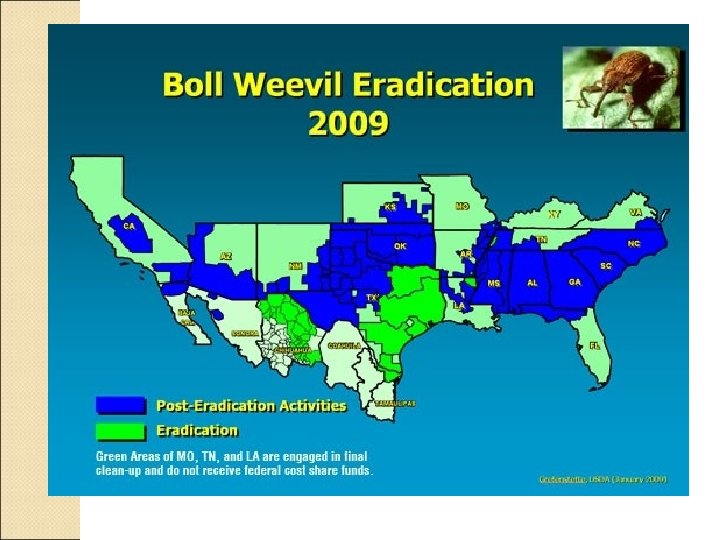
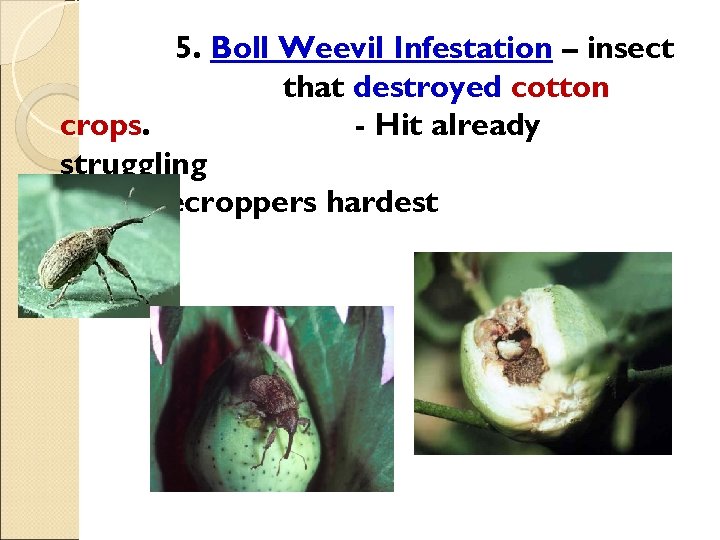 5. Boll Weevil Infestation – insect that destroyed cotton crops. - Hit already struggling sharecroppers hardest

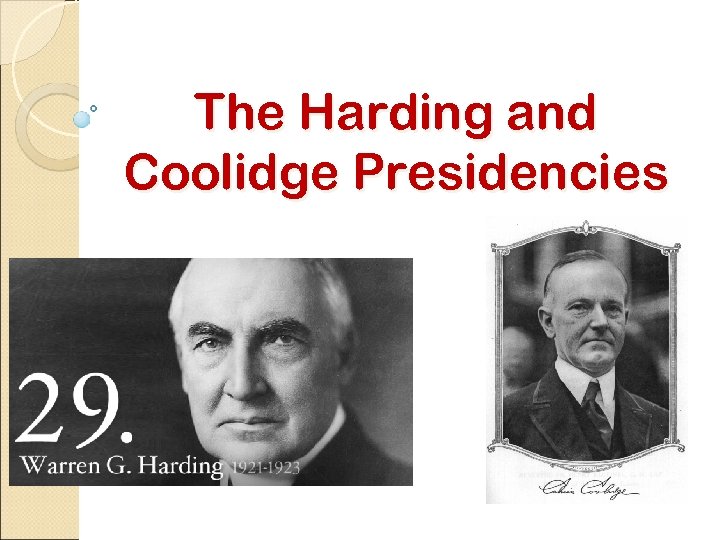 The Harding and Coolidge Presidencies
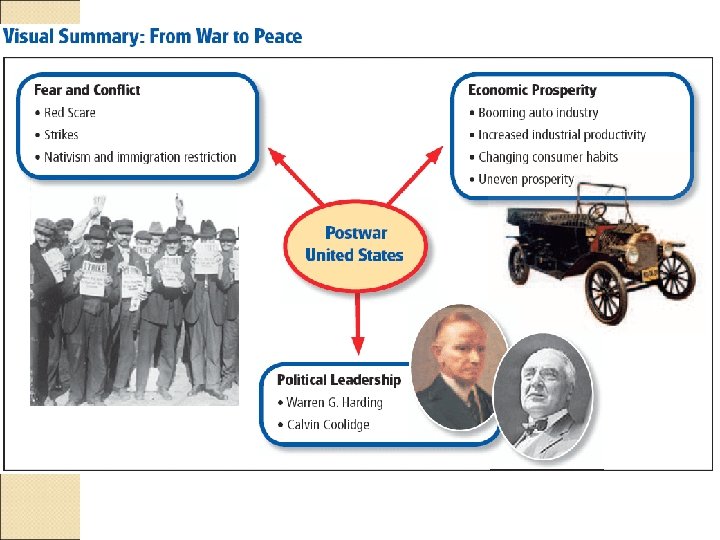
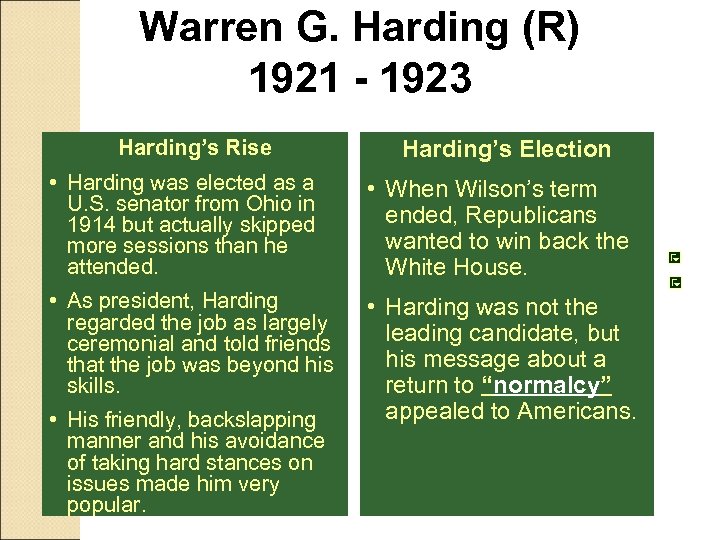 Warren G. Harding (R) 1921 - 1923 Harding’s Rise Harding’s Election • Harding was elected as a U. S. senator from Ohio in 1914 but actually skipped more sessions than he attended. • When Wilson’s term ended, Republicans wanted to win back the White House. • As president, Harding regarded the job as largely ceremonial and told friends that the job was beyond his skills. • Harding was not the leading candidate, but his message about a return to “normalcy” appealed to Americans. • His friendly, backslapping manner and his avoidance of taking hard stances on issues made him very popular.
 A. Harding’s Policies 1. “less government in business and more business in government” would solve postwar economic problems 2. HARDING’ GOALS a. Cut the federal budget b. Reduce taxes for wealthy c. Believed that the wealthy would start businesses and pull America out of hard times.
 3. Fordney-Mc. Cumber Tariff - raised the cost of foreign farm products to help U. S. farmer 4. Harding compensated for his poor governing skills by hiring highly skilled cabinet members. ◦ U. S. Treasury Secretary Andrew Mellon reformed the tax system. ◦ Secretary of State Charles Evans Hughes and Commerce Secretary Herbert Hoover were also incredibly successful cabinet members.
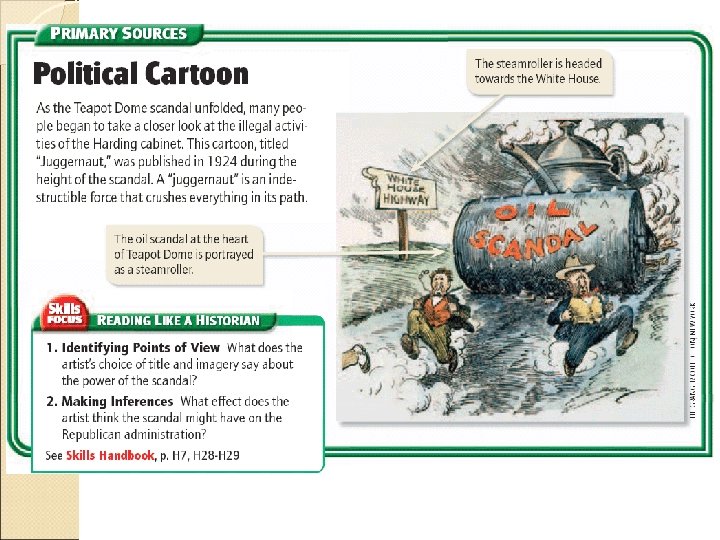
 B. Harding’s Scandal and Sudden Death 1. Ohio Gang a. Harding’s old friends from Ohio were appointed to lower-level gov. jobs. b. Many were convicted of taking bribes. 2. Teapot Dome Scandal (Wyoming) a. Sec of Interior Albert Fall accepted bribes in return for allowing oil companies to drill federal oil
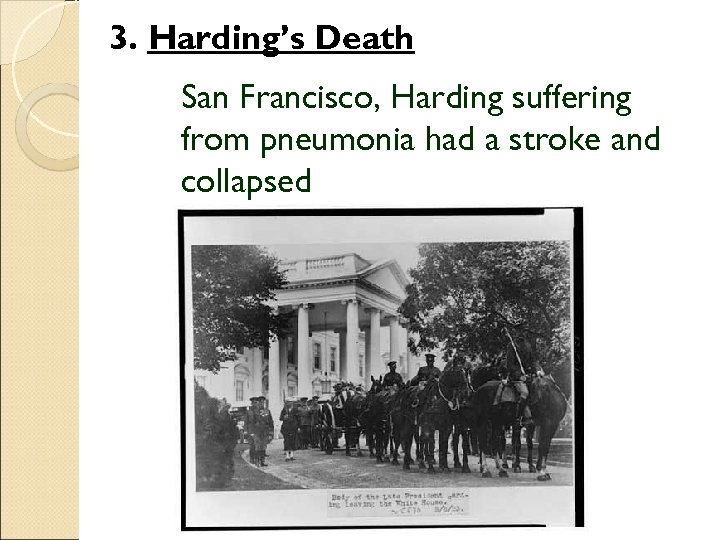 3. Harding’s Death San Francisco, Harding suffering from pneumonia had a stroke and collapsed
 Calvin Coolidge 1923 - 1929 Vice President Calvin Coolidge took the office of president in the early hours following Harding’s death. Coolidge got rid of officials suspected of corruption under Harding. Coolidge was popular at the time but did not run for re-election in 1928.
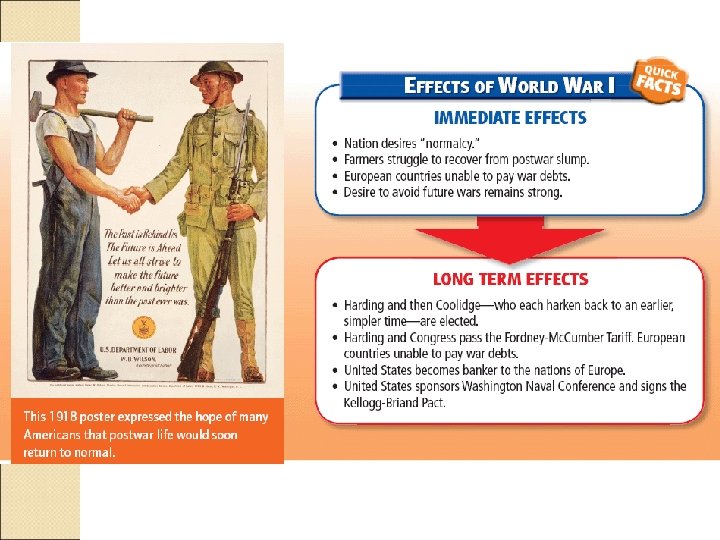
 Lingering Effects of WWI Fordney-Mc. Cumber Tariff - European farmers had a hard time selling their goods in the U. S. - European farmers could not earn the money needed to pay back the U. S. - European farmers turn to Germany, demanding the Germans pay high reparations.
 Washington Naval Conference 1. Arms Race Begins… again World powers begin to build more and more weapons in an effort to avoid one nation gaining a clear advantage - G. B. & Japan 2. 1921: Washington Naval Conference held to head off the arms race and reduce size of navies - the meeting was a success
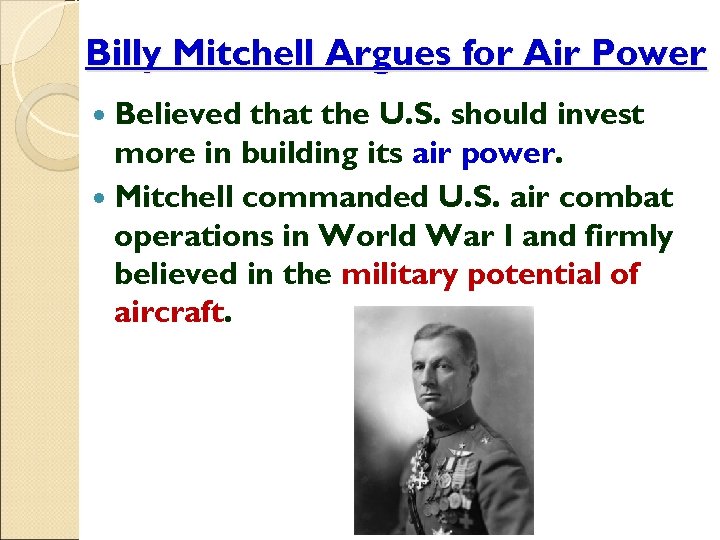 Billy Mitchell Argues for Air Power Believed that the U. S. should invest more in building its air power. Mitchell commanded U. S. air combat operations in World War I and firmly believed in the military potential of aircraft.
 The Kellogg-Briand Pact 60 nations signed it Signees renounced war as a solution for international controversies. No system for enforcement Only promises World would realize that it was not solid enough to stop war from happening again.