


 Скачать презентацию The Rise of Segregation Progressive Era Section 6
f1dfc4dfa543eac7c9909f97c1587b3e.ppt
- Количество слайдов: 24
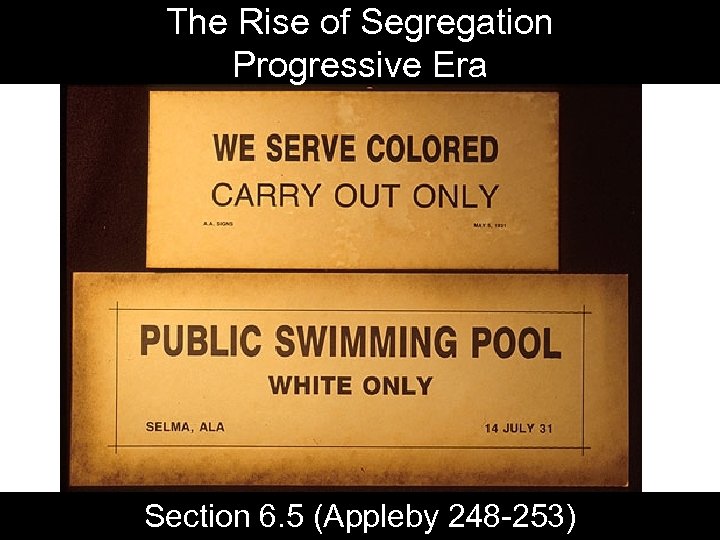 The Rise of Segregation Progressive Era Section 6. 5 (Appleby 248 -253)
 Today’s Agenda • • Current Events 6. 3 slide show Presentations Homework – Read 6. 3 – Unit Test next week (on Progressivism)
 At the end of this lesson, you should be able to: • • What was the Compromise of 1877? What were Jim Crow laws? Describe Plessy v Ferguson (1896). What is lynching? Who is Ida B. Wells? Who was Booker T. Washington? Who was W. E. B. Dubois? Who is D. W. Griffith?
 What had the progressives accomplished? • • • • Amendments • 16 Graduated Income Tax • Helps farmers, the poor • 17 • Direct Election of Senators • helps to stop corruption of political machines • 18 prohibits sale, manufacturing, • distribution of alcohol Helps stops alcoholism • 19 prohibits limits on suffrage • based on sex Helps women vote • Mueller v Oregon Protects women from excessive work hours Children’s Crusade Calls attention to child labor Meat Inspection Act Protects consumer from poo-poo kaa-kaa in meat National Consumer League – Child labor Hull House – immigrants Wisconsin Experiment – democracy Galveston Plan – Efficient city gov What did it fail to accomplished?
 Lynching
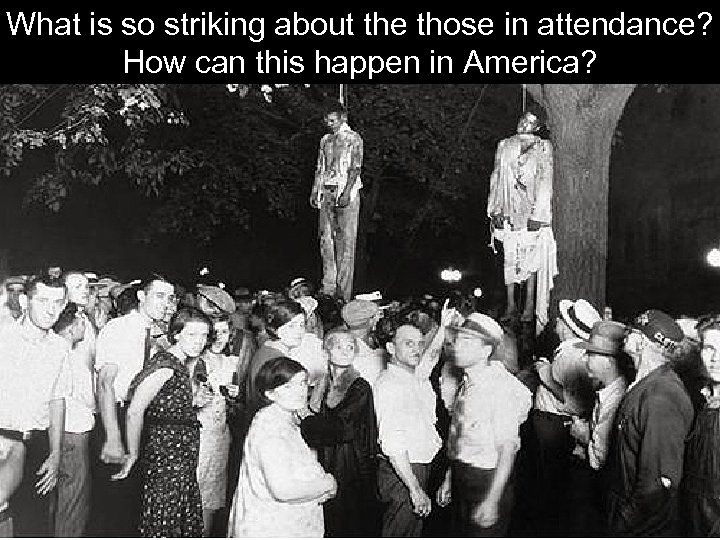 What is so striking about the those in attendance? How can this happen in America?
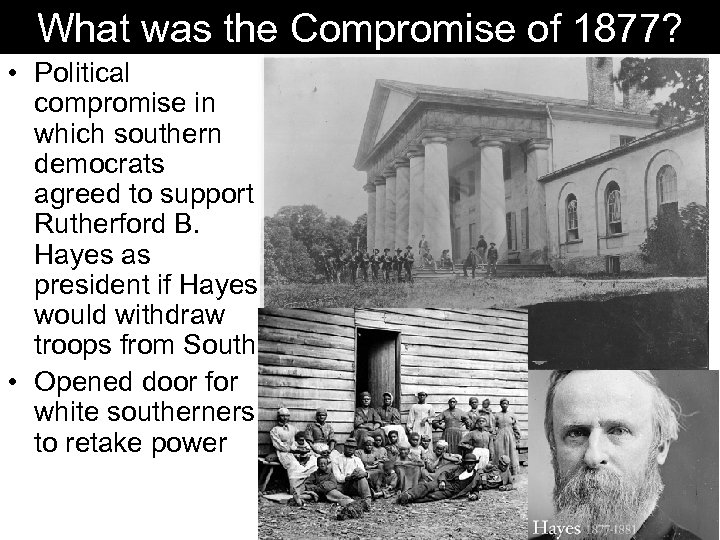 What was the Compromise of 1877? • Political compromise in which southern democrats agreed to support Rutherford B. Hayes as president if Hayes would withdraw troops from South • Opened door for white southerners to retake power
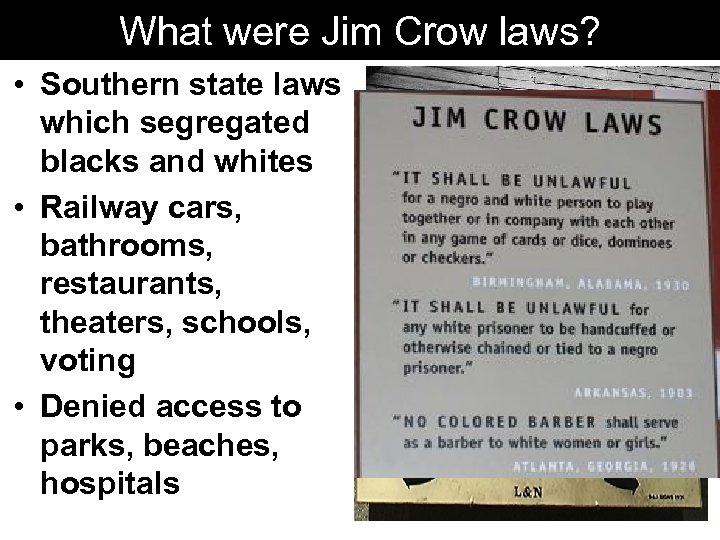 What were Jim Crow laws? • Southern state laws which segregated blacks and whites • Railway cars, bathrooms, restaurants, theaters, schools, voting • Denied access to parks, beaches, hospitals
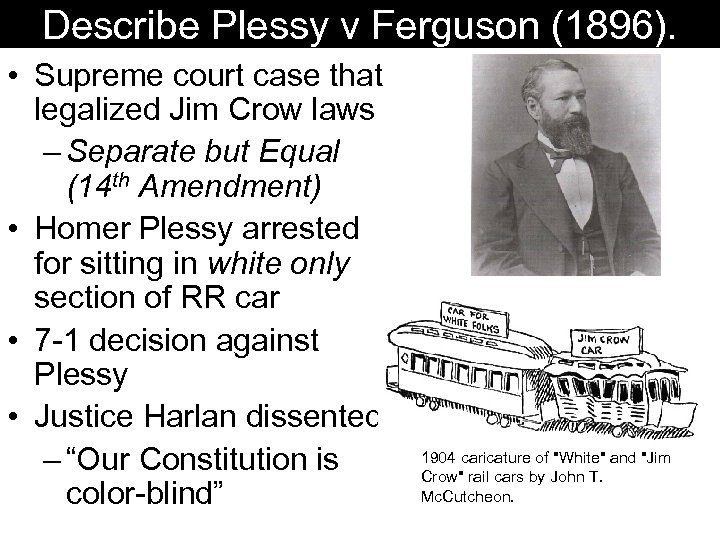 Describe Plessy v Ferguson (1896). • Supreme court case that legalized Jim Crow laws – Separate but Equal (14 th Amendment) • Homer Plessy arrested for sitting in white only section of RR car • 7 -1 decision against Plessy • Justice Harlan dissented – “Our Constitution is color-blind” 1904 caricature of "White" and "Jim Crow" rail cars by John T. Mc. Cutcheon.
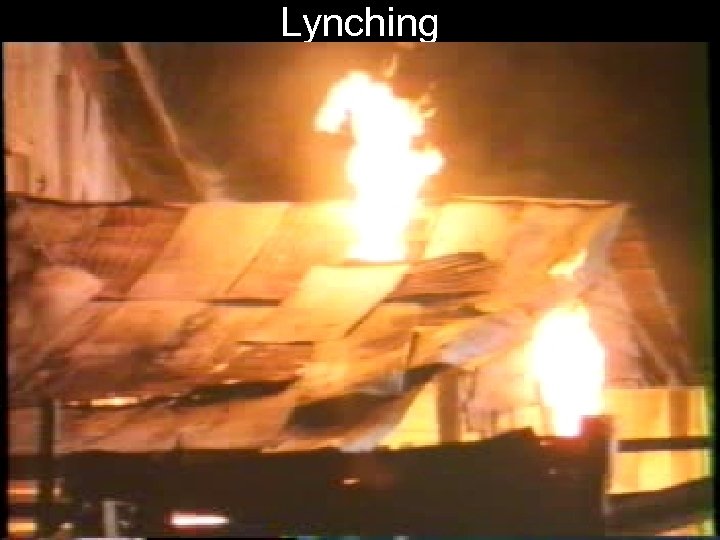
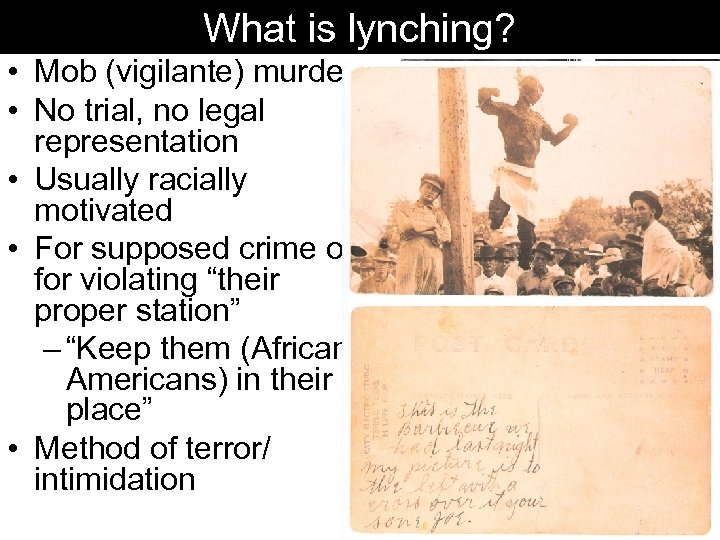 What is lynching? • Mob (vigilante) murder • No trial, no legal representation • Usually racially motivated • For supposed crime or for violating “their proper station” – “Keep them (African Americans) in their place” • Method of terror/ intimidation

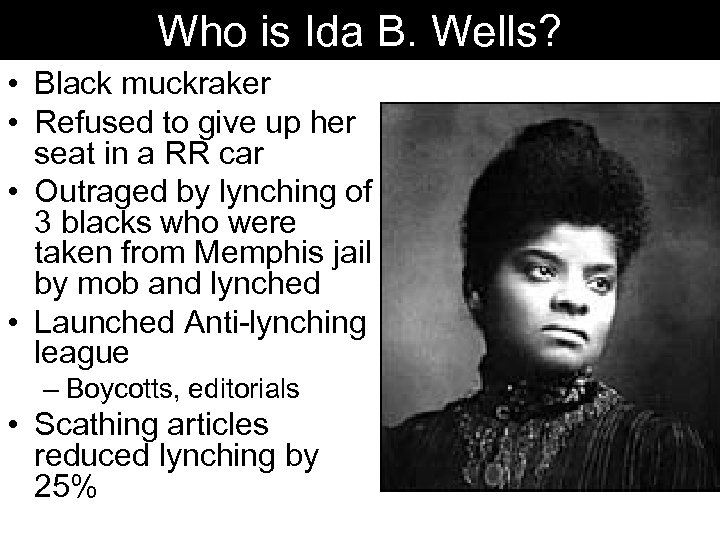 Who is Ida B. Wells? • Black muckraker • Refused to give up her seat in a RR car • Outraged by lynching of 3 blacks who were taken from Memphis jail by mob and lynched • Launched Anti-lynching league – Boycotts, editorials • Scathing articles reduced lynching by 25%
 African Americans & the Progressive Era
 Booker T. Washington Presentation
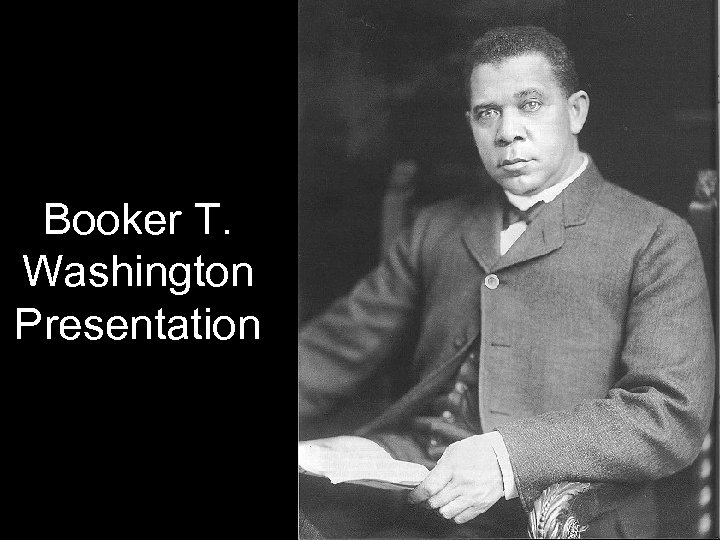
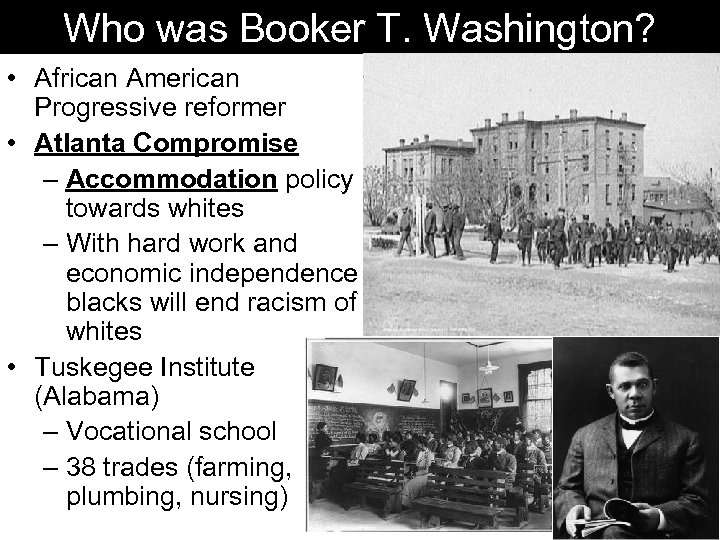 Who was Booker T. Washington? • African American Progressive reformer • Atlanta Compromise – Accommodation policy towards whites – With hard work and economic independence blacks will end racism of whites • Tuskegee Institute (Alabama) – Vocational school – 38 trades (farming, plumbing, nursing)
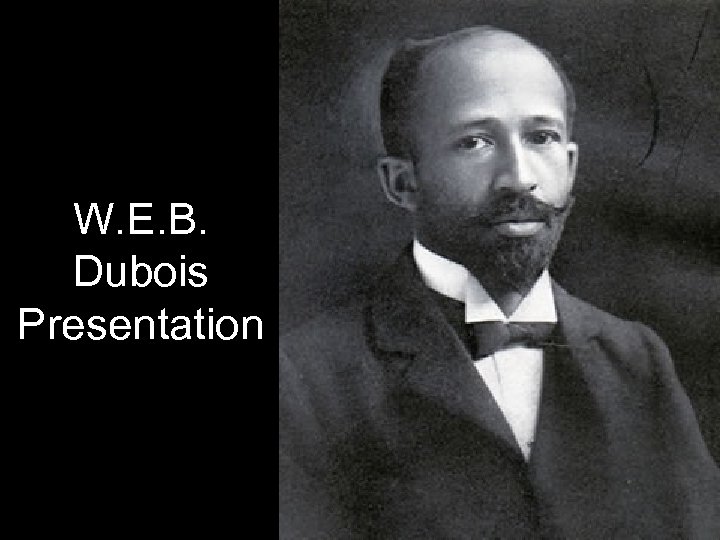 W. E. B. Dubois Presentation
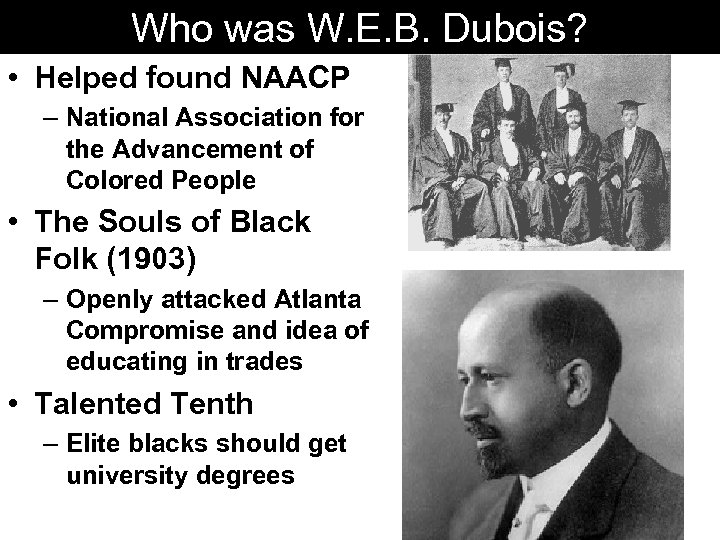 Who was W. E. B. Dubois? • Helped found NAACP – National Association for the Advancement of Colored People • The Souls of Black Folk (1903) – Openly attacked Atlanta Compromise and idea of educating in trades • Talented Tenth – Elite blacks should get university degrees
 Washington v Dubois
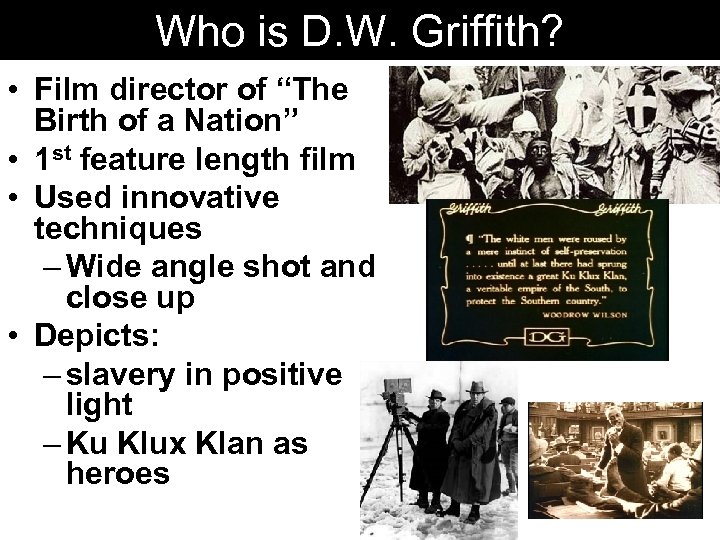 Who is D. W. Griffith? • Film director of “The Birth of a Nation” • 1 st feature length film • Used innovative techniques – Wide angle shot and close up • Depicts: – slavery in positive light – Ku Klux Klan as heroes
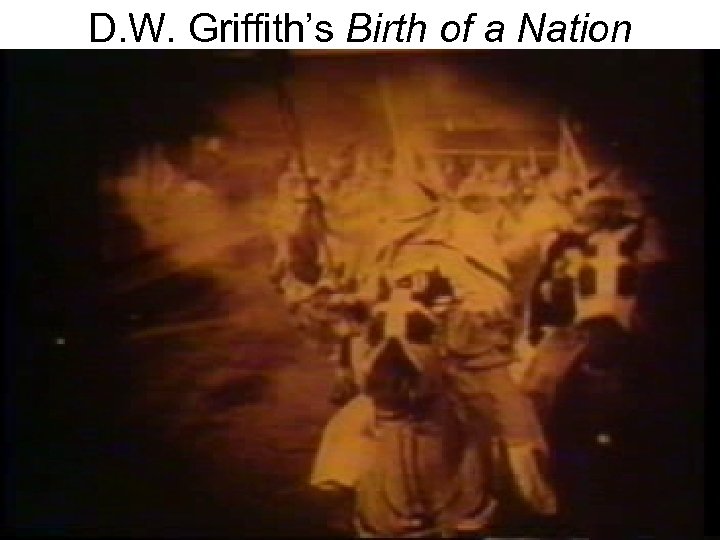 D. W. Griffith’s Birth of a Nation
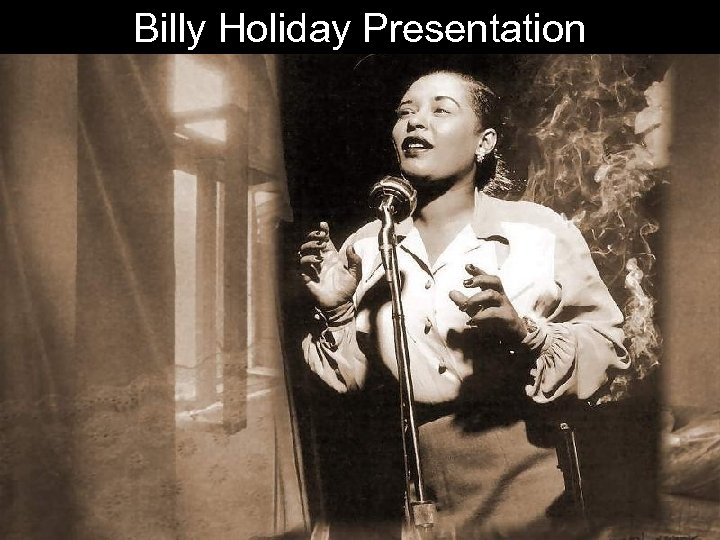 Billy Holiday Presentation
 Billy Holiday • American jazz singer • Style very influential on jazz instrumentalists, pioneered a new way of manipulating phrasing and tempo • Extremely difficult childhood – Raped, protestation, drug abuse • Strange Fruit – Song which protested American racism, particularly the lynching of African Americans
 Strange Fruit • Southern trees bear strange fruit, Blood on the leaves and blood at the root, Black bodies swinging in the southern breeze, Strange fruit hanging from the poplar trees. Pastoral scene of the gallant south, The bulging eyes and the twisted mouth, Scent of magnolias, sweet and fresh, Then the sudden smell of burning flesh. Here is fruit for the crows to pluck, For the rain to gather, for the wind to suck, For the sun to rot, for the trees to drop, Here is a strange and bitter crop.
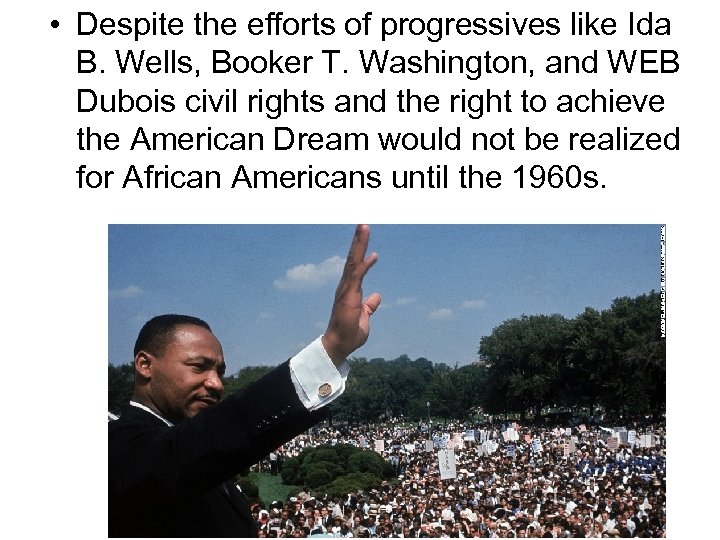 • Despite the efforts of progressives like Ida B. Wells, Booker T. Washington, and WEB Dubois civil rights and the right to achieve the American Dream would not be realized for African Americans until the 1960 s.