 Скачать презентацию The receptiveness of school environments to a community-based
f328aa461a68ff5ca03be45bf0a9ae7b.ppt
- Количество слайдов: 26



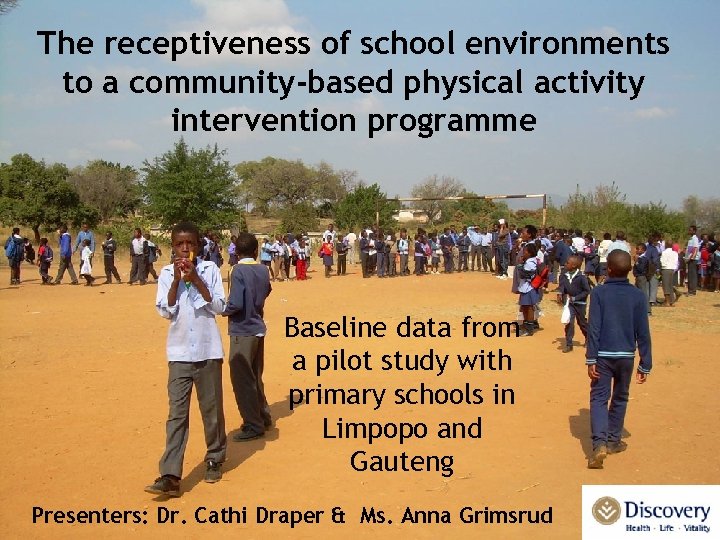
The receptiveness of school environments to a community-based physical activity intervention programme Baseline data from a pilot study with primary schools in Limpopo and Gauteng Presenters: Dr. Cathi Draper & Ms. Anna Grimsrud

Research Team University of Cape Town – Exercise Science and Sports Medicine Prof. Vicki Lambert Dr. Cathi Draper Ms. Anna Grimsrud University of the Witwatersrand Prof. Michael Rudolph Dr. Simon Nemutandani Ms. Lauren de Kock
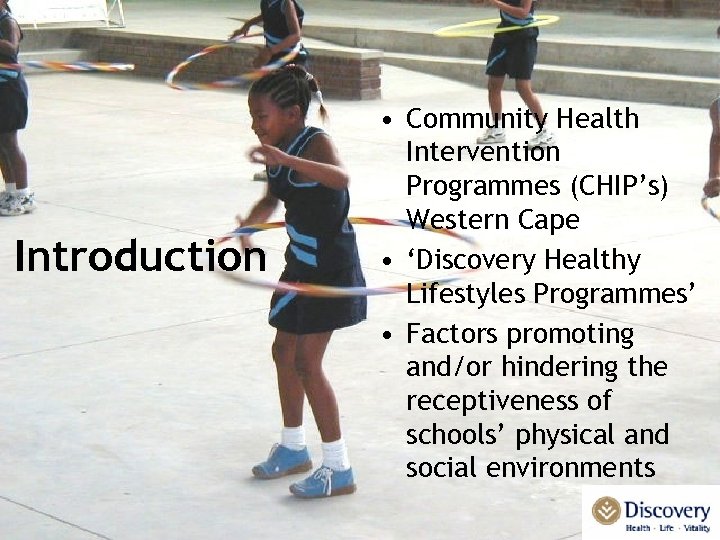
Introduction • Community Health Intervention Programmes (CHIP’s) Western Cape • ‘Discovery Healthy Lifestyles Programmes’ • Factors promoting and/or hindering the receptiveness of schools’ physical and social environments
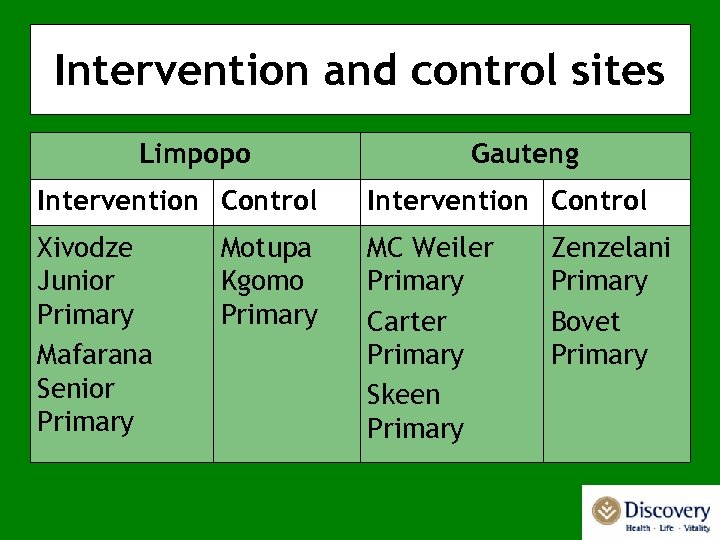
Intervention and control sites Limpopo Gauteng Intervention Control Xivodze Junior Primary Mafarana Senior Primary MC Weiler Primary Carter Primary Skeen Primary Motupa Kgomo Primary Zenzelani Primary Bovet Primary
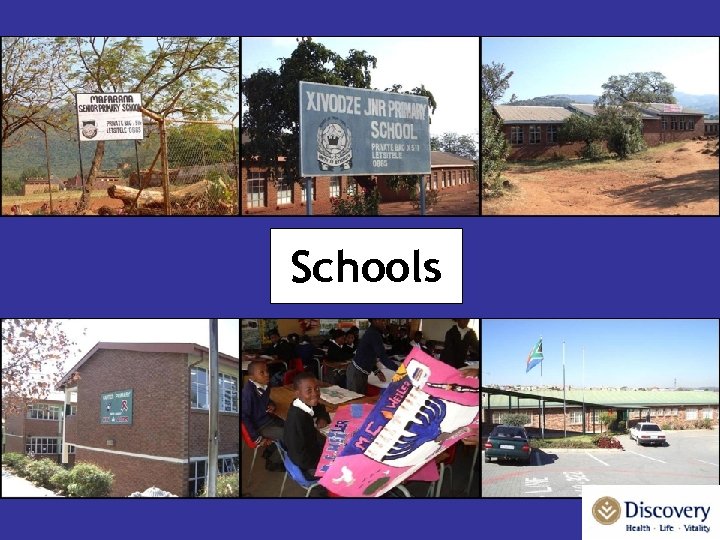
Schools
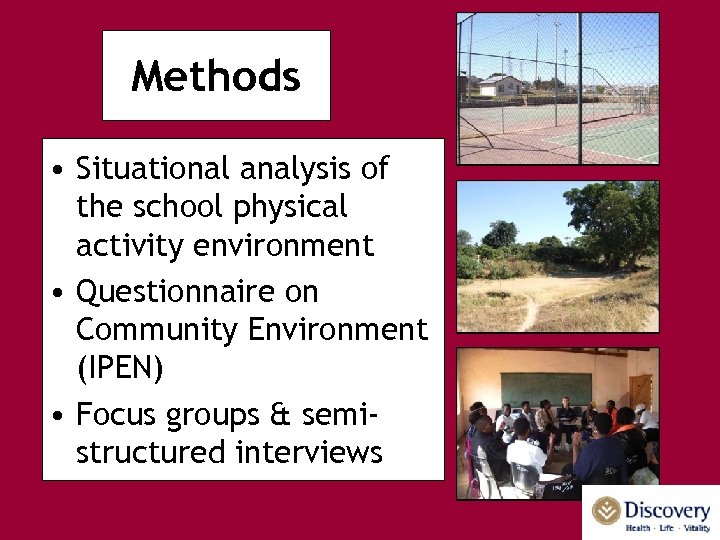
Methods • Situational analysis of the school physical activity environment • Questionnaire on Community Environment (IPEN) • Focus groups & semistructured interviews
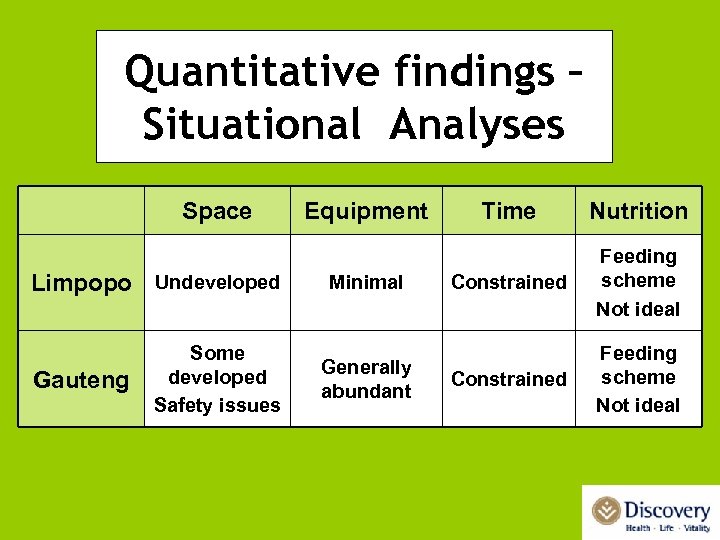
Quantitative findings – Situational Analyses Space Limpopo Undeveloped Gauteng Some developed Safety issues Equipment Minimal Generally abundant Time Nutrition Constrained Feeding scheme Not ideal
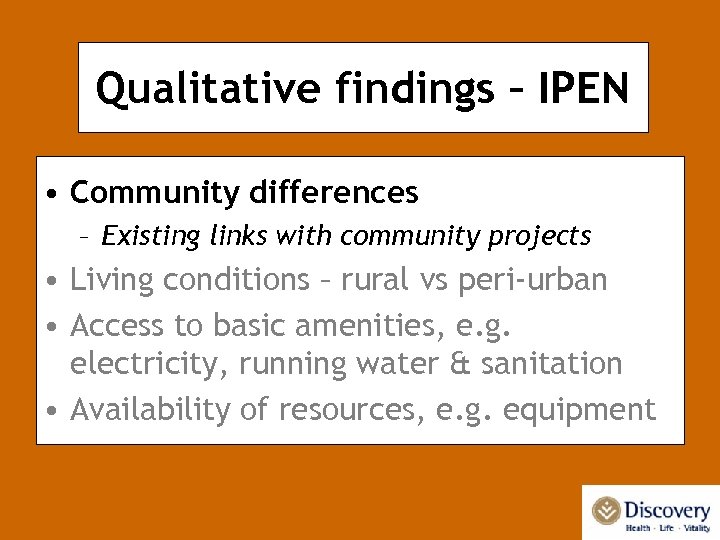
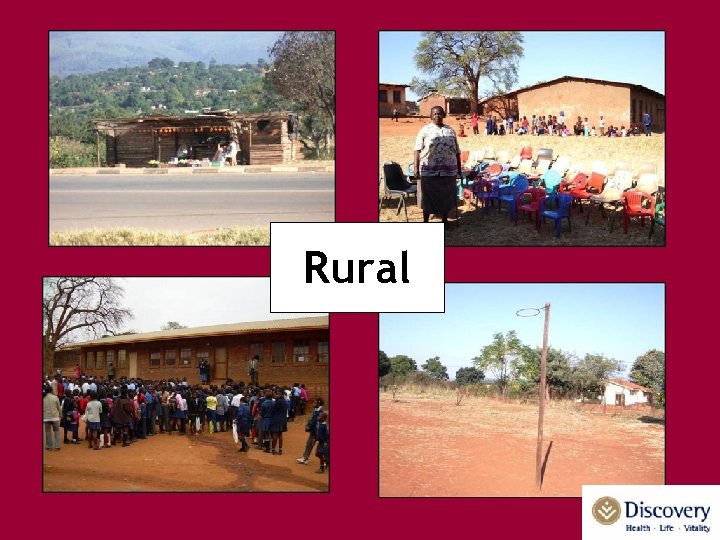
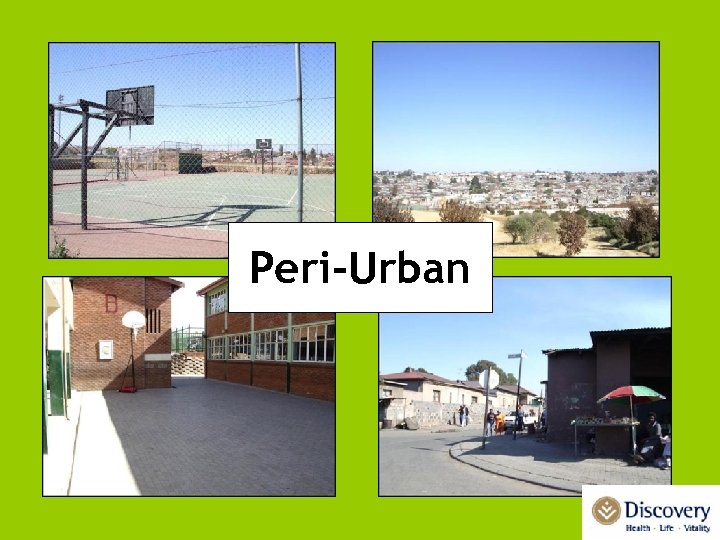
Qualitative findings – IPEN • Community differences – Existing links with community projects • Living conditions – rural vs peri-urban • Access to basic amenities, e. g. electricity, running water & sanitation • Availability of resources, e. g. equipment
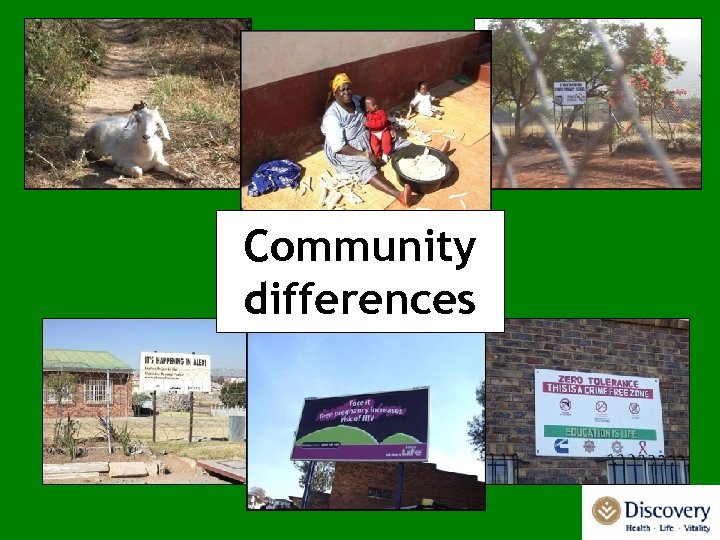
Community differences
Qualitative findings – IPEN • Community differences – Existing links with community projects • Living conditions – rural vs peri-urban • Access to basic amenities, e. g. electricity, running water & sanitation • Availability of resources, e. g. equipment
Rural
Peri-Urban
Qualitative findings – IPEN • Community differences – Existing links with community projects • Living conditions – rural vs peri-urban • Access to basic amenities, e. g. electricity, running water & sanitation • Availability of resources, e. g. equipment
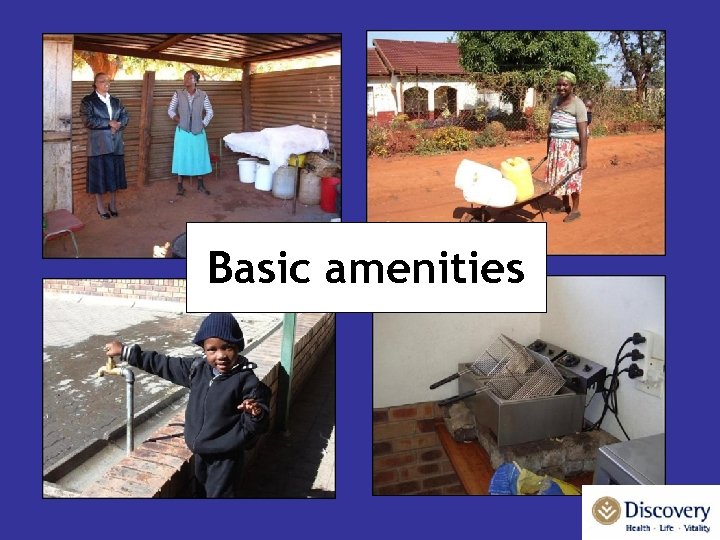
Basic amenities
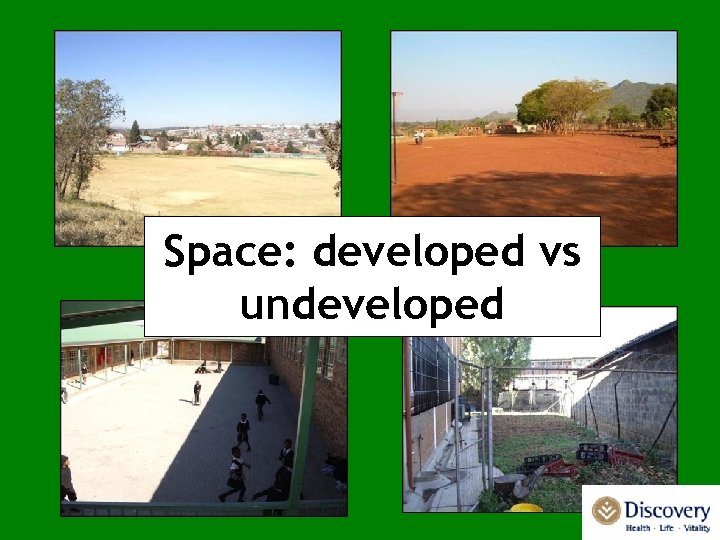
Space: developed vs undeveloped
Qualitative findings – Focus Groups & interviews • Importance of ongoing & sustainable training and management • Transfer and internalisation of knowledge • Impact of knowledge on attitudes, beliefs & behaviour • Increased self-efficacy of leaders • Leaders as role models for members • Role of training staff
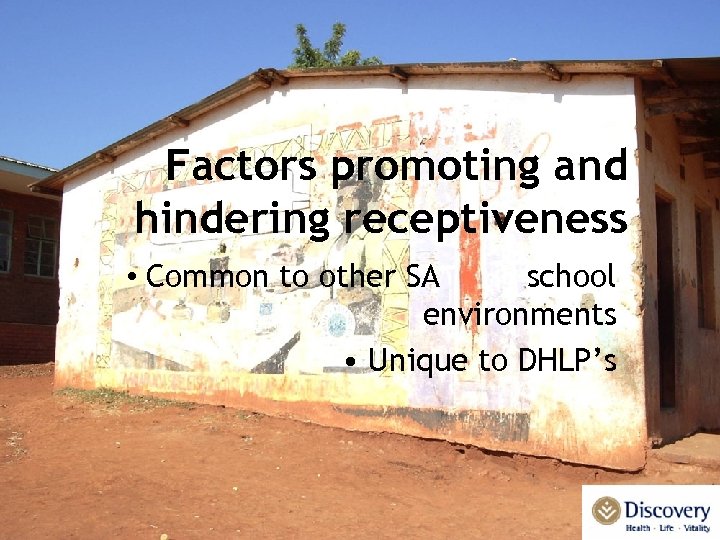
Factors promoting and hindering receptiveness • Common to other SA school environments • Unique to DHLP’s
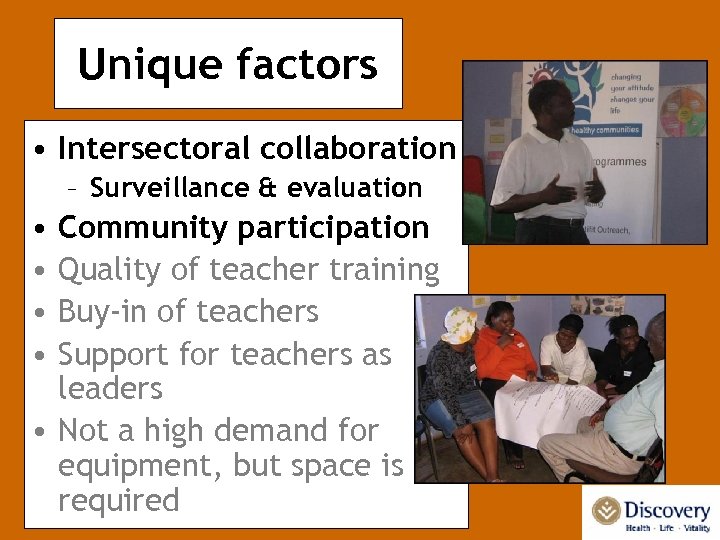
Unique factors • Intersectoral collaboration – Surveillance & evaluation • • Community participation Quality of teacher training Buy-in of teachers Support for teachers as leaders • Not a high demand for equipment, but space is required

Collaborators
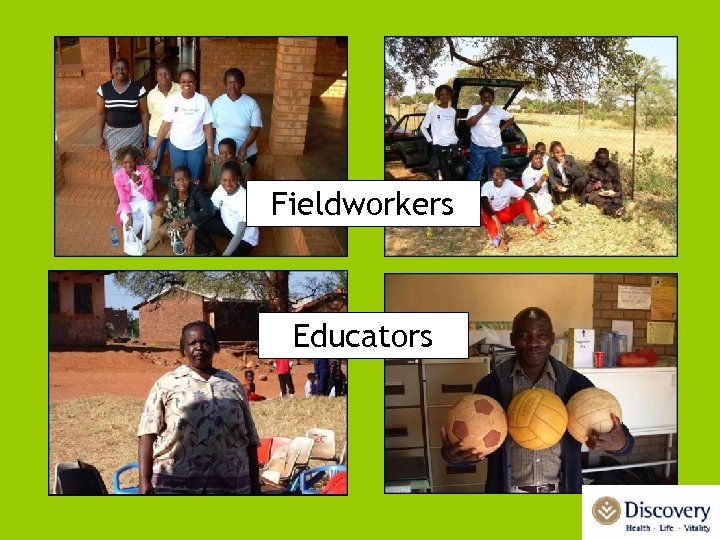
Fieldworkers Educators
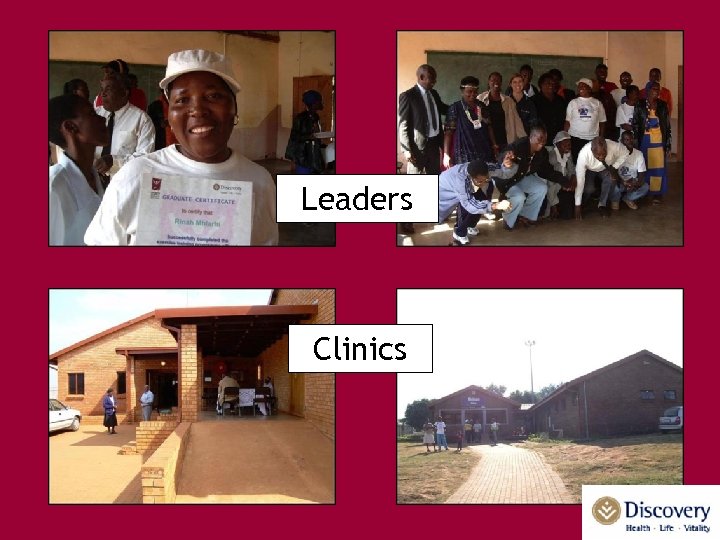
Leaders Clinics
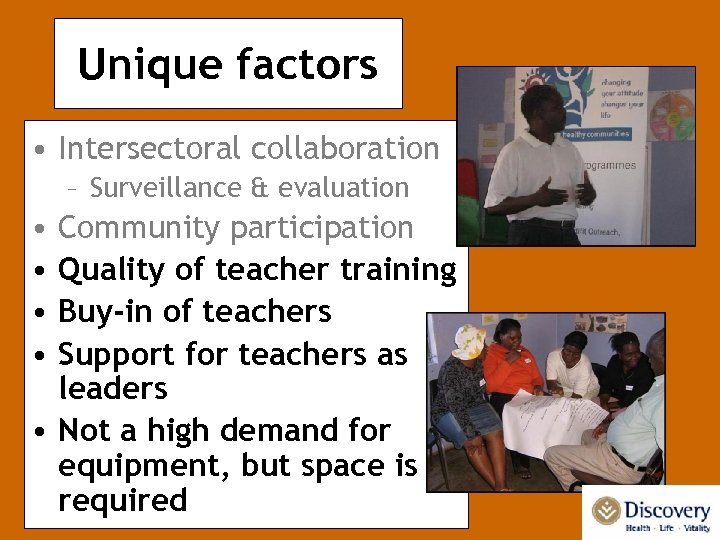
Unique factors • Intersectoral collaboration – Surveillance & evaluation • • Community participation Quality of teacher training Buy-in of teachers Support for teachers as leaders • Not a high demand for equipment, but space is required
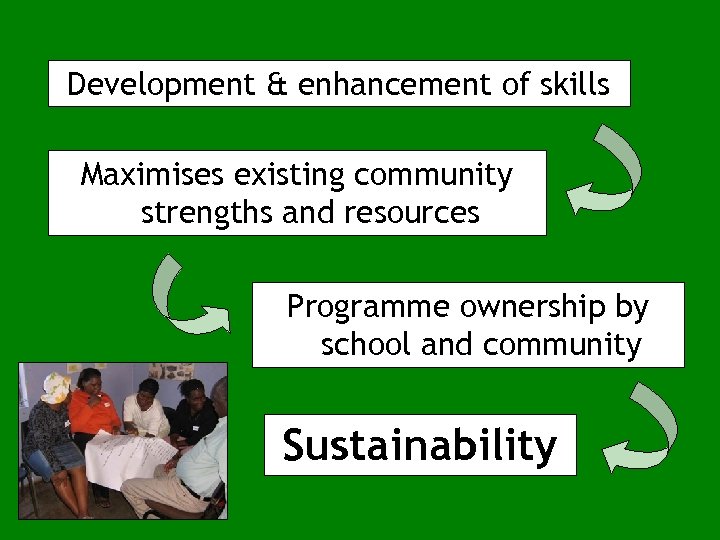
Development & enhancement of skills Maximises existing community strengths and resources Programme ownership by school and community Sustainability
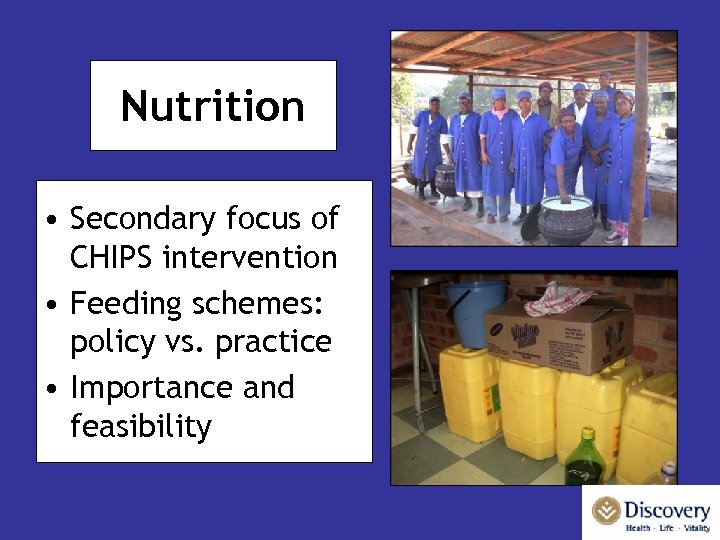
Nutrition • Secondary focus of CHIPS intervention • Feeding schemes: policy vs. practice • Importance and feasibility
• Baseline assessment - quantitative & qualitative • Comparison to national physiological data • Changes attributed to intervention • Other areas for intervention (e. g. nutrition) • Provide evidence to support expansion • Factors responsible for intervention fidelity/success Future research avenues

Thank you
Скачать презентацию The receptiveness of school environments to a community-based
f328aa461a68ff5ca03be45bf0a9ae7b.ppt