Скачать презентацию THE PROPOSED SOUTHEAST ASIAN SINGLE AVIATION MARKET Dr
a4d074472d64d110e7e356b57315b670.ppt
- Количество слайдов: 20
 THE PROPOSED SOUTHEAST ASIAN SINGLE AVIATION MARKET Dr. Alan Khee-Jin Tan 15 April 2009
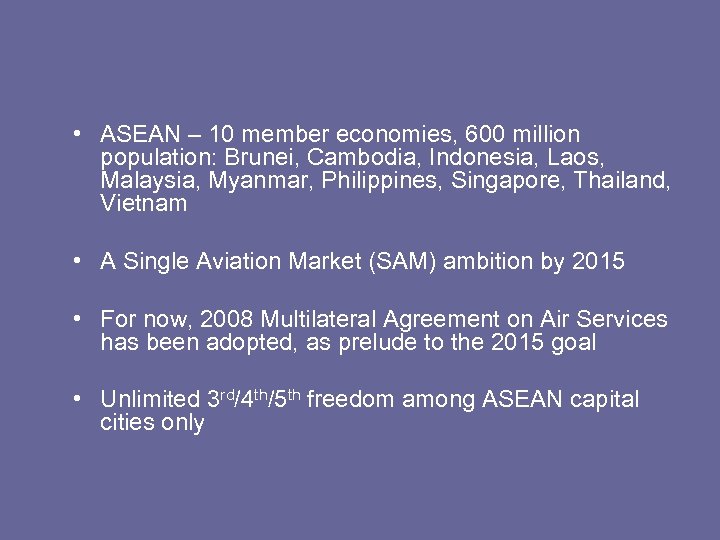 • ASEAN – 10 member economies, 600 million population: Brunei, Cambodia, Indonesia, Laos, Malaysia, Myanmar, Philippines, Singapore, Thailand, Vietnam • A Single Aviation Market (SAM) ambition by 2015 • For now, 2008 Multilateral Agreement on Air Services has been adopted, as prelude to the 2015 goal • Unlimited 3 rd/4 th/5 th freedom among ASEAN capital cities only
 Major Issues/Challenges • Market Access • Ownership and Control • External Relations
 Market Access • Non-capital cities: no consensus yet, may be included later (stated goal: 2010? ) • Even if successful, support only for unlimited 3 rd/4 th/5 th freedom, and intra-ASEAN only • No 7 th, 8 th, 9 th freedoms! Single Market in name only?
 Ownership and Control • Most states still subscribing to substantial ownership and effective control. Though increasingly, principal place of business. • Note Singapore’s unusually liberal agreement with the U. K. – only effective regulatory control to reside with Singapore. Substantial ownership and effective economic control can reside elsewhere! • But hope for an ASEAN “community carrier” concept. Substantial ownership can be spread across member states, but effective control to remain with designating state?
 Ownership and Control (cont’d) • “Community carrier” concept facilitative only – member states need not impose it on own airlines, but will allow access for other member states’ airlines which are structured as such • Concept only makes sense fully if unlimited ASEAN-wide market access is recognised
 External Relations • Wholly premature to consider E. U. -type “horizontal mandate”, though inevitable in long run • Exact “deal” with a third country, e. g. China or India, unclear. A new bilateral that supersedes existing bilaterals? • Preliminary agreement with China – unlimited 3 rd, 4 th and 5 th freedom between ASEAN and China by 2010. Will this jumpstart/accelerate 2015 intra-ASEAN deadline?
 External Relations (cont’d) • Even on 3 rd/4 th/5 th freedom basis, more northerly ASEAN states unlikely to agree, as they will lose out to more southerly states’ airlines. Illustrate. • More realistic: unlimited 3 rd/4 th freedom only, but restricted to home bases. This adds nothing to several existing bilaterals! • Stopping at unlimited 3 rd/4 th freedom will advantage the Chinese carriers only. They can fly literally from any point in China to any point in ASEAN. But ASEAN airlines can’t do the reverse!
 External Relations (cont’d) • This is the familiar problem facing a group of small states, when dealing with a larger market. E. U. vs. the U. S. ! • Only solution is to open up INTRA-ASEAN 5 th and 7 th freedoms! • But political will lacking, and governments/national carriers unable to see beyond the ends of their noses! Indonesia still maintaining ban on foreign low-cost carriers that “threaten” its national carrier.
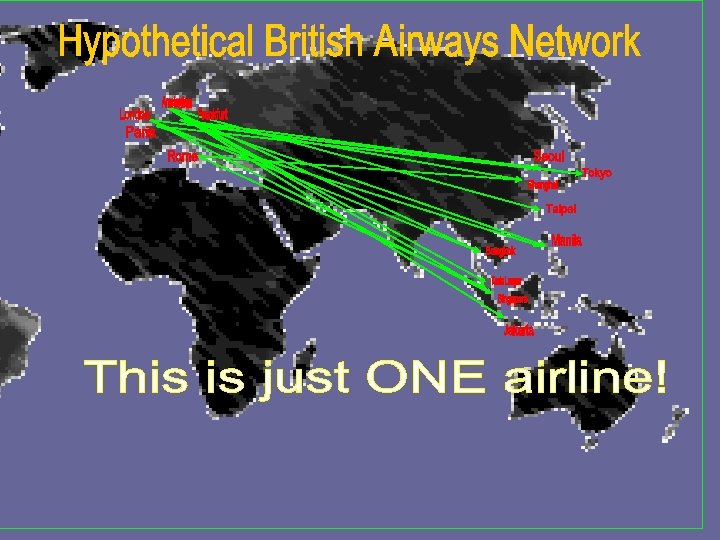
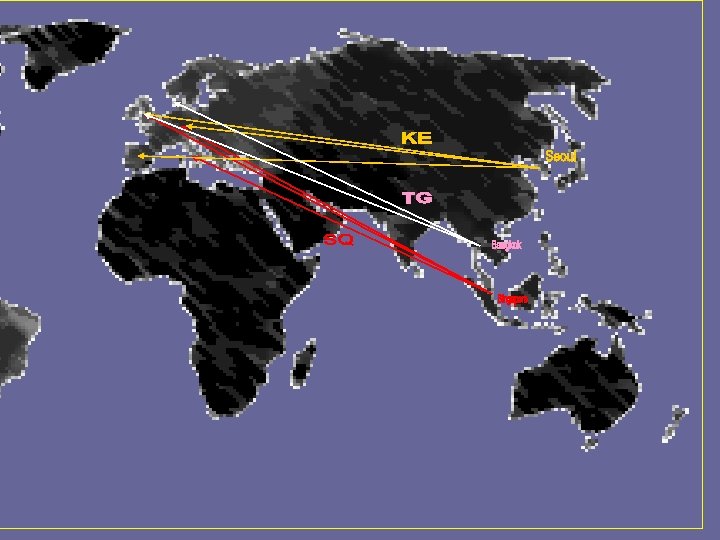
 E. U. Horizontal Mandate and Consequences • Mergers and consolidation among EU airlines, with capital injections from EU sources beyond 49% norm • Mega-carriers e. g. Air France/KLM, Lufthansa/Swiss. Iberia and Alitalia? • Leaner, stronger competitors than US airlines!
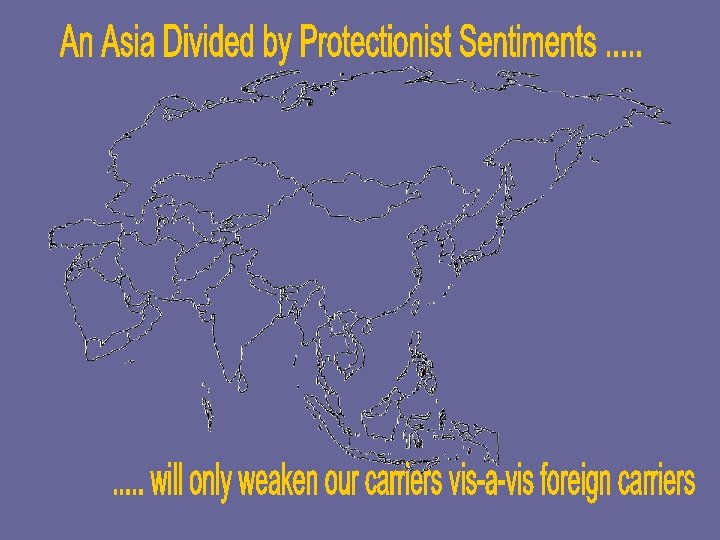
 Meanwhile, in ASEAN and Asia …. . protectionism looms • Mergers still impossible • Asian governments still denying each other’s carriers liberalized access (no 5 ths, no 7 ths) • Asian carriers still can’t operate from multiple bases/hubs; SIA restricted to Singapore, Korean Air to Seoul, and so on. • Innovation by Low-Cost Carriers - Air. Asia “joint venture”/franchise model to get around restrictions. Disguised multiple hubs! • Fate of Tiger Incheon?
 What next after horizontal mandate? • Full-fledged Open Skies between unified EU and individual third states? • EU has already approached Australia and New Zealand.
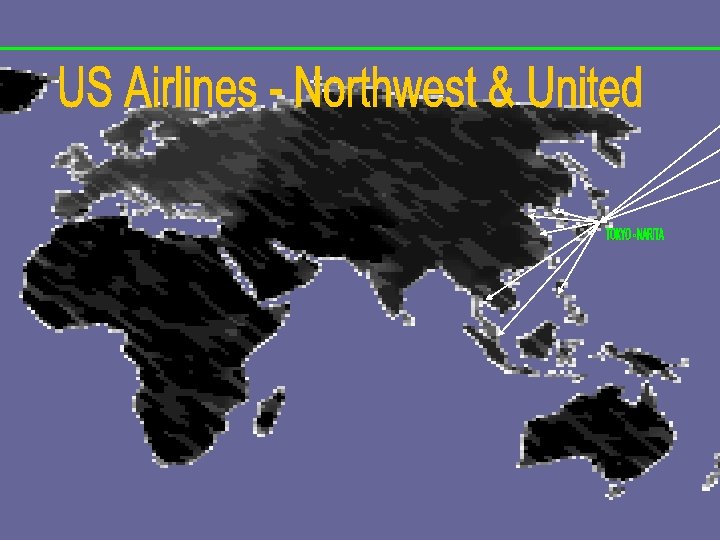
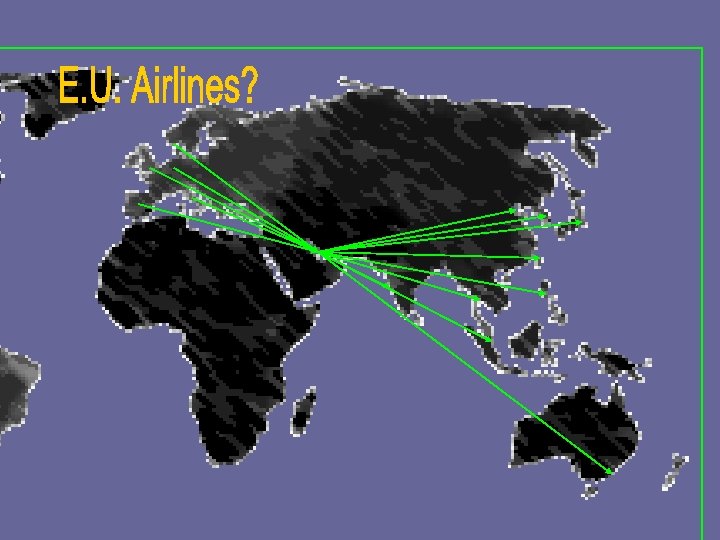
 Conclusions • Asian carriers cannot respond with an equally comprehensive “spray” or “starburst” of flights – can’t build multiple hubs in Asia • E. U. carriers can merge across boundaries in Europe, becoming leaner and more competitive. Asian carriers can’t do the same • In time, the E. U. carriers will build hub in the Western gateway into Asia – Dubai? Abu Dhabi? Mumbai?
 Conclusions (cont’d) • The solution: Asian governments must start opening up their markets to each other’s airlines and relaxing ownership rules. • ASEAN experiment is but modest first step in this larger game. • Can it ultimately link up the other regions – Northeast Asia, West Asia, South Asia – into regional bloc? ?