


 Скачать презентацию The Property Tax is made up of two
7883dee097d26e52e826483f929c8c34.ppt
- Количество слайдов: 122

 The Property Tax is made up of two basic components:
 1) Budget needs (Taxes) 2) Estimates of Market Value (Assessed Values)
 Let’s look at budget needs (taxes) first. . .
 Budget Needs What do we use tax dollars for ?
 Taxes are used for : • Schools
 Taxes are used for : • Police Services
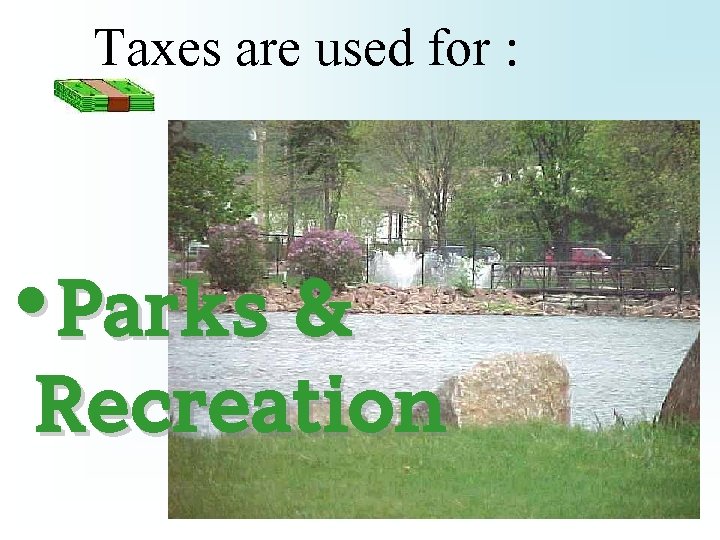 Taxes are used for : • Parks & Recreation
 Taxes are used for : • Fire & Rescue
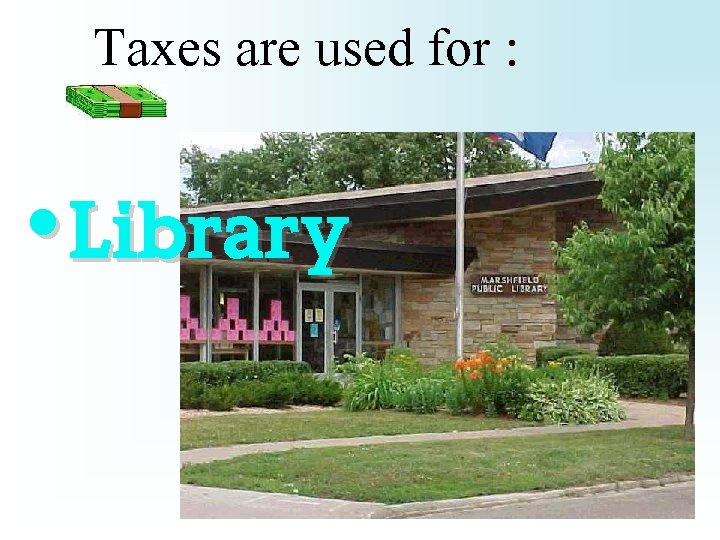 Taxes are used for : • Library
 Taxes are used for : • Streets
 Taxes are used for: Administrative Services
 Budget Needs We see that each Department of Government has a budget. . .
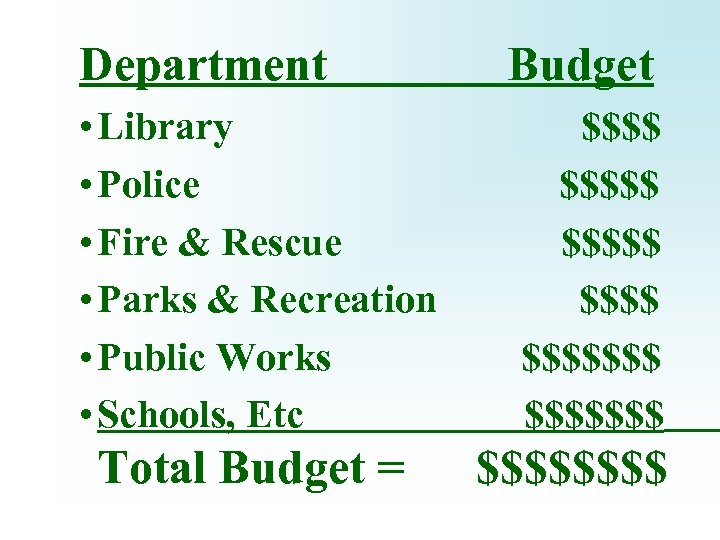 Department • Library • Police • Fire & Rescue • Parks & Recreation • Public Works • Schools, Etc Total Budget = Budget $$$$$ $$$$$$$
 The total budget is called the “tax levy”
 The tax levy: “The total budget dollars needed to run municipal services”

 Up until now we have talked about budget needs (taxes). . .
 Now let’s talk about how these budget needs are assigned. . .
 . . . to each residence and business in our community. . .
 . . . so everyone pays their “fair share” of taxes.
 It’s done by relating to the Assessed Value.
 Let’s see how that’s done. . .
 The guiding principle behind the property tax:
 “The value of property owned is an indication of one’s ability to pay taxes”.
 State Laws have been written to reflect this idea and to guide the assessing process.
 By State Law then… each home and every business must be assessed based on an estimate of value.
 Assessors use three “approaches” for estimating value for real property.
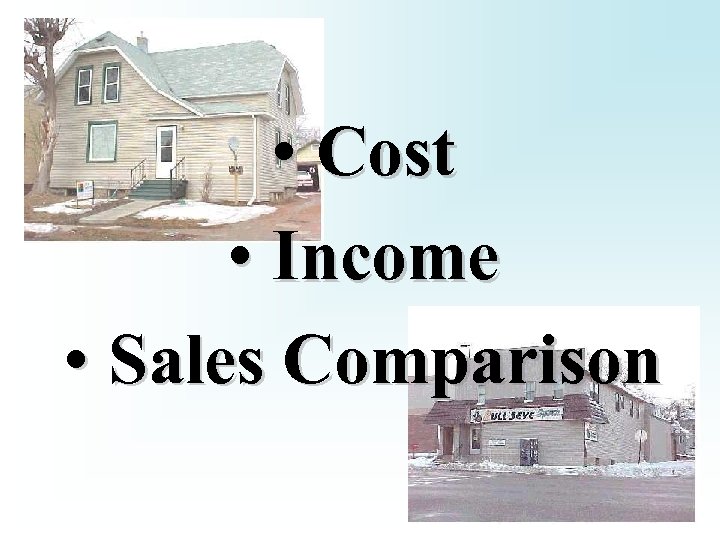 • Cost • Income • Sales Comparison
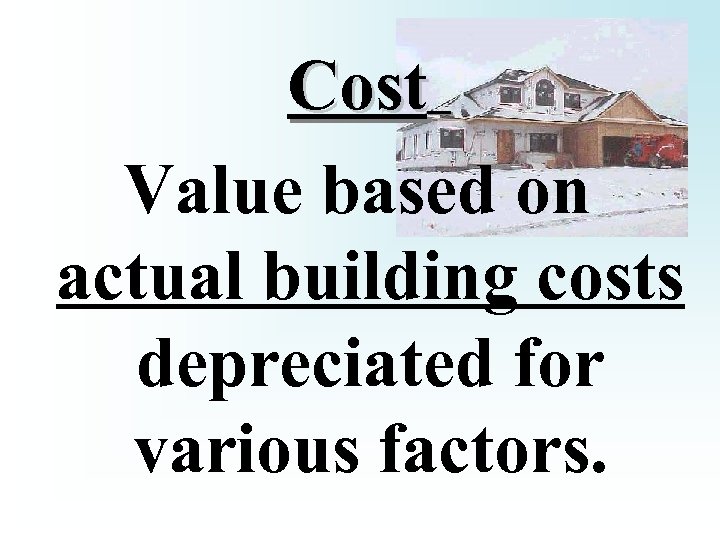 Cost Value based on actual building costs depreciated for various factors.
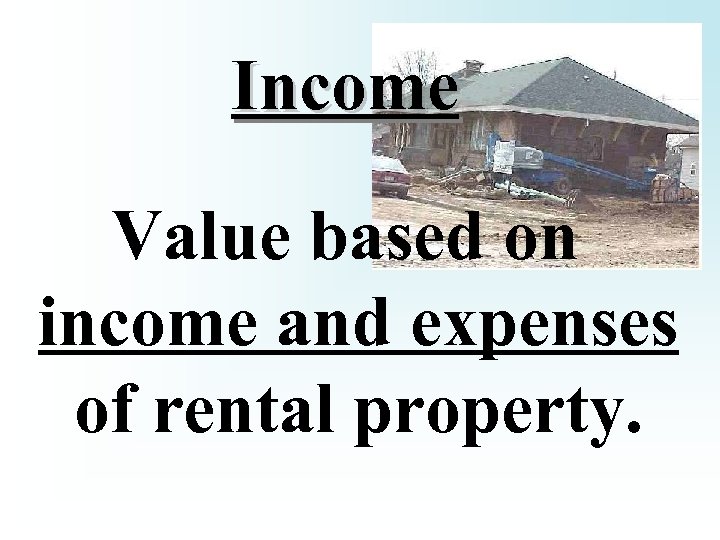 Income Value based on income and expenses of rental property.
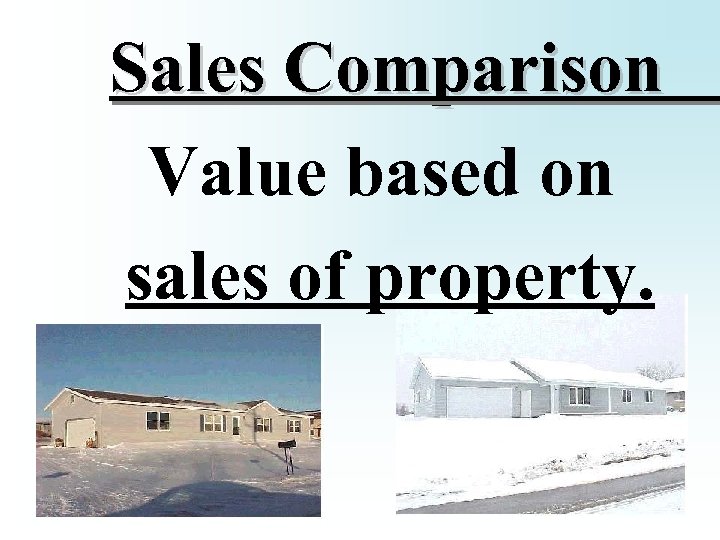 Sales Comparison Value based on sales of property.
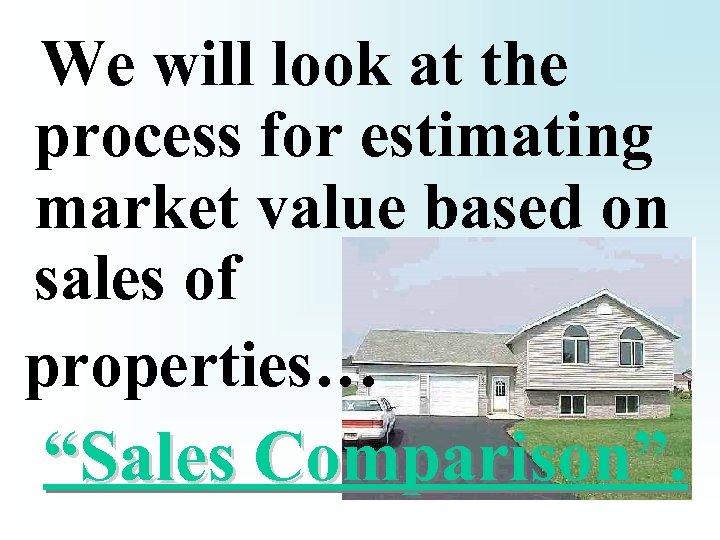 We will look at the process for estimating market value based on sales of properties… “Sales Comparison”.
 “Market Value” : An estimate of what a home or business would sell for under normal market conditions.
 Assessors call these estimates of market value “assessed values”
 How does the Assessor’s Office estimate Market Value? Value
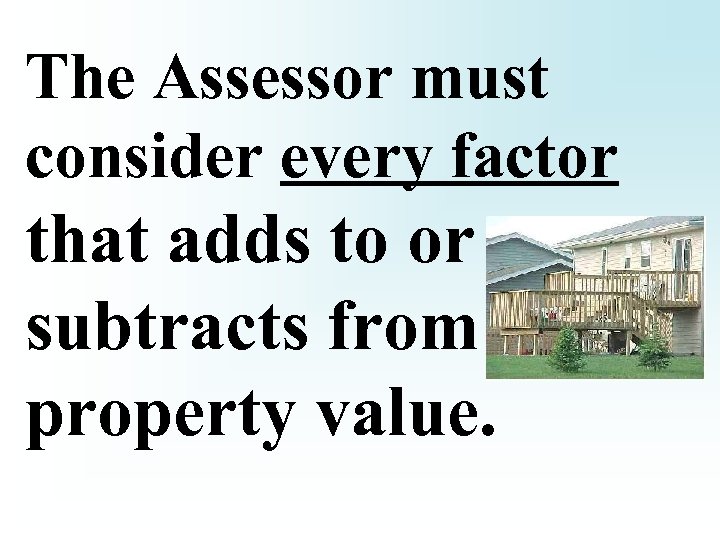 The Assessor must consider every factor that adds to or subtracts from property value.
 What makes one house sell for more, or less, than another house?
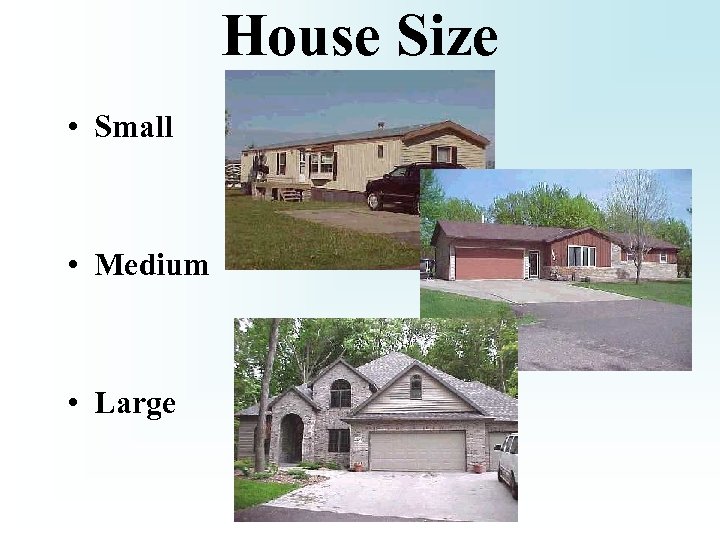 House Size • Small • Medium • Large
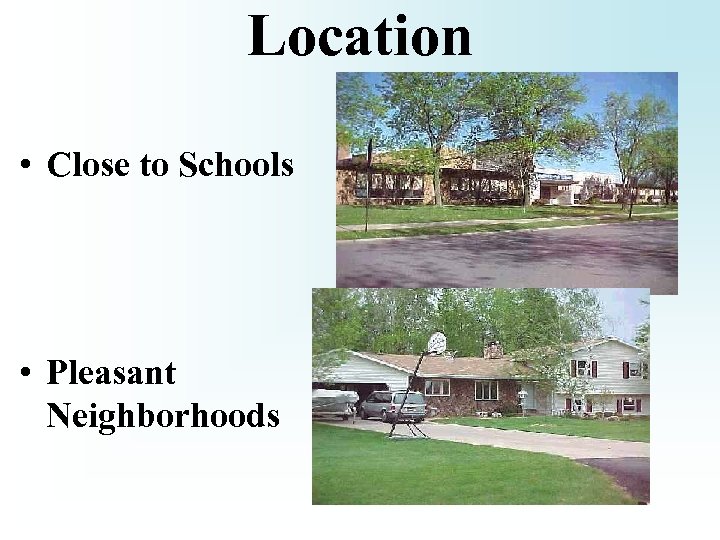 Location • Close to Schools • Pleasant Neighborhoods
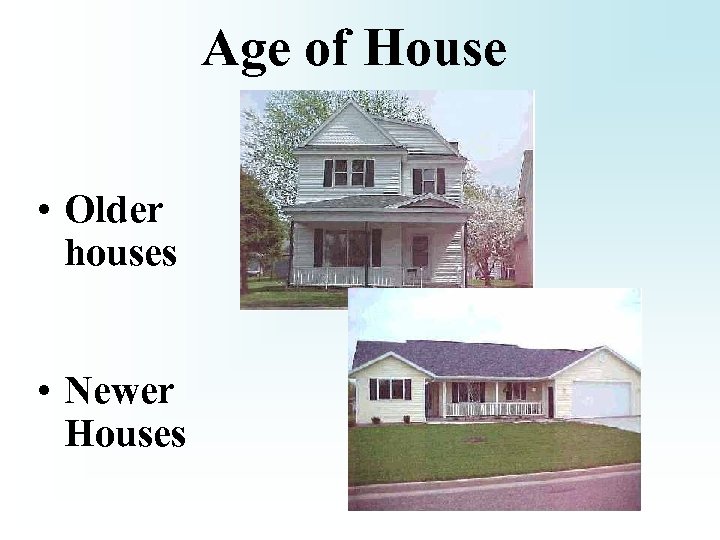 Age of House • Older houses • Newer Houses
 Other things that affect value: • Construction Quality • Number of Bedrooms • Number of Bathrooms • Family Room • Decks/Patios/Gazebos • Recreation Room, etc
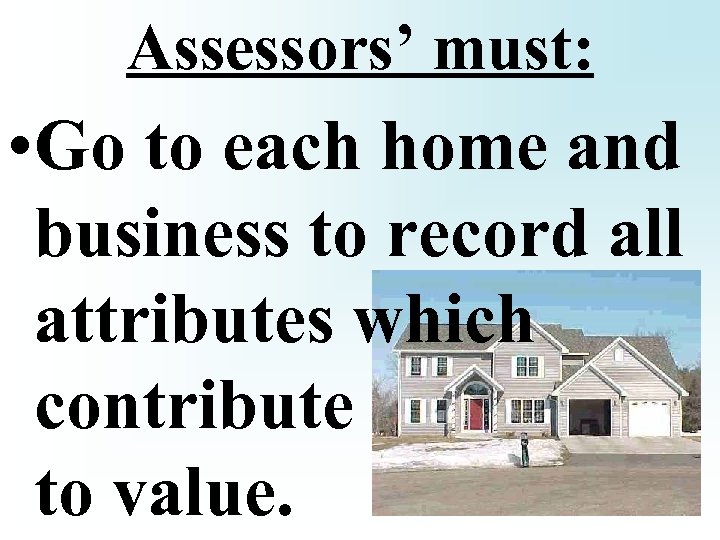 Assessors’ must: • Go to each home and business to record all attributes which contribute to value.
 Assessors’ must: • Maintain these records annually to include all changes that affect value.
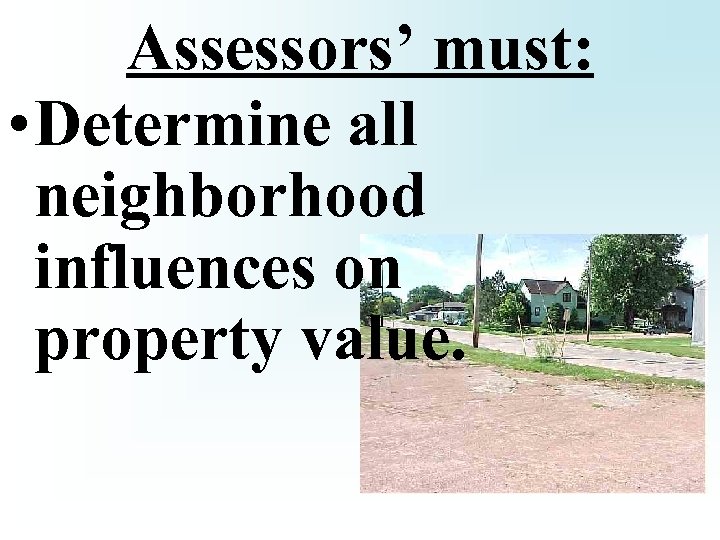 Assessors’ must: • Determine all neighborhood influences on property value.
 Assessors’ must: • Determine any special influences on property value (such as contamination).
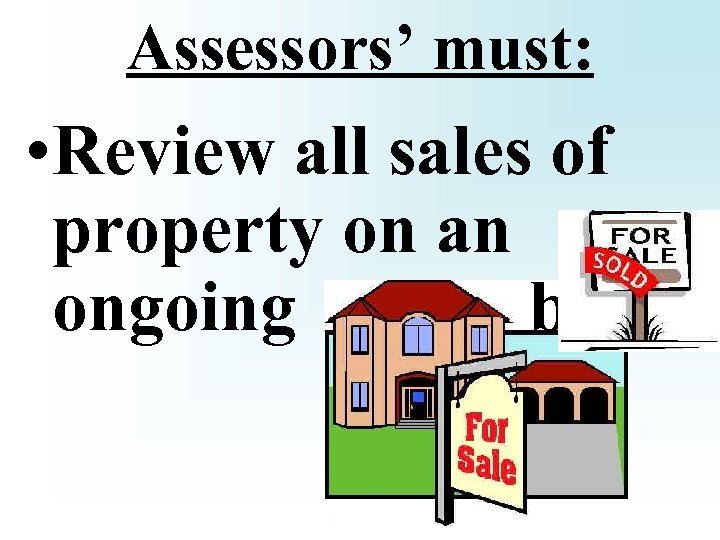 Assessors’ must: • Review all sales of property on an ongoing basis.
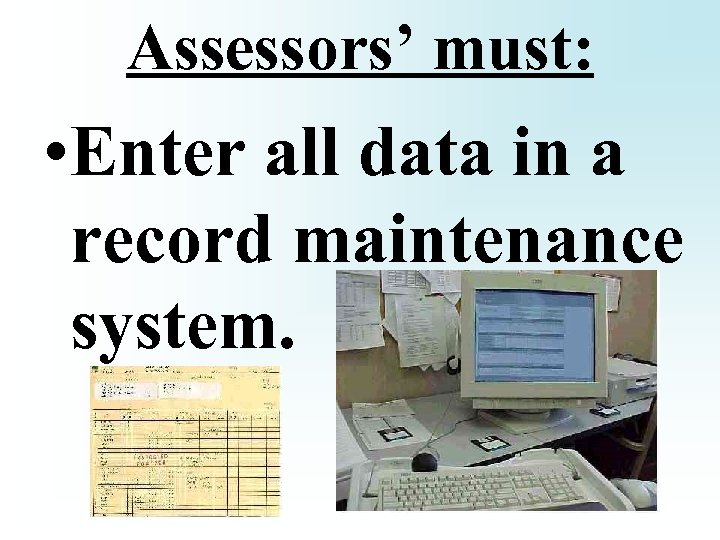 Assessors’ must: • Enter all data in a record maintenance system.
 Assessors’ must: • Statistically analyze all factors contributing to value and adjust to reflect current sales of property.
 Assessors’ must: • Generate estimates of value on each property annually.
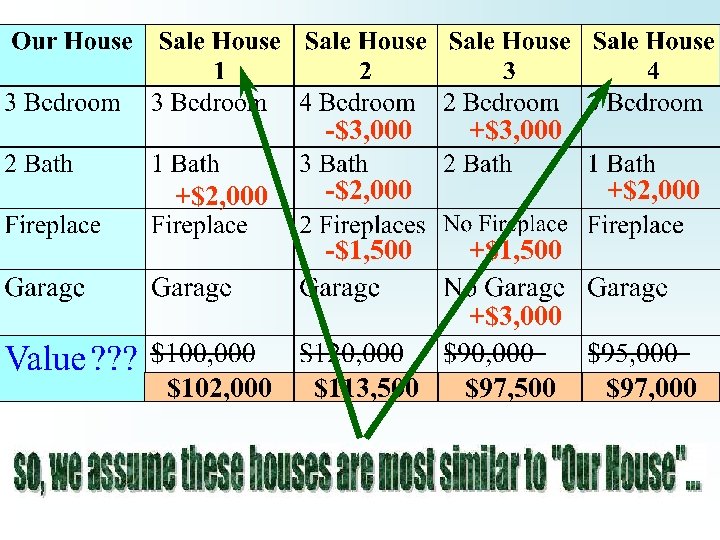
 Assessed Values are generated by comparing each house to similar properties that have recently sold, and adjusting for differences.
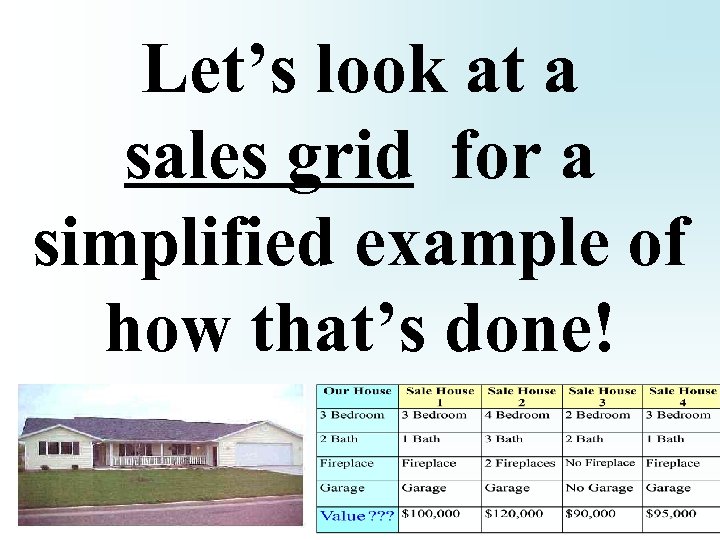 Let’s look at a sales grid for a simplified example of how that’s done!
 Let’s assume the houses in our example are the same age, size, physical condition, quality and in the same neighborhood.
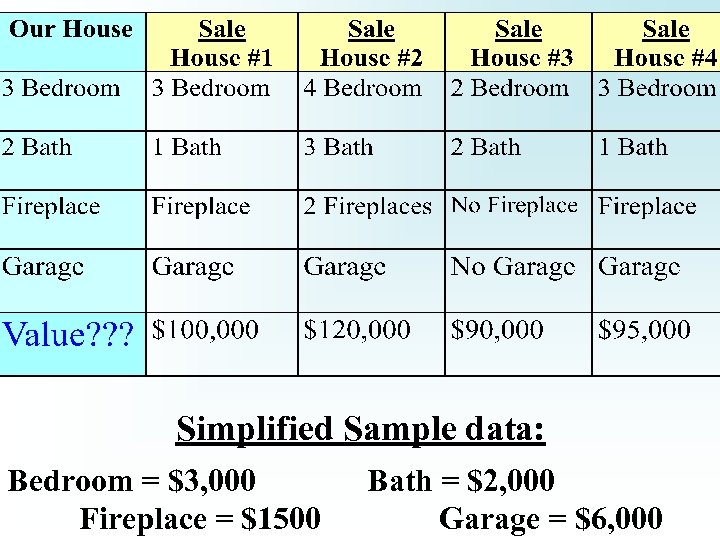 Simplified Sample data: Bedroom = $3, 000 Fireplace = $1500 Bath = $2, 000 Garage = $6, 000
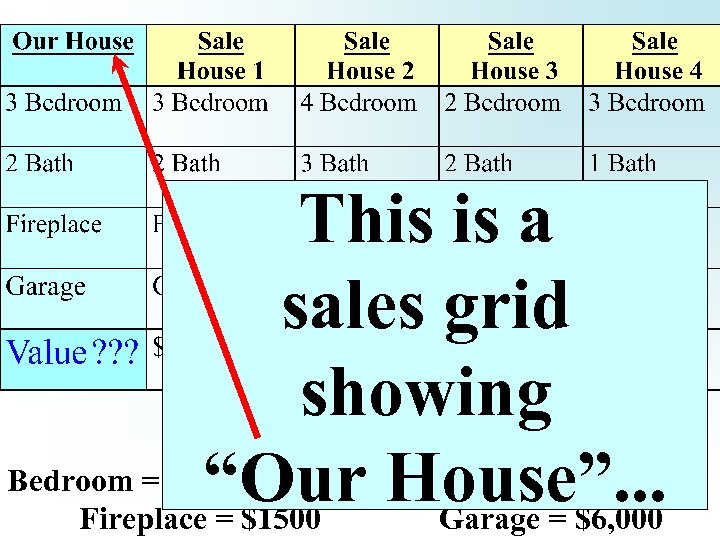 This is a sales grid showing Bedroom = $3, 000 = $2, 000 “Our. Bath Garage = $6, 000 House”. . . Fireplace = $1500
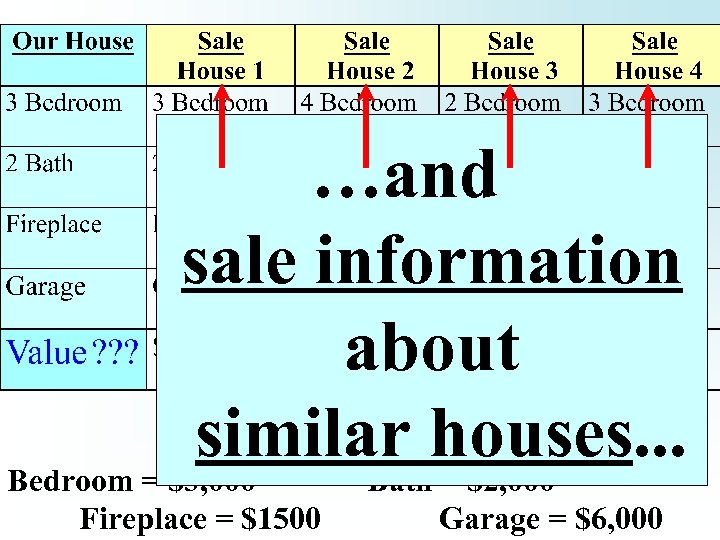 …and sale information about similar houses. . . Bedroom = $3, 000 Bath = $2, 000 Fireplace = $1500 Garage = $6, 000
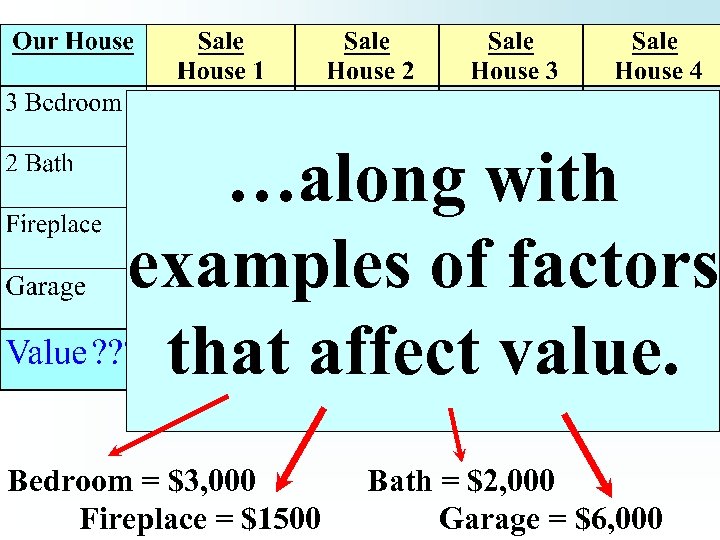 …along with examples of factors that affect value. Bedroom = $3, 000 Fireplace = $1500 Bath = $2, 000 Garage = $6, 000
 The sale properties are adjusted for differences to match “Our House”.
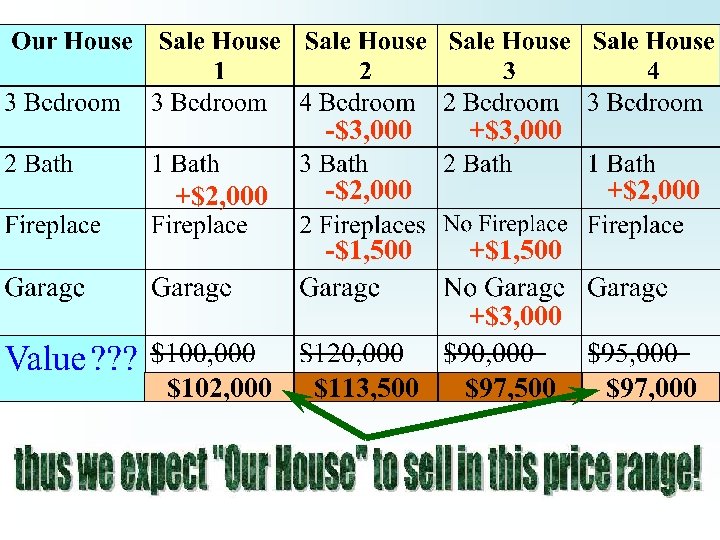
 When we are finished we should have an estimate of what “Our House” would sell for. . .
 …giving us an example of an assessed value
 Let’s adjust the first sale for any differences from “Our House”. . .
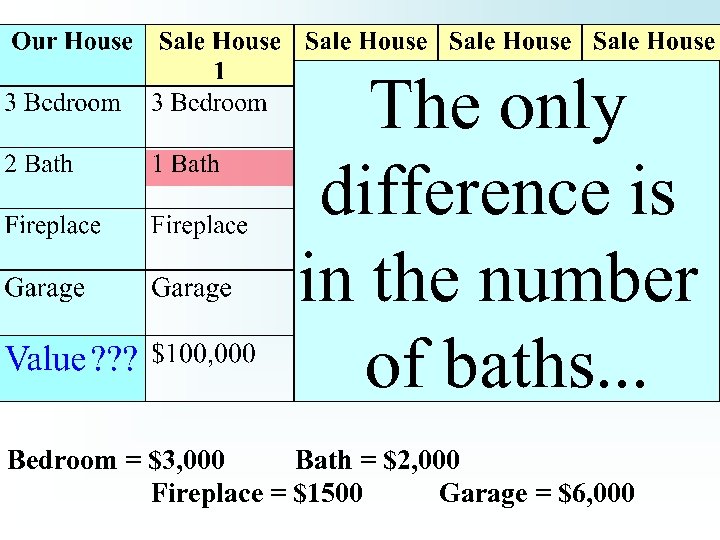 The only difference is in the number of baths. . . Bedroom = $3, 000 Bath = $2, 000 Fireplace = $1500 Garage = $6, 000
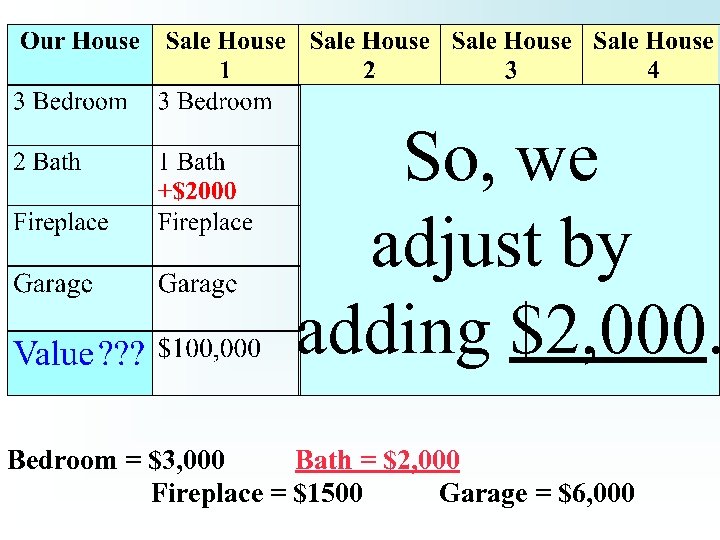 So, we adjust by adding $2, 000. Bedroom = $3, 000 Bath = $2, 000 Fireplace = $1500 Garage = $6, 000
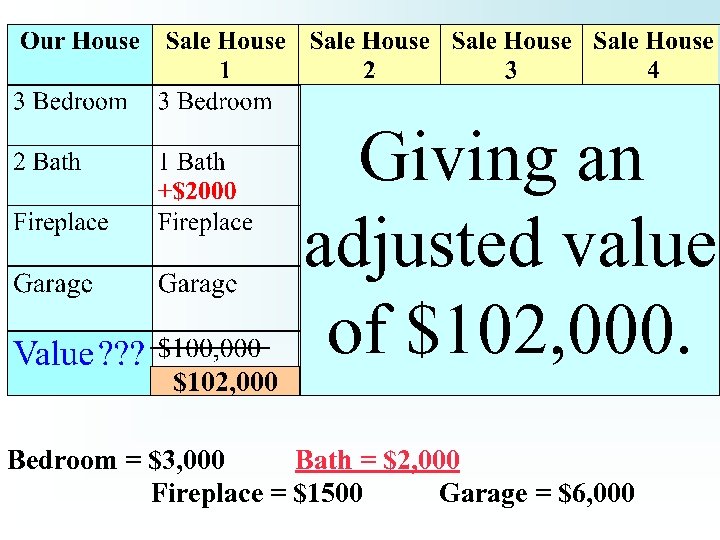 $102, 000 Giving an adjusted value of $102, 000. Bedroom = $3, 000 Bath = $2, 000 Fireplace = $1500 Garage = $6, 000
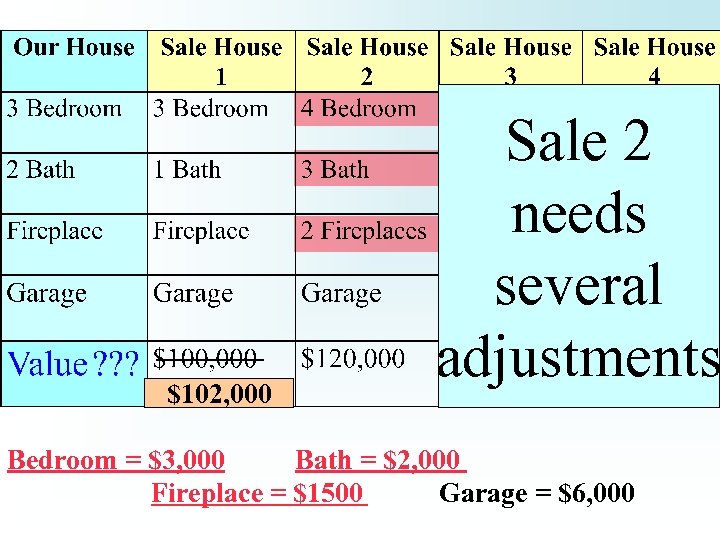 $102, 000 Sale 2 needs several adjustments Bedroom = $3, 000 Bath = $2, 000 Fireplace = $1500 Garage = $6, 000
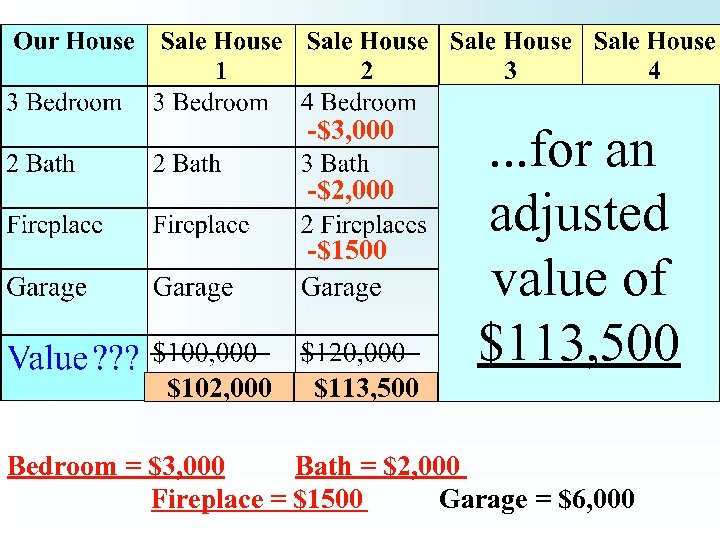 -$3, 000 -$2, 000 -$1500 $102, 000 . . . for an adjusted value of $113, 500 Bedroom = $3, 000 Bath = $2, 000 Fireplace = $1500 Garage = $6, 000
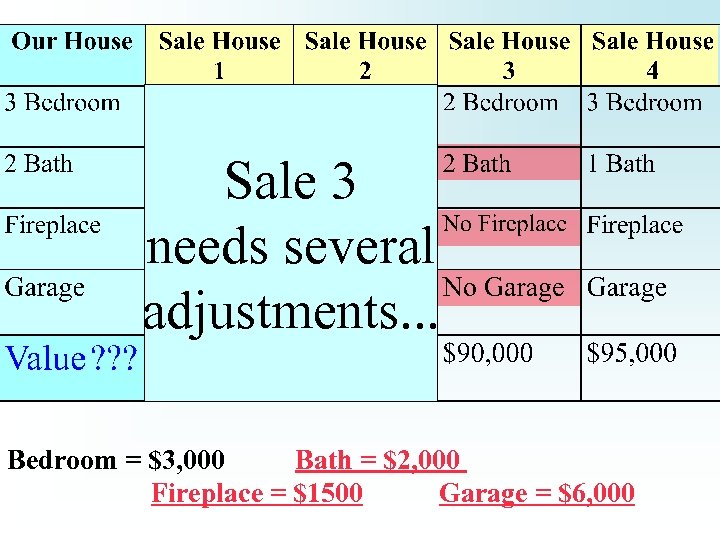 Sale 3 needs several adjustments. . . Bedroom = $3, 000 Bath = $2, 000 Fireplace = $1500 Garage = $6, 000
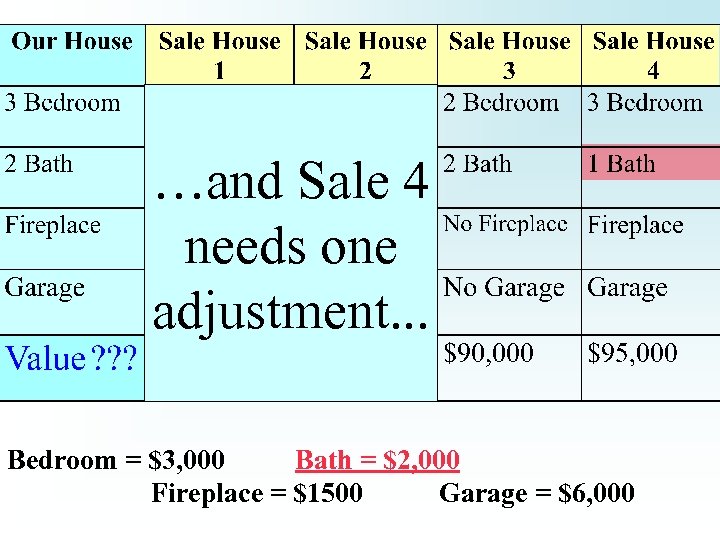 …and Sale 4 needs one adjustment. . . Bedroom = $3, 000 Bath = $2, 000 Fireplace = $1500 Garage = $6, 000
 Go ahead and adjust sales #3 and #4 on your work sheet to reflect the differences between the sales properties and “Our House”. . .
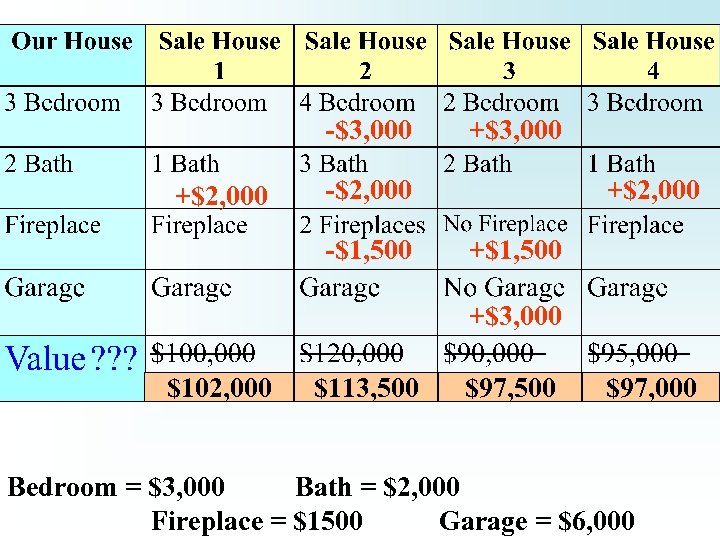 -$3, 000 +$2, 000 +$3, 000 -$2, 000 -$1, 500 +$2, 000 +$1, 500 +$3, 000 $102, 000 $113, 500 $97, 000 Bedroom = $3, 000 Bath = $2, 000 Fireplace = $1500 Garage = $6, 000
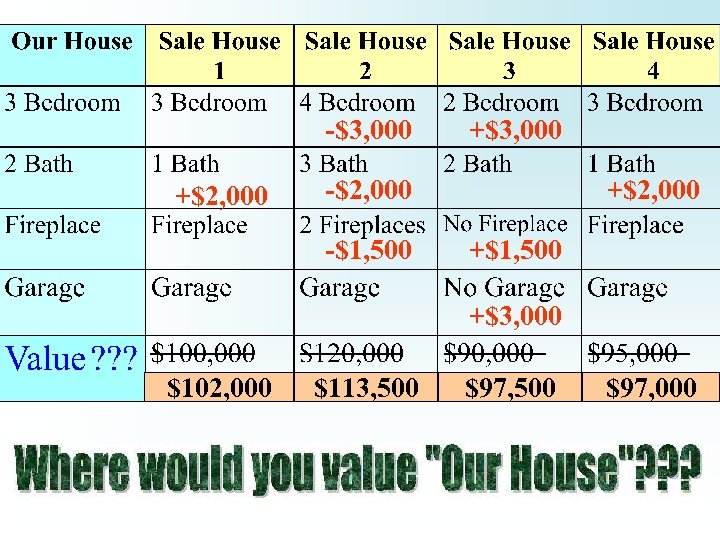 -$3, 000 +$2, 000 +$3, 000 -$2, 000 -$1, 500 +$2, 000 +$1, 500 +$3, 000 $102, 000 $113, 500 $97, 000
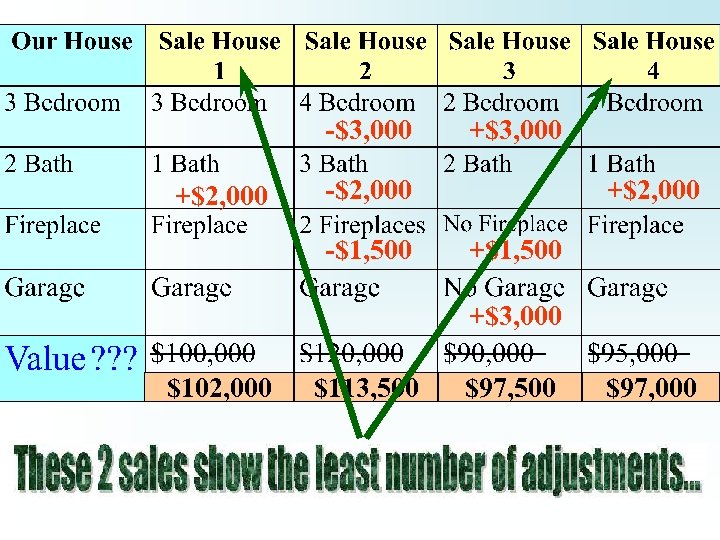 -$3, 000 +$2, 000 +$3, 000 -$2, 000 -$1, 500 +$2, 000 +$1, 500 +$3, 000 $102, 000 $113, 500 $97, 000
 -$3, 000 +$2, 000 +$3, 000 -$2, 000 -$1, 500 +$2, 000 +$1, 500 +$3, 000 $102, 000 $113, 500 $97, 000
 -$3, 000 +$2, 000 +$3, 000 -$2, 000 -$1, 500 +$2, 000 +$1, 500 +$3, 000 $102, 000 $113, 500 $97, 000
 Now that you have valued “Our House”. . .
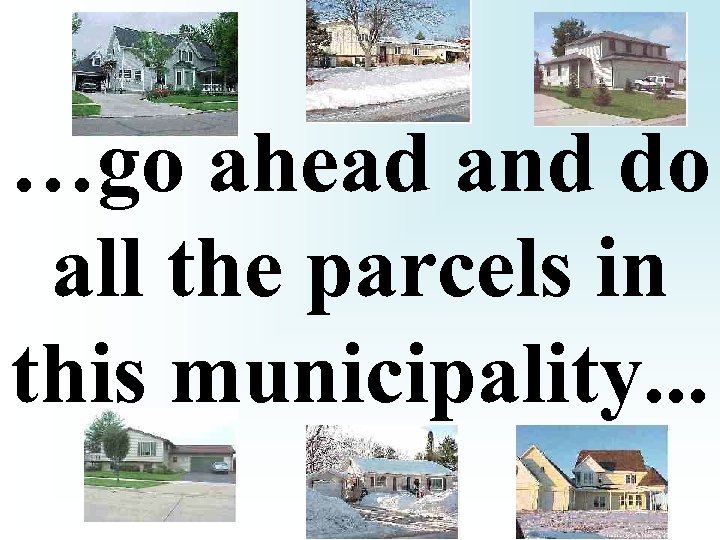 …go ahead and do all the parcels in this municipality. . .
 …remembering to account for all the other variable factors. . .
 . . . that affect an estimate of value: age, size, physical condition, quality, neighborhood, etc.
 It’s a massive and exacting job requiring much diligence and attention to detail.
 Let’s look next at the “fairness” issue:

 Equitable Values “The fair distribution of the tax levy. . .
 . . . characterized by applying valuation techniques in an even-handed manner. ”
 In other words, no single taxpayer or group of taxpayers. . .
 . . . is to be assessed in such a manner that an unjust tax burden would result.
 The goal: No one is to pay more, or less, than their fair share of the tax levy.
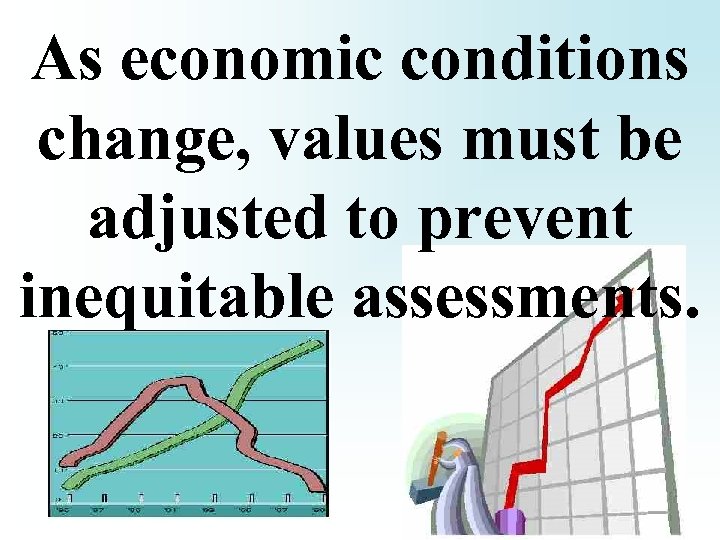 As economic conditions change, values must be adjusted to prevent inequitable assessments.
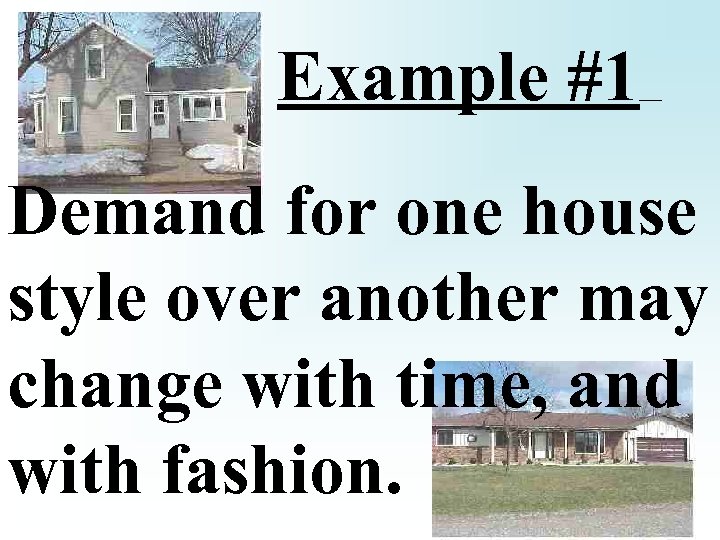 Example #1 Demand for one house style over another may change with time, and with fashion.
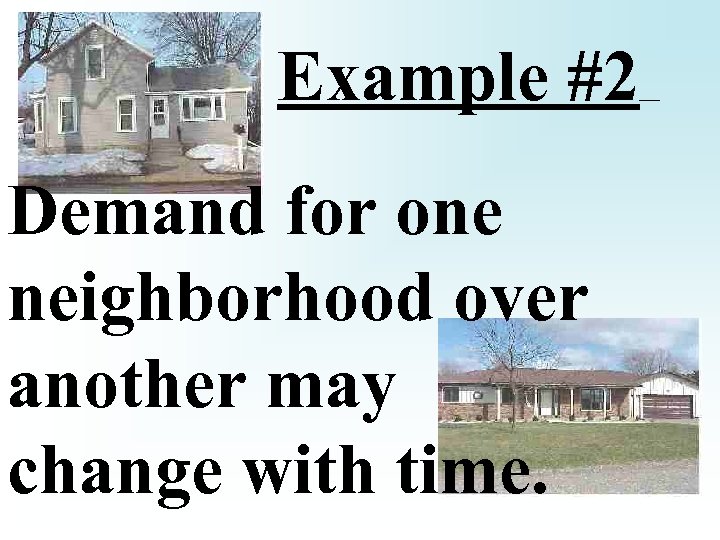 Example #2 Demand for one neighborhood over another may change with time.
 Much of the Assessor’s work goes to accounting for these constant changes!
 What happens when a property owner disagrees with the assessed value?

 Three Steps: 1) Open Book 2) Board of Review 3) Higher Appeals
 Open Book: Informal review of the assessment roll at the assessor’s office–meet with your assessor.
 Board of Review: Formal presentation of evidence of value before a board of your peers.
 Higher Appeals: Appeal in the Court System or Department of Revenue, depending on circumstances.

 State law requires assessments to be within 10% of market value once every 5 years.
 As we have seen, market conditions are constantly changing.
 Over time it becomes necessary to review all of the properties in a municipality…
 To bring all property values back into line with actual market conditions…
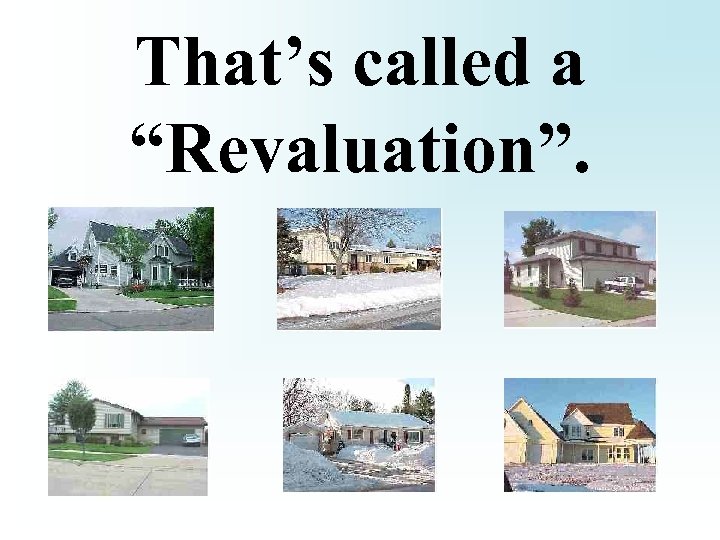 That’s called a “Revaluation”.
 In a revaluation, all properties are reviewed, along with all of the factors contributing to value.
 Assessors attempt to visit every home and business to verify property data.
 Changes in property data are noted and all properties are adjusted for varying market conditions.
 The #1 Question: How will a revaluation affect my taxes?
 We will look at two scenarios regarding the affect of revaluations on taxes:
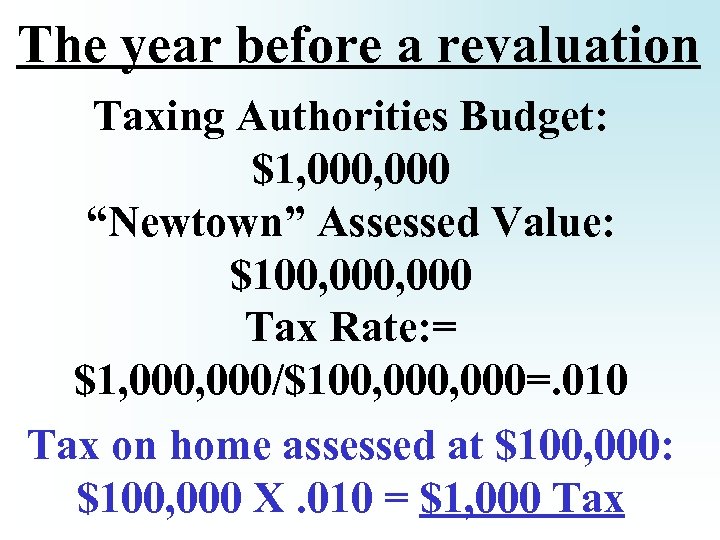 The year before a revaluation Taxing Authorities Budget: $1, 000 “Newtown” Assessed Value: $100, 000 Tax Rate: = $1, 000/$100, 000=. 010 Tax on home assessed at $100, 000: $100, 000 X. 010 = $1, 000 Tax
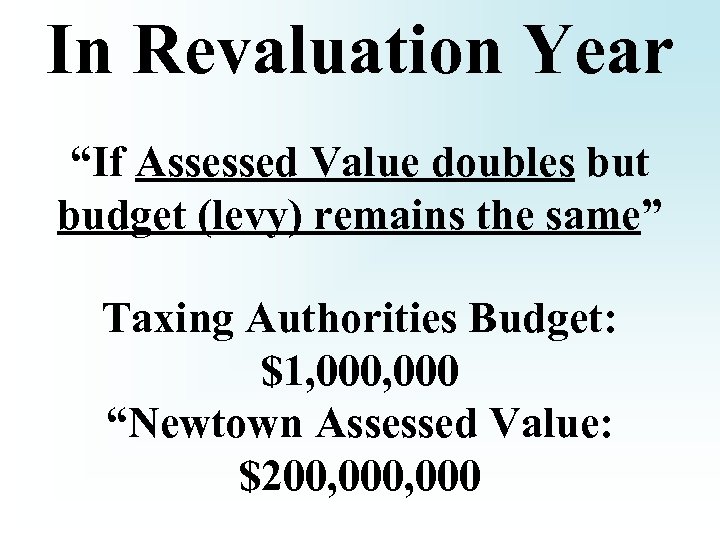 In Revaluation Year “If Assessed Value doubles but budget (levy) remains the same” Taxing Authorities Budget: $1, 000 “Newtown Assessed Value: $200, 000
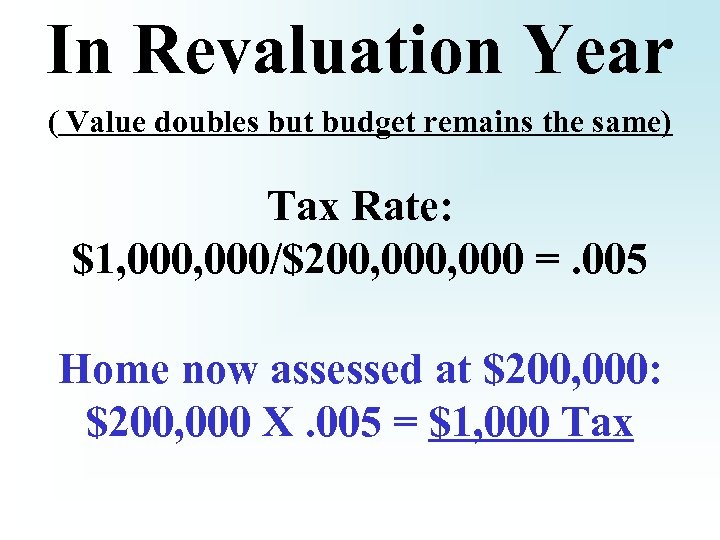 In Revaluation Year ( Value doubles but budget remains the same) Tax Rate: $1, 000/$200, 000 =. 005 Home now assessed at $200, 000: $200, 000 X. 005 = $1, 000 Tax
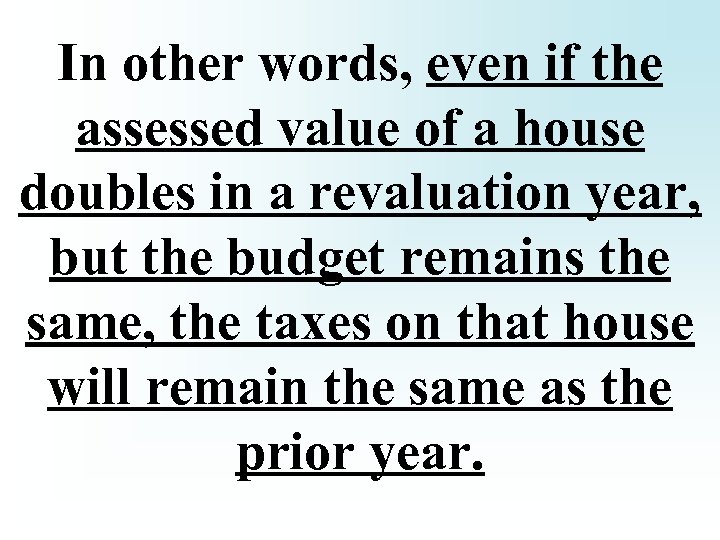 In other words, even if the assessed value of a house doubles in a revaluation year, but the budget remains the same, the taxes on that house will remain the same as the prior year.
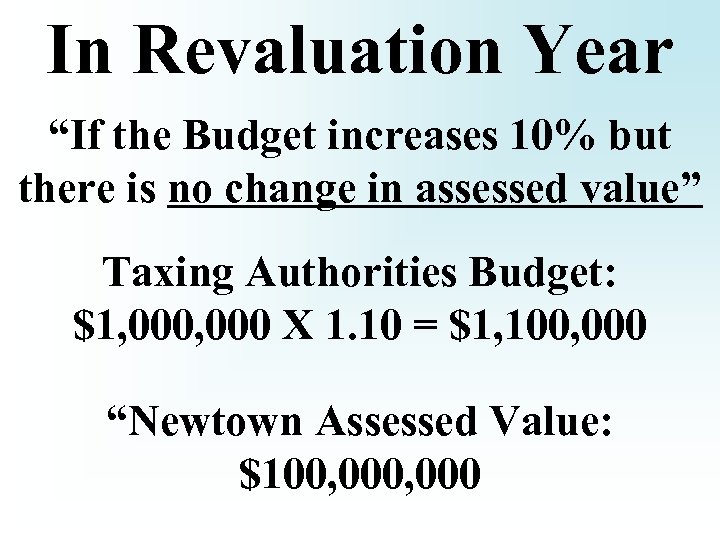 In Revaluation Year “If the Budget increases 10% but there is no change in assessed value” Taxing Authorities Budget: $1, 000 X 1. 10 = $1, 100, 000 “Newtown Assessed Value: $100, 000
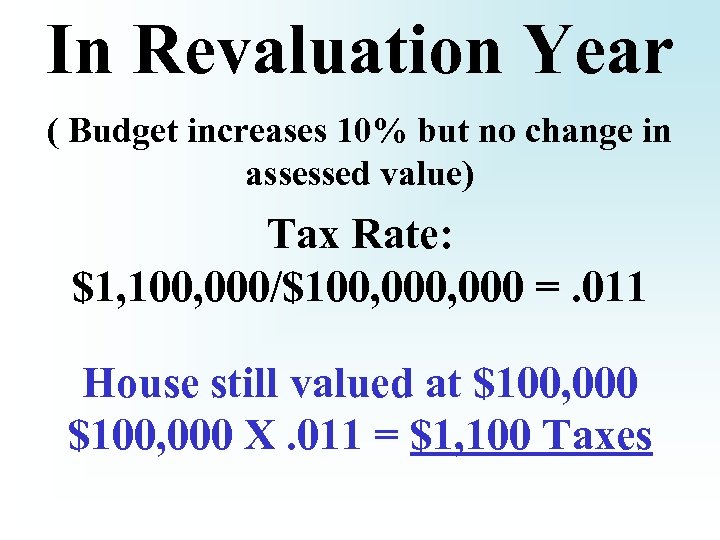 In Revaluation Year ( Budget increases 10% but no change in assessed value) Tax Rate: $1, 100, 000/$100, 000 =. 011 House still valued at $100, 000 X. 011 = $1, 100 Taxes
 In other words, even if the assessed value of a house stays the same in a revaluation year, but the budget increases, the taxes on that house will increase, under typical circumstances.
 We have reviewed the duties of Assessing Officers as they prepare the annual assessment roll.
 We have seen how State laws and regulations guide the assessing process.
 We have observed the #1 goal of the professional Assessing Officer:
 Using all of our resources, we generate assessed values. . . values
 …so everyone can pay their fair share of the budget (taxes). . .
 …and everyone can enjoy the benefits of living here!
 Thank You!