


 Скачать презентацию THE PROGRESSIVE ERA CHAPTER 8 1890 -1920
e5204b7b00098cf50e39c8d547421c08.ppt
- Количество слайдов: 27
 THE PROGRESSIVE ERA CHAPTER 8 1890 -1920
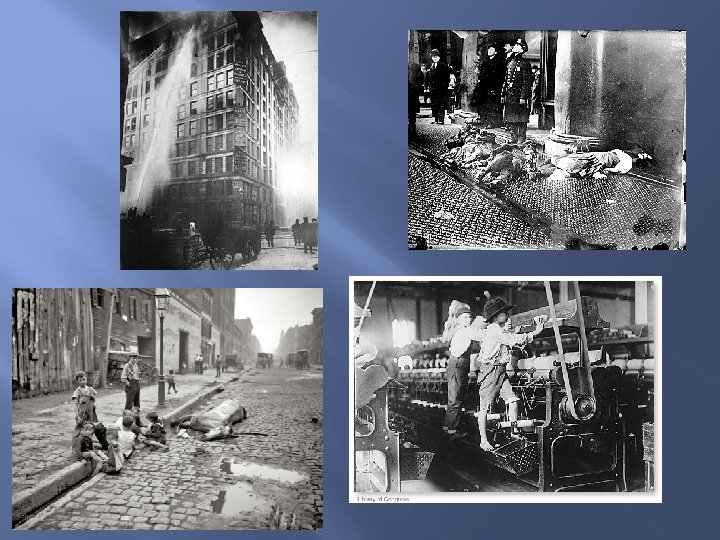
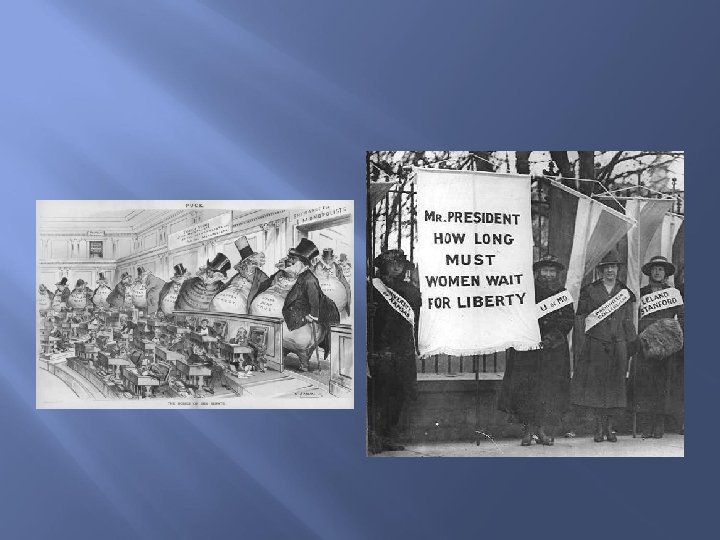
 Progressive Movement Based on the belief that new ideas and honest, efficient government could bring about social justice. Progressive ideas brought lasting reforms that still affect society today.
 Muckraker Socially conscious journalists and other writers who dramatized the need for reform Uncovered corruption in government and business Term coined by TR (a muckraker is a tool used to clean manure and hay out of animals’ stalls)
 Upton Sinclair/ The Jungle Example of muckraking. Novel by Upton Sinclair that uncovered unsanitary conditions in the meat-packing industry.
 Social Gospel Based on the belief that Christianity should be the basis for social reform. By following the Bible’s teachings about charity and justice, people could make society the “kingdom of God”
 Settlement House A community center that provided social services to the urban poor. Gave mothers classes in child care and taught English to immigrants.
 Jane Addams/ Hull House Jane Addams-leading figure in the settlement house movement. 1889 - Addams opened Hull House, a settlement house in Chicago.
 Direct Primary Election in which citizens themselves vote to select nominees for upcoming elections.
 Initiative Gave citizens the power to put a proposed new law directly on the ballot.
 Referendum Allowed citizens to approve or reject laws passed by legislators.
 Recall Gave voters the power to remove public servants from office before their terms ended.
 17 th Amendment Allowed for the direct election of US senators.
 Susan B. Anthony Leader in the quest for women’s equality. She was arrested for illegally casting a vote in the election of 1872. She believed that the 14 th and 15 th amendments should apply to women.
 Elizabeth Cady Stanton Another leader in the women’s suffrage movement. One of the organizers of the Seneca Falls convention in 1848. Believed that the first step in women’s equality was gaining the right to vote.
 19 th Amendment Constitutional amendment granting women the right to vote.
 Niagara Movement A meeting of influential African American thinkers, including Du Bois at Niagara Falls. The Niagara Movement denounced the idea of gradual progress supported by Booker T. Washington.
 NAACP National Association for the Advancement of Colored People Founded in 1909 after a race riot in Springfield, Illinois White reformers, along with members of the Niagara Movement, such as Du Bois founded the NAACP to protect African Americans, win the right to vote, and help secure civil rights in general.
 Theodore Roosevelt/ Square Deal 26 th President of the US Believed that the government should actively balance the needs of competing groups in American society. Square Deal: The name of TR’s progressive reforms. The goal of the Square Deal was to keep the wealthy and powerful from taking advantage of small business owners and the poor.
 Trustbusting TR earned the nick-name “trustbuster” because of his efforts in breaking up trusts. TR was not interested in breaking up all large companies. He saw a difference between “good” trusts and “bad” trusts.
 Meat Inspection Act Provided federal agents to inspect any meat sold across state lines and required federal inspection of meat-processing facilities. A result of the publication of The Jungle
 Pure Food and Drug Act Placed controls on food and medicine. Prohibited the manufacture, sale, or shipment of impure or falsley labeled food and drugs. Today the FDA enforces this law.
 William H. Taft TR’s successor to the presidency. Handpicked by TR to follow through with his progressive reforms, Taft proved to be a disappointment to TR and his progressive followers.
 Progressive Party/ Bull Moose Party In 1912, TR decides to run against his former friend, Taft. He breaks away from the Republican Party and forms his own party, the Progressive Party. Nick-named the “Bull Moose” party.
 16 th Amendment Constitutional amendment that gave the federal government the power to tax the income of individuals.
 Wilson/ New Freedom Woodrow Wilson, a democrat, wins the election of 1912 because of a split republican vote between Taft and TR. Also a progressive, Wilson called his program the “New Freedom”