 Скачать презентацию The Printing Culture By Quynh Dinh Mike Tae
d7f485cf9030857dbfcc104dd9690b4c.ppt
- Количество слайдов: 30



The Printing Culture By: Quynh Dinh Mike Tae Kim James Barnett
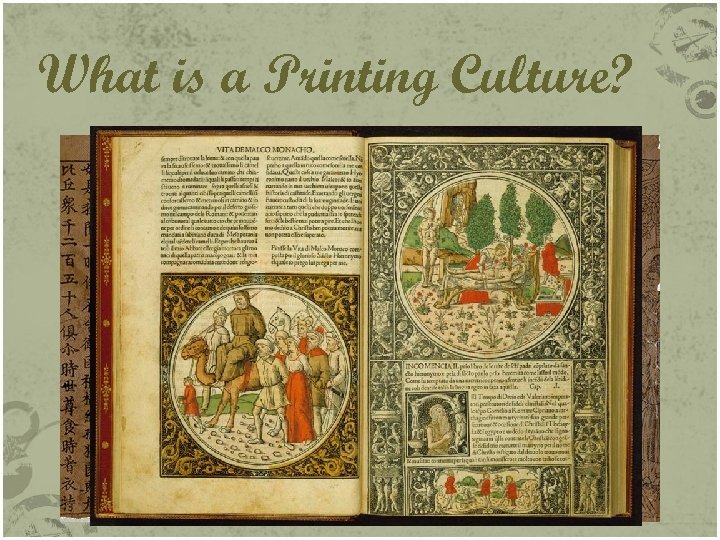
What is a Printing Culture?
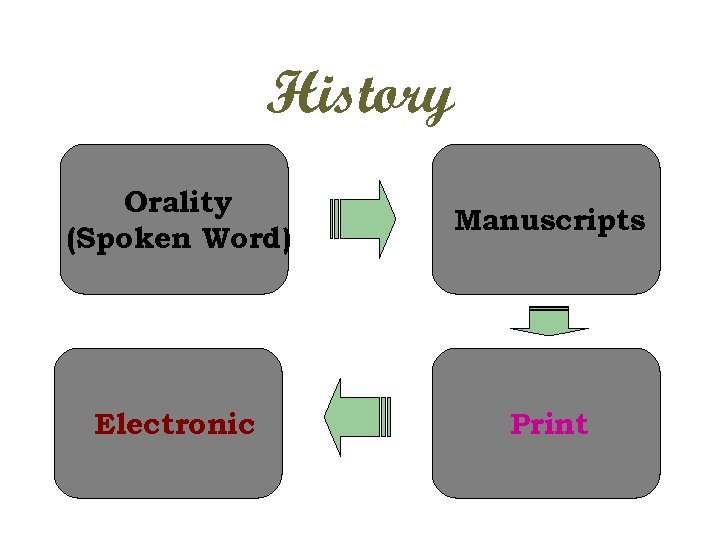
History Orality (Spoken Word) Manuscripts Electronic Print
History Orality (Spoken Word) • Life of illiterate • Memory • Stories told, not read
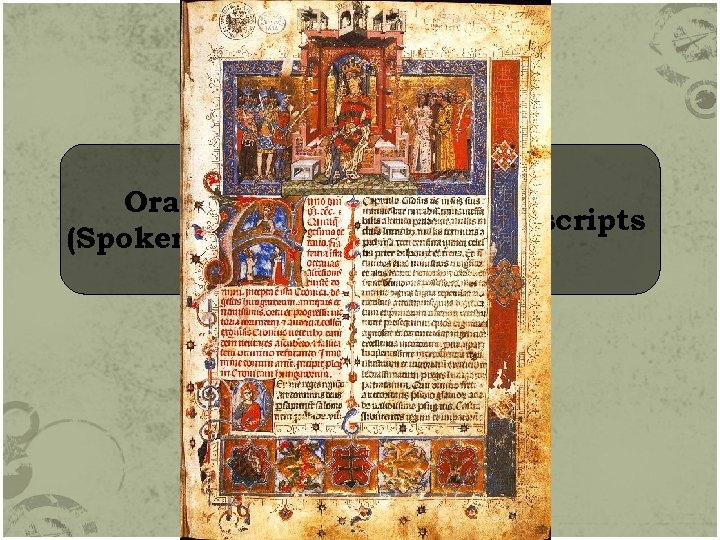
History Orality (Spoken Word) Manuscripts
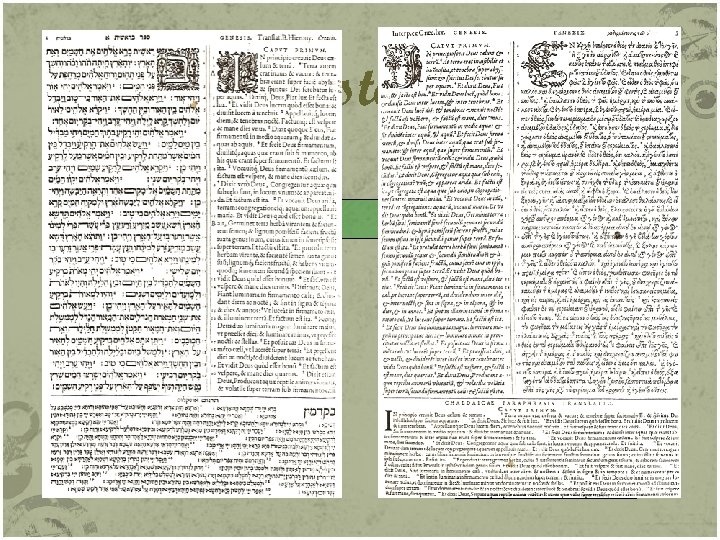
History Orality (Spoken Word) Manuscripts Print

History Orality (Spoken Word) Manuscripts Electronics Print
Changes 1440, 1455, 1490 Transition from orality was a long process Things were still read aloud until the 18 th century Printer would listen to things read to him Villagers came to hear traveling readers The Black Plague Social changes New market for books Job opportunities

"Why should old men be referred to their juniors now that it is possible for the young by diligent study to acquire the same knowledge? " ~ Jacobo Filipo Foresti The World of Aldus Manutius.
Adapting to the Printing Press successfully • Martin Luther and the Protestant Reformation • Every Protestant household must have a bible • Feelings of self importance through practice of Protestant doctrines • Protestant printers are able to print and write without fear of recrimination from their church
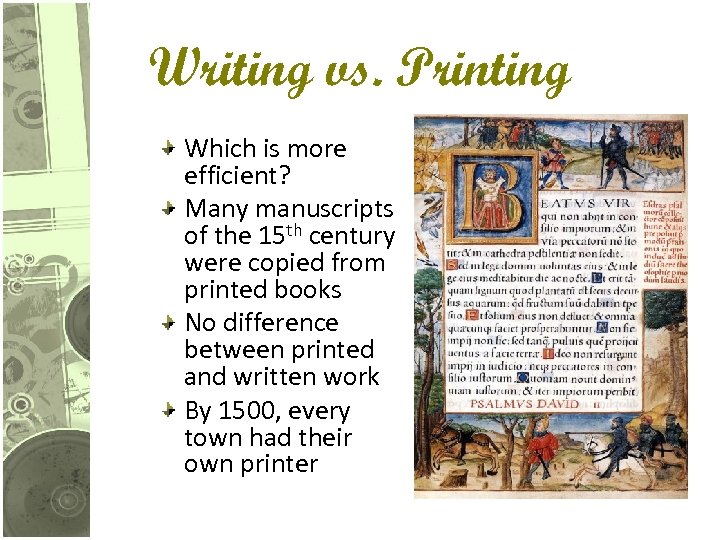
Writing vs. Printing Which is more efficient? Many manuscripts of the 15 th century were copied from printed books No difference between printed and written work By 1500, every town had their own printer
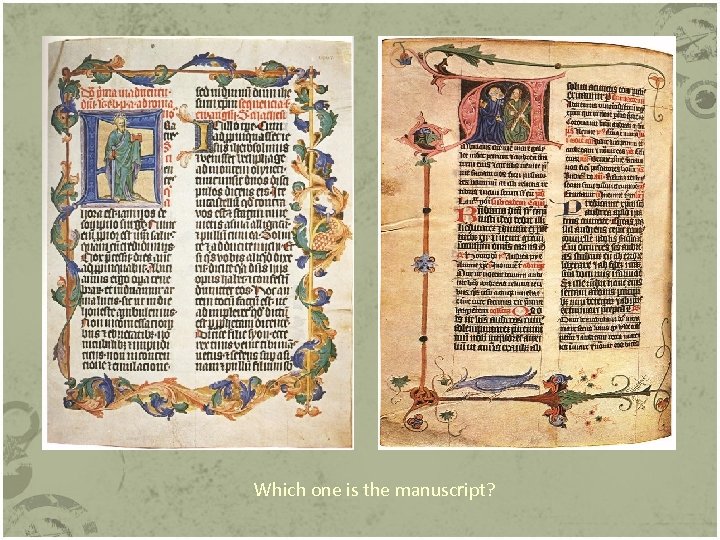
Which one is the manuscript?
Cross-cultural exchange Each occupation worked separately, each belonging to their own guild Printing brought them together Book fair Interactions between type founders, correctors, translators, copy editors, illustrators or print dealers, indexers, and others who are engaged in editorial work
Continued… • Sparked creativity and changed the relationship between intellectuals • Collaborations include: – Priests, abbots, and printers – astronomers and engravers – physicians and painters – rich merchants and local scholars
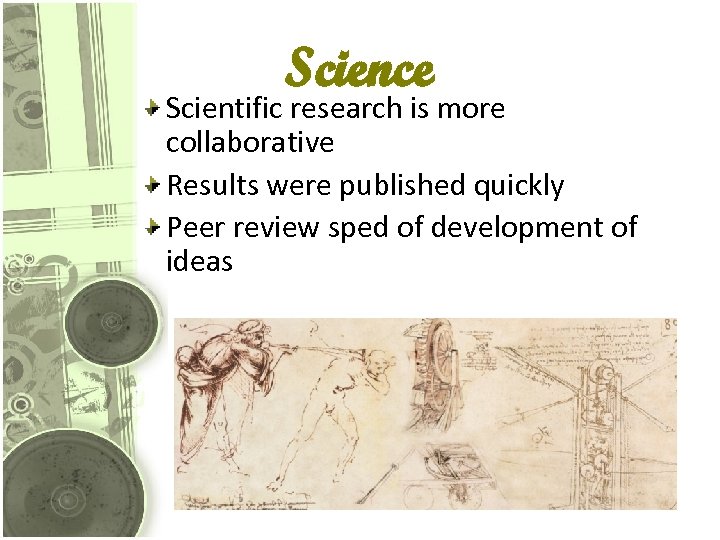
Science Scientific research is more collaborative Results were published quickly Peer review sped of development of ideas
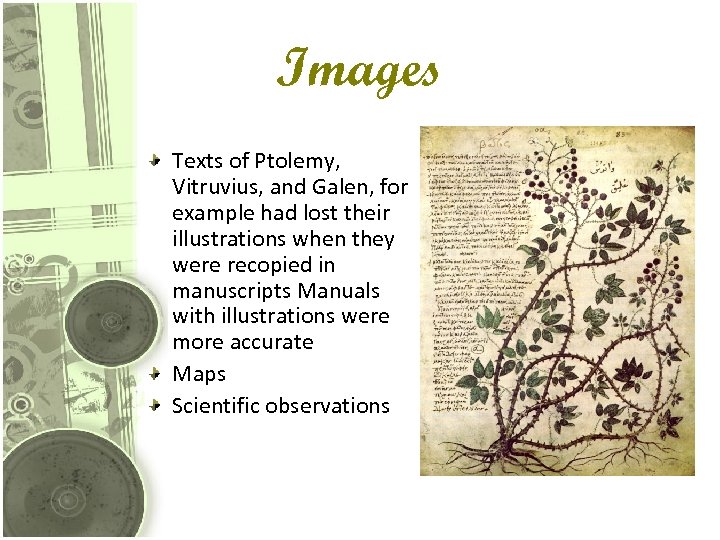
Images Texts of Ptolemy, Vitruvius, and Galen, for example had lost their illustrations when they were recopied in manuscripts Manuals with illustrations were more accurate Maps Scientific observations
Standardization • Errors in copying • "if a single compositor's error cold be circulated in great many copies, so too could a single scholar's emendation" (Eisenstein) • Harder to make identical copies by hand • Maps and diagrams
Standardization, cont. • Standardization of text – Spelling and Grammar – Less mistakes – Laws • Alphabetical order • Indexes
Commercialization of Books were 400 times cheaper - More supply than demand Merchants looked for interesting topics Paid writers Variety of books circulated How to play musical instrument Keeping an account Etiquette Manuals helping inquisitors, priests, confessors and pilgrims, Cook books Children’s picture books
"A man born in 1453, the year of the fall of Constantinople, could look back from his fiftieth year on a lifetime in which about eight million books have been printed, more perhaps than all the scribes of Europe had produced since Constantine founded his city in AD 330" ~ Michael Clapham
Transitioning to the Printing Press
Effects on Education • Distrust of received opinions in counter-renaissance Europe • Sharing and widespread availability of information now lead to new scientific discoveries • Printers becoming better educated to suit the needs of their business. • No more scribal errors, instead identical copies can now be made • Scientific methods for cataloguing and indexing research now become standard
"A serious student could now endeavor to cover a larger body of material by private reading than a student or even a mature scholar needed to master or could hope to master before printing made books cheap and plentiful" ~ Craig Thompson The Colloquies of Erasmus
Reaction of Catholic Church to the Printing Press • Church is able to use the Printing Press to better advertise themselves, becoming commercial. • Catholic censorship caused many Italian authors either to delay publishing to the point where they lost credit for the discovery; or simply did not publish at all. • Inability of Catholic Church to change with the ideas of the times aids cause of Protestants.
Positive Aspects of the Printing Press Knowledge is much more easily transported from one area to the next. Human error is cut down from the absence of ‘slavish copying’ by scribes. A new emphasis is put on learning. Knowledge is much more desirable once it is easily procurable. Transition from accepted beliefs to learned ones. Helps further the messages preached by both Protestants and Catholics alike. Indexing and scientific cataloguing become intensely important. Ability to look at many ancient texts quickly and easily. Printing was, for those who had the resources and ability, very profitable. Promoted an international exchange of information, at a previously unimaginable level.
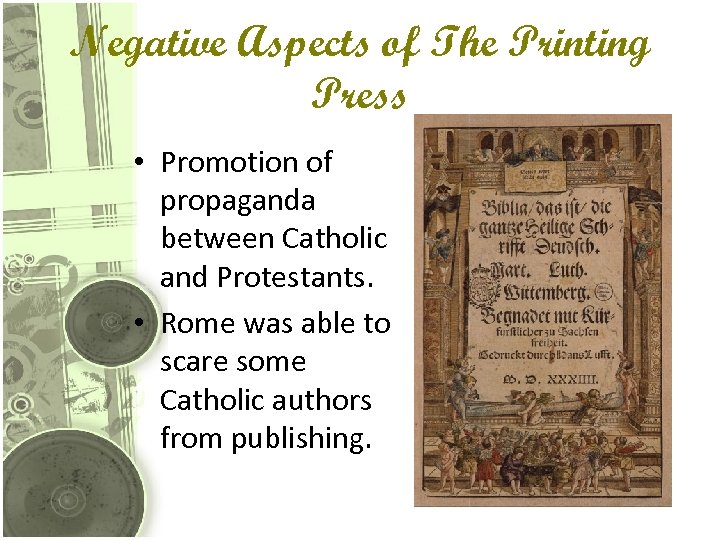
Negative Aspects of The Printing Press • Promotion of propaganda between Catholic and Protestants. • Rome was able to scare some Catholic authors from publishing.
Effects of The Printing Press Led to significant scholastic discoveries, especially in terms of astronomy. New technology is created because of new desire to explore more of the natural world. Allowed for identical copies of manuscripts to be published in mass quantities for the first time Entertainment was now literally placed in the palms of the people. Protestants
Effects of the Printing Press, cont. Mass Culture People were reading, hearing, and wearing the same things Copyright and plagiarism Government tried to control printers 1 copy vs. 1000 copies Censorship Give certain printers special rights to print books Efforts were useless books with different title pages, authors, ect… were smuggled all over Europe

What will the future hold?
 Скачать презентацию The Printing Culture By Quynh Dinh Mike Tae
d7f485cf9030857dbfcc104dd9690b4c.ppt