


 Скачать презентацию The President Constitutional Requirements Qualifications Art
f8cf14568442d933ed912542ff450483.ppt
- Количество слайдов: 25
 The President
 Constitutional Requirements Qualifications • Art. II • “natural-born citizen” • 14 years of US residency • 35 years of age • THAT’S IT!!! • What other kinds of things do you think the president should have?
 Military Power • Commander in Chief (civilian control) • Prez can send armed forces abroad – Congress has not declared war since 12/8/1941 – Korea, Vietnam, Iraq? – all Constitutional • War Powers Resolution, 1973 – Prez must report to Congress within 48 hours after deployment – If Congress does not OK in 60 days, must withdraw – Check on president, attempt to limit president
 Diplomatic Power • Create treaties with foreign nations with Senate permission, 2/3 Senate approval (advice and consent) • Executive agreement – not permission needed, deal between heads of state, not binding to next administration
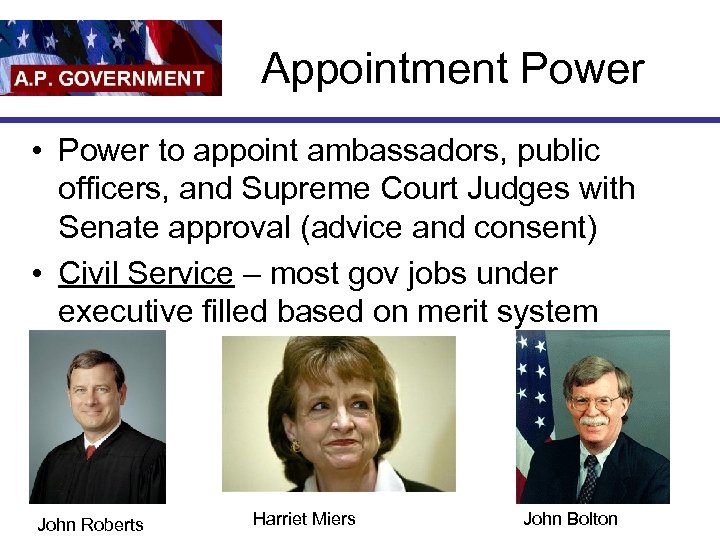 Appointment Power • Power to appoint ambassadors, public officers, and Supreme Court Judges with Senate approval (advice and consent) • Civil Service – most gov jobs under executive filled based on merit system John Roberts Harriet Miers John Bolton
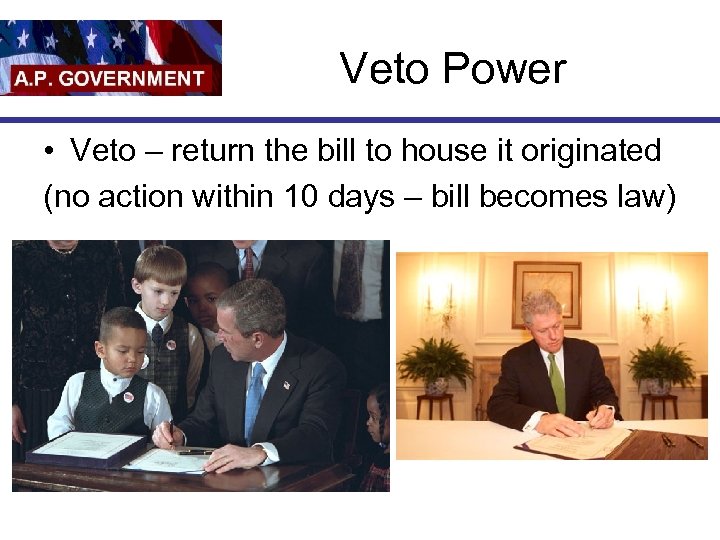 Veto Power • Veto – return the bill to house it originated (no action within 10 days – bill becomes law)
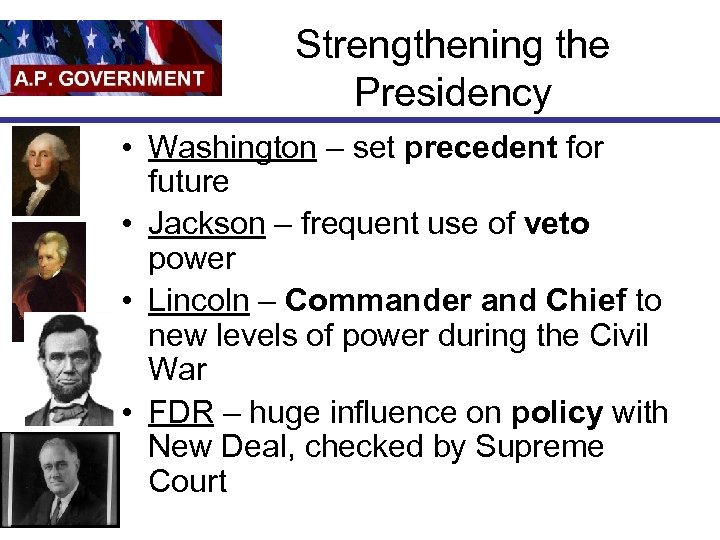 Strengthening the Presidency • Washington – set precedent for future • Jackson – frequent use of veto power • Lincoln – Commander and Chief to new levels of power during the Civil War • FDR – huge influence on policy with New Deal, checked by Supreme Court
 Executive privilege • The right to privacy of conversation between advisors and prez Why? 1. Separation of powers prevents branches from sharing internal workings 2. Privacy is needed for candid advice from advisors with out political pressure
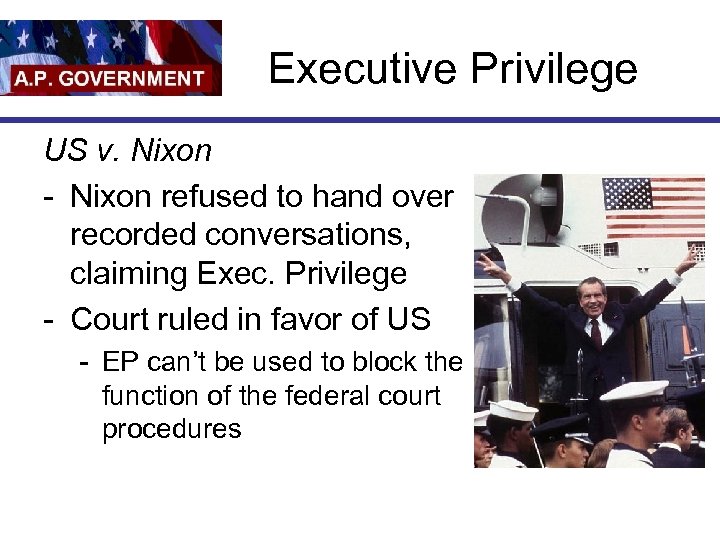 Executive Privilege US v. Nixon - Nixon refused to hand over recorded conversations, claiming Exec. Privilege - Court ruled in favor of US - EP can’t be used to block the function of the federal court procedures
 Executive Orders • Prez issues executive orders that have force of law • Ex – power to enforce the Constitution, treaties, laws, etc. – FDR – allowed Japanese internment – Truman – integrate military – Eisenhower – desegregate public schools
 More about Legislative Powers • State of the Union – Setting the legislative agenda (telling Congress what bills Prez wants to see passed) • One strategy to get legislation passed is to appeal to the public directly for support. – This strategy of going public (also known as using the "bully pulpit“) • is based on the expectation that public support will put pressure on. . . politicians to give the president what he wants • Presidential approval ratings (measured through surveys) impact the president's ability to influence the legislative agenda. – During the last year of his or her second term, a president is known as a "lame duck. “ • Veto Power • Issue of Divided Government
 Gridlock • Divided government – Prez and Congress majority represent different political parties • “gridlock” – the inability to accomplish goals – Con – government operation shuts down – Pro – slows the decision making process, example of check and balance
 Vice President • Preside over the Senate, tie breaking vote • Takes over the presidency if the President cannot finish term • 12 th Amendment – voters choose President and VP together – Previous to 1804, the losing candidate became VP
 White House Office • “Pyramid” model – assistants answer to a hierarchy up to a chief of staff (few top advisors to prez, prez free but isolated) • “Circular” model – direct contact with staff (many top advisors to prez, prez busy but connected) • Significance: determines what aids have the most influence on presidential decisions
 Executive Office of the President • Contains agencies and offices that advise the president on current issues • The White House Office keeps presidential schedule, writes speeches, and maintains relations with Congress, the press, and the public. • National Security Council – advises on military and foreign policy • Office of Management and Budget – prepares national budget, largest office • National Economic Council – advises with economic planning
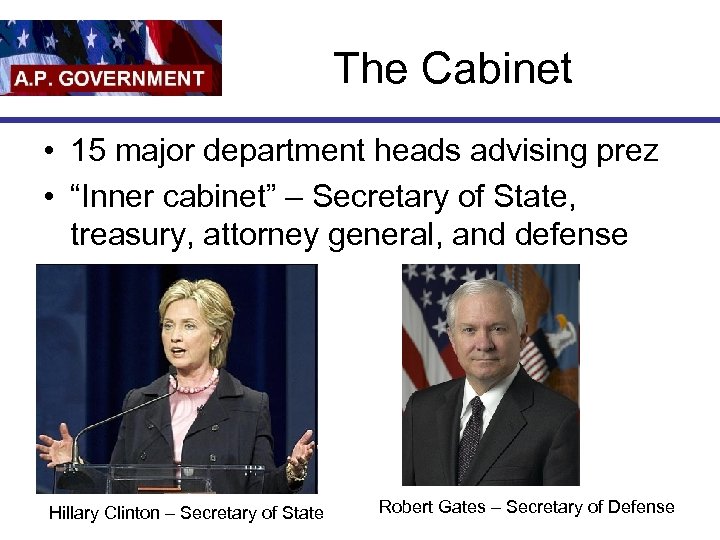 The Cabinet • 15 major department heads advising prez • “Inner cabinet” – Secretary of State, treasury, attorney general, and defense Hillary Clinton – Secretary of State Robert Gates – Secretary of Defense
 Presidential Disability and Succession • 22 nd Amendment – limited President to 2 terms, serving no more than 10 years • 25 th Amendment – If the VP office is vacated, then the President can select a new VP
 Impeachment • House impeaches, Senate tries the prez, Chief Justice presides over the trial • Two presidents impeached, neither removed (Andrew Johnson, Bill Clinton)
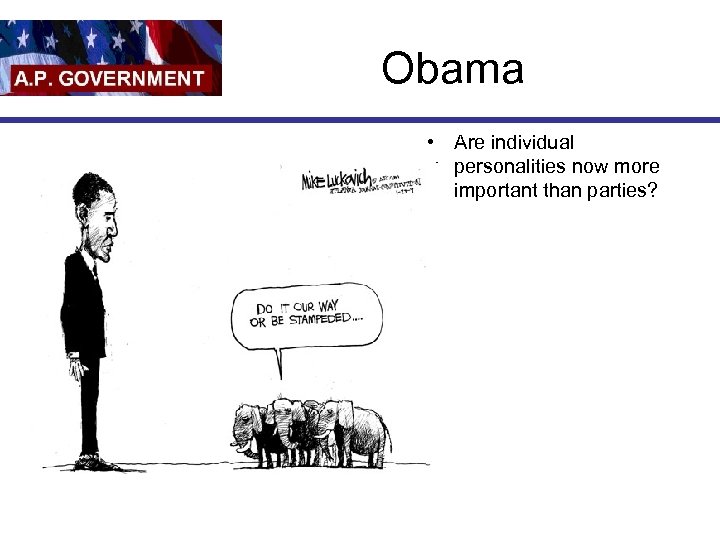 Obama • Are individual personalities now more important than parties?
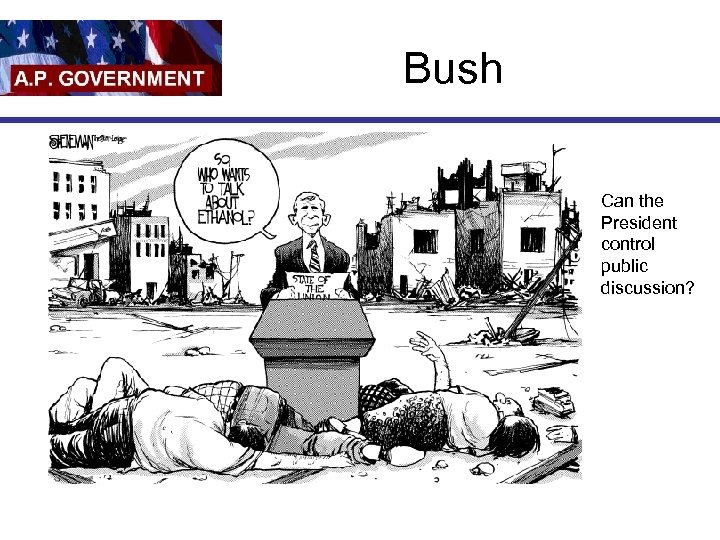 Bush Can the President control public discussion?
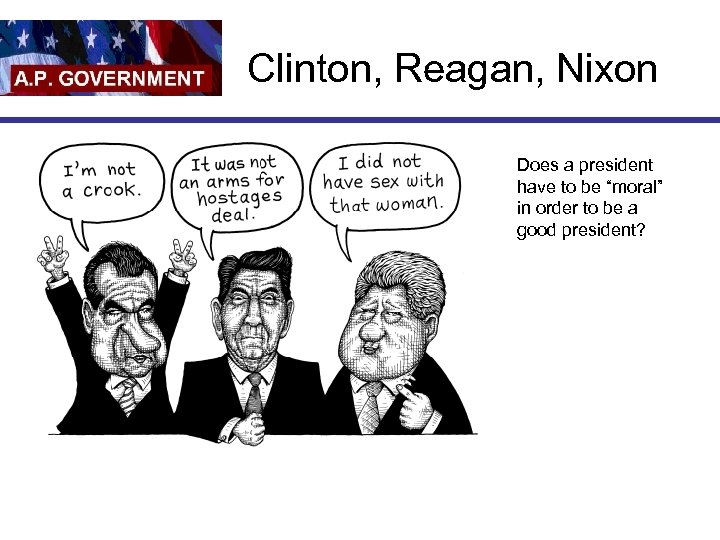 Clinton, Reagan, Nixon Does a president have to be “moral” in order to be a good president?
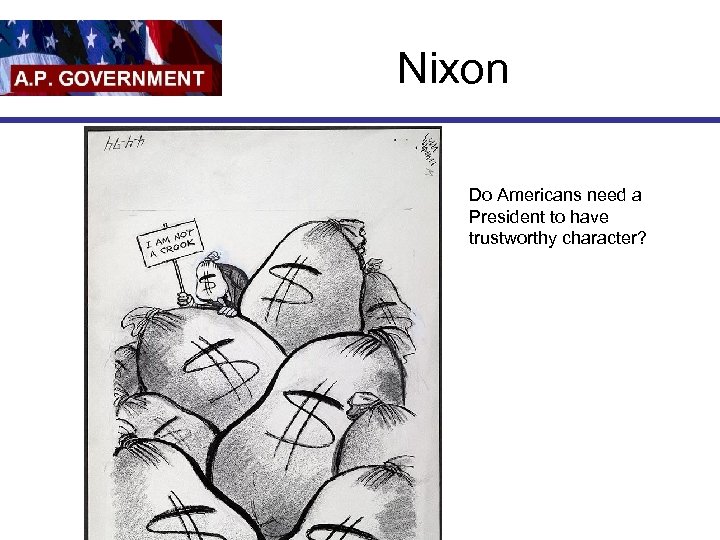 Nixon Do Americans need a President to have trustworthy character?
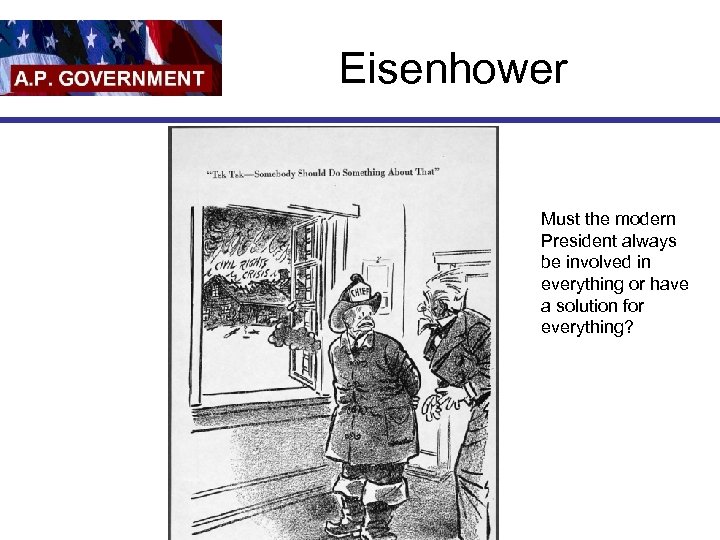 Eisenhower Must the modern President always be involved in everything or have a solution for everything?
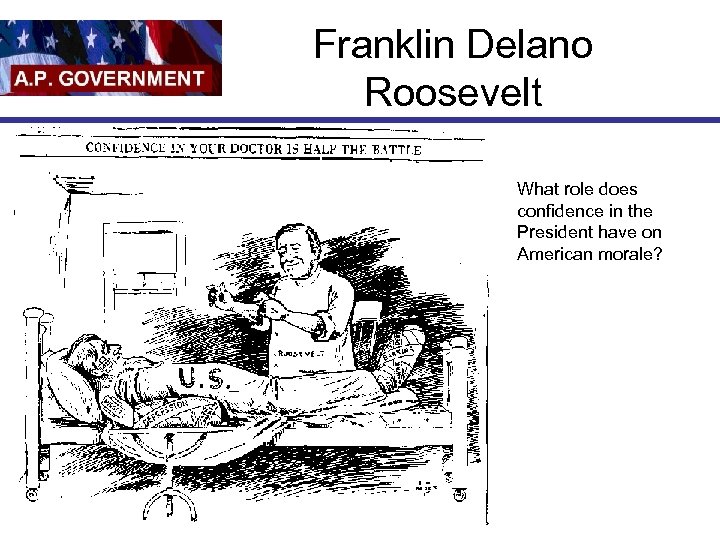 Franklin Delano Roosevelt What role does confidence in the President have on American morale?
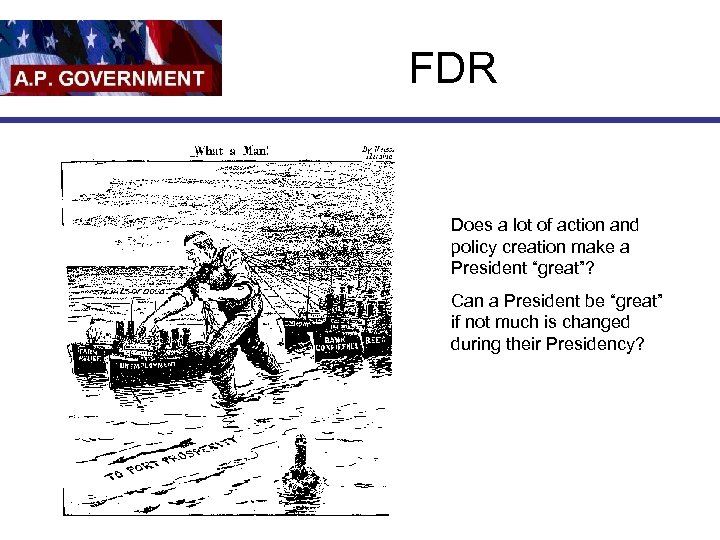 FDR Does a lot of action and policy creation make a President “great”? Can a President be “great” if not much is changed during their Presidency?