


 Скачать презентацию The Presidency of Richard Nixon Nixon was
5a33aa474f6a2b387c4e2688b6feb012.ppt
- Количество слайдов: 30
 The Presidency of Richard Nixon
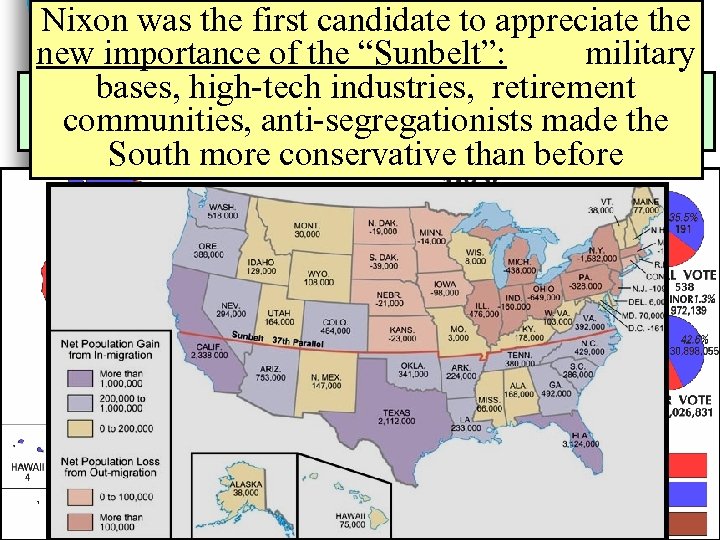 Nixon was the first candidate to appreciate the The Republican Resurgence new importance of the “Sunbelt”: military Nixon claimed to represent the “silent majority” ■bases, high-tech industries, benefited In 1968, Republicans retirement communities, Vietnam disaster protest who worked, anti-segregationists made the from the paid taxes, & did not & South more conservative than before division in the Democratic party: –Richard Nixon (R) ran as the one candidate who could restore order in America –Humphrey (D) was plagued by anti-war protesters –George Wallace (3 rd) attacked blacks & liberals
 The End of an Era ■ The presidential election of 1968 ended 30 years of: –Liberal reform—Americans reform began to favor conservative political leaders –Activist foreign policy—Vietnam policy proved that Containment failed to be applied to global scale ■ A “silent majority” seemed fed up with protest, violence, long hair, drug use, & sexual promiscuity
 Foreign Policy Nixon hoped to a relaxing ■ Nixon proved for be an effective of Cold War tensions foreign-policy president: –Most foreign policy decisions were made by Nixon & National Security Advisor Henry Kissinger ■ Developed a plan for détente: détente –An “honorable” exit from Vietnam –Using U. S. trade to induce cooperation from the USSR –Improved relations with China
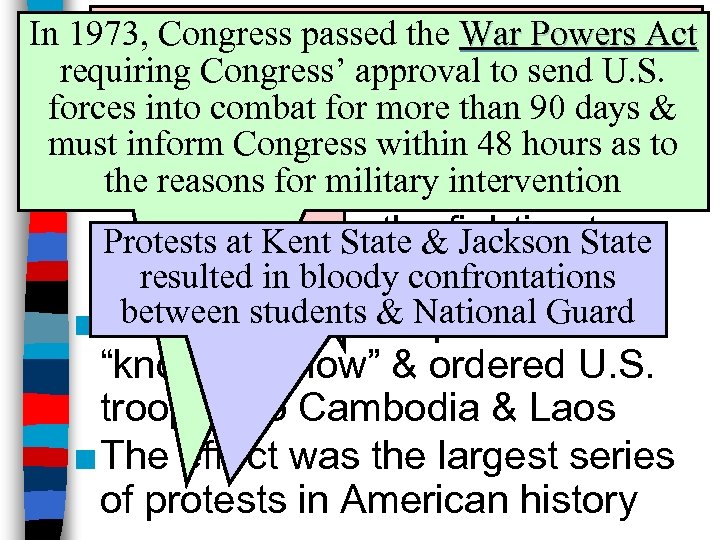 These bombings were conducted without In 1973, Congress passed the War Powers Act Ending the Vietnam War the Congress’ approval to send U. S. requiringconsent or approval of Congress ■ Nixon’s plan for an “honorable forces into combat for more than 90 days & peace” was “Vietnamization”: Vietnamization must inform Congress within 48 hours as to the reasons for military intervention –Gradual withdraw of U. S. troops –Handing over the Jackson to Protests at Kent State &fighting State South Vietnamese troops resulted in bloody confrontations between students hoped for a ■ Privately, Nixon& National Guard “knockout blow” & ordered U. S. troops into Cambodia & Laos ■ The effect was the largest series of protests in American history
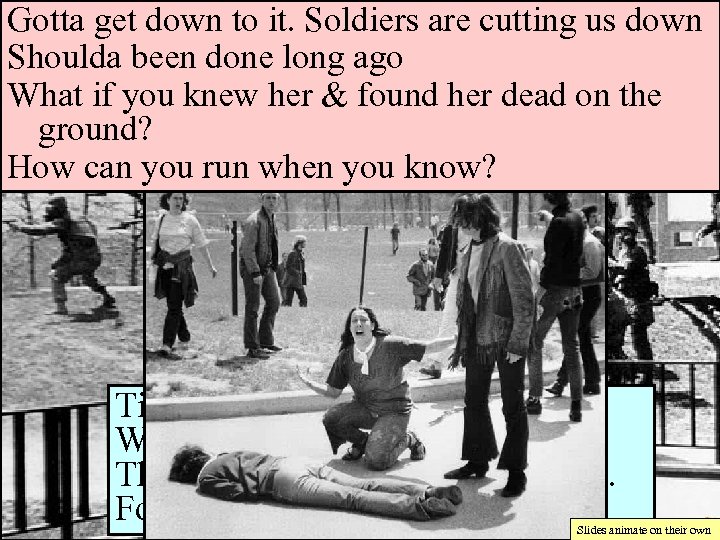 Gotta get down to it. Ohio student protests Kent State, Soldiers are cutting us down Shoulda been done long ago What if you knew her & found her dead on the ground? How can you run when you know? Tin soldiers and Nixon coming. We're finally on our own. This summer I hear the drumming. Four dead in Ohio. Slides animate on their own
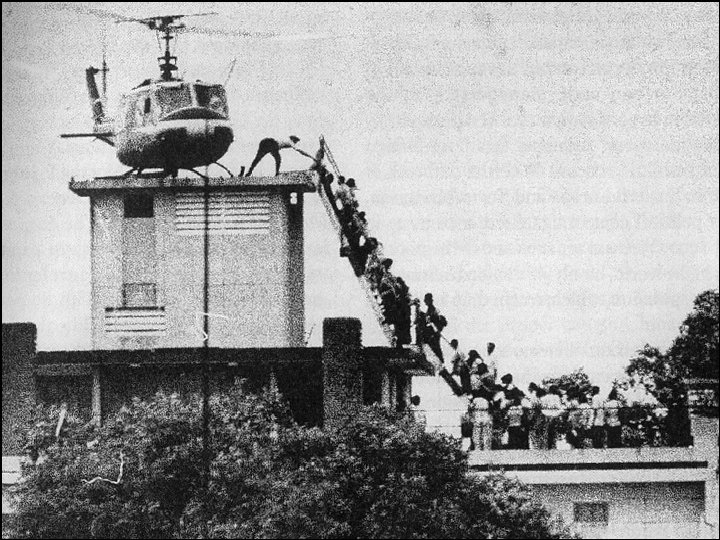
 Ending the Vietnam War ■ In January 1973, the U. S. & North Vietnam agreed to a cease fire –By March 1973, U. S. troops were withdrawn –By 1975, the South Vietnamese capital of Saigon fell & Vietnam became unified under the Communist government –Vietnam proved Containment could not be sustained
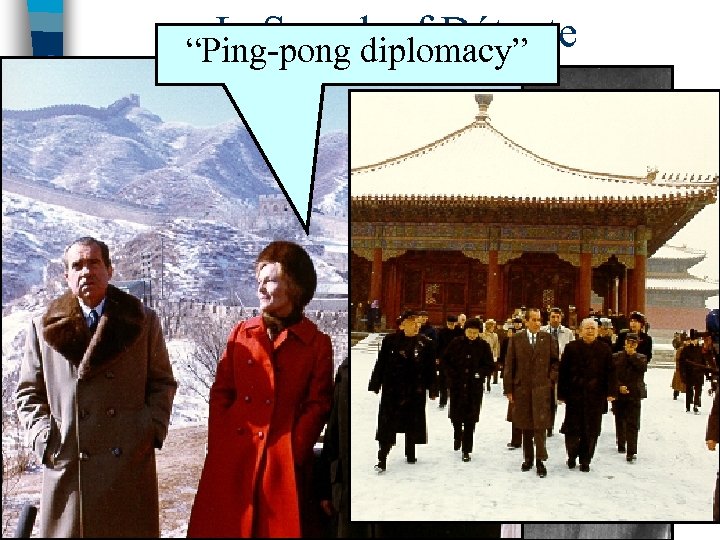 In Search of Détente “Ping-pong diplomacy” ■ In Feb 1972, Nixon became 1 st U. S. president to visit & recognize the People’s Republic of China: –These improved Sino-American relations helped eased Cold War tensions & forced the USSR to consider diplomacy with the U. S. –Presented the U. S. with its 1 st economic access to China
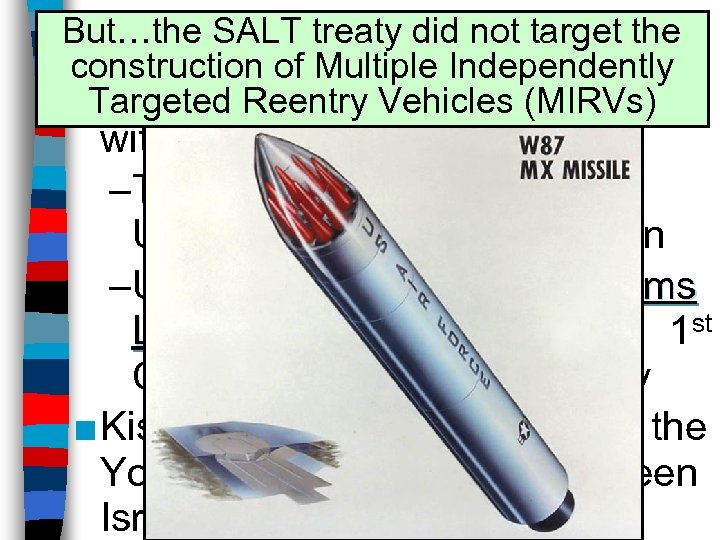 But…the SALT treaty did not target the In Search of Détente construction of Multiple Independently ■ Nixon traveled to Moscow to meet Targeted Reentry Vehicles (MIRVs) with Soviet leader Brezhnev: –The U. S. agreed to sell the USSR $1 billion worth of grain –USSR agreed to Strategic Arms Limitation Talks (SALT), the 1 st Cold War nuclear arms treaty ■ Kissinger negotiated an end to the Yom Kippur War in 1973 between Israel & Egypt
 Nixon’s Covert Operations ■ Despite Nixon’s public détente with the USSR & China, most foreign policy was covert: covert –CIA funded the leaders of brutal gov’ts in Iran, South Africa, the Philippines, & Nicaragua –CIA assassinated Chilean president Salvador Allende
 Nixon’s Domestic Policy ■ Nixon entered office asjustice Replaced retiring chief a moderate who kept LBJ’s Great Earl Warren with Warren Burger Society in place Nominated Harry Blackmun, Lewis Powell, & William Rehnquist –But, Nixon shifted responsibility for social problems to state & local governments –Nixon reshaped the Supreme Court along conservative lines when 4 justices retired
 Nixon’s Domestic Policy ■ Nixon oversaw the creation of: –Environmental Protection Agency –Occupational Safety & Health Administration (OSHA) –A failed plan to replace welfare benefits with a minimum income –Quotas for minority construction firms for gov’t projects –Ended the gold standard in 1971
 Nixonomics ■ The economy coineda“Nixonomics” Democrats was challenge: to describe Nixon’s failed plan –Nixon inherited inflation & deficit spending from the Vietnam War This “Great Nixon Turnaround” ended the recession in government –Nixon’s decrease spending & increase in interest rates led to the 1 st American recession since 1958 ■ In 1971, Nixon responded with a 90 -day freeze on wages & prices & imposed a 10% tax on imports
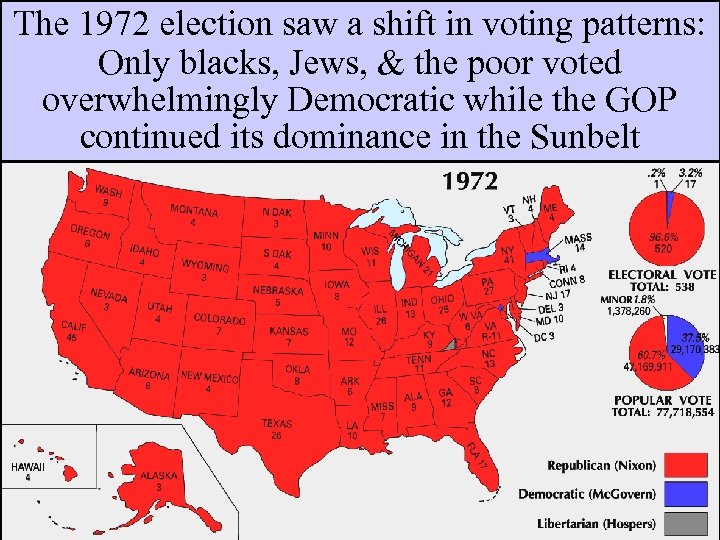 The 1972 election saw a shift in voting patterns: The Election of 1972 Only blacks, Jews, & the poor voted ■ In 1972, Nixon ran for re-election overwhelmingly Democratic while the GOP continued its dominance in the Sunbelt –Democrat George Mc. Govern was labeled an “outsider” who supported “acid, abortion, & amnesty” –Nixon won in the 4 th largest margin of victory in history ■ But…the Watergate scandal ended the Nixon presidency
 Watergate: A Crisis of Democracy
 The Watergate Scandal ■ In 1972, a break-in at Democratic candidate George Mc. Govern’s headquarters revealed a wellfunded plan of espionage & sabotage by the Committee to Re. Elect the President (CREEP) ■ The Watergate cover-up led to Nixon’s resignation & a changed American perception of the gov’t & the role of the media
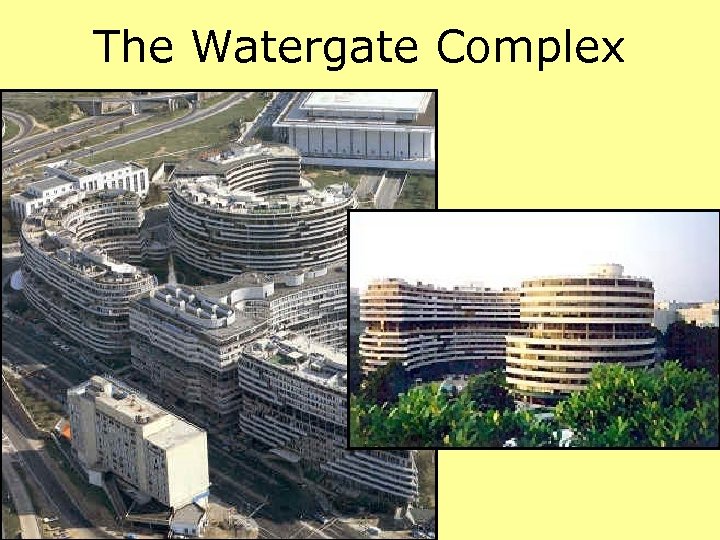 The Watergate Complex
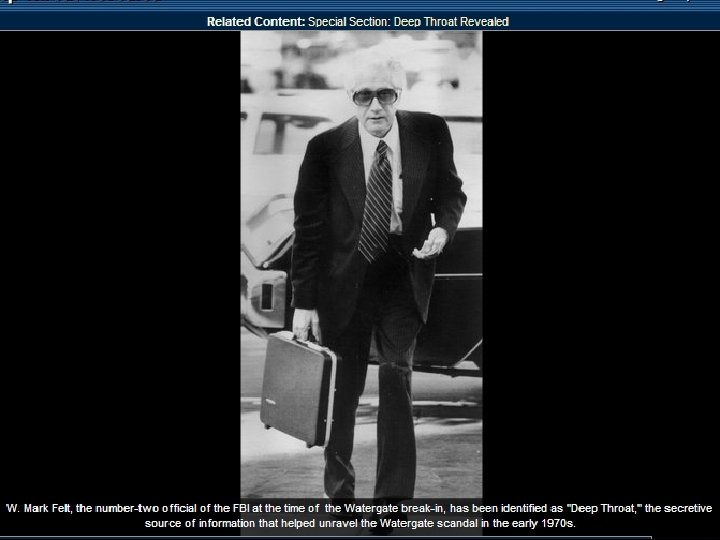
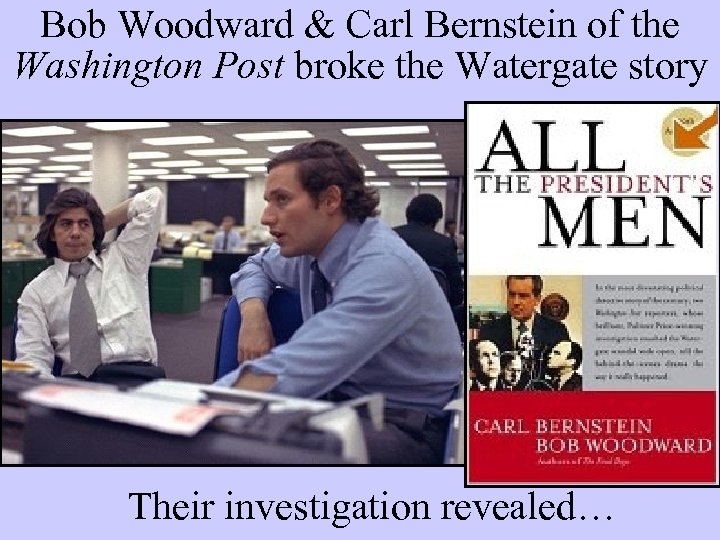 Bob Woodward & Carl Bernstein of the Washington Post broke the Watergate story Their investigation revealed…
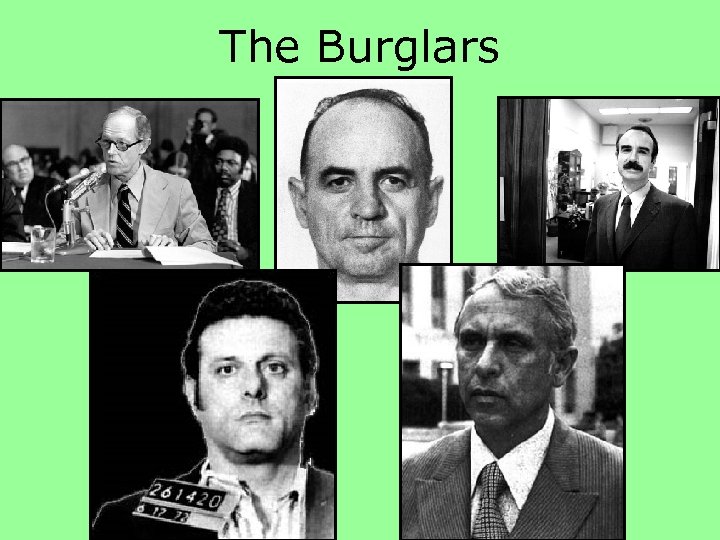 The Burglars
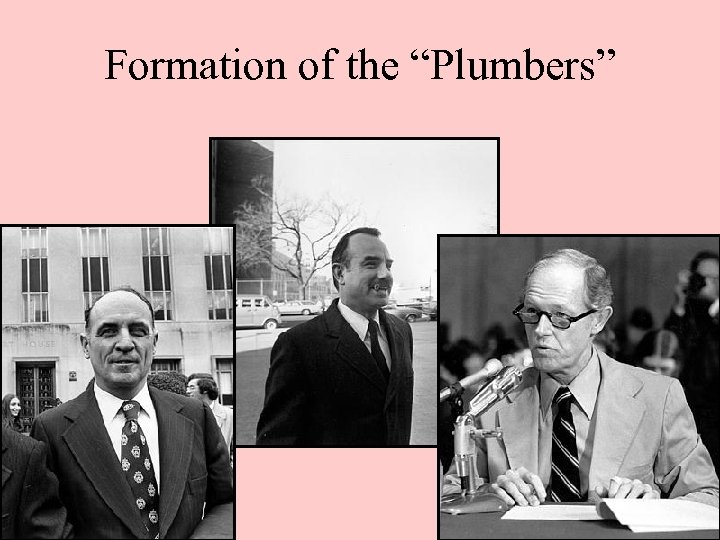 Formation of the “Plumbers”
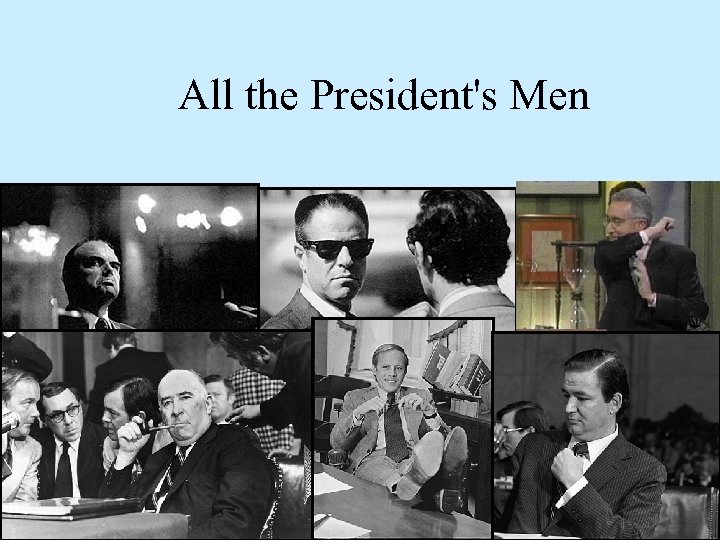 All the President's Men
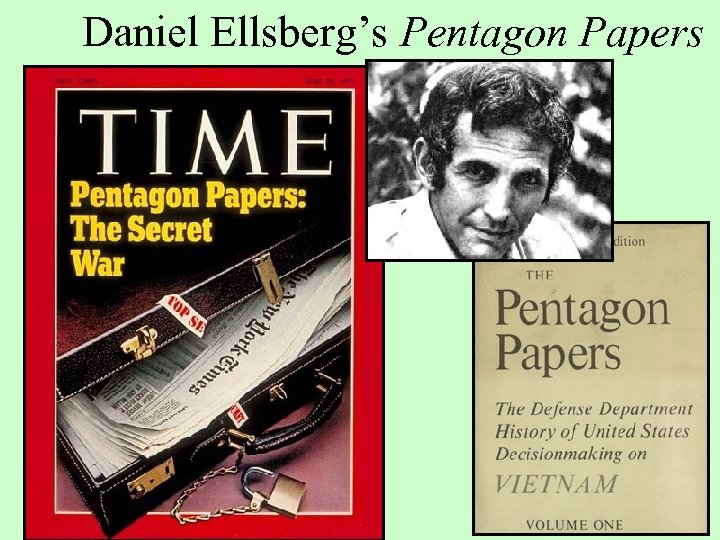 Daniel Ellsberg’s Pentagon Papers
 Nixon’s Enemies List ■ Jane Fonda ■ Paul Newman ■ Edward Kennedy ■ Joe Namath ■ Daniel Schorr ■ Bill Cosby ■ Several 100 more U. S. citizens
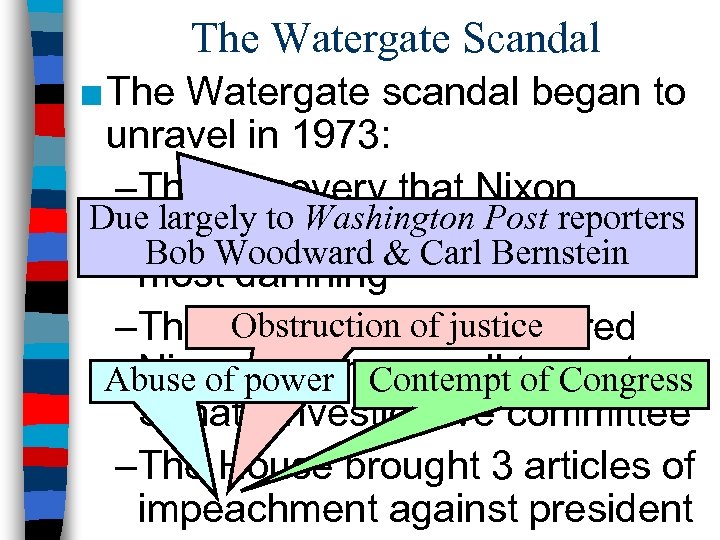 The Watergate Scandal ■ The Watergate scandal began to unravel in 1973: –The discovery that Nixon Due largely to Washington Post reporters recorded conversations proved Bob Woodward & Carl Bernstein most damning Obstruction of justice –The Supreme Court ordered Nixon to turn over all of Congress Abuse of power Contempt tapes to a Senate investigative committee –The House brought 3 articles of impeachment against president
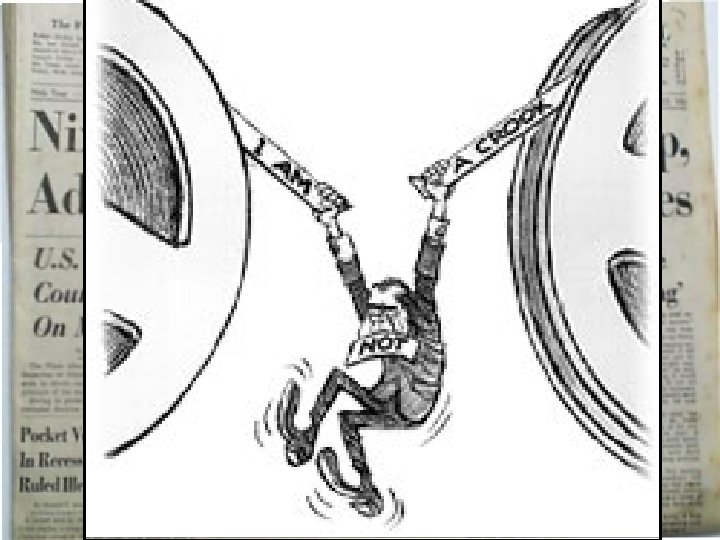 Stonewalling
 The began the trend of a stronger Teddy Roosevelt. Watergate Scandal president than Congress; a trend thatscandal: continued ■ Impact of theth. Watergate Nixon throughout the 20 century until – 26 members of Nixon’s After Nixon, Congress enacted campaign administration easier for the to jail were sent Justice finance reform, made it Dept The press began to be seen as – to investigate the Executive Branch, took back“watchdog” over the gov’t a some control of the federal budget, passed the Freedom of Information Act, & –An independent judiciary branch reigned in CIA covert operations was vital to protect individual freedom & national interests –Power shifted from the president to Congress
 Conclusions: Politics After Watergate ■ The Watergate scandal eroded public trust in their own gov’t ■ The growing tension between president & Congress prevented strong, effective leadership from meeting foreign & domestic problems in the 1970 s ■ The discontent of the 1960 s & 1970 s revealed an America at war with itself
 Ranking Presidential Scandals ■ Examine & rank order presidential scandals in American history: –Ulysses Grant Crédit Mobilier & Whiskey Ring –Warren Harding Teapot Dome –Richard Nixon Watergate –Ronald Reagan Iran-Contra Affair –Bill Clinton Whitewater & Monica Lewinski Affair