 Скачать презентацию THE PRESENT PERFECT TENSE Bu tense i oluşturmak için
13824966634e26dca392f23f4f919c48.ppt
- Количество слайдов: 26



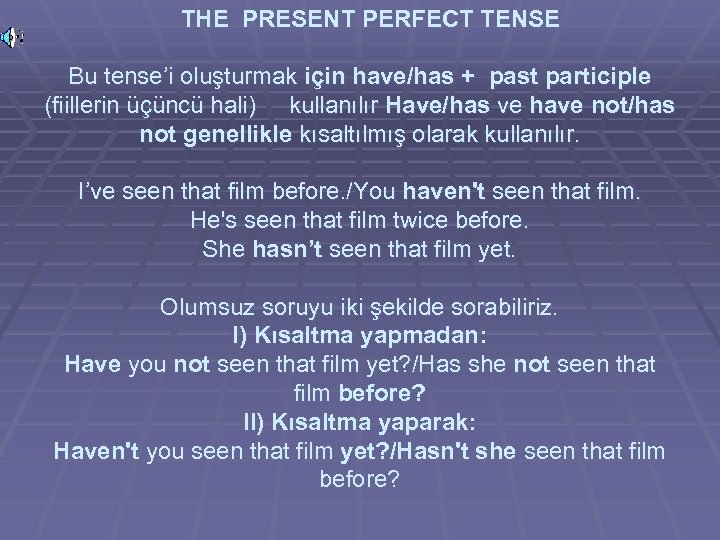
THE PRESENT PERFECT TENSE Bu tense’i oluşturmak için have/has + past participle (fiillerin üçüncü hali) kullanılır Have/has ve have not/has not genellikle kısaltılmış olarak kullanılır. I’ve seen that film before. /You haven't seen that film. He's seen that film twice before. She hasn’t seen that film yet. Olumsuz soruyu iki şekilde sorabiliriz. I) Kısaltma yapmadan: Have you not seen that film yet? /Has she not seen that film before? II) Kısaltma yaparak: Haven't you seen that film yet? /Hasn't she seen that film before?
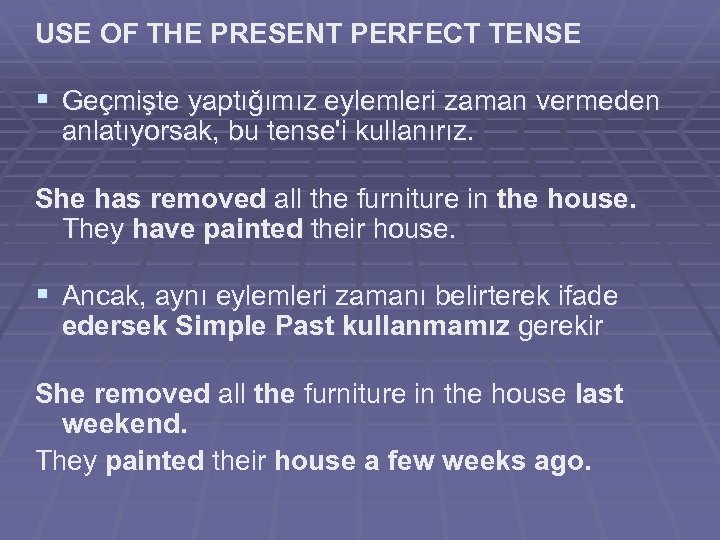
USE OF THE PRESENT PERFECT TENSE § Geçmişte yaptığımız eylemleri zaman vermeden anlatıyorsak, bu tense'i kullanırız. She has removed all the furniture in the house. They have painted their house. § Ancak, aynı eylemleri zamanı belirterek ifade edersek Simple Past kullanmamız gerekir She removed all the furniture in the house last weekend. They painted their house a few weeks ago.
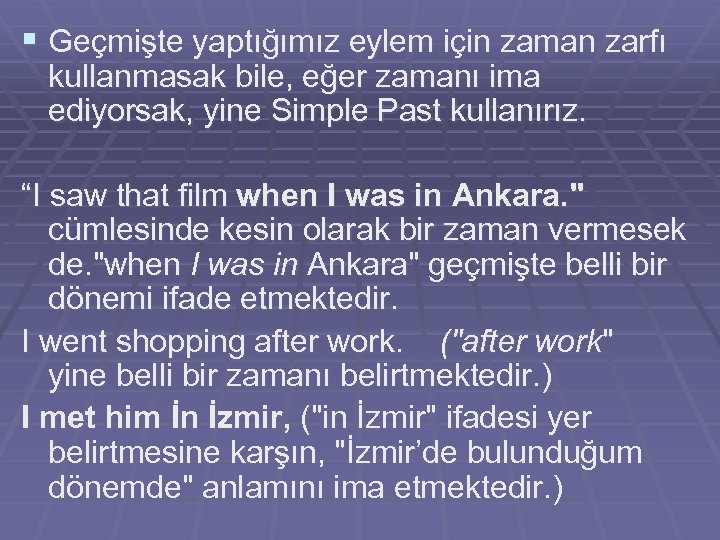
§ Geçmişte yaptığımız eylem için zaman zarfı kullanmasak bile, eğer zamanı ima ediyorsak, yine Simple Past kullanırız. “I saw that film when I was in Ankara. " cümlesinde kesin olarak bir zaman vermesek de. "when I was in Ankara" geçmişte belli bir dönemi ifade etmektedir. I went shopping after work. ("after work" yine belli bir zamanı belirtmektedir. ) I met him İn İzmir, ("in İzmir" ifadesi yer belirtmesine karşın, "İzmir’de bulunduğum dönemde" anlamını ima etmektedir. )
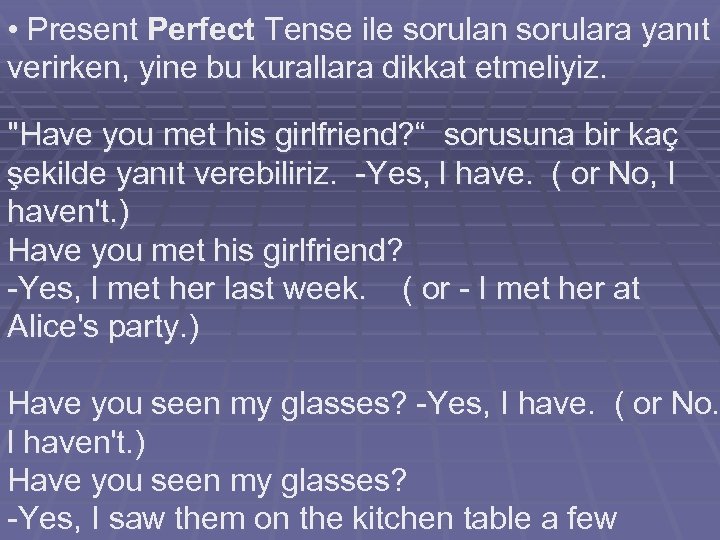
• Present Perfect Tense ile sorulan sorulara yanıt verirken, yine bu kurallara dikkat etmeliyiz. "Have you met his girlfriend? “ sorusuna bir kaç şekilde yanıt verebiliriz. -Yes, l have. ( or No, I haven't. ) Have you met his girlfriend? -Yes, l met her last week. ( or - I met her at Alice's party. ) Have you seen my glasses? -Yes, I have. ( or No. l haven't. ) Have you seen my glasses? -Yes, I saw them on the kitchen table a few
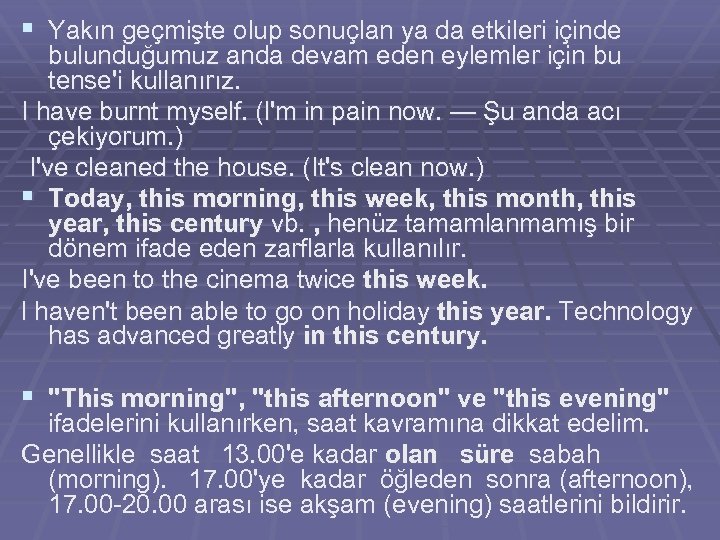
§ Yakın geçmişte olup sonuçlan ya da etkileri içinde bulunduğumuz anda devam eden eylemler için bu tense'i kullanırız. I have burnt myself. (l'm in pain now. — Şu anda acı çekiyorum. ) I've cleaned the house. (It's clean now. ) § Today, this morning, this week, this month, this year, this century vb. , henüz tamamlanmamış bir dönem ifade eden zarflarla kullanılır. I've been to the cinema twice this week. l haven't been able to go on holiday this year. Technology has advanced greatly in this century. § "This morning", "this afternoon" ve "this evening" ifadelerini kullanırken, saat kavramına dikkat edelim. Genellikle saat 13. 00'e kadar olan süre sabah (morning). 17. 00'ye kadar öğleden sonra (afternoon), 17. 00 -20. 00 arası ise akşam (evening) saatlerini bildirir.
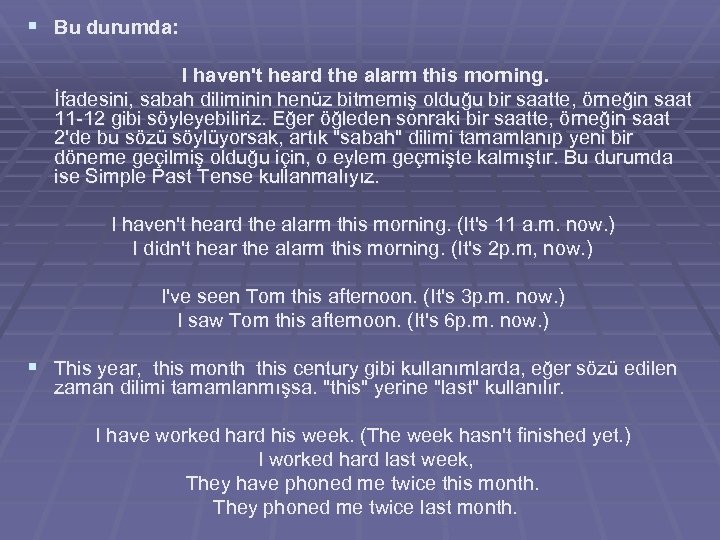
§ Bu durumda: I haven't heard the alarm this morning. İfadesini, sabah diliminin henüz bitmemiş olduğu bir saatte, örneğin saat 11 -12 gibi söyleyebiliriz. Eğer öğleden sonraki bir saatte, örneğin saat 2'de bu sözü söylüyorsak, artık "sabah" dilimi tamamlanıp yeni bir döneme geçilmiş olduğu için, o eylem geçmişte kalmıştır. Bu durumda ise Simple Past Tense kullanmalıyız. I haven't heard the alarm this morning. (It's 11 a. m. now. ) l didn't hear the alarm this morning. (It's 2 p. m, now. ) I've seen Tom this afternoon. (It's 3 p. m. now. ) I saw Tom this afternoon. (It's 6 p. m. now. ) § This year, this month this century gibi kullanımlarda, eğer sözü edilen zaman dilimi tamamlanmışsa. "this" yerine "last" kullanılır. I have worked hard his week. (The week hasn't finished yet. ) I worked hard last week, They have phoned me twice this month. They phoned me twice last month.
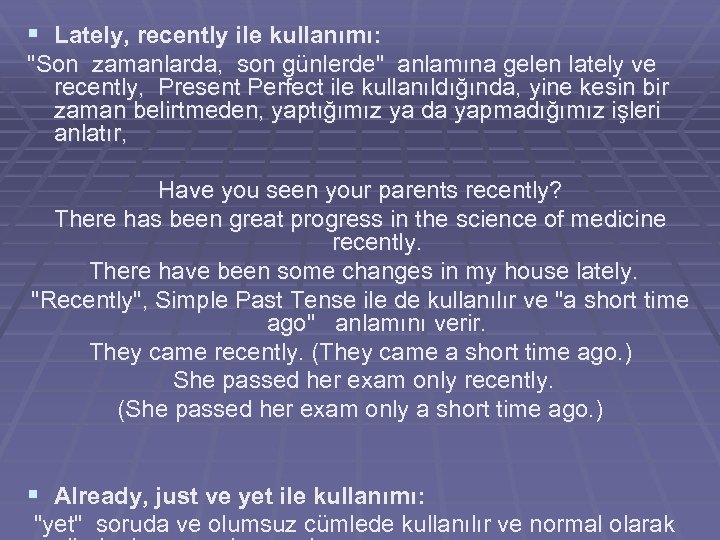
§ Lately, recently ile kullanımı: "Son zamanlarda, son günlerde" anlamına gelen lately ve recently, Present Perfect ile kullanıldığında, yine kesin bir zaman belirtmeden, yaptığımız ya da yapmadığımız işleri anlatır, Have you seen your parents recently? There has been great progress in the science of medicine recently. There have been some changes in my house lately. "Recently", Simple Past Tense ile de kullanılır ve "a short time ago" anlamını verir. They came recently. (They came a short time ago. ) She passed her exam only recently. (She passed her exam only a short time ago. ) § Already, just ve yet ile kullanımı: "yet" soruda ve olumsuz cümlede kullanılır ve normal olarak
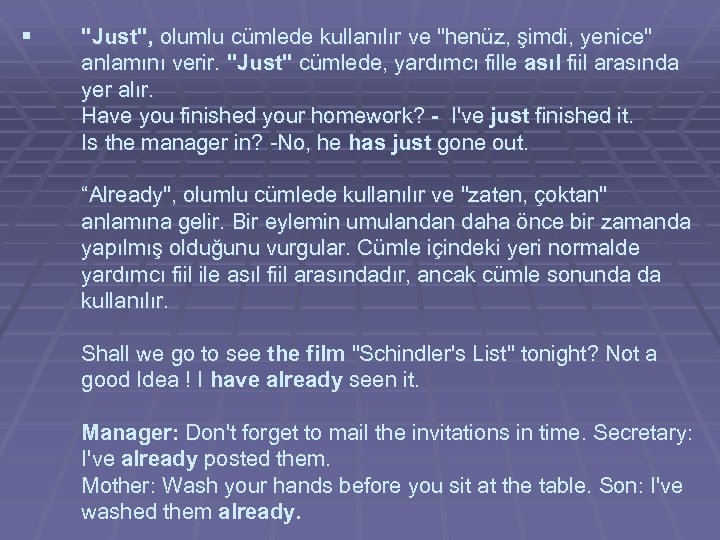
§ "Just", olumlu cümlede kullanılır ve "henüz, şimdi, yenice" anlamını verir. "Just" cümlede, yardımcı fille asıl fiil arasında yer alır. Have you finished your homework? - I've just finished it. Is the manager in? -No, he has just gone out. “Already", olumlu cümlede kullanılır ve "zaten, çoktan" anlamına gelir. Bir eylemin umulandan daha önce bir zamanda yapılmış olduğunu vurgular. Cümle içindeki yeri normalde yardımcı fiil ile asıl fiil arasındadır, ancak cümle sonunda da kullanılır. Shall we go to see the film "Schindler's List" tonight? Not a good Idea ! I have already seen it. Manager: Don't forget to mail the invitations in time. Secretary: I've already posted them. Mother: Wash your hands before you sit at the table. Son: I've washed them already.
• Ever, never, all my life, in his life, always, occasionally, often, several times, once, twice. ete. gibi zarflarla kullanımı: Daha önce, sıklık bildiren zarfların [ever, never, ahuays, oflen, etc. (Geniş Zaman ile Simple Present) kullanımını görmüştük. Aynı zarflar, anlamda biraz bir değişiklikle, Present Perfect Tense ile de kullanılır, I always get up early. [Simple Present — Ben her zaman erken kalkarım. "Bugüne kadar hep erken kalktım. Bundan sonra da büyük bir olasılıkla erken kalkacağım. Bu benim alışkanlığım, " anlamını verir. ) I have always got up early, (Present Perfect — "Ben her zaman erken kalkmışımdır. " ifadesi, yaşamımın sadece şu ana kadar olan bölümünü kapsar. ) My father has always Iived in his hometown. [He has lived in his hometown all his life. ) I've never seen such a pretty dog in my life.
• once, twice, three times, several times, many times gibi zarflarla, bir eylemi yaşamımız boyunca kaç kez yaptığımızı ifade etmek için Present Perfect Tense kullanırız. Have you ever been abroad? Yes, I've been to Germany several times, She has invited ine to her house many times, but I've never had any spare time. I've seen her parents only once. NOTE: Bu zarfların Simple Past Tense ile kullanımına dikkat ediniz. "She has invited me to her house many times, but I've never had any spare time. " cümlesini, geçmişte zamanı belirterek verirsek, Simple Past kullanmamız gerekir, She Invited me to her house many times during my stay in Germany, but I never had any spare time. "My father has lived in his hometown all his life. " cümlesinden, babamın hayatta olduğu anlamını çıkarıyoruz. Artık hayatta olmayan birinin yaptığı işlerden söz ediyorsak, Simple Past Tense kullanmamız gerekir. My grandfather lived in his hometovm all his life. (He is dead now, J I have never flown in an aeroplane. My grandmother never flew in an aeroplane. (She isn't alive any more. )
• So far up to now, until now) ile kullanımı: "So far", "şu ana kadar" anlamına gelir ve so far today, so far this month so far this semestre, so far this summer, etc. gibi zarflarla birlikte de kullanılabilir. It hasn't snowed so far this winter. I got many bad grades last semestre, but l haven't had any low grades so far this semestre. We haven't eaten anything so far today. So far this summer, I have swum in the sea only once.
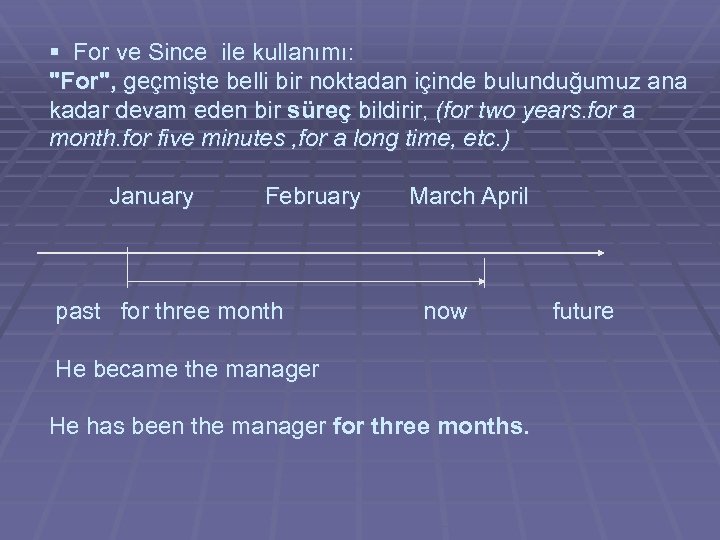
§ For ve Since ile kullanımı: "For", geçmişte belli bir noktadan içinde bulunduğumuz ana kadar devam eden bir süreç bildirir, (for two years. for a month. for five minutes , for a long time, etc. ) January February past for three month March April now He became the manager He has been the manager for three months. future
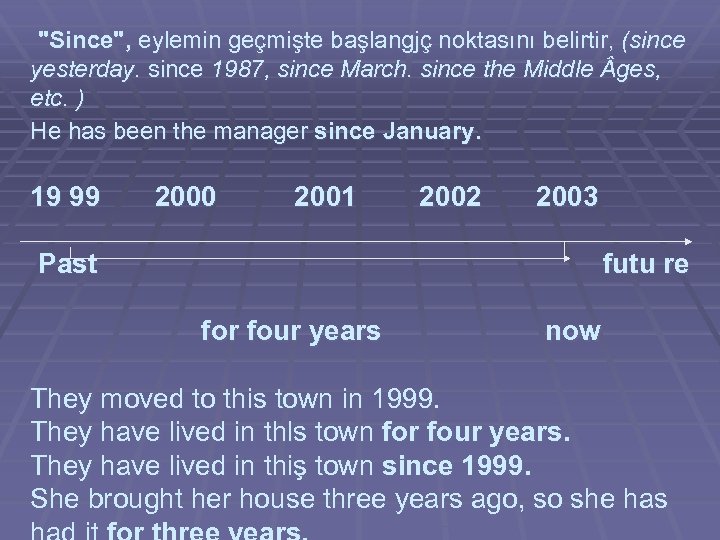
"Since", eylemin geçmişte başlangjç noktasını belirtir, (since yesterday. since 1987, since March. since the Middle ges, etc. ) He has been the manager since January. 19 99 2000 2001 2002 2003 Past futu re for four years now They moved to this town in 1999. They have lived in thls town for four years. They have lived in thiş town since 1999. She brought her house three years ago, so she has
§ It is + a period of time + since +Simple Past/ Pr. Perfect It is three months since I last went to the cînema. It is three montlıs since I have been to the cinema. Her iki cümleyi de Türkçe'ye şöyle çevirebiliriz: Sinemaya gitmeydi üç ay oluyor, ya da En son sinemaya gittiğimden beri üç ay geçti. l haven't been to the cinema for three months. I last went to the cinema three months ago. It's ten days since she hasn't worked because she is ill. (She has been ill in bed for ten days. ) It's eight years since I graduated from university. (I graduated from university eight years ago. ) It is just two weeks since they got maıried. (They got married just two weeks ago. or They have been married for just two weeks. )
• this is the first time + Present Perfect I'm very excited now, because this is the first time I've driven a car. This is the second time he has played tennis. That's why he isn't good at it. You shouldn't drink so much coffee, It's bad for you. This is the fifth cup of coffee you have drunk in the last two hours. This is the third exam we have taken so far this term. This is + superlative + present perfect This is the most boring book I have ever read. (Bu hayatımda okuduğum en sıkıcı kitap. ) This is the most difficult situation I have ever been in, He is the most talkative person I have met in my life.
• gone or been “go" fiilini Perfect Tense ile iki şekilde kullanabiliriz: Eğer kişi, sözü edilen yerde ise, ya da sözü edilen yere gitmek üzere yola çıkmışsa, gone kullanılır. I'd like to talk to your mother. Is she at home? No. she has gone shopping, Can I speak to Mr Jones, please? Sorry. He has gone out of town and hasn't come back yet. Eğer kişi, sözü edilen yerde daha önce bulunduğunu ifade ediyorsa, yani konuşma sırasında başka bir mekanda ise been kullanılır. Have you ever been abroad? Yes, I have been to Germany several times, The speakers are now not in Germany. Don't worry. l have been to the bank today. I can lend you some.
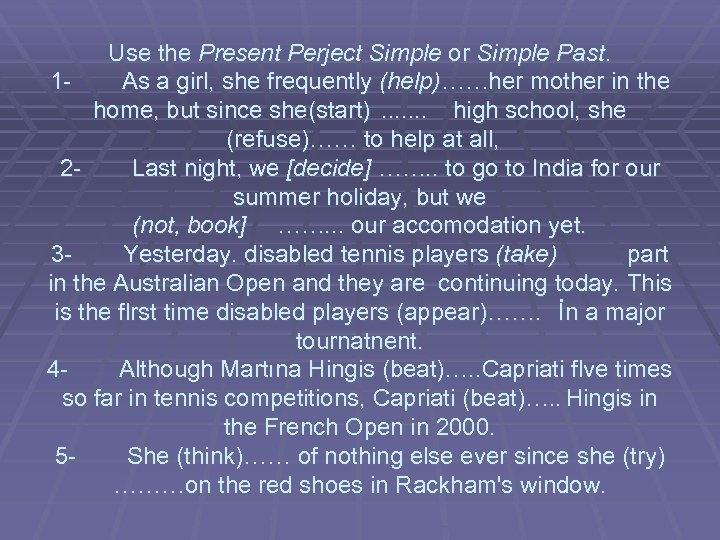
Use the Present Perject Simple or Simple Past. 1 As a girl, she frequently (help)……her mother in the home, but since she(start). . . . high school, she (refuse)…… to help at all, 2 Last night, we [decide] ……. . to go to India for our summer holiday, but we (not, book] ……. . . our accomodation yet. 3 Yesterday. disabled tennis players (take) part in the Australian Open and they are continuing today. This is the flrst time disabled players (appear)……. İn a major tournatnent. 4 Although Martına Hingis (beat)…. . Capriati flve times so far in tennis competitions, Capriati (beat)…. . Hingis in the French Open in 2000. 5 She (think)…… of nothing else ever since she (try) ………on the red shoes in Rackham's window.
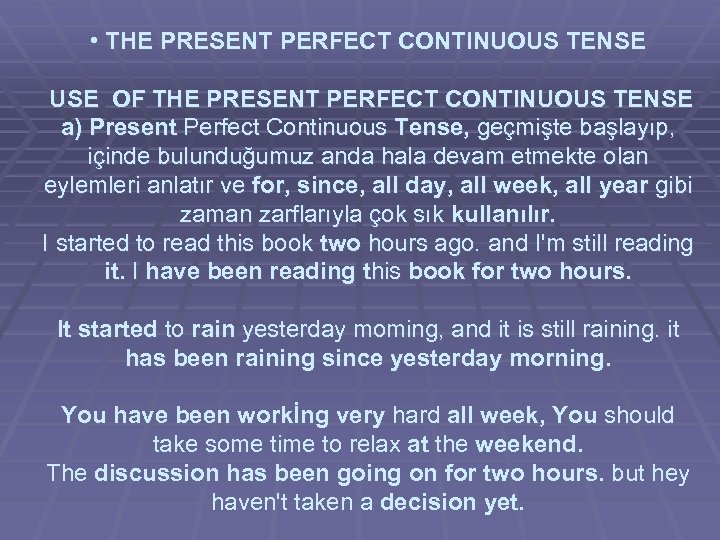
• THE PRESENT PERFECT CONTINUOUS TENSE USE OF THE PRESENT PERFECT CONTINUOUS TENSE a) Present Perfect Continuous Tense, geçmişte başlayıp, içinde bulunduğumuz anda hala devam etmekte olan eylemleri anlatır ve for, since, all day, all week, all year gibi zaman zarflarıyla çok sık kullanılır. I started to read this book two hours ago. and I'm still reading it. I have been reading this book for two hours. It started to rain yesterday moming, and it is still raining. it has been raining since yesterday morning. You have been workİng very hard all week, You should take some time to relax at the weekend. The discussion has been going on for two hours. but hey haven't taken a decision yet.
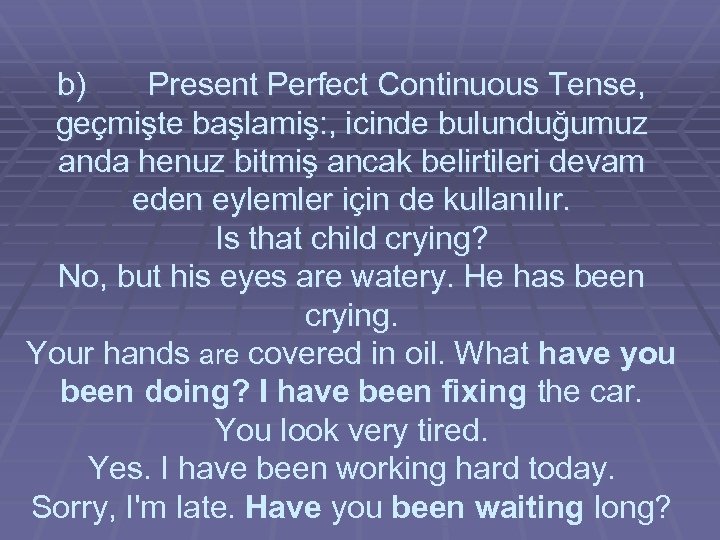
b) Present Perfect Continuous Tense, geçmişte başlamiş: , icinde bulunduğumuz anda henuz bitmiş ancak belirtileri devam eden eylemler için de kullanılır. Is that child crying? No, but his eyes are watery. He has been crying. Your hands are covered in oil. What have you been doing? I have been fixing the car. You look very tired. Yes. I have been working hard today. Sorry, I'm late. Have you been waiting long?
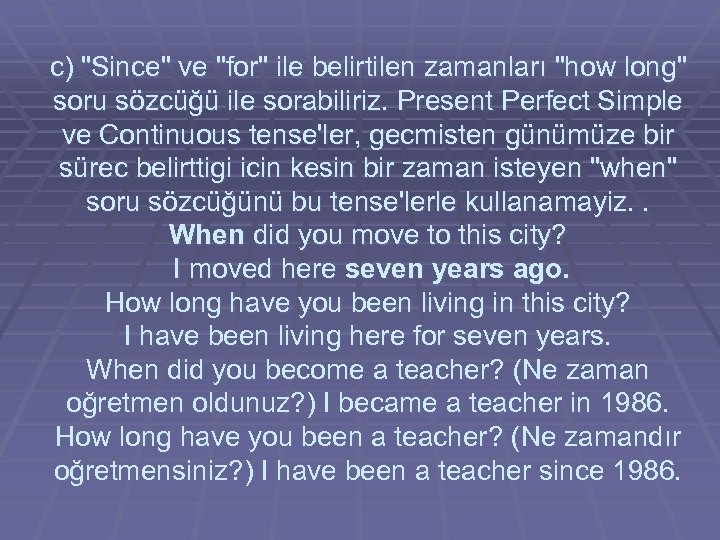
c) "Since" ve "for" ile belirtilen zamanları "how long" soru sözcüğü ile sorabiliriz. Present Perfect Simple ve Continuous tense'ler, gecmisten günümüze bir sürec belirttigi icin kesin bir zaman isteyen "when" soru sözcüğünü bu tense'lerle kullanamayiz. . When did you move to this city? I moved here seven years ago. How long have you been living in this city? I have been living here for seven years. When did you become a teacher? (Ne zaman oğretmen oldunuz? ) I became a teacher in 1986. How long have you been a teacher? (Ne zamandır oğretmensiniz? ) I have been a teacher since 1986.
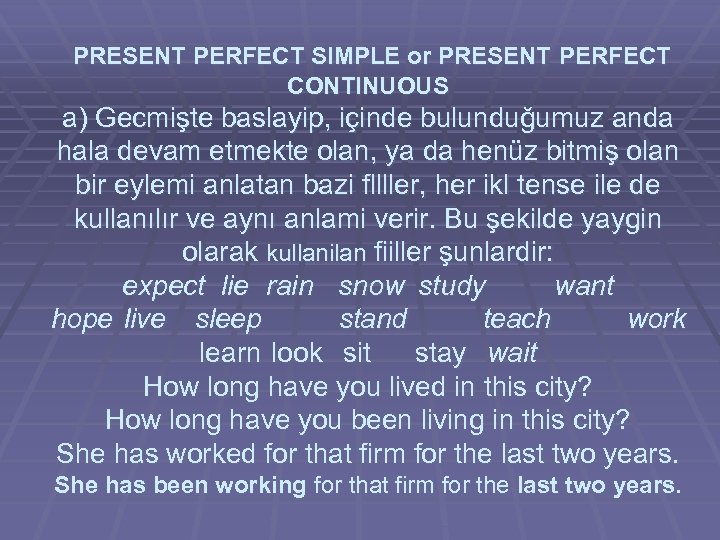
PRESENT PERFECT SIMPLE or PRESENT PERFECT CONTINUOUS a) Gecmişte baslayip, içinde bulunduğumuz anda hala devam etmekte olan, ya da henüz bitmiş olan bir eylemi anlatan bazi fllller, her ikl tense ile de kullanılır ve aynı anlami verir. Bu şekilde yaygin olarak kullanilan fiiller şunlardir: expect lie rain snow study want hope Iive sleep stand teach work learn look sit stay wait How long have you lived in this city? How long have you been living in this city? She has worked for that firm for the last two years. She has been working for that firm for the last two years.
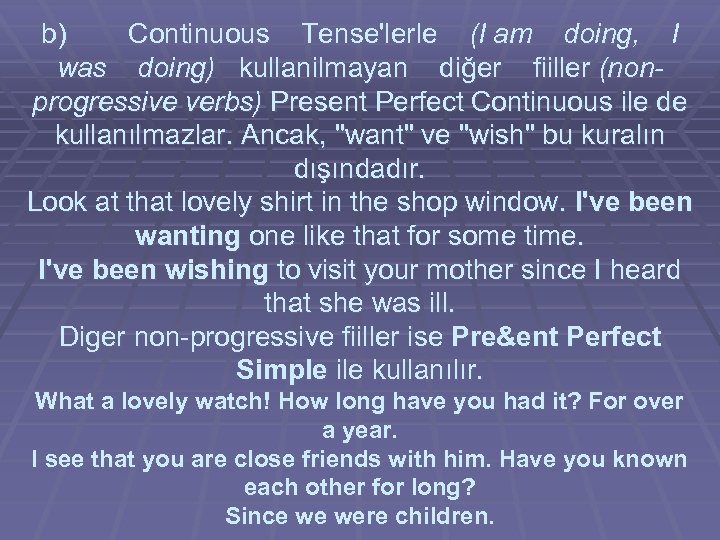
b) Continuous Tense'lerle (I am doing, I was doing) kullanilmayan diğer fiiller (nonprogressive verbs) Present Perfect Continuous ile de kullanılmazlar. Ancak, "want" ve "wish" bu kuralın dışındadır. Look at that lovely shirt in the shop window. I've been wanting one like that for some time. I've been wishing to visit your mother since I heard that she was ill. Diger non-progressive fiiller ise Pre&ent Perfect Simple ile kullanılır. What a lovely watch! How long have you had it? For over a year. I see that you are close friends with him. Have you known each other for long? Since we were children.
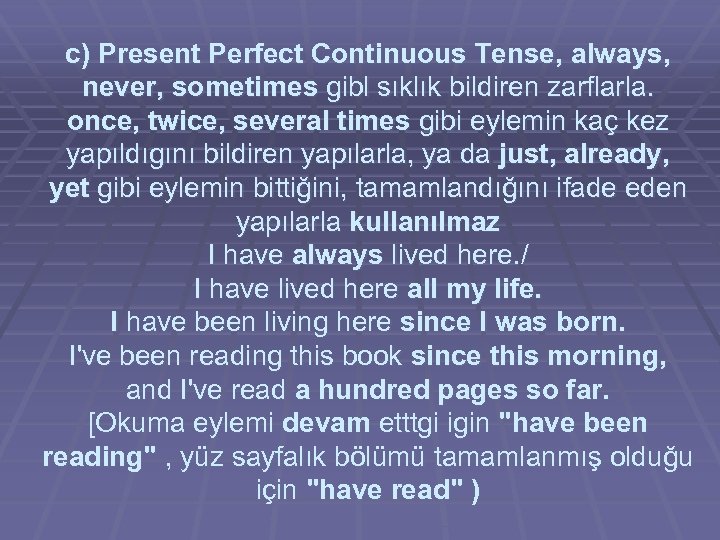
c) Present Perfect Continuous Tense, always, never, sometimes gibl sıklık bildiren zarflarla. once, twice, several times gibi eylemin kaç kez yapıldıgını bildiren yapılarla, ya da just, already, yet gibi eylemin bittiğini, tamamlandığını ifade eden yapılarla kullanılmaz I have always lived here. / I have lived here all my life. I have been living here since I was born. I've been reading this book since this morning, and I've read a hundred pages so far. [Okuma eylemi devam etttgi igin "have been reading" , yüz sayfalık bölümü tamamlanmış olduğu için "have read" )
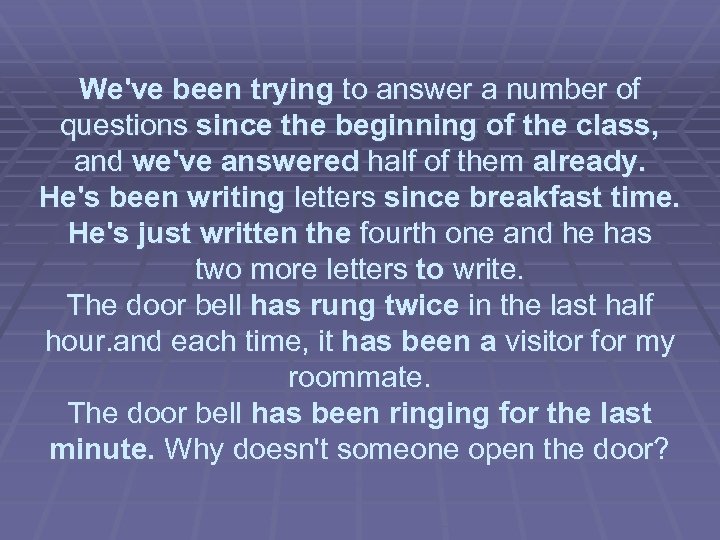
We've been trying to answer a number of questions since the beginning of the class, and we've answered half of them already. He's been writing letters since breakfast time. He's just written the fourth one and he has two more letters to write. The door bell has rung twice in the last half hour. and each time, it has been a visitor for my roommate. The door bell has been ringing for the last minute. Why doesn't someone open the door?
PRESENT PERFECT CONTINUOUS OR PRESENT PERFECT SIMPLE ? We use the present perfect continuous: for an action happening over a period of time. It doesn't matter if it's finished or not. This book's very good. I've been reading it all evening. for an action happening over a short period. They've been talking for 20 minutes. When talking about How long. I’m sorry I'm late. How long have you been waiting? ' 'Don't worry. I’ ve only been waiting for a few minutes. ' We normally use the present perfect simple: for completed actions. We can’t get into the house, because she's lost the key.
• for actions happening over a longer period. I've always lived in London. when we talk about how many things or how many times. I've taken ten photos so far. She's written to him five times, but he hasn 't replied once. • Some verbs when they describe a state, not an action, aren't used in the present perfect continuous. For example: agree, believe, belong, hate, know, like, love, mind, notice, own, remember, seem, suppose, understand, want, wish. I've been ill for two weeks, (not I've been being ill. ) She's known him for a year. (not She's been knowing him. )
Скачать презентацию THE PRESENT PERFECT TENSE Bu tense i oluşturmak için
13824966634e26dca392f23f4f919c48.ppt