 Скачать презентацию The Power of G-Flux Build Muscle Lose Fat
boston_seminar.ppt
- Количество слайдов: 140



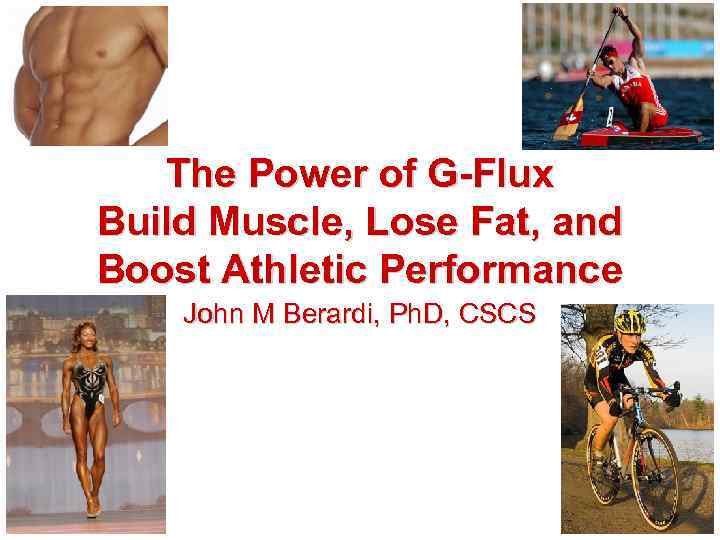
The Power of G-Flux Build Muscle, Lose Fat, and Boost Athletic Performance John M Berardi, Ph. D, CSCS
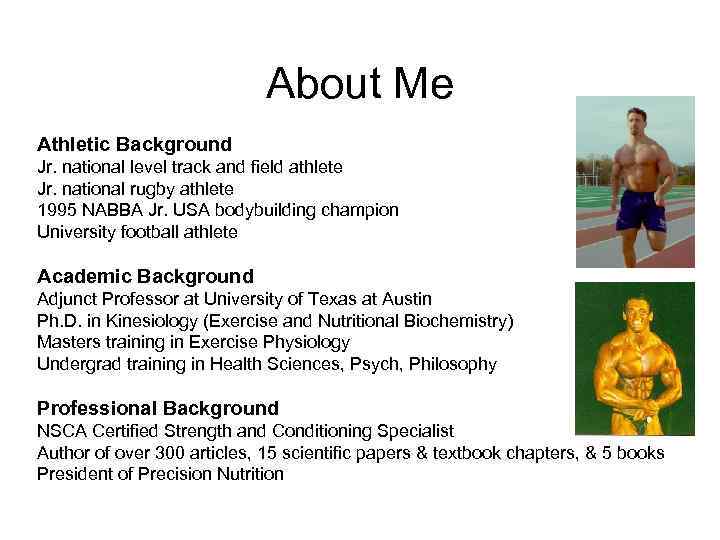
About Me Athletic Background Jr. national level track and field athlete Jr. national rugby athlete 1995 NABBA Jr. USA bodybuilding champion University football athlete Academic Background Adjunct Professor at University of Texas at Austin Ph. D. in Kinesiology (Exercise and Nutritional Biochemistry) Masters training in Exercise Physiology Undergrad training in Health Sciences, Psych, Philosophy Professional Background NSCA Certified Strength and Conditioning Specialist Author of over 300 articles, 15 scientific papers & textbook chapters, & 5 books President of Precision Nutrition
The Precision Nutrition Story Precision Nutrition was created as an education system for elite athletes. The program not only grew in the athletic community but it took off in recreational exercisers everywhere.
What Is Precision Nutrition?

Technology and Support Community

To pick up a copy of Precision Nutrition Click here to read more about PN http: //www. precisionnutrition. com/system. html To check out our online PN Forums http: //www. precisionnutrition. com/members/index. php
My 3 Goals This Weekend • Teach you the core Precision Nutrition principles. • Give you a theoretical foundation for these ideas. • Provide practical take-home strategies for immediate use.

Introduction

Words of Wisdom Tips for making sense of it all: 1) What are the commonalities among successful programs? Focus on them… 2) What are the people you’d like to emulate doing? Mentor with them… Keep in mind that you are an individual and what works for one person might not work for all people. Let’s list some differences between people leading to different prescriptions…
Common Themes In the end, there is one common denominator among ALL body composition programs that get great results – whether the results are muscle building, fat loss, an overall healthy physique, etc. What is it? ALL successful programs control energy balance Energy Intake Your Body Energy Expenditure
Of Atkins, Sears and Ornish Let’s get practical… Riddle me this…how can all three programs produce successful weight loss results in the SAME populations?
Of Atkins, Sears and Ornish 2 Words: Maxilomandibular Fixation Obviously, not all plans are created equal. Weight loss is one thing… Losing fat Preserving bone mass & lean mass Keeping nutrient intake high Improving blood and cellular health
Ways of Creating a Negative Energy Balance 1) Be born with a genetically fast metabolism 2) Be born with a very spendthrift metabolism 3) Take drugs that speed the metabolism 4) Perform a very high volume of exercise Since most of the world’s exercising population 5) Practice rigid calorie balancing wants to be leaner, what are some specific ways 6) Develop an eating disorder to achieve a negative energy balance? 7) Remain sedentary while eating few calories IMPORTANT NOTE: These help explain how some people can stay relatively lean and look “fit” while doing the “wrong things”
Controlling Energy Balance What’s the goal here if we want to control energy balance while maximizing health and optimizing body composition? Eat as much quality food as possible Preserving bone mass & lean mass Keeping nutrient intake high Improving blood and cellular health Yet closely balancing out our energy needs
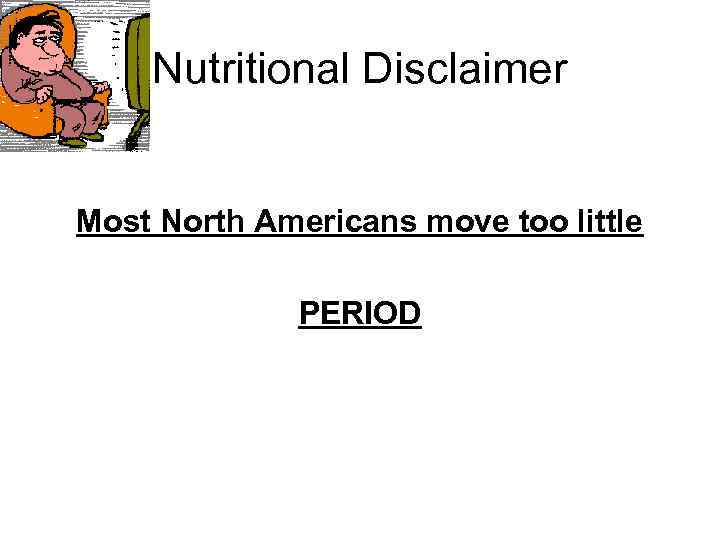
Nutritional Disclaimer Most North Americans move too little PERIOD
Nutritional Disclaimer Think of North America’s managing Nutrition is important for. Obesity Problem… energy The body is programmed to 73. 4839% balance and is regulate weight. So why is North America over fat even change. responsible forsophysical in the fact of chronic dieting? Low energy expenditure and sedentary lifestyles lead to dysregulation. Sedentary, thrifty, and older individuals share one thing in common – low energy expenditure. Lack of exercise is the major limiting factor Profile: low calorie intake, weight gain, poor health, disease Yes, nutrition makes a difference but we see athletes eating poorly all the time without becoming obese. Why? Who do we see this in? Their high activity – Sedentary individuals keeps body weight regulation tighter. – Thrifty individuals – Older individuals (primary sedentary)
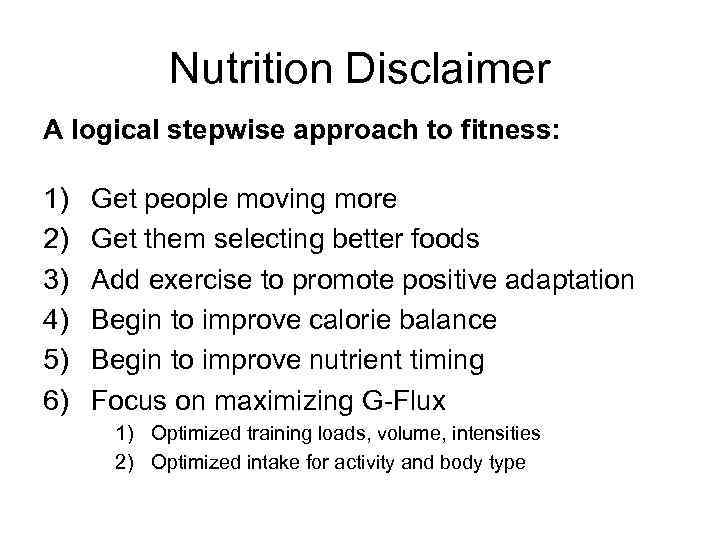
Nutrition Disclaimer A logical stepwise approach to fitness: 1) 2) 3) 4) 5) 6) Get people moving more Get them selecting better foods Add exercise to promote positive adaptation Begin to improve calorie balance Begin to improve nutrient timing Focus on maximizing G-Flux 1) Optimized training loads, volume, intensities 2) Optimized intake for activity and body type
Move More Remember this: Success leaves clues
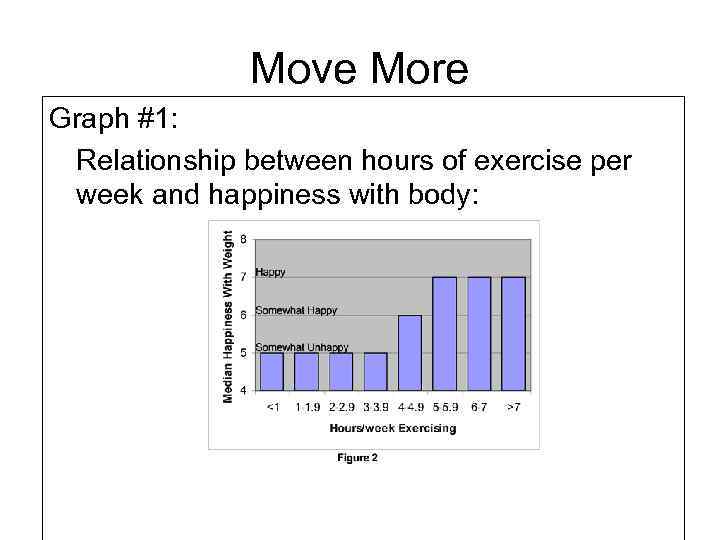
Move More Graph #1: Recent study performed at www. johnberardi. com Relationship between hours of exercise per in conjunction with Gary Homann at the week and happiness with body: University of Wyoming. Studied 940 people at all levels of exercise Goals - determine what exercise parameters get the best results AND what keeps people exercising.
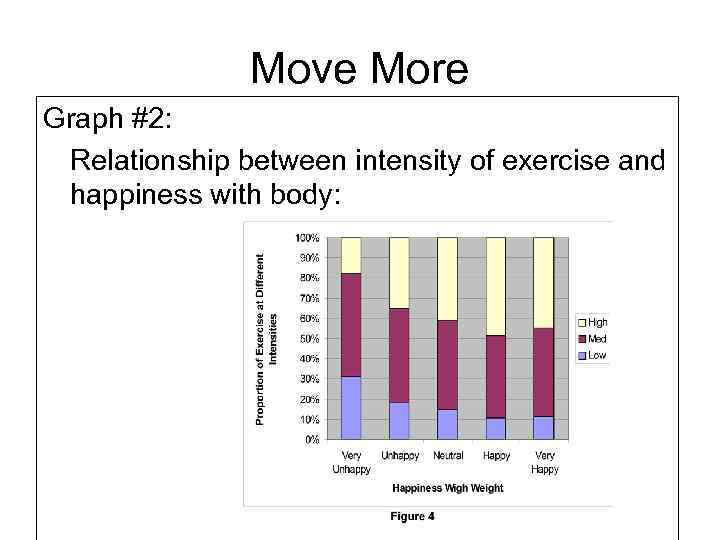
Move More Graph #2: Relationship between intensity of exercise and happiness with body:
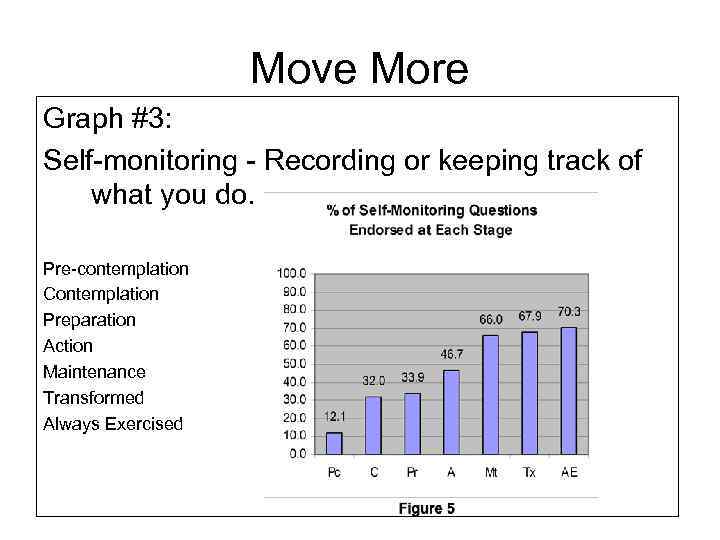
Move More Graph #3: Self-monitoring - Recording or keeping track of what you do. Pre-contemplation Contemplation Preparation Action Maintenance Transformed Always Exercised
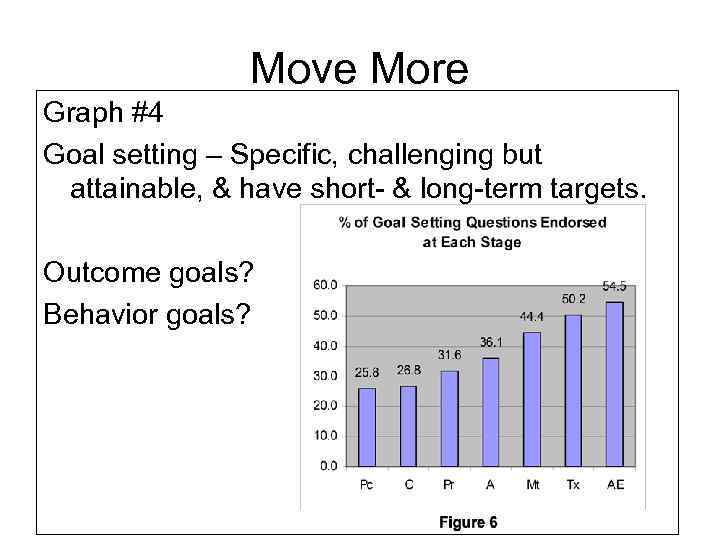
Move More Graph #4 Goal setting – Specific, challenging but attainable, & have short- & long-term targets. Outcome goals? Behavior goals?
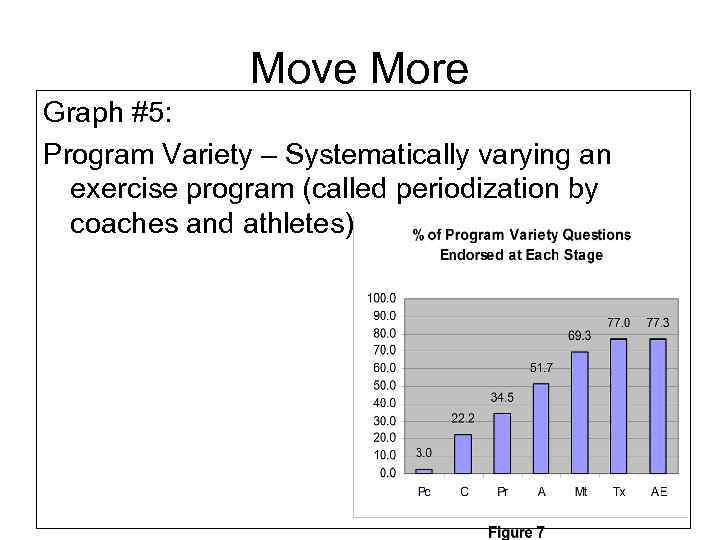
Move More Graph #5: Program Variety – Systematically varying an exercise program (called periodization by coaches and athletes).
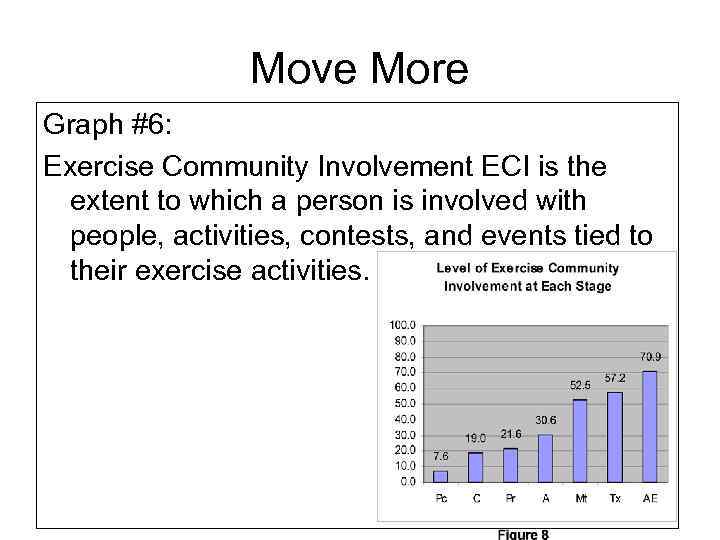
Move More Graph #6: Exercise Community Involvement ECI is the extent to which a person is involved with people, activities, contests, and events tied to their exercise activities.
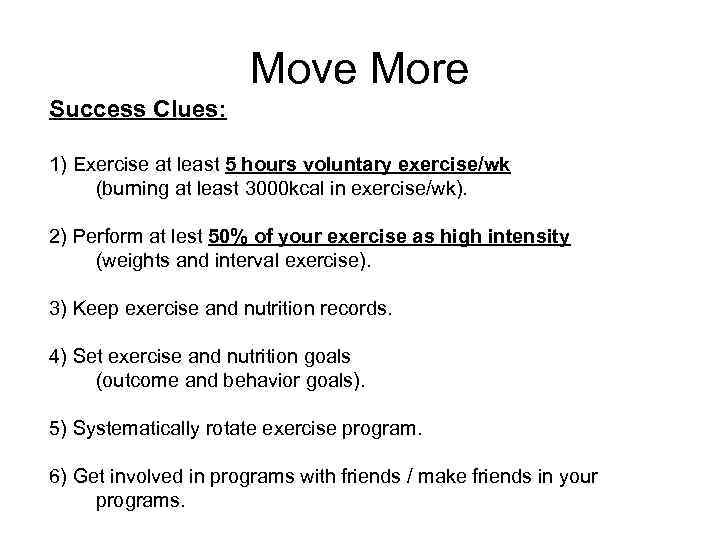
Move More Success Clues: 1) Exercise at least 5 hours voluntary exercise/wk (burning at least 3000 kcal in exercise/wk). 2) Perform at lest 50% of your exercise as high intensity (weights and interval exercise). 3) Keep exercise and nutrition records. 4) Set exercise and nutrition goals (outcome and behavior goals). 5) Systematically rotate exercise program. 6) Get involved in programs with friends / make friends in your programs.
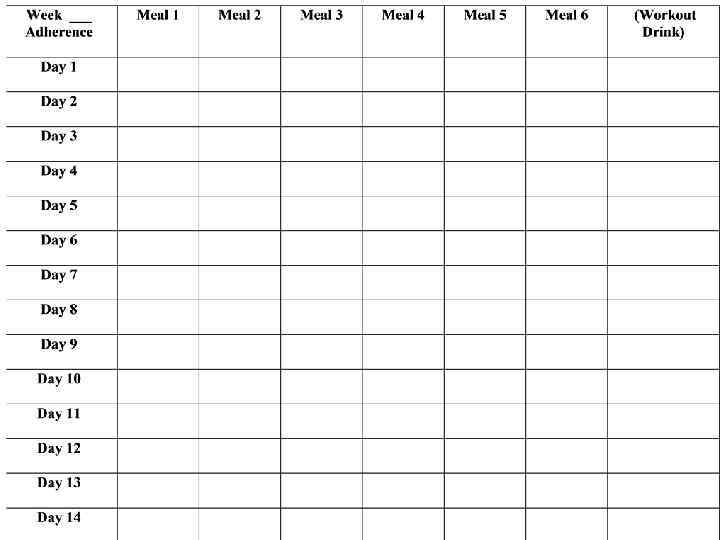
Records
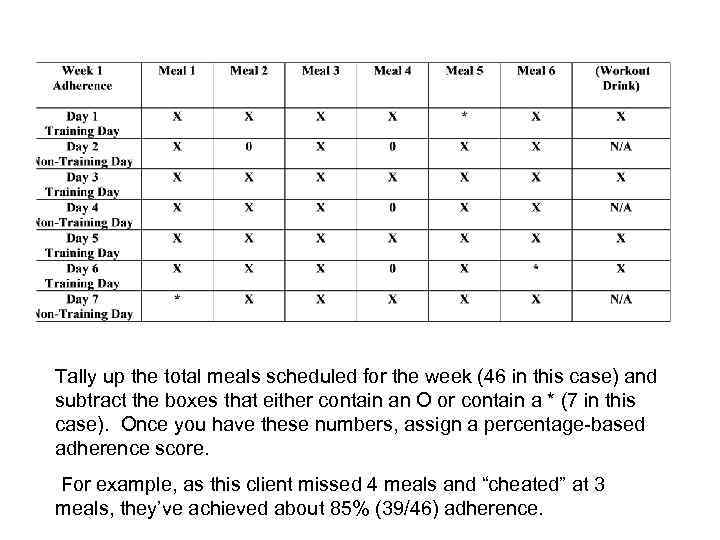
Tally up the total meals scheduled for the week (46 in this case) and subtract the boxes that either contain an O or contain a * (7 in this case). Once you have these numbers, assign a percentage-based adherence score. For example, as this client missed 4 meals and “cheated” at 3 meals, they’ve achieved about 85% (39/46) adherence.

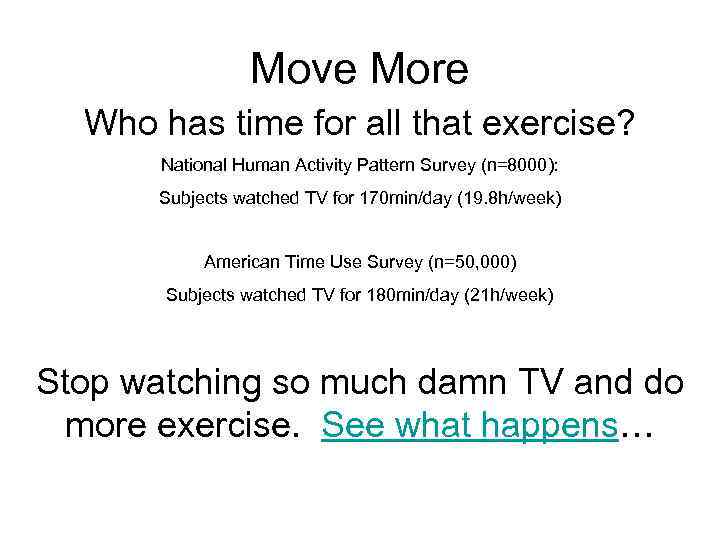
Move More Who has time for all that exercise? Exercise volumes (www. healthierus. gov) 30 min/day National Humanreduction (3. 5 hr/wk) for disease risk Activity Pattern Survey (n=8000): 60 min/day for weight management (7 hr/wk) 90 min/day. Subjects watched TV for 170 min/day (19. 8 h/week) for weight loss (10. 5 hr/wk) Homann et al American Time from high intensity = happy with body >5 hr exercise per week with >½ Use Survey (n=50, 000) Subjects watched TV for 180 min/day (21 h/week) Jakicic et al >5 hr exercise per week = weight loss and improved disease risk profiles Stop watching so much damn TV and do more exercise. See what happens… Westerterp KR. Pattern and intensity of physical activity. Nature 410: 539, 2001. Accumulated impact of low intensity activities over greater duration is of greater energetic impact vs. short bursts of high intensity activity. All this points to at least 5 hours of total physical activity per week – and for maximal G-Flux, perhaps some form of exercise almost every day – with a mix of high and low intensity activities.
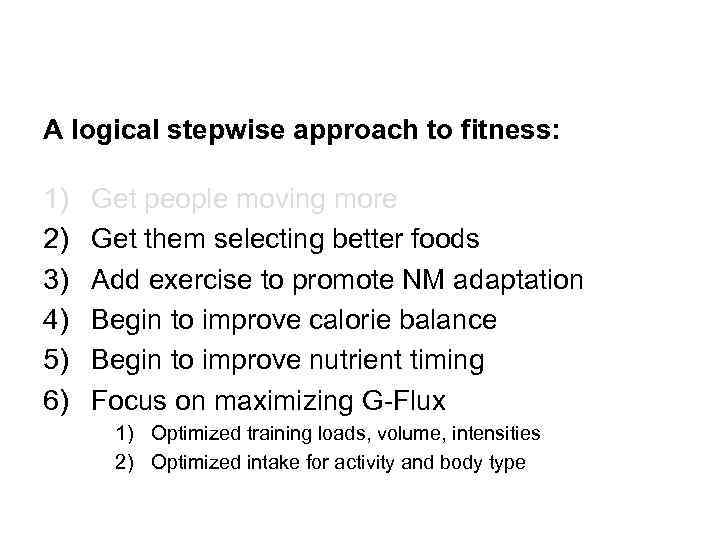
A logical stepwise approach to fitness: 1) 2) 3) 4) 5) 6) Get people moving more Get them selecting better foods Add exercise to promote NM adaptation Begin to improve calorie balance Begin to improve nutrient timing Focus on maximizing G-Flux 1) Optimized training loads, volume, intensities 2) Optimized intake for activity and body type
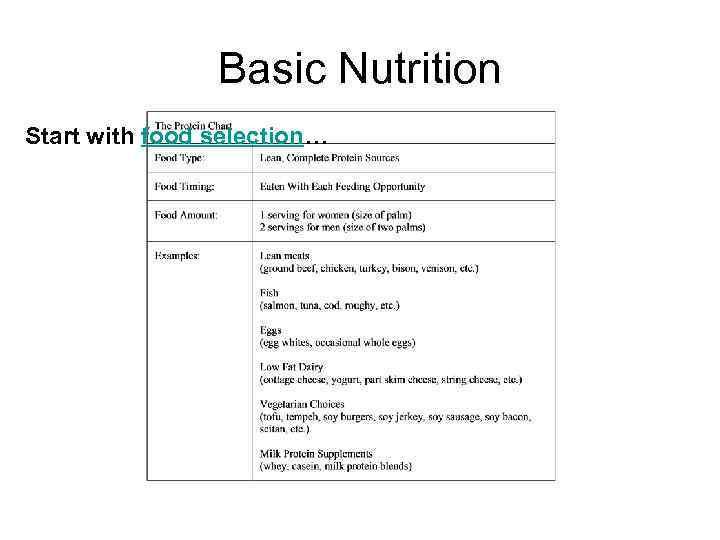
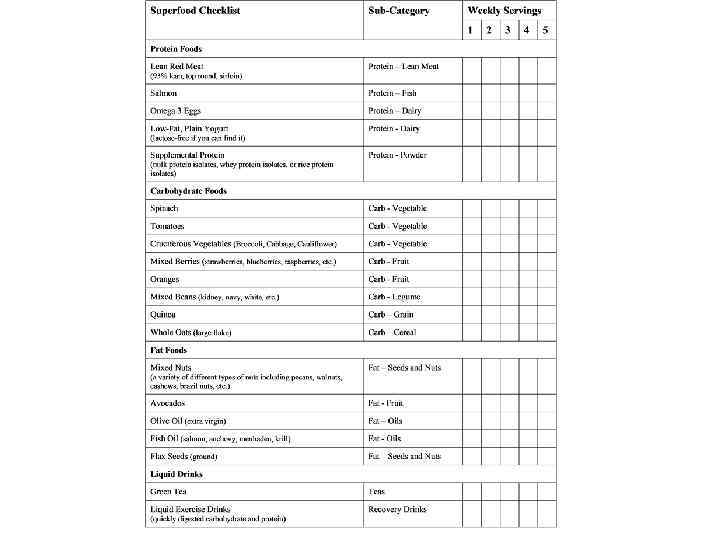
Basic Nutrition Start with food selection…
Basic Nutrition
Basic Nutrition
Basic Nutrition
Basic Nutrition “I eat really well…” But… “…I’m still 20 lbs overweight. ” “My diet is perfect…” But… “…I often feel sluggish and low energy. ” “I make good nutritional choices…” But… “…I’ve got high BP, cholesterol, and type II diabetes. ”
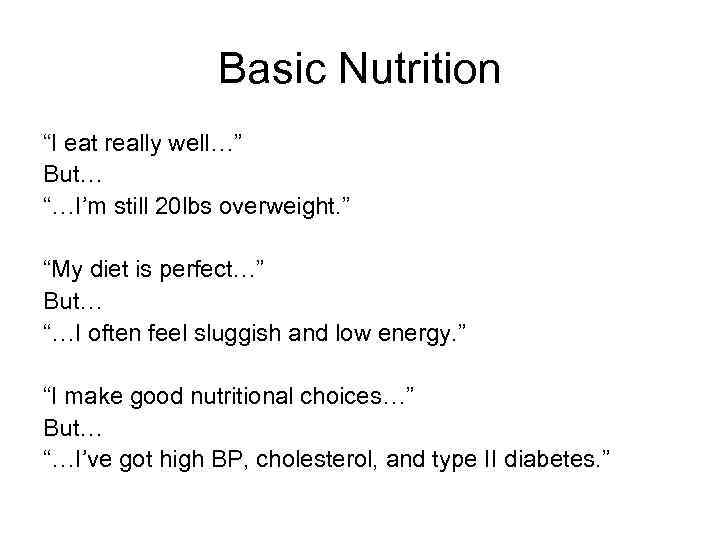
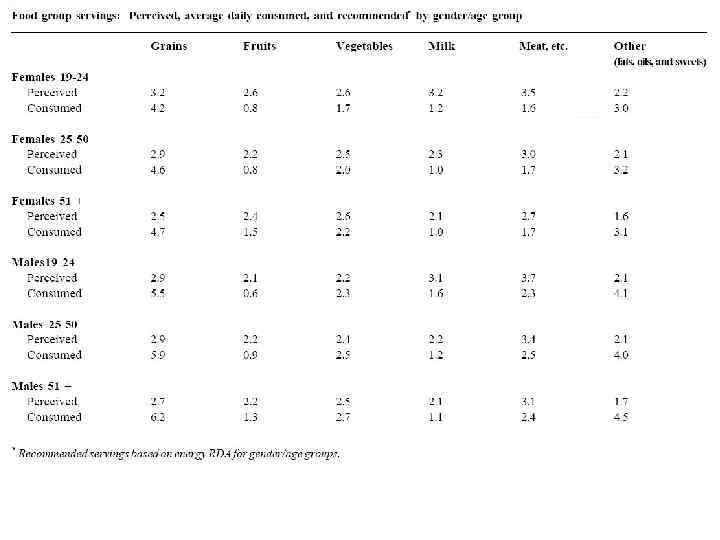
Basic Nutrition What’s the problem here? Most people have no idea how they’re doing (poor adherence either knowingly or unknowingly).
Basic Nutrition
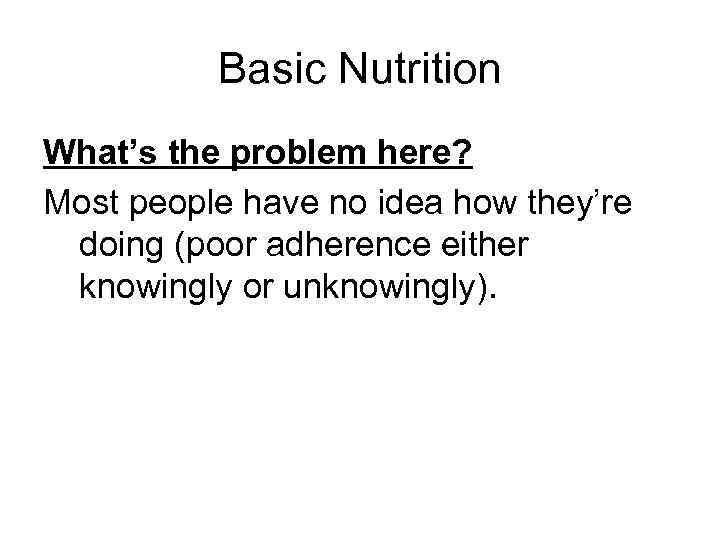
Basic Nutrition Even if they’re doing what they think they should (good adherence), if they’re not getting results, their program might need to improve. I call this an outcome-based nutrition approach.
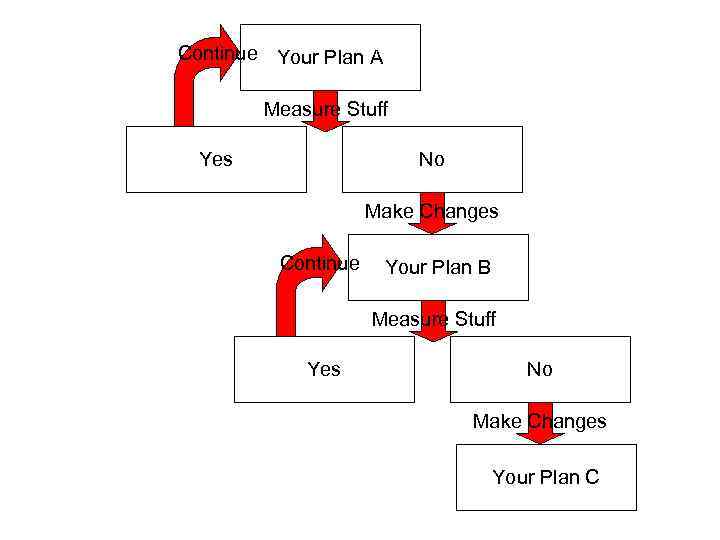
Continue Your Plan A Measure Stuff Yes No Make Changes Continue Your Plan B Measure Stuff Yes No Make Changes Your Plan C

…Time for a break…
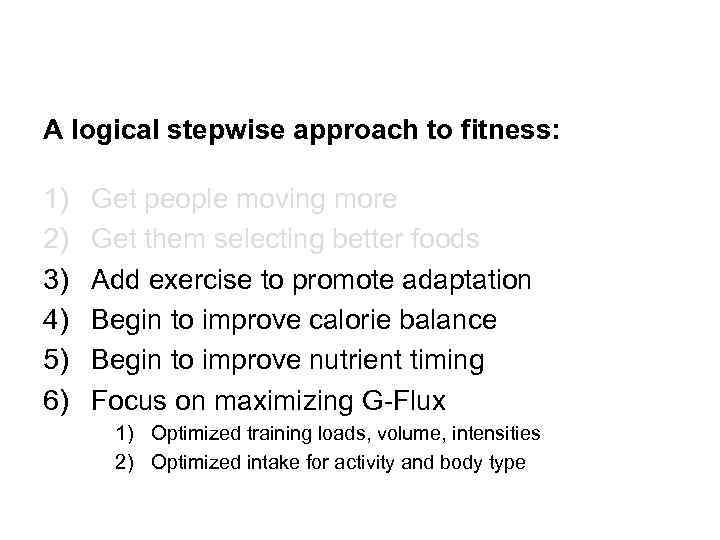
A logical stepwise approach to fitness: 1) 2) 3) 4) 5) 6) Get people moving more Get them selecting better foods Add exercise to promote adaptation Begin to improve calorie balance Begin to improve nutrient timing Focus on maximizing G-Flux 1) Optimized training loads, volume, intensities 2) Optimized intake for activity and body type
More Advanced Principles Individualization By Body Type Using somatotype categories to determine training/nutritional optimization. Currently working on equations using regional skinfolds and muscle fiber types to refine somatotype vagaries.
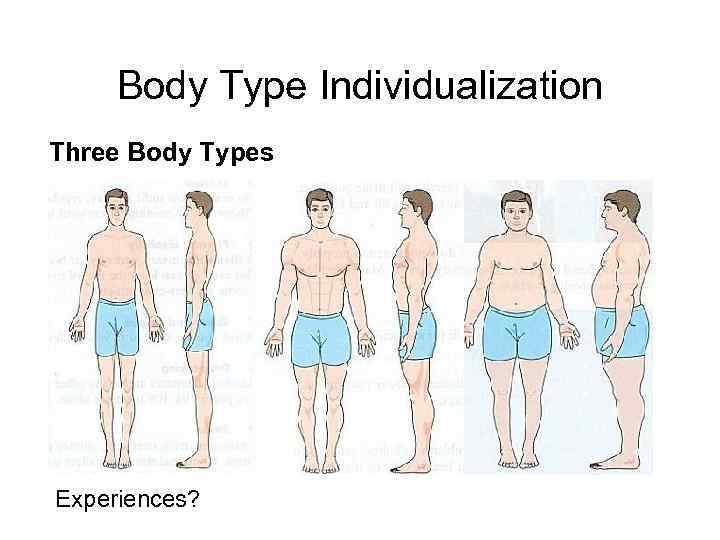
Body Type Individualization Three Body Types Ectomorphic (lean, thin, small joints, fast metabolism) Mesomorphic (muscular, stocky, larger muscles, small joints) Endomorphic (higher % fat, larger frame, slow metabolism) Experiences?
Body Type Individualization Ectomorphic Physiology: Hyperactive sympathetic nervous systems and thyroid hormone output. Energy Balance Considerations: High SNS and thyroid output leads to high amounts of non-exercise energy expenditure (RMR, TEF, SPA). High SNS also leads to reduced digestive activity and lower appetite.
Body Type Individualization Mesomorphic Physiology: High anabolic hormone concentrations. Energy Balance Considerations: High anabolic hormone concentrations increase tissue turnover and protein synthesis, keeping energy expenditure high yet not as high as the ectomorph. High anabolic hormone concentrations increase appetite.
Body Type Individualization Endomorphic Physiology: High insulin output and low SNS activity. Energy Balance Considerations: Low SNS activity leads to low amounts of non-exercise energy expenditure (RMR, TEF, SPA). Low SNS activity is correlated with increased appetite.
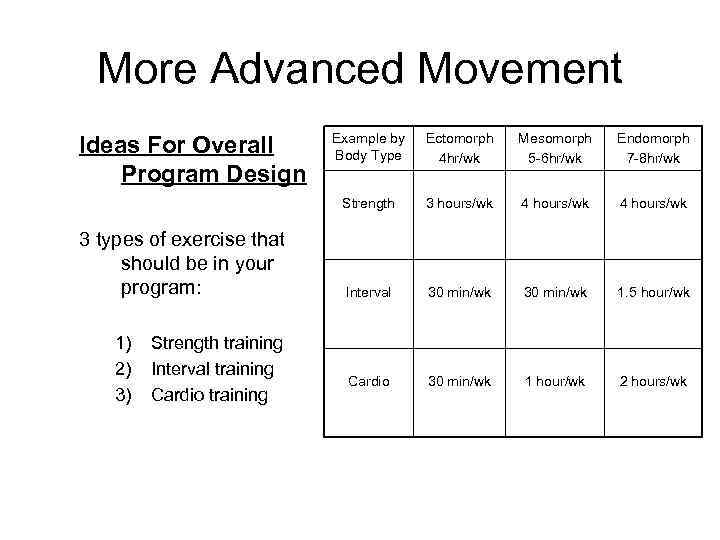
More Advanced Movement 3 types of exercise that should be in your program: 1) 2) 3) Strength training Interval training Cardio training Example by Body Type Ectomorph 4 hr/wk Mesomorph 5 -6 hr/wk Endomorph 7 -8 hr/wk Strength Ideas For Overall Program Design 3 hours/wk 4 hours/wk Interval 30 min/wk 1. 5 hour/wk Cardio 30 min/wk 1 hour/wk 2 hours/wk
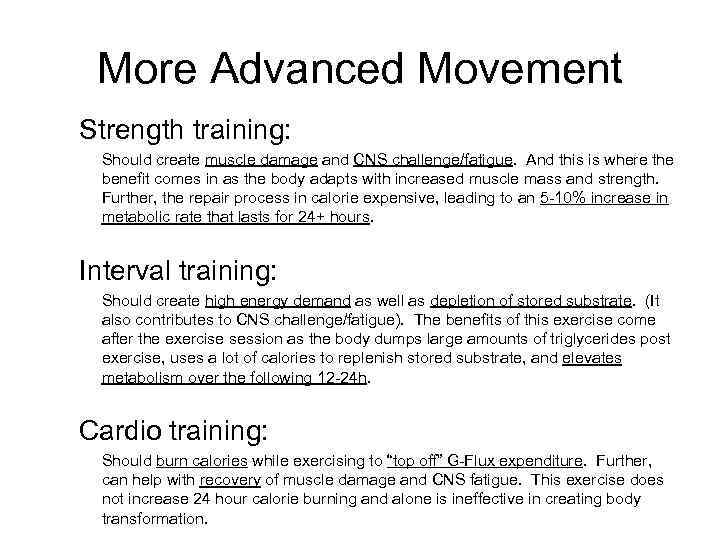
More Advanced Movement Strength training: Should create muscle damage and CNS challenge/fatigue. And this is where the benefit comes in as the body adapts with increased muscle mass and strength. Further, the repair process in calorie expensive, leading to an 5 -10% increase in metabolic rate that lasts for 24+ hours. Interval training: Should create high energy demand as well as depletion of stored substrate. (It also contributes to CNS challenge/fatigue). The benefits of this exercise come after the exercise session as the body dumps large amounts of triglycerides post exercise, uses a lot of calories to replenish stored substrate, and elevates metabolism over the following 12 -24 h. Cardio training: Should burn calories while exercising to “top off” G-Flux expenditure. Further, can help with recovery of muscle damage and CNS fatigue. This exercise does not increase 24 hour calorie burning and alone is ineffective in creating body transformation.
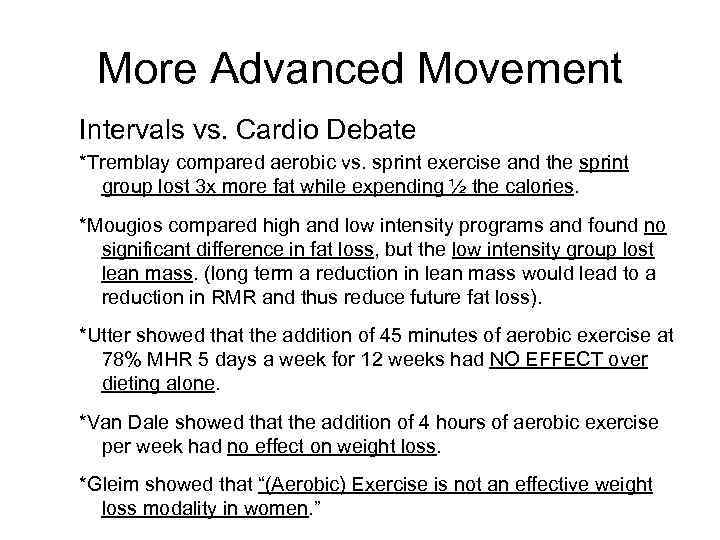
More Advanced Movement Intervals vs. Cardio Debate *Tremblay compared aerobic vs. sprint exercise and the sprint group lost 3 x more fat while expending ½ the calories. *Mougios compared high and low intensity programs and found no significant difference in fat loss, but the low intensity group lost lean mass. (long term a reduction in lean mass would lead to a reduction in RMR and thus reduce future fat loss). *Utter showed that the addition of 45 minutes of aerobic exercise at 78% MHR 5 days a week for 12 weeks had NO EFFECT over dieting alone. *Van Dale showed that the addition of 4 hours of aerobic exercise per week had no effect on weight loss. *Gleim showed that “(Aerobic) Exercise is not an effective weight loss modality in women. ”
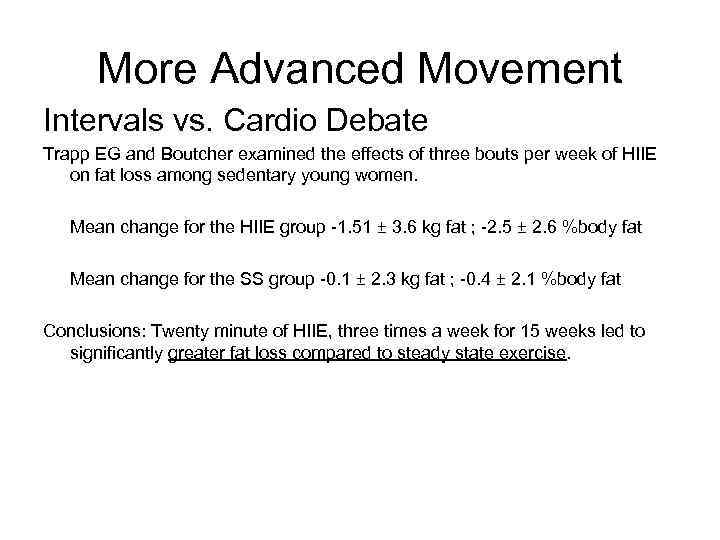
More Advanced Movement Intervals vs. Cardio Debate Trapp EG and Boutcher examined the effects of three bouts per week of HIIE on fat loss among sedentary young women. Mean change for the HIIE group -1. 51 ± 3. 6 kg fat ; -2. 5 ± 2. 6 %body fat Mean change for the SS group -0. 1 ± 2. 3 kg fat ; -0. 4 ± 2. 1 %body fat Conclusions: Twenty minute of HIIE, three times a week for 15 weeks led to significantly greater fat loss compared to steady state exercise.
More Advanced Movement The Problem With Cardio Williams PT, Wood PD discovered that men & women who logged the same weekly mileage year after year—regardless of the amount—gained weight. Even those who ran more than 40 miles a week were susceptible. "Your metabolism slows a little more every year, so you need to increase activity levels as you age, " says study author Paul T. Williams, Ph. D. "Yet most people do the opposite. " What’s a better strategy? Clearly the effects of aerobic exercise do little to offset this reduction in metabolism. And additional research also suggests that regular running improves your body's exercise efficiency, meaning the same amount of activity burns fewer calories. The researchers concluded that to avoid weight gain, male runners need to boost their weekly mileage by 1. 7 miles every year, or approximately 88. 4 miles per year, every year, with female runners having to boost their mileage by 2. 4 miles per week or 125 miles per year, every year.
More Advanced Movement Do no cardio? Absolutely not! Cardio is an effective calorie burning modality – but not to be done alone and not to be done as one’s only exercise. However, when included in a program that focuses on proper eating, smart muscle-building weight training, and fat burning intervals, cardio can help: 1) Top up G-Flux 2) Improve recovery of CNS
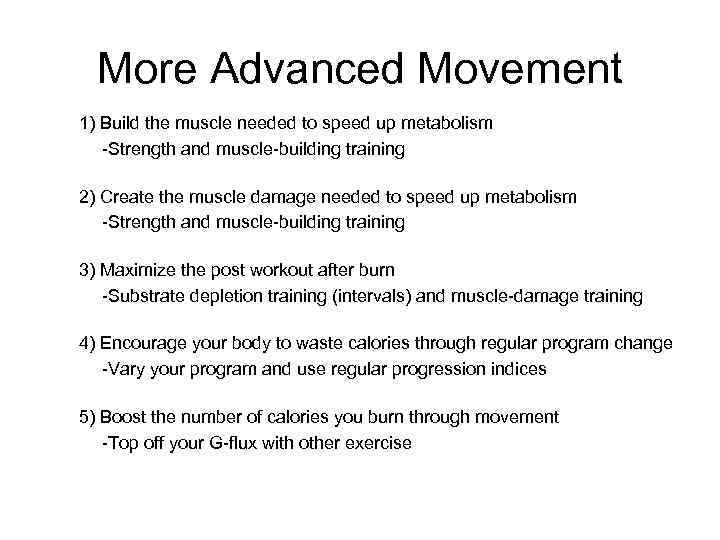
More Advanced Movement 1) Build the muscle needed to speed up metabolism -Strength and muscle-building training 2) Create the muscle damage needed to speed up metabolism -Strength and muscle-building training 3) Maximize the post workout after burn -Substrate depletion training (intervals) and muscle-damage training 4) Encourage your body to waste calories through regular program change -Vary your program and use regular progression indices 5) Boost the number of calories you burn through movement -Top off your G-flux with other exercise
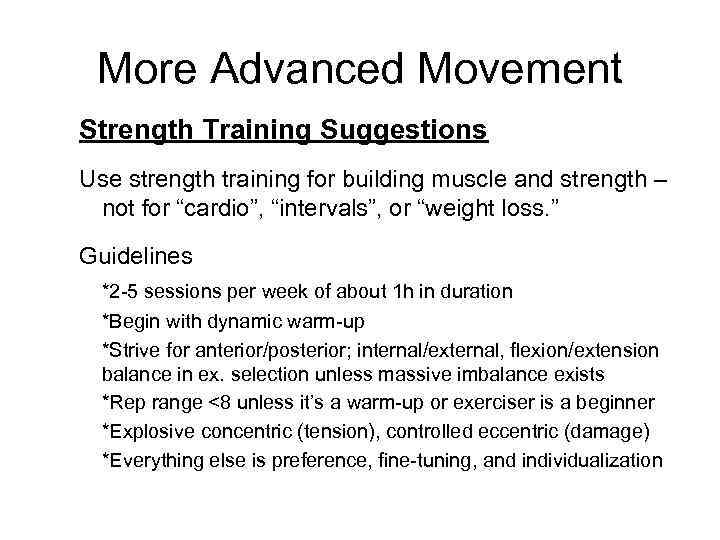
More Advanced Movement Strength Training Suggestions Use strength training for building muscle and strength – not for “cardio”, “intervals”, or “weight loss. ” Guidelines *2 -5 sessions per week of about 1 h in duration *Begin with dynamic warm-up *Strive for anterior/posterior; internal/external, flexion/extension balance in ex. selection unless massive imbalance exists *Rep range <8 unless it’s a warm-up or exerciser is a beginner *Explosive concentric (tension), controlled eccentric (damage) *Everything else is preference, fine-tuning, and individualization
More Advanced Movement Interval Training Suggestions Use interval training for high intensity calorie burning work. Guidelines *1 -3 sessions per week *Bodybuilders, to maximize muscle fullness, should minimize *Begin with 20 minutes and work up to max of 45 *Mix modalities and work: rest intervals *Suggested work: rest – 30 on-90 off; 60 on-120 off; 90 on-90 off *Make sure “on” intervals are done at VERY HIGH intensity *Make sure “off” intervals are done at VERY LOW intensity *Select a work intensity that allows consistent effort thru full workout; therefore first few sets should be less than max
More Advanced Movement Interval Demonstration http: //www. youtube. com/watch? v=u. FX 05 r. ZGRUg http: //www. youtube. com/watch? v=Zxo 9 k. Lc. WSEA
More Advanced Movement Cardio Training Suggestions Use cardio training to top-off G-flux and to promote CNS recovery Guidelines *1 -3 sessions per week *Done at moderate intensity (60 -70% HR Max) *More than 30 minutes is best *Steady state is good but all forms of “play” are acceptable *Have fun with this as it doesn’t have to be done at a gym
More Advanced Movement Exercise Scheduling Daily exercise (or as close to it as possible) is likely best vs. lots of exercise done on 3 -4 days. Try to alternate high intensity and low intensity/rest days if possible. However, when scheduling your program, just get all the exercise done. If you have to miss Monday, do that workout on Tuesday.

…Time for a break…
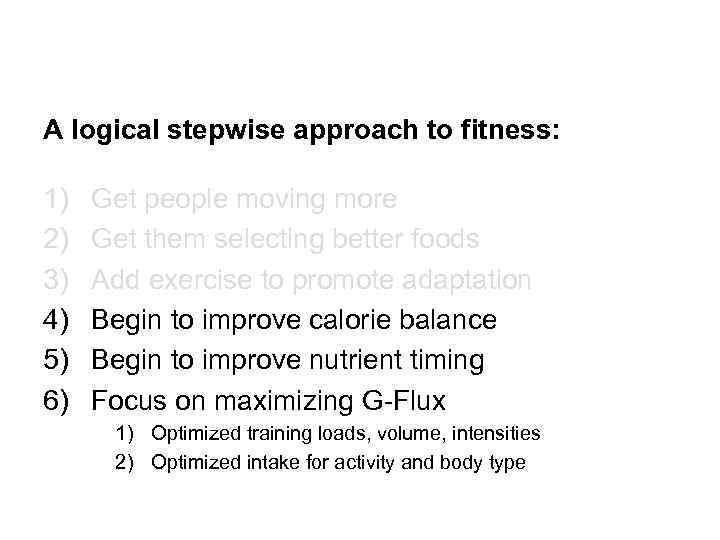
A logical stepwise approach to fitness: 1) 2) 3) 4) 5) 6) Get people moving more Get them selecting better foods Add exercise to promote adaptation Begin to improve calorie balance Begin to improve nutrient timing Focus on maximizing G-Flux 1) Optimized training loads, volume, intensities 2) Optimized intake for activity and body type
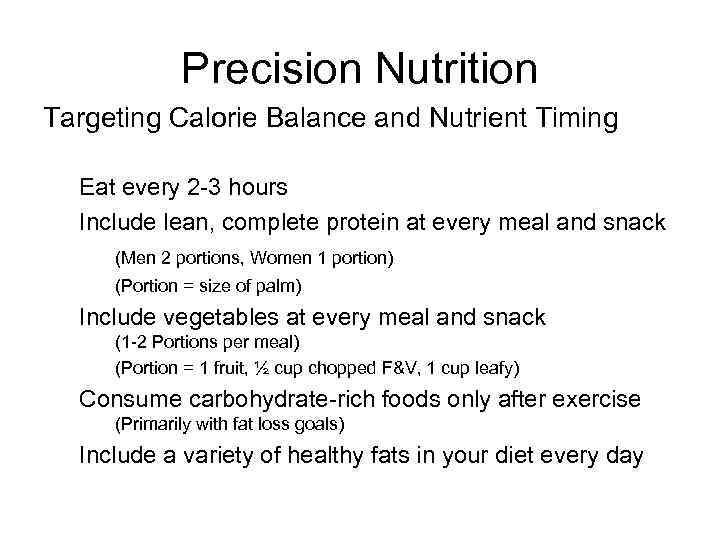
Precision Nutrition Targeting Calorie Balance and Nutrient Timing Eat every 2 -3 hours Include lean, complete protein at every meal and snack (Men 2 portions, Women 1 portion) (Portion = size of palm) Include vegetables at every meal and snack (1 -2 Portions per meal) (Portion = 1 fruit, ½ cup chopped F&V, 1 cup leafy) Consume carbohydrate-rich foods only after exercise (Primarily with fat loss goals) Include a variety of healthy fats in your diet every day
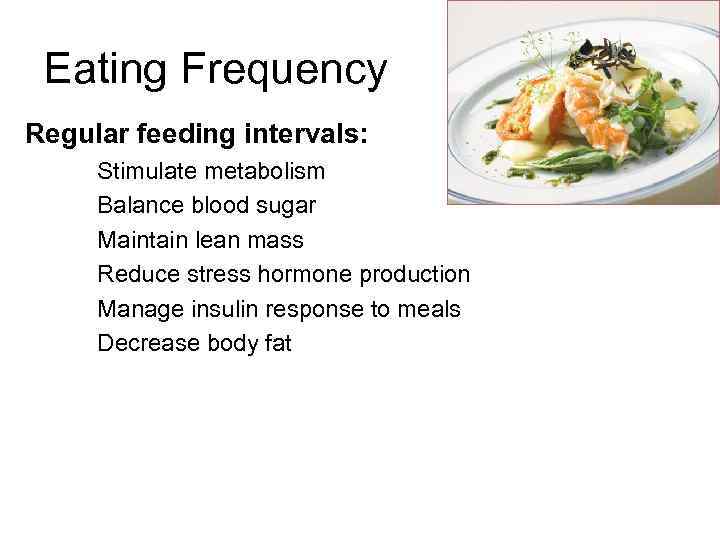
Eating Frequency Regular feeding intervals: Stimulate metabolism Balance blood sugar Maintain lean mass Reduce stress hormone production Manage insulin response to meals Decrease body fat
Eating Frequency Problem Solving 1) 2) 3) 4) 5) How many meals a day should I be eating? Should I eat before bed, before exercise, etc? How big should these meals be? Does this mean 3 meals and 2 -3 snacks per day? What happens if I miss a meal?
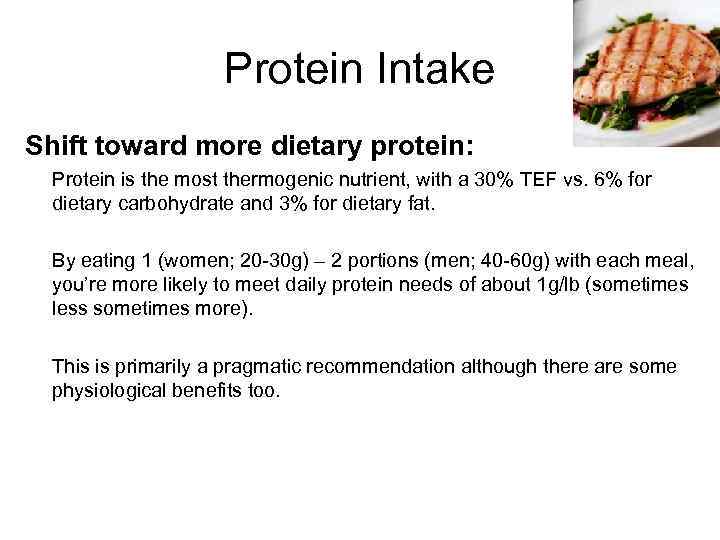
Protein Intake Shift toward more dietary protein: Protein is the most thermogenic nutrient, with a 30% TEF vs. 6% for dietary carbohydrate and 3% for dietary fat. By eating 1 (women; 20 -30 g) – 2 portions (men; 40 -60 g) with each meal, you’re more likely to meet daily protein needs of about 1 g/lb (sometimes less sometimes more). This is primarily a pragmatic recommendation although there are some physiological benefits too.
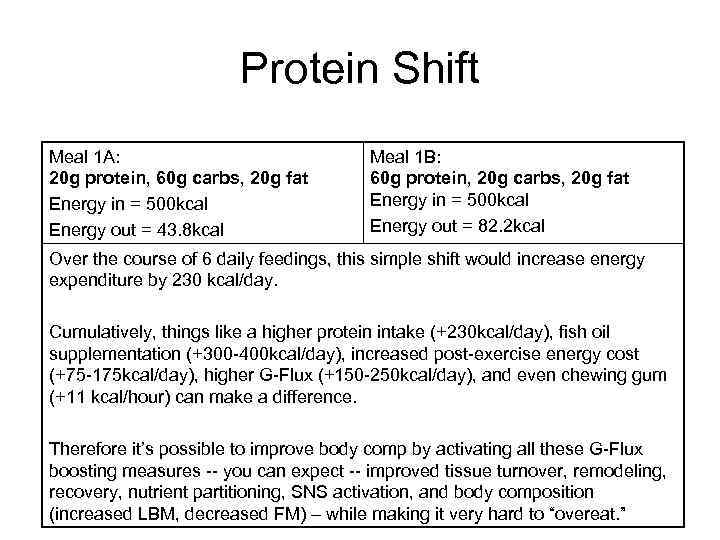
Protein Shift Meal 1 A: 20 g protein, 60 g carbs, 20 g fat Energy in = 500 kcal Energy out = 43. 8 kcal Meal 1 B: 60 g protein, 20 g carbs, 20 g fat Energy in = 500 kcal Energy out = 82. 2 kcal Over the course of 6 daily feedings, this simple shift would increase energy expenditure by 230 kcal/day. Cumulatively, things like a higher protein intake (+230 kcal/day), fish oil supplementation (+300 -400 kcal/day), increased post-exercise energy cost (+75 -175 kcal/day), higher G-Flux (+150 -250 kcal/day), and even chewing gum (+11 kcal/hour) can make a difference. Therefore it’s possible to improve body comp by activating all these G-Flux boosting measures -- you can expect -- improved tissue turnover, remodeling, recovery, nutrient partitioning, SNS activation, and body composition (increased LBM, decreased FM) – while making it very hard to “overeat. ”
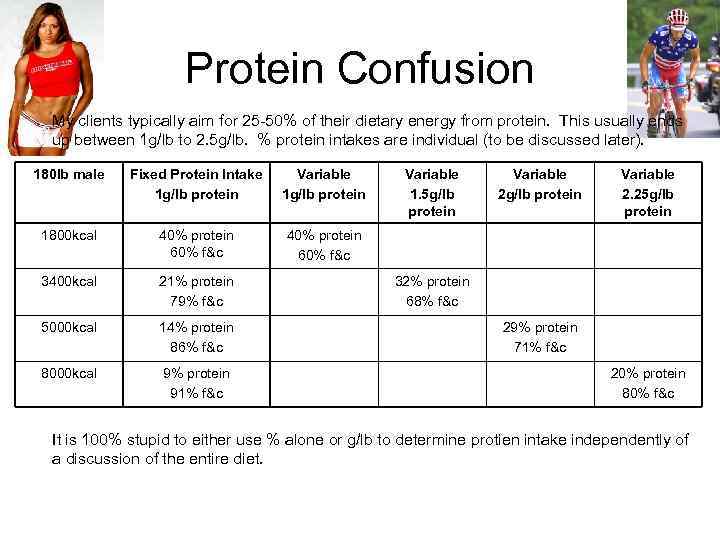
Protein Confusion My clients typically aim for 25 -50% of their dietary energy from protein. This usually ends up between 1 g/lb to 2. 5 g/lb. % protein intakes are individual (to be discussed later). 180 lb male Fixed Protein Intake 1 g/lb protein Variable 1 g/lb protein 1800 kcal 40% protein 60% f&c 3400 kcal 21% protein 79% f&c 5000 kcal 14% protein 86% f&c 8000 kcal 9% protein 91% f&c Variable 1. 5 g/lb protein Variable 2. 25 g/lb protein 32% protein 68% f&c 29% protein 71% f&c 20% protein 80% f&c It is 100% stupid to either use % alone or g/lb to determine protien intake independently of a discussion of the entire diet.
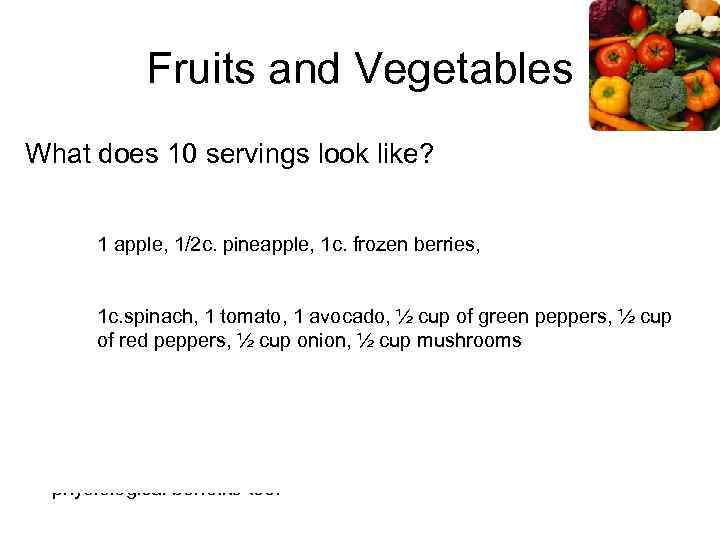
Fruits and Vegetables Focus – vitamins and minerals as well as fiber, What does 10 servings look like? phytochemicals, and alkaline/acid balance 1 apple, 2 portions with each meal, berries, By eating 1 – 1/2 c. pineapple, 1 c. frozen you’re more likely to meet daily fruit and veggie recommendations of about 8 -12 servings per day (athletes may need more). 1 c. spinach, 1 tomato, 1 avocado, ½ cup of green peppers, ½ cup of red peppers, ½ cup onion, ½ cup mushrooms 1 medium sized fruit, ½ cup raw chopped fruit or vegetables, and 1 cup of raw leafy vegetables equals a serving. This is primarily a pragmatic recommendation although there are some physiological benefits too.
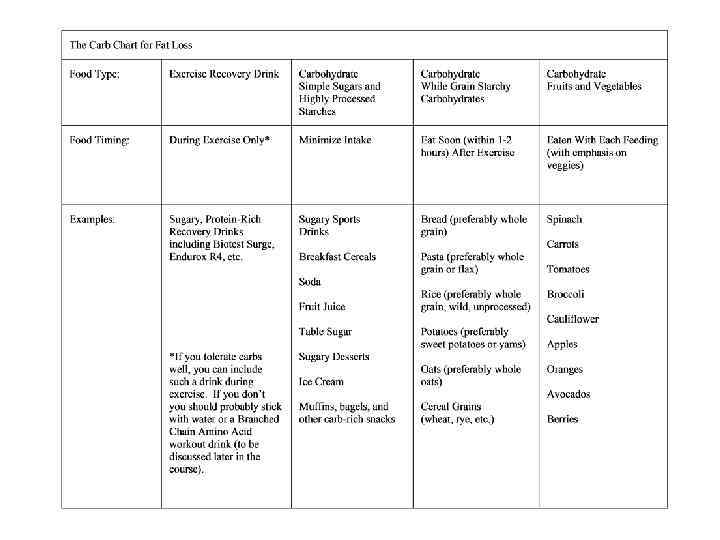
Carb Timing Carbohydrate timing and individualization: For fat loss, earn higher carb meals by exercising first When you do earn them stick with whole grain, unprocessed varieties Caveat For carb-dependent sports and those interested in muscle gain, more carbs may be included More on this to come…
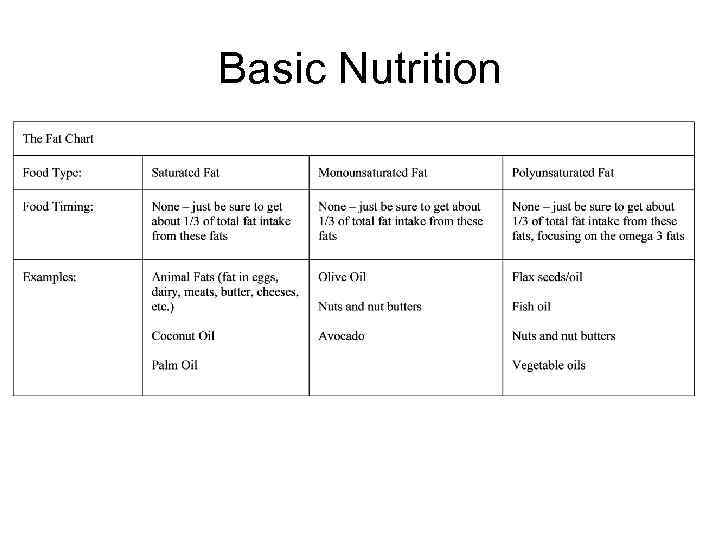
Fat Intake There is a wide range of potential fat intake (15 -60%) and it’s based on carb intake. An average, healthy intake would be 30% Goals would be 1/3 of each type of fat (mono, poly, sat) and 2: 1 or 1: 1 omega 6 to omega 3.
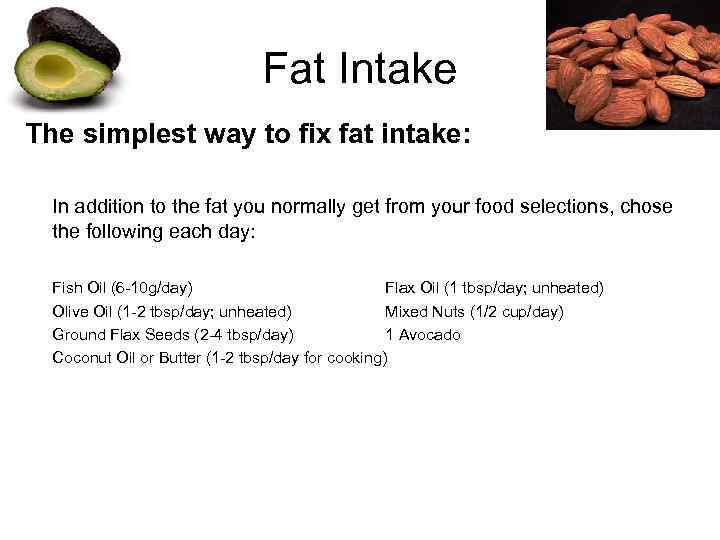
Fat Intake The simplest way to fix fat intake: In addition to the fat you normally get from your food selections, chose the following each day: Fish Oil (6 -10 g/day) Flax Oil (1 tbsp/day; unheated) Olive Oil (1 -2 tbsp/day; unheated) Mixed Nuts (1/2 cup/day) Ground Flax Seeds (2 -4 tbsp/day) 1 Avocado Coconut Oil or Butter (1 -2 tbsp/day for cooking)
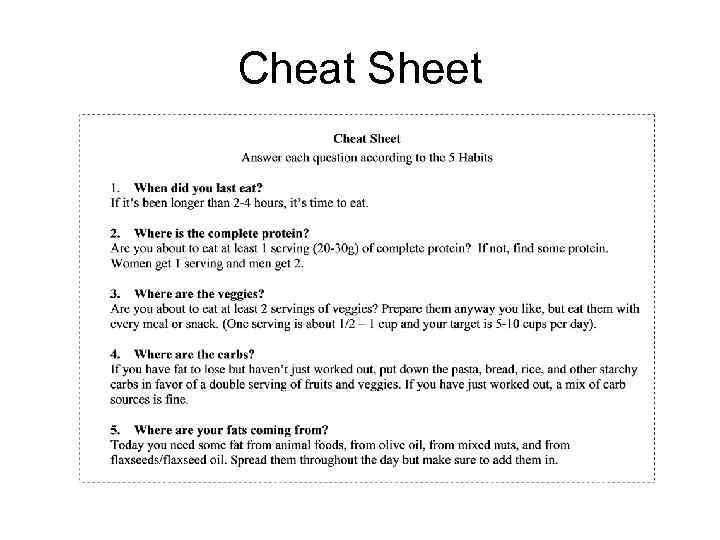
Cheat Sheet
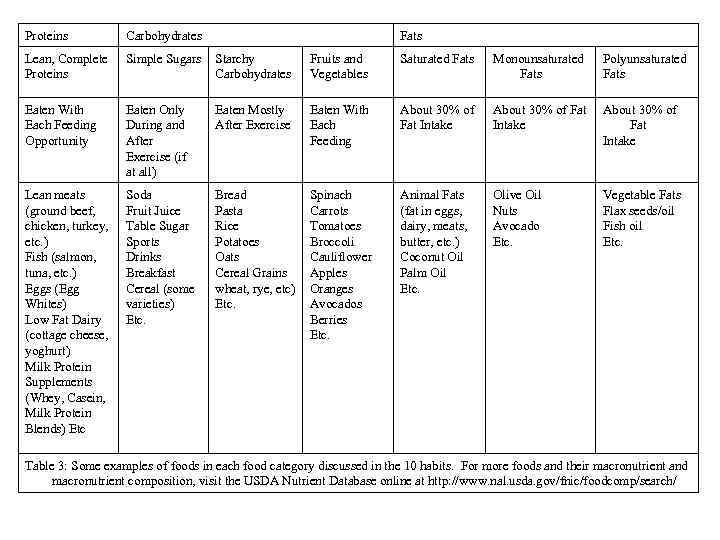
Proteins Carbohydrates Fats Lean, Complete Proteins Simple Sugars Starchy Carbohydrates Fruits and Vegetables Saturated Fats Monounsaturated Fats Polyunsaturated Fats Eaten With Each Feeding Opportunity Eaten Only During and After Exercise (if at all) Eaten Mostly After Exercise Eaten With Each Feeding About 30% of Fat Intake Lean meats (ground beef, chicken, turkey, etc. ) Fish (salmon, tuna, etc. ) Eggs (Egg Whites) Low Fat Dairy (cottage cheese, yoghurt) Milk Protein Supplements (Whey, Casein, Milk Protein Blends) Etc Soda Fruit Juice Table Sugar Sports Drinks Breakfast Cereal (some varieties) Etc. Bread Pasta Rice Potatoes Oats Cereal Grains wheat, rye, etc) Etc. Spinach Carrots Tomatoes Broccoli Cauliflower Apples Oranges Avocados Berries Etc. Animal Fats (fat in eggs, dairy, meats, butter, etc. ) Coconut Oil Palm Oil Etc. Olive Oil Nuts Avocado Etc. Vegetable Fats Flax seeds/oil Fish oil Etc. Table 3: Some examples of foods in each food category discussed in the 10 habits. For more foods and their macronutrient and macronutrient composition, visit the USDA Nutrient Database online at http: //www. nal. usda. gov/fnic/foodcomp/search/
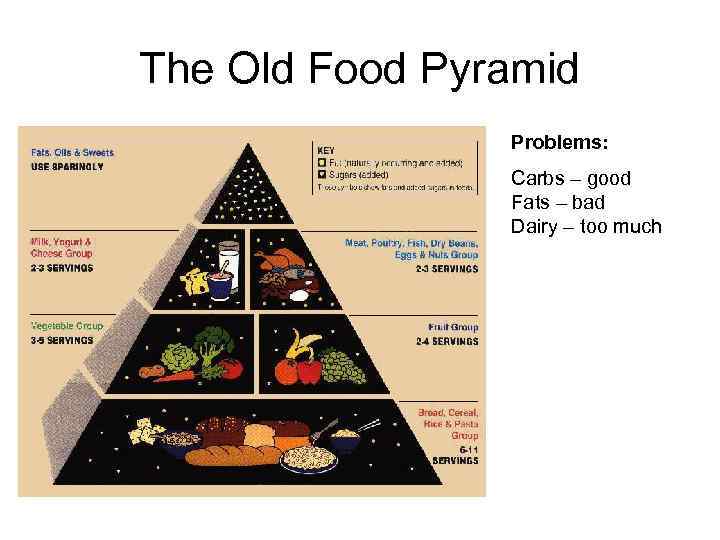
The Old Food Pyramid Problems: Carbs – good Fats – bad Dairy – too much
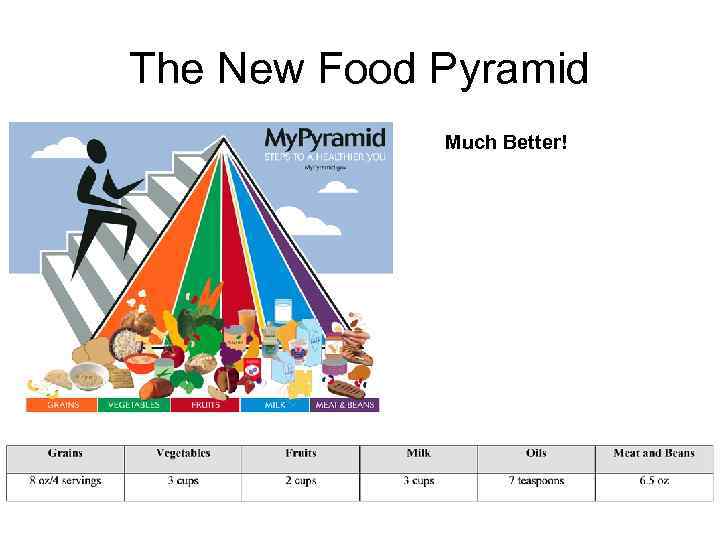
The New Food Pyramid Much Better!
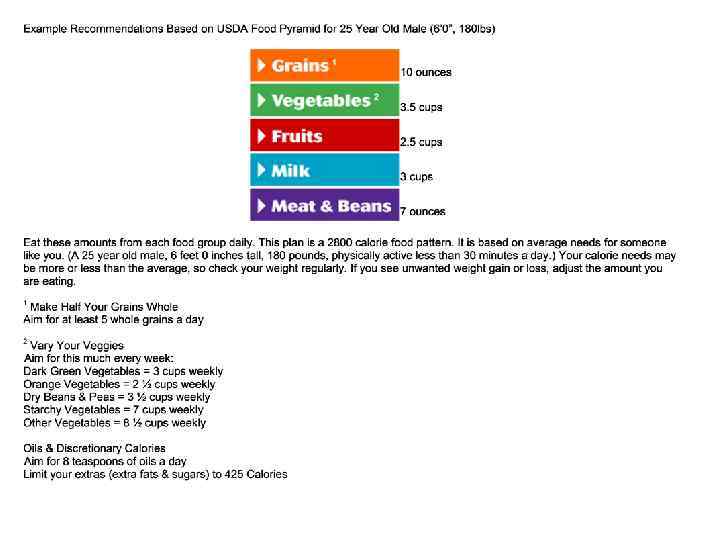
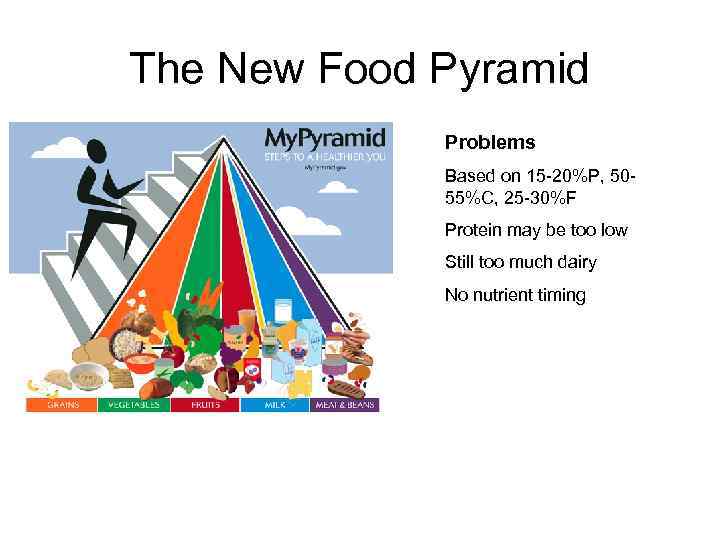
The New Food Pyramid Problems Based on 15 -20%P, 5055%C, 25 -30%F Protein may be too low Still too much dairy No nutrient timing
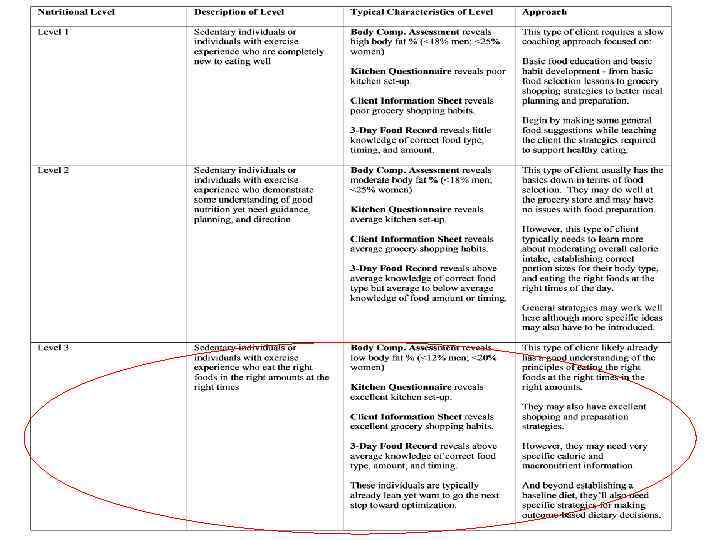
Nutritional Individualization The habits previously discussed are good for Level 1 and 2 clients. However, Level 3 clients may need a higher level of individualization.
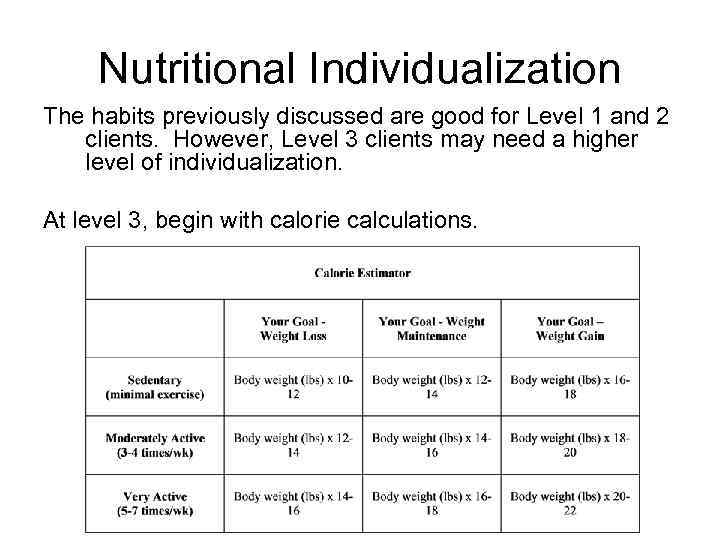
Nutritional Individualization The habits previously discussed are good for Level 1 and 2 clients. However, Level 3 clients may need a higher level of individualization. At level 3, begin with calorie calculations.
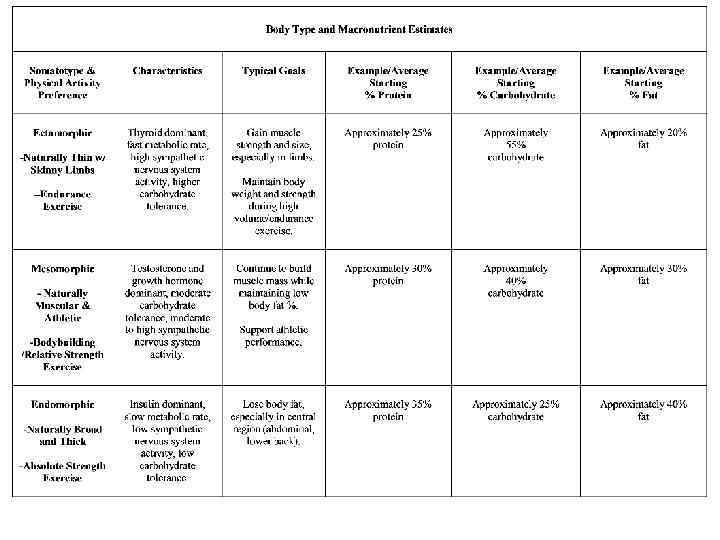
Nutritional Individualization Determine macronutrient recommendations
Body Type Individualization Ectomorph Notes: Exercise and Recovery: Require lots of pure rest & recovery time (yoga, meditation, etc). May require regular CNS recovery supplementation Feeding: Usually under eat during ad-libitum conditions and require forcefeeding until they adapt to new, higher intake. Should eat carbs throughout the day (low GI if possible) – although highest carb meals (high GI) should come during/post-exercise. Do best on higher calorie and carbohydrate intakes (25%P; 55%C; 20%F)
Body Type Individualization Mesomorph Notes Feeding: Usually don’t need to count calories as they respond fairly well to ad libitum eating conditions. Do well to ingest low GI breakfast carbs along with higher carb (high GI) workout and post-exercise meals. Fewer carbs during the rest of the day. Do best on a mixed nutritional intake (30%P; 40%C; 30%F)
Body Type Individualization Endomorphic Exercise: Require higher exercise volume than other types Feeding: Don’t always over eat relative to energy expenditure but do have poor nutrient partitioning. Limit carbs to during exercise (if at all) and maybe some low GI, high fiber carbs within 1 -2 hours post exercise. The rest of the carbs should come from veggies w/ small amount of fruit. (35%P; 25%C; 40%F)
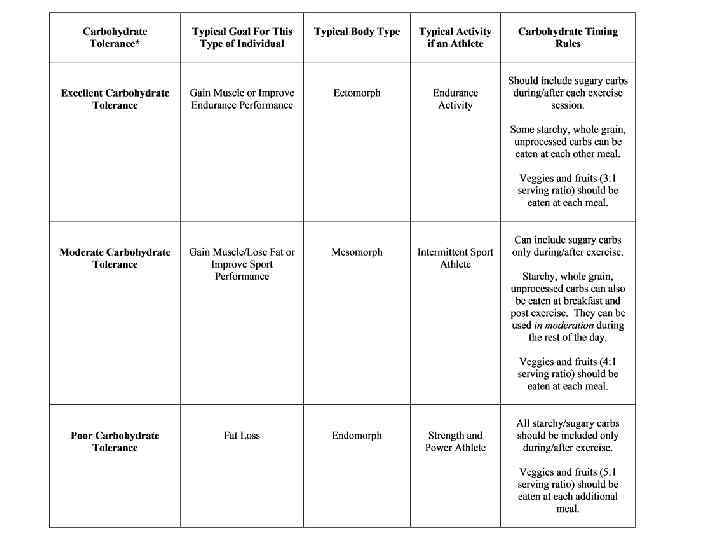
Nutritional Individualization Determine nutrient timing
Nutritional Individualization The USDA Food Database http: //www. nal. usda. gov/fnic/foodcomp/search/ Nutrition Data http: //www. nutritiondata. com/

…Time for a break…
Special Cases Very low calorie diets -extreme levels of leanness with maximal muscle mass Very low carb diets -extreme levels of leanness with maximal muscle mass Calorie cycling -necessary if using either above -3 ways to cycle for fat loss -cycling for muscle gain Very high carb diets -endurance athletes prior to events
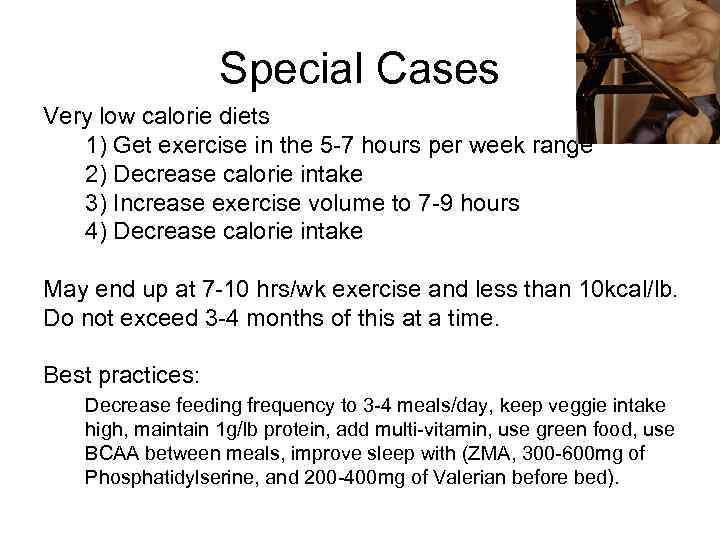
Special Cases Very low calorie diets 1) Get exercise in the 5 -7 hours per week range 2) Decrease calorie intake 3) Increase exercise volume to 7 -9 hours 4) Decrease calorie intake May end up at 7 -10 hrs/wk exercise and less than 10 kcal/lb. Do not exceed 3 -4 months of this at a time. Best practices: Decrease feeding frequency to 3 -4 meals/day, keep veggie intake high, maintain 1 g/lb protein, add multi-vitamin, use green food, use BCAA between meals, improve sleep with (ZMA, 300 -600 mg of Phosphatidylserine, and 200 -400 mg of Valerian before bed).
Special Cases Very low carb diets Similar to low calorie diets yet carbs will make up less than 20% of intake, protein will remain at 1 g/lb, and fat will make up the rest.
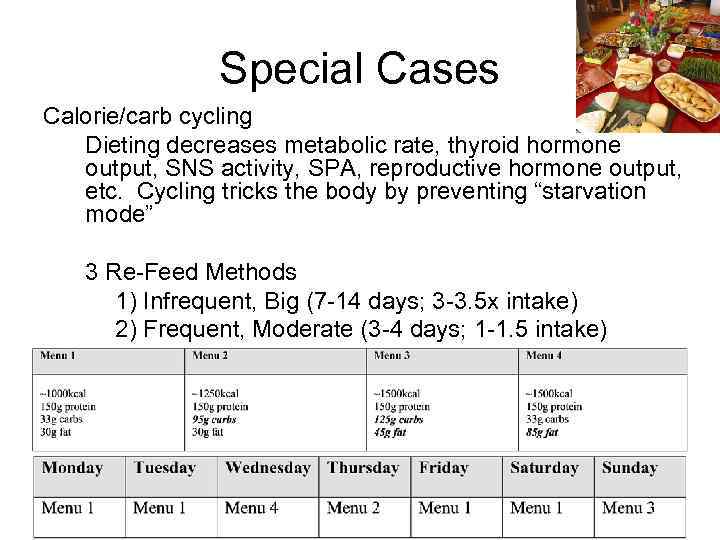
Special Cases Calorie/carb cycling Dieting decreases metabolic rate, thyroid hormone output, SNS activity, SPA, reproductive hormone output, etc. Cycling tricks the body by preventing “starvation mode” 3 Re-Feed Methods 1) Infrequent, Big (7 -14 days; 3 -3. 5 x intake) 2) Frequent, Moderate (3 -4 days; 1 -1. 5 intake) 3) Strategic Cycling
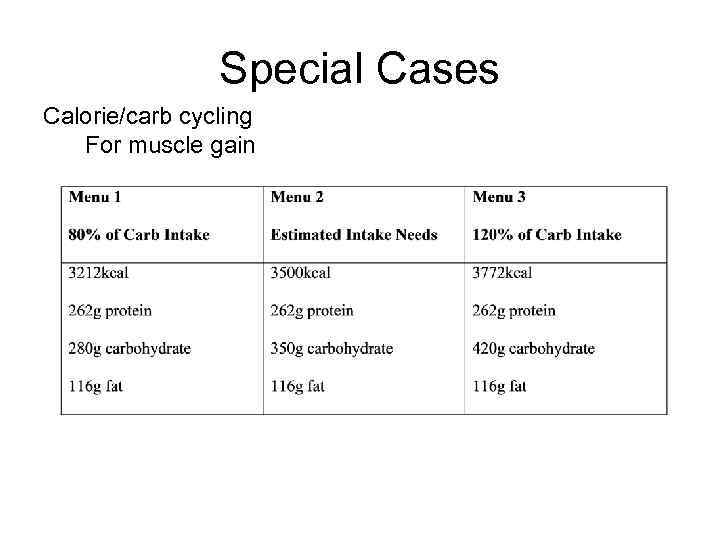
Special Cases Calorie/carb cycling For muscle gain
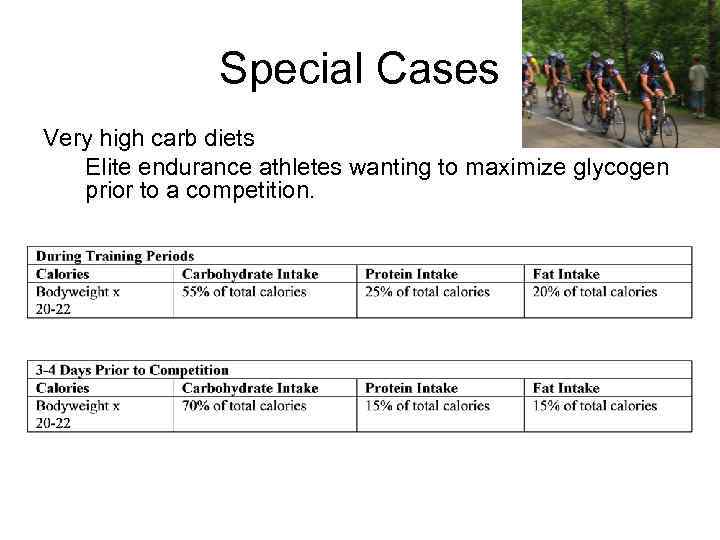
Special Cases Very high carb diets Elite endurance athletes wanting to maximize glycogen prior to a competition.

…Time for a break…
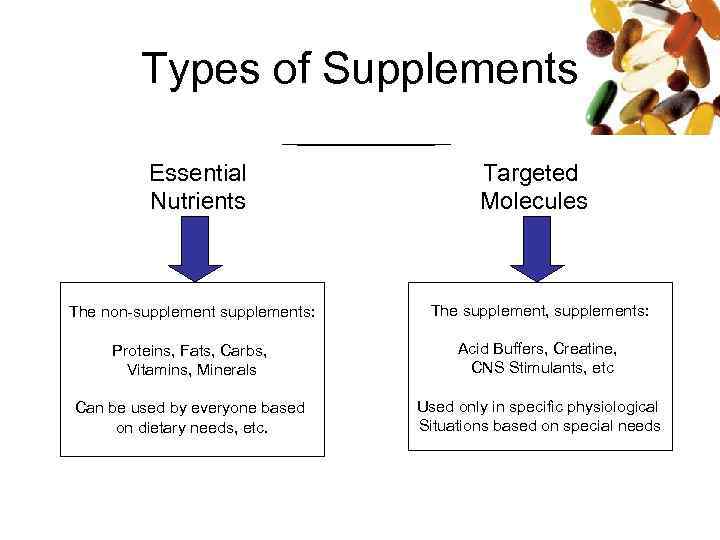
Types of Supplements Essential Nutrients Targeted Molecules The non-supplements: The supplement, supplements: Proteins, Fats, Carbs, Vitamins, Minerals Acid Buffers, Creatine, CNS Stimulants, etc Can be used by everyone based on dietary needs, etc. Used only in specific physiological Situations based on special needs
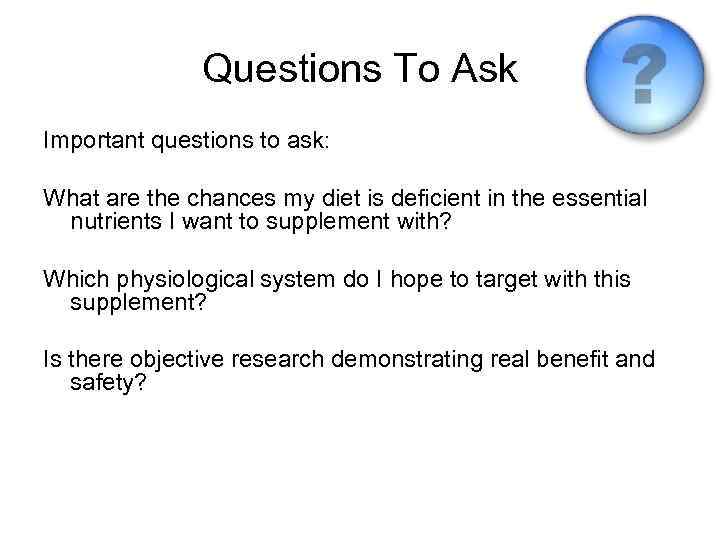
Questions To Ask Important questions to ask: What are the chances my diet is deficient in the essential nutrients I want to supplement with? Which physiological system do I hope to target with this supplement? Is there objective research demonstrating real benefit and safety?
Questions To Ask First priority: Eat better acid, Proteins/amino acids, essential fatty What are the chances my diet is deficient in the essential nutrients I want to supplement with? vitamin/minerals, phytochemicals/phytonutrients Next step: Supplement on “bad days” 50% hospitalized patients in urban areas, 42% receiving hip replacement, A deficiency in North America? and 40 -85% in nursing homes show deficiencies/malnourishment. Exercisers and athletes also can fall short due to food aversions, low calorie intake, low protein intake, low F&V intake, low fat intake, poor choices (esp. when on the road).
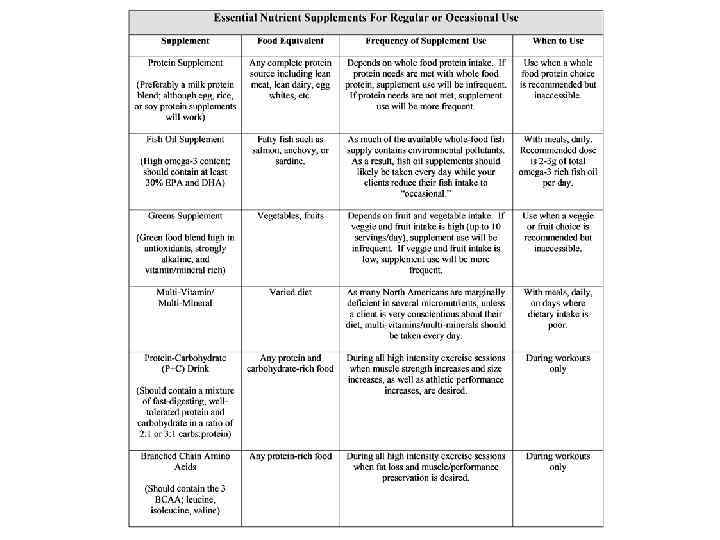
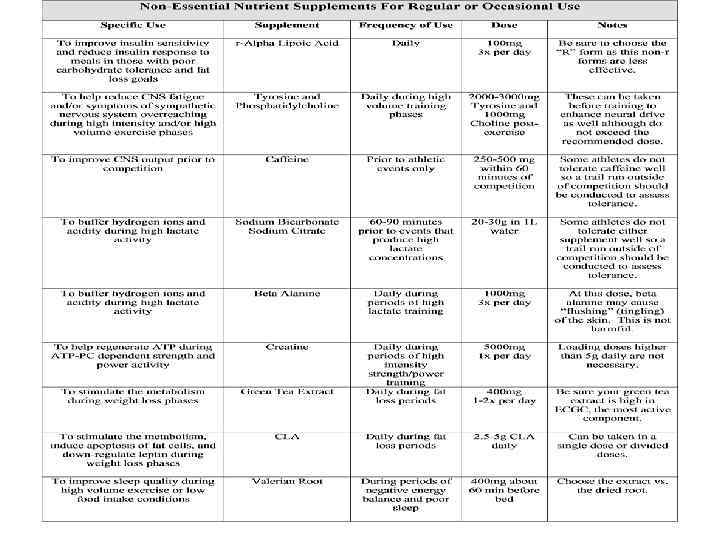
Questions To Ask Which physiological system do I hope to target with this supplement?
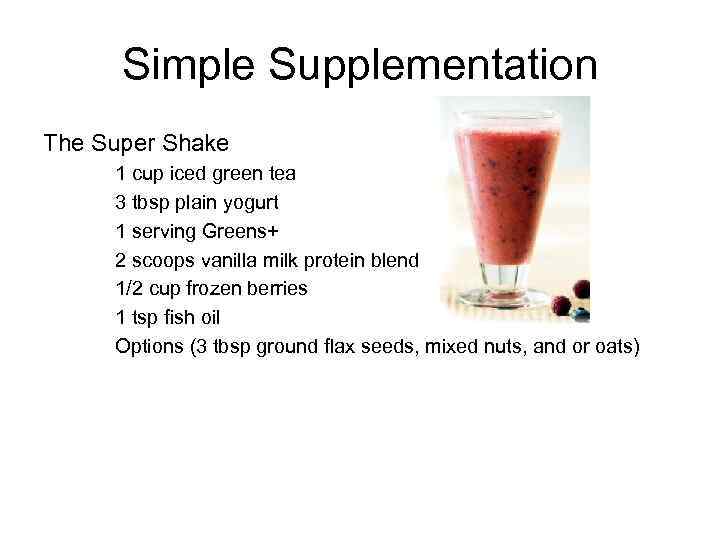
Simple Supplementation The Super Shake 1 cup iced green tea 3 tbsp plain yogurt 1 serving Greens+ 2 scoops vanilla milk protein blend 1/2 cup frozen berries 1 tsp fish oil Options (3 tbsp ground flax seeds, mixed nuts, and or oats)
Questions To Ask Is there objective research demonstrating real benefit and safety? Example: Creatine A review of over 500 studies evaluating effects on muscle physiology and/or exercise capacity. 300 have evaluated performance value and 70% showed positive results. Of these, very few showed any negative effects. www. pubmed. com
Athletes? IOC Sports Nutrition Consensus (2003) • “The amount, composition and timing of food intake can profoundly affect sports performance. Good nutritional practice will help athletes train hard, recover quickly and adapt more effectively with less risk of illness and injury. ” • “The right diet will help athletes achieve an optimum body size and body composition to achieve greater success in their sport. ”

Are They Safe? FDA does not test effectiveness, safety, or purity • FDA does not analyze supplement products before they are sold to consumers. The manufacturer is responsible for ensuring that the ingredient list is accurate and that the ingredients are safe. They are also required to make sure that the content matches the amount declared on the label. FDA does not have adequate resources to analyze dietary products sent by consumers who want to know their content. Instead, consumers may contact the manufacturer or a commercial laboratory.

Are They Safe? If the FDA does not test effectiveness, safety, or purity • No guarantee of: – Accuracy of ingredient list – Accuracy of contents – Safety of ingredients – Research supporting efficacy

Are They Safe? In Canada, stricter regulations are in place… Before any supplement is produced/marketed, this product has to be cleared by the NHPD (Natural Health Products Directorate) • • • Products & manufacturers licenses GMPs Adverse reaction reporting Clinical trials to support claims and safety Labeling conventions have to be used.

Are They Safe? Danger of Contamination (2001)? • 634 non-hormonal products – – • 289 of products came from companies that sold hormonal products 345 came from companies that did not sell hormonal products. 94 samples were positive for banned substances and 66 were questionable (25%).
Strategies 1) Check with www. wada-ama. org 2) Check for supplement/drug/food interactions at www. merk. com/mmhe 3) Choose a larger company and look for certificates or 3 rd party analysis. www. nsf. org has begun this but few supplements have been tested. 4) www. consumerlab. com tests for label claims 5) Choose products with few ingredients

…Time for a break…
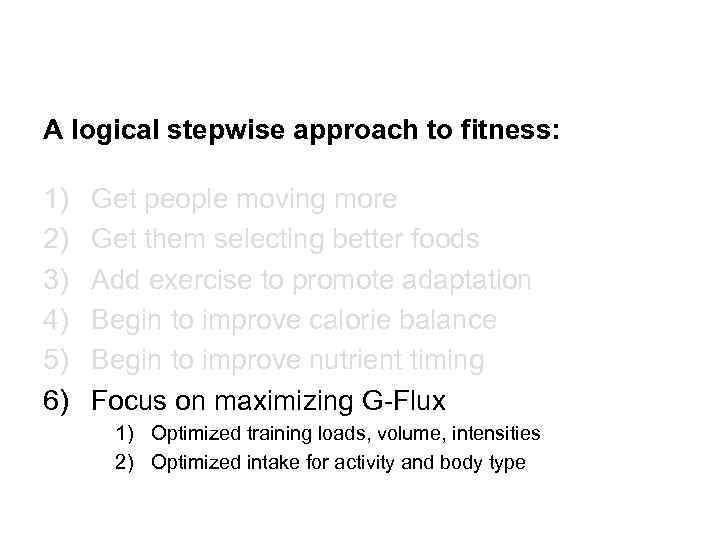
A logical stepwise approach to fitness: 1) 2) 3) 4) 5) 6) Get people moving more Get them selecting better foods Add exercise to promote adaptation Begin to improve calorie balance Begin to improve nutrient timing Focus on maximizing G-Flux 1) Optimized training loads, volume, intensities 2) Optimized intake for activity and body type
When energy balance gets confusing…
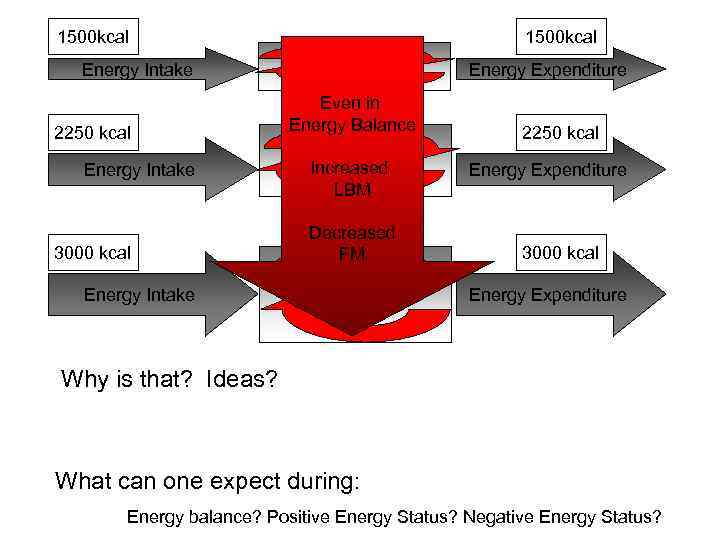
1500 kcal Energy Intake 2250 kcal Energy Intake 3000 kcal Energy Intake 1500 kcal Metabolic Rate Even in Energy Balance Metabolic Rate Increased LBM Decreased FM Metabolic Rate Energy Expenditure 2250 kcal Energy Expenditure 3000 kcal Energy Expenditure Why is that? Ideas? -Increased sympathetic activity -Increased micronutrient delivery -Improved nutrient partitioning -Faster tissue remodeling and turnover What can one expect during: Energy balance? Positive Energy Status? Negative Energy Status?
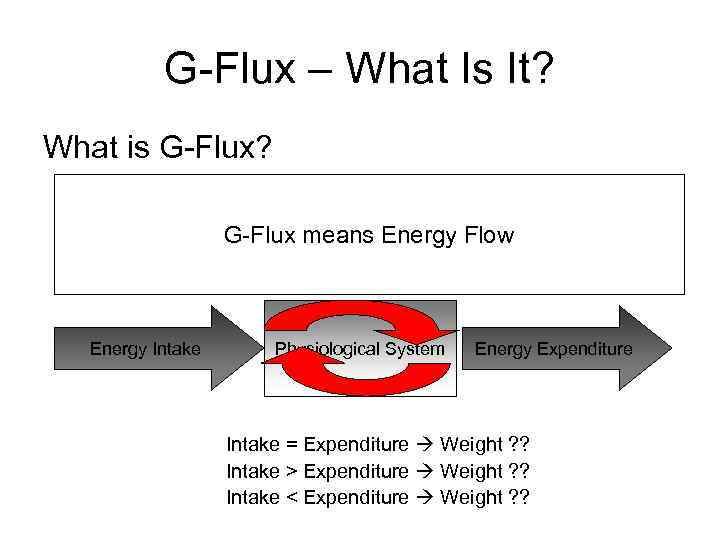
G-Flux – What Is It? What is G-Flux? – Definition: G-Flux is the 1 complex & 2 interdependent relationship between the G-Flux means Energy Flow energy that flows into & the energy that flows out of the body. Energy Intake Physiological System Energy Expenditure Intake = Expenditure Weight ? ? Intake > Expenditure Weight ? ? Intake < Expenditure Weight ? ?
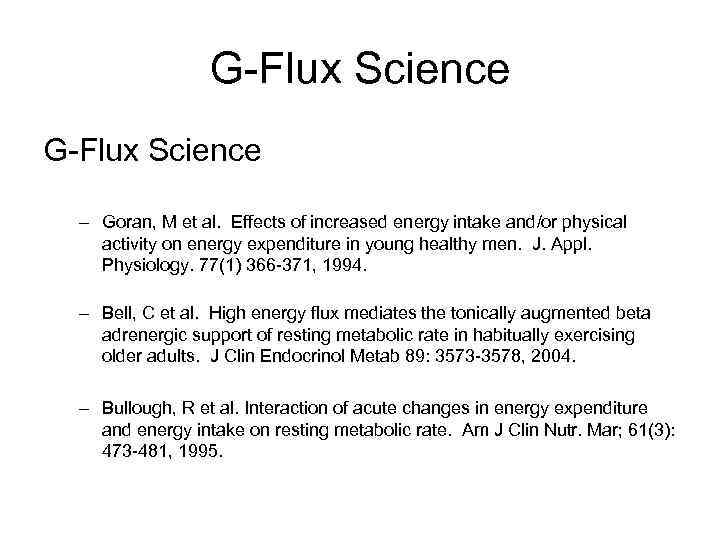
G-Flux Science – Goran, M et al. Effects of increased energy intake and/or physical activity on energy expenditure in young healthy men. J. Appl. Physiology. 77(1) 366 -371, 1994. – Bell, C et al. High energy flux mediates the tonically augmented beta adrenergic support of resting metabolic rate in habitually exercising older adults. J Clin Endocrinol Metab 89: 3573 -3578, 2004. – Bullough, R et al. Interaction of acute changes in energy expenditure and energy intake on resting metabolic rate. Am J Clin Nutr. Mar; 61(3): 473 -481, 1995.
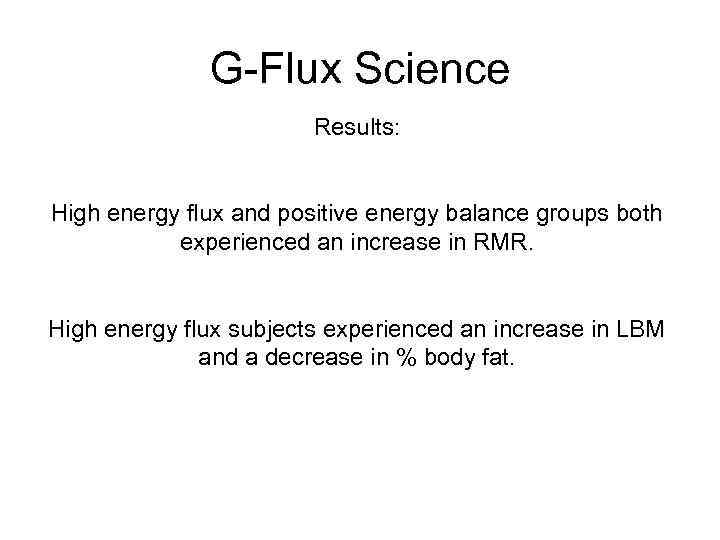
G-Flux Science *Goran et al study High Results: 10 day energy balance (at 2200 kcal) energy flux and positive| energy balance groups experienced an increase in RMR. 3 days off | 10 day treatment period (conditions below) both High energy flux subjects experienced an increase in LBM Treatment conditions: and a decrease in % body fat. 1. 2. 3. 4. Low flux - no change in energy intake or physical activity (balance at 2200 kcal) High flux - increased energy intake and expenditure (+50%; balance at 3300 kcal) Positive energy balance (3300 kcal in, 2200 kcal out) Negative energy balance (2200 kcal in, 3300 kcal out)
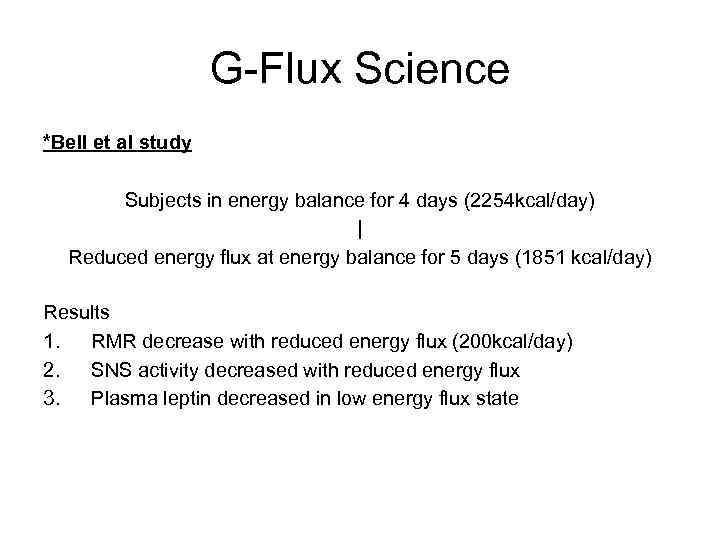
G-Flux Science *Bell et al study Subjects in energy balance for 4 days (2254 kcal/day) | Reduced energy flux at energy balance for 5 days (1851 kcal/day) Results 1. RMR decrease with reduced energy flux (200 kcal/day) 2. SNS activity decreased with reduced energy flux 3. Plasma leptin decreased in low energy flux state
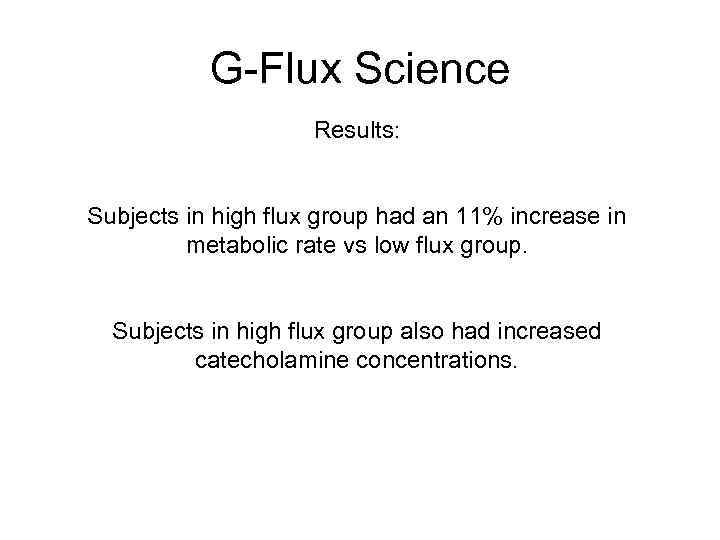
G-Flux Science *Bullough et al study Results: Subjects in high flux group had an 11% increase in metabolic rate vs low flux group. After initial testing, subjects were assigned to 4 conditions for 3 days: 1. 2. 3. 4. High energy flux while in energy balance Low energy flux while in energy balance Subjects in high flux group also had increased Negative energy balance catecholamine concentrations. Positive energy balance
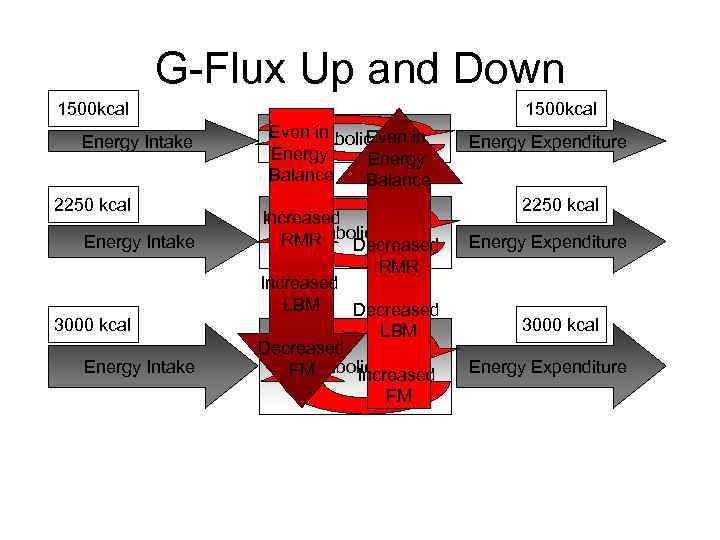
G-Flux Up and Down 1500 kcal Energy Intake 2250 kcal Energy Intake 3000 kcal Energy Intake 1500 kcal Even in Even Metabolic Ratein Energy Balance Increased Metabolic Rate RMR Decreased RMR Increased LBM Decreased Metabolic Rate FM Increased FM Energy Expenditure 2250 kcal Energy Expenditure 3000 kcal Energy Expenditure
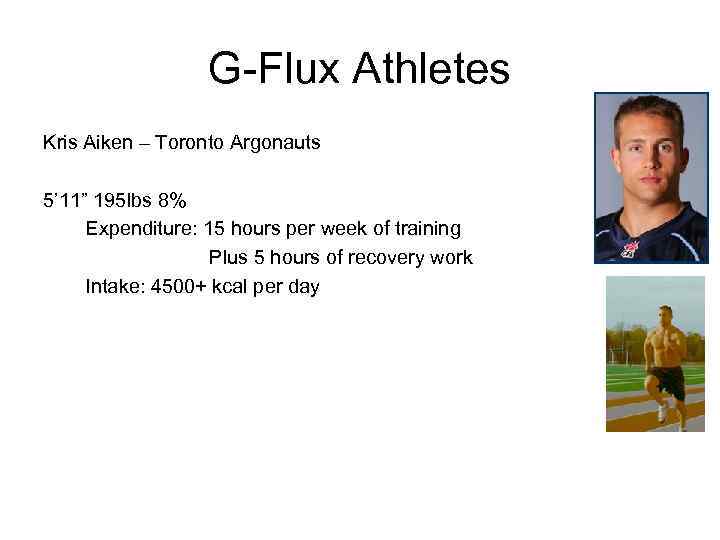
G-Flux Athletes Kris Aiken – Toronto Argonauts 5’ 11” 195 lbs 8% Expenditure: 15 hours per week of training Plus 5 hours of recovery work Intake: 4500+ kcal per day
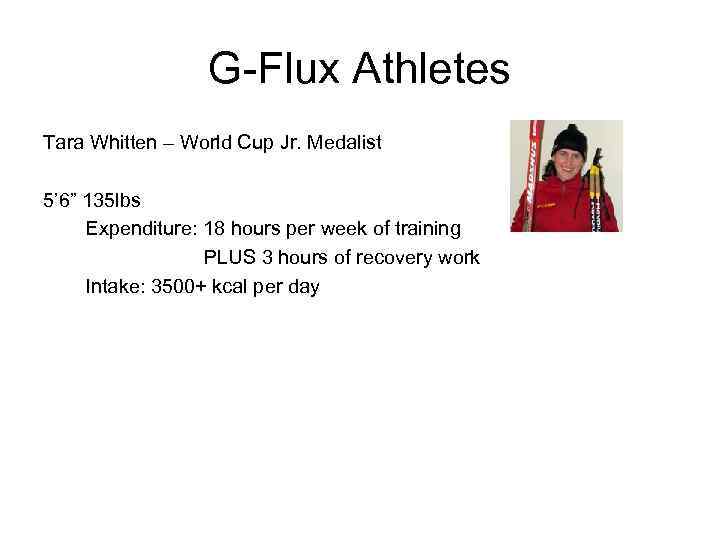
G-Flux Athletes Tara Whitten – World Cup Jr. Medalist 5’ 6” 135 lbs Expenditure: 18 hours per week of training PLUS 3 hours of recovery work Intake: 3500+ kcal per day
G-Flux - Athletes to Exercisers Not one of these athletes has to restrict energy intake! They train hard, eat the right things in the right amounts at the right times, and their body comp falls into line with their exercise. This is G-Flux firing on all cylinders. Recreational exercisers need to take this lesson – by increasing exercise activity, G-Flux increases. They can then EAT MORE and in doing so, health, body comp, and performance come into line.
G-Flux and High Volume Training Why aren’t these individuals all overtrained? With the right mixture of activities and the right nutritional intake, not only will overtraining be a non-issue, you will improve far faster than you thought possible. Tools to assess recovery/training status: 1) Simple objective markers 2) Simple subjective markers 3) POMS
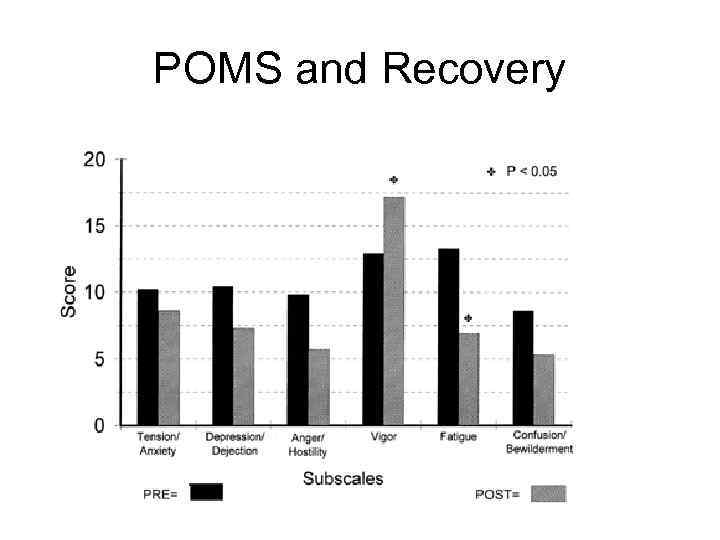
POMS and Recovery
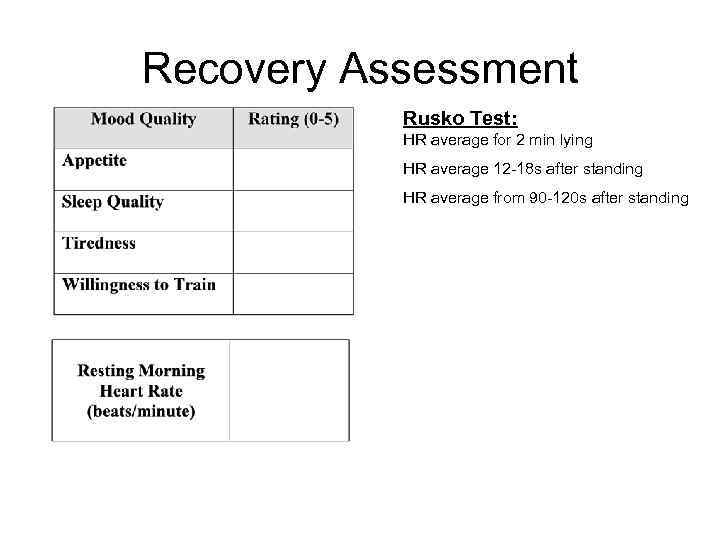
Recovery Assessment Rusko Test: HR average for 2 min lying HR average 12 -18 s after standing HR average from 90 -120 s after standing
G-Flux and High Volume Training List the reasons why increased training volume, increased 24 hour energy expenditure, and increased food intake will lead to improvements in body comp and training. -Increased nutrient intake (vitamins, minerals, phytochemicals) -Increased nutrient partitioning (muscle vs. fat storage) -Increased tissue turnover and adaptation (breakdown/rebuild) -Increased ability to work (increased density/super training effect)
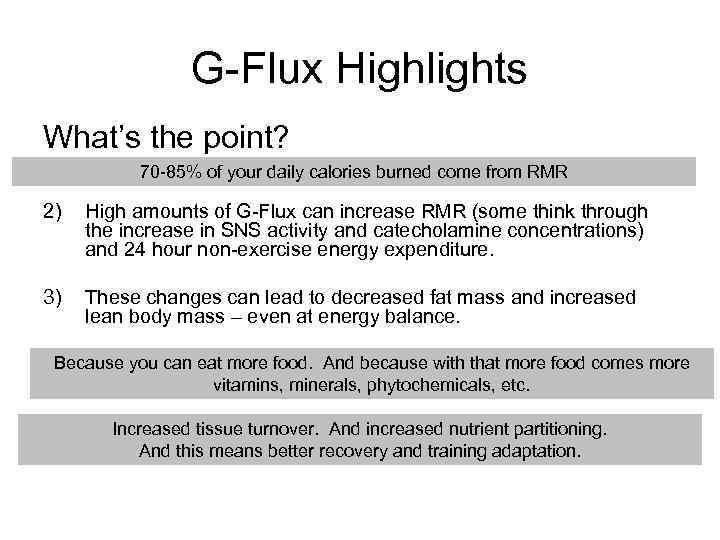
G-Flux Highlights What’s the point? 1) RMR accounts for ? ? ? of calories burned come from RMR 70 -85% of your daily your total daily energy expenditure? 2) High amounts of G-Flux can increase RMR (some think through the increase in SNS activity and catecholamine concentrations) and 24 hour non-exercise energy expenditure. 3) These changes can lead to decreased fat mass and increased lean body mass – even at energy balance. Because it’s hard to get food. And because with that more food Why is 4) Plus, you can eat moreto a state of positive energy balance. comes more this a good thing? vitamins, minerals, phytochemicals, etc. 5) Increased tissue turnover. And increased an elevated metabolic Besides decreased fat mass, what else isnutrient partitioning. And this rate good for? means better recovery and training adaptation.
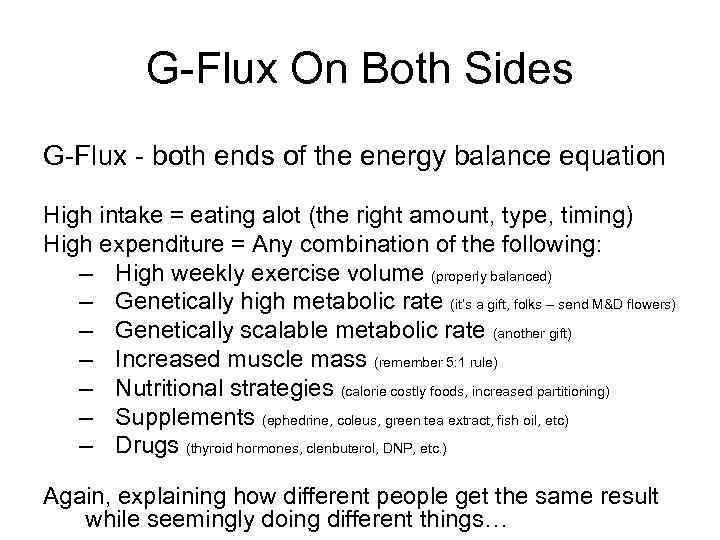
G-Flux On Both Sides G-Flux - both ends of the energy balance equation High intake = eating alot (the right amount, type, timing) High expenditure = Any combination of the following: – High weekly exercise volume (properly balanced) – Genetically high metabolic rate (it’s a gift, folks – send M&D flowers) – Genetically scalable metabolic rate (another gift) – Increased muscle mass (remember 5: 1 rule) – Nutritional strategies (calorie costly foods, increased partitioning) – Supplements (ephedrine, coleus, green tea extract, fish oil, etc) – Drugs (thyroid hormones, clenbuterol, DNP, etc. ) Again, explaining how different people get the same result while seemingly doing different things…
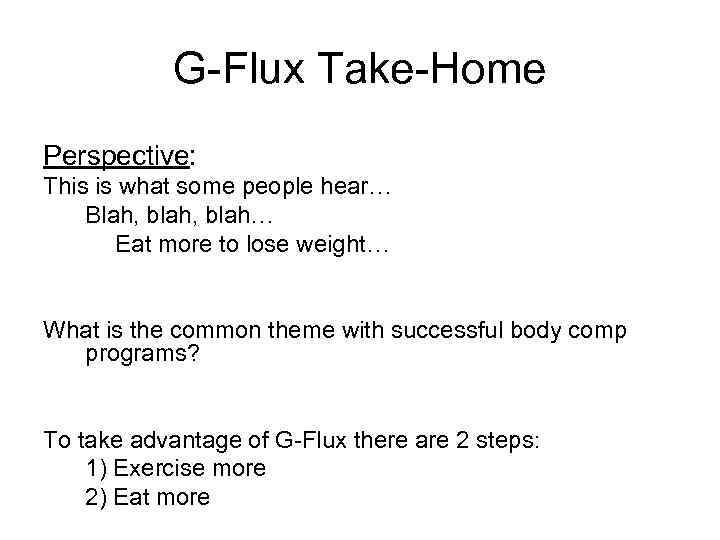
G-Flux Take-Home Perspective: This is what some people hear… Blah, blah… Eat more to lose weight… What is the common theme with successful body comp programs? To take advantage of G-Flux there are 2 steps: 1) Exercise more 2) Eat more
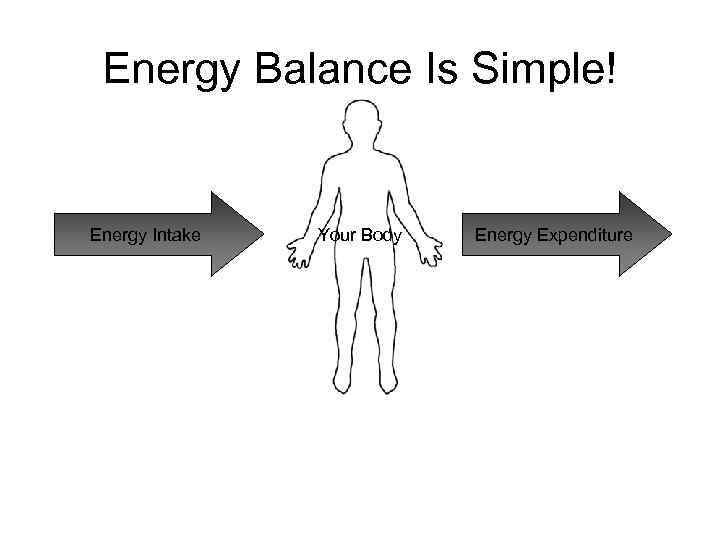
Energy Balance Is Simple! Energy Intake Your Body Energy Expenditure
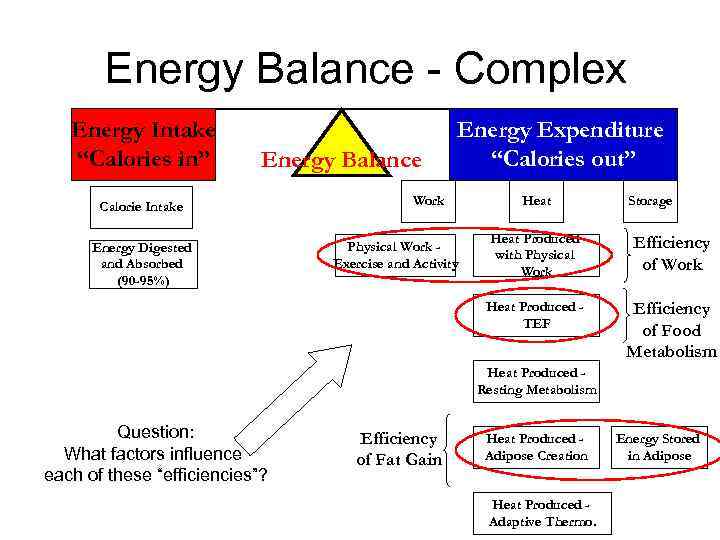
Energy Balance - Complex Energy Intake “Calories in” Energy Balance Calorie Intake Energy Expenditure “Calories out” Work Heat Storage Physical Work Exercise and Activity Heat Produced with Physical Work Efficiency of Work Heat Produced TEF Energy Digested and Absorbed (90 -95%) Efficiency of Food Metabolism Heat Produced Resting Metabolism Question: What factors influence each of these “efficiencies”? Efficiency of Fat Gain Heat Produced Adipose Creation Heat Produced Adaptive Thermo. Energy Stored in Adipose
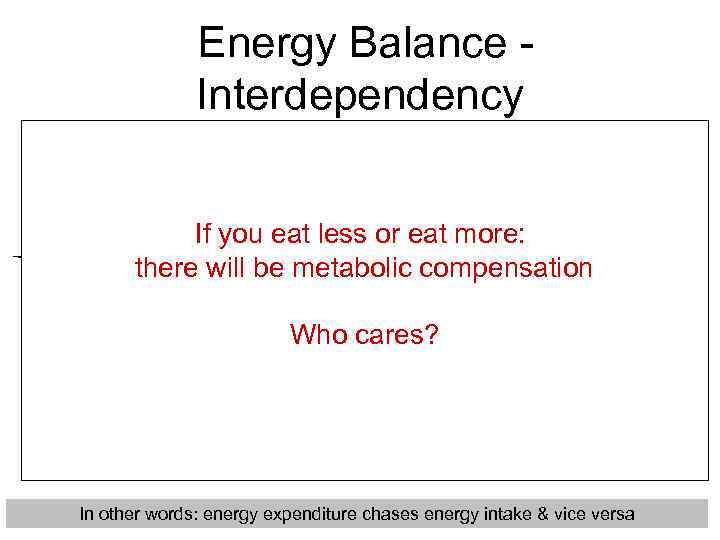
Energy Balance Interdependency Energy expenditure “feeds back” to impact body mass/composition and energy intake 1. Energy comes in. If you eat less or eat more: there will be metabolic compensation Energy Intake “Calories in” 2. Energy intake is “sensed”. Body Mass/Composition Who cares? Energy Expenditure “Calories out” 3. Signals are sent to manipulate expenditure. In other words: energy expenditure chases energy intake & vice versa
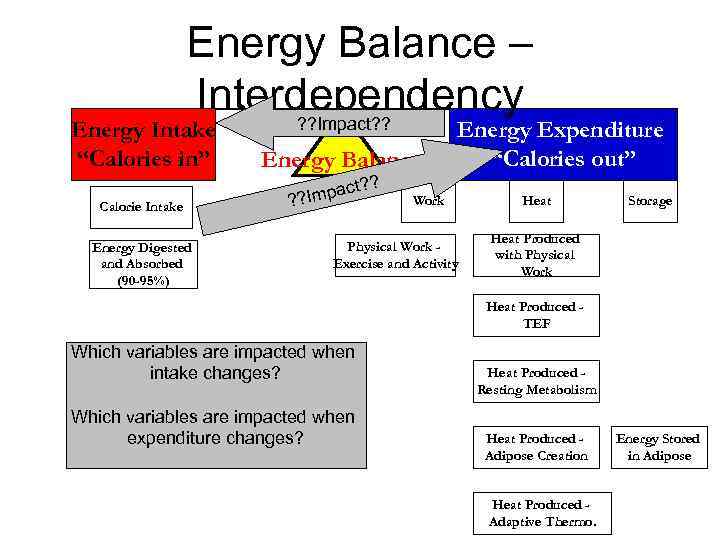
Energy Balance – Interdependency ? ? Impact? ? Energy Intake “Calories in” Calorie Intake Energy Digested and Absorbed (90 -95%) Energy Balance t? ? Impac ? ? Energy Expenditure “Calories out” Work Physical Work Exercise and Activity Heat Storage Heat Produced with Physical Work Heat Produced TEF Which variables are impacted when intake changes? Which variables are impacted when expenditure changes? Heat Produced Resting Metabolism Heat Produced Adipose Creation Heat Produced Adaptive Thermo. Energy Stored in Adipose
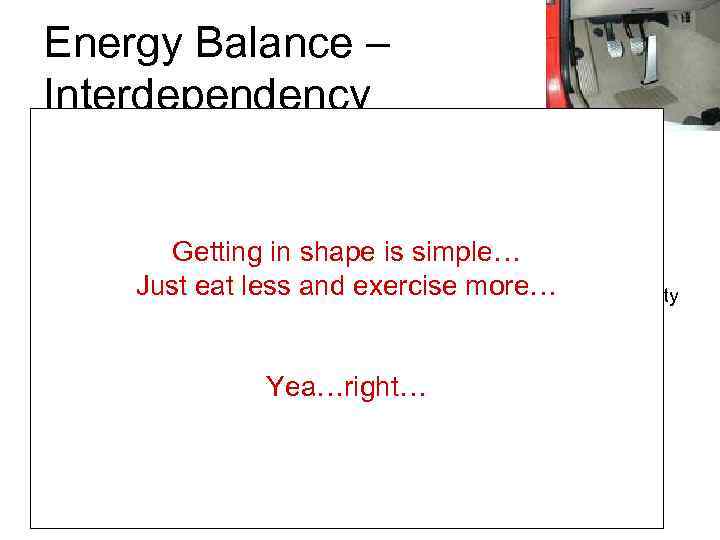
Energy Balance – Interdependency The metabolic gas pedal… -Increase or decrease food intake -You increase or decrease SNS activity Getting in shape is simple… -You increase or decrease physical activity Just eat less and exercise more… -You increase or decrease heat produced at rest &during activity -You decrease or increase the efficiencies -Increase or decrease physical activity Yea…right… -You increase or decrease food consumption We call this metabolic regulation…
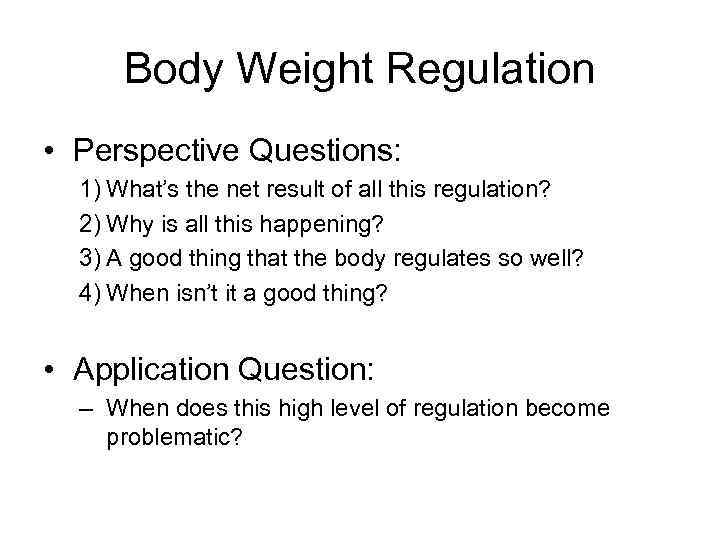
Body Weight Regulation • Perspective Questions: 1) What’s the net result of all this regulation? 2) Why is all this happening? 3) A good thing that the body regulates so well? 4) When isn’t it a good thing? • Application Question: – When does this high level of regulation become problematic? • • • Body is at an undesirable weight/composition Trying to change your body and it outsmarts your efforts Regulation stops occurring
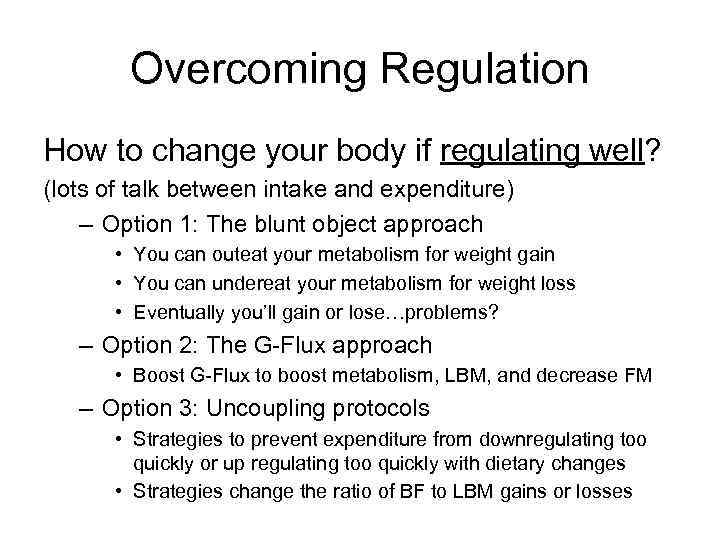
Overcoming Regulation How to change your body if regulating well? (lots of talk between intake and expenditure) – Option 1: The blunt object approach • You can outeat your metabolism for weight gain • You can undereat your metabolism for weight loss • Eventually you’ll gain or lose…problems? – Option 2: The G-Flux approach • Boost G-Flux to boost metabolism, LBM, and decrease FM – Option 3: Uncoupling protocols • Strategies to prevent expenditure from downregulating too quickly or up regulating too quickly with dietary changes • Strategies change the ratio of BF to LBM gains or losses
Simple Body Composition • Perspective Question: – So how do you get a great body without trying to control all of these variables, count every calorie absorbed, approximate metabolic shifts, attempt to figure out how well you regulate, etc? – Use the G-Flux principles with high exercise volumes and increased nutrient intake
When It Gets Complex Why it doesn’t always work? Application Question: Which types of individuals wouldn’t benefit from the “don’t count calories” model? Sedentary (older) Thrifty Good Regulators
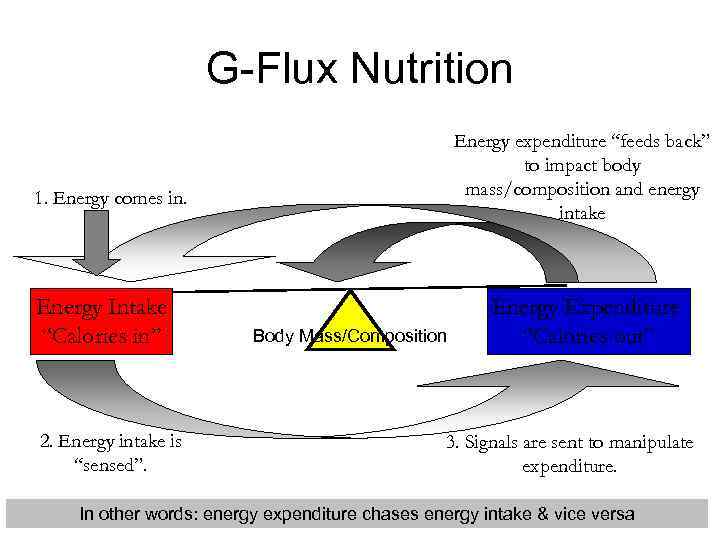
G-Flux Nutrition Energy expenditure “feeds back” to impact body mass/composition and energy intake 1. Energy comes in. Energy Intake “Calories in” 2. Energy intake is “sensed”. Body Mass/Composition Energy Expenditure “Calories out” 3. Signals are sent to manipulate expenditure. In other words: energy expenditure chases energy intake & vice versa
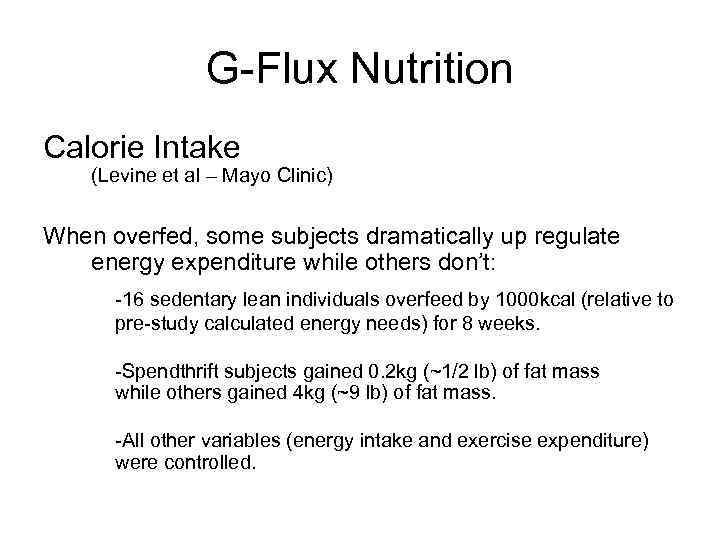
G-Flux Nutrition Calorie Intake (Levine et al – Mayo Clinic) When overfed, some subjects dramatically up regulate energy expenditure while others don’t: -16 sedentary lean individuals overfeed by 1000 kcal (relative to pre-study calculated energy needs) for 8 weeks. -Spendthrift subjects gained 0. 2 kg (~1/2 lb) of fat mass while others gained 4 kg (~9 lb) of fat mass. -All other variables (energy intake and exercise expenditure) were controlled.
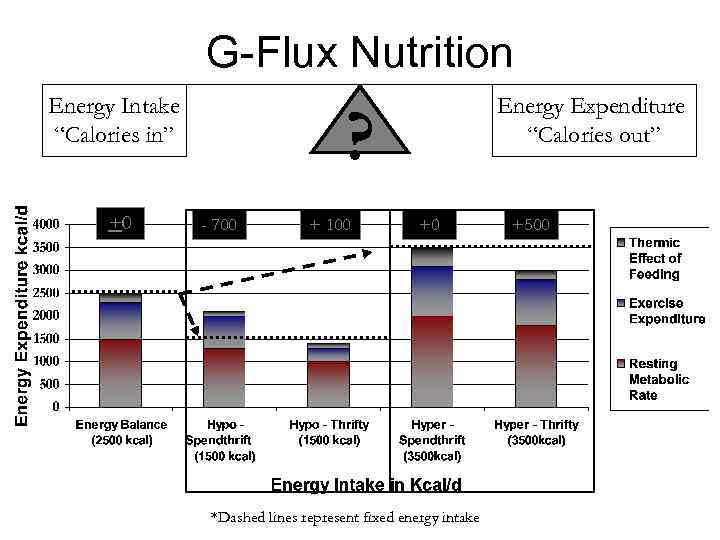
G-Flux Nutrition Energy Intake “Calories in” +0 Energy Expenditure “Calories out” ? - 700 + 100 +0 *Dashed lines represent fixed energy intake +500
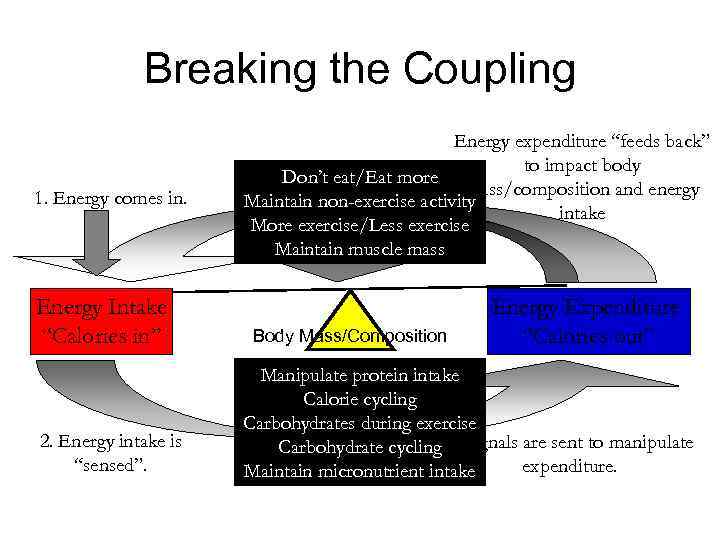
Breaking the Coupling 1. Energy comes in. Energy Intake “Calories in” 2. Energy intake is “sensed”. Energy expenditure “feeds back” to impact body Don’t eat/Eat more mass/composition and energy Maintain non-exercise activity intake More exercise/Less exercise Maintain muscle mass 2 Body Mass/Composition Energy Expenditure “Calories out” Manipulate protein intake Calorie cycling Carbohydrates during exercise Carbohydrate cycling 3. Signals are sent to manipulate expenditure. Maintain micronutrient intake 1
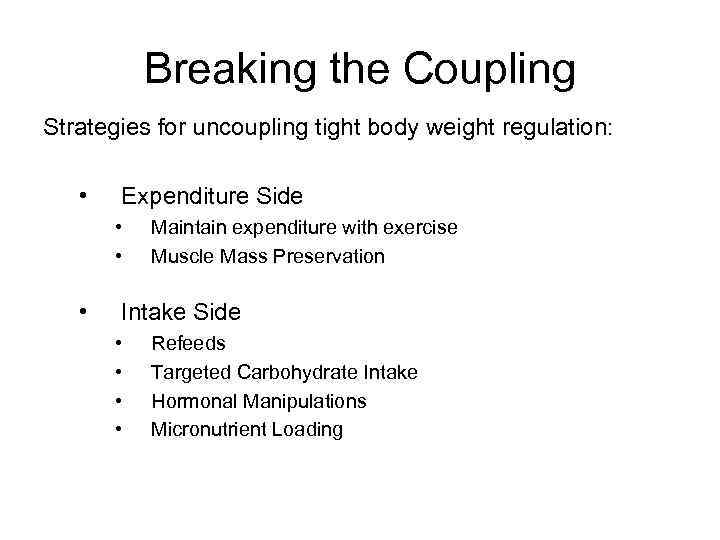
Breaking the Coupling Strategies for uncoupling tight body weight regulation: • Expenditure Side • • • Maintain expenditure with exercise Muscle Mass Preservation Intake Side • • Refeeds Targeted Carbohydrate Intake Hormonal Manipulations Micronutrient Loading

Question and Answer
Скачать презентацию The Power of G-Flux Build Muscle Lose Fat
boston_seminar.ppt