


 Скачать презентацию THE PODHALE GEOTHERMAL SPACE HEATING PROJECT THE
8cd5f0389c10faa0d7cf6541d9ba3bb9.ppt
- Количество слайдов: 39
 THE PODHALE GEOTHERMAL SPACE HEATING PROJECT
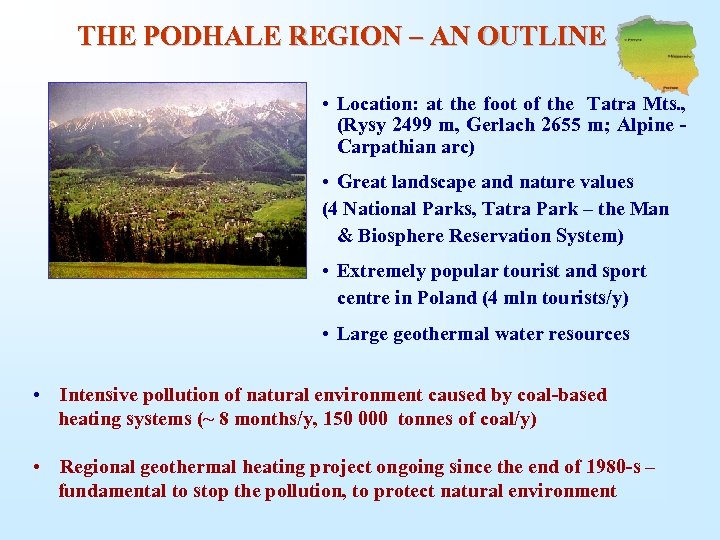 THE PODHALE REGION – AN OUTLINE • Location: at the foot of the Tatra Mts. , (Rysy 2499 m, Gerlach 2655 m; Alpine - Carpathian arc) • Great landscape and nature values (4 National Parks, Tatra Park – the Man & Biosphere Reservation System) • Extremely popular tourist and sport centre in Poland (4 mln tourists/y) • Large geothermal water resources • Intensive pollution of natural environment caused by coal-based heating systems (~ 8 months/y, 150 000 tonnes of coal/y) • Regional geothermal heating project ongoing since the end of 1980 -s – fundamental to stop the pollution, to protect natural environment
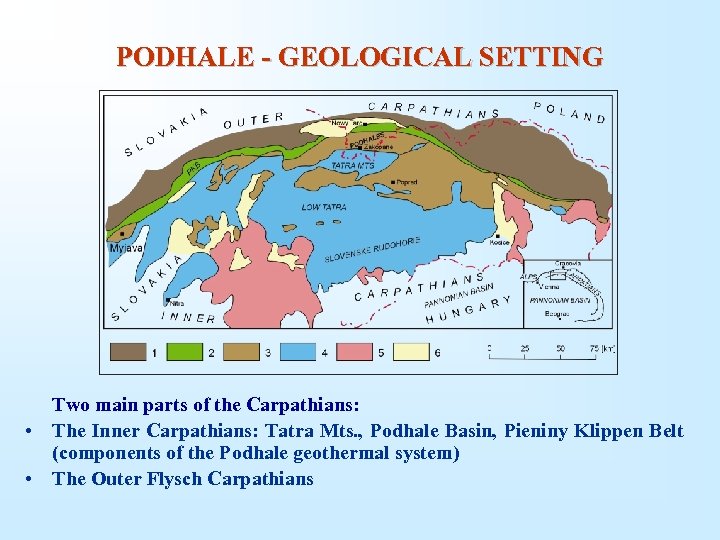 PODHALE - GEOLOGICAL SETTING Two main parts of the Carpathians: • The Inner Carpathians: Tatra Mts. , Podhale Basin, Pieniny Klippen Belt (components of the Podhale geothermal system) • The Outer Flysch Carpathians
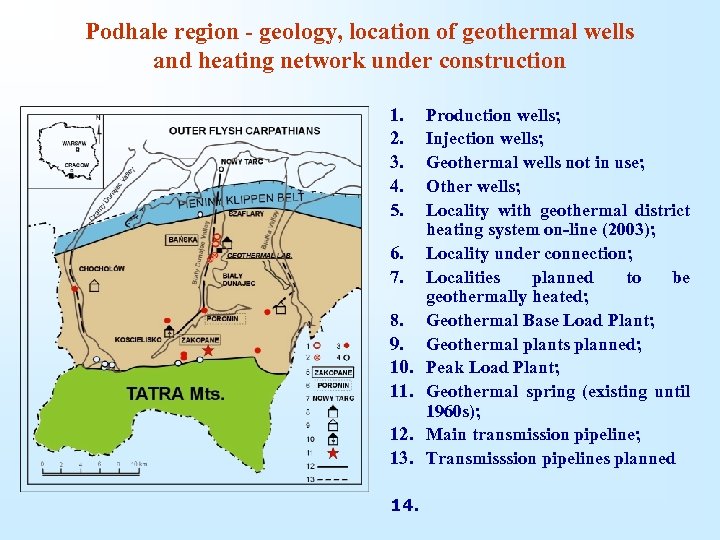 Podhale region - geology, location of geothermal wells and heating network under construction 1. 2. 3. 4. 5. 6. 7. 8. 9. 10. 11. 12. 13. 14. Production wells; Injection wells; Geothermal wells not in use; Other wells; Locality with geothermal district heating system on-line (2003); Locality under connection; Localities planned to be geothermally heated; Geothermal Base Load Plant; Geothermal plants planned; Peak Load Plant; Geothermal spring (existing until 1960 s); Main transmission pipeline; Transmisssion pipelines planned
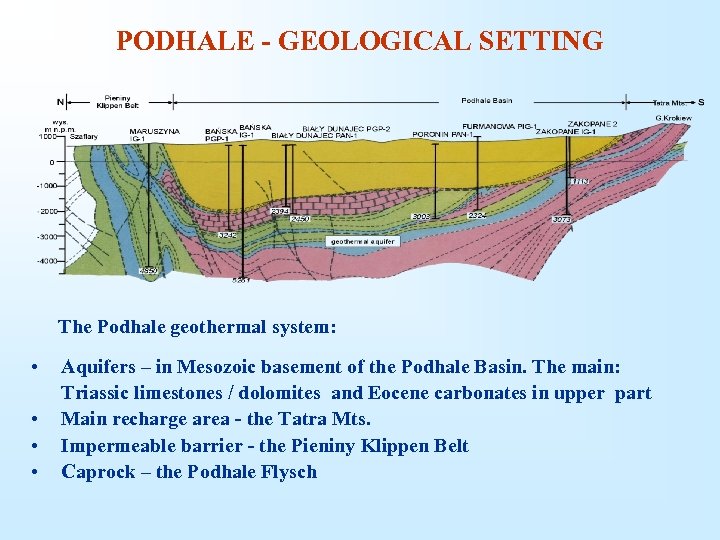 PODHALE - GEOLOGICAL SETTING The Podhale geothermal system: • Aquifers – in Mesozoic basement of the Podhale Basin. The main: Triassic limestones / dolomites and Eocene carbonates in upper part • Main recharge area - the Tatra Mts. • Impermeable barrier - the Pieniny Klippen Belt • Caprock – the Podhale Flysch
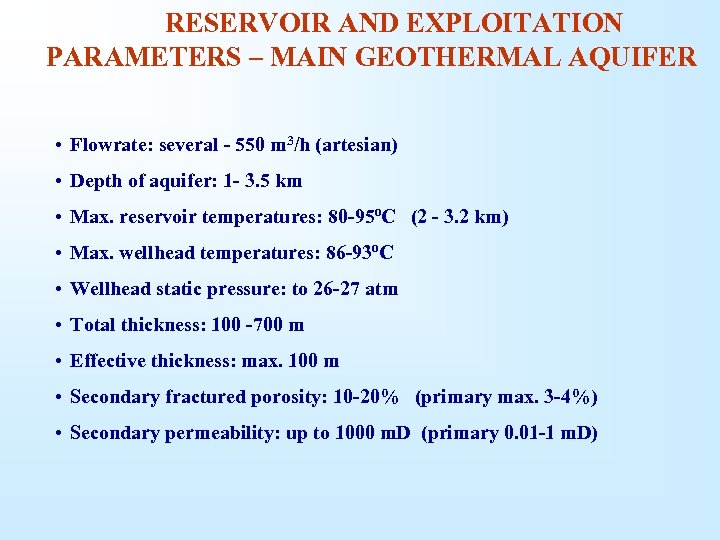 RESERVOIR AND EXPLOITATION PARAMETERS – MAIN GEOTHERMAL AQUIFER • Flowrate: several - 550 m 3/h (artesian) • Depth of aquifer: 1 - 3. 5 km • Max. reservoir temperatures: 80 -95ºC (2 - 3. 2 km) • Max. wellhead temperatures: 86 -93ºC • Wellhead static pressure: to 26 -27 atm • Total thickness: 100 -700 m • Effective thickness: max. 100 m • Secondary fractured porosity: 10 -20% (primary max. 3 -4%) • Secondary permeability: up to 1000 m. D (primary 0. 01 -1 m. D)
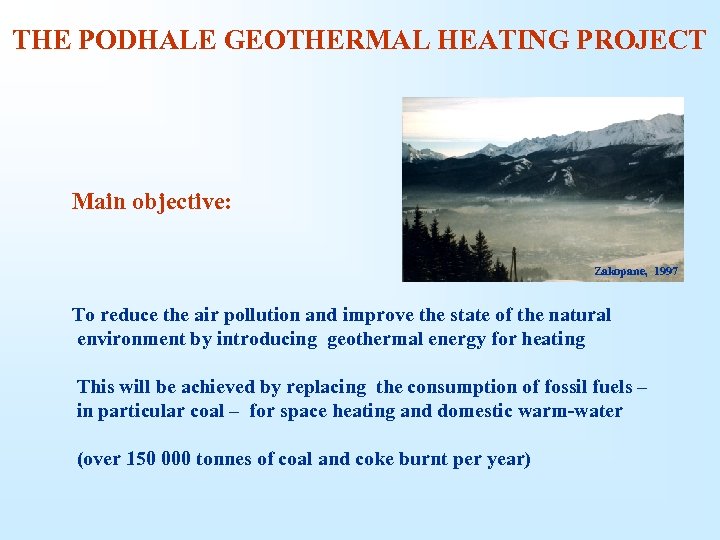 THE PODHALE GEOTHERMAL HEATING PROJECT Main objective: Zakopane, 1997 To reduce the air pollution and improve the state of the natural environment by introducing geothermal energy for heating This will be achieved by replacing the consumption of fossil fuels – in particular coal – for space heating and domestic warm-water (over 150 000 tonnes of coal and coke burnt per year)
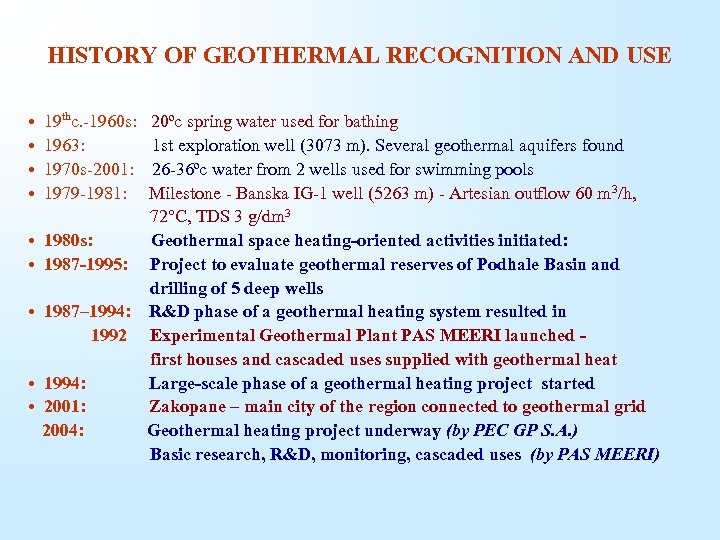 HISTORY OF GEOTHERMAL RECOGNITION AND USE • 19 thc. -1960 s: 20ºc spring water used for bathing • 1963: 1 st exploration well (3073 m). Several geothermal aquifers found • 1970 s-2001: 26 -36ºc water from 2 wells used for swimming pools • 1979 -1981: Milestone - Banska IG-1 well (5263 m) - Artesian outflow 60 m 3/h, 72°C, TDS 3 g/dm 3 • 1980 s: Geothermal space heating-oriented activities initiated: • 1987 -1995: Project to evaluate geothermal reserves of Podhale Basin and drilling of 5 deep wells • 1987– 1994: R&D phase of a geothermal heating system resulted in 1992 Experimental Geothermal Plant PAS MEERI launched first houses and cascaded uses supplied with geothermal heat • 1994: Large-scale phase of a geothermal heating project started • 2001: Zakopane – main city of the region connected to geothermal grid 2004: Geothermal heating project underway (by PEC GP S. A. ) Basic research, R&D, monitoring, cascaded uses (by PAS MEERI)
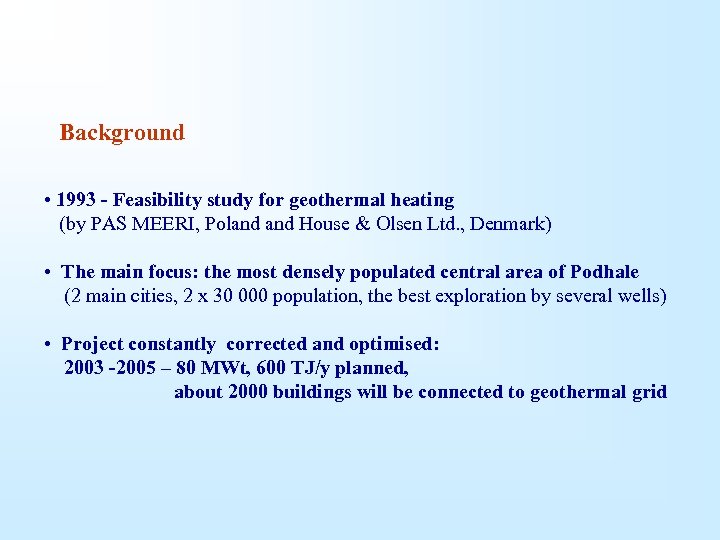 Background • 1993 - Feasibility study for geothermal heating (by PAS MEERI, Poland House & Olsen Ltd. , Denmark) • The main focus: the most densely populated central area of Podhale (2 main cities, 2 x 30 000 population, the best exploration by several wells) • Project constantly corrected and optimised: 2003 -2005 – 80 MWt, 600 TJ/y planned, about 2000 buildings will be connected to geothermal grid
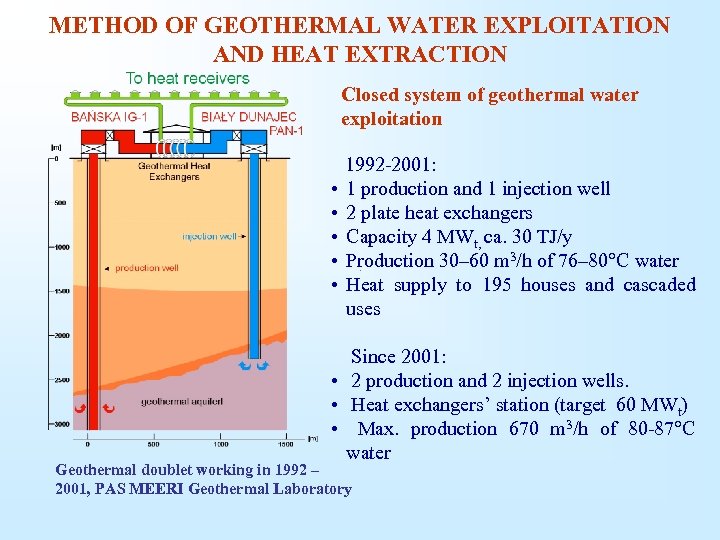 METHOD OF GEOTHERMAL WATER EXPLOITATION AND HEAT EXTRACTION Closed system of geothermal water exploitation 1992 -2001: • • • 1 production and 1 injection well 2 plate heat exchangers Capacity 4 MWt, ca. 30 TJ/y Production 30– 60 m 3/h of 76– 80°C water Heat supply to 195 houses and cascaded uses Since 2001: • 2 production and 2 injection wells. • Heat exchangers’ station (target 60 MWt) • Max. production 670 m 3/h of 80 -87°C water Geothermal doublet working in 1992 – 2001, PAS MEERI Geothermal Laboratory
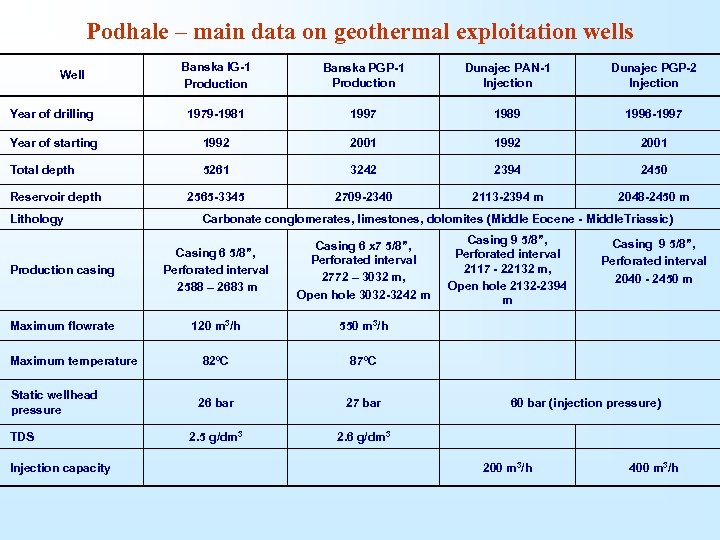 Podhale – main data on geothermal exploitation wells Banska IG-1 Production Banska PGP-1 Production Year of drilling 1979 -1981 1997 Year of starting 1992 Total depth Well Reservoir depth Lithology Dunajec PAN-1 Injection Dunajec PGP-2 Injection 1989 1996 -1997 2001 1992 2001 5261 3242 2394 2450 2565 -3345 2709 -2340 2113 -2394 m 2048 -2450 m Carbonate conglomerates, limestones, dolomites (Middle Eocene - Middle. Triassic) Production casing Casing 6 5/8”, Perforated interval 2588 – 2683 m Casing 6 x 7 5/8”, Perforated interval 2772 – 3032 m, Open hole 3032 -3242 m Maximum flowrate 120 m 3/h 87ºC 26 bar 27 bar 2. 5 g/dm 3 Casing 9 5/8”, Perforated interval 2040 - 2450 m 550 m 3/h 82ºC Casing 9 5/8”, Perforated interval 2117 - 22132 m, Open hole 2132 -2394 m 2. 6 g/dm 3 Maximum temperature Static wellhead pressure TDS Injection capacity 60 bar (injection pressure) 200 m 3/h 400 m 3/h
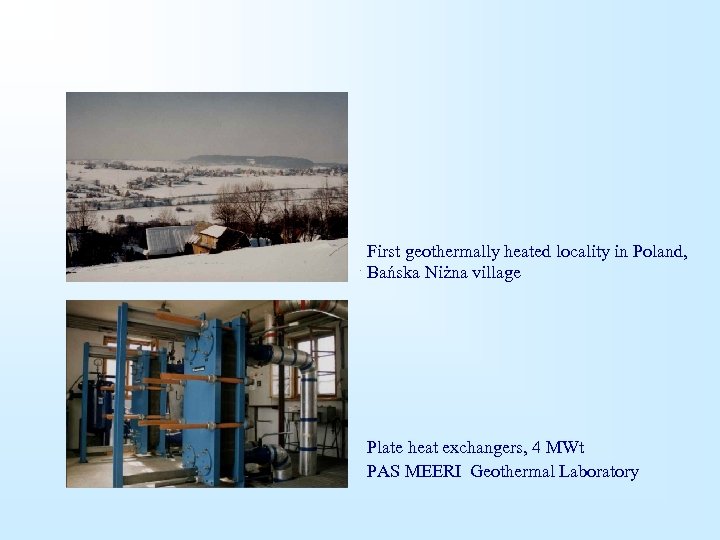 First geothermally heated locality in Poland, Bańska Niżna village Plate heat exchangers, 4 MWt PAS MEERI Geothermal Laboratory
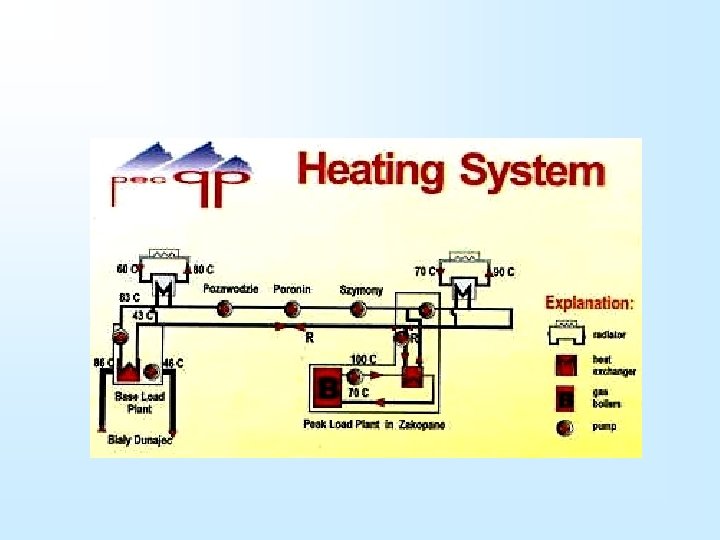
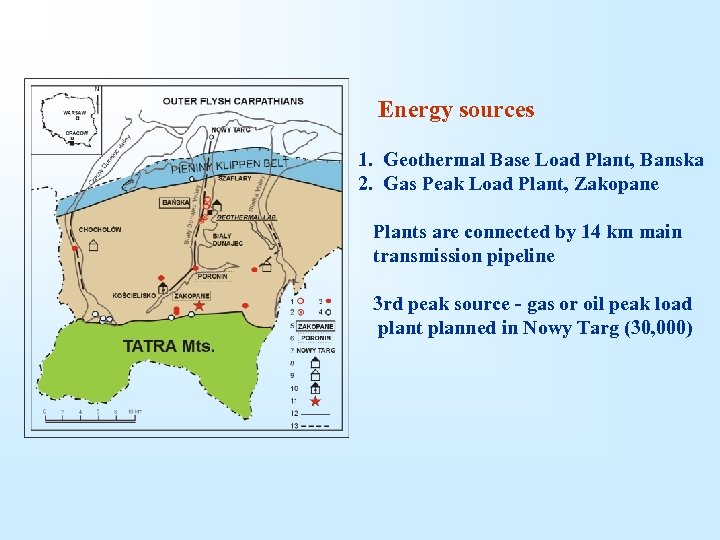 Energy sources 1. Geothermal Base Load Plant, Banska 2. Gas Peak Load Plant, Zakopane Plants are connected by 14 km main transmission pipeline 3 rd peak source - gas or oil peak load plant planned in Nowy Targ (30, 000)
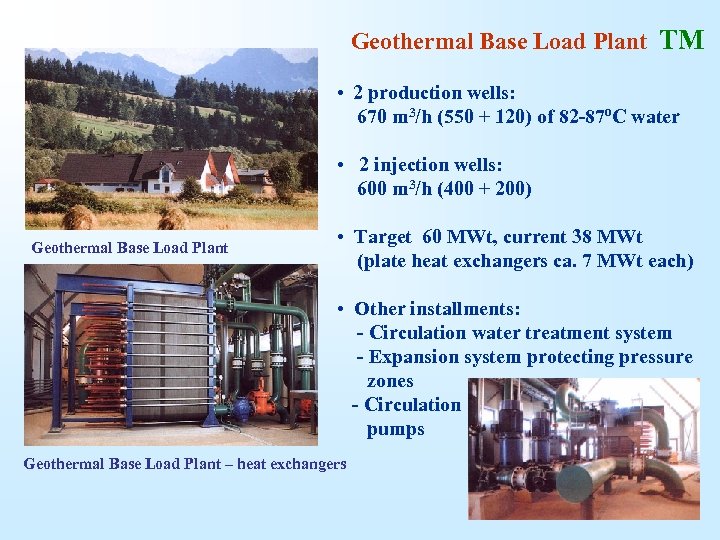 Geothermal Base Load Plant TM • 2 production wells: 670 m 3/h (550 + 120) of 82 -87ºC water • 2 injection wells: 600 m 3/h (400 + 200) Geothermal Base Load Plant • Target 60 MWt, current 38 MWt (plate heat exchangers ca. 7 MWt each) • Other installments: - Circulation water treatment system - Expansion system protecting pressure zones - Circulation pumps Geothermal Base Load Plant – heat exchangers
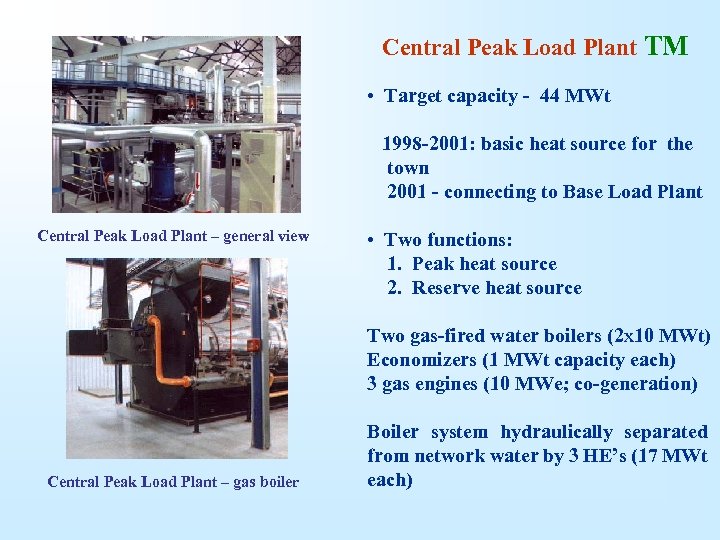 Central Peak Load Plant TM • Target capacity - 44 MWt 1998 -2001: basic heat source for the town 2001 - connecting to Base Load Plant Central Peak Load Plant – general view Central Peak Load Plant – gas boiler • Two functions: 1. Peak heat source 2. Reserve heat source Two gas-fired water boilers (2 x 10 MWt) Economizers (1 MWt capacity each) 3 gas engines (10 MWe; co-generation) Boiler system hydraulically separated from network water by 3 HE’s (17 MWt each)
 ECOLOGICAL EFFECTS, END OF 2005 • Number of consumers connected to geothermal heating network: - > 410 individual consumers - > 120 large-scale receivers - 25 coal-fired heating plants that supplied over 100 blocks of flats • Geothermal heat production - 180 GJ/2005 (total 230 GJ) • Limitation of emissions, i. e. CO, SO 2, and dust – Zakopane: - Annual average concentrations of particulate matter (PM 10) and SO 2 dropped by ca. 50% - During winter heating season 2001/2002 the SO 2 concentration dropped by 67% (!)
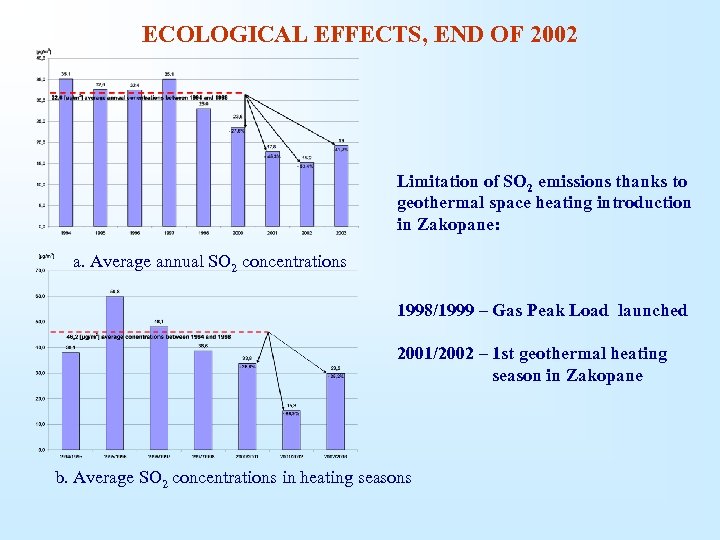 ECOLOGICAL EFFECTS, END OF 2002 Limitation of SO 2 emissions thanks to geothermal space heating introduction in Zakopane: a. Average annual SO 2 concentrations 1998/1999 – Gas Peak Load launched 2001/2002 – 1 st geothermal heating season in Zakopane b. Average SO 2 concentrations in heating seasons
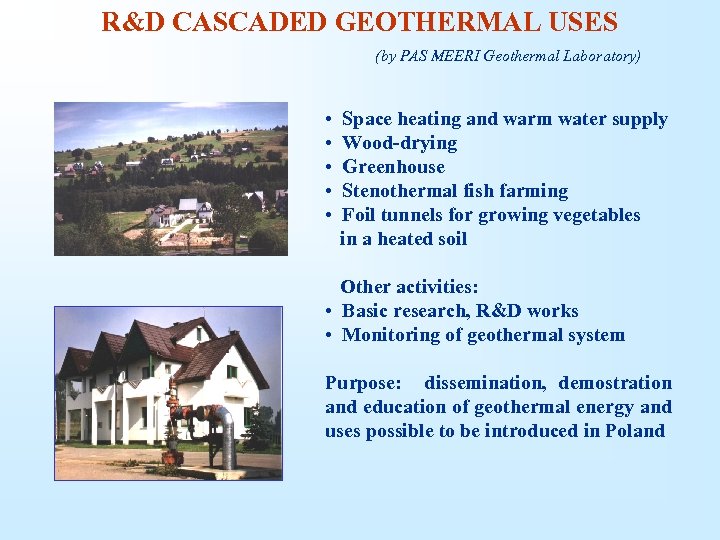 R&D CASCADED GEOTHERMAL USES (by PAS MEERI Geothermal Laboratory) • Space heating and warm water supply • Wood-drying • Greenhouse • Stenothermal fish farming • Foil tunnels for growing vegetables in a heated soil Other activities: • Basic research, R&D works • Monitoring of geothermal system Purpose: dissemination, demostration and education of geothermal energy and uses possible to be introduced in Poland
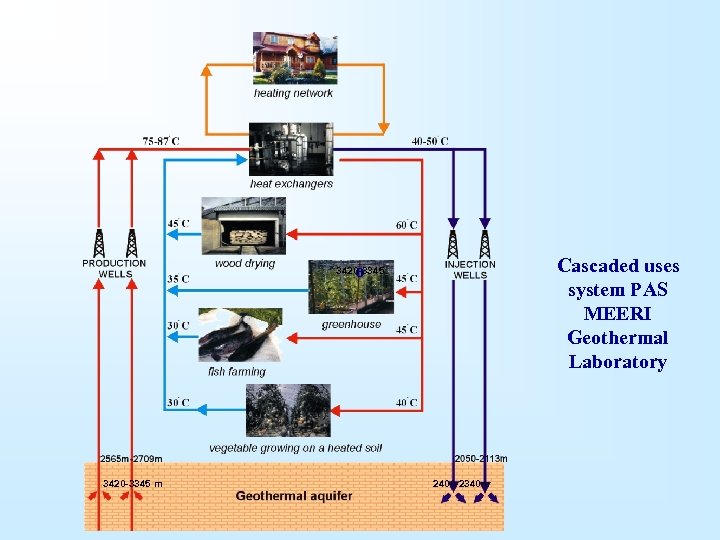 Cascaded uses system PAS MEERI Geothermal Laboratory o 3420 -3345 m 2400 -2340 m
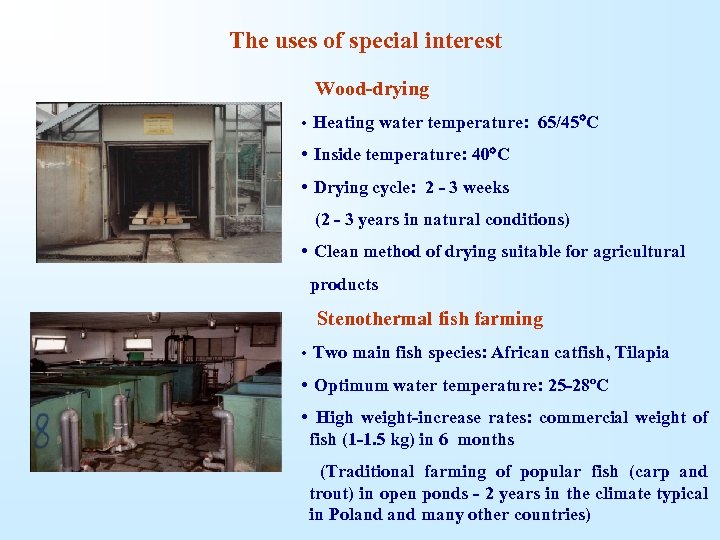 The uses of special interest Wood-drying • Heating water temperature: 65/45 C • Inside temperature: 40 C • Drying cycle: 2 - 3 weeks (2 - 3 years in natural conditions) • Clean method of drying suitable for agricultural products Stenothermal fish farming • Two main fish species: African catfish, Tilapia • Optimum water temperature: 25 -28ºC • High weight-increase rates: commercial weight of fish (1 -1. 5 kg) in 6 months (Traditional farming of popular fish (carp and trout) in open ponds - 2 years in the climate typical in Poland many other countries)
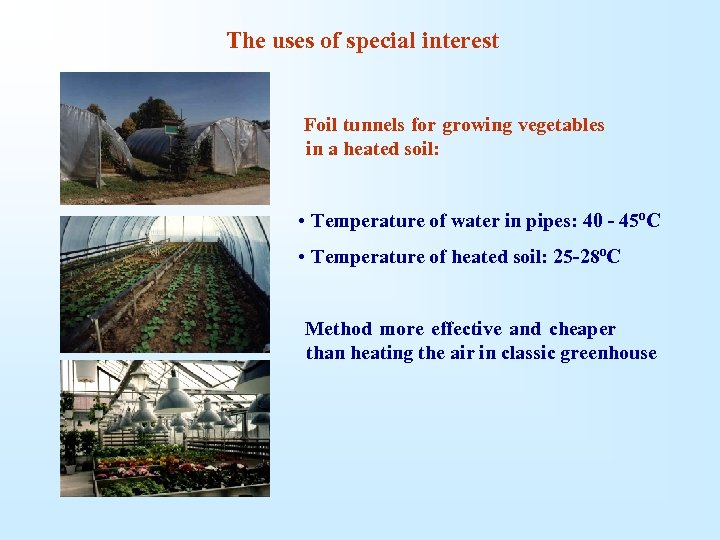 The uses of special interest Foil tunnels for growing vegetables in a heated soil: • Temperature of water in pipes: 40 - 45ºC • Temperature of heated soil: 25 -28ºC Method more effective and cheaper than heating the air in classic greenhouse
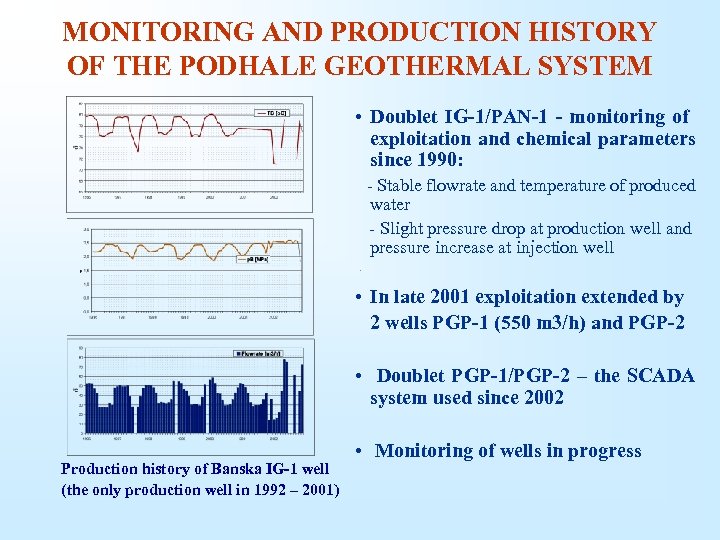 MONITORING AND PRODUCTION HISTORY OF THE PODHALE GEOTHERMAL SYSTEM • Doublet IG-1/PAN-1 - monitoring of exploitation and chemical parameters since 1990: - Stable flowrate and temperature of produced water - Slight pressure drop at production well and pressure increase at injection well • In late 2001 exploitation extended by 2 wells PGP-1 (550 m 3/h) and PGP-2 • Doublet PGP-1/PGP-2 – the SCADA system used since 2002 Production history of Banska IG-1 well (the only production well in 1992 – 2001) • Monitoring of wells in progress
 FURTHER PROSPECTS OF GEOTHERMAL USES • Recreation and balneotherapy – important chance for development of tourism and economics, long awaited by tourists and local people - Recreation complex in Zakopane underway. - 4 centres in different stages of preparation for realisation • Multipurpose uses
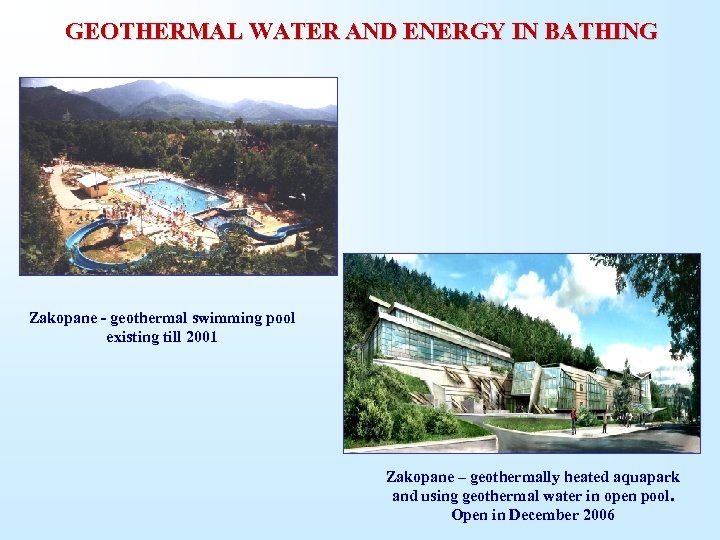 GEOTHERMAL WATER AND ENERGY IN BATHING Zakopane - geothermal swimming pool existing till 2001 Zakopane – geothermally heated aquapark and using geothermal water in open pool. Open in December 2006
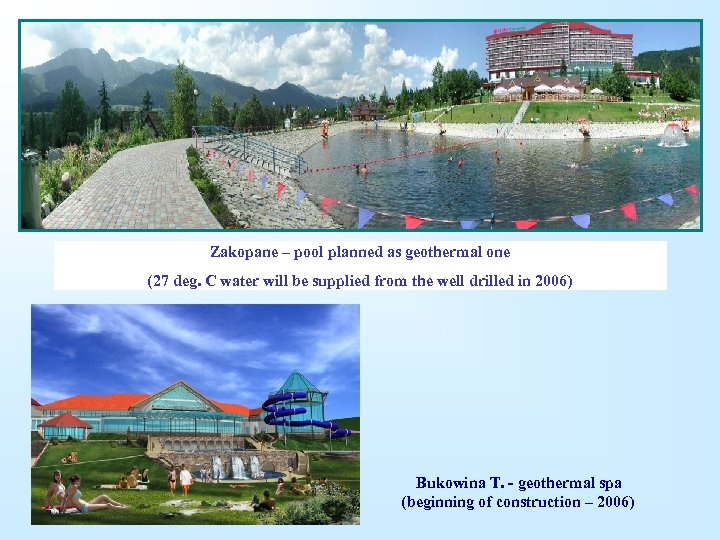 Zakopane – pool planned as geothermal one (27 deg. C water will be supplied from the well drilled in 2006) Bukowina T. - geothermal spa (beginning of construction – 2006)
 CLOSING REMARKS • The Podhale system represents interesting and complex geological and geothermal structure • Offers good reservoir and exploitation conditions for a large-scale geothermal heating and other uses • Geothermal heating project has already resulted in important ecological benefits expressed by significant reduction of emissions generated so far by coal burnt for heating • Ecological, social and economic benefits will prove the purposefulness, feasibility and reliability of using geothermal energy in Poland several other European countries
 The end Thank you very much for your attention!
 GEOTHERMAL AS PART OF DEVELOPMENT STRATEGIES OF THE PODHALE REGION • Important agent of the sustainable development • Factor which should stimulate tourism coherent with world tendency to develop various forms of recreation using local resources and tourist attractions • Chance for new jobs at local employment market • Geothermal project realized along with the complex project of water–waste management
 System based on geothermal heat (75 - 80%), gas used in peak periods (more on 9 th March)
 Heating networks* • Geothermal heating system consists of 3 main circulation loops: 1. Geothermal circulation Standard pressure 40 bar in Base Load Plant and 64 bar behind injection geothermal pumps 2. Network water circulation. Standard pressure 16 bar 3. Boiler circulation in Peak Load Plant. Standard pressure 6 bar To compensate large differences in ground topography (670 – 930 m a. s. l. ) and to keep pressure not exceeding 16 bar, the network water system was divided into 4 pressure zones • Distribution pipelines - preinsulated pipes with small heat losses (drop less than 2°C on a distance of 14 km) All pipelines of DN 100 and more in diameter are equipped with the leakage detection system • 90/50°C heating network (56 km) built practically from scratch - prior to the project, only the part of Zakopane was provided with a heating network • Due to the great area covered by the project, the construction of the heating networks involved a major amount of expenditures (ca. 60% - 30 Mio USD)
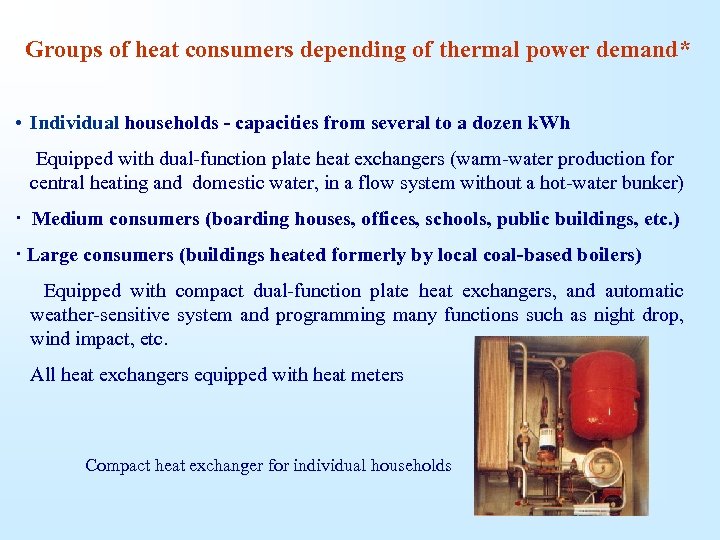 Groups of heat consumers depending of thermal power demand* • Individual households - capacities from several to a dozen k. Wh Equipped with dual-function plate heat exchangers (warm-water production for central heating and domestic water, in a flow system without a hot-water bunker) · Medium consumers (boarding houses, offices, schools, public buildings, etc. ) · Large consumers (buildings heated formerly by local coal-based boilers) Equipped with compact dual-function plate heat exchangers, and automatic weather-sensitive system and programming many functions such as night drop, wind impact, etc. All heat exchangers equipped with heat meters Compact heat exchanger for individual households
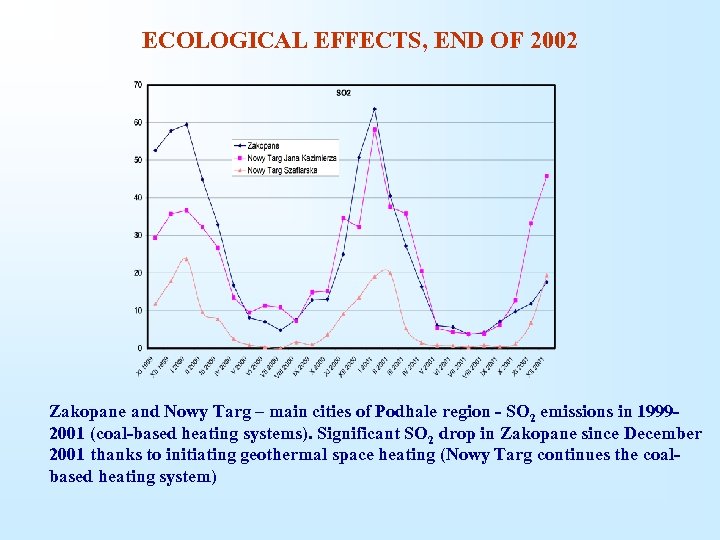 ECOLOGICAL EFFECTS, END OF 2002 Zakopane and Nowy Targ – main cities of Podhale region - SO 2 emissions in 19992001 (coal-based heating systems). Significant SO 2 drop in Zakopane since December 2001 thanks to initiating geothermal space heating (Nowy Targ continues the coalbased heating system)
 SOCIAL ASPECTS OF GEOTHERMAL SPACE HEATING INTRODUCTION • Project accompanied by information and education • Involvement of local authorities • Cooperation and support from the community and Social Geothermal Committee of Banska - first geothermally heated locality in a country • Benefits and advantages indicated by geothermal heat consumers: - Considerable comfort of operating the heating facilities - Greater possibility of regulation of temperature inside rooms - Possibility of energy use bservation, which influences its saving - Limitation of air pollution (particularly visible in winter –clean snow) - Geothermal heating in buildings attracts tourists for hire of rooms
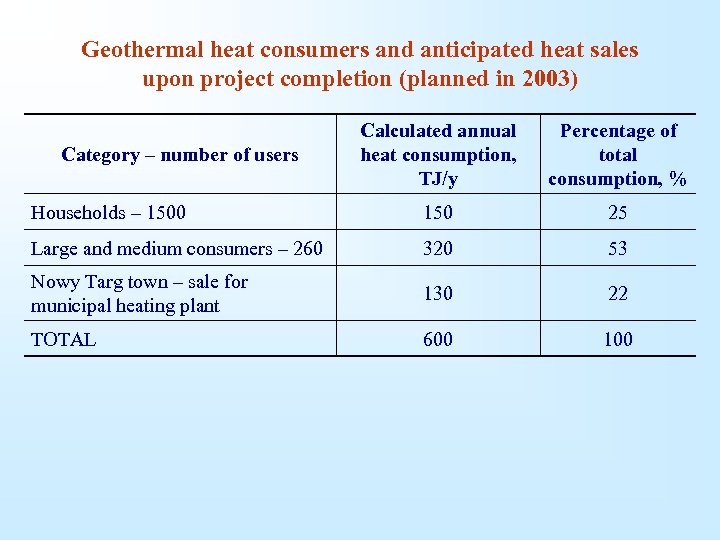 Geothermal heat consumers and anticipated heat sales upon project completion (planned in 2003) Calculated annual heat consumption, TJ/y Percentage of total consumption, % Households – 1500 150 25 Large and medium consumers – 260 320 53 Nowy Targ town – sale for municipal heating plant 130 22 TOTAL 600 100 Category – number of users
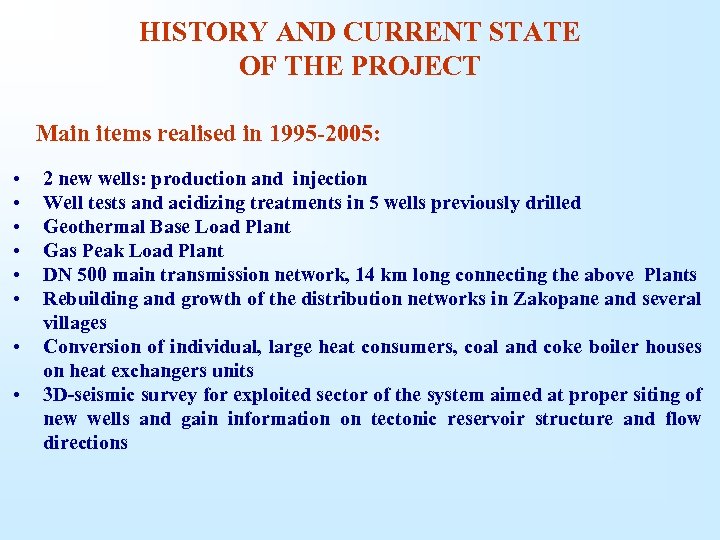 HISTORY AND CURRENT STATE OF THE PROJECT Main items realised in 1995 -2005: • • 2 new wells: production and injection Well tests and acidizing treatments in 5 wells previously drilled Geothermal Base Load Plant Gas Peak Load Plant DN 500 main transmission network, 14 km long connecting the above Plants Rebuilding and growth of the distribution networks in Zakopane and several villages Conversion of individual, large heat consumers, coal and coke boiler houses on heat exchangers units 3 D-seismic survey for exploited sector of the system aimed at proper siting of new wells and gain information on tectonic reservoir structure and flow directions
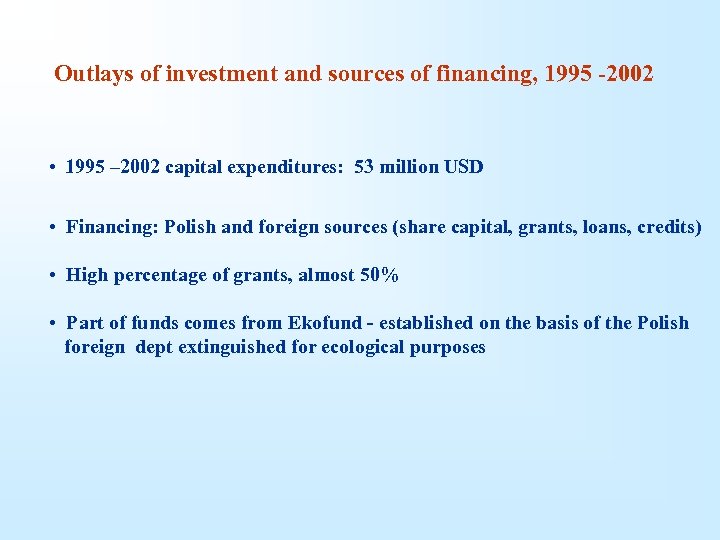 Outlays of investment and sources of financing, 1995 -2002 • 1995 – 2002 capital expenditures: 53 million USD • Financing: Polish and foreign sources (share capital, grants, loans, credits) • High percentage of grants, almost 50% • Part of funds comes from Ekofund - established on the basis of the Polish foreign dept extinguished for ecological purposes
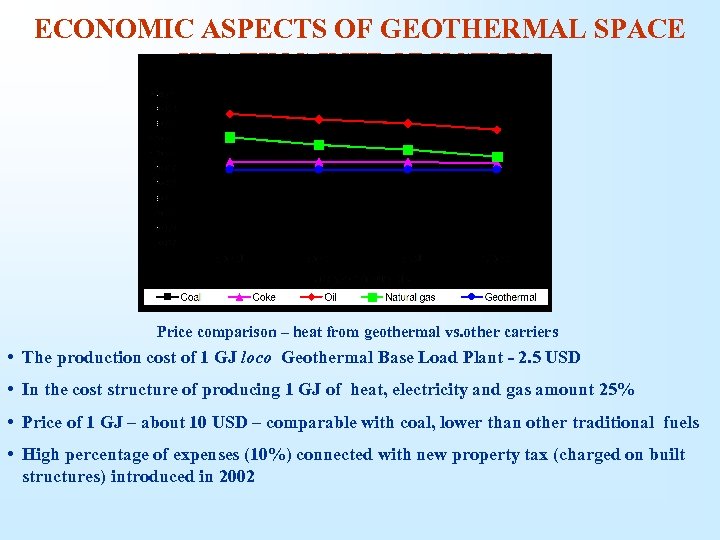 ECONOMIC ASPECTS OF GEOTHERMAL SPACE HEATING INTRODUCTION Price comparison – heat from geothermal vs. other carriers • The production cost of 1 GJ loco Geothermal Base Load Plant - 2. 5 USD • In the cost structure of producing 1 GJ of heat, electricity and gas amount 25% • Price of 1 GJ – about 10 USD – comparable with coal, lower than other traditional fuels • High percentage of expenses (10%) connected with new property tax (charged on built structures) introduced in 2002
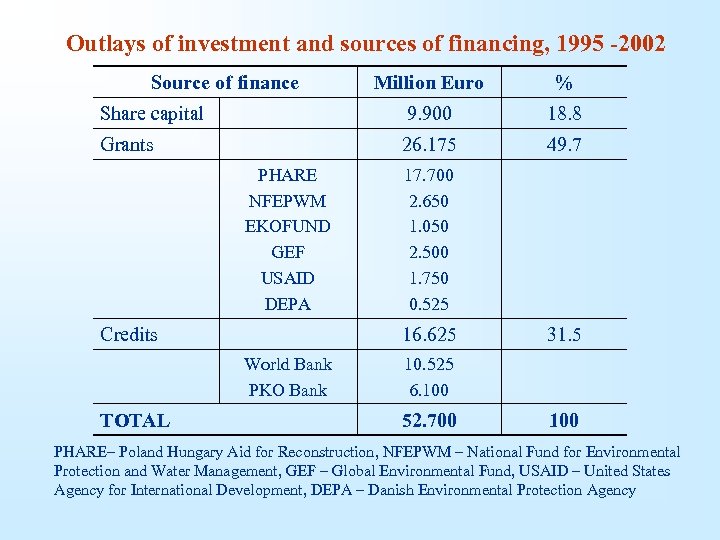 Outlays of investment and sources of financing, 1995 -2002 Source of finance Share capital % PHARE NFEPWM EKOFUND GEF USAID DEPA Credits 9. 900 18. 8 26. 175 Grants 49. 7 17. 700 2. 650 1. 050 2. 500 1. 750 0. 525 16. 625 World Bank PKO Bank TOTAL Million Euro 31. 5 10. 525 6. 100 52. 700 100 PHARE– Poland Hungary Aid for Reconstruction, NFEPWM – National Fund for Environmental Protection and Water Management, GEF – Global Environmental Fund, USAID – United States Agency for International Development, DEPA – Danish Environmental Protection Agency