


 Скачать презентацию The PEFA Program roll-out impact and future
f8649e392df400da55b60ad1a5bc91dd.ppt
- Количество слайдов: 12
 The PEFA Program – roll-out, impact and future focus World Bank Fiduciary Forum March 28, 2008 Frans Ronsholt, PEFA Secretariat 1
 Content PEFA background Status on rolling-out Impact on the Strengthened Approach Future focus of the PEFA program 2
 PEFA background Objective: Results orientation in development of PFM systems & harmonization of PFM analytical work Established: in 2001 by WB and six other agencies. Today working in tandem with 25 donor members of OECD-DAC Joint Venture on PFM. Strategy: the Strengthened Approach to supporting PFM reform A country-led reform program A donor-coordinated program of support A common information pool – • based on the PFM Performance Measurement Framework launched in June 2005 3
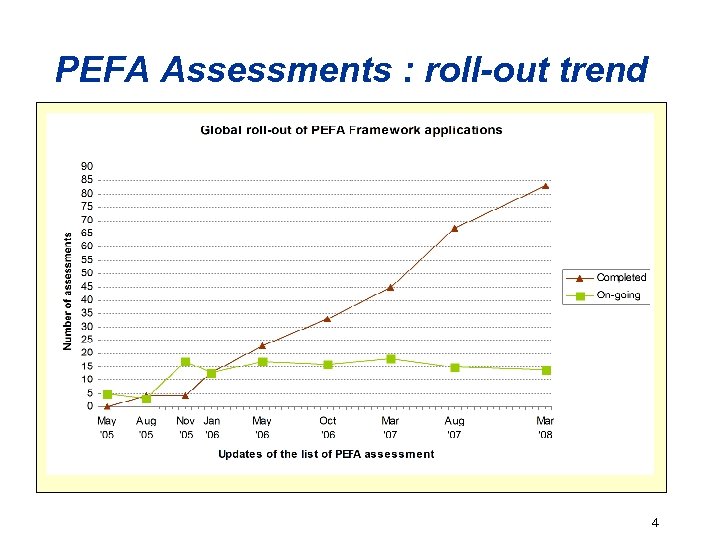 PEFA Assessments : roll-out trend 4
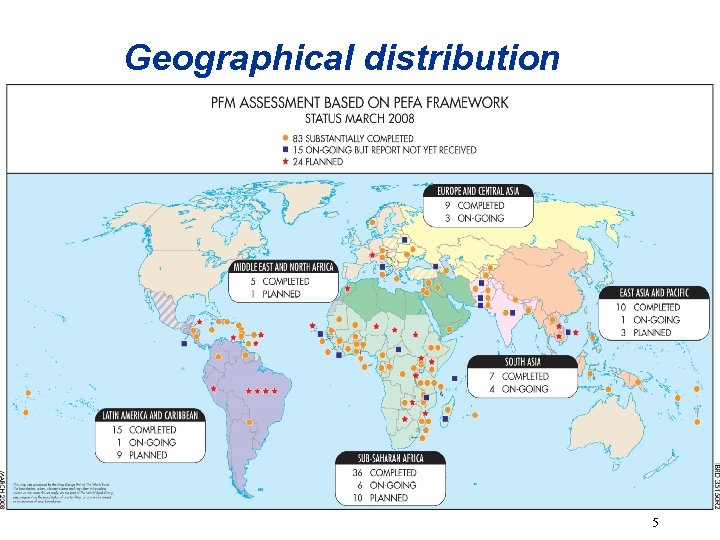 Geographical distribution 5
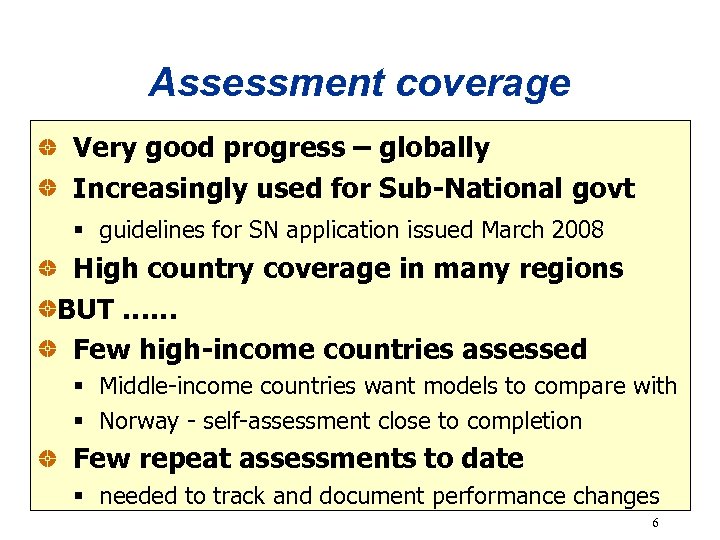 Assessment coverage Very good progress – globally Increasingly used for Sub-National govt § guidelines for SN application issued March 2008 High country coverage in many regions BUT …… Few high-income countries assessed § Middle-income countries want models to compare with § Norway - self-assessment close to completion Few repeat assessments to date § needed to track and document performance changes 6
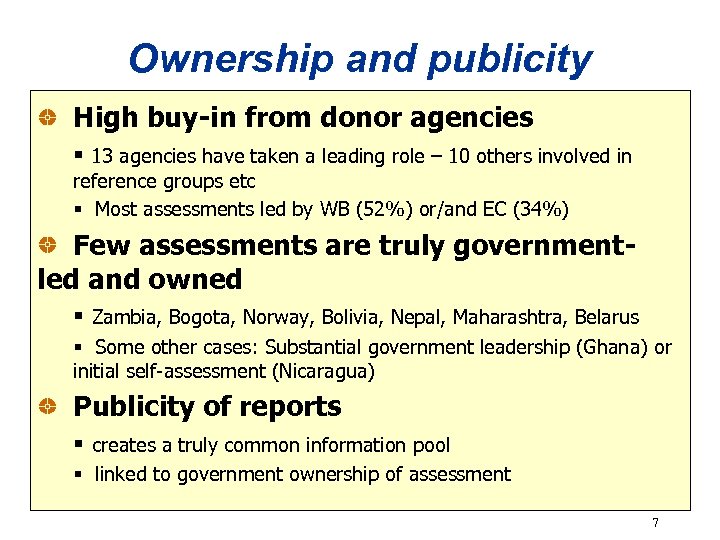 Ownership and publicity High buy-in from donor agencies § 13 agencies have taken a leading role – 10 others involved in reference groups etc § Most assessments led by WB (52%) or/and EC (34%) Few assessments are truly governmentled and owned § Zambia, Bogota, Norway, Bolivia, Nepal, Maharashtra, Belarus § Some other cases: Substantial government leadership (Ghana) or initial self-assessment (Nicaragua) Publicity of reports § creates a truly common information pool § linked to government ownership of assessment 7
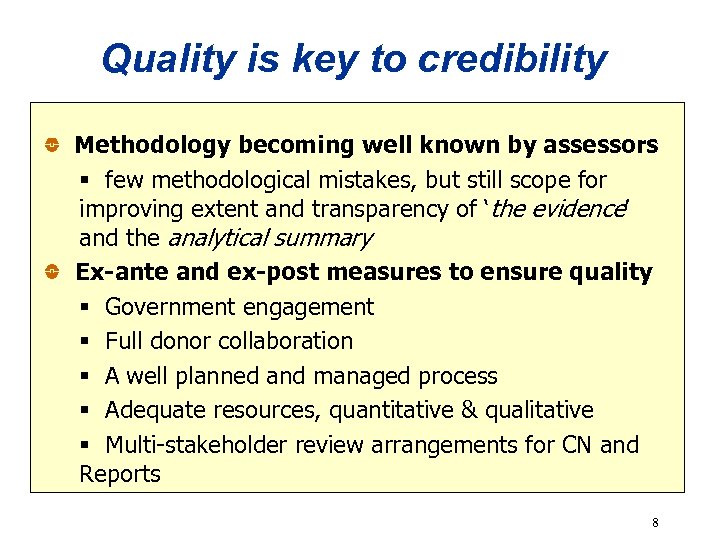 Quality is key to credibility Methodology becoming well known by assessors § few methodological mistakes, but still scope for improving extent and transparency of ‘the evidence’ and the analytical summary Ex-ante and ex-post measures to ensure quality § Government engagement § Full donor collaboration § A well planned and managed process § Adequate resources, quantitative & qualitative § Multi-stakeholder review arrangements for CN and Reports 8
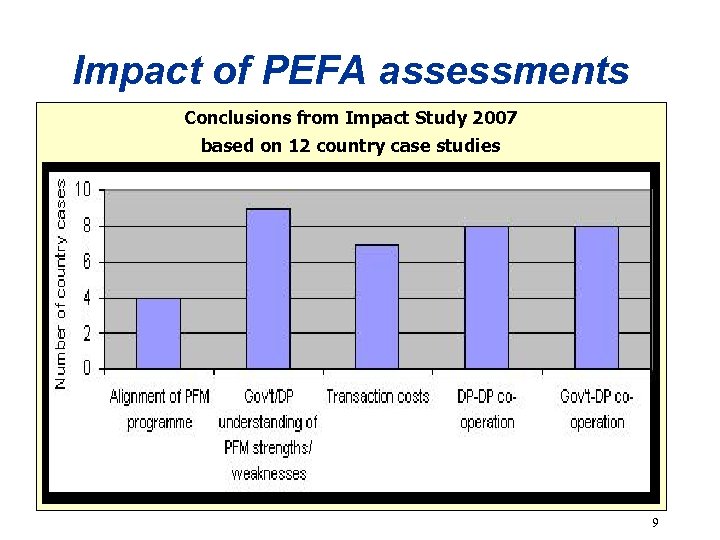 Impact of PEFA assessments Conclusions from Impact Study 2007 based on 12 country case studies 9
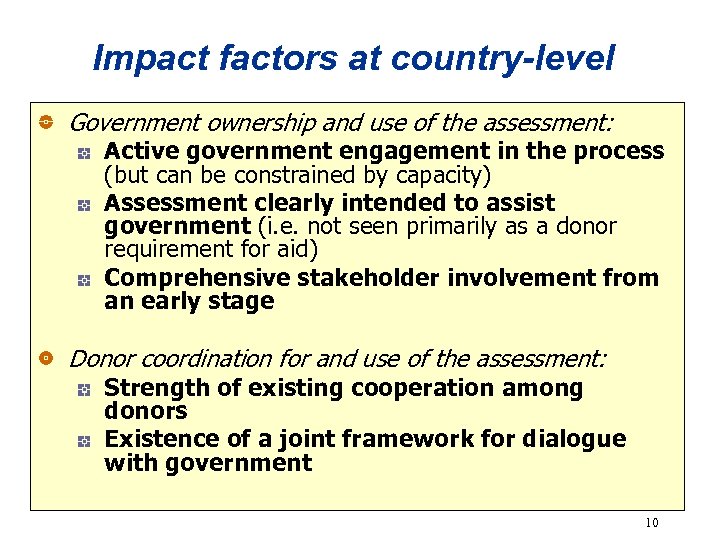 Impact factors at country-level Government ownership and use of the assessment: Active government engagement in the process (but can be constrained by capacity) Assessment clearly intended to assist government (i. e. not seen primarily as a donor requirement for aid) Comprehensive stakeholder involvement from an early stage Donor coordination for and use of the assessment: Strength of existing cooperation among donors Existence of a joint framework for dialogue with government 10
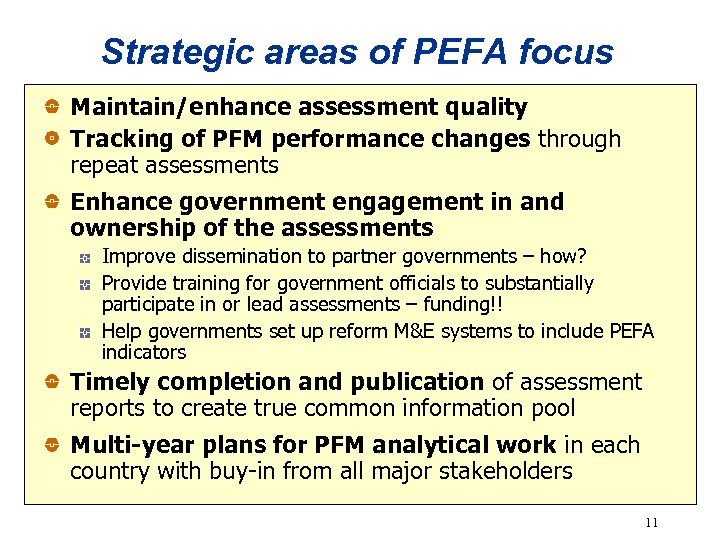 Strategic areas of PEFA focus Maintain/enhance assessment quality Tracking of PFM performance changes through repeat assessments Enhance government engagement in and ownership of the assessments Improve dissemination to partner governments – how? Provide training for government officials to substantially participate in or lead assessments – funding!! Help governments set up reform M&E systems to include PEFA indicators Timely completion and publication of assessment reports to create true common information pool Multi-year plans for PFM analytical work in each country with buy-in from all major stakeholders 11
 Thank You for Your Attention 12