


 Скачать презентацию The Paediatric Regulation Paediatric Team Scientific Advice Paediatrics
56bbb90d70e0c851427c6de05024abf7.ppt
- Количество слайдов: 24
 The Paediatric Regulation Paediatric Team Scientific Advice, Paediatrics & Orphan Drugs Sector EMEA 2007
 The current situation 20 % of the EU population, i. e. 100 million, is aged less than 16 years premature neonate, term neonate, infant, child, adolescent 50 -90% of paediatric medicines have not been tested and evaluated Risks: - adverse effects (overdosing) - inefficacy (underdosing) - improper formulation - delay in access to innovative medicines
 Objectives of the Regulation • Improve the health of children – Increase high quality, ethical research into medicines for children – Increase availability of authorised medicines for children – Increase information on medicines • Achieve the above – Without unnecessary studies in children – Without delaying authorisation for adults
 Main pillars of the Regulation • An expert committee: the Paediatric Committee (PDCO) • An agreed (evolving) paediatric development: the Paediatric Investigation Plan (PIP) • A set of rewards and incentives – For new and on-patent products – For off-patent products • A series of other tools for information, transparency, and stimulation of research
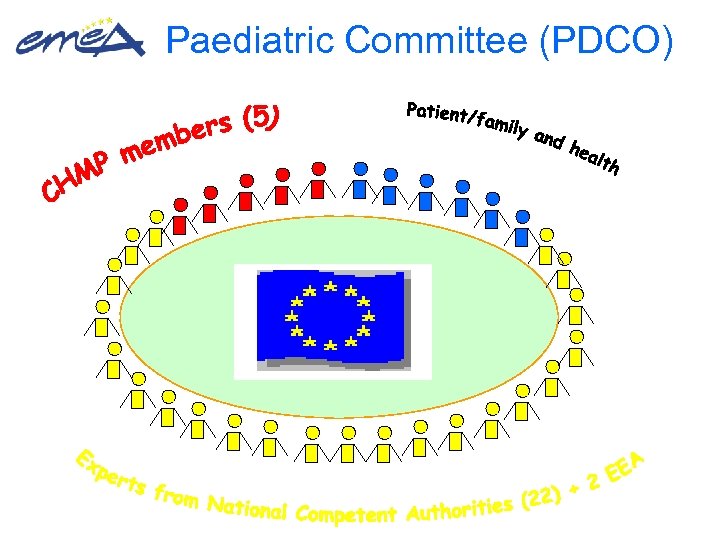 Paediatric Committee (PDCO)
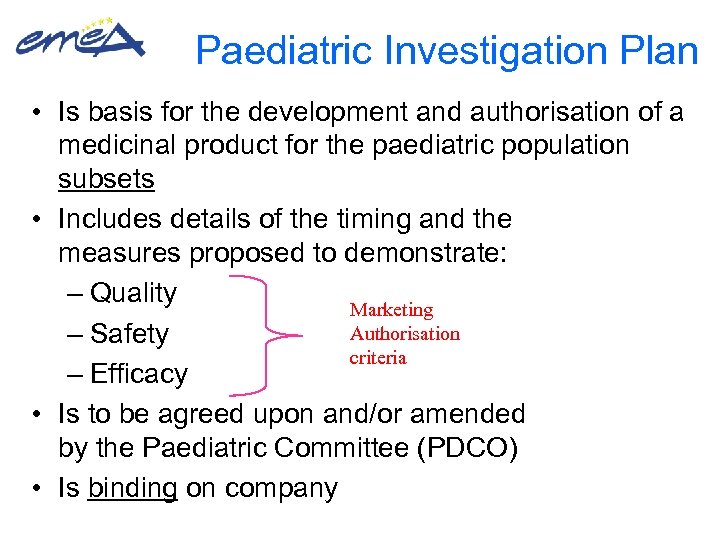 Paediatric Investigation Plan • Is basis for the development and authorisation of a medicinal product for the paediatric population subsets • Includes details of the timing and the measures proposed to demonstrate: – Quality Marketing Authorisation – Safety criteria – Efficacy • Is to be agreed upon and/or amended by the Paediatric Committee (PDCO) • Is binding on company
 Paediatric Investigation Plan Guideline Draft Commission Guideline includes modalities on: • PIP requests • Waiver requests • Deferrals of studies • ‘Key elements’ for PIP Decision • Proposal for ‘Significant Studies’ • Compliance check
 PIP request outline • Information (administrative, condition, product) • Waiver request • Overall strategy for development in children – Details of individual studies – Proposed timelines (and request for deferral) – References
 Paediatric Needs • Preliminary lists established by Paediatric Working Party (PEG), published on EMEA web • To be reviewed by Paediatric Committee in 2007 • Update of Paediatric needs (in 2009) by Paediatric Committee, on basis of inventory, following survey by Member States
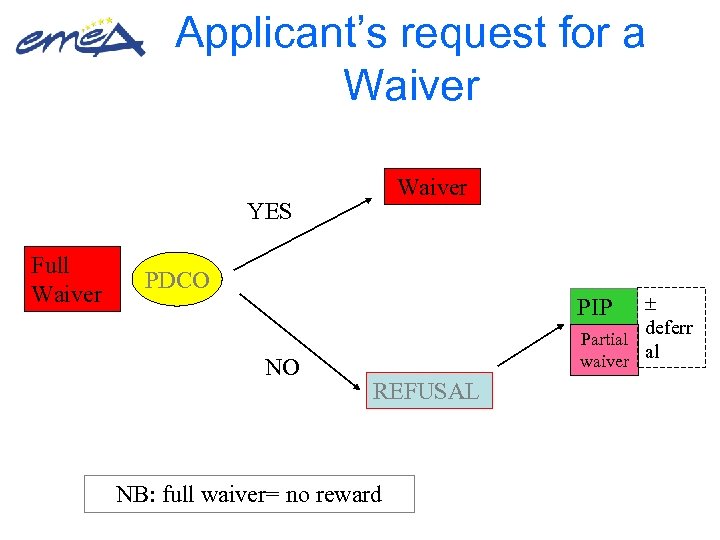 Applicant’s request for a Waiver YES Full Waiver PDCO deferr Partial al waiver PIP NO REFUSAL NB: full waiver= no reward
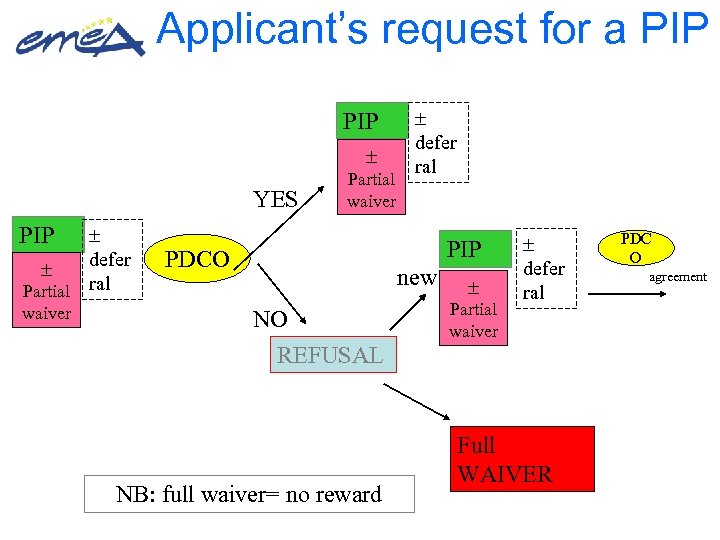 Applicant’s request for a PIP YES PIP defer Partial ral waiver Partial waiver defer ral PIP PDCO new NO REFUSAL NB: full waiver= no reward Partial waiver defer ral Full WAIVER PDC O agreement
 New products • Currently unauthorised products – Obligation to submit results compliant with agreed Paediatric Investigation Plan (PIP) at time of validation of marketing authorisation (or invalid application) – Reward: 6 -month extension of the patent protection (Supplementary Protection Certificate)… If compliance, authorisation in all Member States, and information in Product Information
 Authorised products • Authorised products with a patent – Obligation to submit results compliant with agreed Paediatric Investigation Plan (PIP) at time of validation of new indication, new route of administration, or new formulation (or invalid application) – Rewards: 6 -month extension of the patent protection (Supplementary Protection Certificate) If compliance, authorisation in all Member States, and information in Product Information
 Orphan drugs • 15 -20% of rare diseases only affect children, 55% affect both adult and children (orphan designation data) • 2 years of market exclusivity added to existing 10 years if compliance with PIP and information in Product information
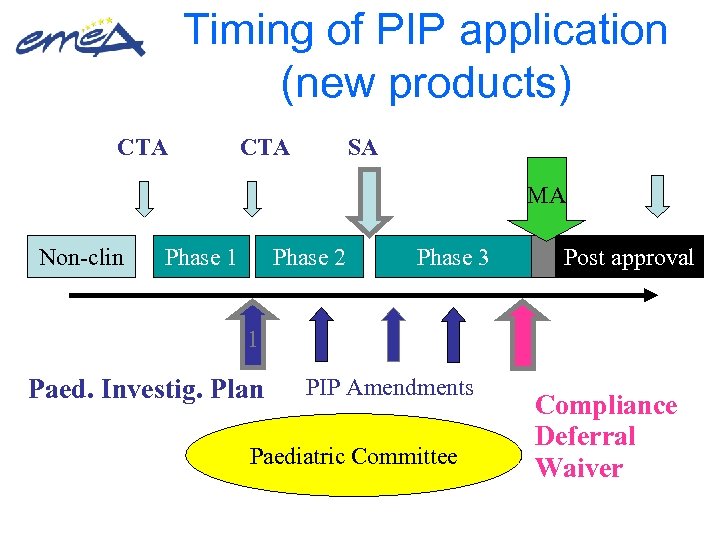 Timing of PIP application (new products) CTA SA MA Non-clin Phase 1 Phase 2 Phase 3 Post approval 1 Paed. Investig. Plan PIP Amendments Paediatric Committee Compliance Deferral Waiver
 ‘Off-patent’ products Optional Procedure – Paediatric Use Marketing Authorisation (PUMA) • Covers Paediatric Indication and Formulation • Need for Paediatric Investigation Plan and Compliance – Reward: 10 years data protection – Brand name can be retained
 PUMA versus MA • Both can use same legal basis for applications • Stand-alone applications, OR • Abridged application with cross-reference to adult product • Covers (only) paediatric indication(s) and formulation(s) • Need for agreed Paediatric Investigation Plan, and Compliance
 Paediatric Scientific Advice • Free of charge since January 2007 • Prior to submission of a PIP, or during PIP implementation process • Including advice on pharmacovigilance and risk management systems • Not binding on Paediatric Committee • Link Paediatric Committee / Scientific Advice Working Party to ensure consistency
 EMEA Paediatric Research Network Objectives: • To link together existing networks, investigators and centres with specific paediatric expertise • Build up competences at a European level • Facilitate the conduct of studies (incl. recruitment) • Avoid duplication of studies • Strategy to be adopted by EMEA Management Board in December 2007
 European Funding • Studies into off-patent medicinal products – From Framework Programme(s) – FP 7: in second call (deadline: September 2007) – 30 million Euros for the 2 first years – Link with identified Priority List of offpatent medicines (published on EMEA website)
 Transparency Measures • Database of Paediatric Trials (Eudra. CT) – Protocols – Results – Studies previously performed (+/- published) • Database of authorised Products in EU (Eudra. Pharm) • Medicinal Product information (including results) • ‘Name and Praise’/’Name and Shame’ by European Commission
 Other measures • Survey of paediatric use of medicines in Member States • Inventory of Paediatric Needs by Paediatric Committee (on basis of survey) • Symbol on any medicinal product authorised for children (pre and post Regulation) • Obligation to market, OR Transfer of MA (or consent to use data) if product withdrawn from the market
 Timelines of Implementation • Immediate (since 26 January 2007) – Free Scientific Advice • 6 months from entry into force (26 July 2007) – Establishment of Paediatric Committee – Submission of PIP/waiver requests – Paediatric Use Marketing Authorisation provisions apply • 12 months from entry into force (26 January 2008) – Adoption of network strategy by Management Board • 18 months from entry into force (26 July 2008) – Obligation for Marketing Authorisation of new products – Or EMEA decision granting a waiver or deferral • 24 months from entry into force (26 January 2009) – Obligation for new indications, new routes of administration, new pharmaceutical forms – Or EMEA decision granting a waiver or deferral
 Conclusions • New and Older medicines are concerned • Funding of research for academics and generic companies is available • Need to answer DG Research calls! • Transparency of information • Support through the EMEA network … Better medicines for children!