


 Скачать презентацию The Nutritional Value and the Environmental Impact of
3f959b0397d5686ed35bd82ccb4bd699.ppt
- Количество слайдов: 15
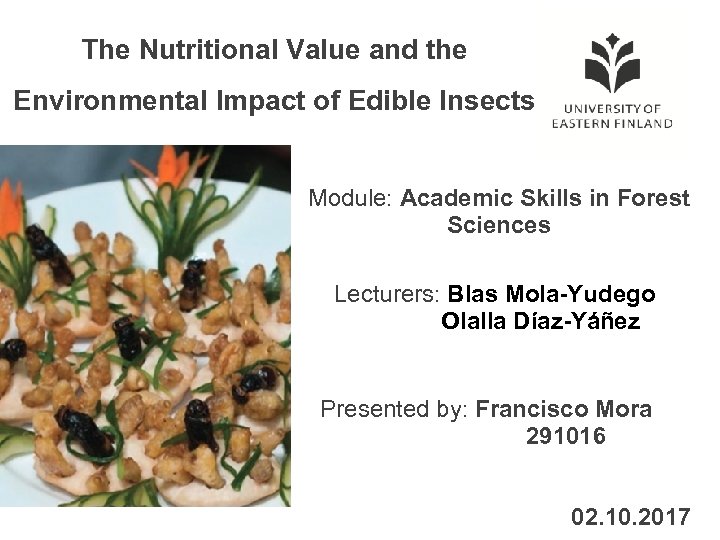 The Nutritional Value and the Environmental Impact of Edible Insects Module: Academic Skills in Forest Sciences Lecturers: Blas Mola-Yudego Olalla Díaz-Yáñez Presented by: Francisco Mora 291016 semin 1 1 02. 10. 2017
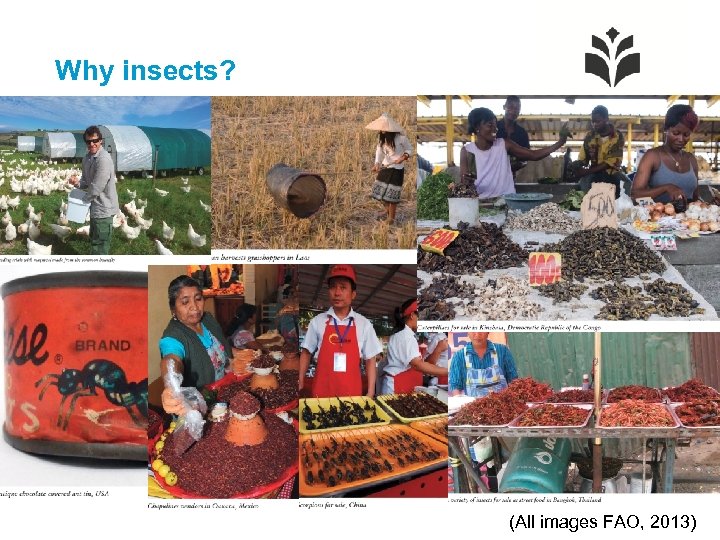 Why insects? 2 (All images FAO, 2013)
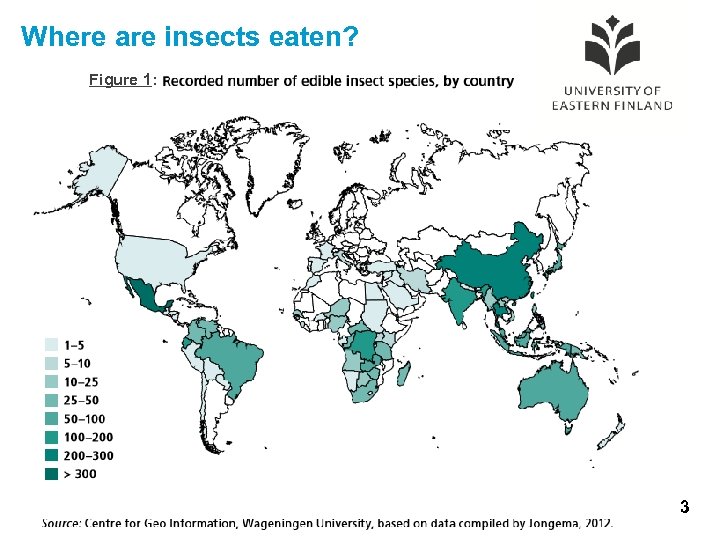 Where are insects eaten? Figure 1: 3
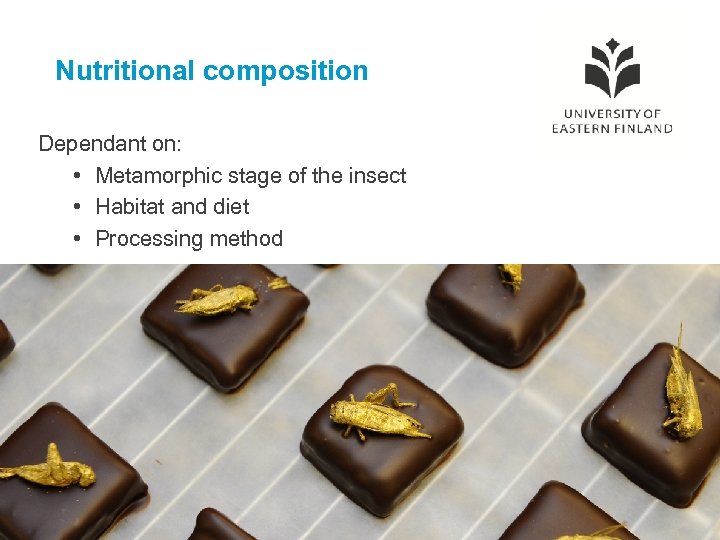 Nutritional composition Dependant on: • Metamorphic stage of the insect • Habitat and diet • Processing method 4
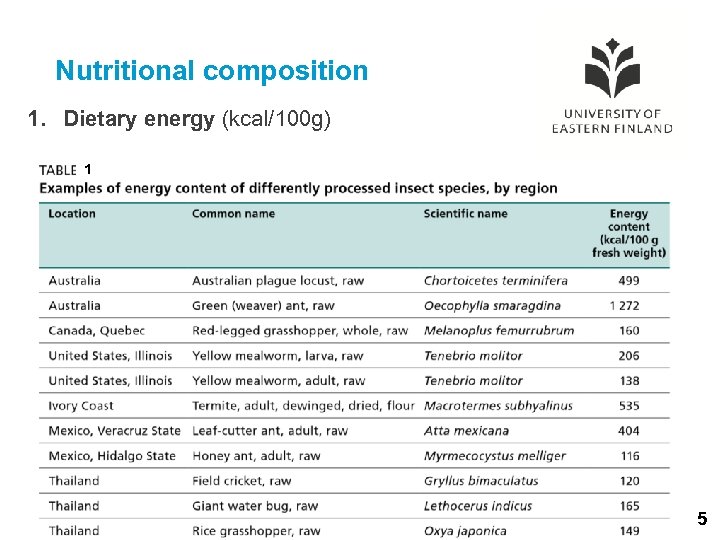 Nutritional composition 1. Dietary energy (kcal/100 g) 1 5 5
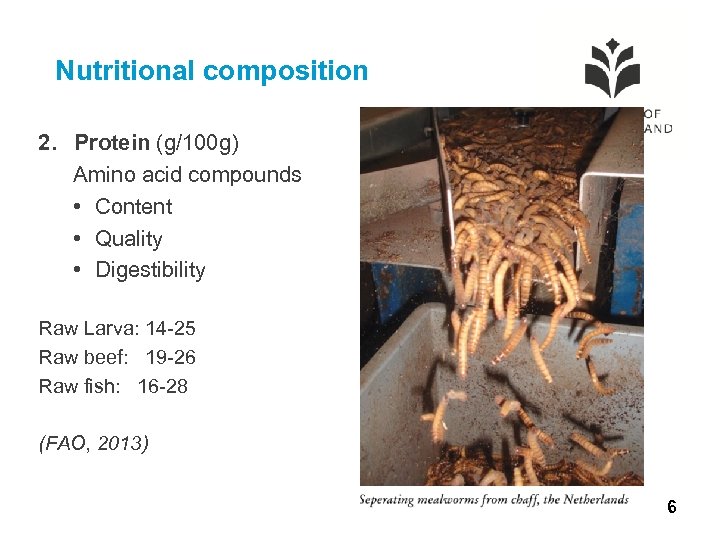 Nutritional composition 2. Protein (g/100 g) Amino acid compounds • Content • Quality • Digestibility Raw Larva: 14 -25 Raw beef: 19 -26 Raw fish: 16 -28 (FAO, 2013) 6
 Nutritional composition 3. Amino acids (mg/100 g) Building blocks for the biosynthesis of all proteins through human metabolism to ensure proper growth, development and maintenance. 4. Fat content (% of dry weight) Triglycerides with a glycerol molecule and 3 fatty acids: • saturated • Unsaturated • Essential 7
 Nutritional composition 5. Micronutrients Common deficiencies in developing countries affecting growth and immune function, that cannot always be reversed by nutrition intervention. Minerals (mg/100 g) Most edible insects boast equal or higher iron and zinc contents than beef (Bukkens, 2005) Iron: Beef: 6 Insects: 6 -80 (Oonincx et al. , 2010) Dietary allowance: 14 -20 8
 Nutritional composition Vitamins (ug/100 g) Stimulate metabolic processes and enhance immune system functions B 12 – Yellow mealworm: 0, 47 House crickets (Acheta domesticus): 5, 4 Recommended Dietary Allowance (RDA) for B 12: 2, 4 ug (Bukkens, 2005) 6. Fiber content Chitin: Most common fiber form in insects. 2. 7 – 50 mg/Kg of fresh matter RDA around 40 mg (Finke, 2007) 9
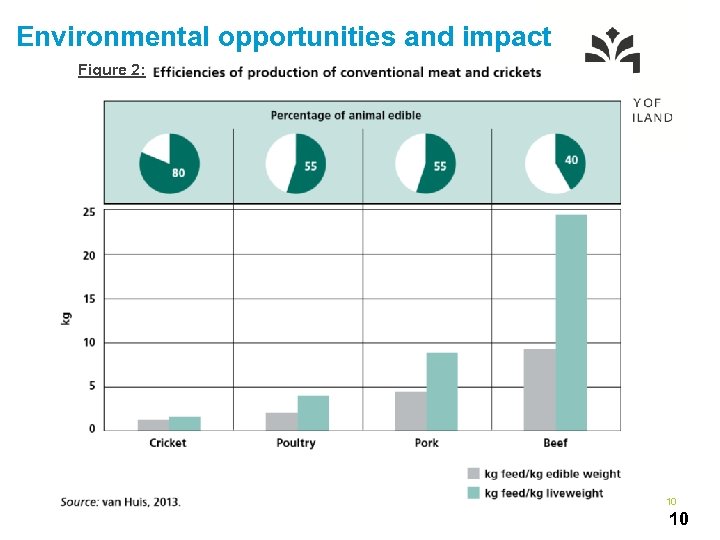 Environmental opportunities and impact Figure 2: 10 10
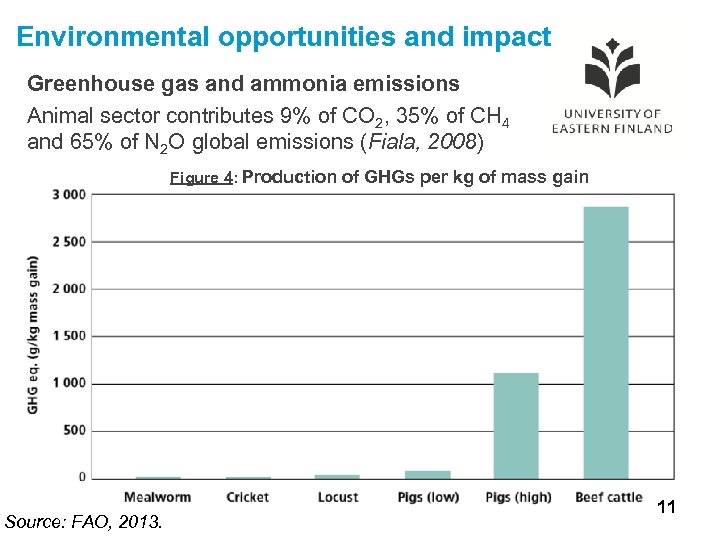 Environmental opportunities and impact Greenhouse gas and ammonia emissions Animal sector contributes 9% of CO 2, 35% of CH 4 and 65% of N 2 O global emissions (Fiala, 2008) Figure 4: Production of GHGs per kg of mass gain Source: FAO, 2013. 11
 Environmental opportunities and impact Water use 1 Kg of chicken 1 Kg of pork 1 Kg of beef 1 Kg of insects 2300 L 3500 L 22000 L. . . (Pimentel et al. , 2004) Risk of zoonotic infections Infections or infestations shared in nature by humans and animals. 12
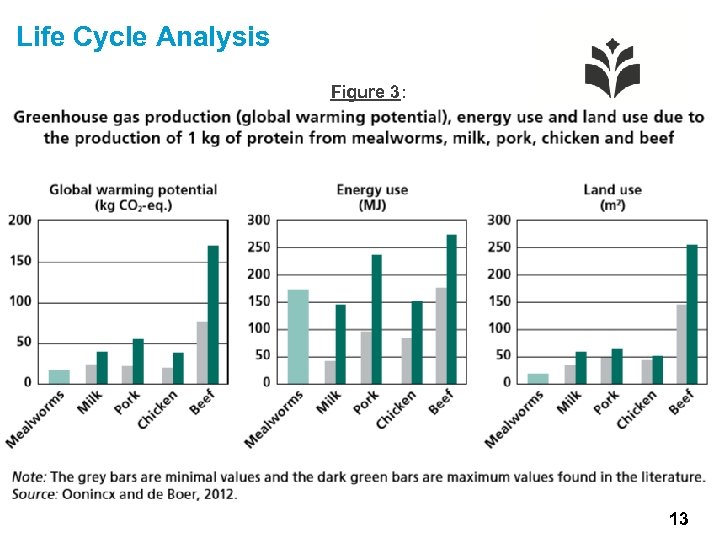 Life Cycle Analysis Figure 3: 13
 Conclusions • Insects could become a valuable dietary component: Complement in countries with low meat consumption substitute in countries with high meat consumtion • Because of it’s lower costs and environmental impact compared to current nutrients sources. • But further research is needed to assess scalability: water use, risk of zoonotic infections, large scale emissions. • Challenge: Changing socially installed views on insects 14
 References - Bukkens, S. G. F. , 2005. Insects in the human diet: nutritional aspects. In M. G. Paoletti, ed. Ecological implications of minilivestock; role of rodents, frogs, snails, and insects for sustainable development, pp. 545– 577. New Hampshire, Science Publishers. - Finke, M. D. 2007. Estimate of chitin in raw whole insects. Zoo Biology, 26, 105– 115. - Oonincx, D. G. A. B. & de Boer, I. J. M. 2012. Environmental impact of the production of mealworms as a protein source for humans: a life cycle assessment. PLo. S ONE, 7(12): e 51145. - Oonincx, D. G. A. B. , van Itterbeeck, J. , Heetkamp, M. J. W. , van den Brand, H. , van Loon, J. & van Huis, A. 2010. An exploration on greenhouse gas and ammonia production by insect species suitable for animal or human consumption. Plos One, 5(12): e 14445. - Pimentel, D. , Berger, B. , Filiberto, D. , Newton, M. , Wolfe, B. , Karabinakis, E. , Clark, S. , Poon, E. , Abbett, E. & Nandagopal, S. 2004. Water resources: agricultural and environmental issues. Bio. Science, 54: 909– 918. - Van Huis, A. 2013. Potential of insects as food and feed in assuring food security. Annual Review of Entomology, 58(1): 563– 583. - Van Huis et al. , 2013, Edible insects: future prospects for food and feed security, FAO. (including All images) 15 15