 Скачать презентацию The Normal Newborn Assessment Care Feeding z Presented
e2c603142990d571ac29be8f5b417705.ppt
- Количество слайдов: 37



The Normal Newborn: Assessment, Care, Feeding z. Presented by, z. Joy Haskin, RN, MS

Joke for the day…. Should children witness childbirth?
TERMS: z. Neonatal Period: z. Birth --> 28 days of life z. Term Infant: z 38 - 42 weeks of gestation z. Transition Period: Phases of instability during the first 6 -8 hours after birth
Viability z. Capacity to live outside of the uterus about 22 to 24 weeks since the last menstrual period, or fetal weight greater than 500 g. z. In the past was 28 weeks - with technology and advancements this is becoming shorter and shorter…. . .
Physiologic Changes of the NB to adjust to extrauterine life: What happens during birth to the neonate?
Circulatory: z. Transitional Circulation = acrocyanosis z. Peripheral circulation = sluggish z. High: RBC 4. 8 -7. 1; Hgb 14 -24; Hct 44 -64 z. WBC 18, 000 @ birth; 23 -24, 000 @ 1 day z. Coagulation: Vit K dependent clotting factors are decreased. z. Platelet counts ok (150, 000 -350, 000)
Respiratory z. Before birth O 2 needs met by placenta z. L/S ratio should be > 2: 1 z. After delivery need mature lungs that are vascularized, have surfactant and sacules - usually adequate by 32 -35 weeksxat term the lungs hold approx. 20 ml of fluid/kg z. What initiates respiration?
Periodic Breathing -vs. Apnea z. Apnea: no breathing for periods of greater than 15 seconds should be evaluated. Periodic Breathing: Notify MD if resp < 30 or > 60
Gastrointestinal System z. Immature at birth, reaches maturity at 2 -3 years of age zplace food at back of tongue zsucking becomes coordinated @32 wks zlittle saliva until 3 months of age zbowel sounds after 1 hour of birth
Gastrointestinal (continued) z. NB have difficulty digesting complex starches and fat z. Abdomen becomes easily distended after eating z. Initial fecal material = meconium z. No normal flora at birth in GI system to synthesize Vit. K
Immune System z. Limited specific and Non-specific immunity at birth zpassive immunity(from mom- Ig. G) for the first 3 months of life ~ this will be reduced if baby is born premature zbreastfeeding = ^ passive immunity (Ig. A)
Temperature Regulation z. Non-Shivering thermogenesis: zbrown fat is the primary source of heat production. Brown fat is broken down into glycerol & fatty acids producing heat. z. Brown fat is found @ the nape of the neck, axillae, around the kidneys and in the mediastinum. z. Slightly warmer to touch than nml skin.
Cold Stress z. An increase in the metabolic rate associated with non-shivering thermogenesis --> increased O 2 demands and caloric consumption z. It’s important to provide a neutral thermal environment to prevent metabolic acidosis and prevent depleted brown fat.
Kidneys and Urination z 92% of all healthy infants void in the first 24 hrs of birth zinitial urine: cloudy, scant amounts, uric acid crystals-> reddish stain on diaper z. Kidneys not fully functional until child is 2 years of age.
Hepatic Function z. Liver produces substances essential for clotting of blood. z. Stores needed iron for the first few months. Preterm & small infants have lower iron stores than full term and heavier infants. (full term infants stores last 4 -6 mo) z. NB at risk for Physiologic Jaundice after 24 hours of age, d/t increased breakdown of RBC’s and immature liver functioning.
Increased Bilirubin Levels z Jaundice in the 1 st day is NOT normal z. Bilirubin level greater than 12 at any time needs further attention z. Maternal causes of increased bilirubin levels in the NB: epidural use, oxytocin induced labor, infection, hepatitis z. Ethnic Influences: Asian infants levels may be double other ethnic groups.
Kernicterus z. Complication of neonatal hyperbilirubinemia --> encephalopathy zbasal ganglia and other areas of the brain and spinal card are infiltrated w/ bilirubin (produced by the breakdown of hemoglobin -> levels of 20 - 25 or more). z. Poor prognosis if untreated.
Neurologic z. All neurons are present, but many are immature: zuncoordinated movements zpoor muscle control zstartle easily ztremors in extremities
Weight Loss z. It is normal for the newborn infant to loose 5 -10% of weight in the first 4 to 5 days of life.
Infants at Risk z“RED FLAGS” after birth include: zgagging --> turning blue (esp. after fdg) zgeneralized cyanosis zweak cry zgrunting or respiratory distress zdecreased or absent movements zexcessive twitching or trembling z. OTHERS>>>>>
Nursing Diagnosis: z. Ineffective Airway Clearance R/T excessive oropharyngeal mucus z. Ineffective Thermoregulation R/T newborn transition to extrauterine life z. High Risk for infection R/T maturational factors, immature immune system z. PC: Hypoxemia PC: Hyperbilirubinemia z(W) Beginning Integration of NB into Family Unit
Nursing Care to Meet NB Needs z. Prevent infection: zhandwashing, stay away from large groups or ill individuals, prophlactic agents (EES, cord care, bathing) z. Vernix z. Breastfeeding
Warmth z. Bath after temperature is stable zwarmer/isolette/bundle zhat zkeep out of drafts zskin to skin
Position of sleep/prevent SIDS z. Back to sleep zfeet to foot of bed zno stuffed animals or excessive blankets in bed zdon’t cover head in stroller zdon’t keep house too warm z. No smoking around infant
Cleanliness z. No tub baths until cord off and healed zclean around organs of elimination and mouth after soiling to prevent skin break down zdaily head to toe bath not necessary z. OK to clean and touch the “soft spot” zfold diapers away from umbilicus z. NEVER leave child alone in tub!!
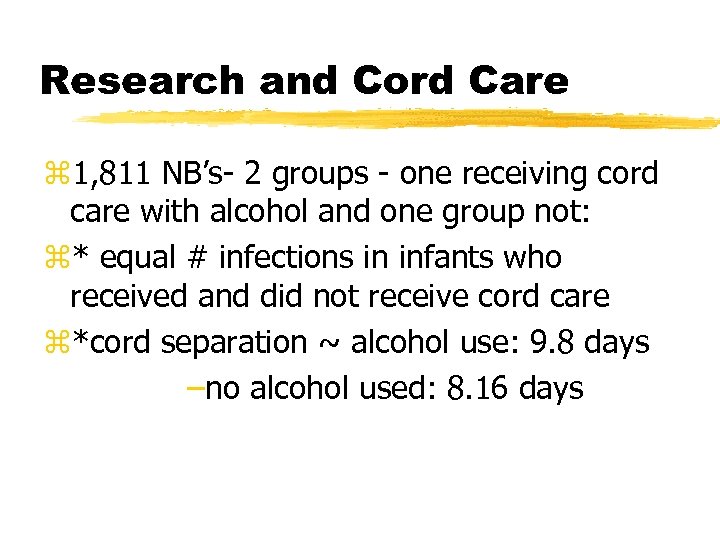
Research and Cord Care z 1, 811 NB’s- 2 groups - one receiving cord care with alcohol and one group not: z* equal # infections in infants who received and did not receive cord care z*cord separation ~ alcohol use: 9. 8 days –no alcohol used: 8. 16 days
Carseats z“AS a condition for licensure, public and private hospitals, birth centers, and clinics must have a written policy on the dissemination of child passenger restraint system information to parents or the person to whom the child is released” (SB 503 REQ)
Genital Care z. Male Infant: if penis is uncircumcised DO NOT RETRACT THE FORESKIN--“leave it alone” z. Female Infant: wipe front to back. If “smegma” has accumulated in the labial folds it can be carefully removed
Infant Feeding z. Why may a mother decide to Breast Feed? z. Discussion
Formula feeding z. Why may a mother decide to formula feed her infant? z. Discussion
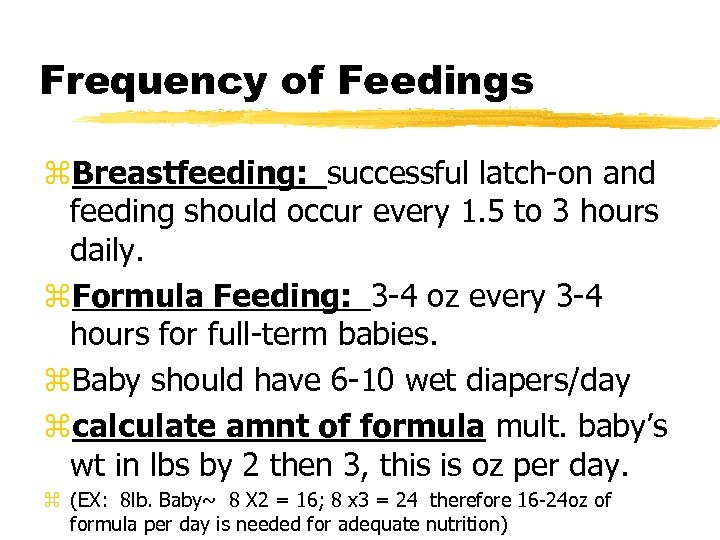
Frequency of Feedings z. Breastfeeding: successful latch-on and feeding should occur every 1. 5 to 3 hours daily. z. Formula Feeding: 3 -4 oz every 3 -4 hours for full-term babies. z. Baby should have 6 -10 wet diapers/day zcalculate amnt of formula mult. baby’s wt in lbs by 2 then 3, this is oz per day. z (EX: 8 lb. Baby~ 8 X 2 = 16; 8 x 3 = 24 therefore 16 -24 oz of formula per day is needed for adequate nutrition)
Nursing Diagnosis z. Effective Breastfeeding z. Risk for Altered Nutrition (more or less than body requirements) R/T (insufficient caloric intake or excessive caloric intake)
Circumcision z. Elective Procedure z. Not pd for by medi-cal z. Decision made based on tradition, religion, culture, or personal factors z. VALUE z. OPPOSITION
Procedure z. Usually delayed 12 to 24 hours until NB is stabilized z. Do not feed 1 hr prior to procedure z. Consent required from one parent z. Methods: Gomco or Plastibell z. Restraint required z. Anesthetic is physician dependent
After Care z. Comfort measures zkeep wound clean and dry (warm water) zck urination w/in 12 hrs after procedure zmonitor for bleeding zs/s of infection will not occur immediately after procedure
Periods of Reactivity z. REVIEW z 1 st period of reactivity: after birth of baby, bursts of rapid movements. Quiet times during this period are ideal for breastfdg & interacting z. Deep Sleep - lasts 60 -100 minutes z 2 nd period of reactivity: occurs 4 -8 hrs after birth lasts 10 min to several hours. Periods of tachycardia & tachypnea. Increased muscle tone, skin color, mucus production, pass meconium

The end….
Скачать презентацию The Normal Newborn Assessment Care Feeding z Presented
e2c603142990d571ac29be8f5b417705.ppt