


 Скачать презентацию The Nifty Feeding Cup Photo courtesy of Laerdal
601655009162da174e45cef8c94056f4.ppt
- Количество слайдов: 16
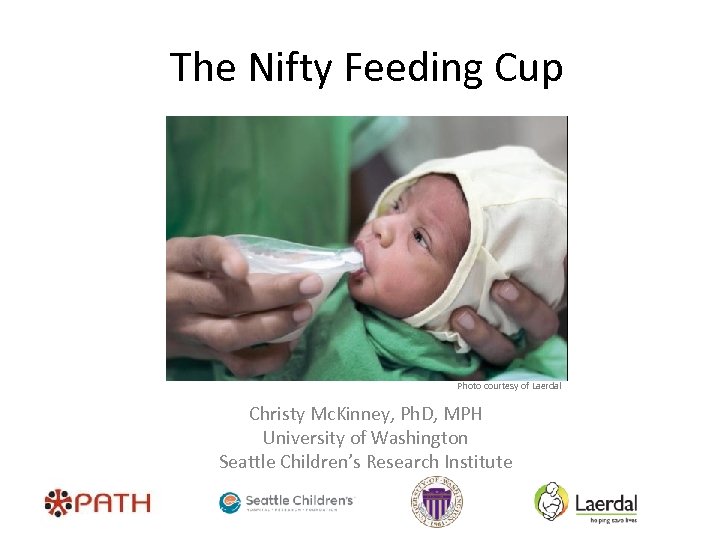 The Nifty Feeding Cup Photo courtesy of Laerdal Christy Mc. Kinney, Ph. D, MPH University of Washington Seattle Children’s Research Institute
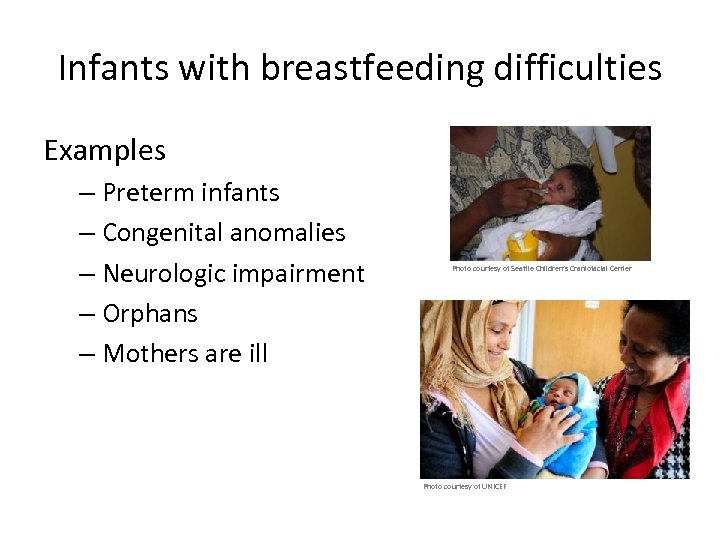 Infants with breastfeeding difficulties Examples – Preterm infants – Congenital anomalies – Neurologic impairment – Orphans – Mothers are ill Photo courtesy of Seattle Children’s Craniofacial Center Photo courtesy of UNICEF
 Burden and Policy • >15 million born yearly with breastfeeding difficulties • WHO/UNICEF Recommendations – LBW in low middle-income countries – Strong recommendation, moderate evidence • Extra support for feeding small/preterm babies – Cups a key commodity – No standard cup exists
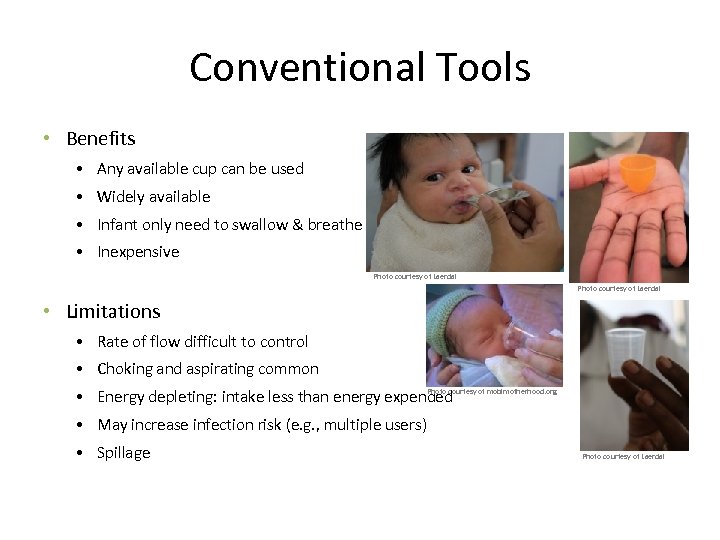 Conventional Tools • Benefits • Any available cup can be used • Widely available • Infant only need to swallow & breathe • Inexpensive Photo courtesy of Laerdal • Limitations • Rate of flow difficult to control • Choking and aspirating common Photo courtesy • Energy depleting: intake less than energy expended of mobimotherhood. org • May increase infection risk (e. g. , multiple users) • Spillage Photo courtesy of Laerdal
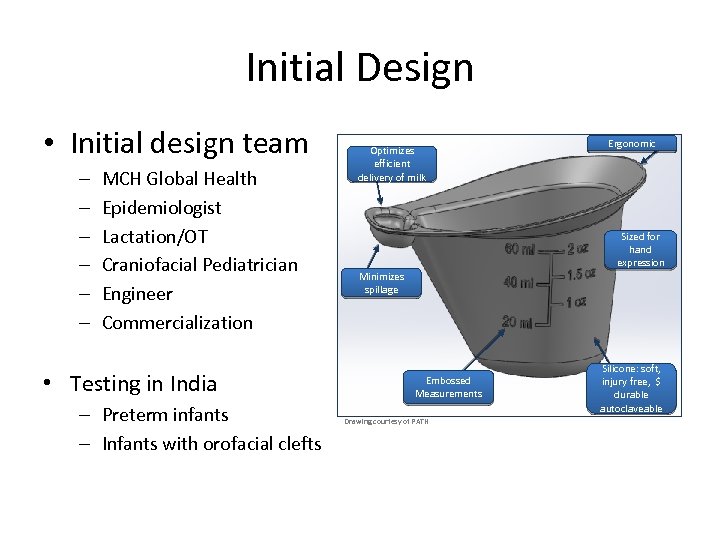 Initial Design • Initial design team – – – MCH Global Health Epidemiologist Lactation/OT Craniofacial Pediatrician Engineer Commercialization • Testing in India – Preterm infants – Infants with orofacial clefts Optimizes efficient delivery of milk Ergonomic Sized for hand expression Minimizes spillage Embossed Measurements Drawing courtesy of PATH Silicone: soft, injury free, $ durable autoclaveable
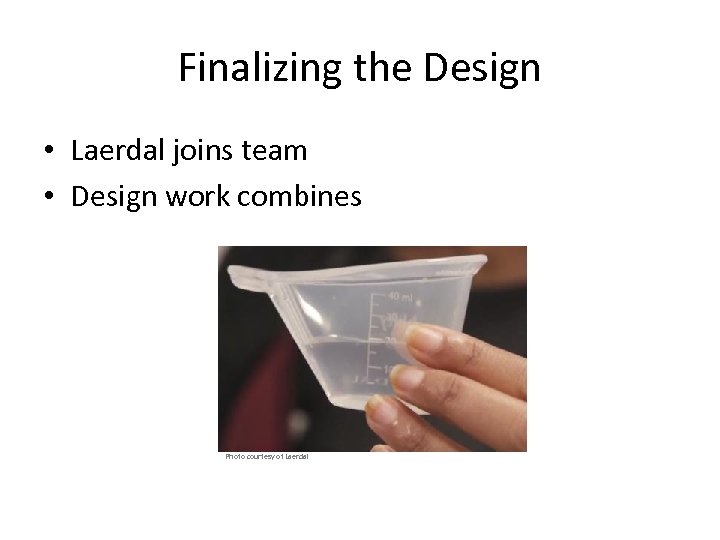 Finalizing the Design • Laerdal joins team • Design work combines Photo courtesy of Laerdal
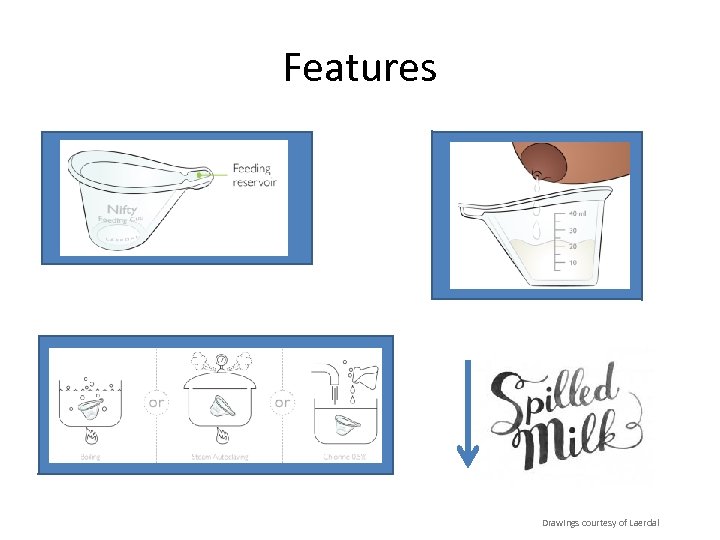 Features Drawings courtesy of Laerdal
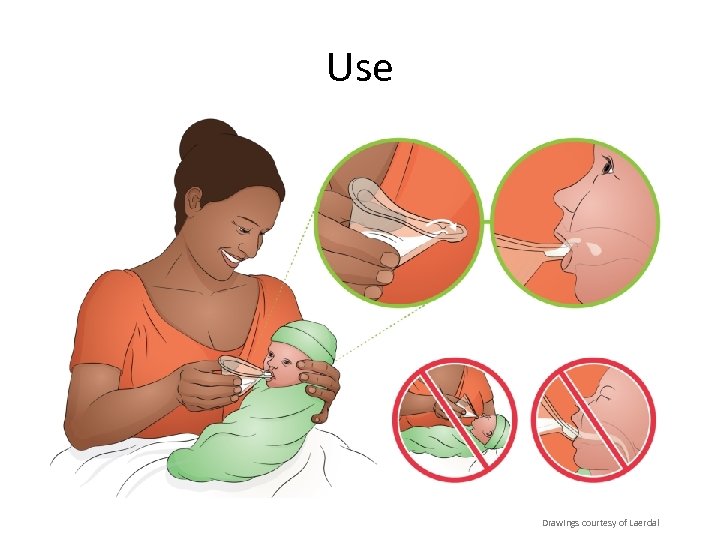 Use Drawings courtesy of Laerdal
 In Action
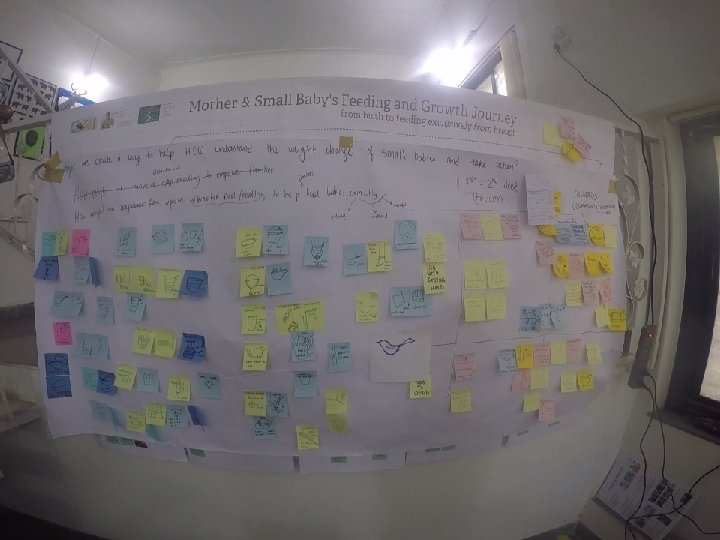 In Action
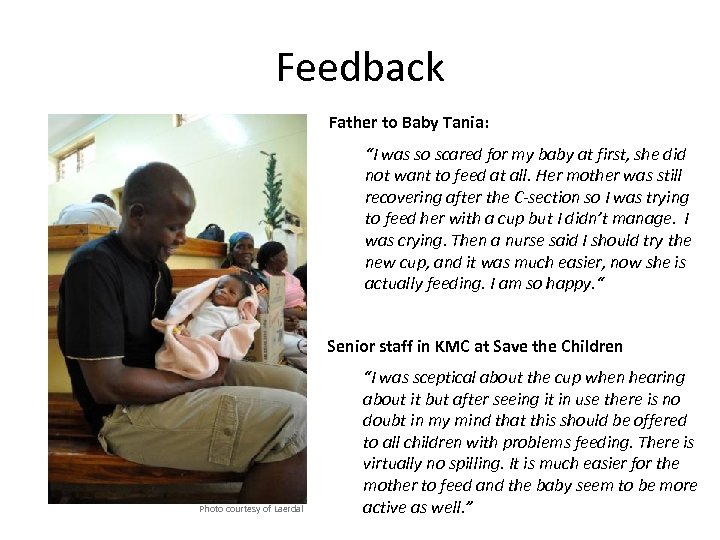 Feedback Father to Baby Tania: “I was so scared for my baby at first, she did not want to feed at all. Her mother was still recovering after the C-section so I was trying to feed her with a cup but I didn’t manage. I was crying. Then a nurse said I should try the new cup, and it was much easier, now she is actually feeding. I am so happy. “ Senior staff in KMC at Save the Children Photo courtesy of Laerdal “I was sceptical about the cup when hearing about it but after seeing it in use there is no doubt in my mind that this should be offered to all children with problems feeding. There is virtually no spilling. It is much easier for the mother to feed and the baby seem to be more active as well. ”
 Clinical Study • Randomized clinical trial – Crossover design • Medicine cup as comparison • 150 caregiver-infant pairs • One year study starting Spring 2017
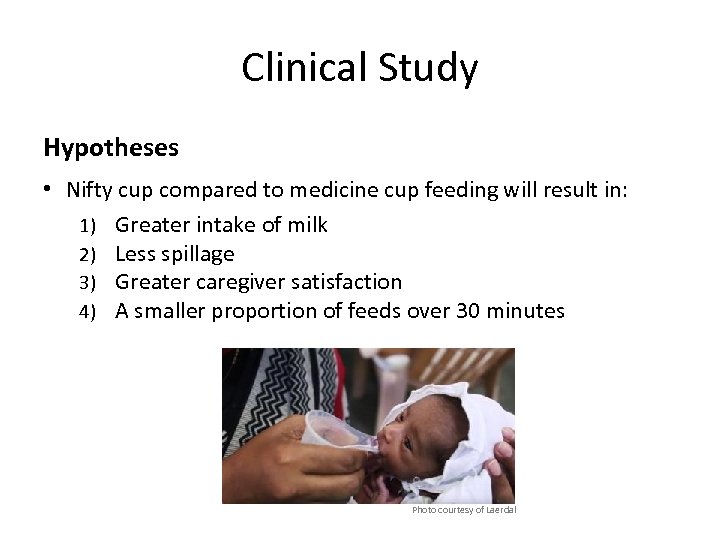 Clinical Study Hypotheses • Nifty cup compared to medicine cup feeding will result in: 1) Greater intake of milk 2) Less spillage 3) Greater caregiver satisfaction 4) A smaller proportion of feeds over 30 minutes Photo courtesy of Laerdal
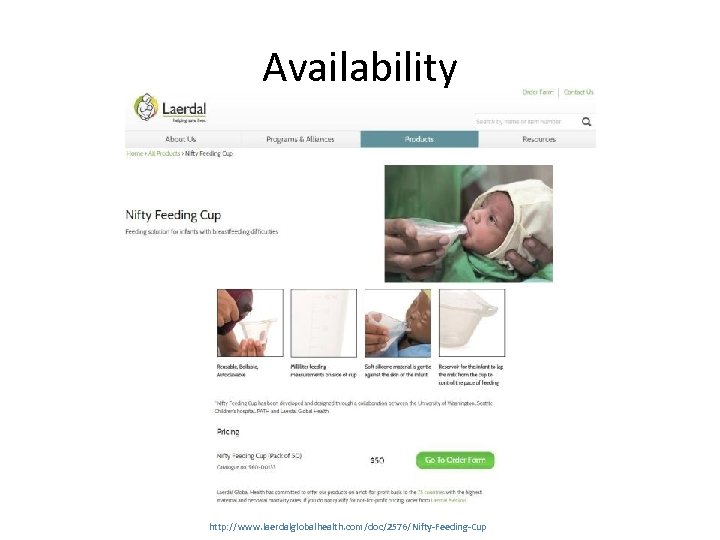 Availability http: //www. laerdalglobalhealth. com/doc/2576/Nifty-Feeding-Cup
 Acknowledgement Saving Lives @ Birth Validation Award The clinical study is made possible through the generous support of the Saving Lives at Birth partners: the United States Agency for International Development (USAID), the Government of Norway, the Bill & Melinda Gates Foundation, Grand Challenges Canada, the U. K. Department for International Development (DFID), and the Korea International Cooperation Agency (KOICA). This presentation was prepared by Seattle Children’s Hospital and its partners and does not necessarily reflect the views of the Saving Lives at Birth partners.
 Photo courtesy of Michael Tillman Drawings courtesy of Laerdal