 Скачать презентацию THE NEW REPUBLIC A The federal Constitution
ad94ffa2ddd6df09f4f7c6930fc2afa5.ppt
- Количество слайдов: 34



THE NEW REPUBLIC
A. The federal Constitution (convention, ratification, Bill of Rights) B. Washington, Hamilton, and shaping of the national government C. Emergence of political parties: Federalists and Republicans D. John Adams' presidency (Alien and Sedition Acts, Election of 1800)
GUIDING QUESTIONS How and why did the Constitution replace the Articles of Confederation? To what extent was the Constitution a radical departure from the Articles of Confederation?
THE FEDERAL CONSTITUTION
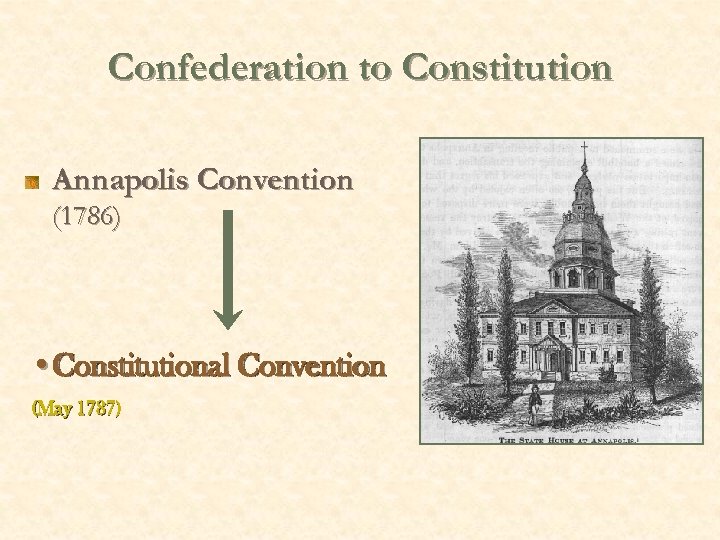
Confederation to Constitution Annapolis Convention (1786) • Constitutional Convention (May 1787)
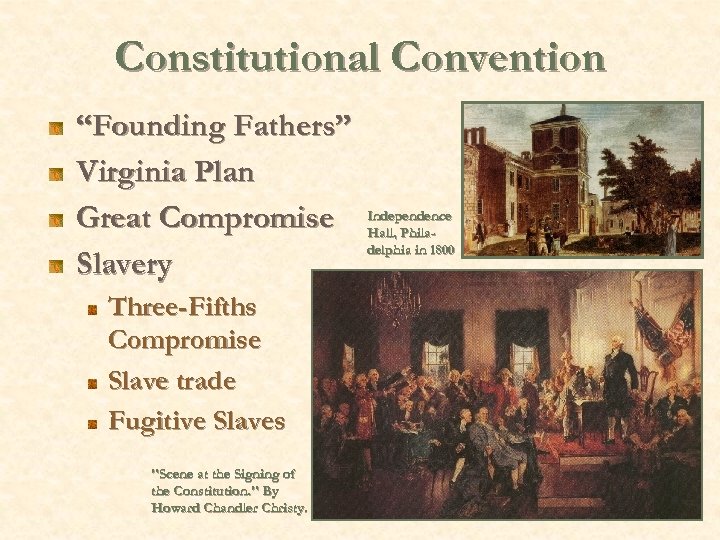
Constitutional Convention “Founding Fathers” Virginia Plan Great Compromise Slavery Three-Fifths Compromise Slave trade Fugitive Slaves "Scene at the Signing of the Constitution. " By Howard Chandler Christy. Independence Hall, Philadelphia in 1800
Features of the Constitution 1. Concern about Concentrated Power • “Federal” system – Problem of sovereignty • Separation of power • Checks and balances
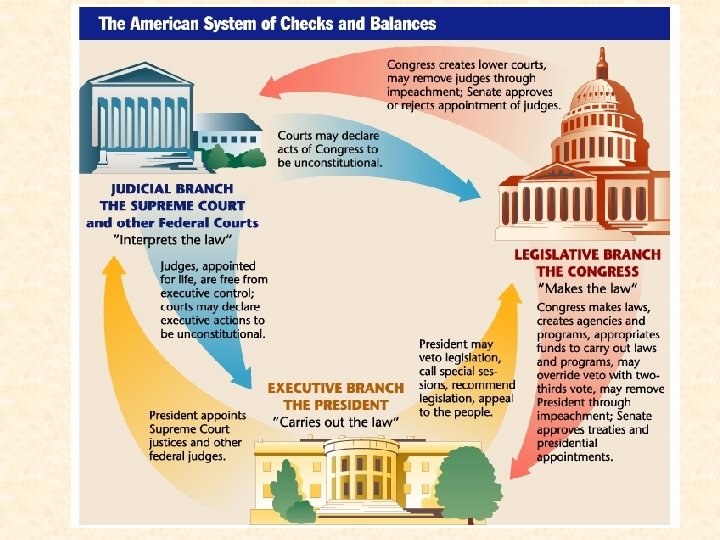
System of Checks and Balances
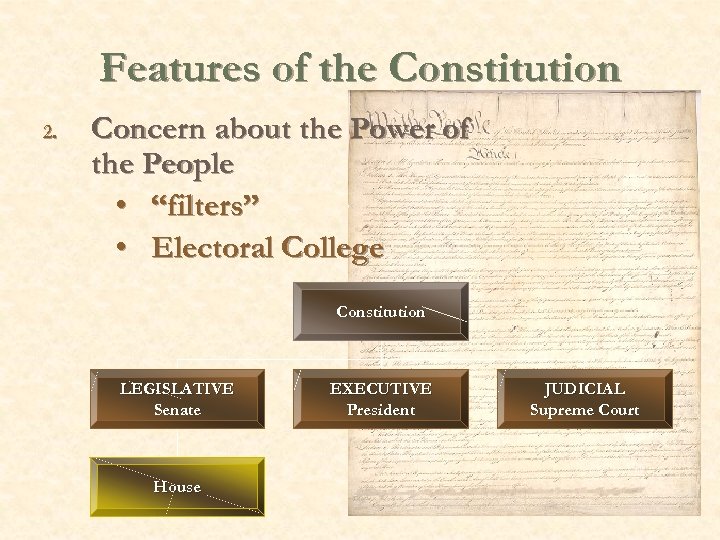
Features of the Constitution 2. Concern about the Power of the People • “filters” • Electoral College Constitution LEGISLATIVE Senate House EXECUTIVE President JUDICIAL Supreme Court
Features of the Constitution Concern about Protecting Economic Interests?
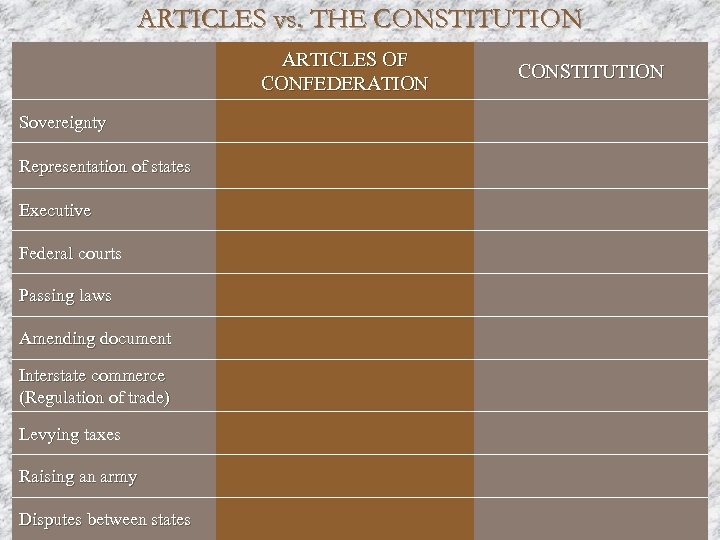
ARTICLES vs. THE CONSTITUTION ARTICLES OF CONFEDERATION Sovereignty Representation of states Executive Federal courts Passing laws Amending document Interstate commerce (Regulation of trade) Levying taxes Raising an army Disputes between states CONSTITUTION
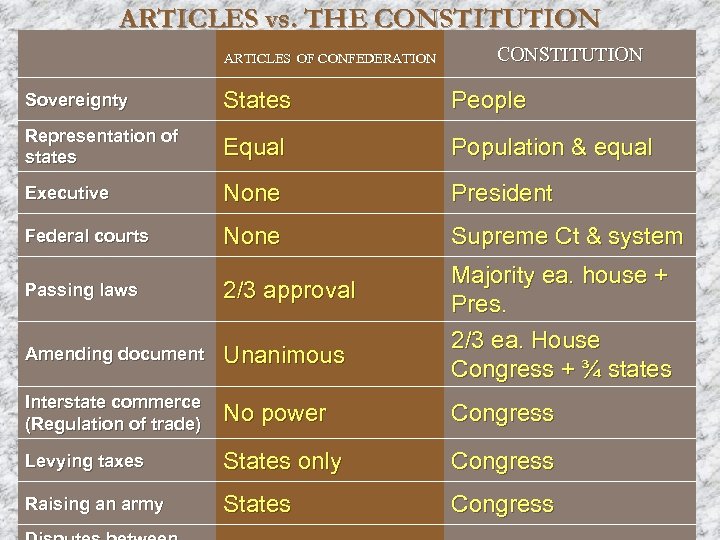
ARTICLES vs. THE CONSTITUTION ARTICLES OF CONFEDERATION CONSTITUTION Sovereignty States People Representation of states Equal Population & equal Executive None President Federal courts None Supreme Ct & system Majority ea. house + Pres. 2/3 ea. House Congress + ¾ states Passing laws 2/3 approval Amending document Unanimous Interstate commerce (Regulation of trade) No power Congress Levying taxes States only Congress Raising an army States Congress
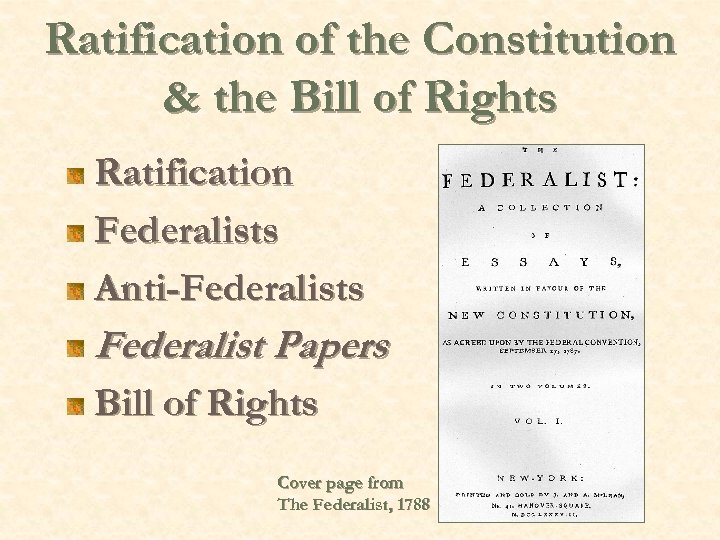
Ratification of the Constitution & the Bill of Rights Ratification Federalists Anti-Federalists Federalist Papers Bill of Rights Cover page from The Federalist, 1788
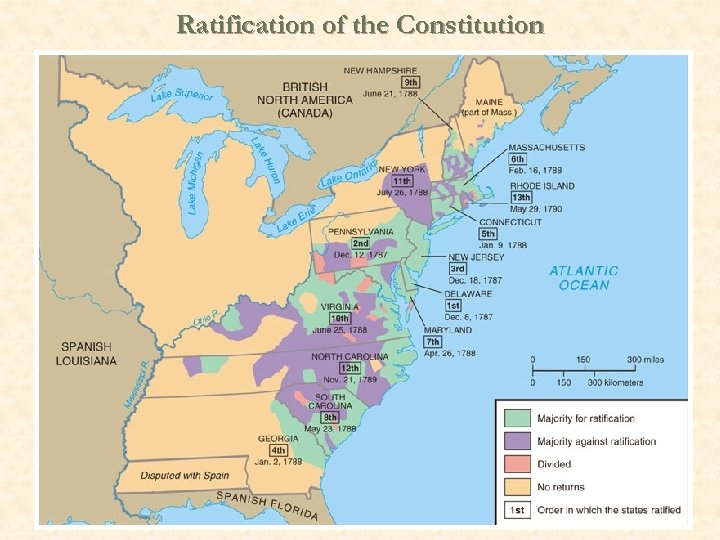
Ratification of the Constitution
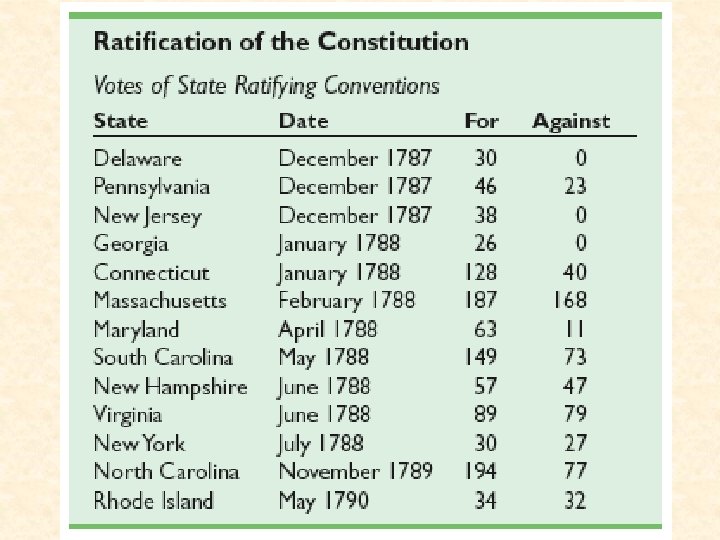
Votes of State Ratifying Conventions
ANALYZING THE CONSTITUTION Did the Constitution reflect the goals of the American Revolution? OR: Was it a counter-revolutionary document established to benefit the traditional political and economic elites?
SHAPING THE NATIONAL GOVERNMENT How did George Washington and Alexander Hamilton set up a stable national government?
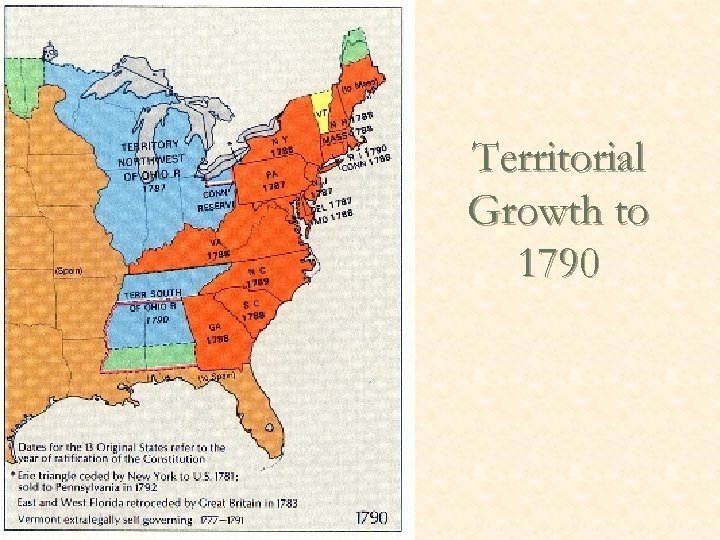
Territorial Growth to 1790
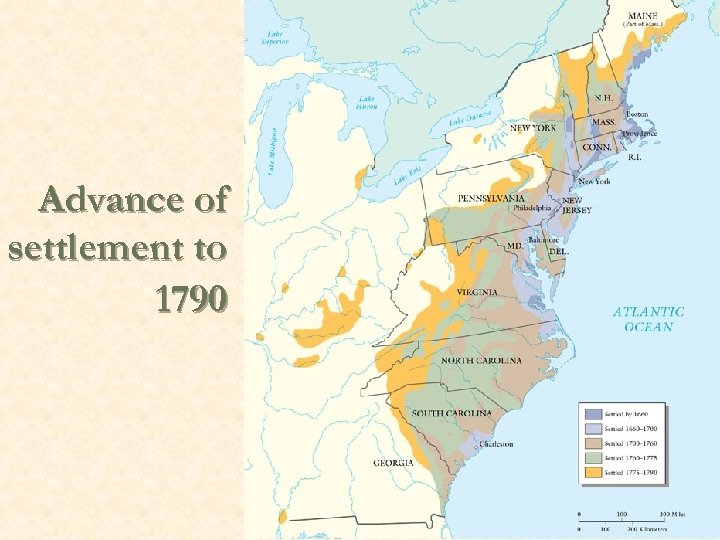
Advance of settlement to 1790
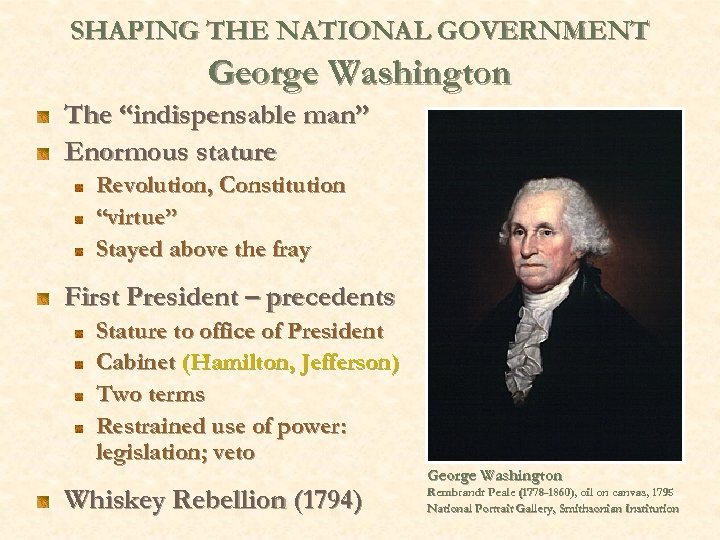
SHAPING THE NATIONAL GOVERNMENT George Washington The “indispensable man” Enormous stature Revolution, Constitution “virtue” Stayed above the fray First President – precedents Stature to office of President Cabinet (Hamilton, Jefferson) Two terms Restrained use of power: legislation; veto Whiskey Rebellion (1794) George Washington Rembrandt Peale (1778 -1860), oil on canvas, 1795 National Portrait Gallery, Smithsonian Institution
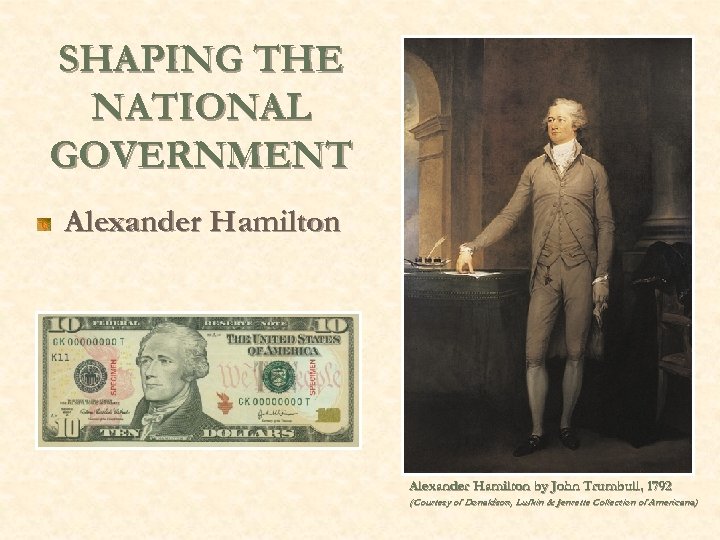
SHAPING THE NATIONAL GOVERNMENT Alexander Hamilton by John Trumbull, 1792 (Courtesy of Donaldson, Lufkin & Jenrette Collection of Americana)
Hamilton’s Financial Plan 1) “Funding the Debt” – at face value ($50 M) 2) Assumption of state debts ($25 M) 3) National Bank – (First) Bank of the United States 4) High Protective Tariff 5) Sources of Revenue: tariff, public land sales, excise tax on whiskey Purposes: a) Place national gov’t on firm financial standing, b) Give wealthy stake in success of new national gov’t c) Promote growth of industrial activity and urban areas
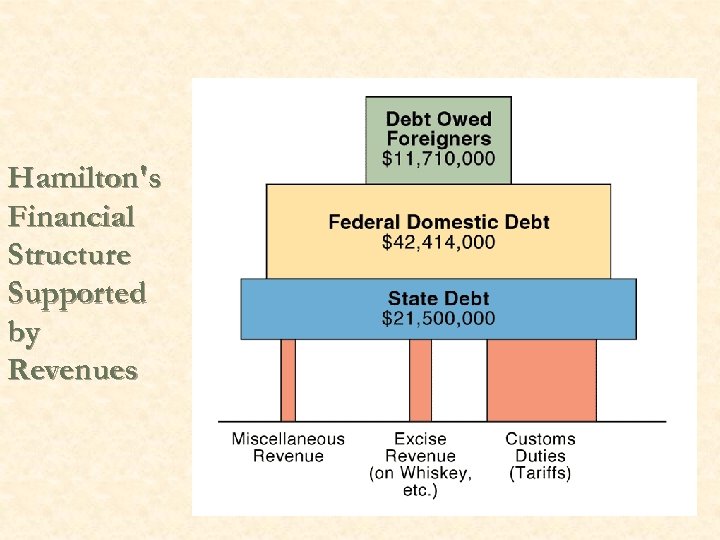
Hamilton's Financial Structure Supported by Revenues
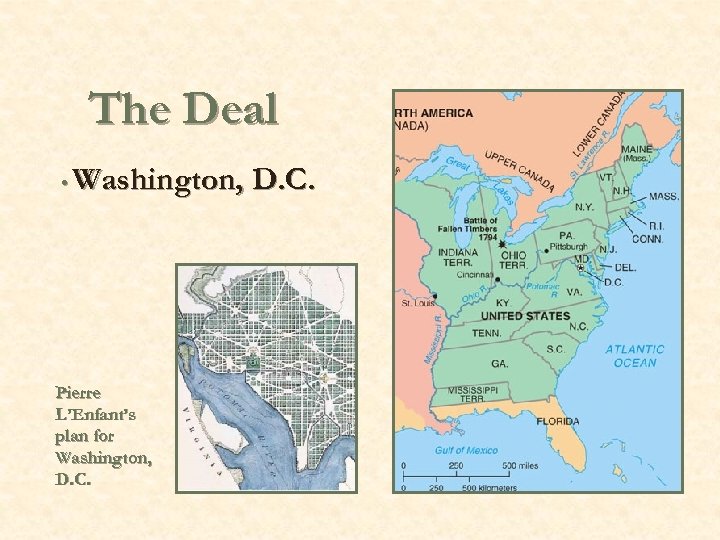
The Deal • Washington, D. C. Pierre L’Enfant’s plan for Washington, D. C.
EMERGENCE OF POLITICAL PARTIES
EMERGENCE OF POLITICAL PARTIES How did differing views of what the nation should become lead to the rise of America’s first political parties?
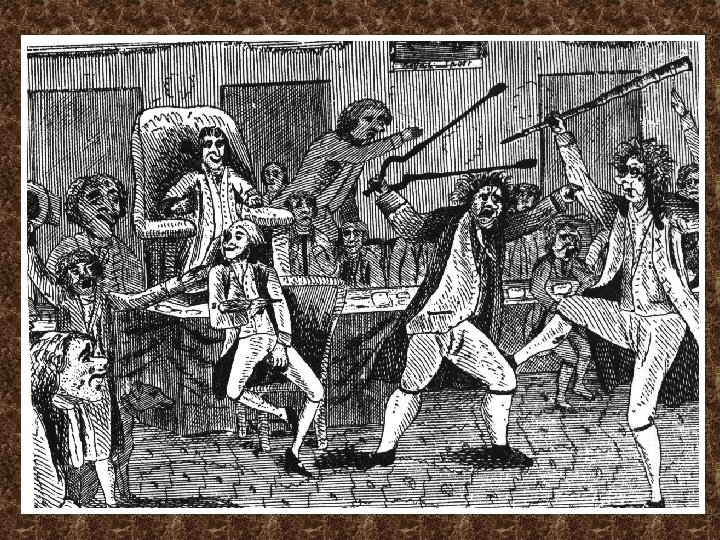
Emergence Of Political Parties Founders’ dislike of parties Democratic-Republicans – usually “Republicans” Federalists “First Party System”: Feds & Reps (1790 s-c. 1816)
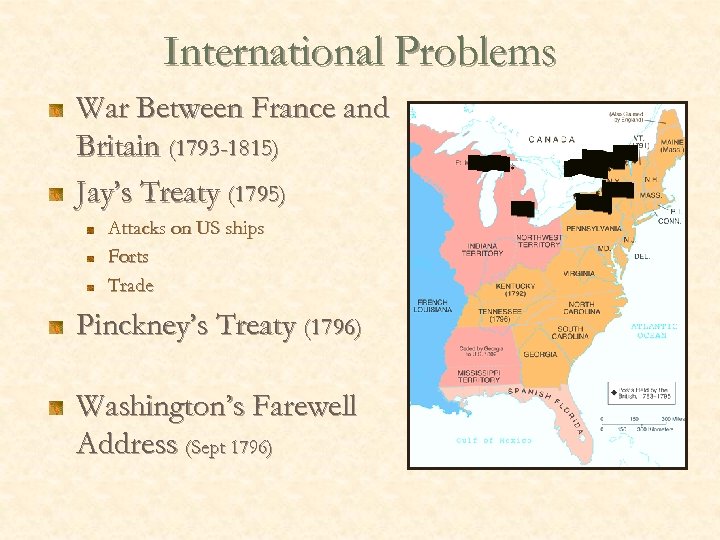
International Problems War Between France and Britain (1793 -1815) Jay’s Treaty (1795) Attacks on US ships Forts Trade Pinckney’s Treaty (1796) Washington’s Farewell Address (Sept 1796)
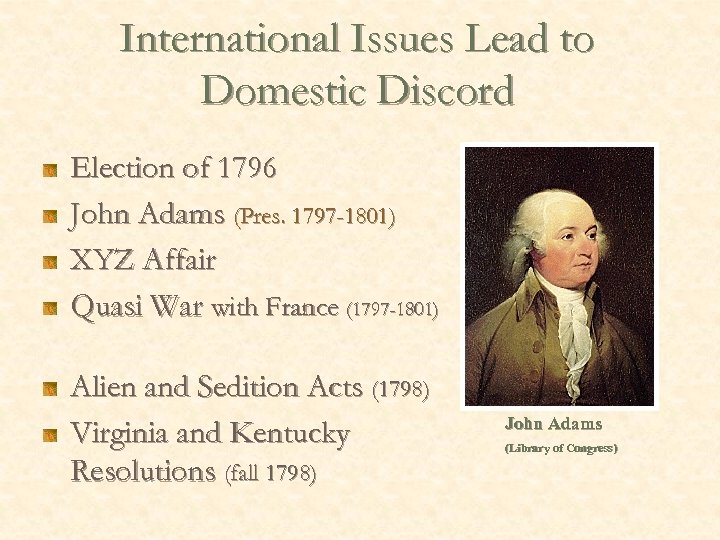
International Issues Lead to Domestic Discord Election of 1796 John Adams (Pres. 1797 -1801) XYZ Affair Quasi War with France (1797 -1801) Alien and Sedition Acts (1798) Virginia and Kentucky Resolutions (fall 1798) John Adams (Library of Congress)
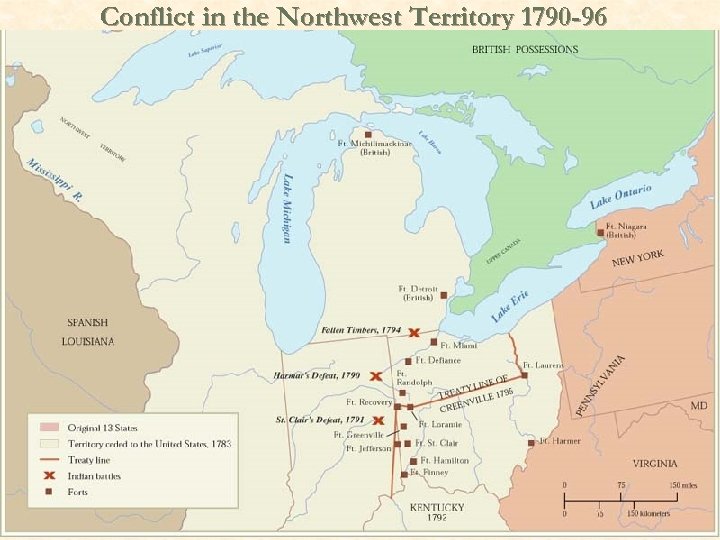
Conflict in the Northwest Territory 1790 -96
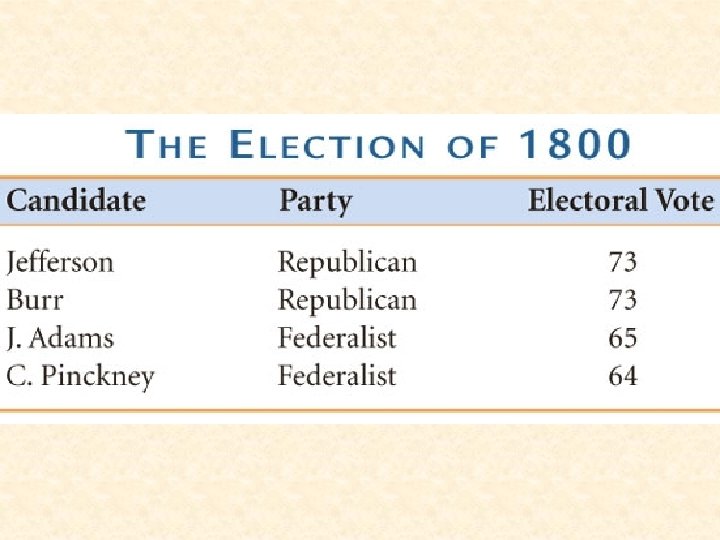
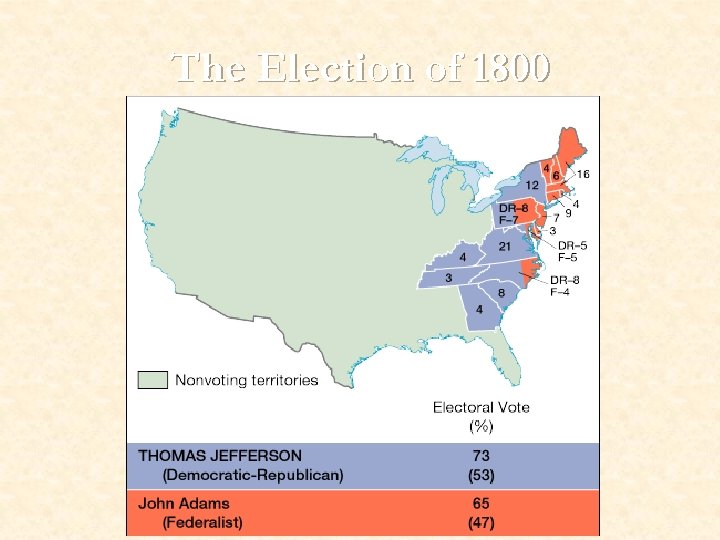
The Election of 1800
Sources Brinkley 10 e http: //www. wadsworth. com/history_d/templates/student_res ources/0030724791_ayers/maps/7. 1. html http: //teachpol. tcnj. edu/amer_pol_hist/thumbnail 73. html Faragher, Out of Many, 3 rd Ed. ; http: //wps. prenhall. com/hss_faragher_outofmany_ap Divine, America Past & Present 7 e Henretta, America’s History from 5 e http: //www. bedfordstmartins. com/mapcentral Nash, The American People 6 e
Скачать презентацию THE NEW REPUBLIC A The federal Constitution
ad94ffa2ddd6df09f4f7c6930fc2afa5.ppt