


 Скачать презентацию THE NEW DIGITAL ECOLOGY The growth and impact
2d8547a77c3d56ba05ad6a49baa0aea1.ppt
- Количество слайдов: 67
 THE NEW DIGITAL ECOLOGY The growth and impact of the internet (and related technologies) Lee Rainie – Director Washington Web Managers Roundtable February 1, 2007
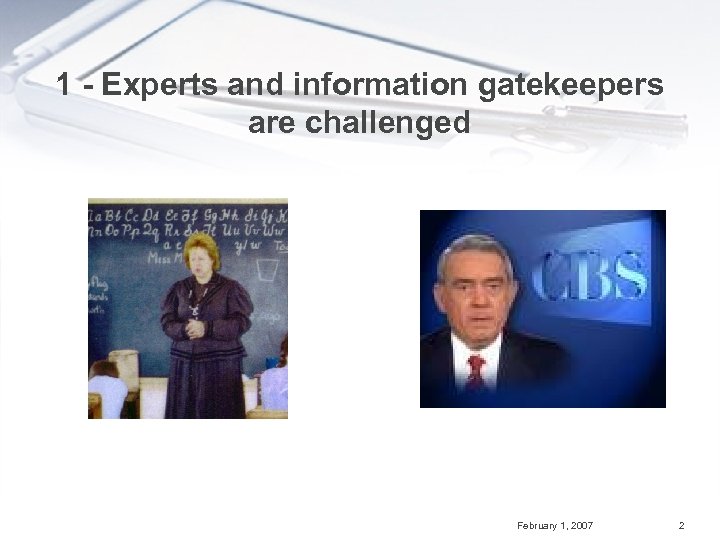 1 - Experts and information gatekeepers are challenged February 1, 2007 2
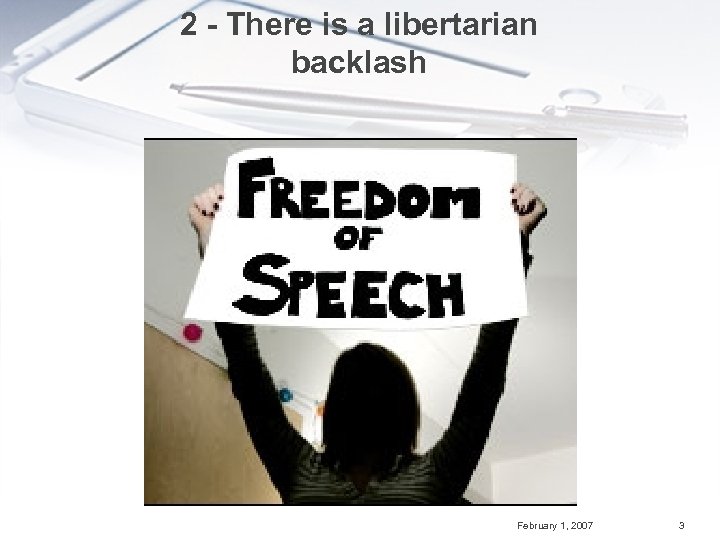 2 - There is a libertarian backlash February 1, 2007 3
 3 - Cataloguing and searching information becomes much easier February 1, 2007 4
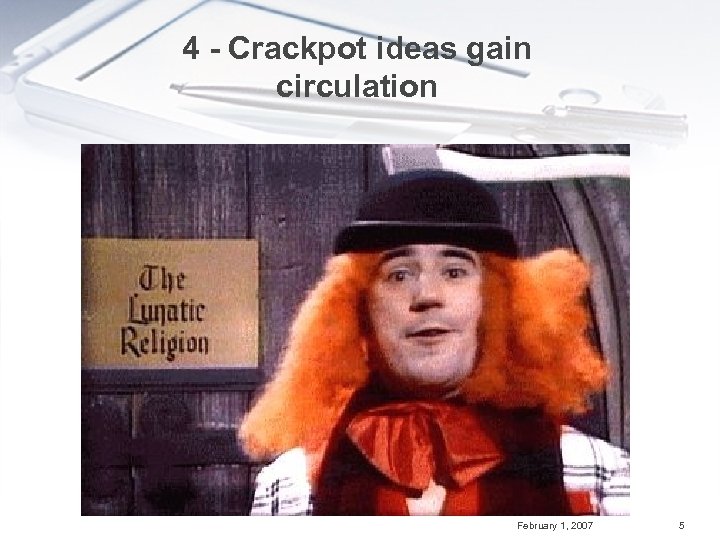 4 - Crackpot ideas gain circulation February 1, 2007 5
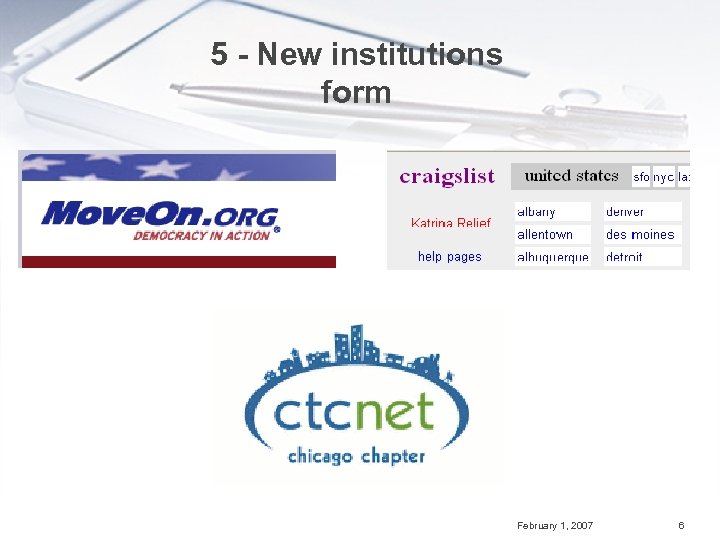 5 - New institutions form February 1, 2007 6
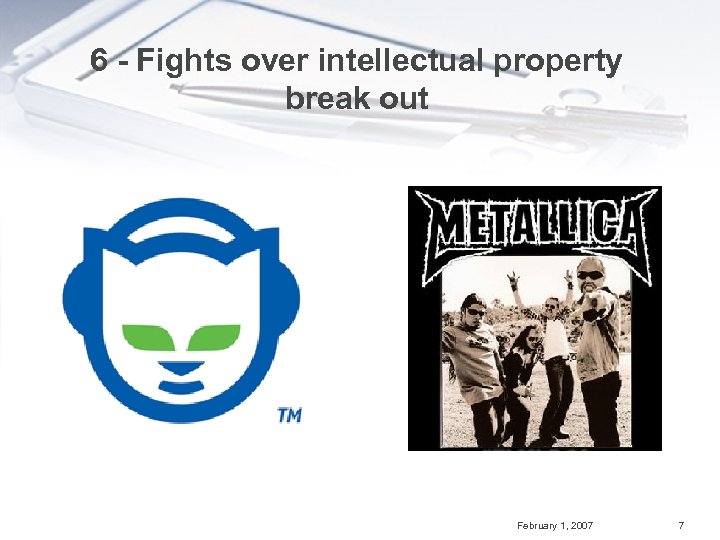 6 - Fights over intellectual property break out February 1, 2007 7
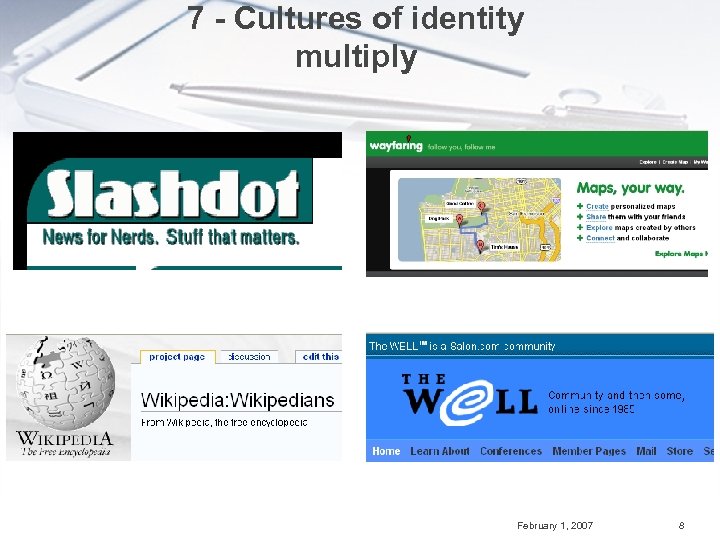 7 - Cultures of identity multiply February 1, 2007 8
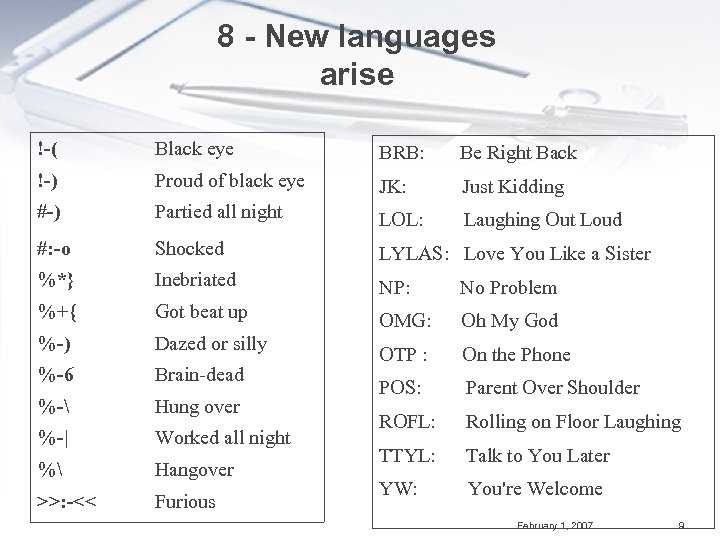 8 - New languages arise !-( Black eye BRB: Be Right Back !-) Proud of black eye JK: Just Kidding #-) Partied all night LOL: Laughing Out Loud #: -o Shocked LYLAS: Love You Like a Sister %*} Inebriated NP: No Problem %+{ Got beat up OMG: Oh My God %-) Dazed or silly %-6 Brain-dead OTP : On the Phone %- Hung over POS: Parent Over Shoulder %-| Worked all night ROFL: Rolling on Floor Laughing % Hangover TTYL: Talk to You Later >>: -<< Furious YW: You're Welcome February 1, 2007 9
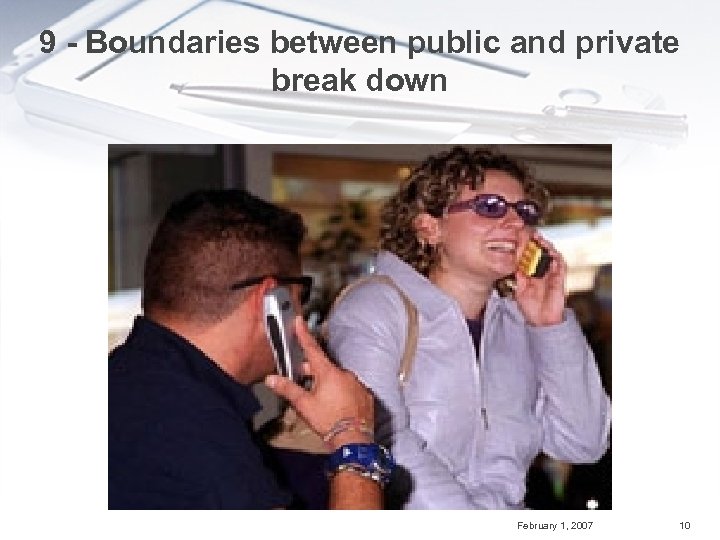 9 - Boundaries between public and private break down February 1, 2007 10
 10 - New professions emerge February 1, 2007 11
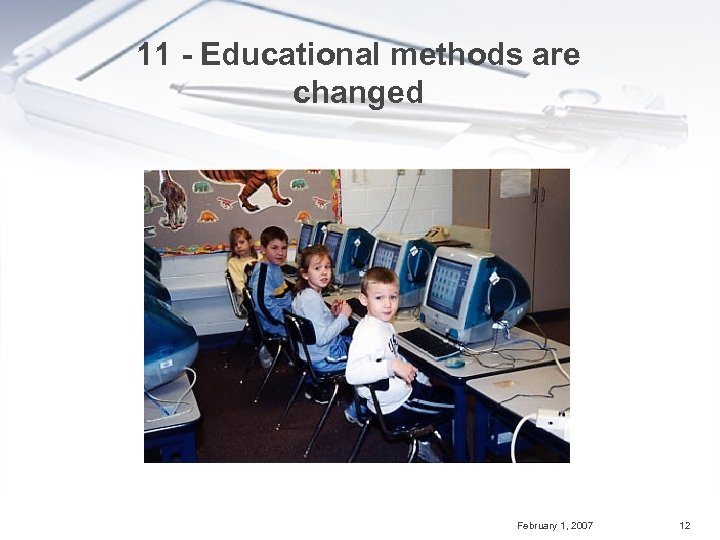 11 - Educational methods are changed February 1, 2007 12
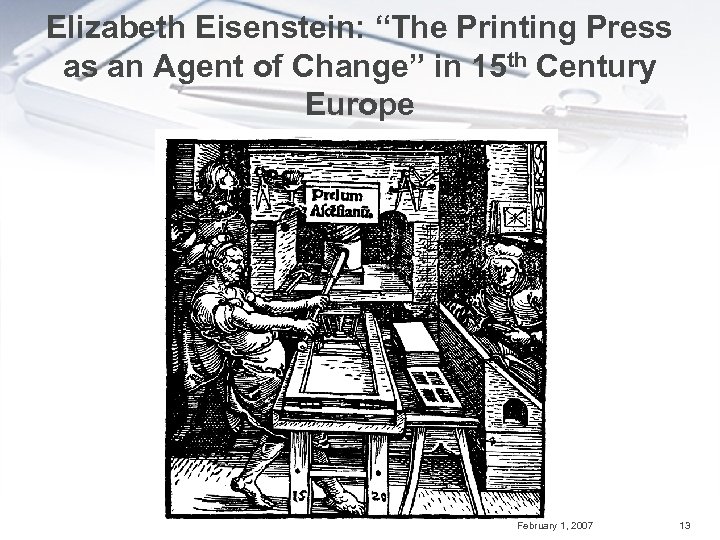 Elizabeth Eisenstein: “The Printing Press as an Agent of Change” in 15 th Century Europe All of these occurred in the last decade …. and 550 years ago February 1, 2007 13
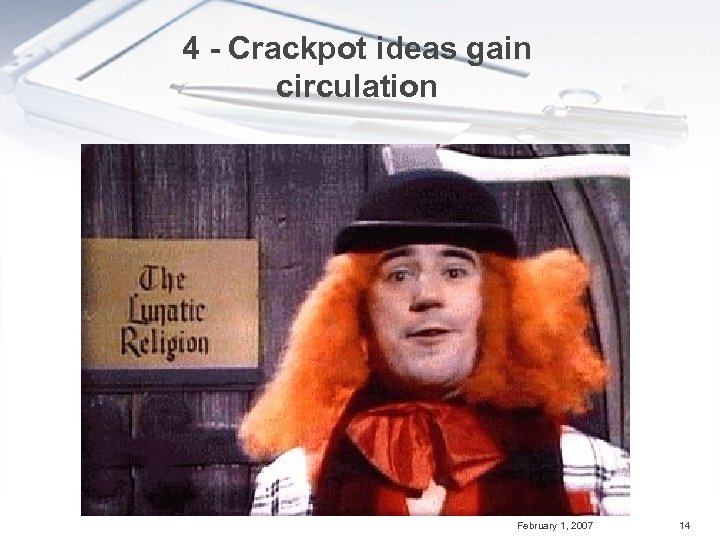 4 - Crackpot ideas gain circulation February 1, 2007 14
 7 new truths about the digital environment that are changing social and civic life New Digital Ecology February 1, 2007 15
 Truth 1 Media and gadgets are ubiquitous parts of everyday life New Digital Ecology February 1, 2007 16
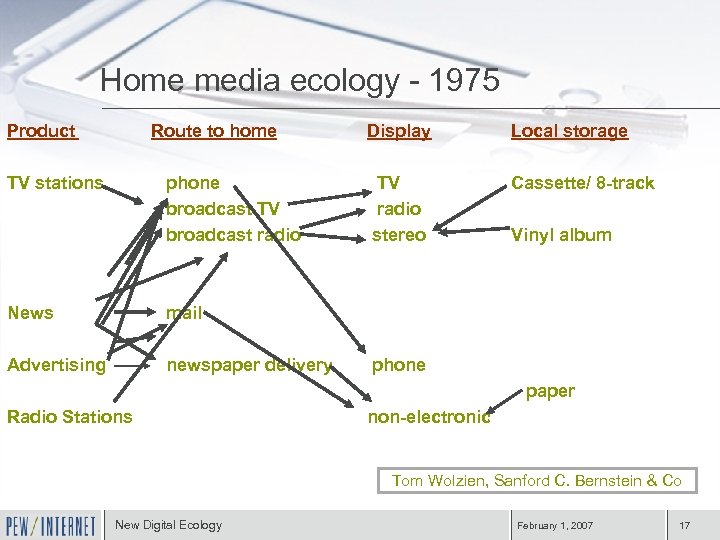 Home media ecology - 1975 Product Route to home TV stations phone broadcast TV broadcast radio News newspaper delivery Local storage TV radio stereo Cassette/ 8 -track Vinyl album mail Advertising Display phone paper Radio Stations non-electronic Tom Wolzien, Sanford C. Bernstein & Co New Digital Ecology February 1, 2007 17
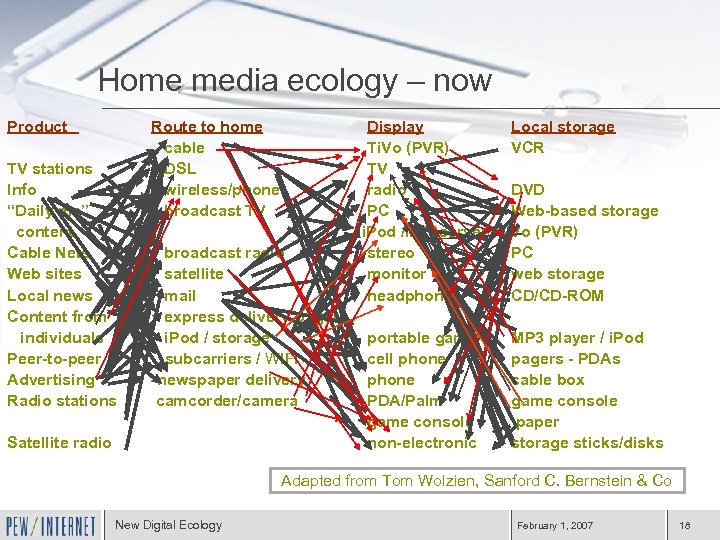 Home media ecology – now Product TV stations Info “Daily me” content Cable Nets Web sites Local news Content from individuals Peer-to-peer Advertising Radio stations Route to home cable DSL wireless/phone broadcast TV broadcast radio satellite mail express delivery pager i. Pod / storage subcarriers / WIFI newspaper delivery camcorder/camera Satellite radio Display Local storage Ti. Vo (PVR) VCR TV radio DVD PC Web-based storage i. Pod /MP 3 server/ Ti. Vo (PVR) stereo PC monitor web storage headphones CD/CD-ROM portable gamer cell phone PDA/Palm game console non-electronic MP 3 player / i. Pod pagers - PDAs cable box game console paper storage sticks/disks Adapted from Tom Wolzien, Sanford C. Bernstein & Co New Digital Ecology February 1, 2007 18
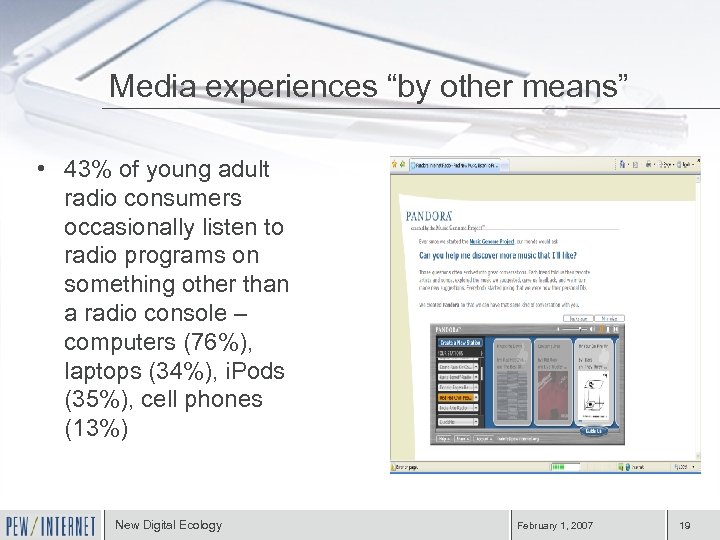 Media experiences “by other means” • 43% of young adult radio consumers occasionally listen to radio programs on something other than a radio console – computers (76%), laptops (34%), i. Pods (35%), cell phones (13%) New Digital Ecology February 1, 2007 19
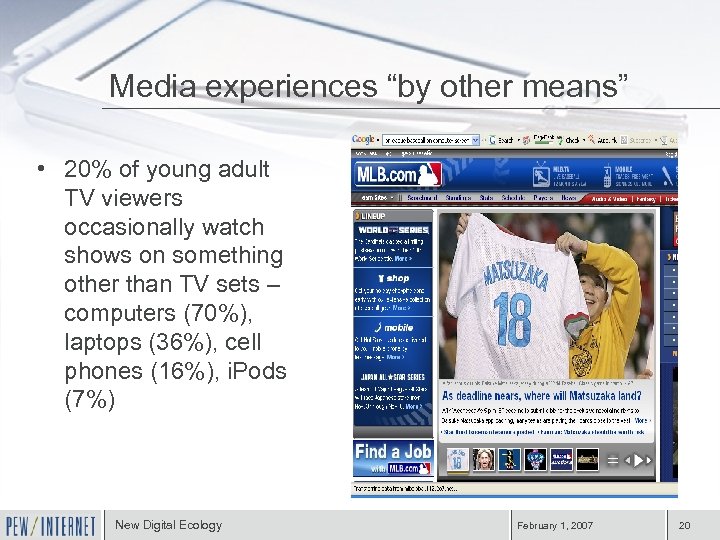 Media experiences “by other means” • 20% of young adult TV viewers occasionally watch shows on something other than TV sets – computers (70%), laptops (36%), cell phones (16%), i. Pods (7%) New Digital Ecology February 1, 2007 20
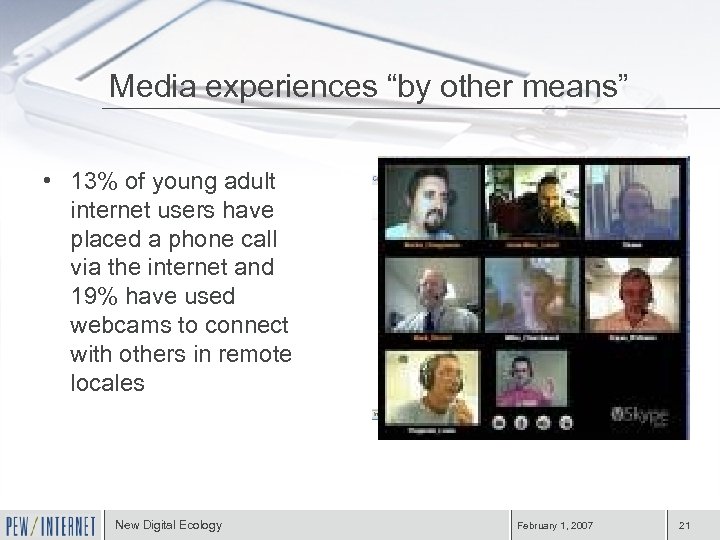 Media experiences “by other means” • 13% of young adult internet users have placed a phone call via the internet and 19% have used webcams to connect with others in remote locales New Digital Ecology February 1, 2007 21
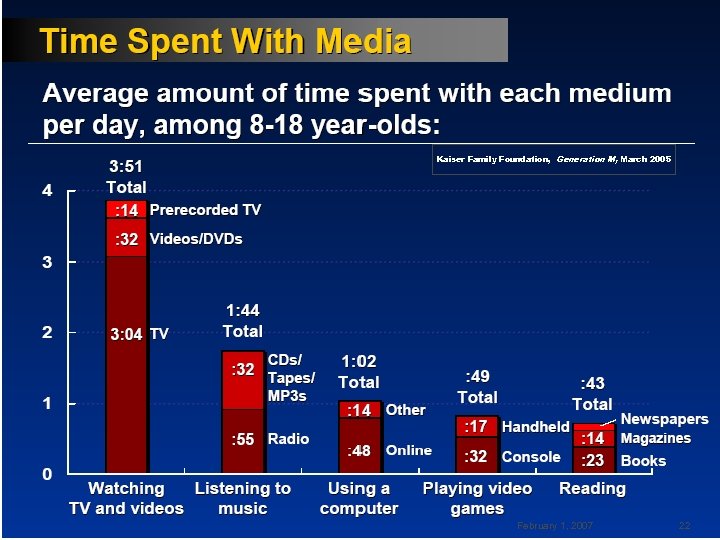 Kaiser Family Foundation, Generation M, March 2005 New Digital Ecology February 1, 2007 22
 Truth 2 New gadgets allow people to enjoy media, gather information, and carry on communication anywhere New Digital Ecology February 1, 2007 23
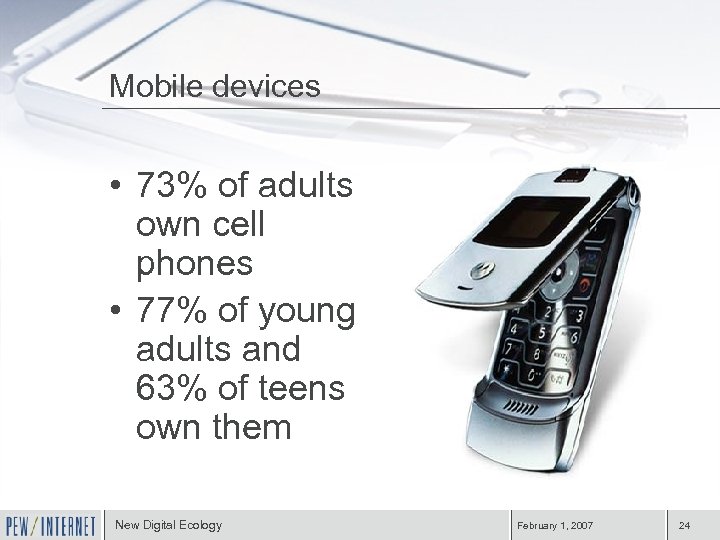 Mobile devices • 73% of adults own cell phones • 77% of young adults and 63% of teens own them New Digital Ecology February 1, 2007 24
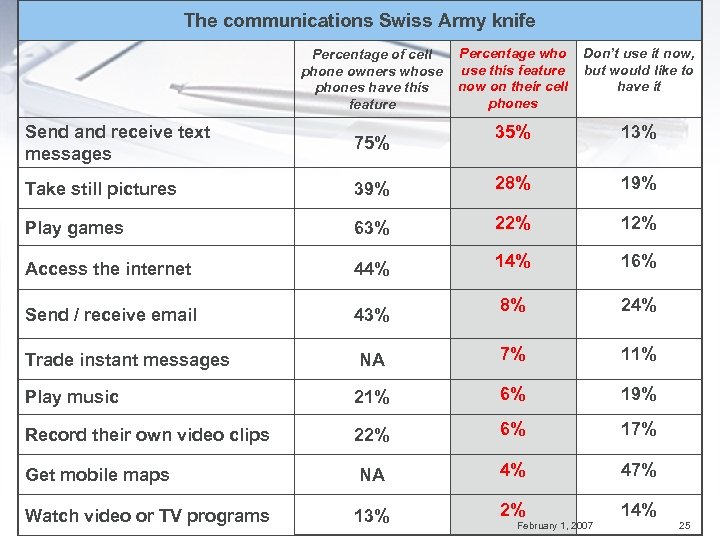 The communications Swiss Army knife Percentage of cell phone owners whose phones have this feature Percentage who use this feature now on their cell phones Don’t use it now, but would like to have it 35% 13% Send and receive text messages 75% Take still pictures 39% 28% 19% Play games 63% 22% 12% Access the internet 44% 16% Send / receive email 43% 8% 24% Trade instant messages NA 7% 11% Play music 21% 6% 19% Record their own video clips 22% 6% 17% Get mobile maps NA 4% 47% Watch video or TV programs 13% 2% 14% February 1, 2007 25
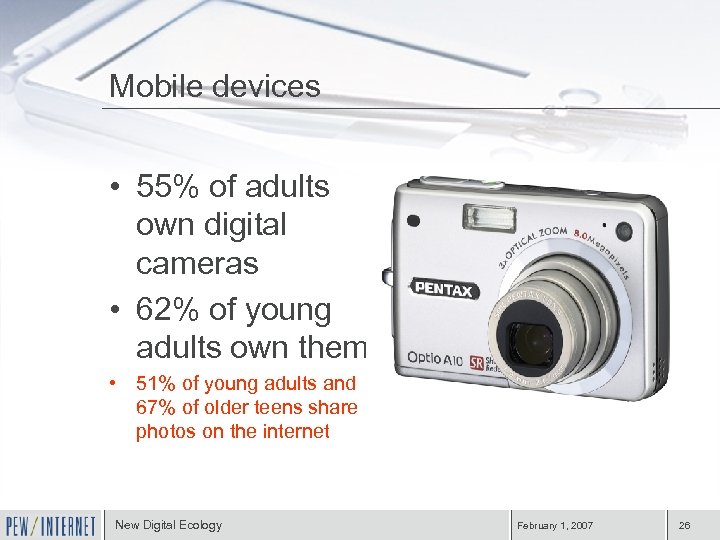 Mobile devices • 55% of adults own digital cameras • 62% of young adults own them • 51% of young adults and 67% of older teens share photos on the internet New Digital Ecology February 1, 2007 26
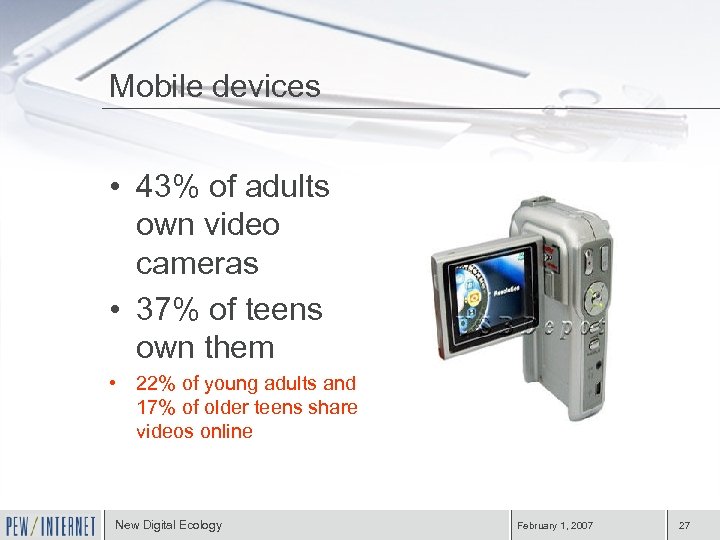 Mobile devices • 43% of adults own video cameras • 37% of teens own them • 22% of young adults and 17% of older teens share videos online New Digital Ecology February 1, 2007 27
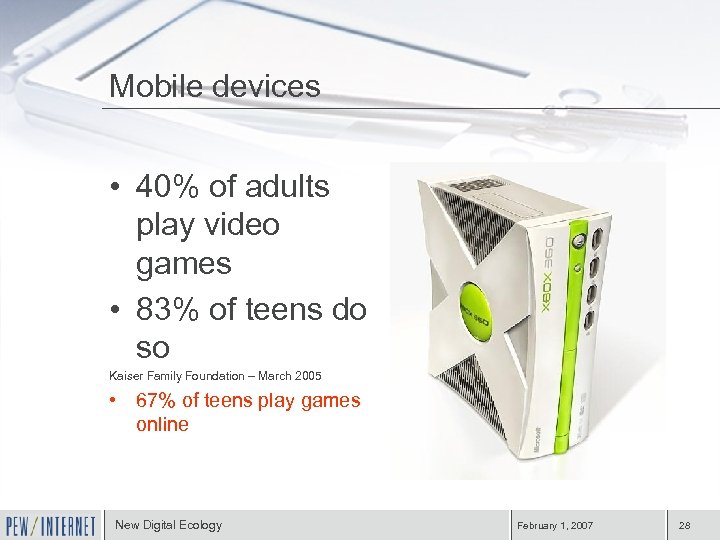 Mobile devices • 40% of adults play video games • 83% of teens do so Kaiser Family Foundation – March 2005 • 67% of teens play games online New Digital Ecology February 1, 2007 28
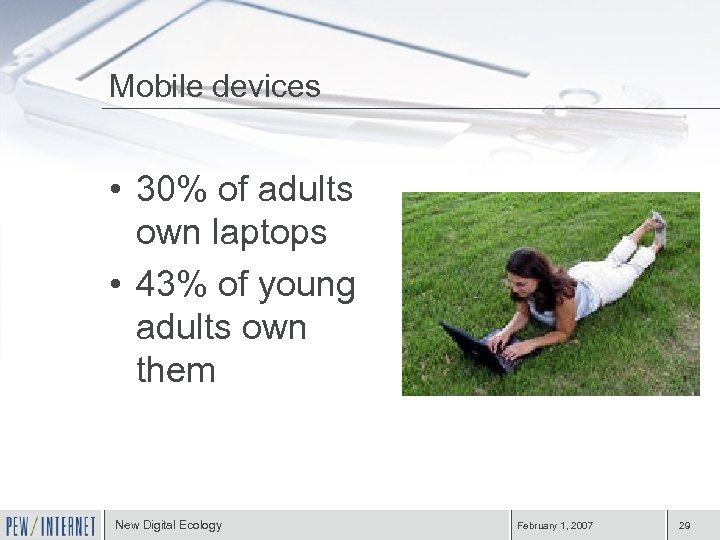 Mobile devices • 30% of adults own laptops • 43% of young adults own them New Digital Ecology February 1, 2007 29
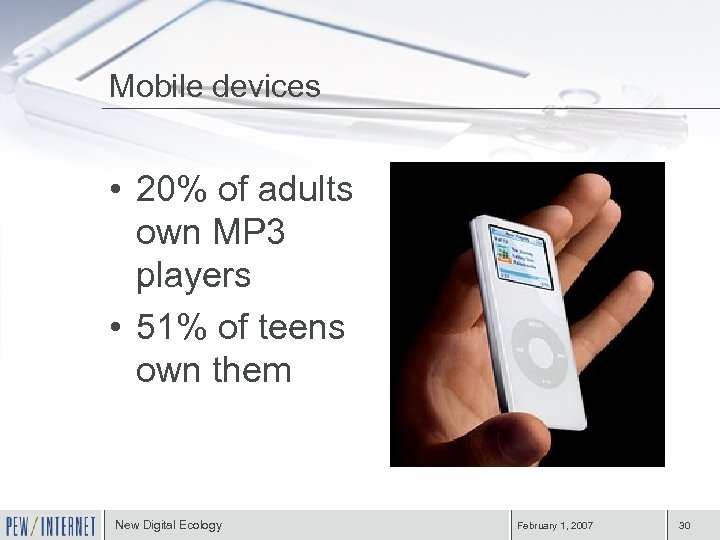 Mobile devices • 20% of adults own MP 3 players • 51% of teens own them New Digital Ecology February 1, 2007 30
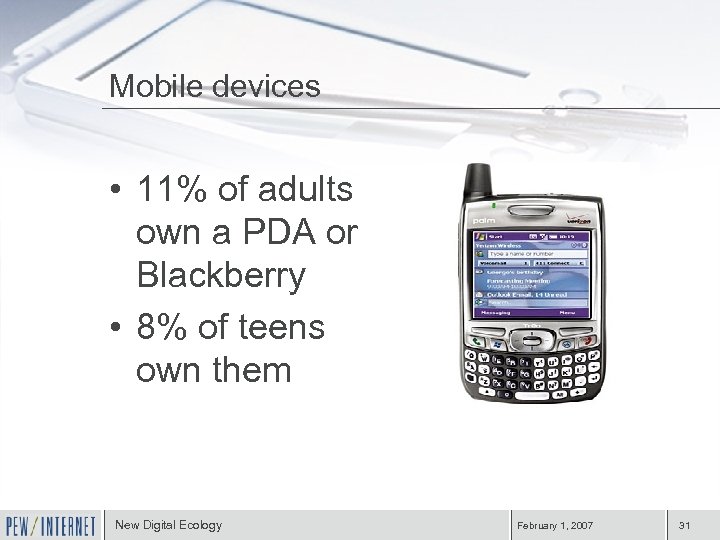 Mobile devices • 11% of adults own a PDA or Blackberry • 8% of teens own them New Digital Ecology February 1, 2007 31
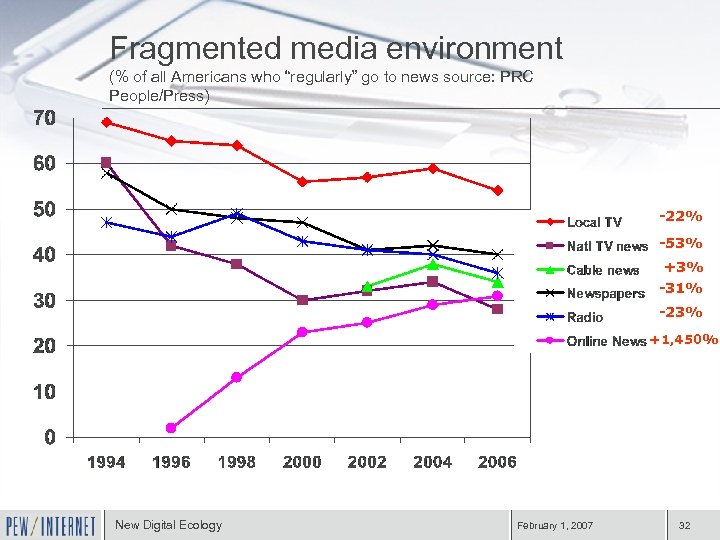 Fragmented media environment (% of all Americans who “regularly” go to news source: PRC People/Press) -22% -53% +3% -31% -23% +1, 450% New Digital Ecology February 1, 2007 32
 Truth 3 The internet (especially broadband) is at the center of the revolution New Digital Ecology February 1, 2007 33
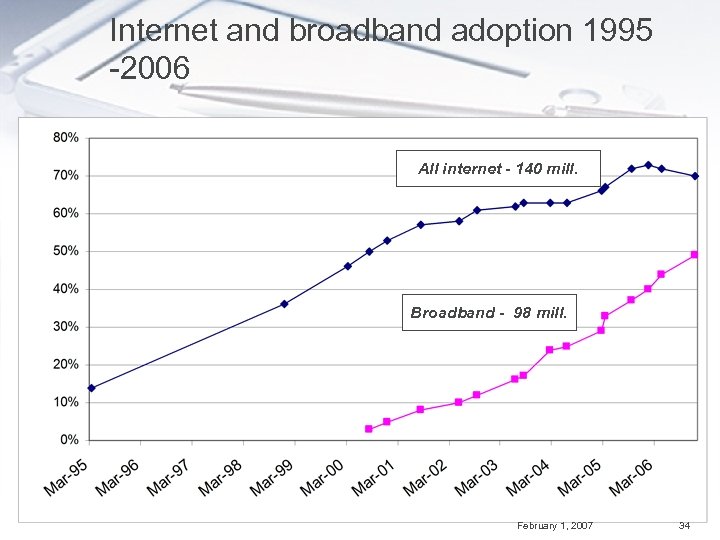 Internet and broadband adoption 1995 -2006 All internet - 140 mill. Broadband - 98 mill. February 1, 2007 34
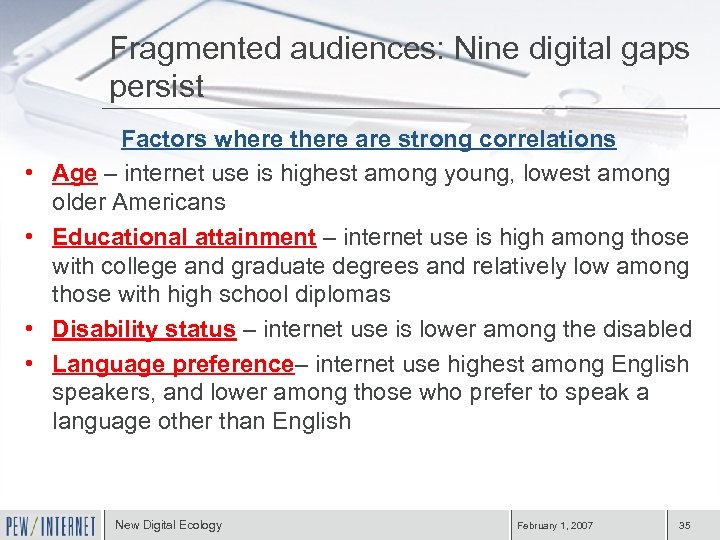 Fragmented audiences: Nine digital gaps persist • • Factors where there are strong correlations Age – internet use is highest among young, lowest among older Americans Educational attainment – internet use is high among those with college and graduate degrees and relatively low among those with high school diplomas Disability status – internet use is lower among the disabled Language preference– internet use highest among English speakers, and lower among those who prefer to speak a language other than English New Digital Ecology February 1, 2007 35
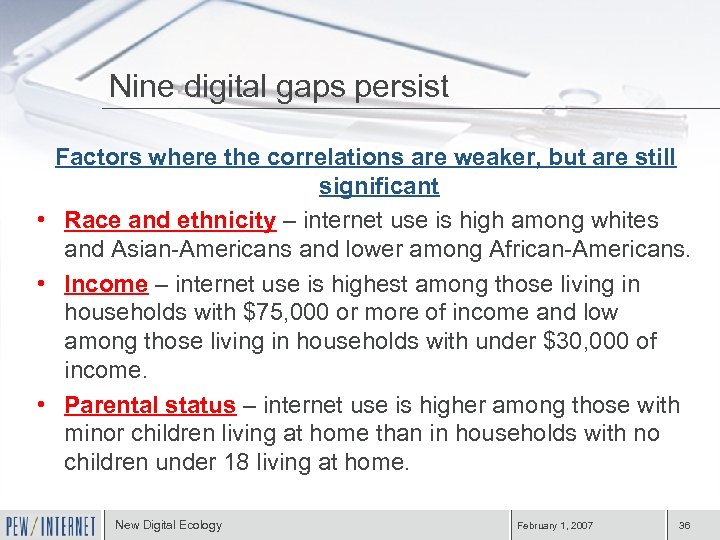 Nine digital gaps persist Factors where the correlations are weaker, but are still significant • Race and ethnicity – internet use is high among whites and Asian-Americans and lower among African-Americans. • Income – internet use is highest among those living in households with $75, 000 or more of income and low among those living in households with under $30, 000 of income. • Parental status – internet use is higher among those with minor children living at home than in households with no children under 18 living at home. New Digital Ecology February 1, 2007 36
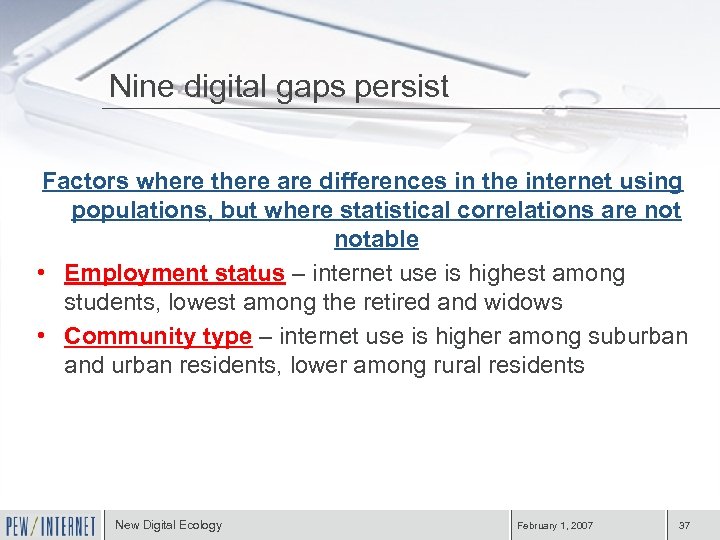 Nine digital gaps persist Factors where there are differences in the internet using populations, but where statistical correlations are notable • Employment status – internet use is highest among students, lowest among the retired and widows • Community type – internet use is higher among suburban and urban residents, lower among rural residents New Digital Ecology February 1, 2007 37
 Truth 4 Different people use the internet in different ways New Digital Ecology February 1, 2007 38
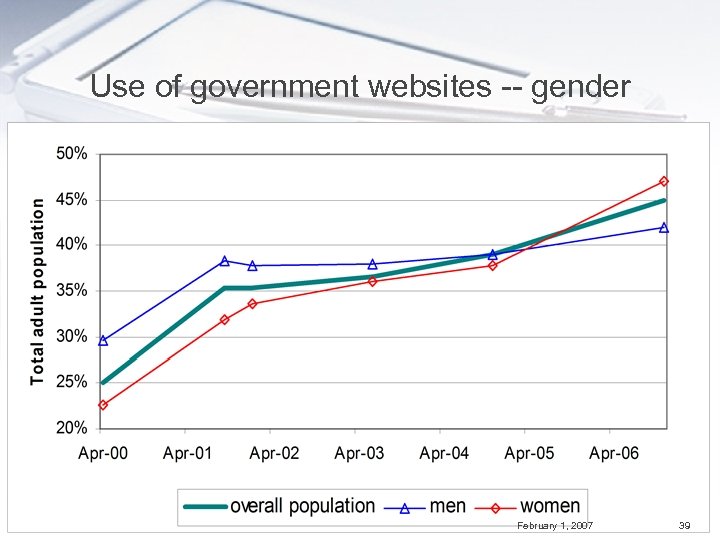 Use of government websites -- gender February 1, 2007 39
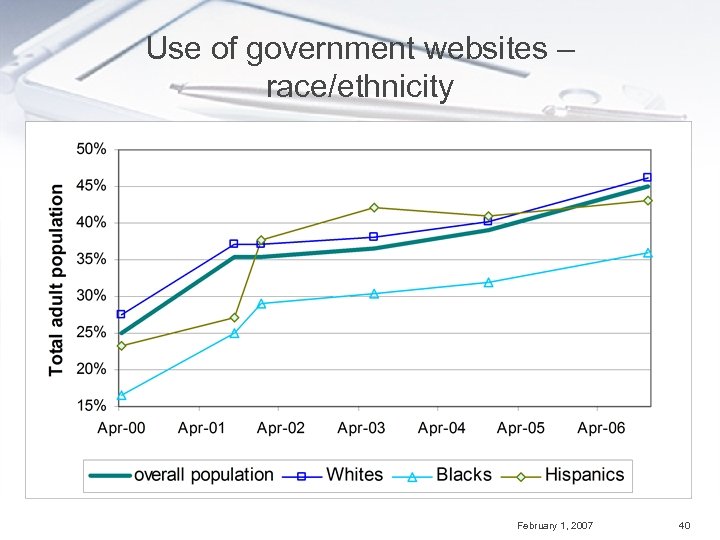 Use of government websites – race/ethnicity February 1, 2007 40
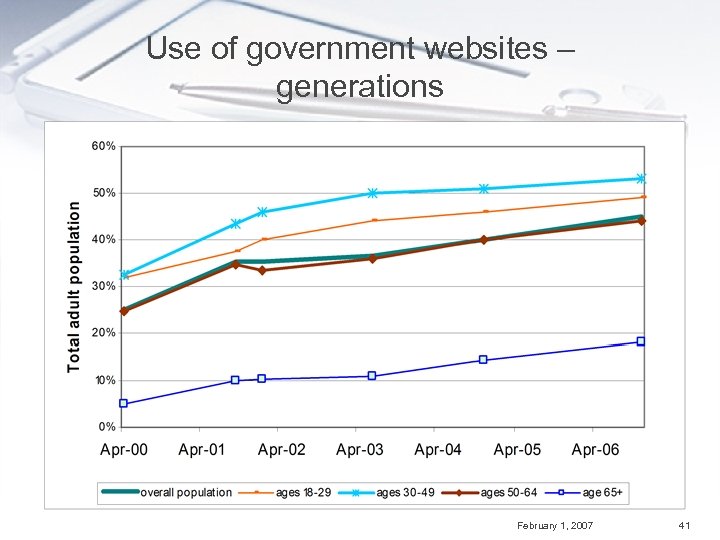 Use of government websites – generations February 1, 2007 41
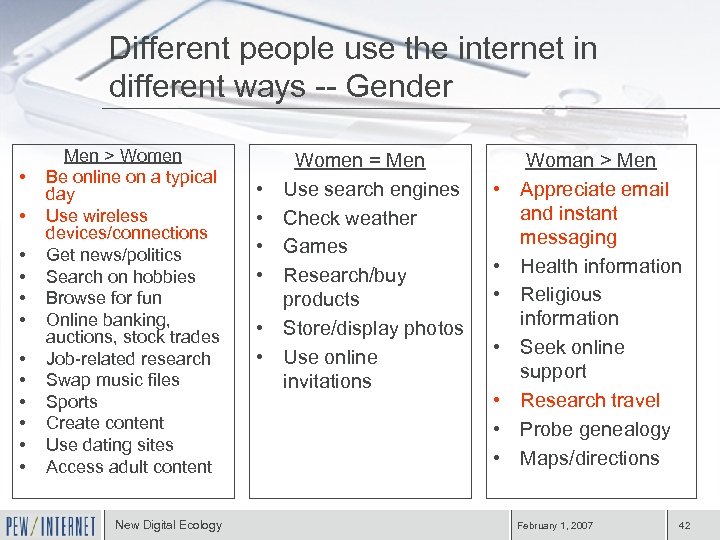 Different people use the internet in different ways -- Gender • • • Men > Women Be online on a typical day Use wireless devices/connections Get news/politics Search on hobbies Browse for fun Online banking, auctions, stock trades Job-related research Swap music files Sports Create content Use dating sites Access adult content New Digital Ecology • • • Women = Men Use search engines Check weather Games Research/buy products Store/display photos Use online invitations • • Woman > Men Appreciate email and instant messaging Health information Religious information Seek online support Research travel Probe genealogy Maps/directions February 1, 2007 42
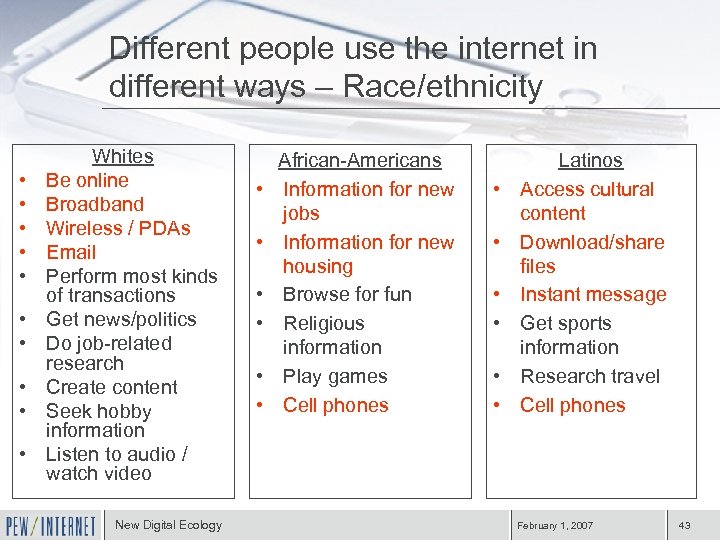 Different people use the internet in different ways – Race/ethnicity • • • Whites Be online Broadband Wireless / PDAs Email Perform most kinds of transactions Get news/politics Do job-related research Create content Seek hobby information Listen to audio / watch video New Digital Ecology • • • African-Americans Information for new jobs Information for new housing Browse for fun Religious information Play games Cell phones • • • Latinos Access cultural content Download/share files Instant message Get sports information Research travel Cell phones February 1, 2007 43
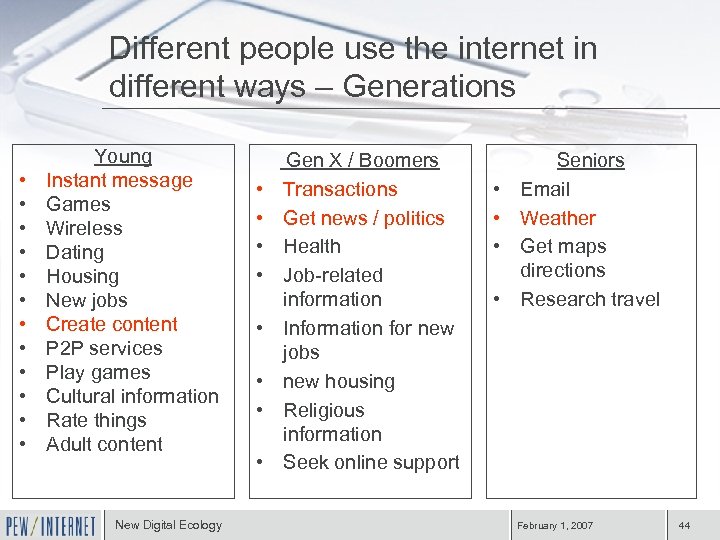 Different people use the internet in different ways – Generations • • • Young Instant message Games Wireless Dating Housing New jobs Create content P 2 P services Play games Cultural information Rate things Adult content New Digital Ecology • • Gen X / Boomers Transactions Get news / politics Health Job-related information Information for new jobs new housing Religious information Seek online support • • Seniors Email Weather Get maps directions Research travel February 1, 2007 44
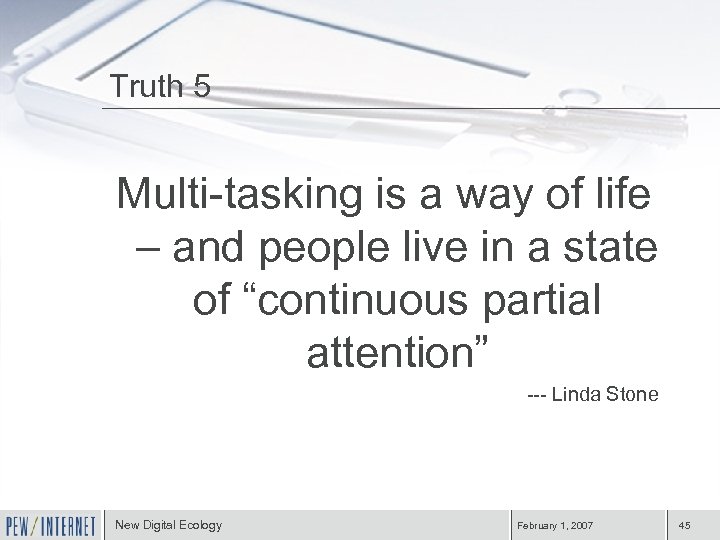 Truth 5 Multi-tasking is a way of life – and people live in a state of “continuous partial attention” --- Linda Stone New Digital Ecology February 1, 2007 45
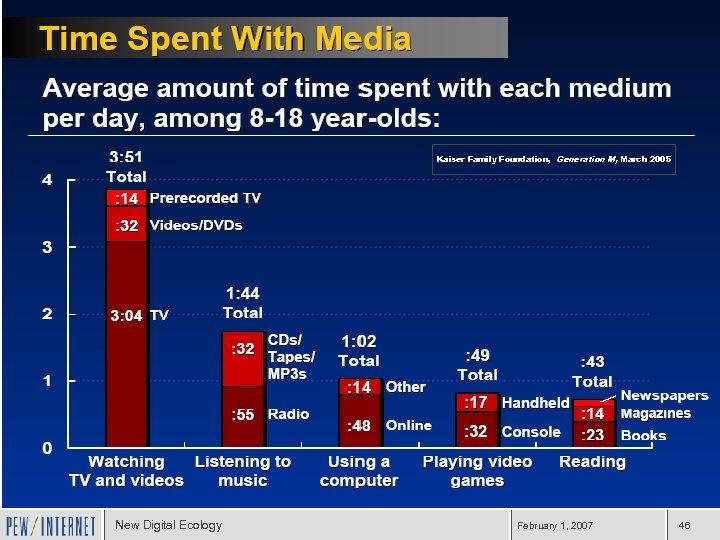 Kaiser Family Foundation, Generation M, March 2005 New Digital Ecology February 1, 2007 46
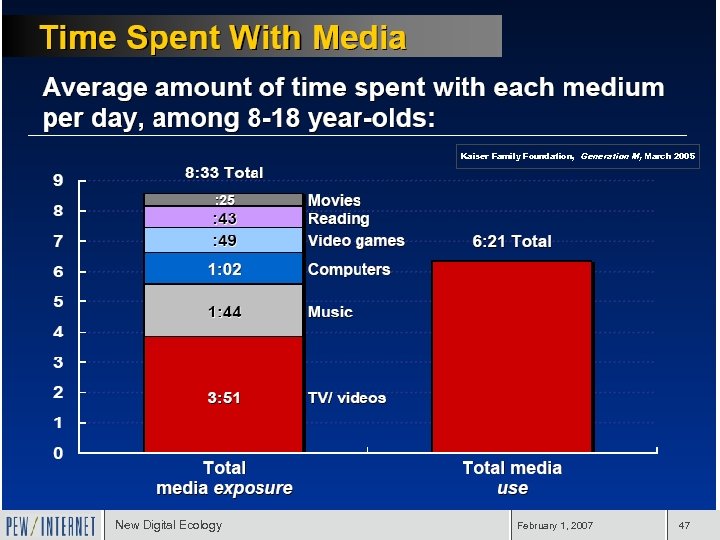 Kaiser Family Foundation, Generation M, March 2005 New Digital Ecology February 1, 2007 47
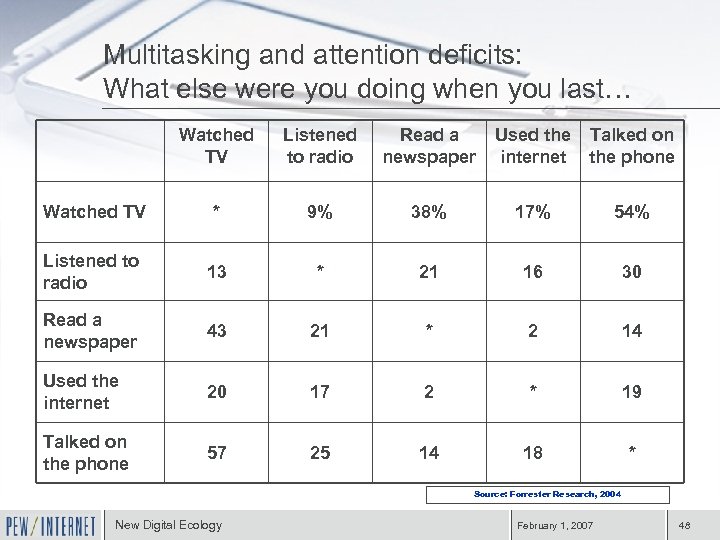 Multitasking and attention deficits: What else were you doing when you last… Watched TV Listened to radio Read a newspaper Used the Talked on internet the phone Watched TV * 9% 38% 17% 54% Listened to radio 13 * 21 16 30 Read a newspaper 43 21 * 2 14 Used the internet 20 17 2 * 19 Talked on the phone 57 25 14 18 * Source: Forrester Research, 2004 New Digital Ecology February 1, 2007 48
 Truth 6 Ordinary citizens have a chance to be publishers, movie makers, artists, song creators, and story tellers New Digital Ecology February 1, 2007 49
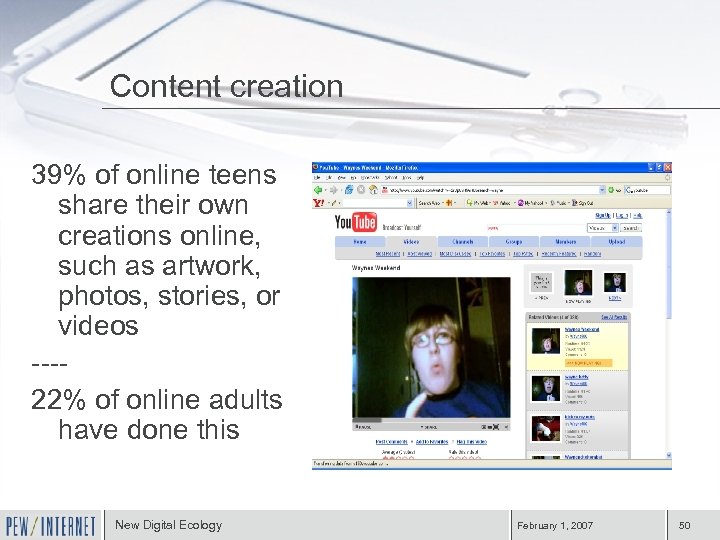 Content creation 39% of online teens share their own creations online, such as artwork, photos, stories, or videos ---22% of online adults have done this New Digital Ecology February 1, 2007 50
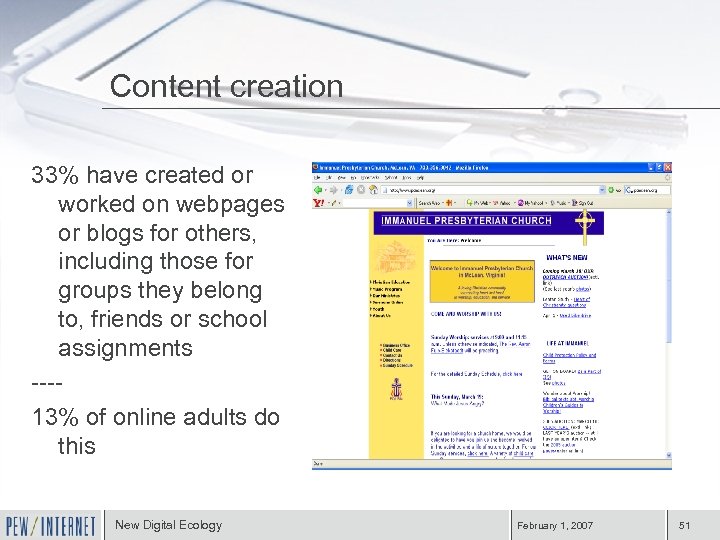 Content creation 33% have created or worked on webpages or blogs for others, including those for groups they belong to, friends or school assignments ---13% of online adults do this New Digital Ecology February 1, 2007 51
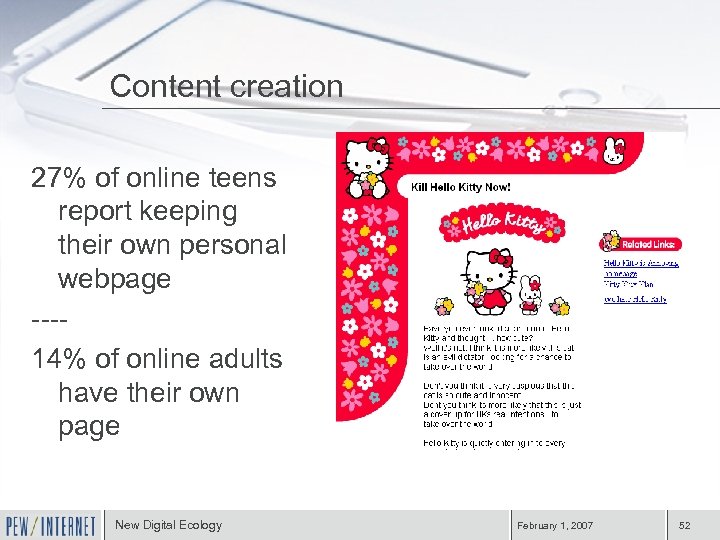 Content creation 27% of online teens report keeping their own personal webpage ---14% of online adults have their own page New Digital Ecology February 1, 2007 52
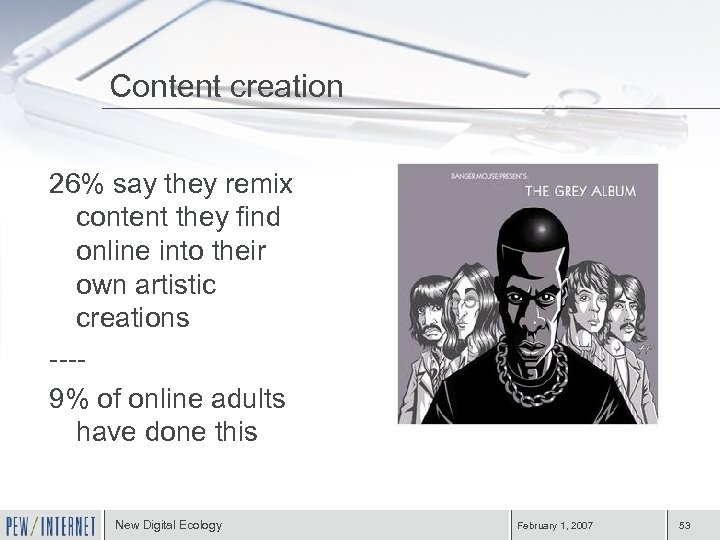 Content creation 26% say they remix content they find online into their own artistic creations ---9% of online adults have done this New Digital Ecology February 1, 2007 53
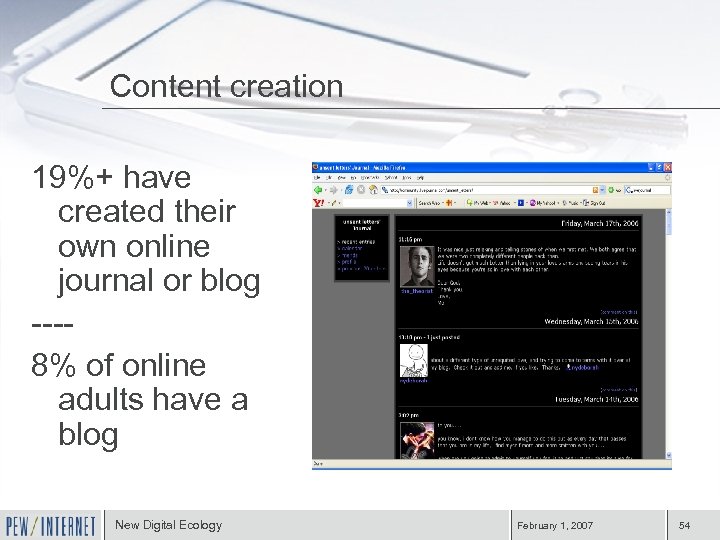 Content creation 19%+ have created their own online journal or blog ---8% of online adults have a blog New Digital Ecology February 1, 2007 54
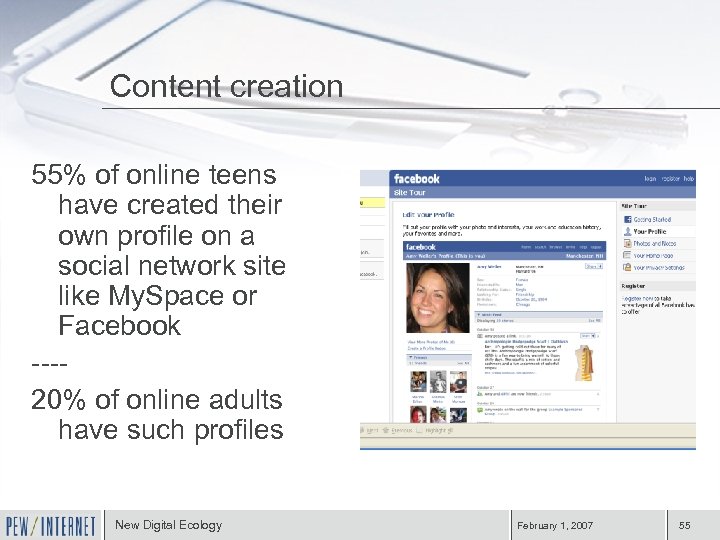 Content creation 55% of online teens have created their own profile on a social network site like My. Space or Facebook ---20% of online adults have such profiles New Digital Ecology February 1, 2007 55
 SNS: The Abridged Version • Girls use it more, more likely to use it to reinforce pre-existing relationships, boys meet more new people, flirt • Communication moving into SNS • Teens are taking protective measures; 66% of SNSusing teens have in some way restricted access to their profile • Tension in social networking sites over “findability” – Want to stay safe; want privacy from parents, teachers – Want to connect with friends, those with similar interests New Digital Ecology February 1, 2007 56
 Communication with social networks is changing and “weak ties” are growing inside networks • We maintain larger networks • Communications patterns shift -- email, IM, texting, blogging • Activities on SNS sites: – 84% post message on friend’s wall or page – 82% send private messages to a friend – 76% post comments to a friend’s blog – 72% make plans with friends on SNS – 61% send a bulletin or mass message to all friends in the system – 33% wink, poke, give e-props to friends New Digital Ecology February 1, 2007 57
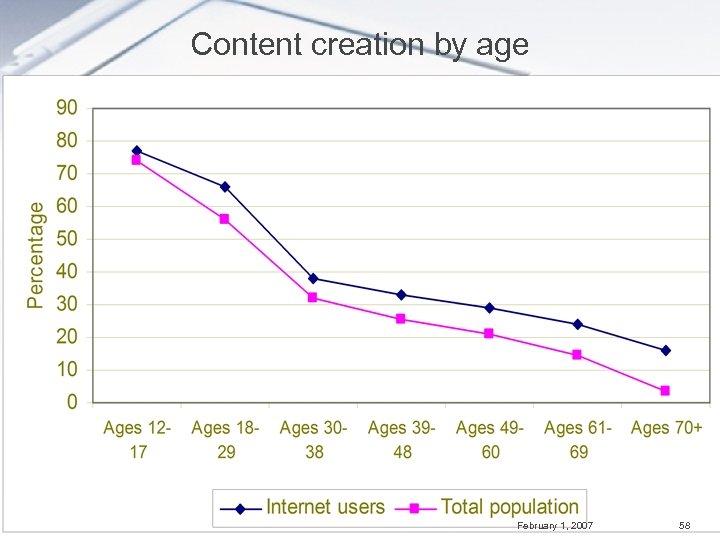 Content creation by age February 1, 2007 58
 February 1, 2007 59
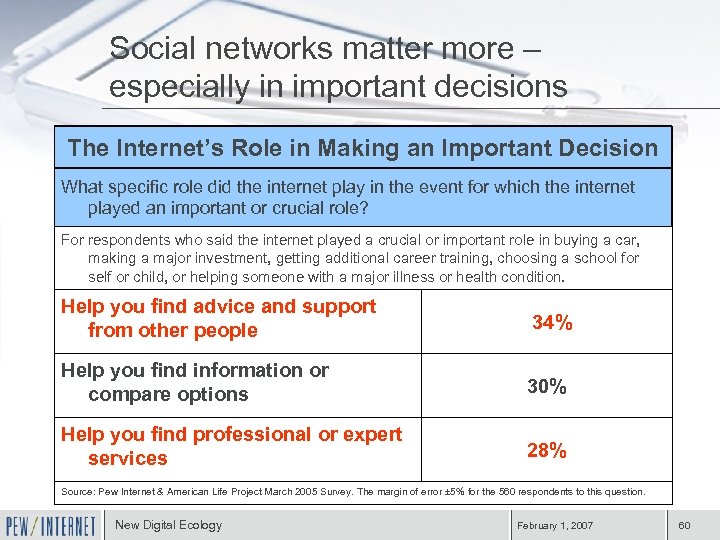 Social networks matter more – especially in important decisions The Internet’s Role in Making an Important Decision What specific role did the internet play in the event for which the internet played an important or crucial role? For respondents who said the internet played a crucial or important role in buying a car, making a major investment, getting additional career training, choosing a school for self or child, or helping someone with a major illness or health condition. Help you find advice and support from other people 34% Help you find information or compare options 30% Help you find professional or expert services 28% Source: Pew Internet & American Life Project March 2005 Survey. The margin of error ± 5% for the 560 respondents to this question. New Digital Ecology February 1, 2007 60
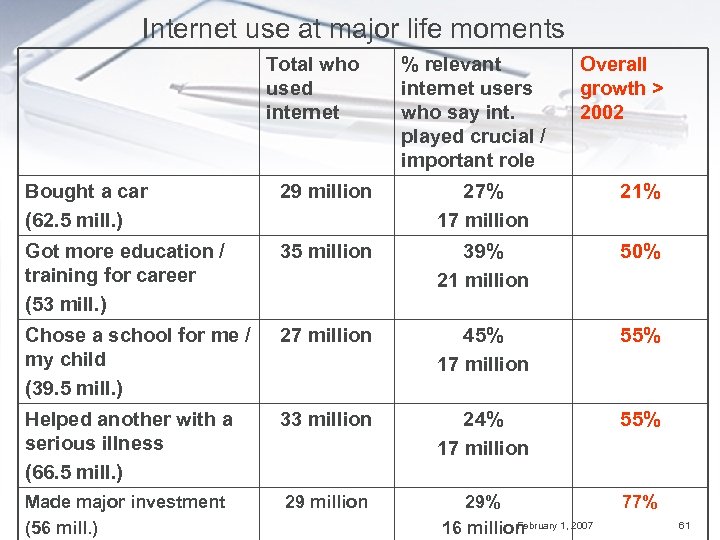 Internet use at major life moments Total who used internet % relevant internet users who say int. played crucial / important role Overall growth > 2002 Bought a car (62. 5 mill. ) 29 million 27% 17 million 21% Got more education / training for career (53 mill. ) 35 million 39% 21 million 50% Chose a school for me / my child (39. 5 mill. ) 27 million 45% 17 million 55% Helped another with a serious illness (66. 5 mill. ) 33 million 24% 17 million 55% Made major investment (56 mill. ) 29 million 29% February 1, 2007 16 million 77% 61
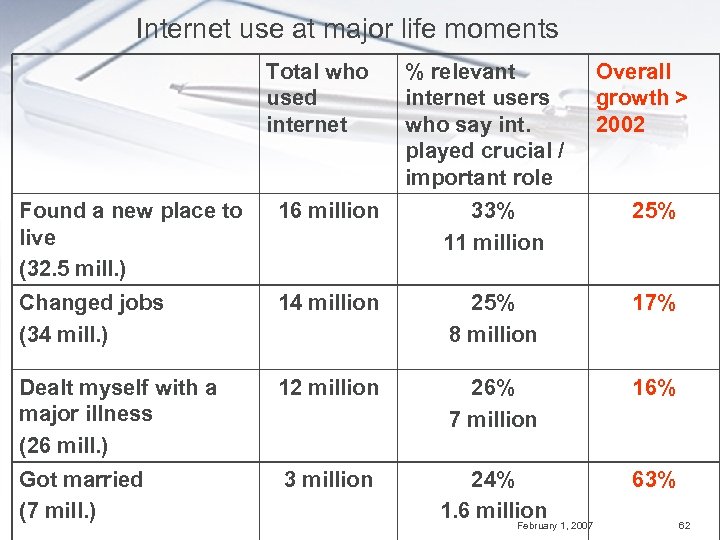 Internet use at major life moments Total who used internet % relevant internet users who say int. played crucial / important role Overall growth > 2002 Found a new place to live (32. 5 mill. ) 16 million 33% 11 million 25% Changed jobs (34 mill. ) 14 million 25% 8 million 17% Dealt myself with a major illness (26 mill. ) 12 million 26% 7 million 16% Got married (7 mill. ) 3 million 24% 1. 6 million 1, 2007 February 63% 62
 Social network sites are special personal and community spaces • • Self-expression and feedback 19% have a blog 38% read the blogs of others 76% of social network-using teens leave comments on the blogs of friends New Digital Ecology February 1, 2007 63
 Truth 7 Everything will change even more in coming years New Digital Ecology February 1, 2007 65
 The J-curve laws • Computing power doubles every 18 months – Moore’s law • Storage power doubles every 12 months – disk law • Communications power doubles every 2 -3 years with improvements in fiber optics and compression – Gilder’s law – Spectrum power is enhanced with efficiency improvements in spectrum allocation and use New Digital Ecology February 1, 2007 66
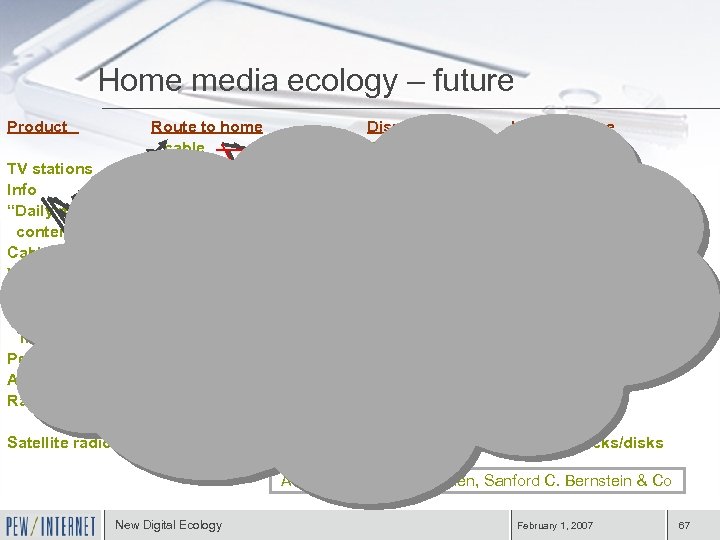 Home media ecology – future Product TV stations Info “Daily me” content Cable Nets Web sites Local news Content from individuals Peer-to-peer Advertising Radio stations Satellite radio Route to home cable phone/DSL wireless broadcast TV Display Local storage Ti. Vo (PVR) VCR TV radio DVD PC Web-based storage i. Pod /MP 3 server/ Ti. Vo (PVR) broadcast radio stereo PC satellite monitor web storage mail headphones CD/CD-ROM express delivery pager i. Pod / storage portable gamer MP 3 player / i. Pod subcarriers / WIFI cell phone pagers - PDAs newspaper delivery phone cable box PDA/Palm game console paper non-electronic storage sticks/disks Adapted from Tom Wolzien, Sanford C. Bernstein & Co New Digital Ecology February 1, 2007 67
 Thank you! Lee Rainie Director Pew Internet & American Life Project 1615 L Street NW Suite 700 Washington, DC 20036 Lrainie@pewinternet. org 202 -419 -4500 New Digital Ecology February 1, 2007 68