 Скачать презентацию The Neolithic Revolution 8000 BCE-3500 BCE Sometimes
a7a998fdd052266769e4f8006ebeb01a.ppt
- Количество слайдов: 15



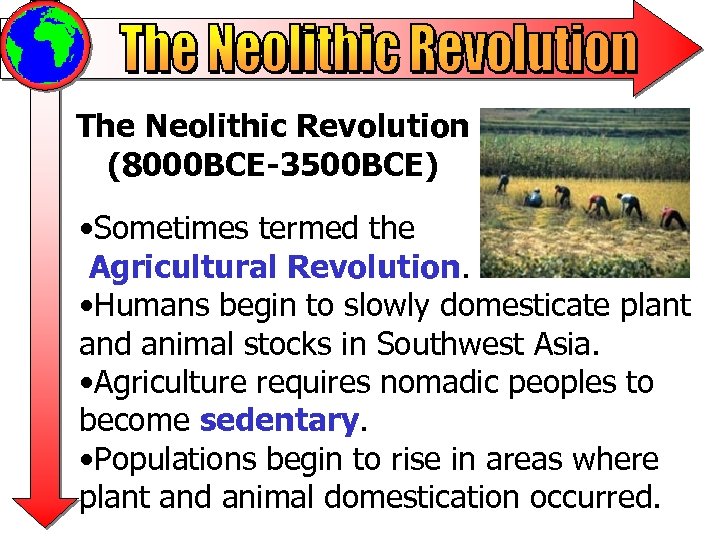
The Neolithic Revolution (8000 BCE-3500 BCE) • Sometimes termed the Agricultural Revolution. • Humans begin to slowly domesticate plant and animal stocks in Southwest Asia. • Agriculture requires nomadic peoples to become sedentary. • Populations begin to rise in areas where plant and animal domestication occurred.
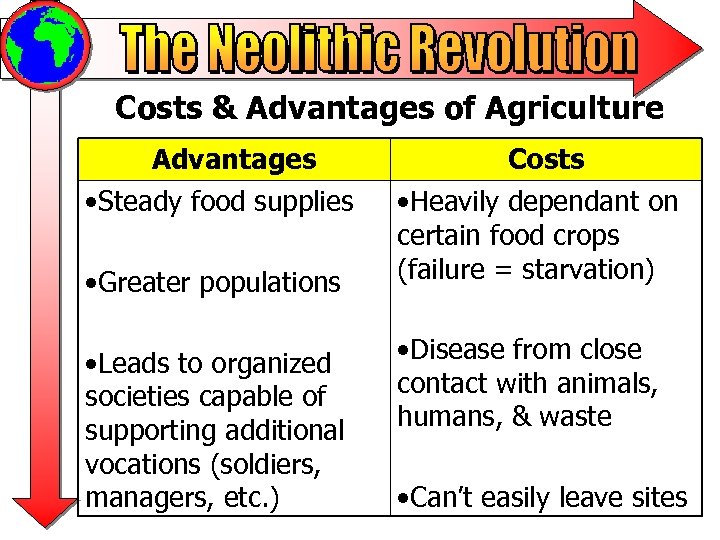
Costs & Advantages of Agriculture Advantages • Steady food supplies • Greater populations • Leads to organized societies capable of supporting additional vocations (soldiers, managers, etc. ) Costs • Heavily dependant on certain food crops (failure = starvation) • Disease from close contact with animals, humans, & waste • Can’t easily leave sites
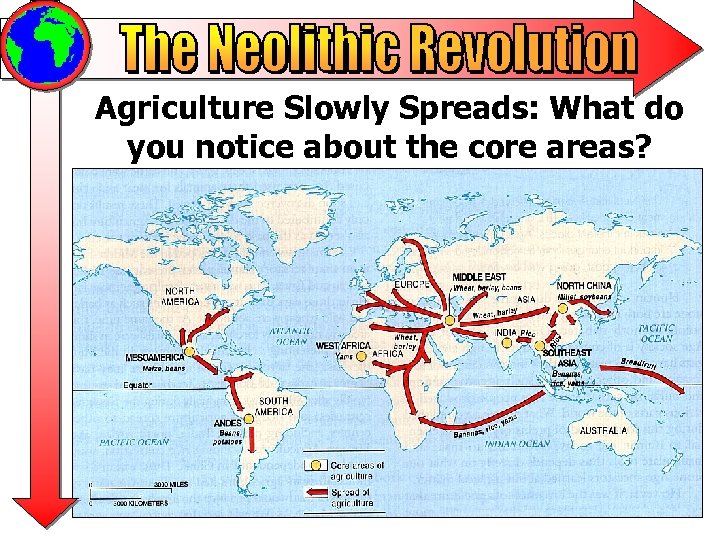
Agriculture Slowly Spreads: What do you notice about the core areas?
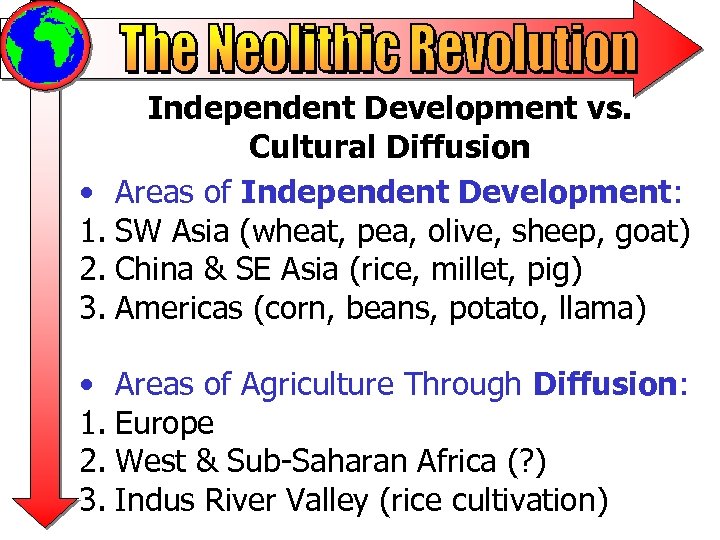
Independent Development vs. Cultural Diffusion • Areas of Independent Development: 1. SW Asia (wheat, pea, olive, sheep, goat) 2. China & SE Asia (rice, millet, pig) 3. Americas (corn, beans, potato, llama) • Areas of Agriculture Through Diffusion: 1. Europe 2. West & Sub-Saharan Africa (? ) 3. Indus River Valley (rice cultivation)
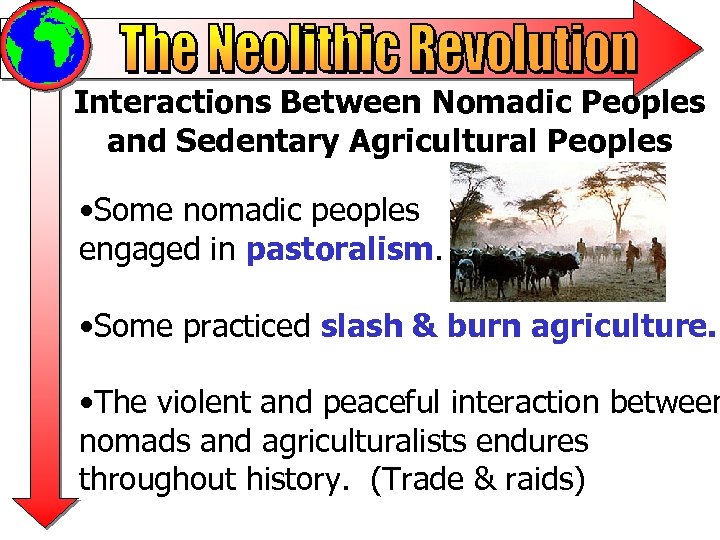
Interactions Between Nomadic Peoples and Sedentary Agricultural Peoples • Some nomadic peoples engaged in pastoralism. • Some practiced slash & burn agriculture. • The violent and peaceful interaction between nomads and agriculturalists endures throughout history. (Trade & raids)
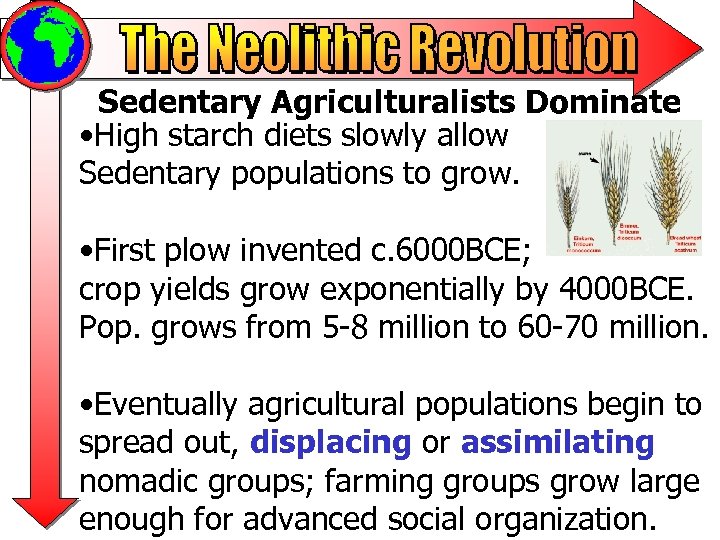
Sedentary Agriculturalists Dominate • High starch diets slowly allow Sedentary populations to grow. • First plow invented c. 6000 BCE; crop yields grow exponentially by 4000 BCE. Pop. grows from 5 -8 million to 60 -70 million. • Eventually agricultural populations begin to spread out, displacing or assimilating nomadic groups; farming groups grow large enough for advanced social organization.
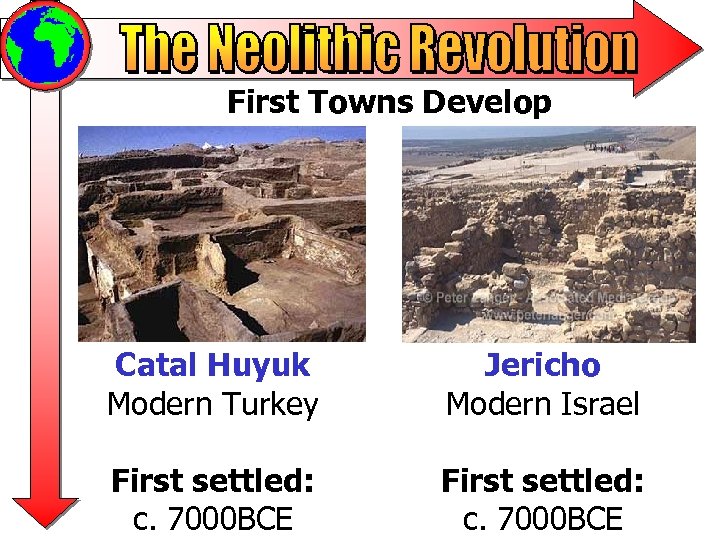
First Towns Develop Catal Huyuk Modern Turkey Jericho Modern Israel First settled: c. 7000 BCE
First Towns Develop • Towns require social differentiation: metal workers, pottery workers, farmers, soldiers, religious and political leaders. (POSSIBLE B/C FOOD SURPLUSES!) • Served as trade centers for the area; specialized in the production of certain unique crafts • Beginnings of social stratification (class)
Towns Present Evidence of: • Religious structures (burial rites, art) • Political & Religious leaders were the same • Still relied on limited hunting & gathering for food
Roles of Women • Women generally lost status under maledominated, patriarchal systems. • Women were limited in vocation, worked in food production, etc. • Women may have lacked the same social rights as men.
Metal Working: From Copper to Bronze • The working of metals became very important to early human settlements for tools & weapons. • Early settlements gradually shifted from copper to the stronger alloy bronze by 3, 000 BCE—ushers in the Bronze Age! • Metal working spread throughout human communities slowly as agriculture had.
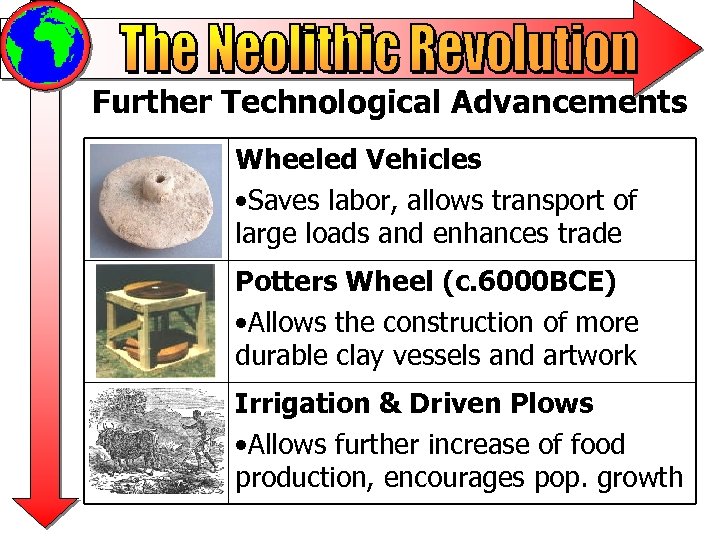
Further Technological Advancements Wheeled Vehicles • Saves labor, allows transport of large loads and enhances trade Potters Wheel (c. 6000 BCE) • Allows the construction of more durable clay vessels and artwork Irrigation & Driven Plows • Allows further increase of food production, encourages pop. growth
Early Human Impact on the Environment • Deforestation in places where copper, bronze, and salt were produced. • Erosion and flooding where agriculture disturbed soil and natural vegetation. • Selective extinction of large land animals and weed plants due to hunting & agriculture.
Advanced Civilization: The Next Step? • By 3500 BCE, relatively large, advanced preliterate societies had developed along the Indus, Huang He, Nile, and Tigris & Euphrates Rivers. • As societies grew in size and need, sedentary human beings were once again faced with pressures to adapt to changing natural and human environments.
Скачать презентацию The Neolithic Revolution 8000 BCE-3500 BCE Sometimes
a7a998fdd052266769e4f8006ebeb01a.ppt