


 Скачать презентацию The Nation s Sick Economy What caused the economy
91a4aa0cbba3281edd66a9c5b93b64a1.ppt
- Количество слайдов: 15
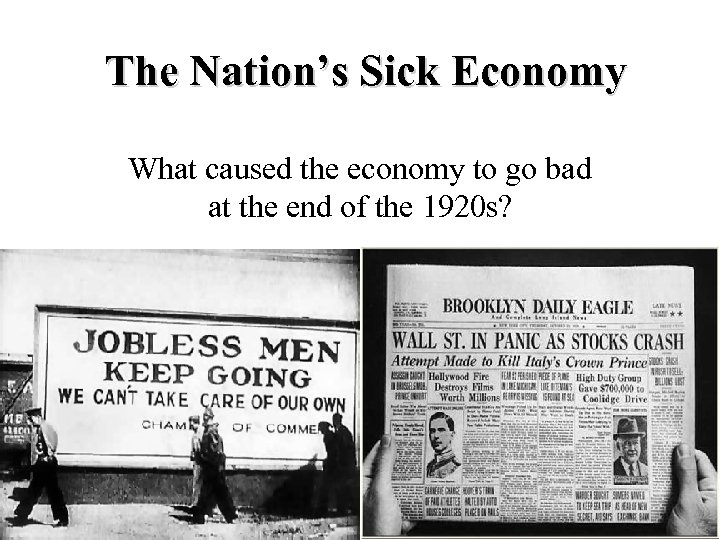 The Nation’s Sick Economy What caused the economy to go bad at the end of the 1920 s?
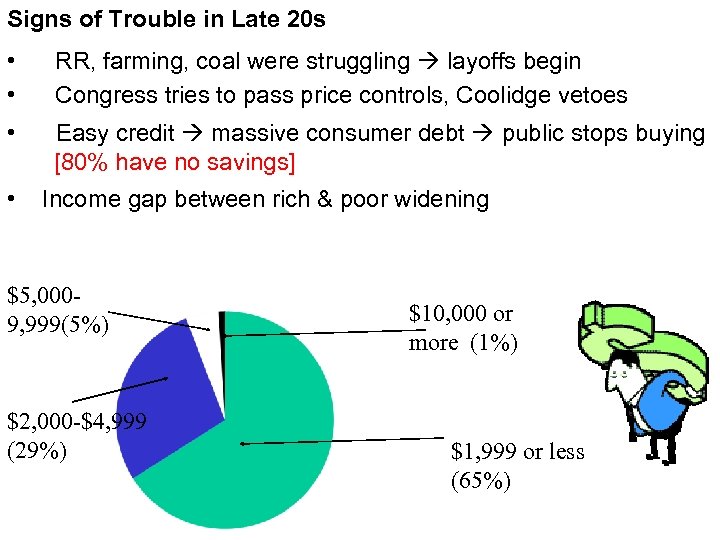 Signs of Trouble in Late 20 s • • RR, farming, coal were struggling layoffs begin Congress tries to pass price controls, Coolidge vetoes • Easy credit massive consumer debt public stops buying [80% have no savings] • Income gap between rich & poor widening $5, 0009, 999(5%) $2, 000 -$4, 999 (29%) $10, 000 or more (1%) $1, 999 or less (65%)
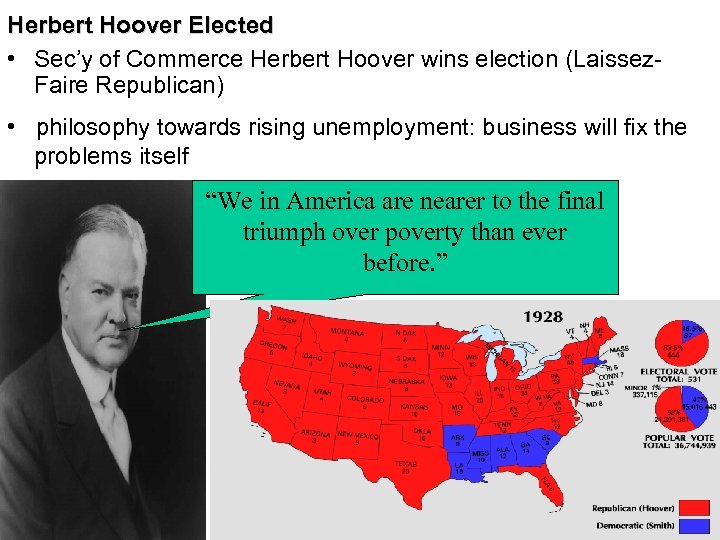 Herbert Hoover Elected • Sec’y of Commerce Herbert Hoover wins election (Laissez. Faire Republican) • philosophy towards rising unemployment: business will fix the problems itself “We in America are nearer to the final triumph over poverty than ever before. ”
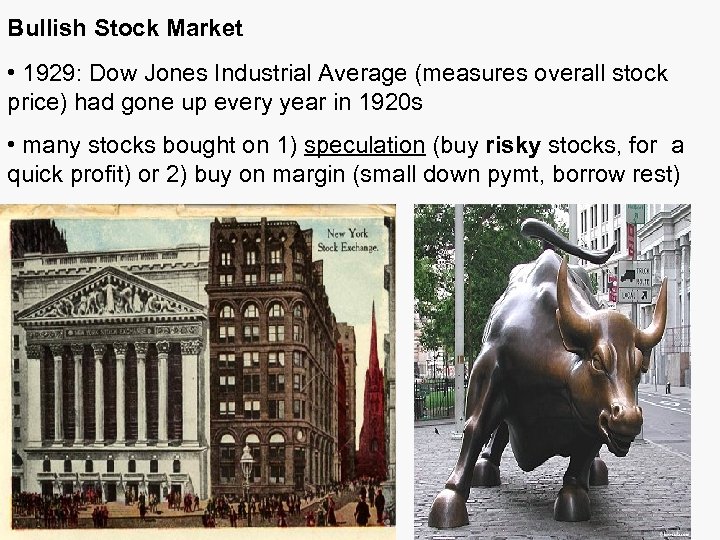 Bullish Stock Market • 1929: Dow Jones Industrial Average (measures overall stock price) had gone up every year in 1920 s • many stocks bought on 1) speculation (buy risky stocks, for a quick profit) or 2) buy on margin (small down pymt, borrow rest)
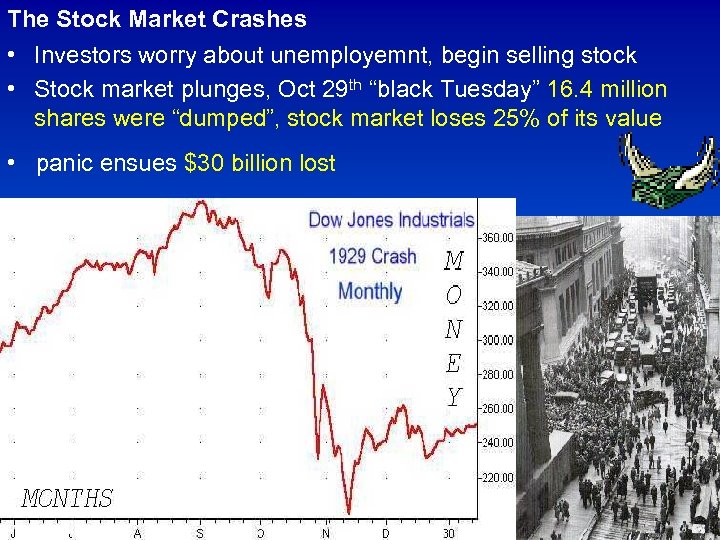 The Stock Market Crashes • Investors worry about unemployemnt, begin selling stock • Stock market plunges, Oct 29 th “black Tuesday” 16. 4 million shares were “dumped”, stock market loses 25% of its value • panic ensues $30 billion lost
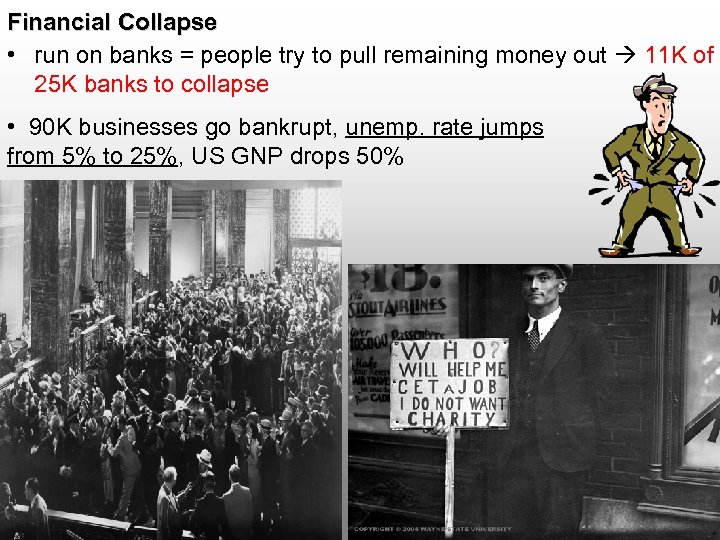 Financial Collapse • run on banks = people try to pull remaining money out 11 K of 25 K banks to collapse • 90 K businesses go bankrupt, unemp. rate jumps from 5% to 25%, US GNP drops 50%
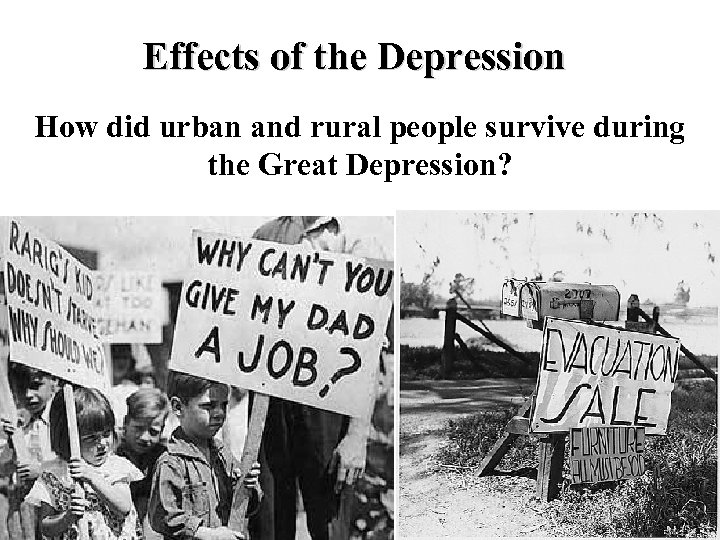 Effects of the Depression How did urban and rural people survive during the Great Depression?
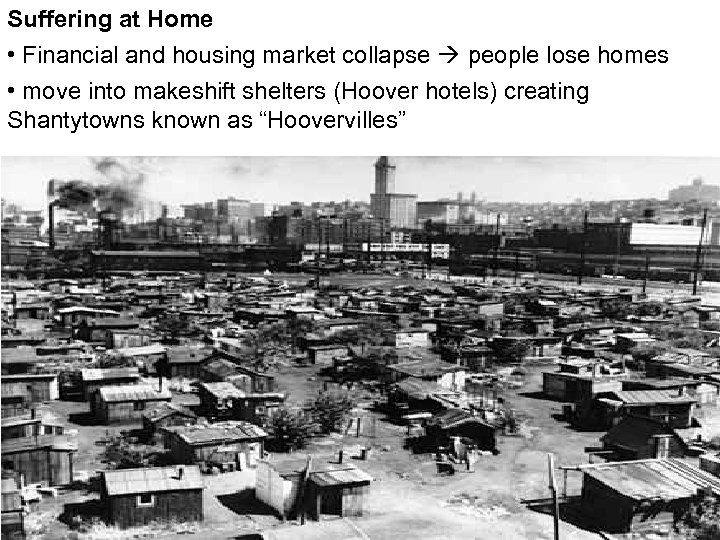 Suffering at Home • Financial and housing market collapse people lose homes • move into makeshift shelters (Hoover hotels) creating Shantytowns known as “Hoovervilles”
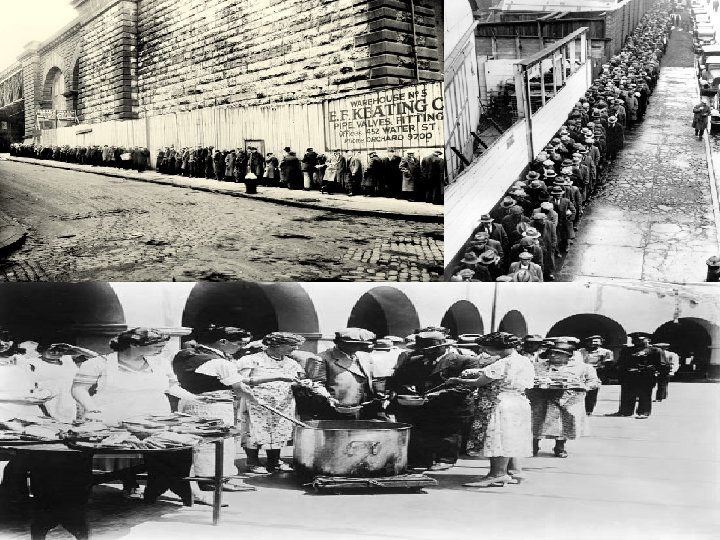
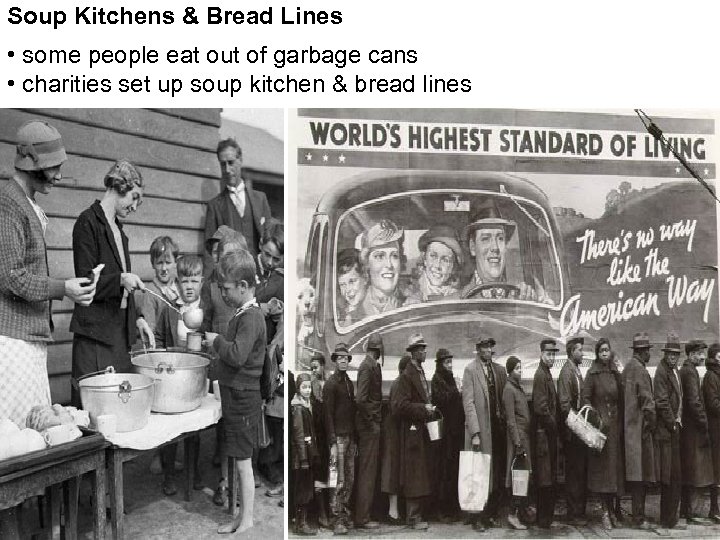 Soup Kitchens & Bread Lines • some people eat out of garbage cans • charities set up soup kitchen & bread lines
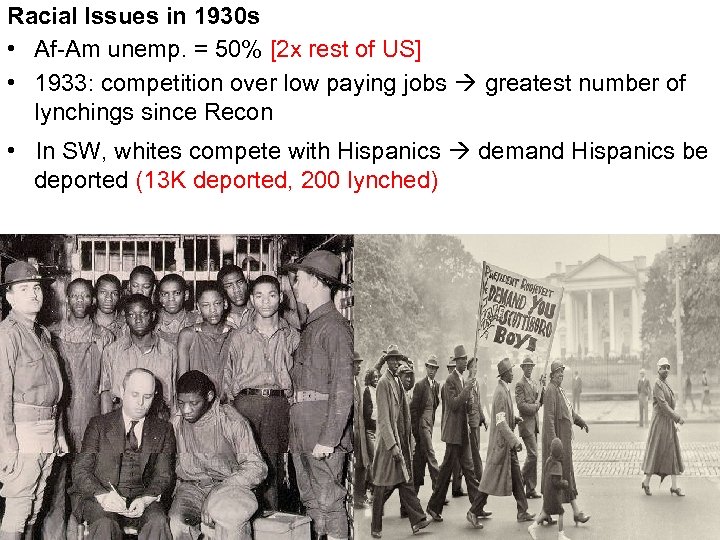 Racial Issues in 1930 s • Af-Am unemp. = 50% [2 x rest of US] • 1933: competition over low paying jobs greatest number of lynchings since Recon • In SW, whites compete with Hispanics demand Hispanics be deported (13 K deported, 200 lynched)
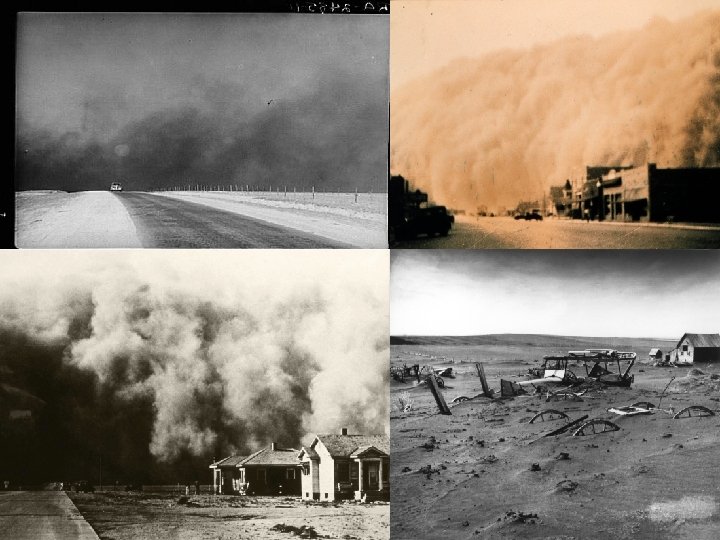
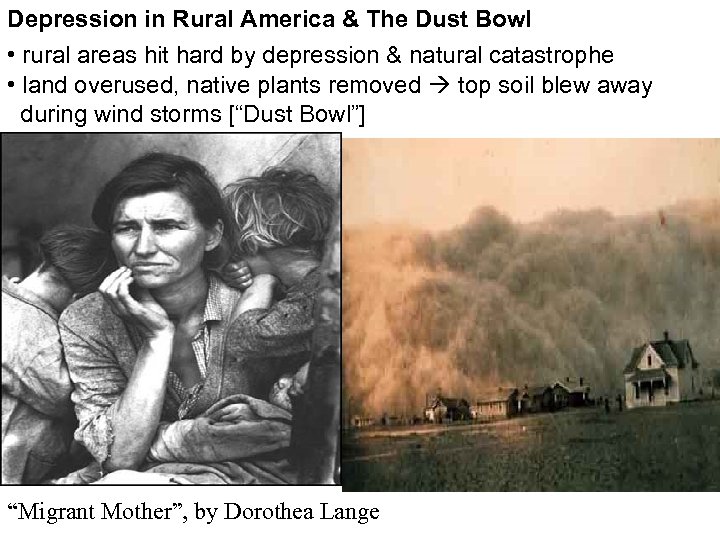 Depression in Rural America & The Dust Bowl • rural areas hit hard by depression & natural catastrophe • land overused, native plants removed top soil blew away during wind storms [“Dust Bowl”] “Migrant Mother”, by Dorothea Lange
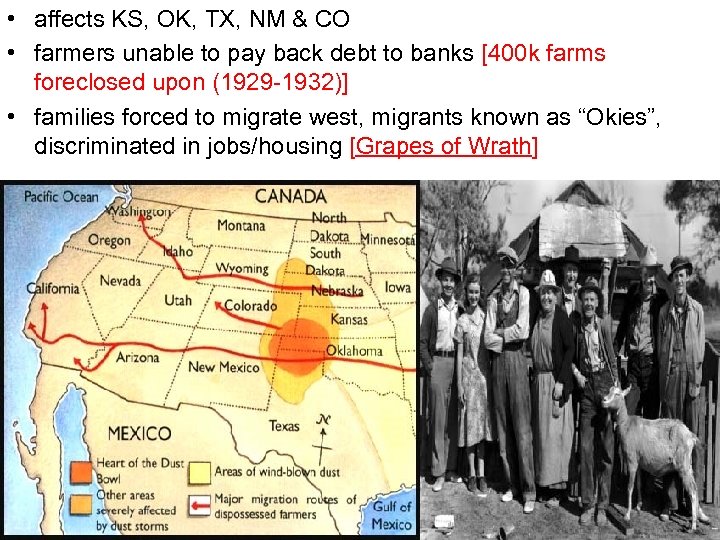 • affects KS, OK, TX, NM & CO • farmers unable to pay back debt to banks [400 k farms foreclosed upon (1929 -1932)] • families forced to migrate west, migrants known as “Okies”, discriminated in jobs/housing [Grapes of Wrath]
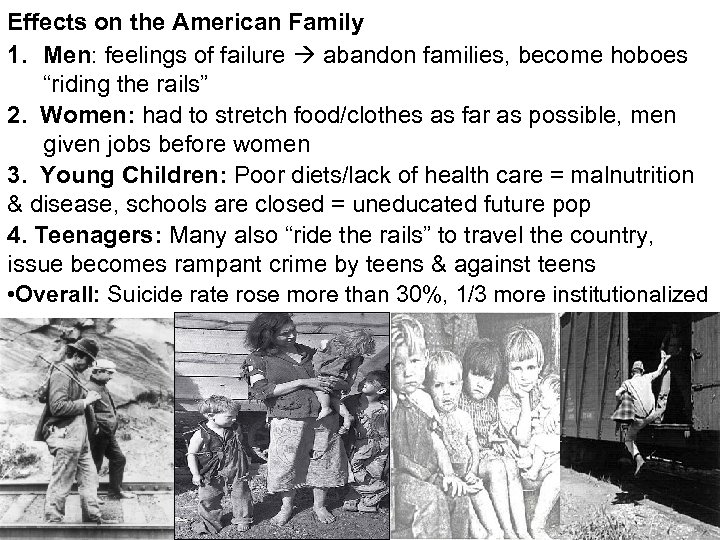 Effects on the American Family 1. Men: feelings of failure abandon families, become hoboes “riding the rails” 2. Women: had to stretch food/clothes as far as possible, men given jobs before women 3. Young Children: Poor diets/lack of health care = malnutrition & disease, schools are closed = uneducated future pop 4. Teenagers: Many also “ride the rails” to travel the country, issue becomes rampant crime by teens & against teens • Overall: Suicide rate rose more than 30%, 1/3 more institutionalized