Скачать презентацию The Nation Divided Chapter 14 Section 1
3f9fa83e2fddf22d3049ba3eceda71f8.ppt
- Количество слайдов: 32
 The Nation Divided Chapter 14
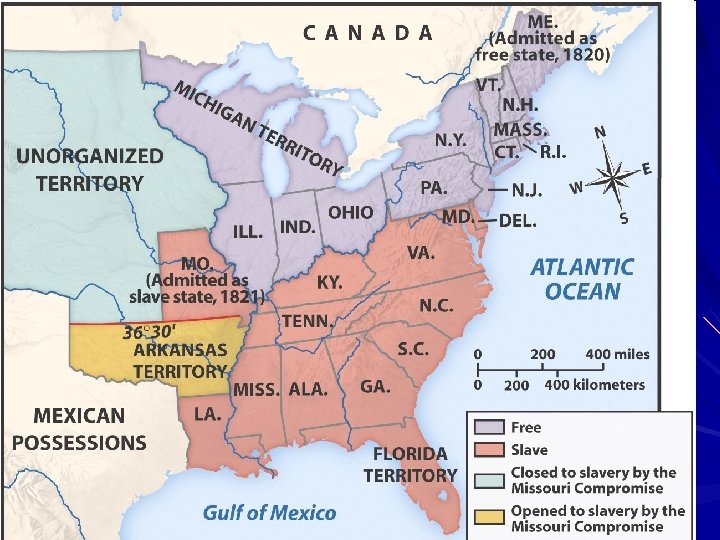
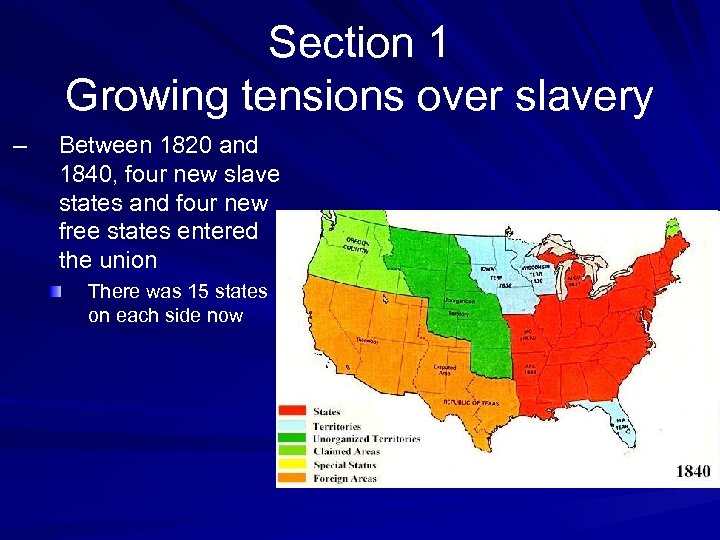 Section 1 Growing tensions over slavery – Between 1820 and 1840, four new slave states and four new free states entered the union There was 15 states on each side now
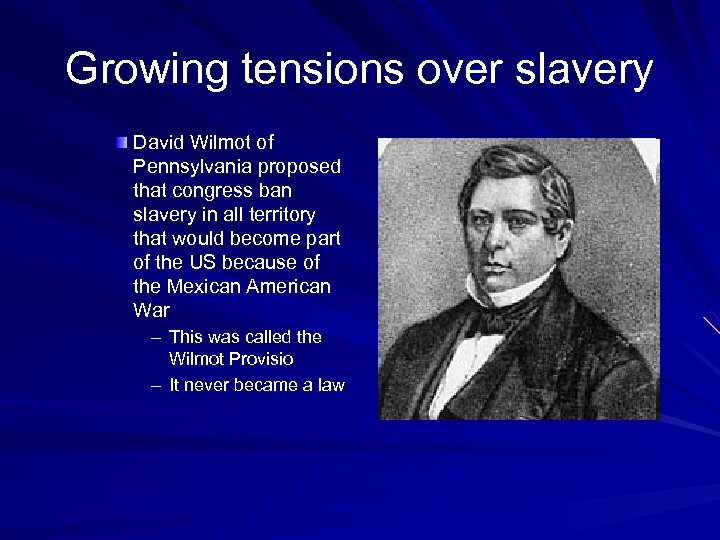 Growing tensions over slavery David Wilmot of Pennsylvania proposed that congress ban slavery in all territory that would become part of the US because of the Mexican American War – This was called the Wilmot Provisio – It never became a law
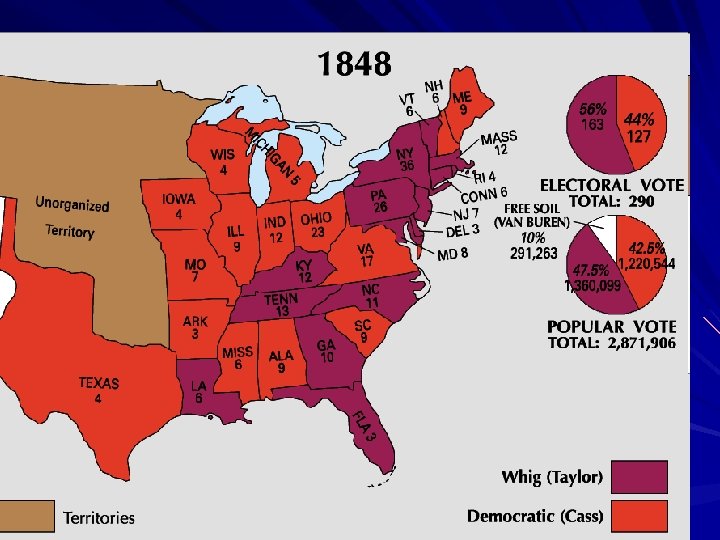
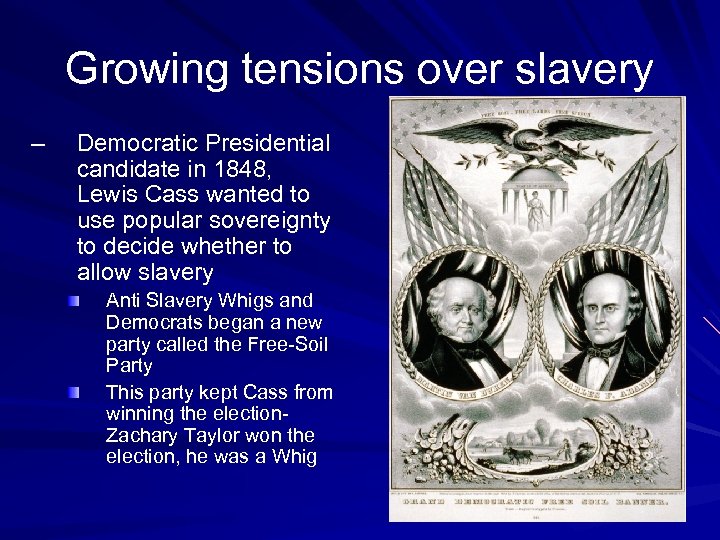 Growing tensions over slavery – Democratic Presidential candidate in 1848, Lewis Cass wanted to use popular sovereignty to decide whether to allow slavery Anti Slavery Whigs and Democrats began a new party called the Free-Soil Party This party kept Cass from winning the election. Zachary Taylor won the election, he was a Whig
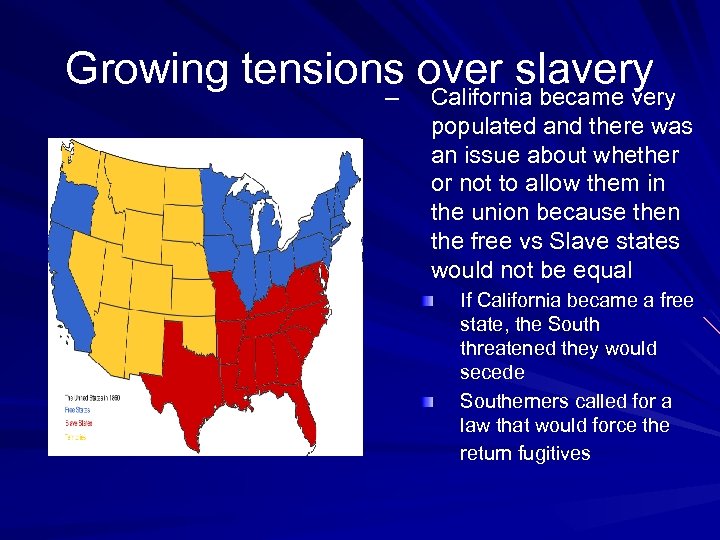 Growing tensions over slavery – California became very populated and there was an issue about whether or not to allow them in the union because then the free vs Slave states would not be equal If California became a free state, the South threatened they would secede Southerners called for a law that would force the return fugitives
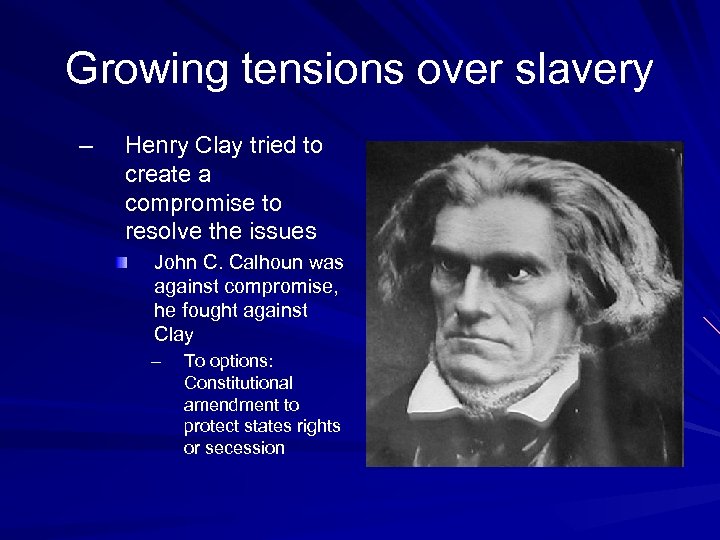 Growing tensions over slavery – Henry Clay tried to create a compromise to resolve the issues John C. Calhoun was against compromise, he fought against Clay – To options: Constitutional amendment to protect states rights or secession
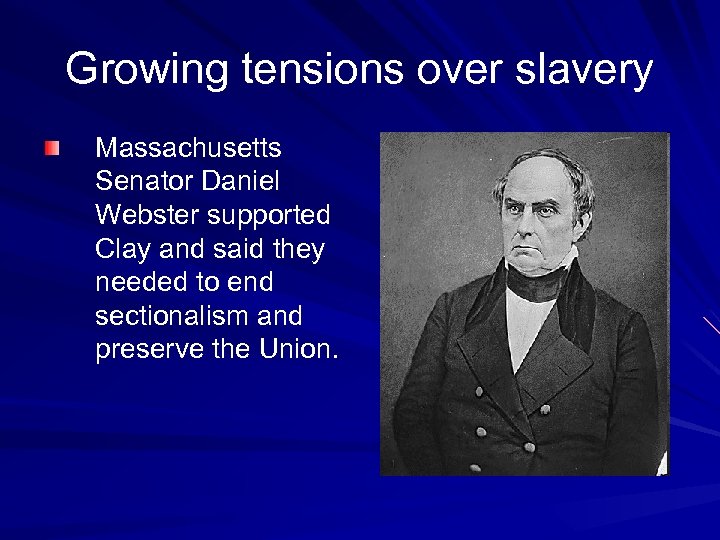 Growing tensions over slavery Massachusetts Senator Daniel Webster supported Clay and said they needed to end sectionalism and preserve the Union.
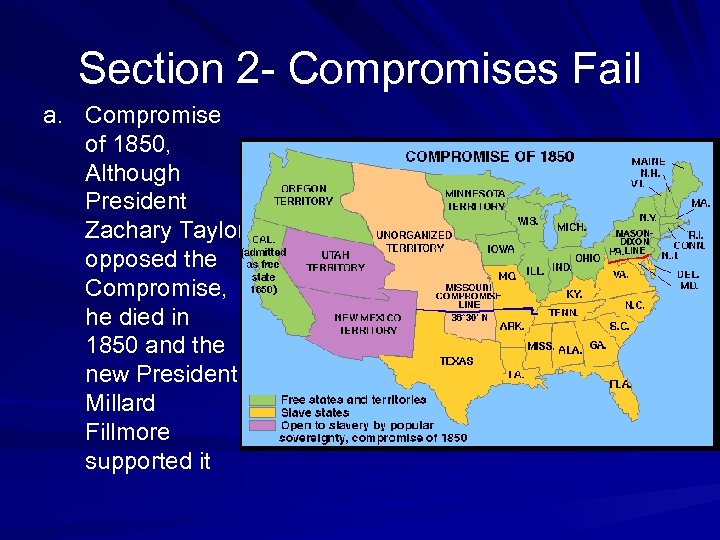 Section 2 - Compromises Fail a. Compromise of 1850, Although President Zachary Taylor opposed the Compromise, he died in 1850 and the new President Millard Fillmore supported it
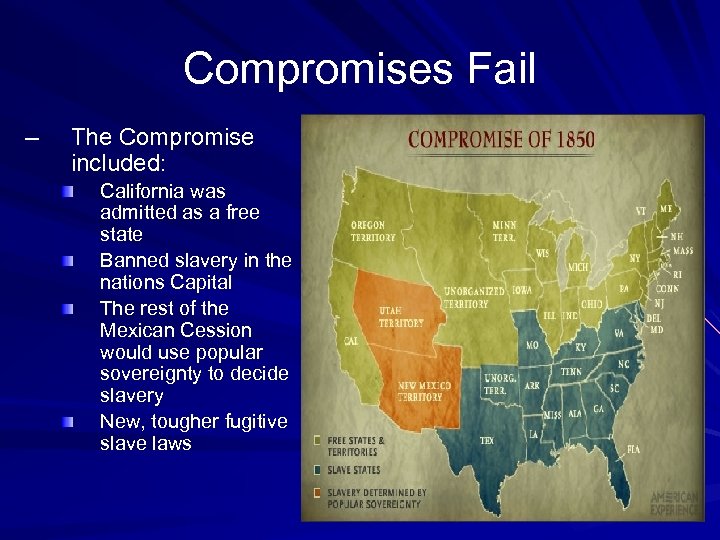 Compromises Fail – The Compromise included: California was admitted as a free state Banned slavery in the nations Capital The rest of the Mexican Cession would use popular sovereignty to decide slavery New, tougher fugitive slave laws
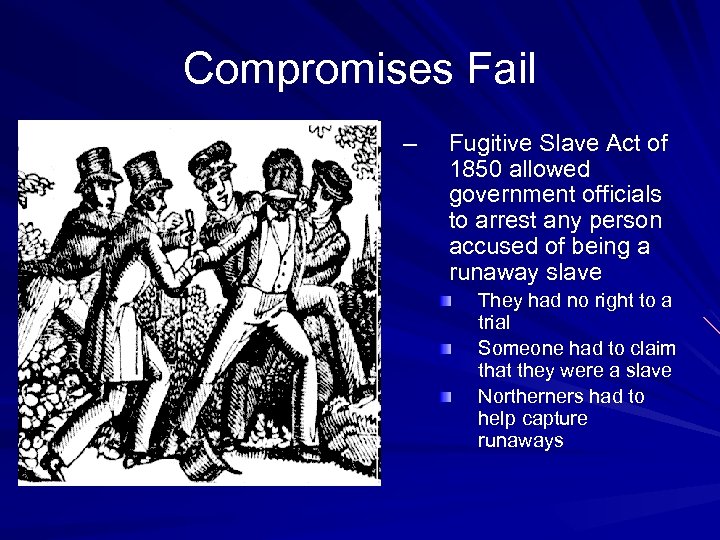 Compromises Fail – Fugitive Slave Act of 1850 allowed government officials to arrest any person accused of being a runaway slave They had no right to a trial Someone had to claim that they were a slave Northerners had to help capture runaways
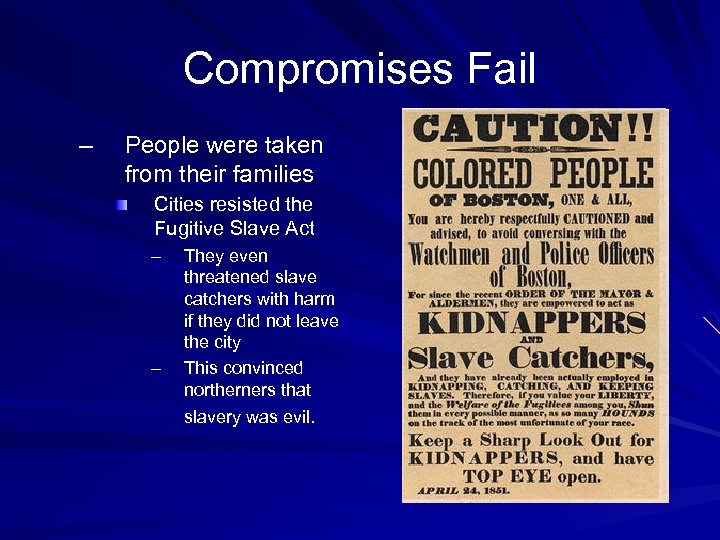 Compromises Fail – People were taken from their families Cities resisted the Fugitive Slave Act – – They even threatened slave catchers with harm if they did not leave the city This convinced northerners that slavery was evil.
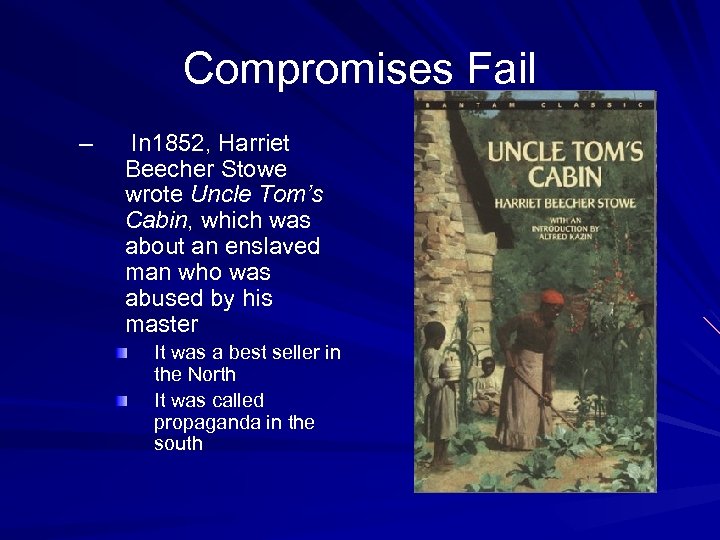 Compromises Fail – In 1852, Harriet Beecher Stowe wrote Uncle Tom’s Cabin, which was about an enslaved man who was abused by his master It was a best seller in the North It was called propaganda in the south
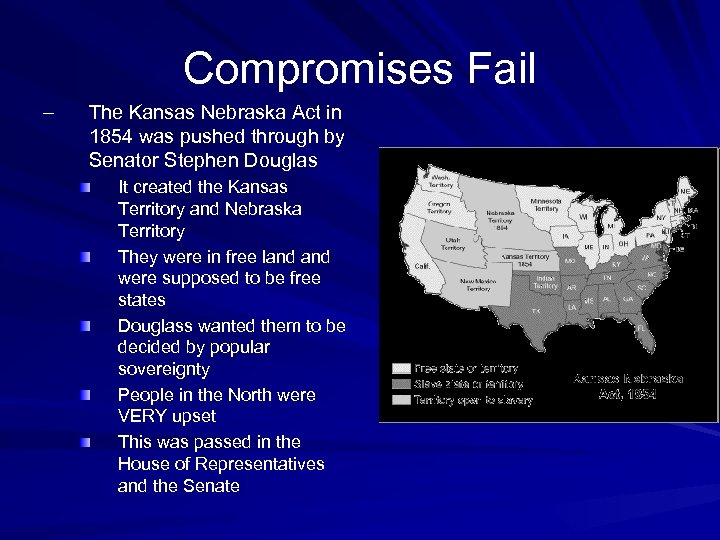 Compromises Fail – The Kansas Nebraska Act in 1854 was pushed through by Senator Stephen Douglas It created the Kansas Territory and Nebraska Territory They were in free land were supposed to be free states Douglass wanted them to be decided by popular sovereignty People in the North were VERY upset This was passed in the House of Representatives and the Senate
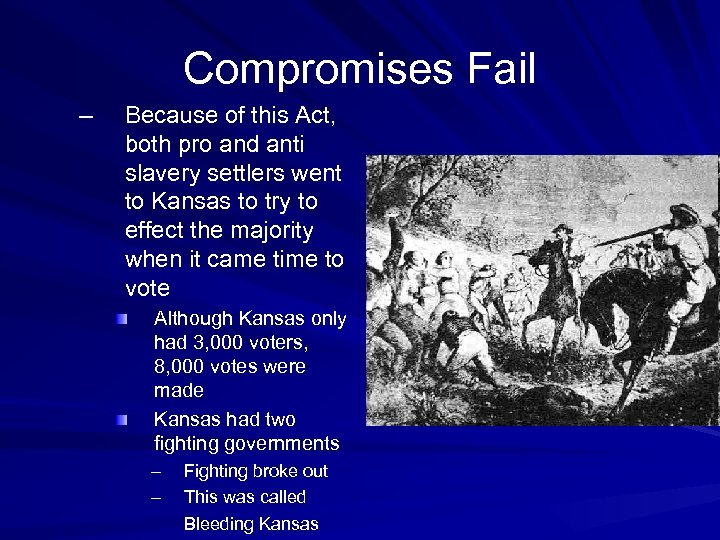 Compromises Fail – Because of this Act, both pro and anti slavery settlers went to Kansas to try to effect the majority when it came time to vote Although Kansas only had 3, 000 voters, 8, 000 votes were made Kansas had two fighting governments – – Fighting broke out This was called Bleeding Kansas
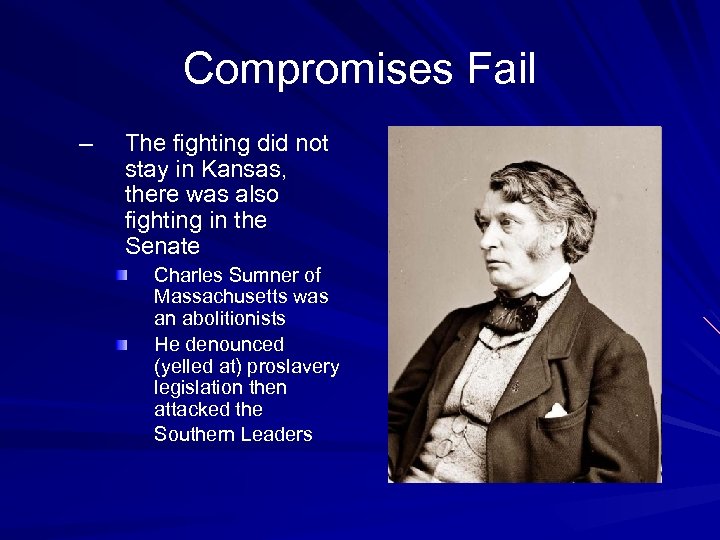 Compromises Fail – The fighting did not stay in Kansas, there was also fighting in the Senate Charles Sumner of Massachusetts was an abolitionists He denounced (yelled at) proslavery legislation then attacked the Southern Leaders
 Section 3 - The Crisis Deepens – The Whig Party split in 1854 and many Northerners joined a new party, the Republican Party They wanted to stop the spread of slavery
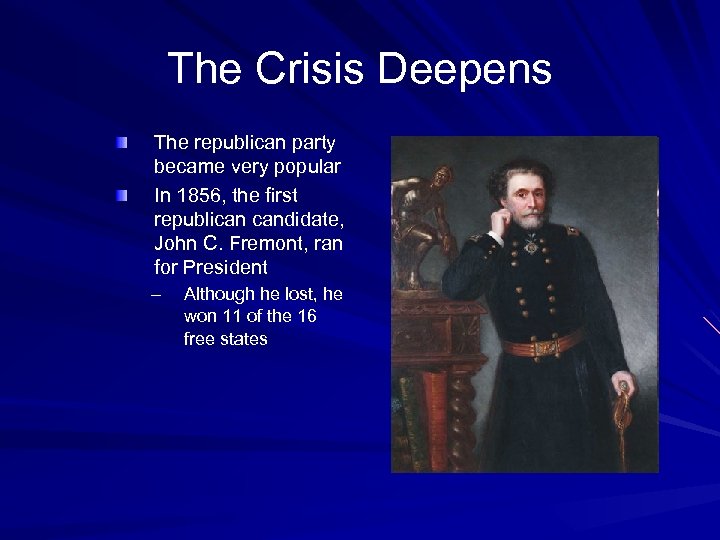 The Crisis Deepens The republican party became very popular In 1856, the first republican candidate, John C. Fremont, ran for President – Although he lost, he won 11 of the 16 free states
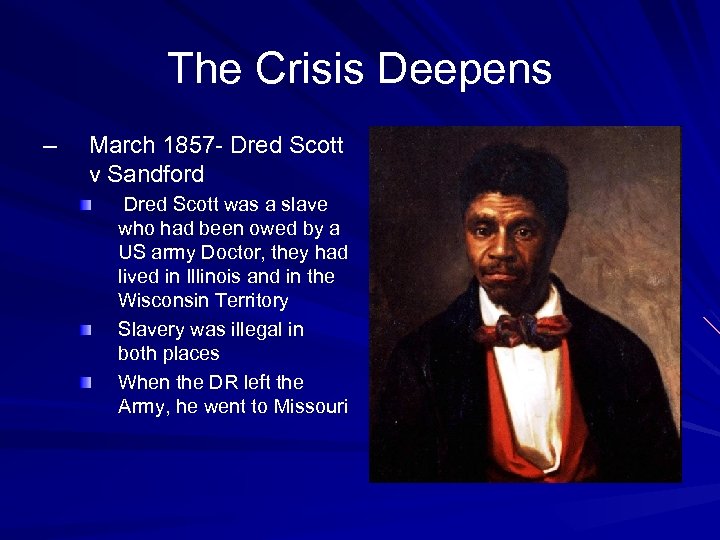 The Crisis Deepens – March 1857 - Dred Scott v Sandford Dred Scott was a slave who had been owed by a US army Doctor, they had lived in Illinois and in the Wisconsin Territory Slavery was illegal in both places When the DR left the Army, he went to Missouri
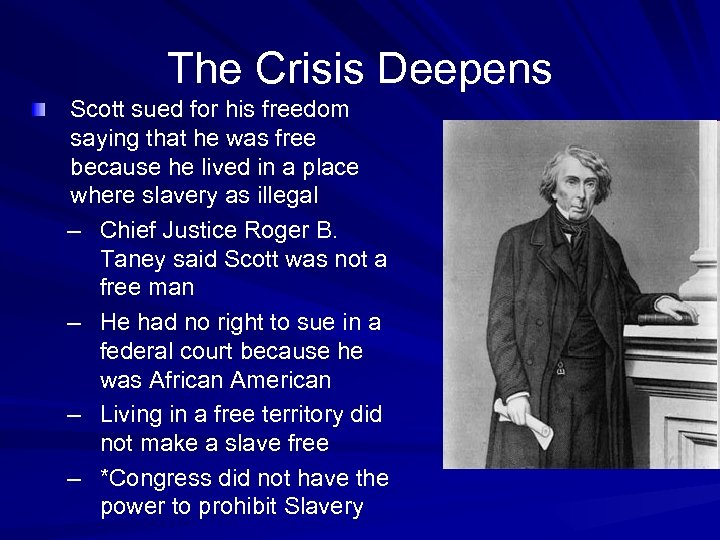 The Crisis Deepens Scott sued for his freedom saying that he was free because he lived in a place where slavery as illegal – Chief Justice Roger B. Taney said Scott was not a free man – He had no right to sue in a federal court because he was African American – Living in a free territory did not make a slave free – *Congress did not have the power to prohibit Slavery
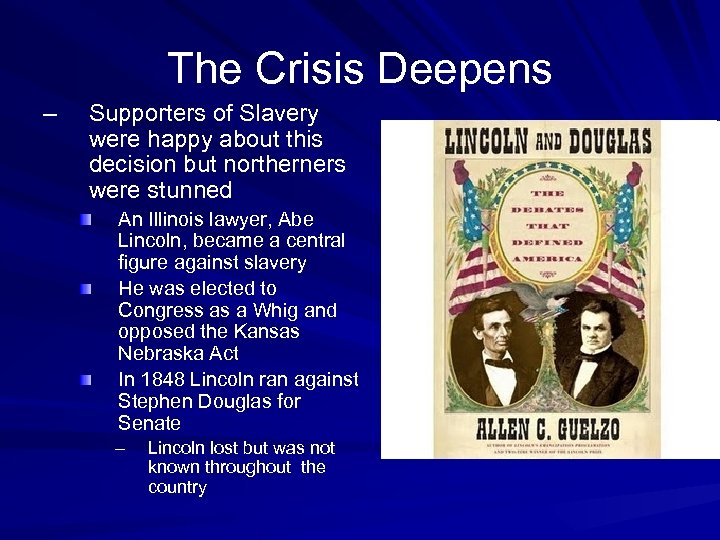 The Crisis Deepens – Supporters of Slavery were happy about this decision but northerners were stunned An Illinois lawyer, Abe Lincoln, became a central figure against slavery He was elected to Congress as a Whig and opposed the Kansas Nebraska Act In 1848 Lincoln ran against Stephen Douglas for Senate – Lincoln lost but was not known throughout the country
 The Crisis Depends The Lincoln- Douglas Debates Abraham Lincoln and Stephen Douglas debated the topic of slavery Abraham Lincoln made a very famous speech upon accepting the Republican Nomination. “A house divided against itself cannot stand. I do not believe this government can endure, permanently, half slave and have free. I fo not expect the union to be dissolved. I do not expect the house to fail, but I do expect it will cease to be divided, it will become all one thing or all the other. ” What do you think he meant by this quote?
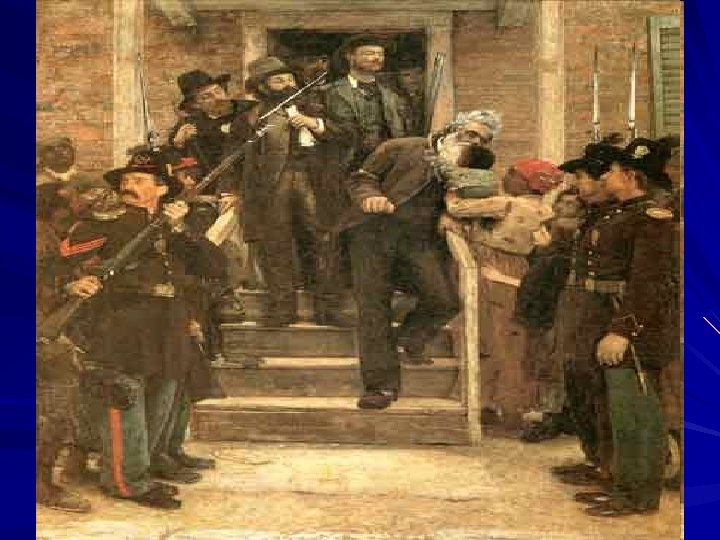
 The Crisis Deepens – John Brown, an Abolitionist, created a plan to raise an army and free slaves in the south He planned to capture Army guns in Harpers Ferry, VA Unfortunately he was surrounded by Colonel Robert E. Lee and was captured. At his trial, he was guilty of murder and treason, he was sentenced to death.
 Section 4 - The coming of the Civil War a. In the election of 1860, Republicans chose Abraham Lincoln and Northern Democrats chose Stephen Douglas, Southern Democrats chose John Breckinridge, the Constitutional Union party nominated John Bell
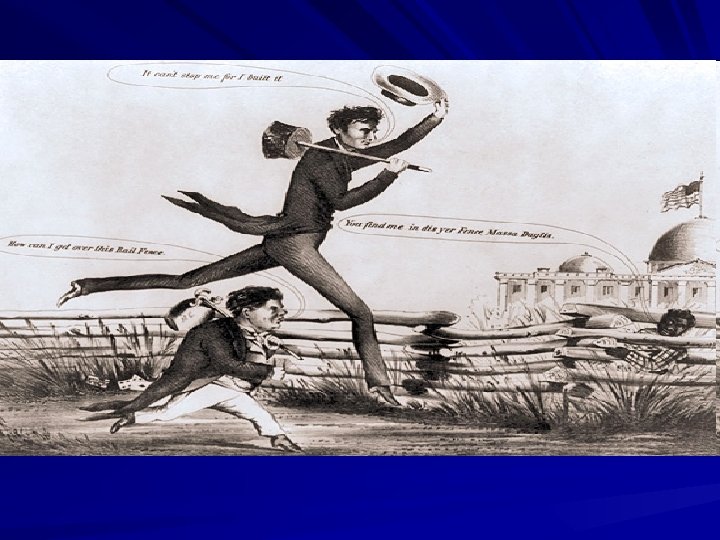
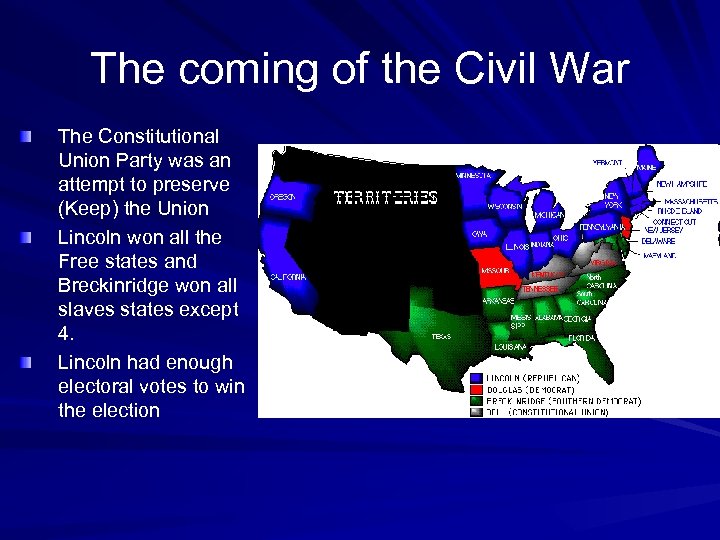 The coming of the Civil War The Constitutional Union Party was an attempt to preserve (Keep) the Union Lincoln won all the Free states and Breckinridge won all slaves states except 4. Lincoln had enough electoral votes to win the election
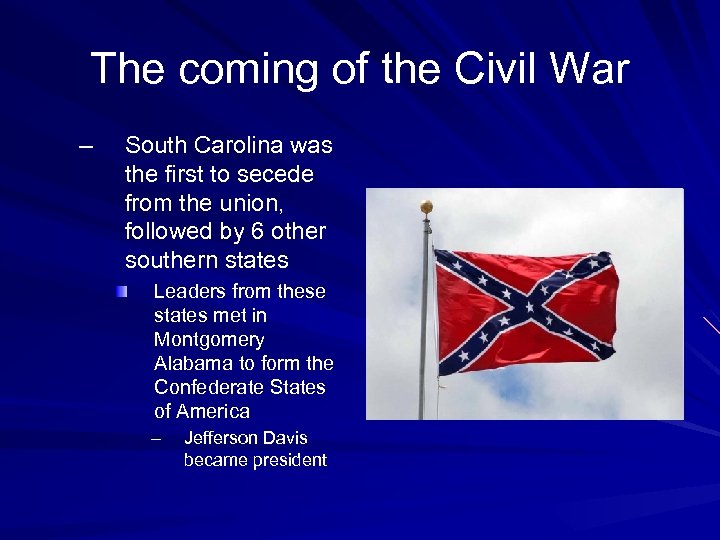 The coming of the Civil War – South Carolina was the first to secede from the union, followed by 6 other southern states Leaders from these states met in Montgomery Alabama to form the Confederate States of America – Jefferson Davis became president
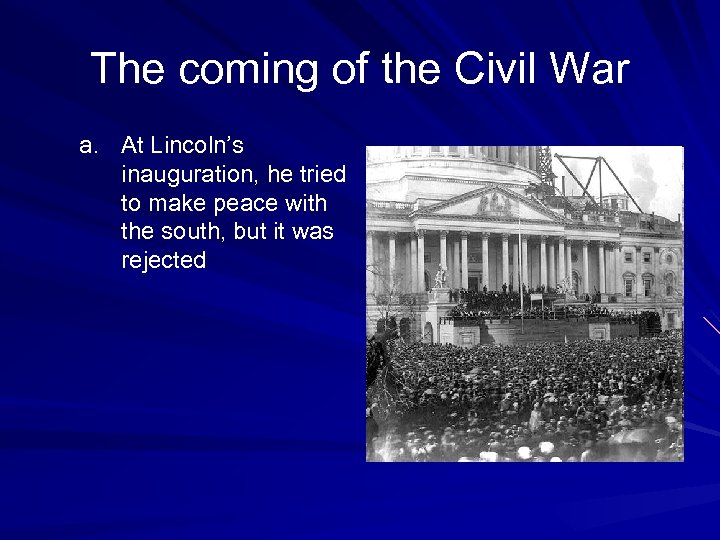 The coming of the Civil War a. At Lincoln’s inauguration, he tried to make peace with the south, but it was rejected
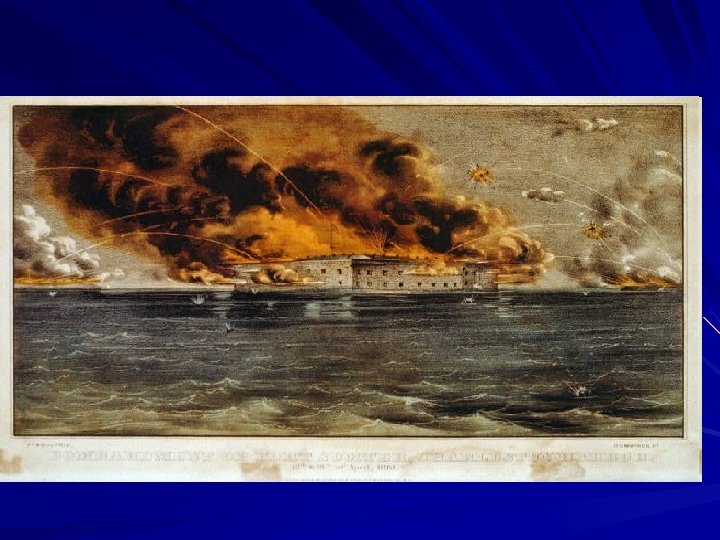
 The coming of the Civil War – At Fort Sumter, in South Carolina, the commander would not surrender, SC authorities decided to starve the troops Lincoln announced he would send food, but not military supplies to the fort This fort was attacked and the US troops surrendered – This attack on Fort Sumter was the beginning of the Civil War