Скачать презентацию The N I Prison Reform Programme Progress Made
40249fabb6eabf3773659255913fb0c9.ppt
- Количество слайдов: 11
 The N. I. Prison Reform Programme: Progress Made and Challenges Remaining 18 January 2017 Dr Michelle Butler Queen’s University Belfast
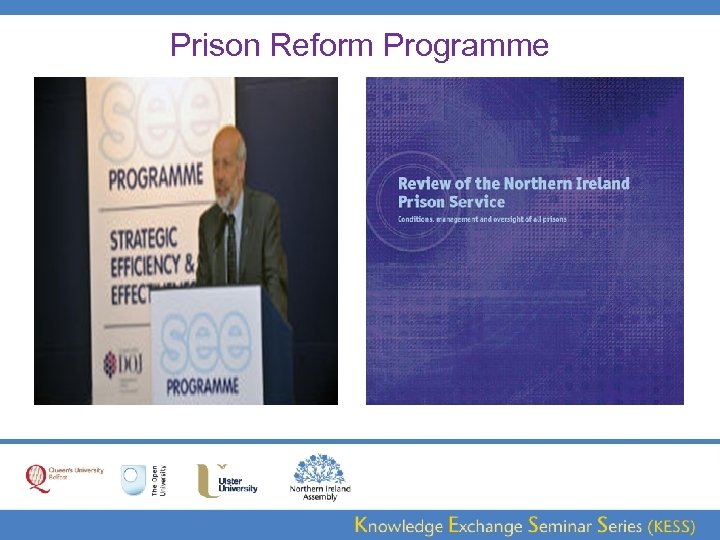 Prison Reform Programme
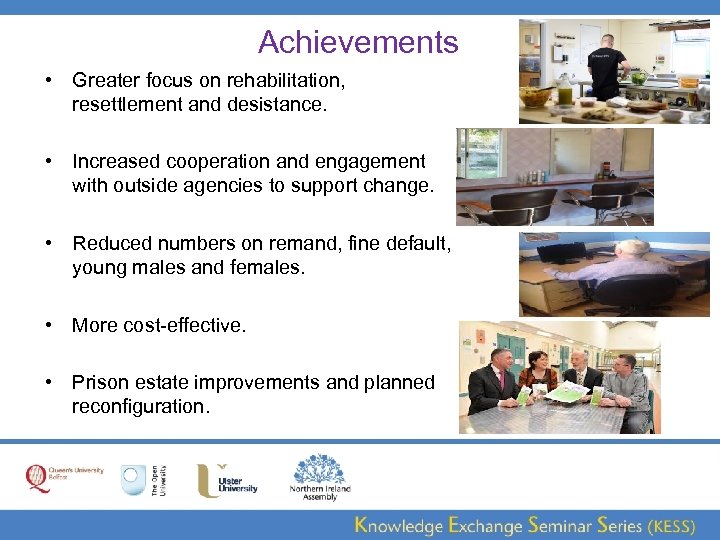 Achievements • Greater focus on rehabilitation, resettlement and desistance. • Increased cooperation and engagement with outside agencies to support change. • Reduced numbers on remand, fine default, young males and females. • More cost-effective. • Prison estate improvements and planned reconfiguration.
 Challenges Remaining • Ongoing resourcing difficulties due to wider fiscal situation. • Managing ‘separated prisoners’, severe mental ill health and personality disorders. • Strengthening relationships between staff and management as well as enhancing leadership. • Ensuring Northern Ireland Prison Service and outside agencies work effectively together and recognise how all contribute to the culture, environment and prison reform programme. • Greater use of data to judge performance.
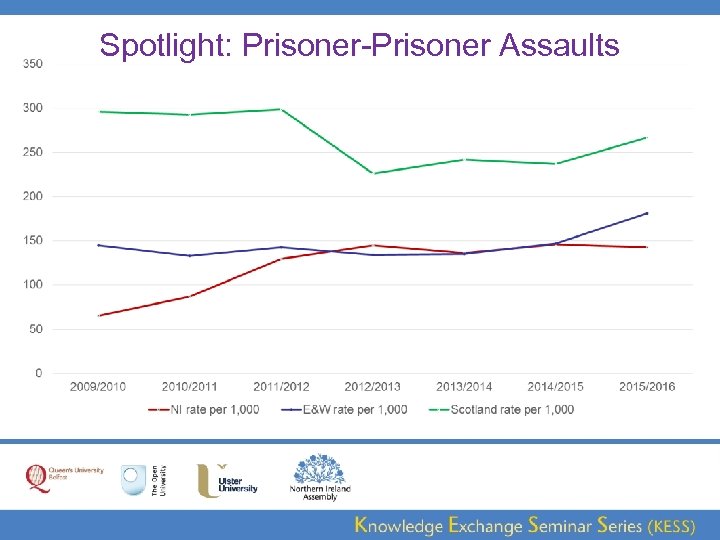 Spotlight: Prisoner-Prisoner Assaults
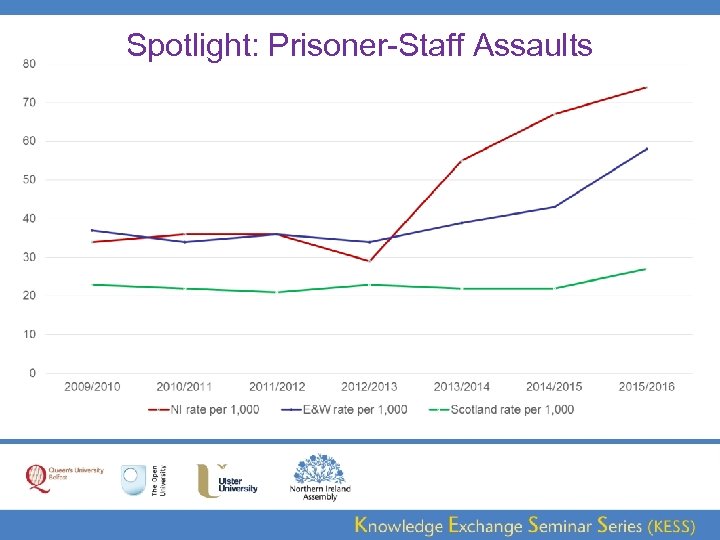 Spotlight: Prisoner-Staff Assaults
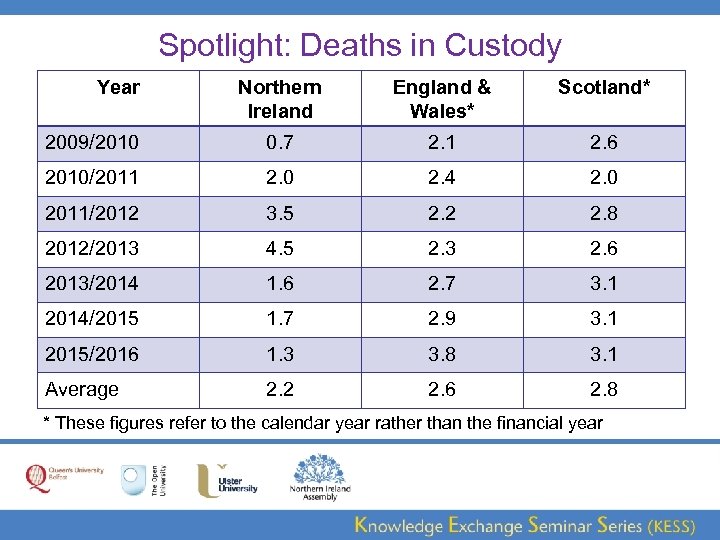 Spotlight: Deaths in Custody Year Northern Ireland England & Wales* Scotland* 2009/2010 0. 7 2. 1 2. 6 2010/2011 2. 0 2. 4 2. 0 2011/2012 3. 5 2. 2 2. 8 2012/2013 4. 5 2. 3 2. 6 2013/2014 1. 6 2. 7 3. 1 2014/2015 1. 7 2. 9 3. 1 2015/2016 1. 3 3. 8 3. 1 Average 2. 2 2. 6 2. 8 * These figures refer to the calendar year rather than the financial year
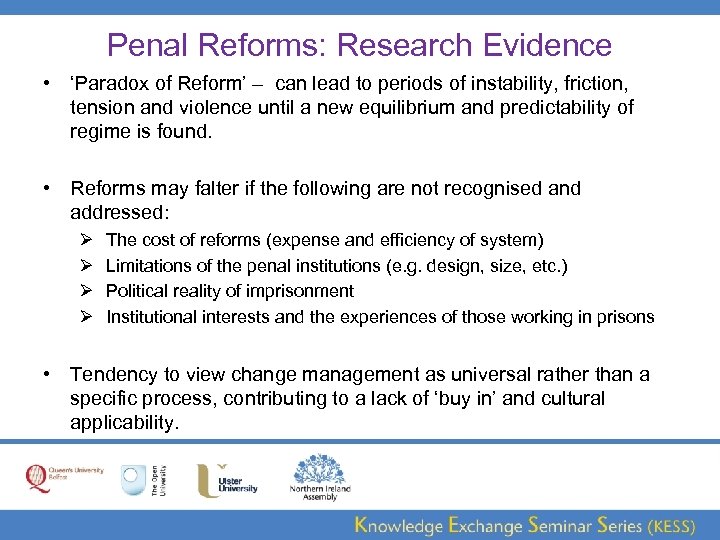 Penal Reforms: Research Evidence • ‘Paradox of Reform’ – can lead to periods of instability, friction, tension and violence until a new equilibrium and predictability of regime is found. • Reforms may falter if the following are not recognised and addressed: Ø Ø The cost of reforms (expense and efficiency of system) Limitations of the penal institutions (e. g. design, size, etc. ) Political reality of imprisonment Institutional interests and the experiences of those working in prisons • Tendency to view change management as universal rather than a specific process, contributing to a lack of ‘buy in’ and cultural applicability.
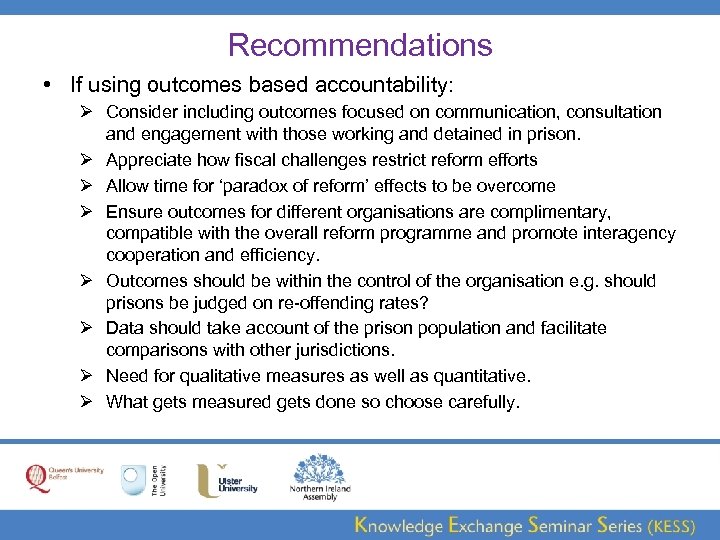 Recommendations • If using outcomes based accountability: Ø Consider including outcomes focused on communication, consultation and engagement with those working and detained in prison. Ø Appreciate how fiscal challenges restrict reform efforts Ø Allow time for ‘paradox of reform’ effects to be overcome Ø Ensure outcomes for different organisations are complimentary, compatible with the overall reform programme and promote interagency cooperation and efficiency. Ø Outcomes should be within the control of the organisation e. g. should prisons be judged on re-offending rates? Ø Data should take account of the prison population and facilitate comparisons with other jurisdictions. Ø Need for qualitative measures as well as quantitative. Ø What gets measured gets done so choose carefully.
 Thanks for your attention. Questions? Email: michelle. butler@qub. ac. uk Telephone: 028 -90973956 Twitter: @Michelle. BQUB