


 Скачать презентацию The Militarization of America At What Cost PREPARED
a590a6c0d291e0ebe65a8eca066ccce6.ppt
- Количество слайдов: 116
 The Militarization of America At What Cost? PREPARED BY PEACE ACTION MONTGOMERY WWW. PEACEACTIONMC. ORG
 Topics 2 The Federal Budget How Are We Spending the Military Part of the Budget? What Does American Militarism Mean for You? The Threat to Democracy What You Can Do
 The Federal Budget 3
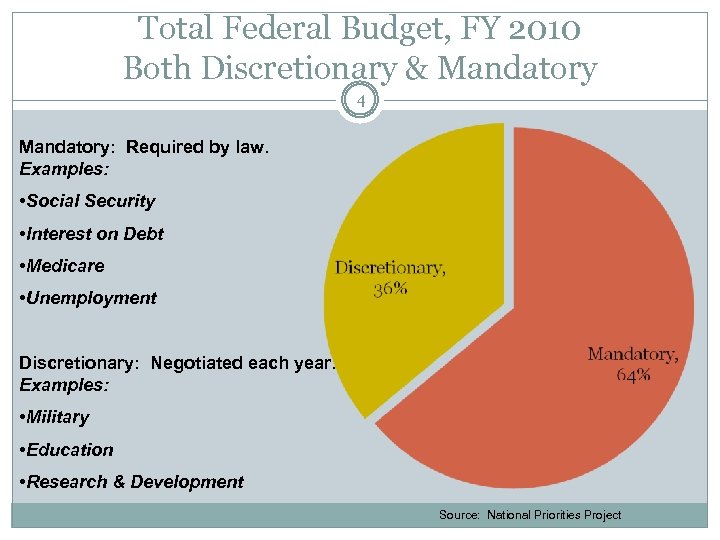 Total Federal Budget, FY 2010 Both Discretionary & Mandatory 4 Mandatory: Required by law. Examples: • Social Security • Interest on Debt • Medicare • Unemployment Discretionary: Negotiated each year. Examples: • Military • Education • Research & Development Source: National Priorities Project
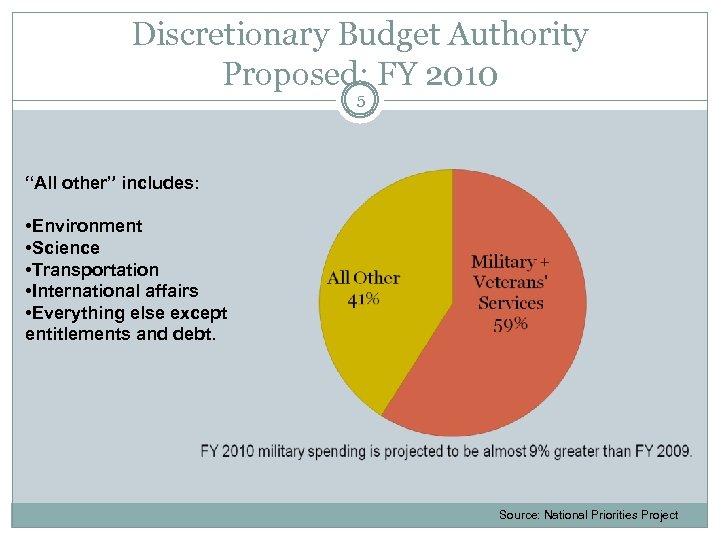 Discretionary Budget Authority Proposed: FY 2010 5 “All other” includes: • Environment • Science • Transportation • International affairs • Everything else except entitlements and debt. Source: National Priorities Project
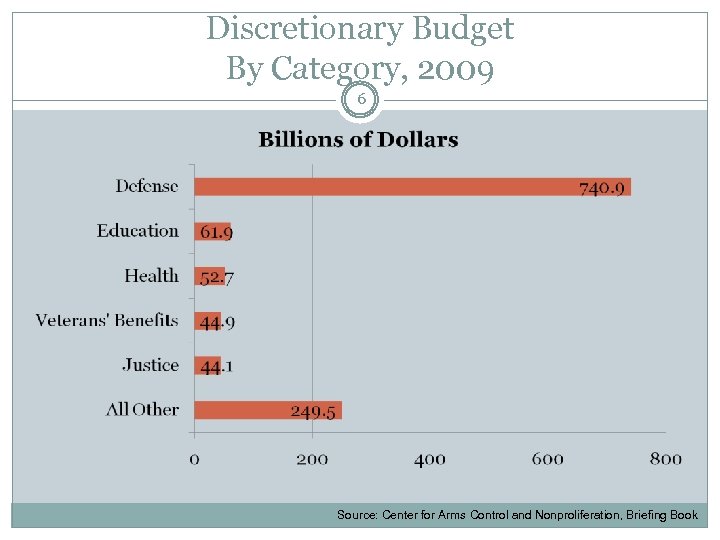 Discretionary Budget By Category, 2009 6 Source: Center for Arms Control and Nonproliferation, Briefing Book
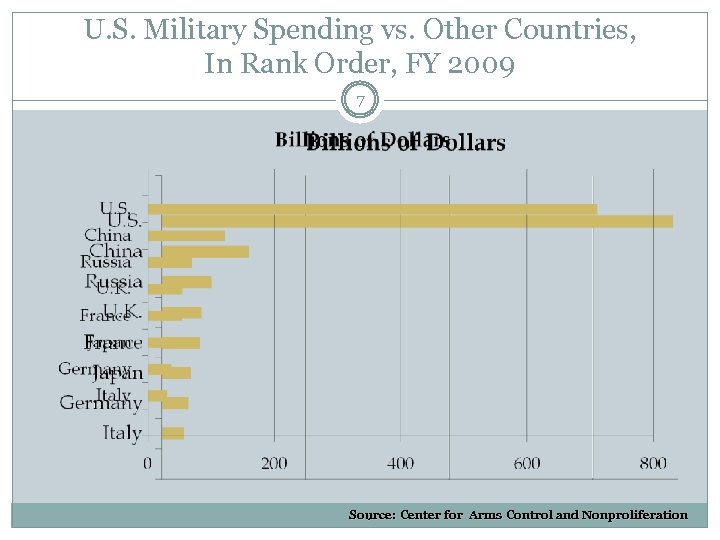 U. S. Military Spending vs. Other Countries, In Rank Order, FY 2009 7 Source: Center for Arms Control and Nonproliferation
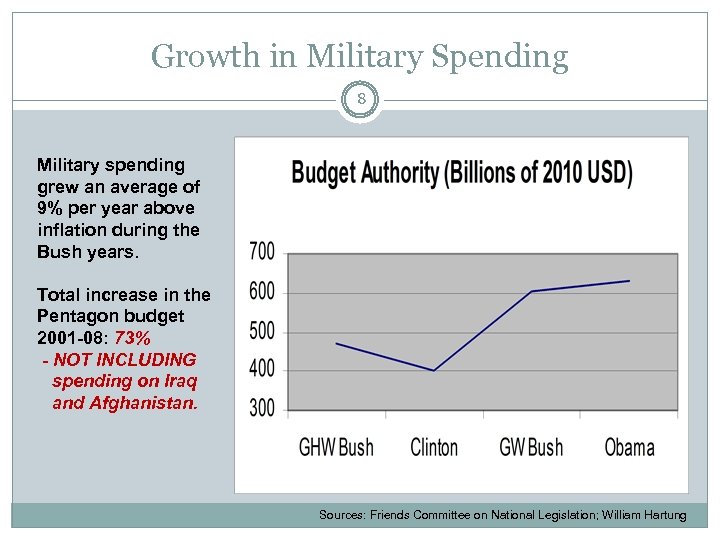 Growth in Military Spending 8 Military spending grew an average of 9% per year above inflation during the Bush years. Total increase in the Pentagon budget 2001 -08: 73% - NOT INCLUDING spending on Iraq and Afghanistan. Sources: Friends Committee on National Legislation; William Hartung
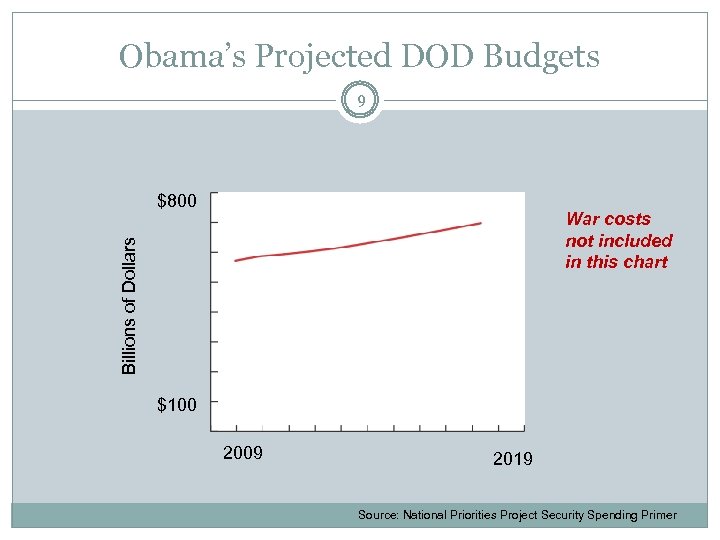 Obama’s Projected DOD Budgets 9 $800 Billions of Dollars War costs not included in this chart $100 2009 2019 Source: National Priorities Project Security Spending Primer
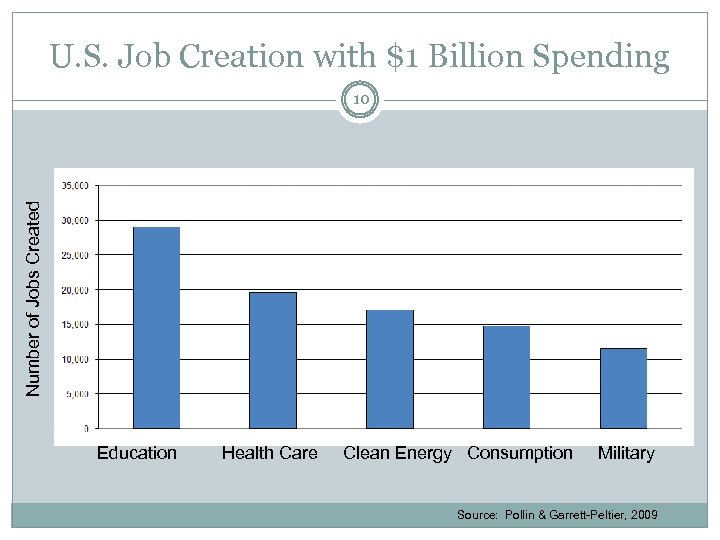 U. S. Job Creation with $1 Billion Spending Number of Jobs Created 10 Education Health Care Clean Energy Consumption Military Source: Pollin & Garrett-Peltier, 2009
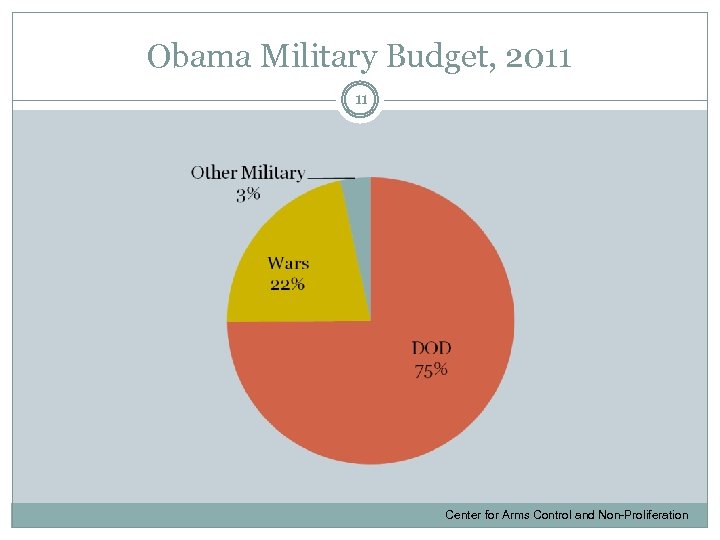 Obama Military Budget, 2011 11 Center for Arms Control and Non-Proliferation
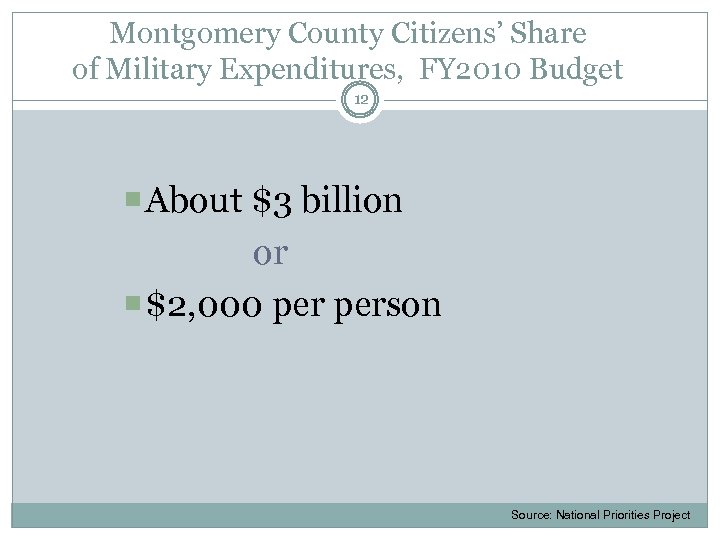 Montgomery County Citizens’ Share of Military Expenditures, FY 2010 Budget 12 About $3 billion or $2, 000 person Source: National Priorities Project
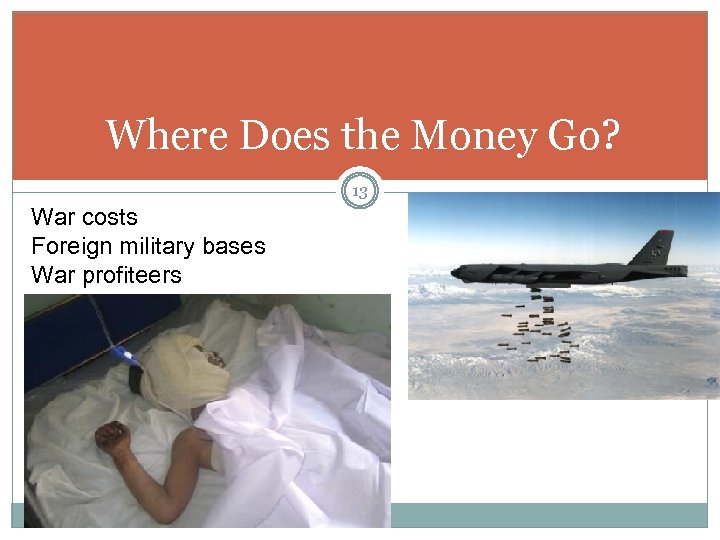 Where Does the Money Go? 13 War costs Foreign military bases War profiteers
 Extraordinary War Costs 14 Total U. S. defense spending in Afghanistan, FY 2010: $101 billion. $400 per gallon: US military’s cost of gasoline in Afghanistan $1 million: cost to send one soldier to Afghanistan for one year Reliance on expensive contractors Source: Congressional Research Service Report RL 33110
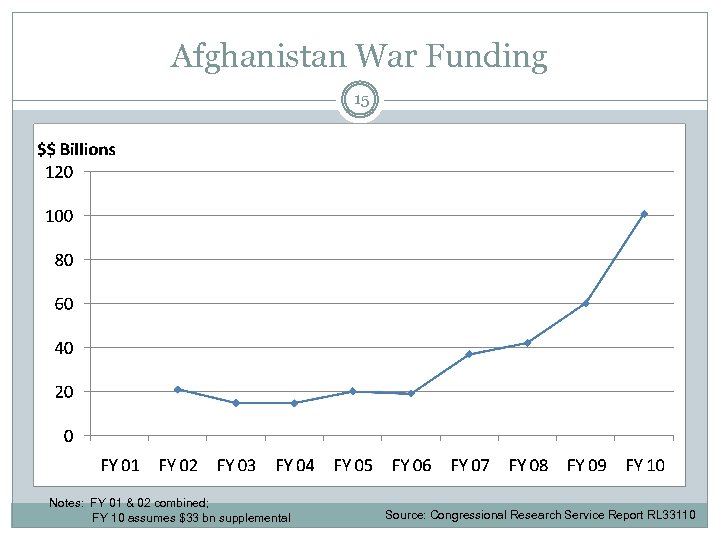 Afghanistan War Funding 15 Notes: FY 01 & 02 combined; FY 10 assumes $33 bn supplemental Source: Congressional Research Service Report RL 33110
 Afghanistan War vs. World Military Spending 16 In 2010, the United States will spend more on the war in Afghanistan alone than every other country in the world but China spends on its own defense. Source: Center for Arms Control and Non-Proliferation
 Total War Costs Iraq and Afghanistan Through 2010 17 Total direct cost of both wars by 2010: over $1 trillion
 $1 Trillion is a Thousand Billion 18 Imagine that you spent $1 million/day beginning with the birth of Jesus—to spend a trillion dollars, you’d need to keep spending $1 million/day until mid-way through the 28 th century. If you laid out $1 trillion end-to-end in $100 bills, you could circle the Earth at the equator 39 times.
 Let’s Tell Congress 19 End the occupations of Iraq and Afghanistan We can’t afford this!
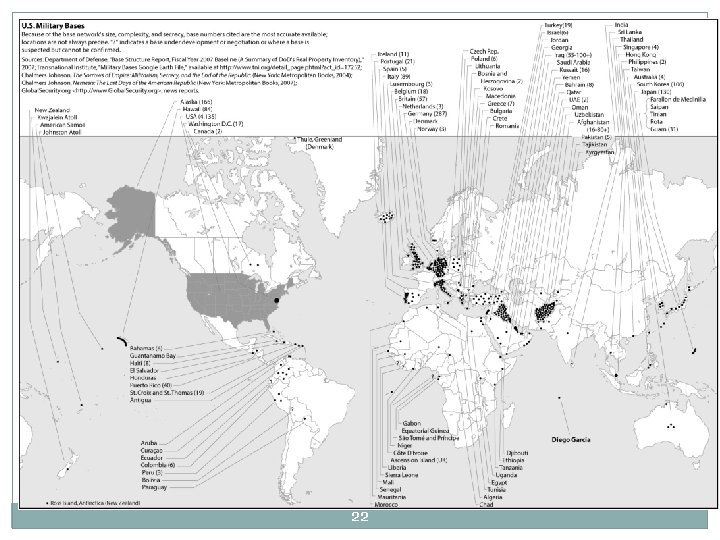
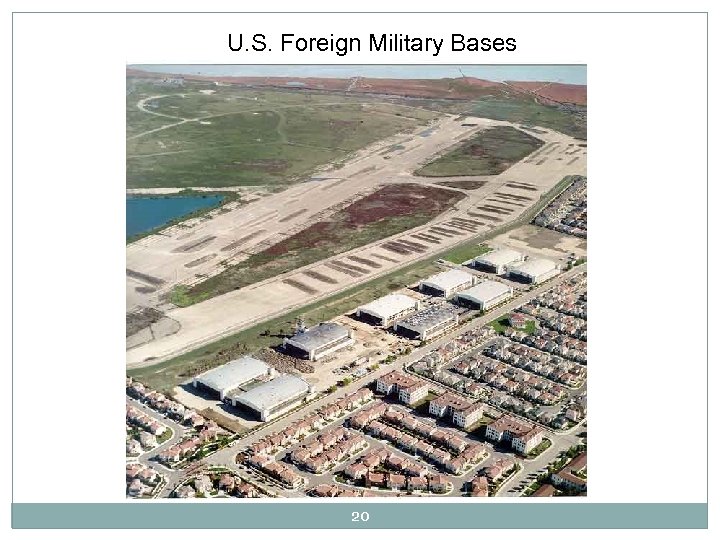 U. S. Foreign Military Bases 20
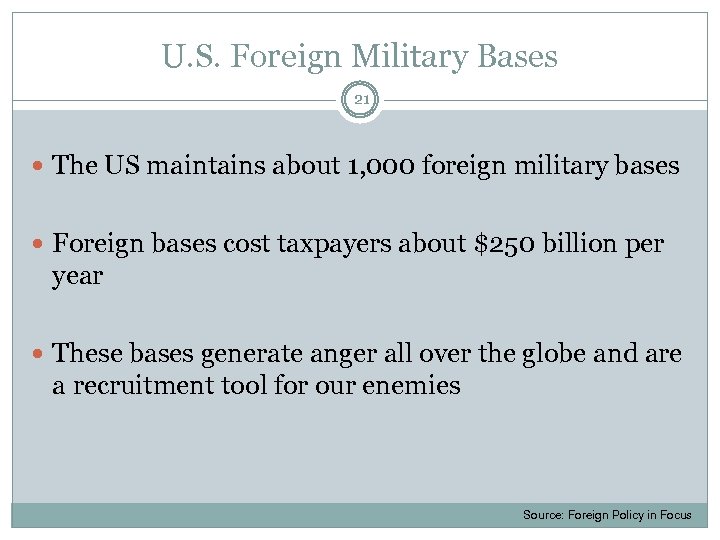 U. S. Foreign Military Bases 21 The US maintains about 1, 000 foreign military bases Foreign bases cost taxpayers about $250 billion per year These bases generate anger all over the globe and are a recruitment tool for our enemies Source: Foreign Policy in Focus
 22
22
 Floating Bases 23 The U. S. has 11 nuclear powered aircraft supercarriers—the only nation on earth to have even one. The U. S. maintains over 100 deployed ships and submarines at any given time—with 30, 000 sailors afloat. Each supercarrier has 90 fixed-wing aircraft and helicopters and can operate continuously for twenty years without refueling. Source: United States Navy
 Military Bases as the New Imperialism 24 U. S. bases constitute 95% of all the military bases any country in the world maintains on any other country's territory. “Once upon a time, you could trace the spread of imperialism by counting up colonies. America's version of the colony is the military base. ” Chalmers Johnson Source: Chalmers Johnson
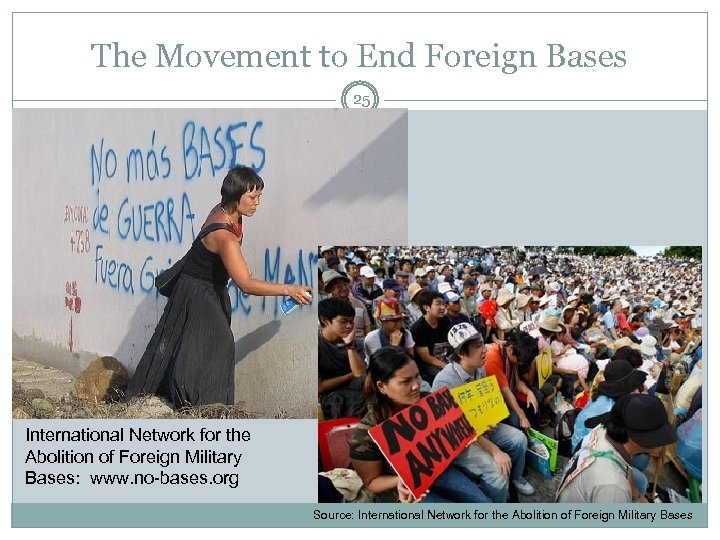 The Movement to End Foreign Bases 25 International Network for the Abolition of Foreign Military Bases: www. no-bases. org Source: International Network for the Abolition of Foreign Military Bases
 26
26
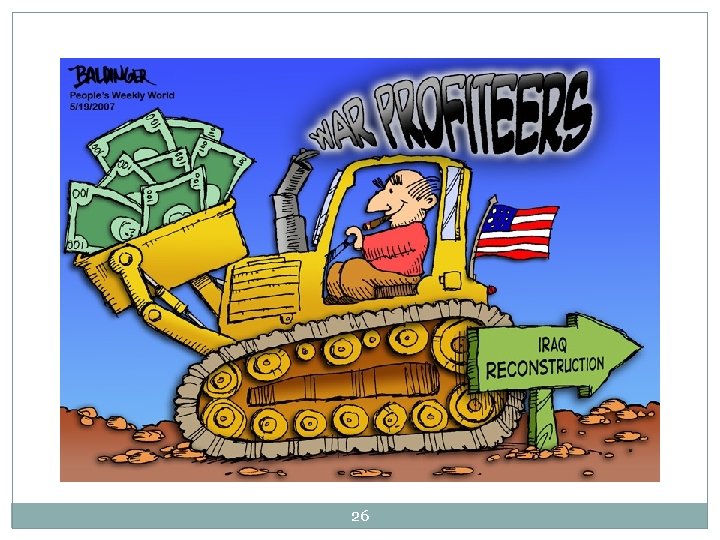
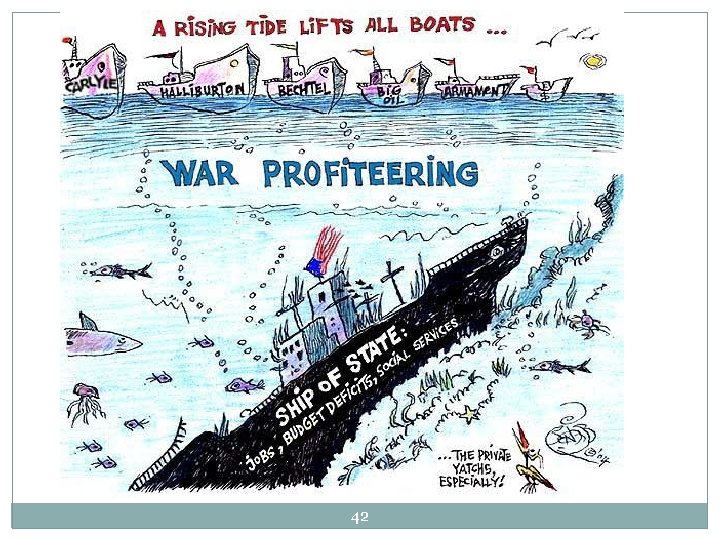
 War Profiteers 27 Definition: Any person or organization that improperly profits from warfare or by selling weapons and other goods to parties at war. How do we define “improperly”?
 War Profiteers 28 Are huge profits improper? Is it acceptable for some people to make literally millions of dollars because thousands of others die? Is it improper if contractors lobby for wars that they benefit from financially? Is it improper if contractors’ products are shoddy? If contractors engage in fraud and highly wasteful practices?
 War Profiteers Example: Lockheed Martin 29 84% Percent of L/M profits derived directly from US tax payers, 2008 $4. 4 billion Amount of tax-payer money distributed as profit, 2008 $36, 560, 000 Total compensation of Lockheed Martin CEO, 2007 $28, 253, 165 Total compensation of 6 other executives, 2007
 Lockheed Martin 30 Paid $577. 2 million in fines because of contract fraud since 1995 Found guilty of 50 instances of various kinds of misconduct (including contractor kickbacks, nuclear safety violations, fraud, etc. ) Source: Wikipedia
 Lockheed Martin: Forms of Influence 31 Political donations to Dem and Repub parties, 1997 - 2009: $2, 346, 300 Donations to individual politicians: averages almost $1 million/year Paid lobbying, 2008: $15, 821, 506 Source: Right Web
 Lockheed Martin: Forms of Influence 32 Geographic distribution of subcontractors “The ideal weapons system is built in 435 Congressional districts and it doesn’t matter whether it works or not. ” Alain C. Enthoven, economist and former Pentagon official. In 2009, Lockheed Martin placed full-page ads in the Washington Post showing the number of jobs for F-22 construction, by Congressional district, throughout the nation.
 Lockheed Martin: Forms of Influence—The Revolving Door 33 Lockheed's former vice-president, Bruce Jackson, organized and chaired the “non-profit” Committee for the Liberation of Iraq (2002 -03): It lobbied hard for the Iraq war—a war that dramatically increased Lockheed Martin profits 8 other senior Bush Administration members had similar ties to Lockheed Martin Source: Wikpedia
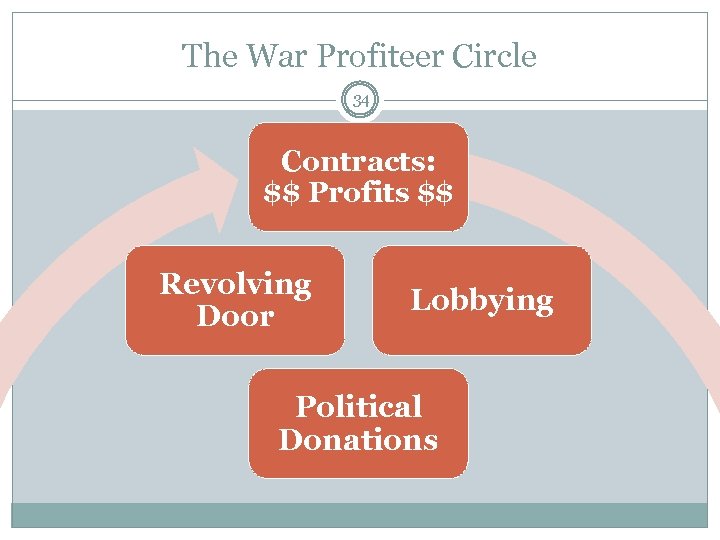 The War Profiteer Circle 34 Contracts: $$ Profits $$ Revolving Door Lobbying Political Donations
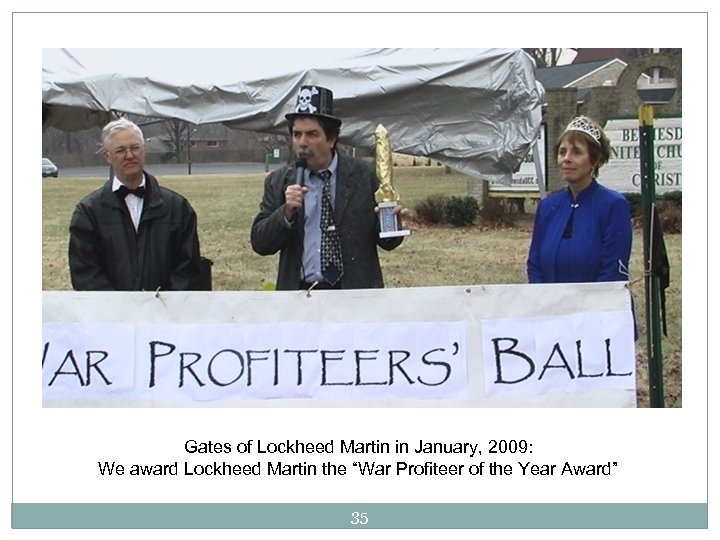 Gates of Lockheed Martin in January, 2009: We award Lockheed Martin the “War Profiteer of the Year Award” 35
 What do Military Contractors Do? 36 Feed troops Maintain facilities and equipment Transport cargo Wash clothes Provide security guards for bases and diplomats Engage in military actions through the CIA Contractors are doing everything that used to be done solely by the military—for a profit.
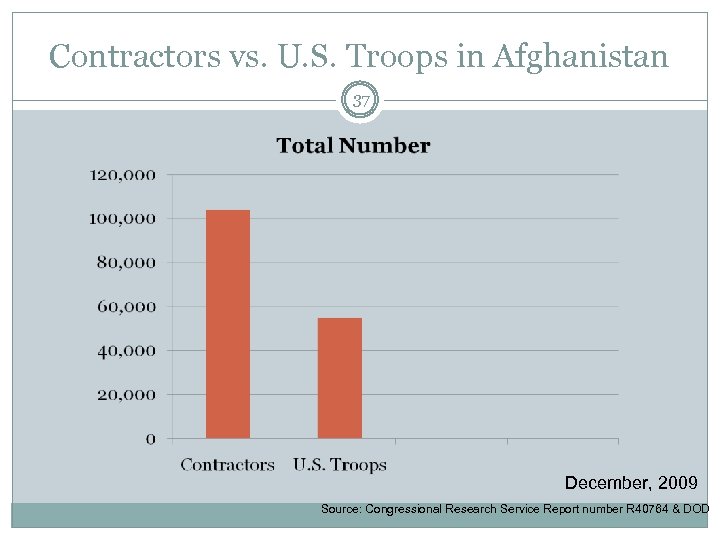 Contractors vs. U. S. Troops in Afghanistan 37 December, 2009 Source: Congressional Research Service Report number R 40764 & DOD
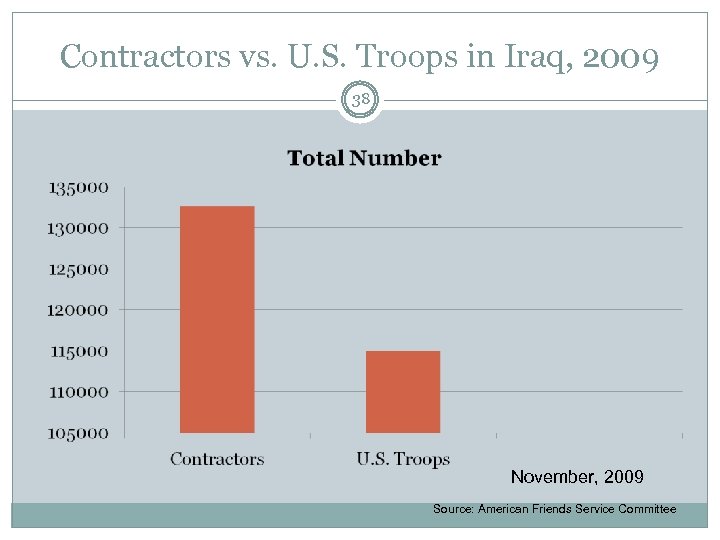 Contractors vs. U. S. Troops in Iraq, 2009 38 November, 2009 Source: American Friends Service Committee
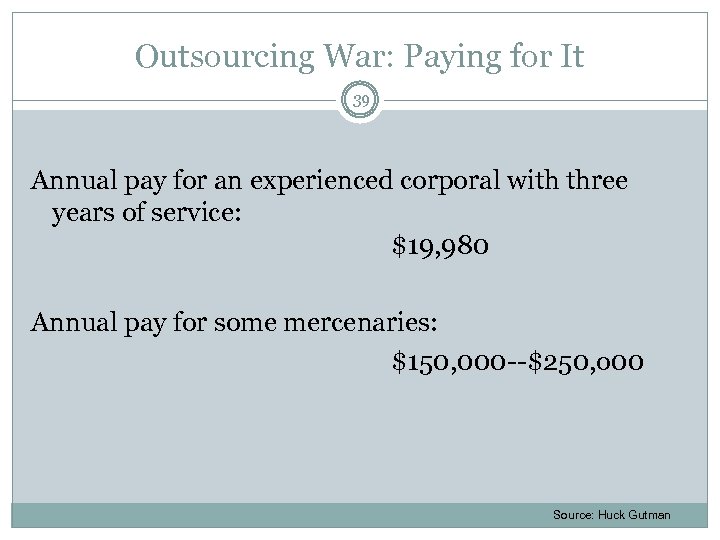 Outsourcing War: Paying for It 39 Annual pay for an experienced corporal with three years of service: $19, 980 Annual pay for some mercenaries: $150, 000 --$250, o 00 Source: Huck Gutman
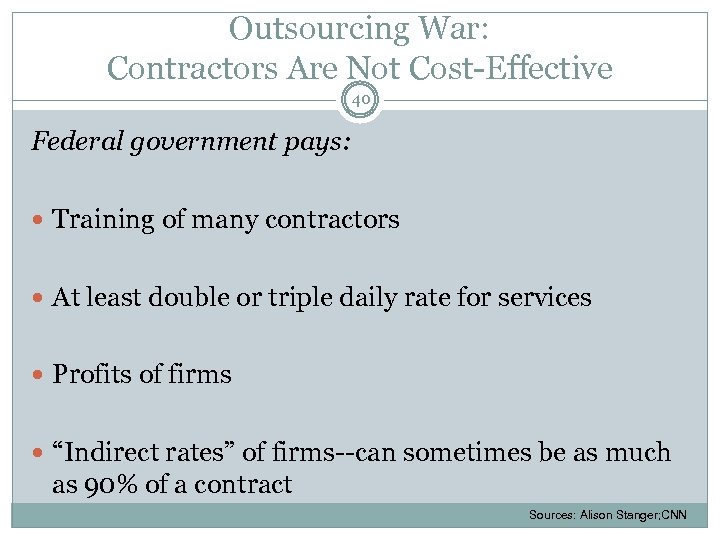 Outsourcing War: Contractors Are Not Cost-Effective 40 Federal government pays: Training of many contractors At least double or triple daily rate for services Profits of firms “Indirect rates” of firms--can sometimes be as much as 90% of a contract Sources: Alison Stanger; CNN
 Outsourcing War: Contractors are Not Cost-Effective 41 Federal government pays: Profits plus indirect rates for subcontractors, i. e. profits plus indirect rates on top of profits and indirect rates— 70% of costs of prime DOD contractors are subs Fraud, waste and abuse (at least 16% in Afghanistan) Clean-up after poor performance, bad behavior Source: Commission on Wartime Contracting in Iraq and Afghanistan
 42
42
 Who Are Mercenaries? 43 Mercenaries are soldiers-for-hire or “private security contractors, ” typically provided by a large firm, such as CACI or Blackwater/Xe. They come from all over the world. Companies like Blackwater/Xe recruit especially from repressive regimes with bad human rights histories. .
 How Many Mercenaries? 44 About 11% of DOD contractors in Iraq & Afghanistan are mercenaries: 13, 924 in June, 09 This does not include State Dept. or CIA-funded mercenaries. Under Barack Obama, in second quarter, 2009: 23% increase in the number of “Private Security Contractors” in Iraq 29% increase in Afghanistan Sources: Congressional Research Service, DOD Contractors in Iraq and Afghanistan; Center for Globalization
 Mercenary Contractors: Example Blackwater/Xe 45 Killed 17 innocent Iraqi citizens in a massacre in 2007. Killed two Afghan civilians, in May 2009. How many more have they killed? We don’t know. Blackwater/Xe is still receiving millions of U. S. taxpayer dollars to provide security for Ambassador Karl Eikenberry, for CIA contracts for extralegal work in Pakistan, and for other services. Source: The Nation, Jeremy Scahill
 Implications of Outsourcing War 46 “The United States has created a new system for waging war. . . You turn the entire world into your recruiting ground. You intricately link corporate profits to an escalation of warfare and make it profitable for companies to participate in your wars. ” “We live amidst the most radical privatization agenda in the history of our country. ” Investigative reporter Jeremy Scahill Source: Bill Moyers Interview
 Outsourcing War 47 Powerful companies promote war because it is profitable, not because of the interests of the nation Oversight of contractors is negligible and contractors often do poor jobs—(e. g. , defective KBR construction that caused electrocution of 12 US servicemen in Iraq) Cost-plus contracts , the most common DOD-type contract, encourage waste and unnecessary spending
 Outsourcing War 48 Contractors are generally outside of any law—they do what they want with total impunity (e. g. , Blackwater massacre)—making a mockery of democracy or rule of law The profit motive is often counter to the military’s goals and the nation’s interest—e. g. , contractors are paying protection money to war lords and the Taliban in Afghanistan
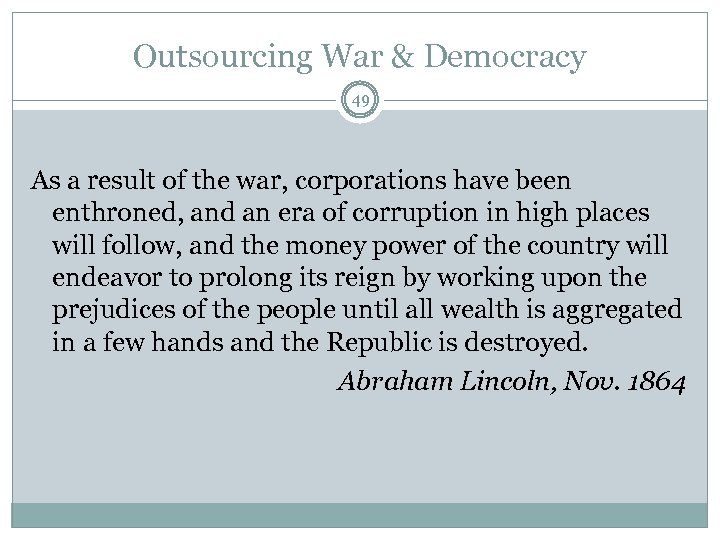 Outsourcing War & Democracy 49 As a result of the war, corporations have been enthroned, and an era of corruption in high places will follow, and the money power of the country will endeavor to prolong its reign by working upon the prejudices of the people until all wealth is aggregated in a few hands and the Republic is destroyed. Abraham Lincoln, Nov. 1864
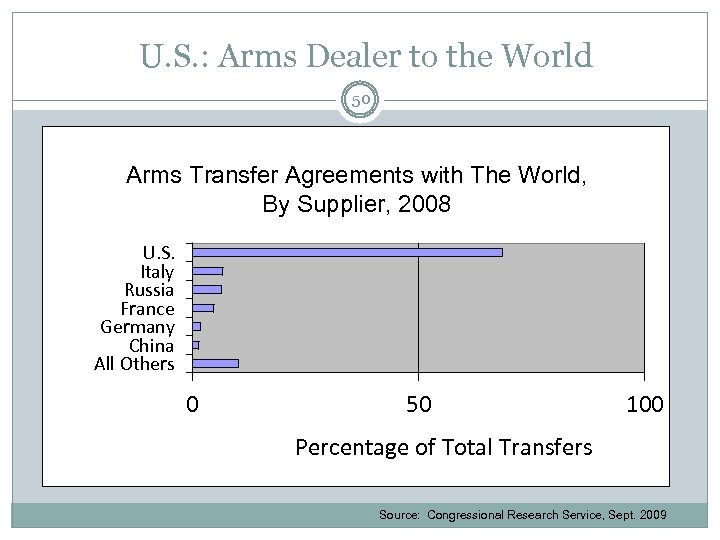 U. S. : Arms Dealer to the World 50 Arms Transfer Agreements with The World, By Supplier, 2008 U. S. Italy Russia France Germany China All Others 0 50 100 Percentage of Total Transfers Source: Congressional Research Service, Sept. 2009
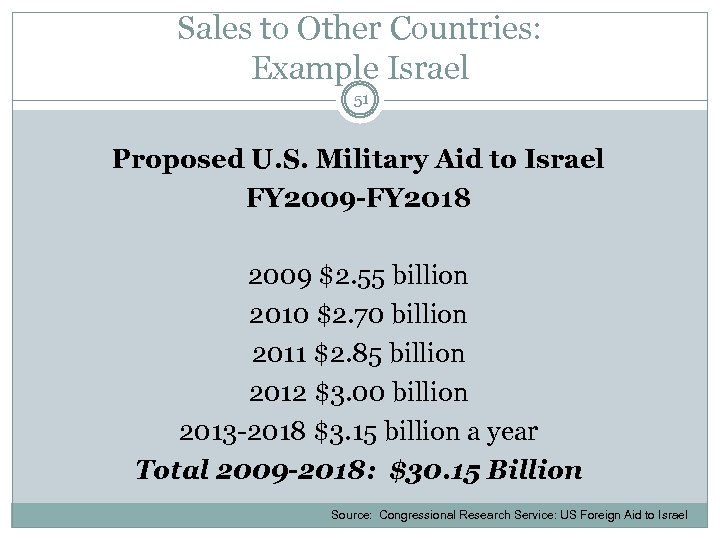 Sales to Other Countries: Example Israel 51 Proposed U. S. Military Aid to Israel FY 2009 -FY 2018 2009 $2. 55 billion 2010 $2. 70 billion 2011 $2. 85 billion 2012 $3. 00 billion 2013 -2018 $3. 15 billion a year Total 2009 -2018: $30. 15 Billion Source: Congressional Research Service: US Foreign Aid to Israel
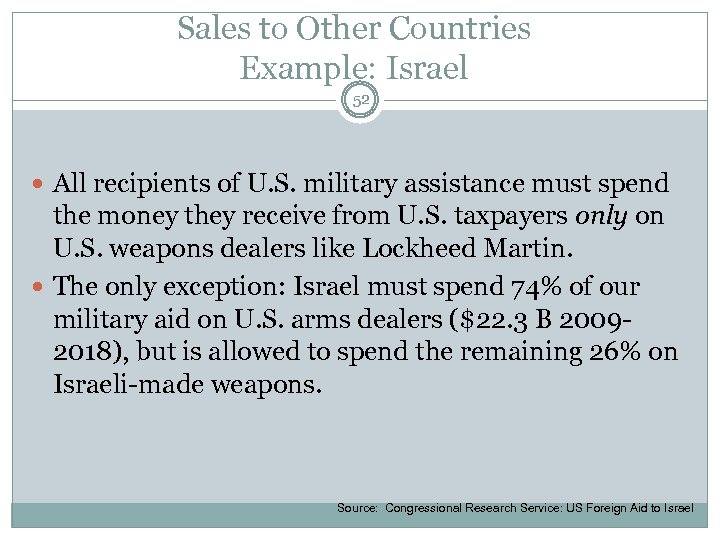 Sales to Other Countries Example: Israel 52 All recipients of U. S. military assistance must spend the money they receive from U. S. taxpayers only on U. S. weapons dealers like Lockheed Martin. The only exception: Israel must spend 74% of our military aid on U. S. arms dealers ($22. 3 B 20092018), but is allowed to spend the remaining 26% on Israeli-made weapons. Source: Congressional Research Service: US Foreign Aid to Israel
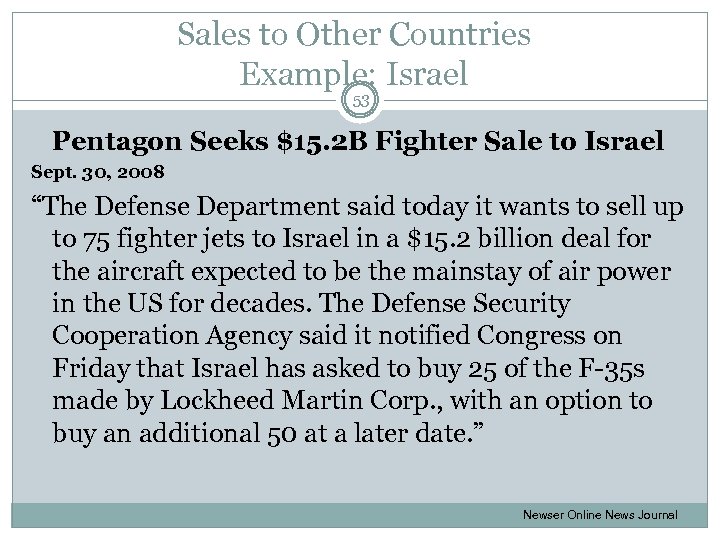 Sales to Other Countries Example: Israel 53 Pentagon Seeks $15. 2 B Fighter Sale to Israel Sept. 30, 2008 “The Defense Department said today it wants to sell up to 75 fighter jets to Israel in a $15. 2 billion deal for the aircraft expected to be the mainstay of air power in the US for decades. The Defense Security Cooperation Agency said it notified Congress on Friday that Israel has asked to buy 25 of the F-35 s made by Lockheed Martin Corp. , with an option to buy an additional 50 at a later date. ” Newser Online News Journal
 Sales to Other Countries: Example Israel 54 1. US gives Israel billions of dollars in foreign aid. 2. US requires Israel to spend most of it by buying from US arms manufacturers. 3. Using this money, Israel buys planes from Lockheed Martin. 4. Lockheed Martin makes more profits.
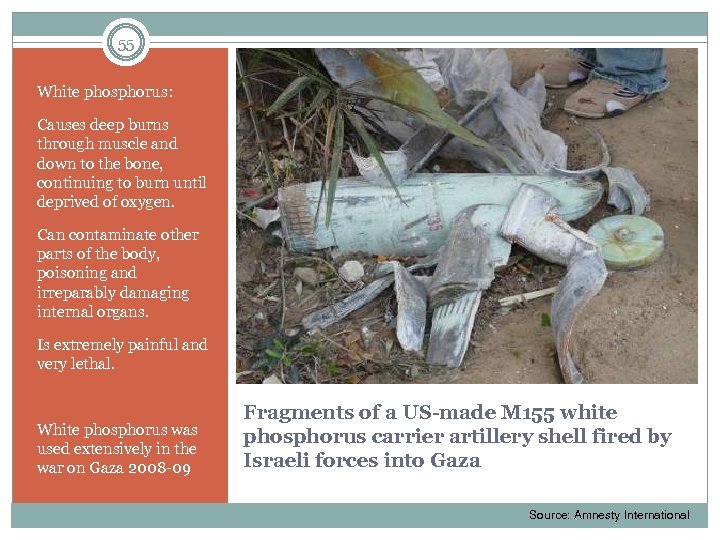 55 White phosphorus: Causes deep burns through muscle and down to the bone, continuing to burn until deprived of oxygen. Can contaminate other parts of the body, poisoning and irreparably damaging internal organs. Is extremely painful and very lethal. White phosphorus was used extensively in the war on Gaza 2008 -09 Fragments of a US-made M 155 white phosphorus carrier artillery shell fired by Israeli forces into Gaza Source: Amnesty International
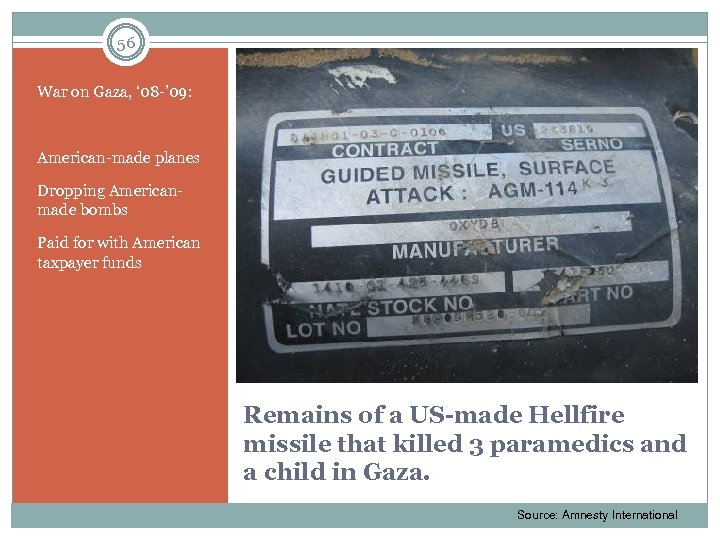 56 War on Gaza, ‘ 08 -’ 09: American-made planes Dropping Americanmade bombs Paid for with American taxpayer funds Remains of a US-made Hellfire missile that killed 3 paramedics and a child in Gaza. Source: Amnesty International
 What Does the Militarization of America Mean for You? 57
 A Weaker Economy 58 The more a country spends on the military relative to its economy: The slower the economic growth The higher the unemployment The slower the productivity growth Source: Council on Economic Priorities
 A Weaker Economy 59 Money to finance wars displaces productive investment, for example to rebuild infrastructure. As a result of not making these investments, future output in the U. S. will be smaller. Source: Stiglitz and Bilmes, The Three Trillion Dollar War
 Financing Costs: Affect Future Economic Growth 60 Money to finance the current wars is borrowed, largely from foreigners. This money has to be repaid, with interest. A huge national debt comes at the expense of domestic investment and future growth. Owing this debt to foreigners increases our vulnerability to foreign control of markets and policy. Source: Stiglitz and Bilmes, The Three Trillion Dollar War
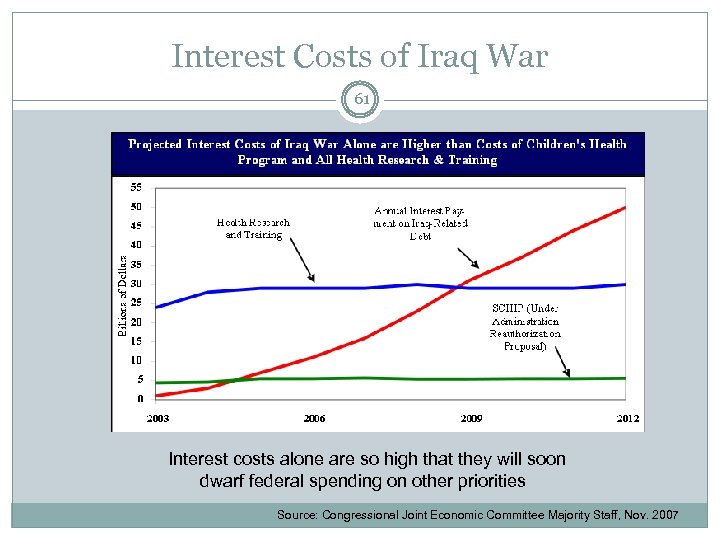 Interest Costs of Iraq War 61 Interest costs alone are so high that they will soon dwarf federal spending on other priorities Source: Congressional Joint Economic Committee Majority Staff, Nov. 2007
 Future Costs Burden Our Economy 62 Future significant costs of current wars, e. g. , continuing treatment for those wounded, will help restrain economic growth Source: Stiglitz and Bilmes, The Three Trillion Dollar War
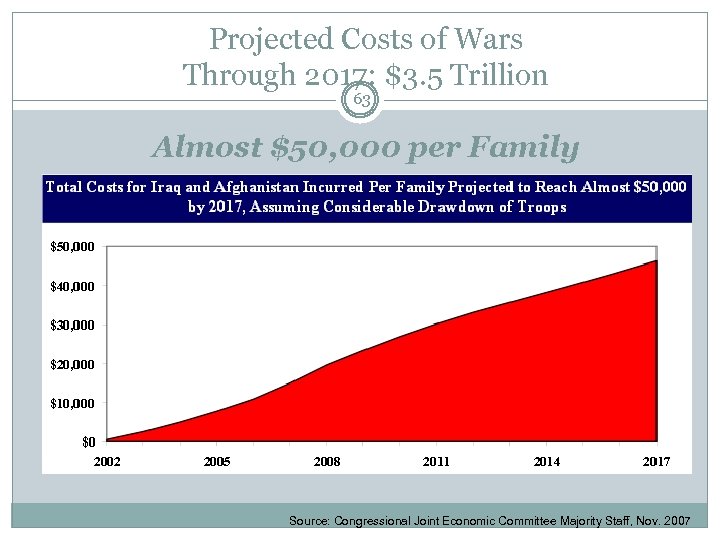 Projected Costs of Wars Through 2017: $3. 5 Trillion 63 Almost $50, 000 per Family Source: Congressional Joint Economic Committee Majority Staff, Nov. 2007
 Total Estimated Costs of Iraq & Afghanistan: $3. 5 Trillion 64 With $3. 5 trillion, for the next 133 years, we could send every 18 -year-old in the U. S. to a state university. We could pay all their education expenses --tuition, fees, and room and board--for four years.
 Environmental Costs 65 The U. S. military is the biggest polluter in the world, generating an estimated 750, 000 tons of toxic waste every year The military burns an estimated 20 million gallons of gasoline daily—about the same as the entire country of Iran Sources: Graydon Carter; Barry Sanders
 Environmental Costs 66 Even if every person, every automobile, and every factory suddenly emitted zero emissions, the Earth would still be headed toward total disaster: The US military produces enough greenhouse gases, by itself, to place our species in imminent danger of extinction Sources: Graydon Carter; Barry Sanders
 Costs of Militarism 67 We have less to invest in new businesses and new ways of doing things—our economy is weaker. We have less to spend on health, education, infrastructure, art and culture. We all have to work harder and longer hours, just to stay even. We endanger the climate and the ability of human beings to live on earth.
 68
68
 69
69
 70
70
 71
71
 Militarism: Threat to American Democracy 72
 Threat to Democracy 73 Militarism restricts freedom at home Freedom of speech (e. g. , Eugene Debs imprisoned for several years because of opposition to World War I) People today fearful of protesting—might lose jobs Militarism expands government surveillance of citizens Patriot Act NSA data mining
 Threat to Democracy 74 Militarism involves immense amounts of money that corrupt the political system Campaign contributions and election ads by war profiteers Lobbying by war profiteers and other corporations (e. g. , oil) Militarism leads to secrecy which is incompatible with democracy The “State Secrets Privilege”: invoked 23 times by Bush & used to dismiss entire cases without regard to the merits—now used by Obama The hiding of the “Pentagon Papers” during the Vietnam War
 Threat to Democracy 75 Militarism erodes fundamental rights Denial of Habeas Corpus in “War on Terror” Legalization of torture Military Commissions Act of 2006, creating kangaroo courts Militarism demonizes certain citizens--who then lose basic rights Japanese-Americans in WW II Muslims and Arab Americans today
 Threat to Democracy 76 Militarism alters the balance of power in our form of government One person now effectively declares war, not Congress As “Commander in Chief, ” all Presidents use “patriotism” to garner power—and today the presidency is more powerful than ever in our history
 Threat to Democracy 77 Militarism leads to powerful secret paramilitary organizations, illegal actions by government, and lack of accountability—destroying the rule of law CIA – Illegal violence in Chile, Iran, Central America, Pakistan “Extraordinary rendition”— kidnappings and disappearances CIA Black Sites—secret prisons, beyond any law Contractors—beyond oversight
 Threat to Democracy 78 Of all the enemies to public liberty war is. . . most to be dreaded because it comprises. . . the germ of every other. . . No nation could preserve its freedom in the midst of continual warfare. James Madison
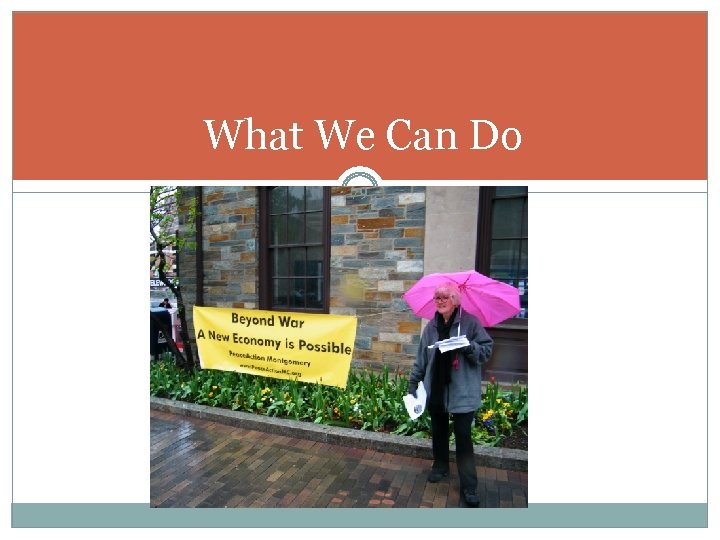 What We Can Do 79
 Policy Changes We Need 80 Close foreign bases End war profiteering Dramatically reduce military contracting and the outsourcing of war Leave Iraq and Afghanistan--completely Cut the military budget
 Close Foreign Bases 81 The Declaration of Independence criticizes the British "for quartering large bodies of armed troops among us" and "for protecting them. . . from punishment for any murders which they should commit on the inhabitants of these States. “ Foreign bases create enemies and make us less safe.
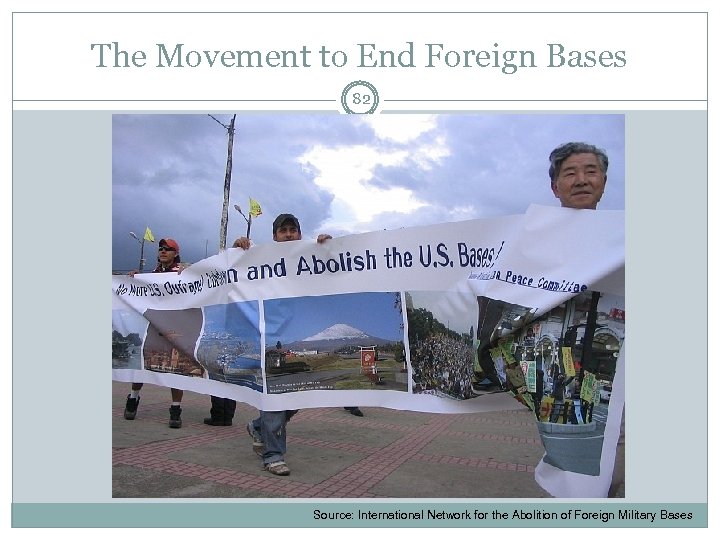 The Movement to End Foreign Bases 82 Source: International Network for the Abolition of Foreign Military Bases
 End War Profiteering 83 FDR , during World War II: "I don't want to see a single war millionaire created in the United States as a result of this world disaster. “ FDR: Supported broad increases in the corporate income tax; Raised the excess-profits tax to 90 percent; and Charged the Office of War Mobilization with the task of eliminating illegal profits.
 Stop Using Mercenaries and Other Contractors 84 No accountability Much more expensive Make war too easy
 Get Out of Iraq and Afghanistan 85 These wars: Are creating new enemies, making us less safe Are destroying our economy Are killing and maiming our young people—as well as hundreds of thousands of Iraqis, Afghans, and Pakistanis Leave no bases or contractors behind!
 Cut the Military Budget 86 We can cut the military budget substantially if we: Close foreign military bases End occupations and wars Stop war profiteering End use of mercenaries and other contractors
 How Much Should We Cut the Budget? 87 Rep. Barney Frank’s goal: Cut the military budget by 25%
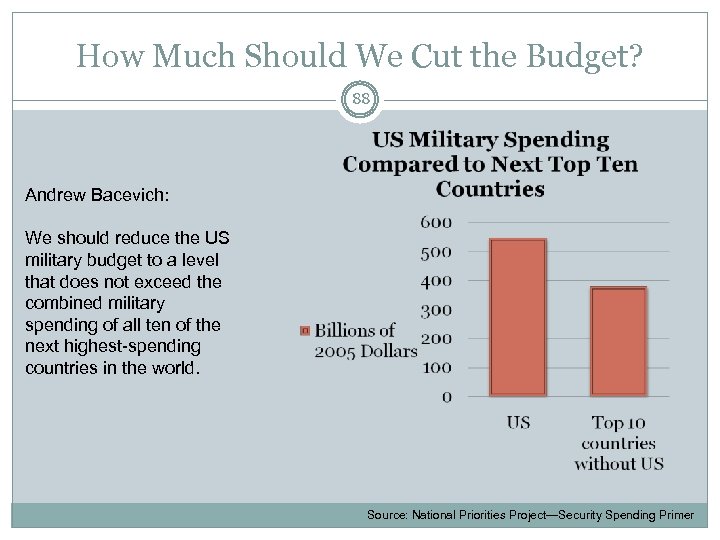 How Much Should We Cut the Budget? 88 Andrew Bacevich: We should reduce the US military budget to a level that does not exceed the combined military spending of all ten of the next highest-spending countries in the world. Source: National Priorities Project—Security Spending Primer
 Cut the Military Budget 89 The annual “Unified Security Budget” specifies ways to cut the military budget and refocus spending for real security. Check it out: www. fpif. org from Foreign Policy in Focus.
 The Cost of Militarism 90 Every gun that is made, every warship launched, every rocket fired signifies in the final sense, a theft from those who hunger and are not fed, those who are cold and are not clothed. This world in arms is not spending money alone. It is spending the sweat of its laborers, the genius of its scientists, the hopes of its children. This is not a way of life at all in any true sense. Under the clouds of war, it is humanity hanging on a cross of iron. Dwight Eisenhower
 Join the movement. Peace Demands Action. 91 • Foreign Policy in Focus LOBBYING • Center for Arms Control • National Priorities Project ELECTORAL WORK PUBLIC EDUCATION • Peace Action • Friends Committee on National Legislation • American Friends Service Committee • Veterans for Peace • Pax Christi MEDIA • Jewish Voice for Peace OUTREACH • Network of Spiritual Progressives STREET ACTIVISM • Progressive Democrats of America • etc, etc.
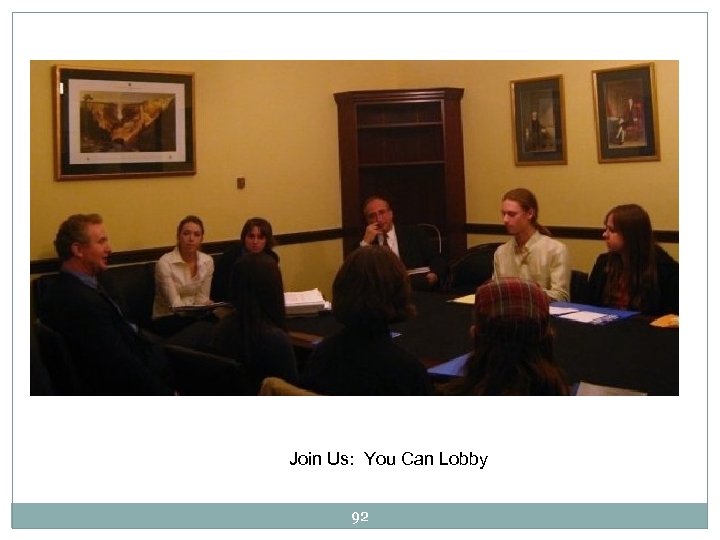 Join Us: You Can Lobby 92
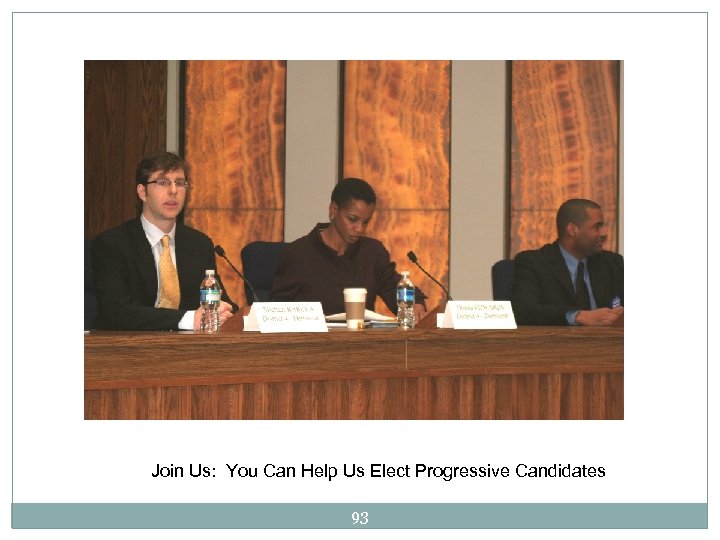 Join Us: You Can Help Us Elect Progressive Candidates 93
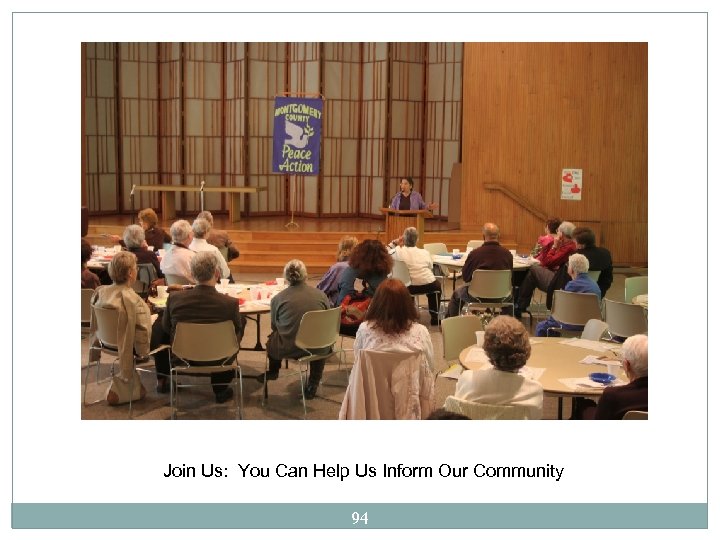 Join Us: You Can Help Us Inform Our Community 94
 Join Us: You Can Help Us with Media Work 95
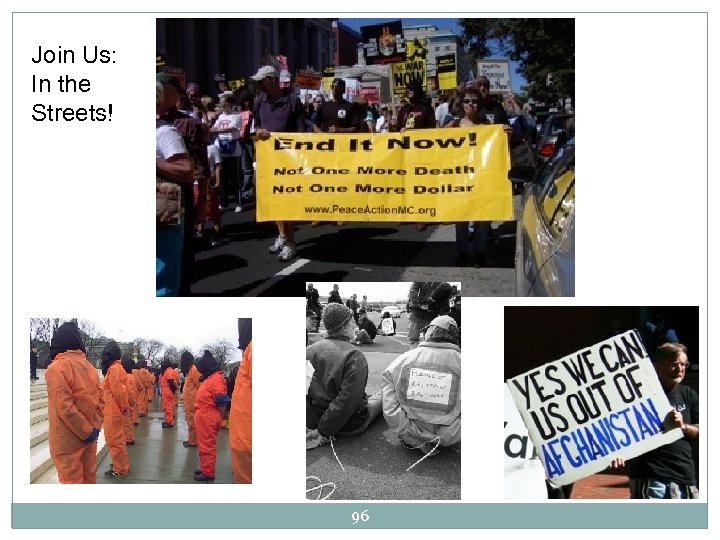 Join Us: In the Streets! 96
 Be A One-Minute Activist 97 Don’t feel like you can make that kind of time? There are other ways you can be part of the solution: Sign up for Peace Action Montgomery’s bi-monthly email letter—and take the actions we suggest Host an educational event through your church, community group, neighborhood Contribute: money is power Find what you can do—and do that
 Peace Action Montgomery www. Peace. Action. MC. org 98
 Sources 99 American Forces Press Service, http: //www. smallgovtimes. com/2009/05/proposed-militaryrecruiting-cuts-reasonable American Friends Service Committee, http: //www. countdowntowithdrawal. org/ Amnesty International, http: //www. amnesty. org. uk/uploads/documents/doc_20012. pdf Center for Arms Control and Non Proliferation, 2009 Briefing Book, http: //www. armscontrolcenter. org/assets/pdfs/fy 09_dod_request_briefing_book. pdf Center for Arms Control and Non-Proliferation, “Putting Afghanistan Troop Increases in Perspective, ” Dec. 2. http: //www. armscontrolcenter. org/policy/securityspending/articles/120209_afghanistan_costs_in_ perspective/ Center for Arms Control and Non-Proliferation, “Analysis of 2010 Defense Authorization Agreement, ” Oct. 21, 2009. http: //www. armscontrolcenter. org/policy/securityspending/articles/102109_c 111_fy 10_authconf/ Center for Arms Control and Nonproliferation: http: //www. armscontrolcenter. org/ Center on Budget and Policy Priorities, http: //www. cbpp. org/cms/index. cfm? fa=view&id=1258 Chalmers Johnson, America’s Empire of Bases. http: //www. tomdispatch. com/post/1181/chalmers_johnson_on_garrisoning_the_planet Commission on Wartime Contracting in Iraq and Afghanistan, Interim Report, June 2009: http: //www. wartimecontracting. gov/docs/CWC_Interim_Report_At_What_Cost_06 -10 -09. pdf
 Sources, continued 100 CNN , Congress to Probe Private Military Contractors in Afghanistan: http: //www. cnn. com/2009/WORLD/asiapcf/12/17/afghanistan. contractors. probe/ Congressional Joint Economic Committee Majority Report. War At Any Price? : http: //jec. senate. gov/index. cfm? Fuse. Action=Reports&Content. Record_id=c 6616188 -7 e 9 c 9 af 9 -716 c-d 2 ecbc 191 d 33&Region_id=&Issue_id= Congressional Research Service Report RL 33110, September 28, 2009 http: //www. fas. org/sgp/crs/natsec/RL 33110. pdf Congressional Research Service Report R 40764, September 21, 2009, http: //www. fas. org/sgp/crs/natsec/R 40764. pdf Congressional Research Service Report RL 33222, US Foreign Aid to Israel, http: //www. fas. org/sgp/crs/mideast/RL 33222. pdf Congressional Research Service: http: //fpc. state. gov/documents/organization/129342. pdf Anita Dancs, Mary Orisich, Suzanne Smith, The Military Costs of Securing Energy (National Priorities Project – October 2008) http: //www. nationalpriorities. org/auxiliary/energy_security/executive_summary. pdf Foreign Policy in Focus: http: //www. fpif. org/ Friends Committee on National Legislation, “Keeping Military Spending in Balance with the Nation’s Priorities, ” March 16, 2009. http: //www. fcnl. org/issues/item. php? item_id=3538&issue_id=19 Huck Gutman, http: //www. redrat. net/BUSH_WAR/mercenaries/index. htm#mercs Iraq Coalition Casualties: http: //icasualties. org/oif/ Jeremy Scahill, interviewed by Bill Moyers, June 2009. http: //www. organicconsumers. org/articles/article_18211. cfm
 Sources, continued 101 John Feffer, “Good War vs. Great Society, ” Foreign Policy in Focus, Sept. 22, 2009. http: //www. fpif. org/fpifzines/wb/6433 Joseph Stiglitz and Linda Bilmes, The Three Trillion Dollar War, Norton & Co. , 2008. Just Foreign Policy: http: //www. justforeignpolicy. org/iraqdeaths. html National Priorities Project: http: //www. nationalpriorities. org Newser: http: //www. newser. com/story/38814/pentagon-seeks-152 b-fighter-sale-to-israel. html Peace Corps Web Site, http: //www. peacecorps. gov/index. cfm? shell=resources. media. press. view&news_id=1452 Refugees International: http: //www. refugeesinternational. org/content/article/detail/9679 Right Web: Committee for the Liberation of Iraq: http: //www. rightweb. irconline. org/profile/Committee_for_the_Liberation_of_Iraq Robert Pollin and Heidi Garrett-Peltier , “The U. S. Employment Effects of Military and Domestic Spending Priorities , ” , Oct. 9, 2009: http: //www. fpif. org/pdf/0910 Jobs_report 1. pdf U. S. Budget: http: //www. whitehouse. gov/omb/budget/fy 2010/assets/summary. pdf. United States Navy Fact File, http: //www. navy. mil/navydata/fact_display. asp? cid=4200&tid=200&ct=4, accessed November 15, 2009. War Resisters League: http: //www. warresisters. org/ Widipedia: Lockheed Martin http: //en. wikipedia. org/wiki/Lockheed_Martin Ycharts: Lockheed Martin: http: //ycharts. com/companies/LMT
 The following slides are extras, originally developed for this presentation, but which I decided not to use. Some people may want to use these, however, depending on specific needs. 102
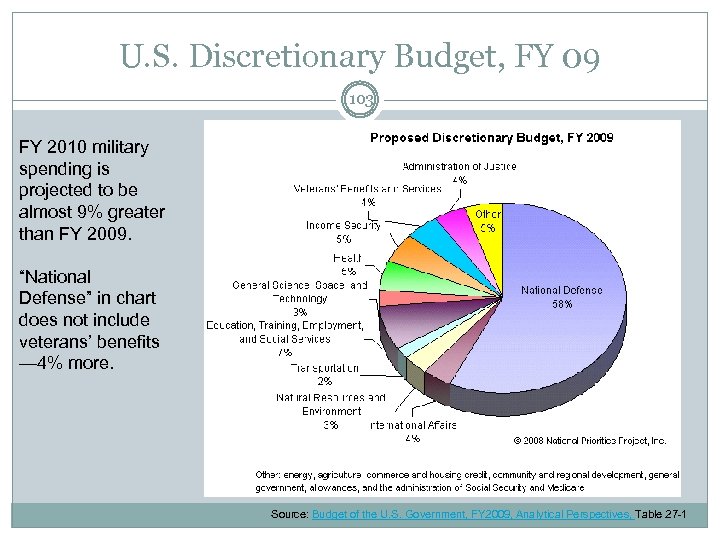 U. S. Discretionary Budget, FY 09 103 FY 2010 military spending is projected to be almost 9% greater than FY 2009. “National Defense” in chart does not include veterans’ benefits — 4% more. Source: Budget of the U. S. Government, FY 2009, Analytical Perspectives, Table 27 -1
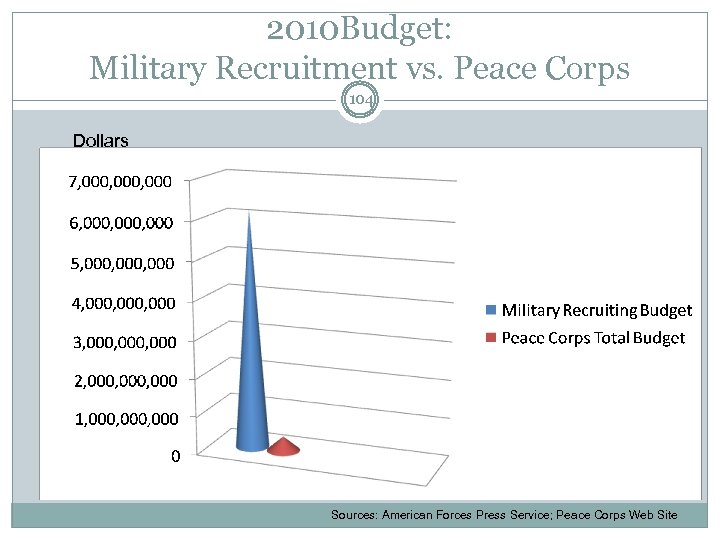 2010 Budget: Military Recruitment vs. Peace Corps 104 Dollars Sources: American Forces Press Service; Peace Corps Web Site
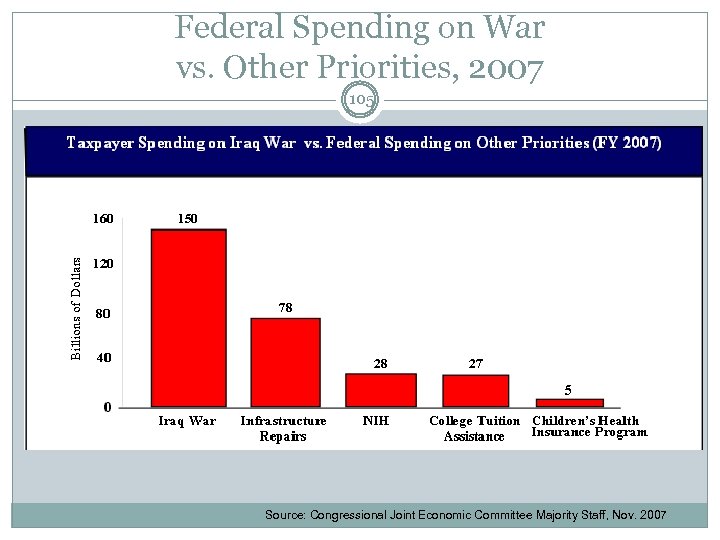 Federal Spending on War vs. Other Priorities, 2007 105 Source: Congressional Joint Economic Committee Majority Staff, Nov. 2007
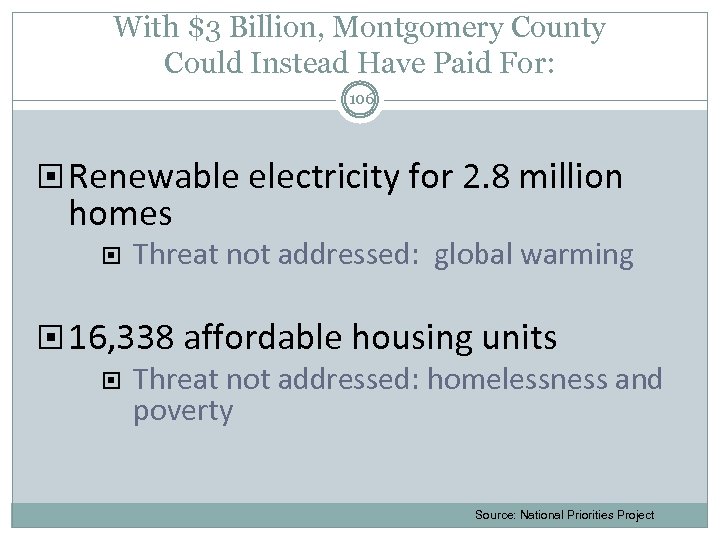 With $3 Billion, Montgomery County Could Instead Have Paid For: 106 Renewable electricity for 2. 8 million homes Threat not addressed: global warming 16, 338 affordable housing units Threat not addressed: homelessness and poverty Source: National Priorities Project
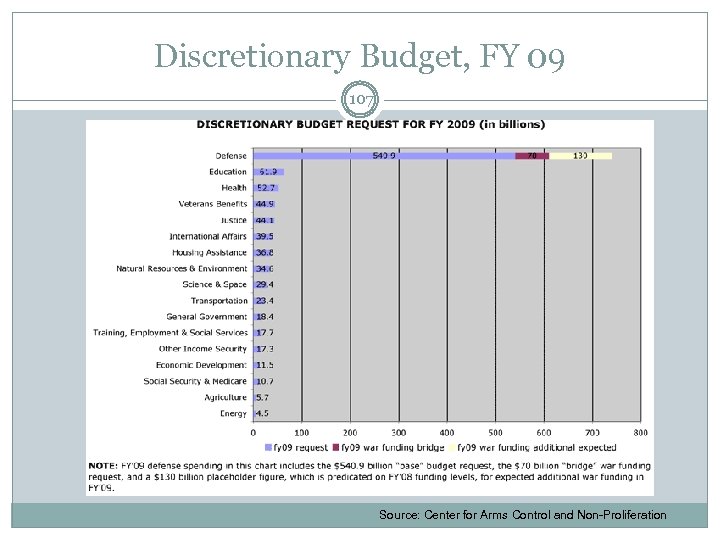 Discretionary Budget, FY 09 107 Source: Center for Arms Control and Non-Proliferation
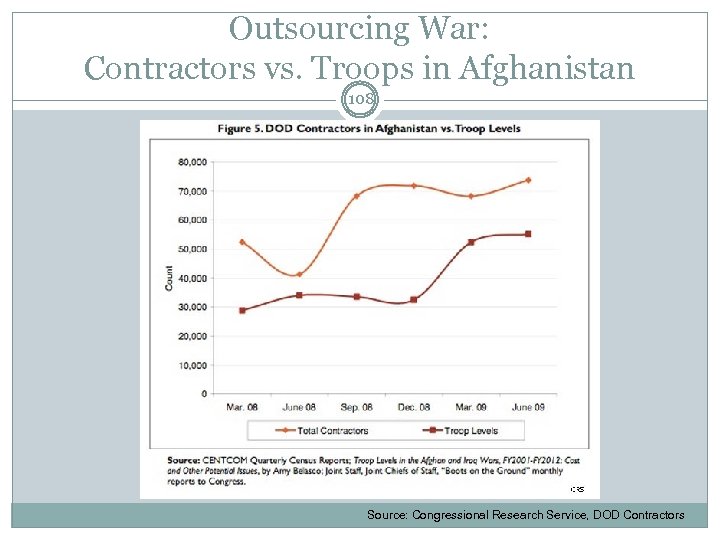 Outsourcing War: Contractors vs. Troops in Afghanistan 108 Source: Congressional Research Service, DOD Contractors
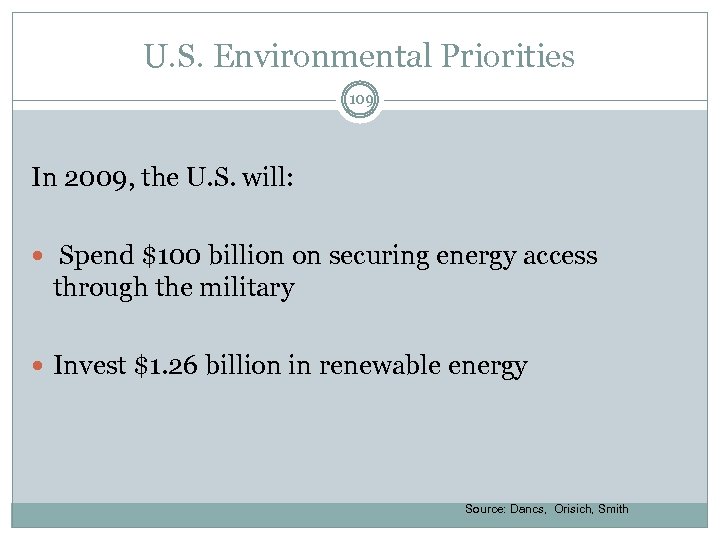 U. S. Environmental Priorities 109 In 2009, the U. S. will: Spend $100 billion on securing energy access through the military Invest $1. 26 billion in renewable energy Source: Dancs, Orisich, Smith
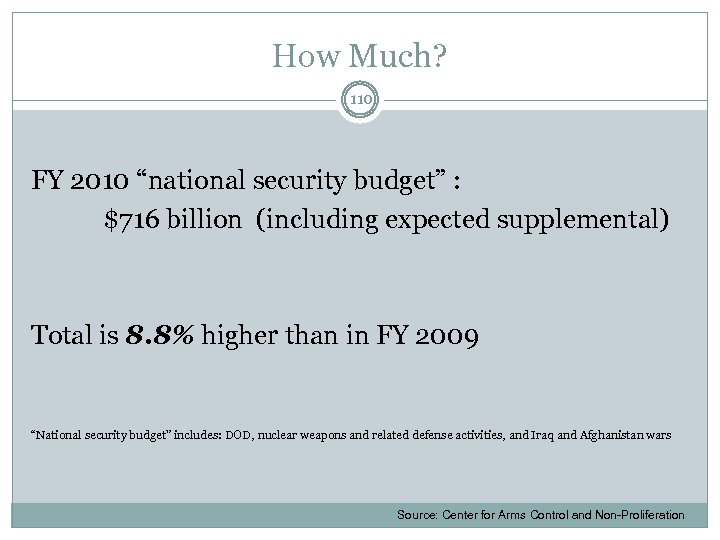 How Much? 110 FY 2010 “national security budget” : $716 billion (including expected supplemental) Total is 8. 8% higher than in FY 2009 “National security budget” includes: DOD, nuclear weapons and related defense activities, and Iraq and Afghanistan wars Source: Center for Arms Control and Non-Proliferation
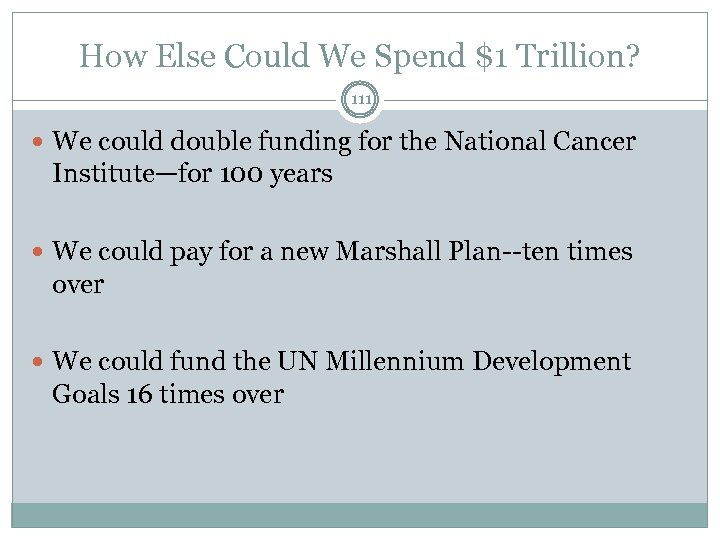 How Else Could We Spend $1 Trillion? 111 We could double funding for the National Cancer Institute—for 100 years We could pay for a new Marshall Plan--ten times over We could fund the UN Millennium Development Goals 16 times over
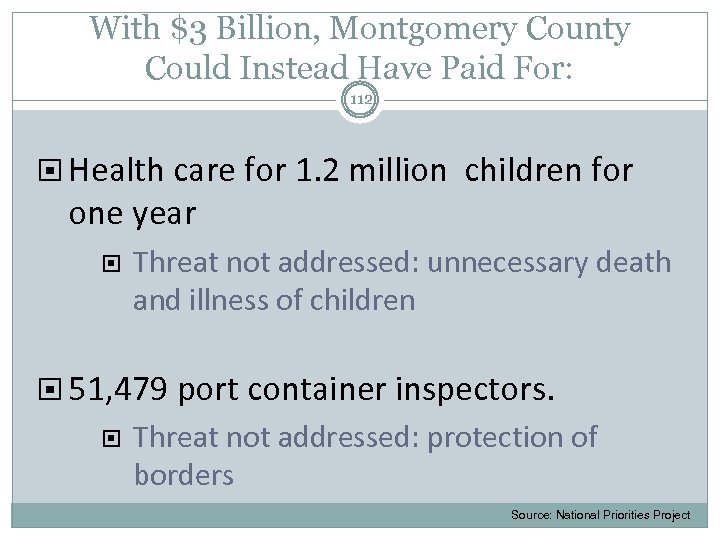 With $3 Billion, Montgomery County Could Instead Have Paid For: 112 Health care for 1. 2 million children for one year Threat not addressed: unnecessary death and illness of children 51, 479 port container inspectors. Threat not addressed: protection of borders Source: National Priorities Project
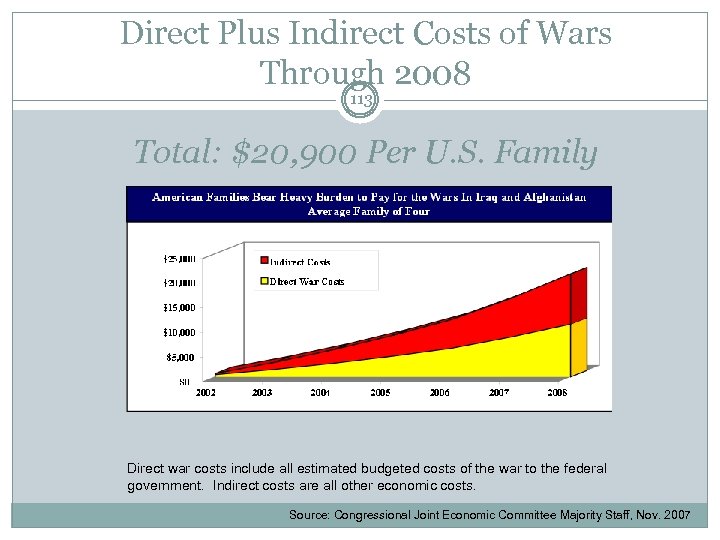 Direct Plus Indirect Costs of Wars Through 2008 113 Total: $20, 900 Per U. S. Family Direct war costs include all estimated budgeted costs of the war to the federal government. Indirect costs are all other economic costs. Source: Congressional Joint Economic Committee Majority Staff, Nov. 2007
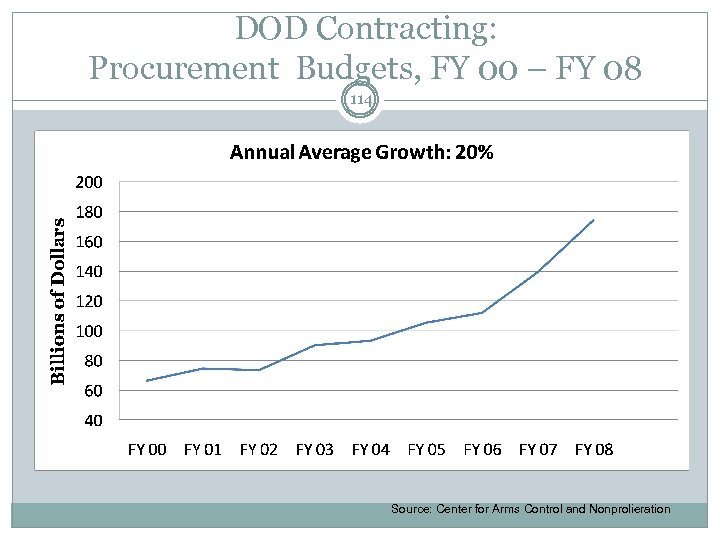 DOD Contracting: Procurement Budgets, FY 00 – FY 08 114 Source: Center for Arms Control and Nonprolieration
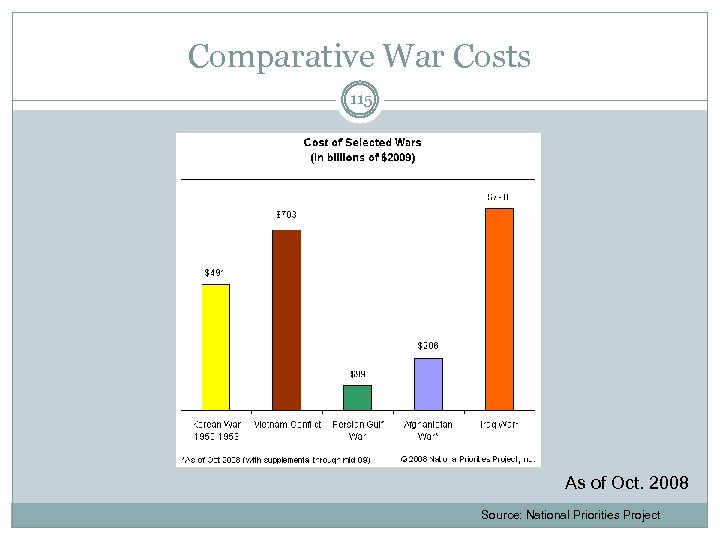 Comparative War Costs 115 As of Oct. 2008 Source: National Priorities Project
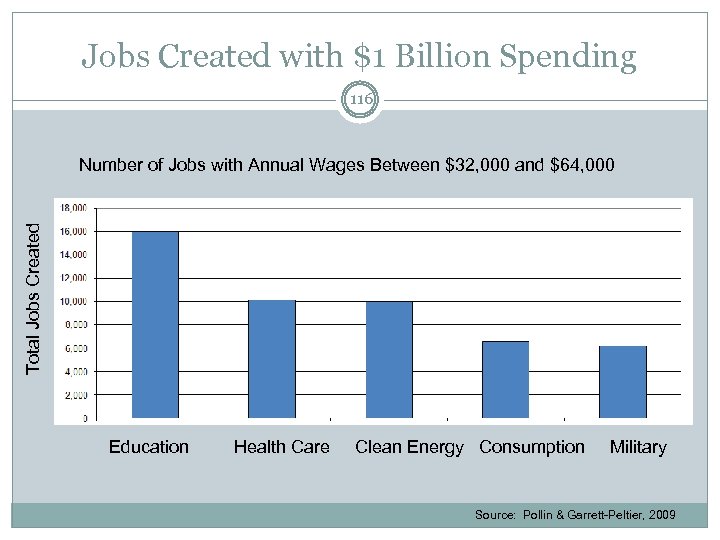 Jobs Created with $1 Billion Spending 116 Total Jobs Created Number of Jobs with Annual Wages Between $32, 000 and $64, 000 Education Health Care Clean Energy Consumption Military Source: Pollin & Garrett-Peltier, 2009