


 Скачать презентацию THE MIDDLE COLONIES Included New York Pennsylvania New
d1fc18150253c2e368305a087367c659.ppt
- Количество слайдов: 25
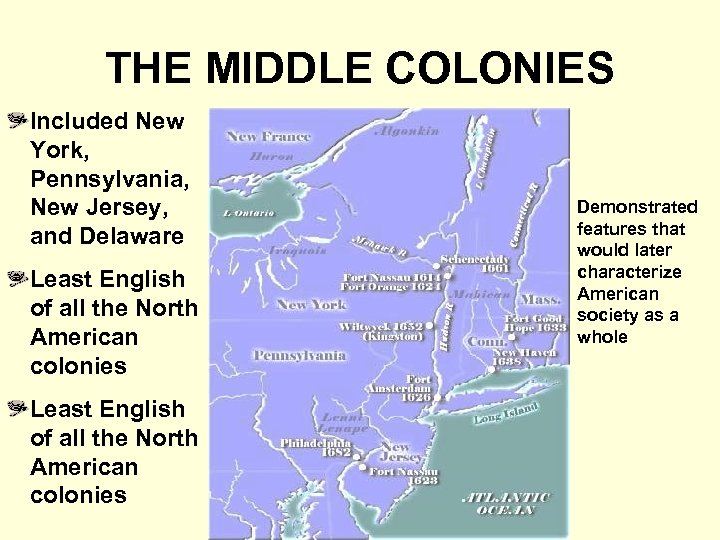 THE MIDDLE COLONIES Included New York, Pennsylvania, New Jersey, and Delaware Least English of all the North American colonies Demonstrated features that would later characterize American society as a whole
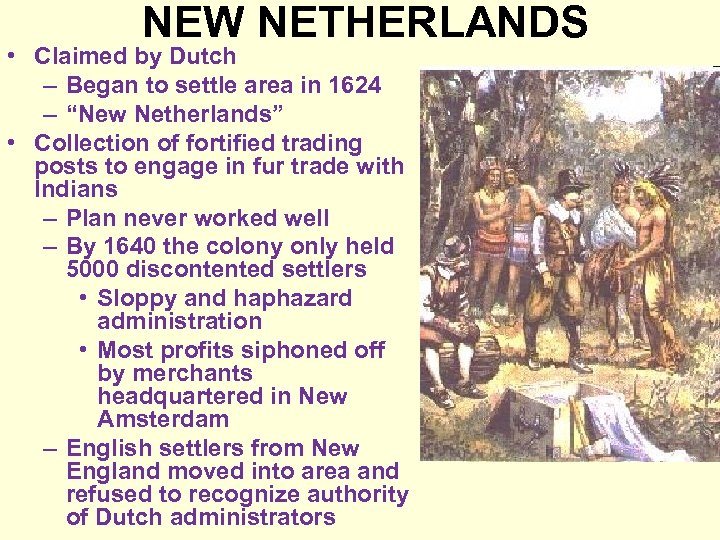 NEW NETHERLANDS • Claimed by Dutch – Began to settle area in 1624 – “New Netherlands” • Collection of fortified trading posts to engage in fur trade with Indians – Plan never worked well – By 1640 the colony only held 5000 discontented settlers • Sloppy and haphazard administration • Most profits siphoned off by merchants headquartered in New Amsterdam – English settlers from New England moved into area and refused to recognize authority of Dutch administrators
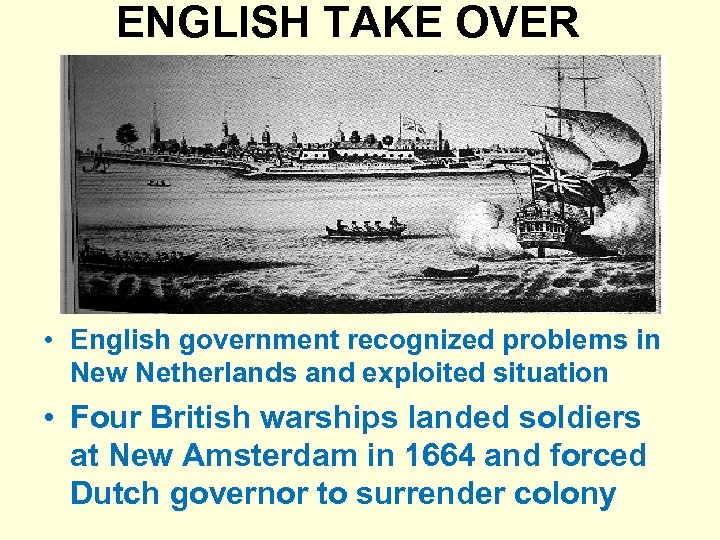 ENGLISH TAKE OVER • English government recognized problems in New Netherlands and exploited situation • Four British warships landed soldiers at New Amsterdam in 1664 and forced Dutch governor to surrender colony
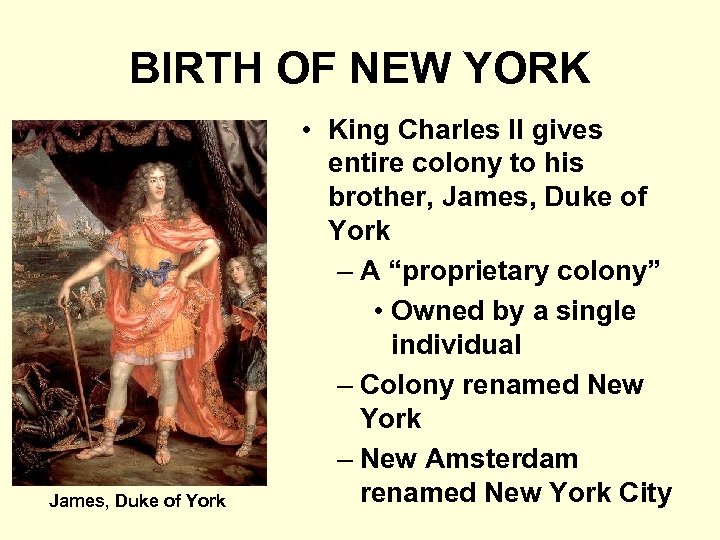 BIRTH OF NEW YORK James, Duke of York • King Charles II gives entire colony to his brother, James, Duke of York – A “proprietary colony” • Owned by a single individual – Colony renamed New York – New Amsterdam renamed New York City
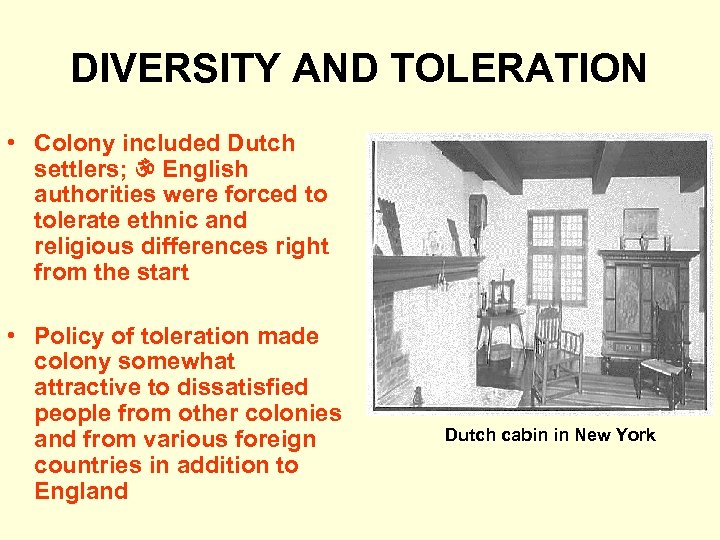 DIVERSITY AND TOLERATION • Colony included Dutch settlers; English authorities were forced to tolerate ethnic and religious differences right from the start • Policy of toleration made colony somewhat attractive to dissatisfied people from other colonies and from various foreign countries in addition to England Dutch cabin in New York
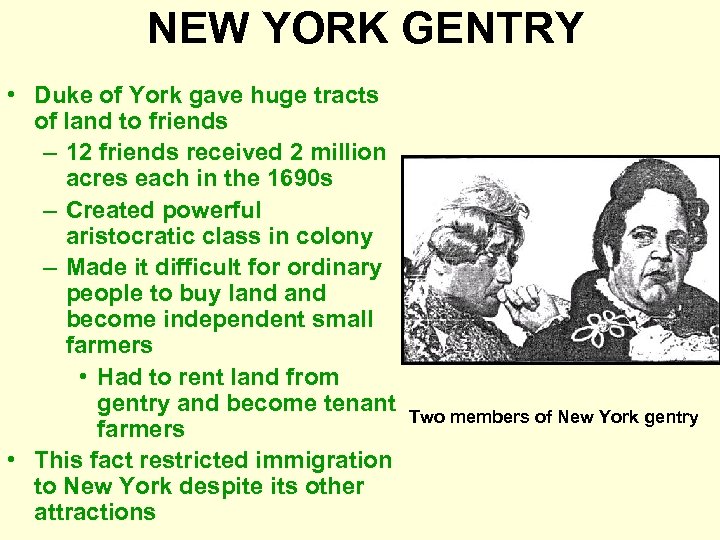 NEW YORK GENTRY • Duke of York gave huge tracts of land to friends – 12 friends received 2 million acres each in the 1690 s – Created powerful aristocratic class in colony – Made it difficult for ordinary people to buy land become independent small farmers • Had to rent land from gentry and become tenant farmers • This fact restricted immigration to New York despite its other attractions Two members of New York gentry
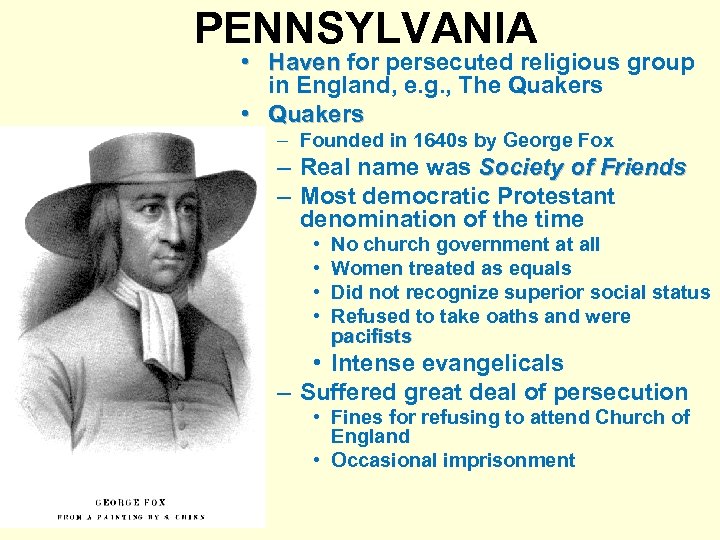 PENNSYLVANIA • Haven for persecuted religious group in England, e. g. , The Quakers • Quakers – Founded in 1640 s by George Fox – Real name was Society of Friends – Most democratic Protestant denomination of the time • • No church government at all Women treated as equals Did not recognize superior social status Refused to take oaths and were pacifists • Intense evangelicals – Suffered great deal of persecution • Fines for refusing to attend Church of England • Occasional imprisonment
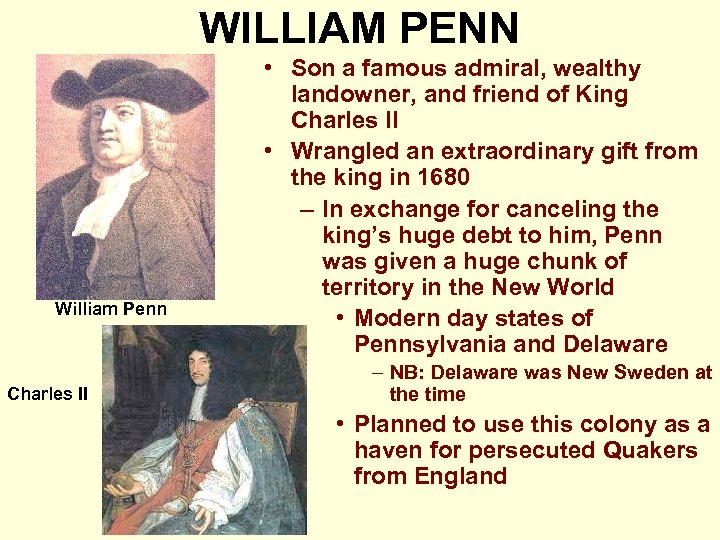 WILLIAM PENN William Penn Charles II • Son a famous admiral, wealthy landowner, and friend of King Charles II • Wrangled an extraordinary gift from the king in 1680 – In exchange for canceling the king’s huge debt to him, Penn was given a huge chunk of territory in the New World • Modern day states of Pennsylvania and Delaware – NB: Delaware was New Sweden at the time • Planned to use this colony as a haven for persecuted Quakers from England
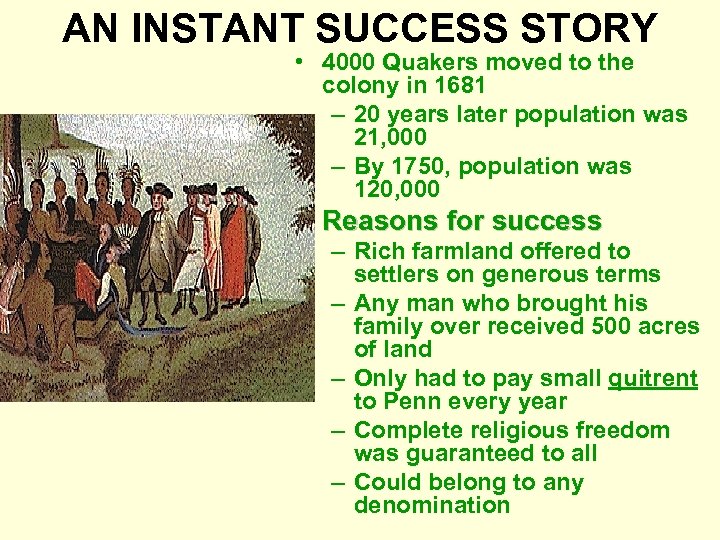 AN INSTANT SUCCESS STORY • 4000 Quakers moved to the colony in 1681 – 20 years later population was 21, 000 – By 1750, population was 120, 000 • Reasons for success – Rich farmland offered to settlers on generous terms – Any man who brought his family over received 500 acres of land – Only had to pay small quitrent to Penn every year – Complete religious freedom was guaranteed to all – Could belong to any denomination
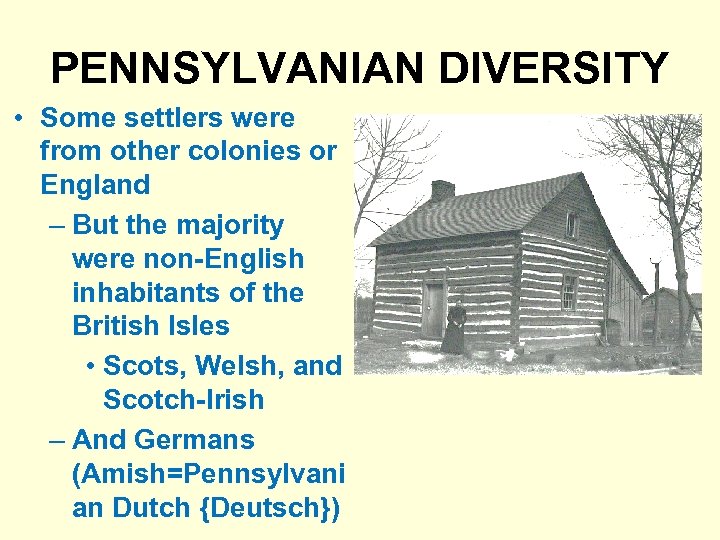 PENNSYLVANIAN DIVERSITY • Some settlers were from other colonies or England – But the majority were non-English inhabitants of the British Isles • Scots, Welsh, and Scotch-Irish – And Germans (Amish=Pennsylvani an Dutch {Deutsch})
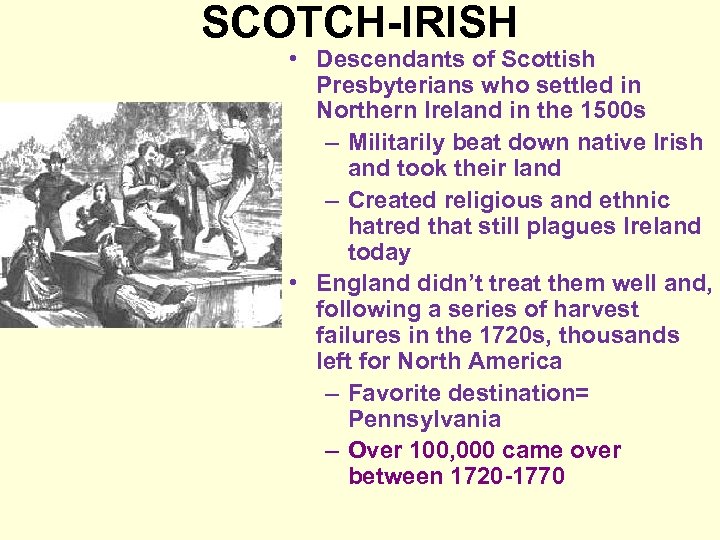 SCOTCH-IRISH • Descendants of Scottish Presbyterians who settled in Northern Ireland in the 1500 s – Militarily beat down native Irish and took their land – Created religious and ethnic hatred that still plagues Ireland today • England didn’t treat them well and, following a series of harvest failures in the 1720 s, thousands left for North America – Favorite destination= Pennsylvania – Over 100, 000 came over between 1720 -1770
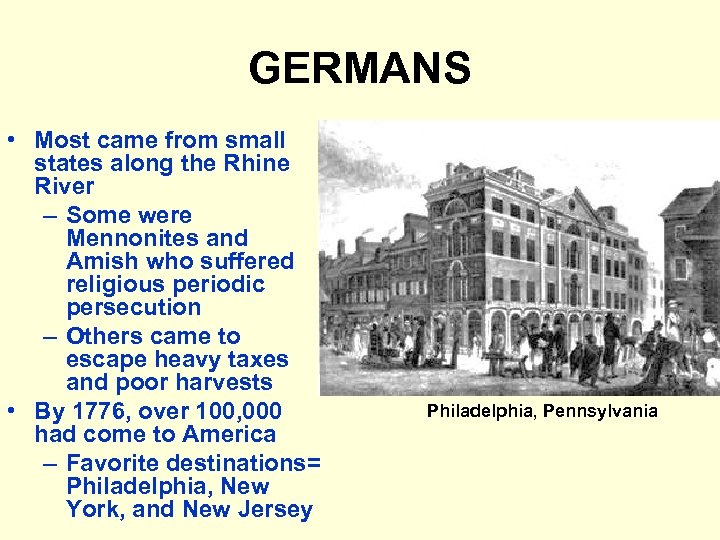 GERMANS • Most came from small states along the Rhine River – Some were Mennonites and Amish who suffered religious periodic persecution – Others came to escape heavy taxes and poor harvests • By 1776, over 100, 000 had come to America – Favorite destinations= Philadelphia, New York, and New Jersey Philadelphia, Pennsylvania
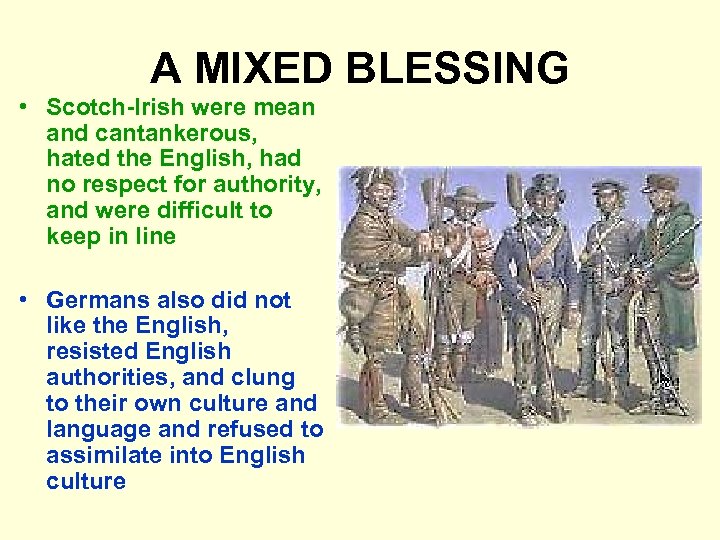 A MIXED BLESSING • Scotch-Irish were mean and cantankerous, hated the English, had no respect for authority, and were difficult to keep in line • Germans also did not like the English, resisted English authorities, and clung to their own culture and language and refused to assimilate into English culture
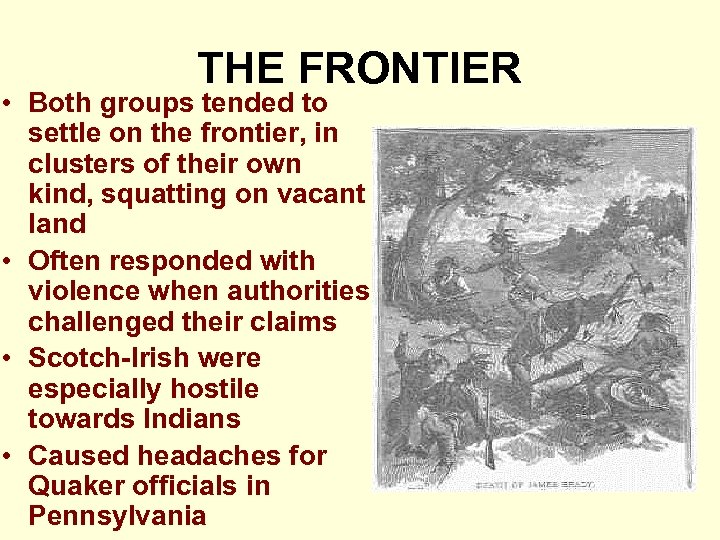 THE FRONTIER • Both groups tended to settle on the frontier, in clusters of their own kind, squatting on vacant land • Often responded with violence when authorities challenged their claims • Scotch-Irish were especially hostile towards Indians • Caused headaches for Quaker officials in Pennsylvania
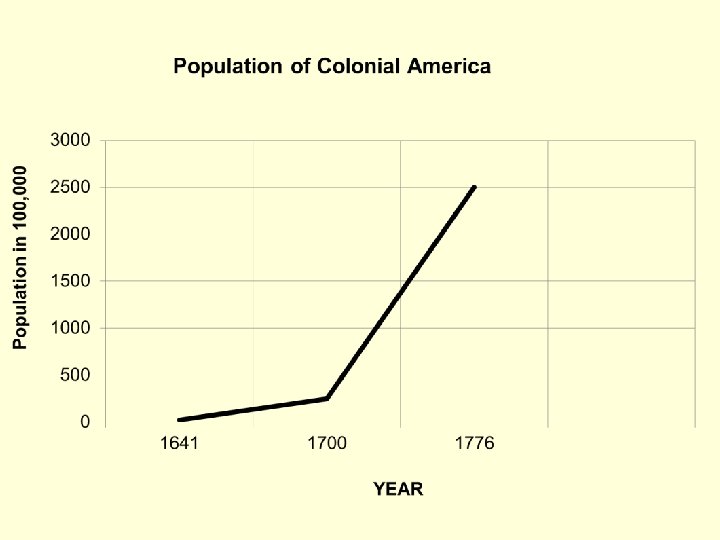
 REASONS • Immigration cannot explain all this growth – One historian has estimated that if immigration had been the only reason for population growth, the total population in 1776 would have been 400, 000—not 2. 5 million • Natural Increase was the most important source for the American population explosion…more births than deaths
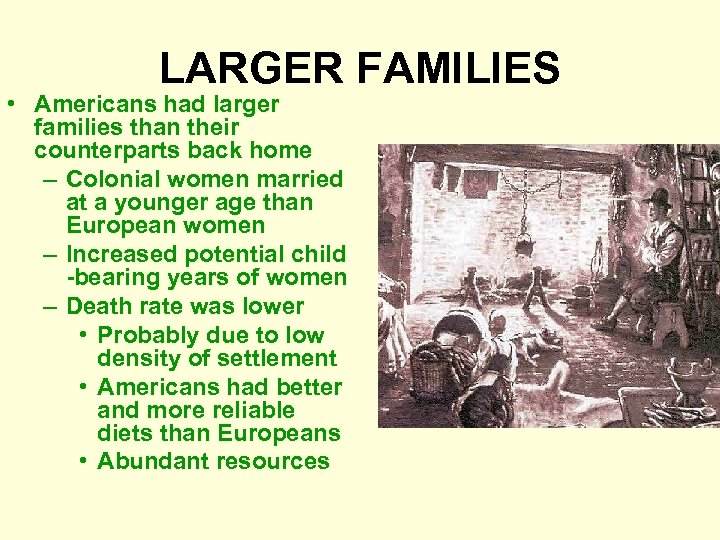 LARGER FAMILIES • Americans had larger families than their counterparts back home – Colonial women married at a younger age than European women – Increased potential child -bearing years of women – Death rate was lower • Probably due to low density of settlement • Americans had better and more reliable diets than Europeans • Abundant resources
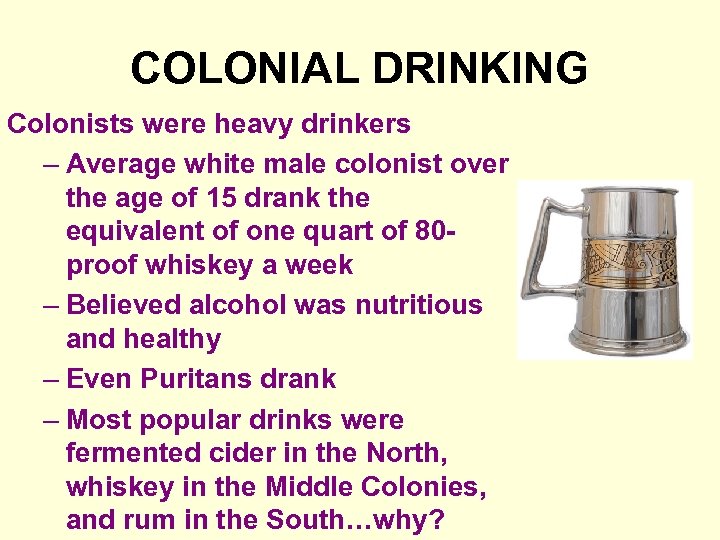 COLONIAL DRINKING Colonists were heavy drinkers – Average white male colonist over the age of 15 drank the equivalent of one quart of 80 proof whiskey a week – Believed alcohol was nutritious and healthy – Even Puritans drank – Most popular drinks were fermented cider in the North, whiskey in the Middle Colonies, and rum in the South…why?
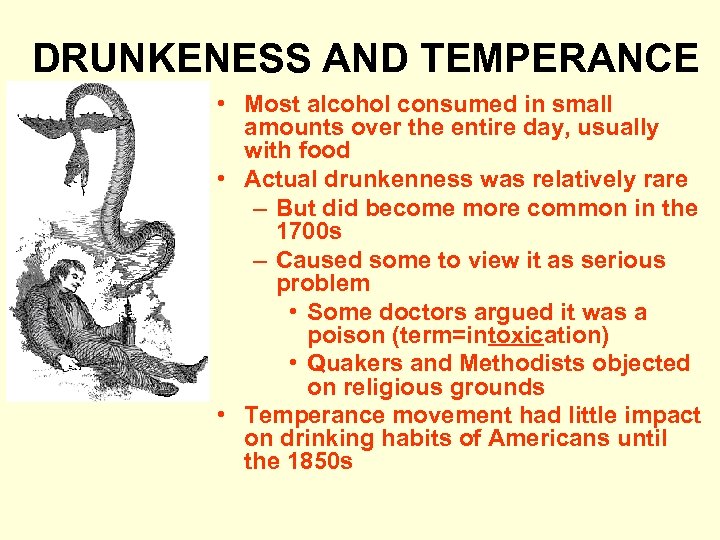 DRUNKENESS AND TEMPERANCE • Most alcohol consumed in small amounts over the entire day, usually with food • Actual drunkenness was relatively rare – But did become more common in the 1700 s – Caused some to view it as serious problem • Some doctors argued it was a poison (term=intoxication) • Quakers and Methodists objected on religious grounds • Temperance movement had little impact on drinking habits of Americans until the 1850 s
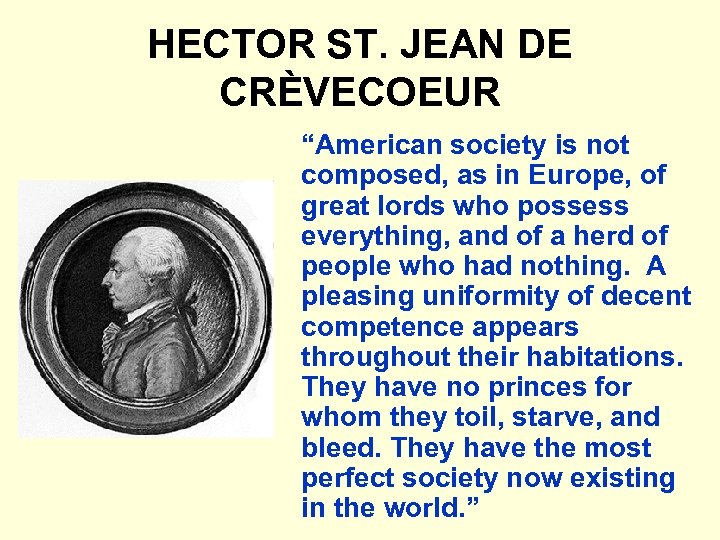 HECTOR ST. JEAN DE CRÈVECOEUR “American society is not composed, as in Europe, of great lords who possess everything, and of a herd of people who had nothing. A pleasing uniformity of decent competence appears throughout their habitations. They have no princes for whom they toil, starve, and bleed. They have the most perfect society now existing in the world. ”
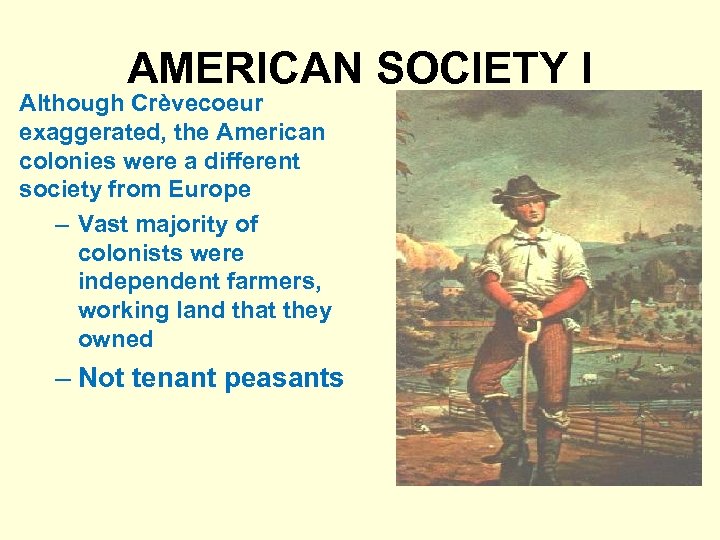 AMERICAN SOCIETY I Although Crèvecoeur exaggerated, the American colonies were a different society from Europe – Vast majority of colonists were independent farmers, working land that they owned – Not tenant peasants
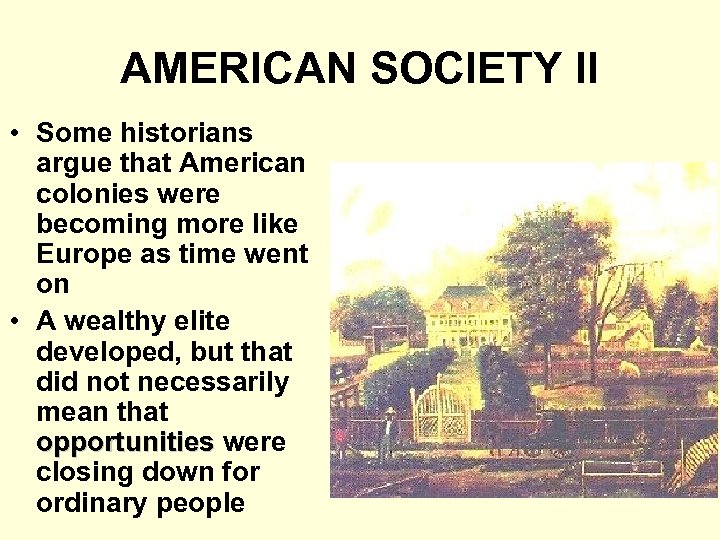 AMERICAN SOCIETY II • Some historians argue that American colonies were becoming more like Europe as time went on • A wealthy elite developed, but that did not necessarily mean that opportunities were closing down for ordinary people
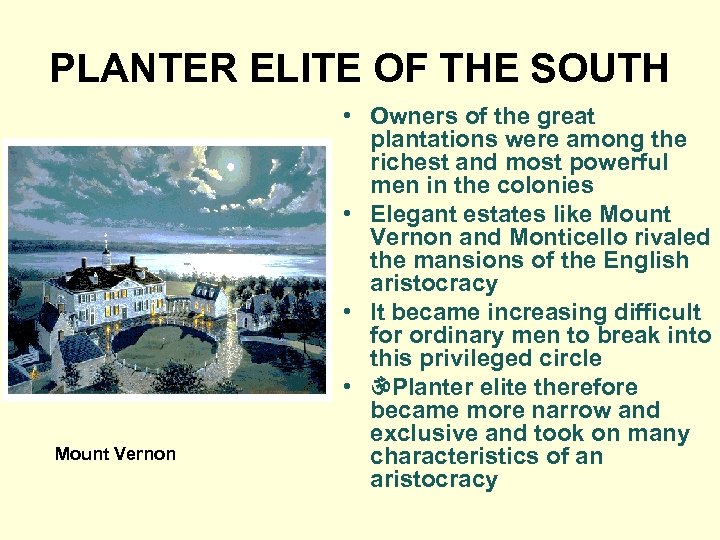 PLANTER ELITE OF THE SOUTH Mount Vernon • Owners of the great plantations were among the richest and most powerful men in the colonies • Elegant estates like Mount Vernon and Monticello rivaled the mansions of the English aristocracy • It became increasing difficult for ordinary men to break into this privileged circle • Planter elite therefore became more narrow and exclusive and took on many characteristics of an aristocracy
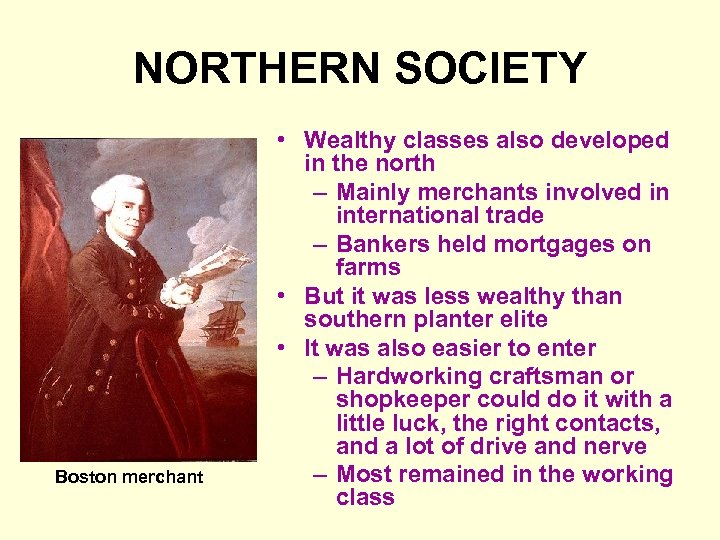 NORTHERN SOCIETY Boston merchant • Wealthy classes also developed in the north – Mainly merchants involved in international trade – Bankers held mortgages on farms • But it was less wealthy than southern planter elite • It was also easier to enter – Hardworking craftsman or shopkeeper could do it with a little luck, the right contacts, and a lot of drive and nerve – Most remained in the working class
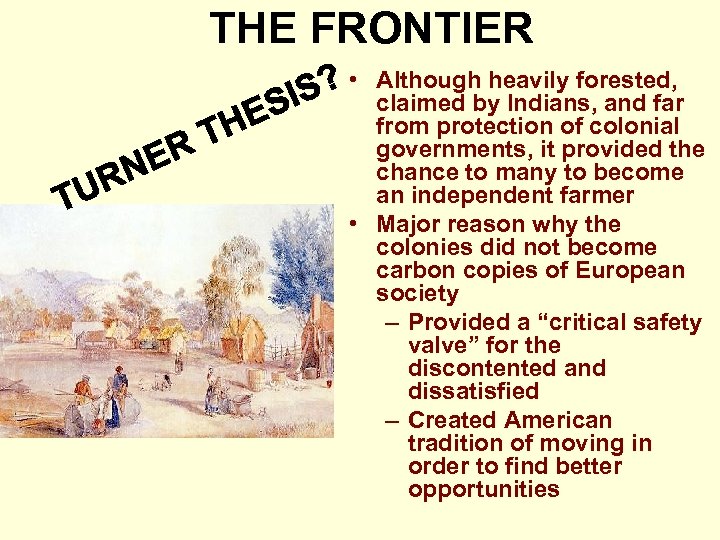 THE FRONTIER • Although heavily forested, claimed by Indians, and far from protection of colonial governments, it provided the chance to many to become an independent farmer • Major reason why the colonies did not become carbon copies of European society – Provided a “critical safety valve” for the discontented and dissatisfied – Created American tradition of moving in order to find better opportunities