


 Скачать презентацию The Metropolitan St Louis Grants Conference NSF The
1e500c65a81a77132b66d0e746cd037d.ppt
- Количество слайдов: 27
 The Metropolitan St. Louis Grants Conference NSF: The American Competitiveness Initiative January 10, 2007 Hosted by: Washington University in St. Louis, Missouri
 Along the Road Ahead • Backdrop – The overall “environment” includes: – – – – The political landscape Constrained budgets “War time” environment Disaster relief funding Deficit reduction Economic uncertainty Trade deficit 2
 Along the Road Ahead • There is some potential good news for R&D – The American Competitiveness Initiative 3
 4
4
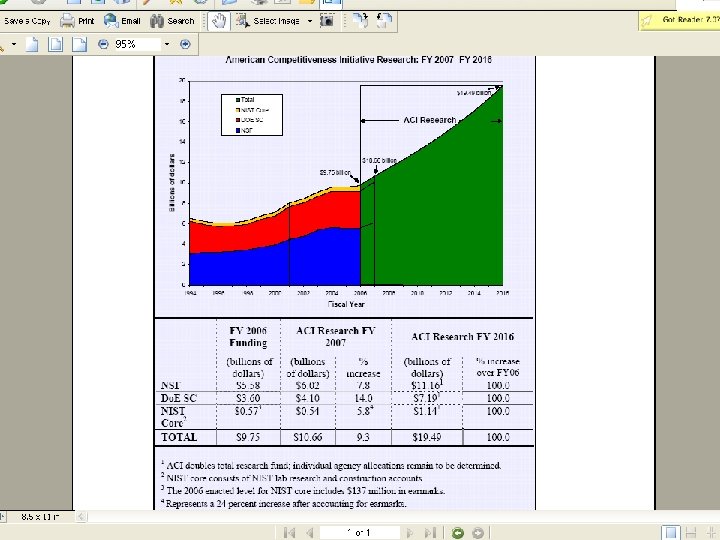
 American Competitiveness Initiative • Boost physical sciences • More attention to math and science education in public schools • Focus on applied energy research • Make Research and Experimentation Federal tax credit permanent But: • Flat lines NIH for next 5 years • Freezes NASA’s spending on earth and space sciences 5
 American Competitiveness Initiative Haves: • Double over 10 years: – DOE Science Programs – NSF NIST • DHS: +$18 million for research on nuclear detection and forensics • ED: Invest $326 million total in Math and Science Education (+51%) 6
 American Competitiveness Initiative Have Nots: • NIH: +1% – Some few winners: • + $110 million for bio defense fund • + $49 million for initiative on genes, environment and health • +15 million for new bridge award for young investigators • NASA: +1% – A host of science missions being placed on hold including: • The space interferometry telescope • A probe to search for Earth-like planets • Spacecraft to measure global precipitation • EPA: 6. 7% in S&T account • NOAA: $279 million 7
 Congress and the Budget: The Future Appears Bright 8
 NSF’s Key Congressional Players • House and Senate Budget Committees • Authorization Committees – House Science Committee/Sub-committees – Senate Health, Education, Labor & Pensions Committee – Senate Commerce, Science & Transportation Committee • Appropriations Committees – New committee structure: House and Senate – new staff 9
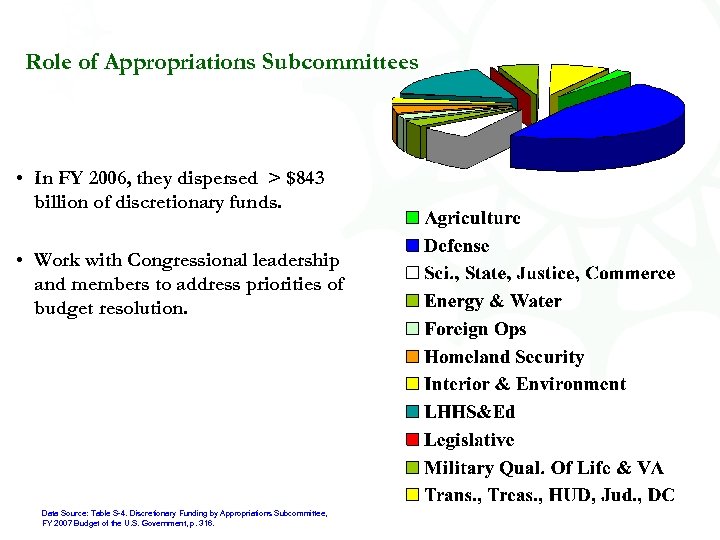 Role of Appropriations Subcommittees • In FY 2006, they dispersed > $843 billion of discretionary funds. • Work with Congressional leadership and members to address priorities of budget resolution. 10 Data Source: Table S-4. Discretionary Funding by Appropriations Subcommittee, FY 2007 Budget of the U. S. Government, p. 316.
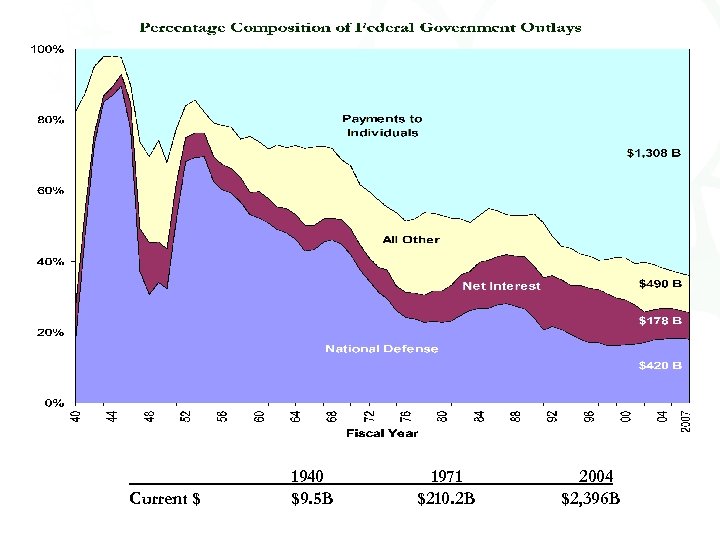 Current $ 1940 $9. 5 B 1971 $210. 2 B 2004 $2, 396 B 11
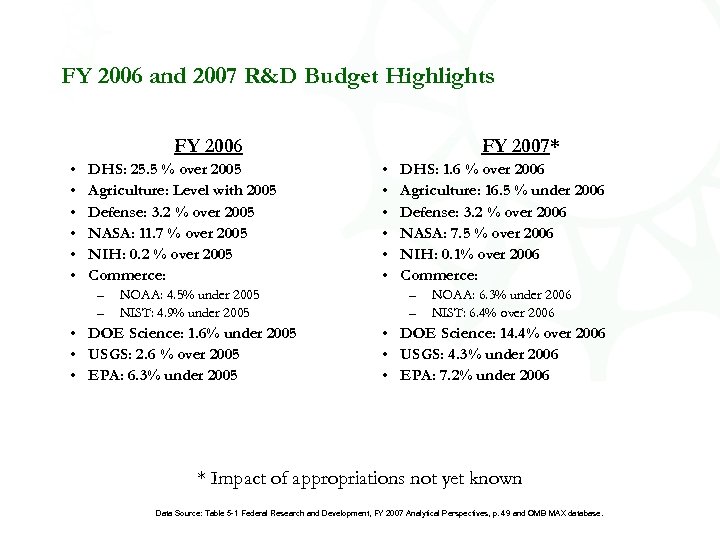 FY 2006 and 2007 R&D Budget Highlights FY 2006 • • • DHS: 25. 5 % over 2005 Agriculture: Level with 2005 Defense: 3. 2 % over 2005 NASA: 11. 7 % over 2005 NIH: 0. 2 % over 2005 Commerce: – – NOAA: 4. 5% under 2005 NIST: 4. 9% under 2005 • DOE Science: 1. 6% under 2005 • USGS: 2. 6 % over 2005 • EPA: 6. 3% under 2005 FY 2007* • • • DHS: 1. 6 % over 2006 Agriculture: 16. 5 % under 2006 Defense: 3. 2 % over 2006 NASA: 7. 5 % over 2006 NIH: 0. 1% over 2006 Commerce: – – NOAA: 6. 3% under 2006 NIST: 6. 4% over 2006 • DOE Science: 14. 4% over 2006 • USGS: 4. 3% under 2006 • EPA: 7. 2% under 2006 * Impact of appropriations not yet known 12 Data Source: Table 5 -1 Federal Research and Development, FY 2007 Analytical Perspectives, p. 49 and OMB MAX database.
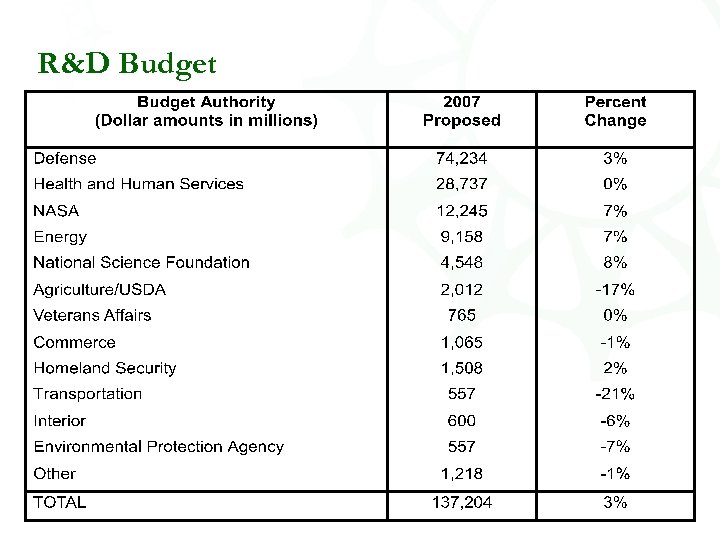 R&D Budget 13
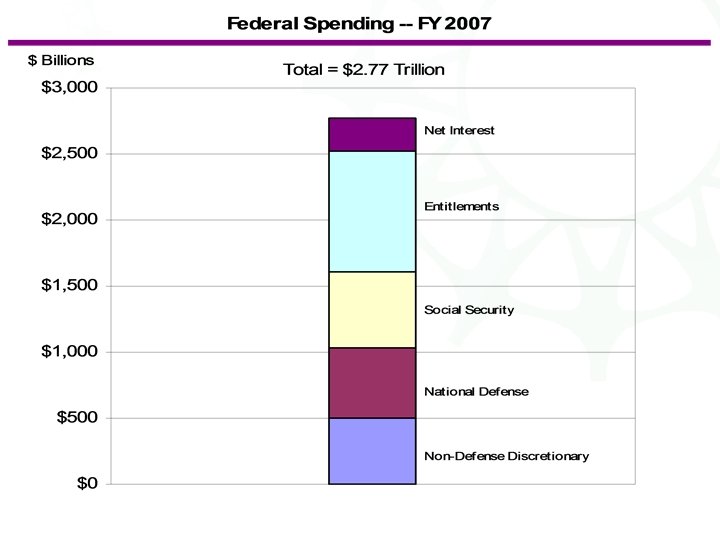 14
14
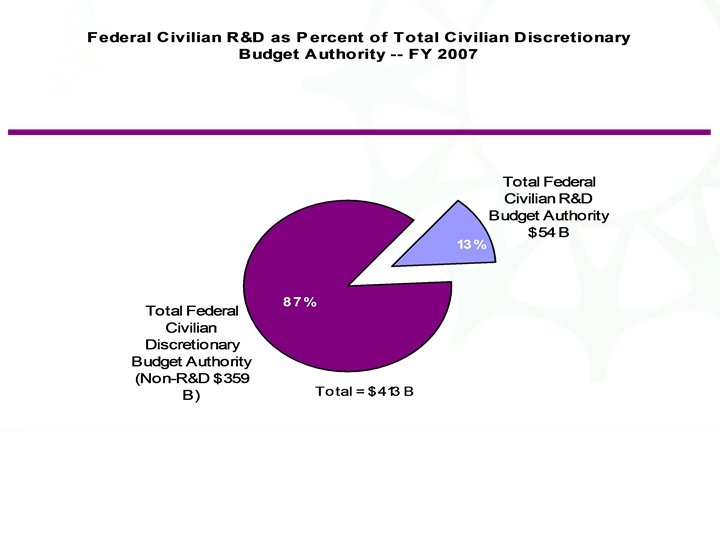 15
15
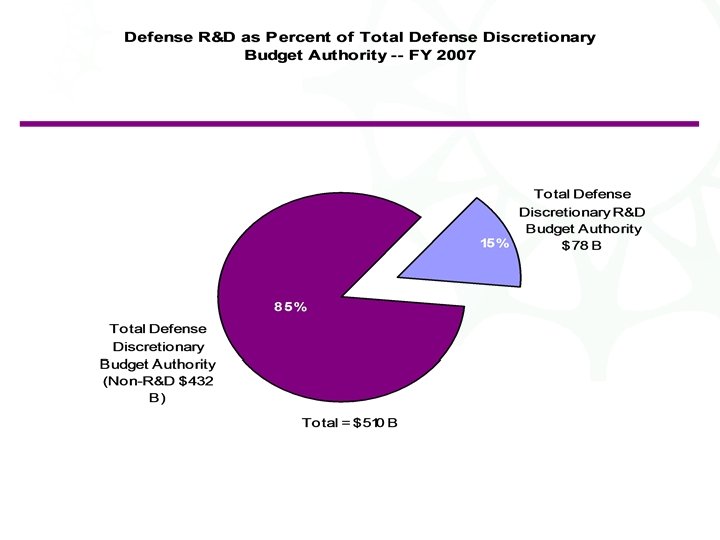 16
16
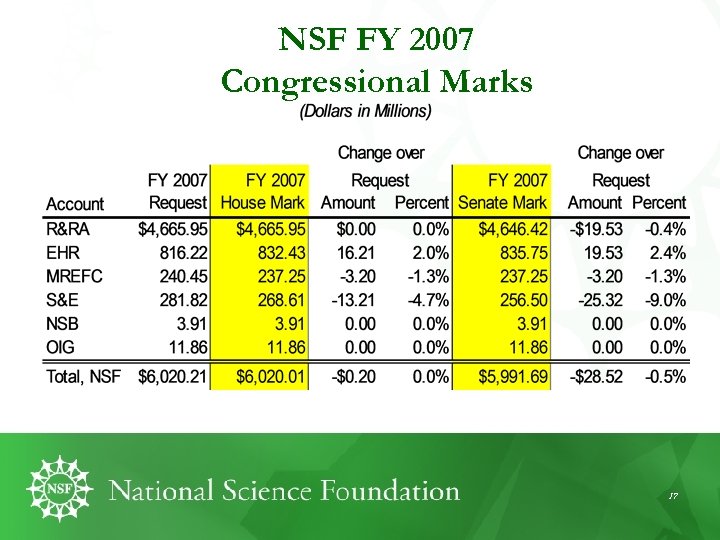 NSF FY 2007 Congressional Marks 17
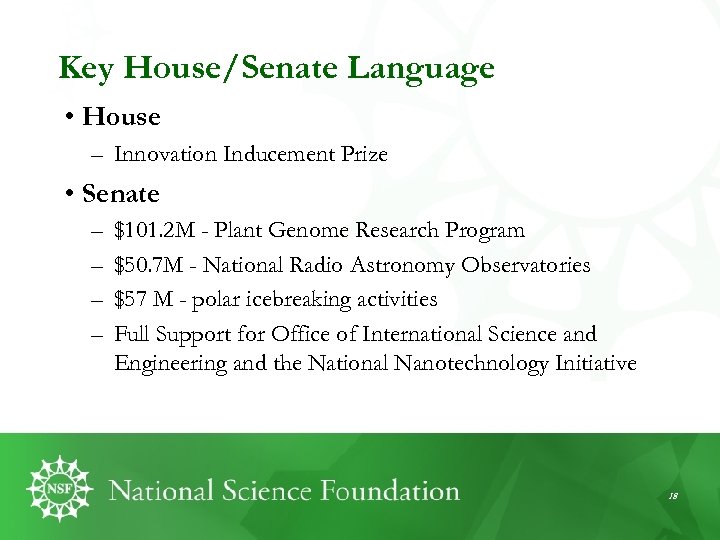 Key House/Senate Language • House – Innovation Inducement Prize • Senate – – $101. 2 M - Plant Genome Research Program $50. 7 M - National Radio Astronomy Observatories $57 M - polar icebreaking activities Full Support for Office of International Science and Engineering and the National Nanotechnology Initiative 18
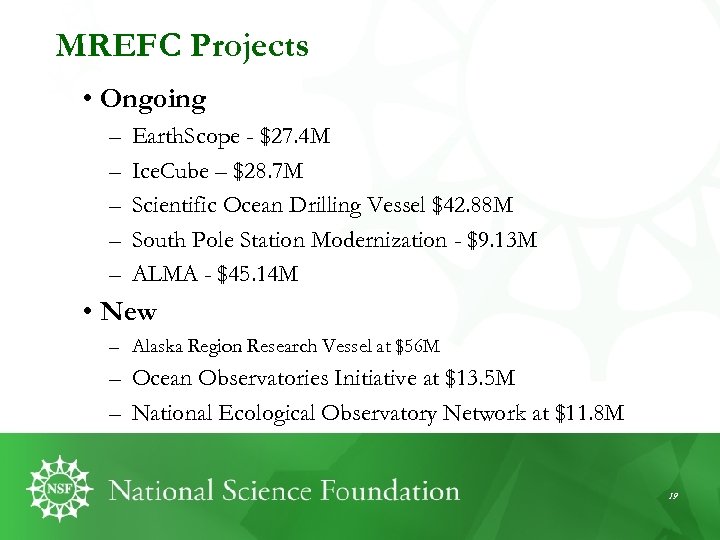 MREFC Projects • Ongoing – – – Earth. Scope - $27. 4 M Ice. Cube – $28. 7 M Scientific Ocean Drilling Vessel $42. 88 M South Pole Station Modernization - $9. 13 M ALMA - $45. 14 M • New – Alaska Region Research Vessel at $56 M – Ocean Observatories Initiative at $13. 5 M – National Ecological Observatory Network at $11. 8 M 19
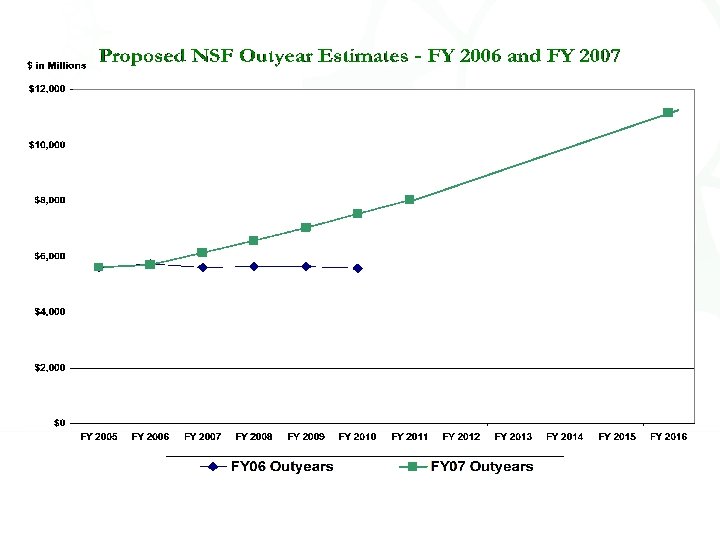
 President’s American Competitiveness Initiative Double the NSF budget over 10 years 20 Cover image credit: Eric J. Heller, Harvard University
 21
21
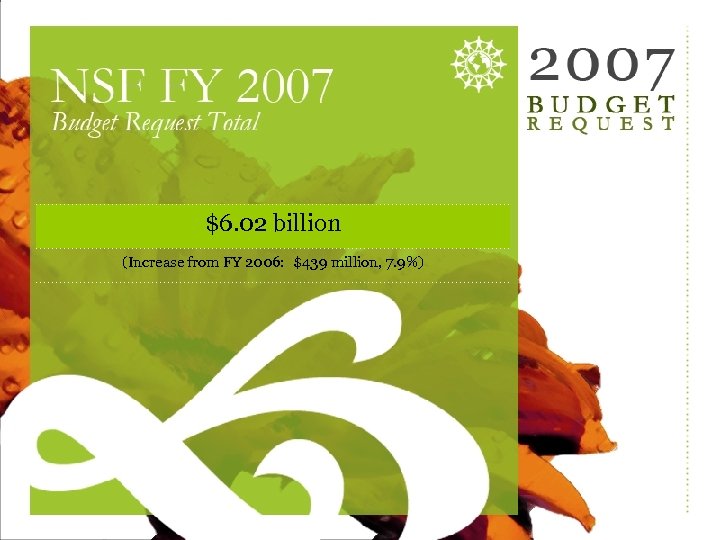 $6. 02 billion (Increase from FY 2006: $439 million, 7. 9%) 22
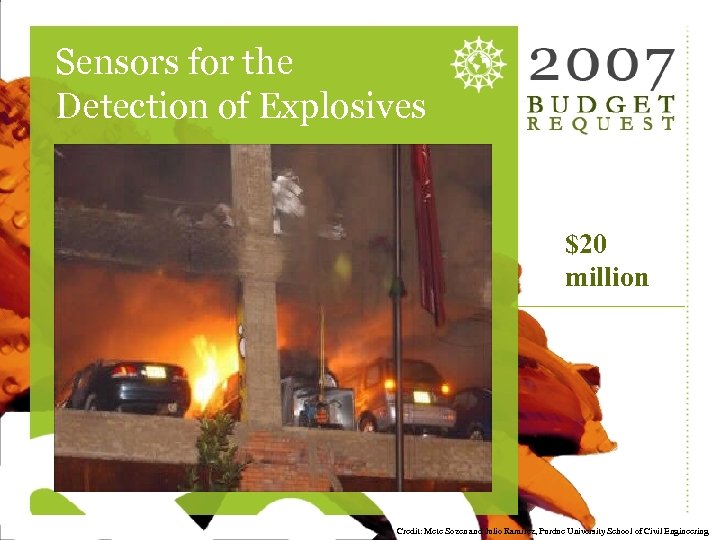 Sensors for the Detection of Explosives $20 million 23 Credit: Mete Sozen and Julio Ramirez, Purdue University School of Civil Engineering
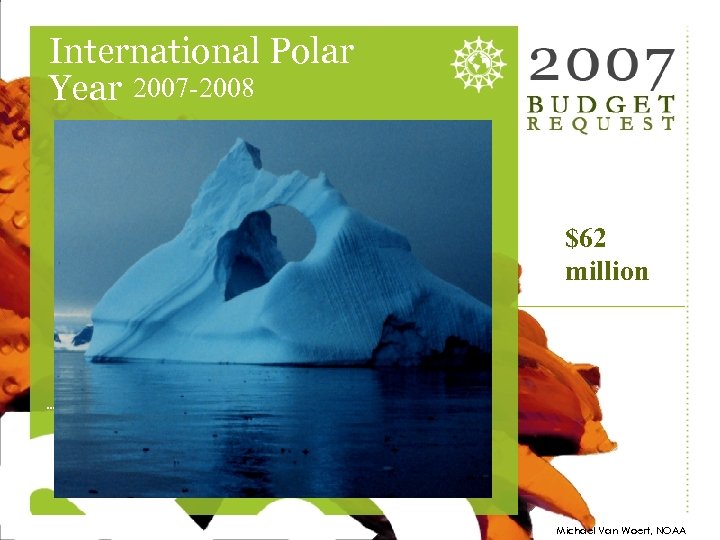 International Polar Year 2007 -2008 $62 million 24 Michael Van Woert, NOAA
 Science Metrics $6. 8 million 25
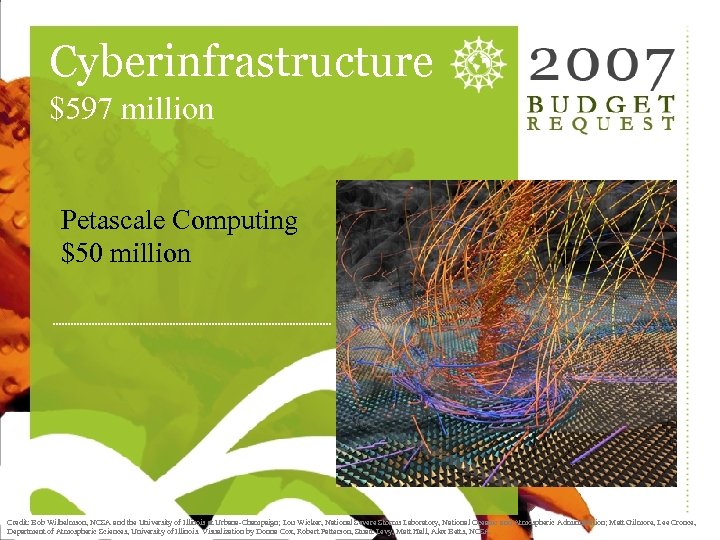 Cyberinfrastructure $597 million Petascale Computing $50 million 26 Credit: Bob Wilhelmson, NCSA and the University of Illinois at Urbana-Champaign; Lou Wicker, National Severe Storms Laboratory, National Oceanic and Atmospheric Administration; Matt Gilmore, Lee Cronce, Department of Atmospheric Sciences, University of Illinois. Visualization by Donna Cox, Robert Patterson, Stuart Levy, Matt Hall, Alex Betts, NCSA.
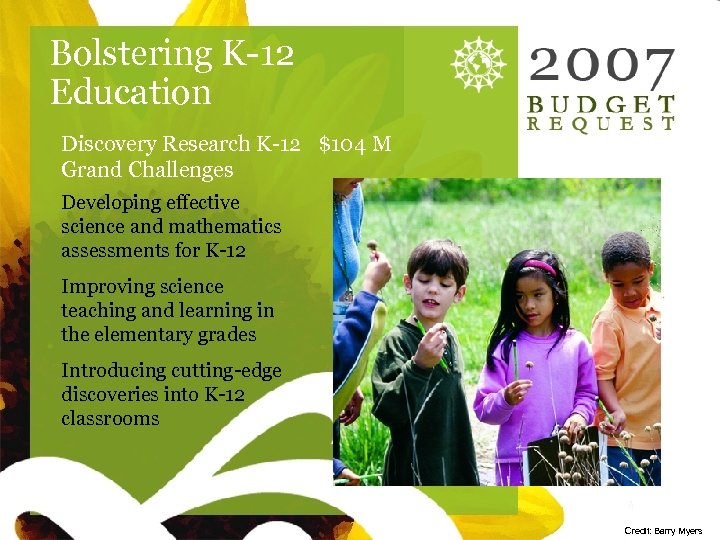 Bolstering K-12 Education Discovery Research K-12 $104 M Grand Challenges Developing effective science and mathematics assessments for K-12 Improving science teaching and learning in the elementary grades Introducing cutting-edge discoveries into K-12 classrooms 27 Credit: Barry Myers