


 Скачать презентацию The Mathematics of the Electoral College Part II
c7ccc0c2bf99fab2061f2c03969d5fb0.ppt
- Количество слайдов: 32
 The Mathematics of the Electoral College (Part II) E. Arthur Robinson, Jr. Dec 3, 2010
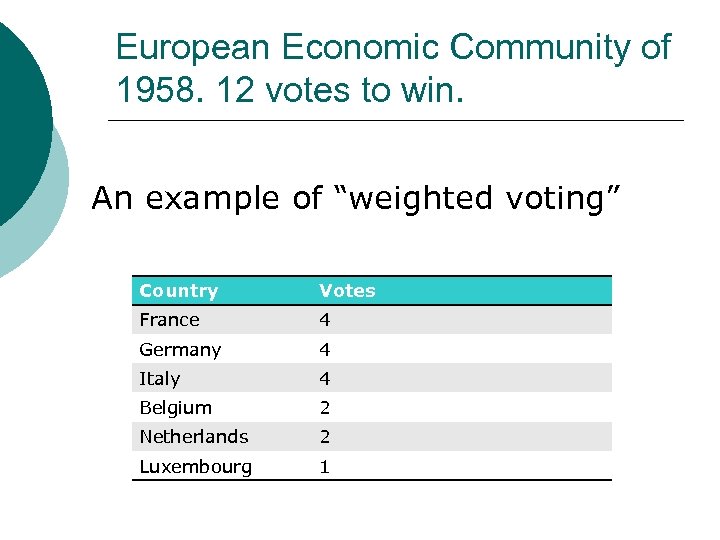 European Economic Community of 1958. 12 votes to win. An example of “weighted voting” Country Votes France 4 Germany 4 Italy 4 Belgium 2 Netherlands 2 Luxembourg 1
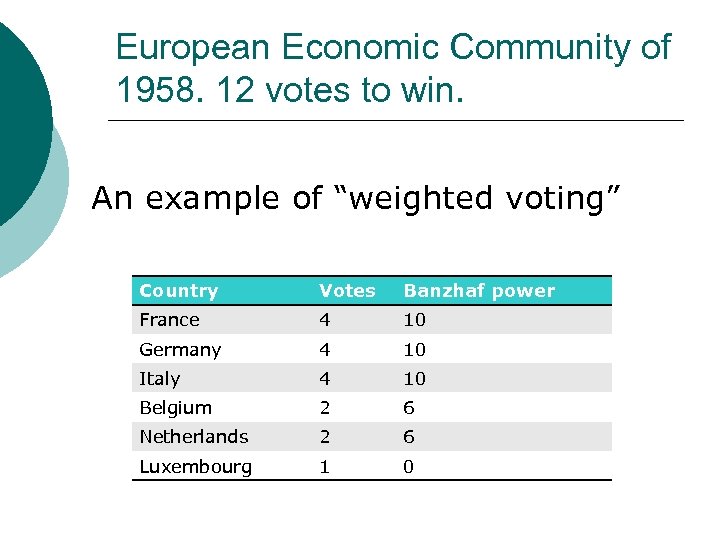 European Economic Community of 1958. 12 votes to win. An example of “weighted voting” Country Votes Banzhaf power France 4 10 Germany 4 10 Italy 4 10 Belgium 2 6 Netherlands 2 6 Luxembourg 1 0
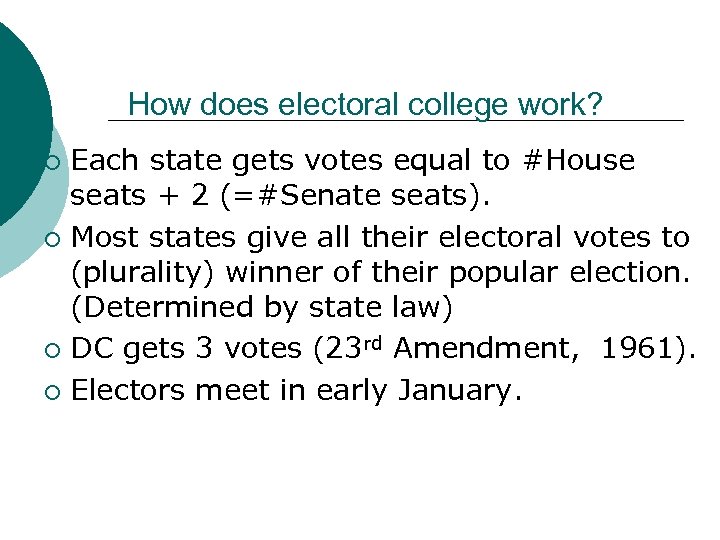 How does electoral college work? Each state gets votes equal to #House seats + 2 (=#Senate seats). ¡ Most states give all their electoral votes to (plurality) winner of their popular election. (Determined by state law) ¡ DC gets 3 votes (23 rd Amendment, 1961). ¡ Electors meet in early January. ¡
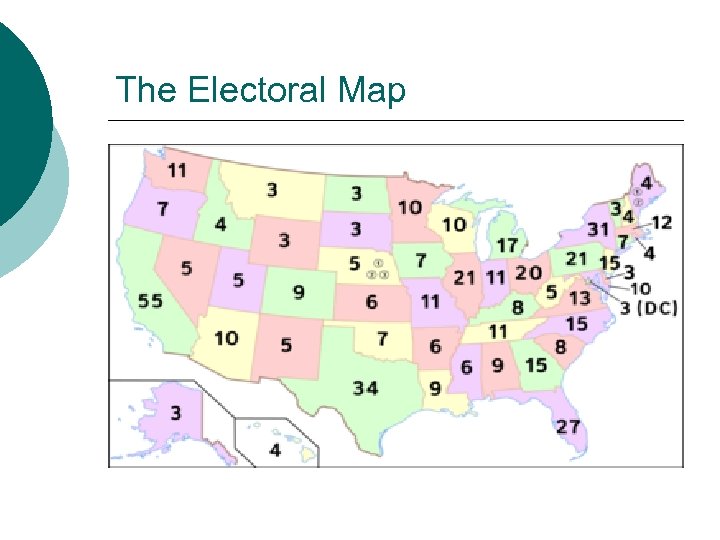 The Electoral Map
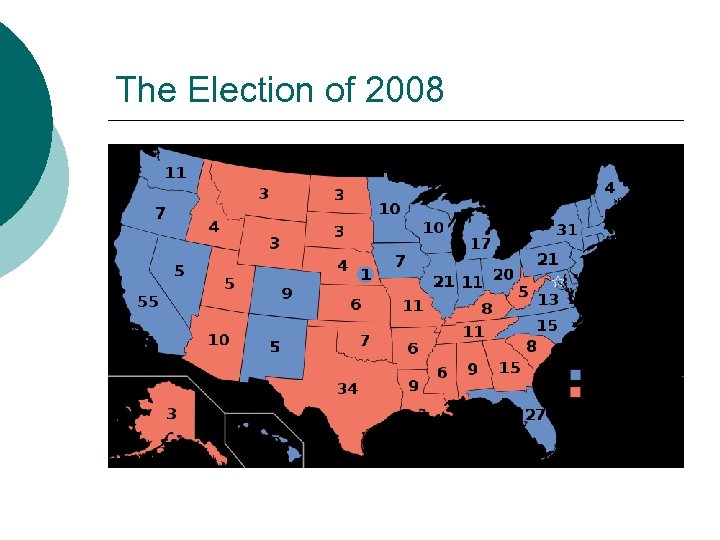 The Election of 2008
 Is Electoral College weighted voting? ¡ Yes --- if you think of states as voters.
 Is Electoral College weighted voting? ¡ ¡ Yes --- if you think of states as voters. But…
 Is Electoral College weighted voting? ¡ ¡ ¡ Yes --- if you think of states as voters. But… No --- if you think of people as voters.
 Is Electoral College weighted voting? ¡ ¡ Yes --- if you think of states as voters. But… No --- if you think of people as voters. ¡ Nevertheless, even in this case you can estimate Banzhaf power of voters ¡
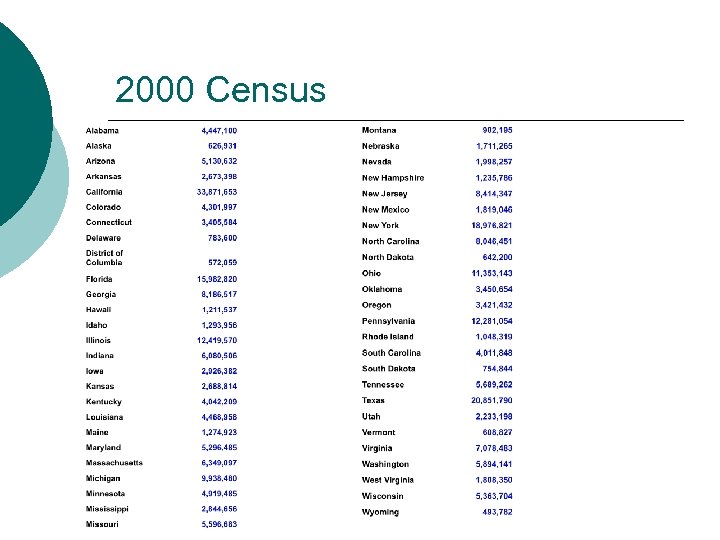 2000 Census
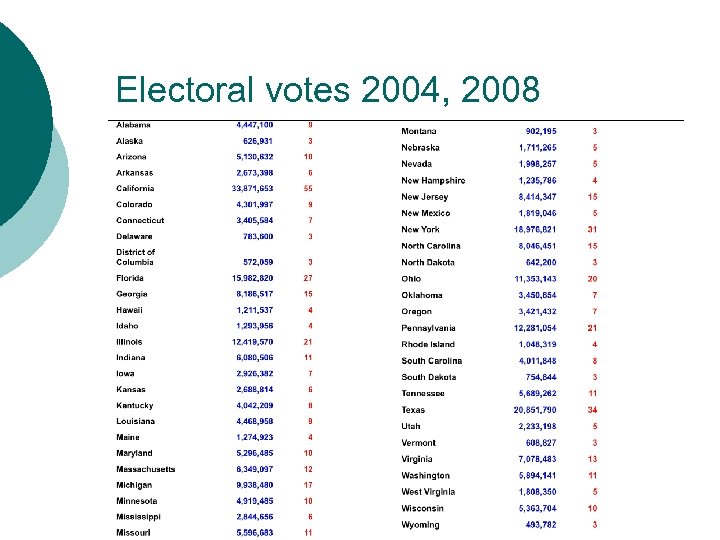 Electoral votes 2004, 2008
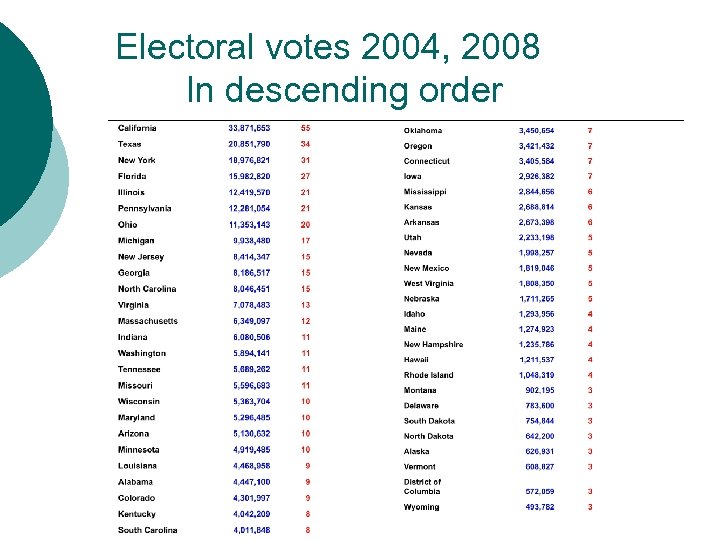 Electoral votes 2004, 2008 In descending order
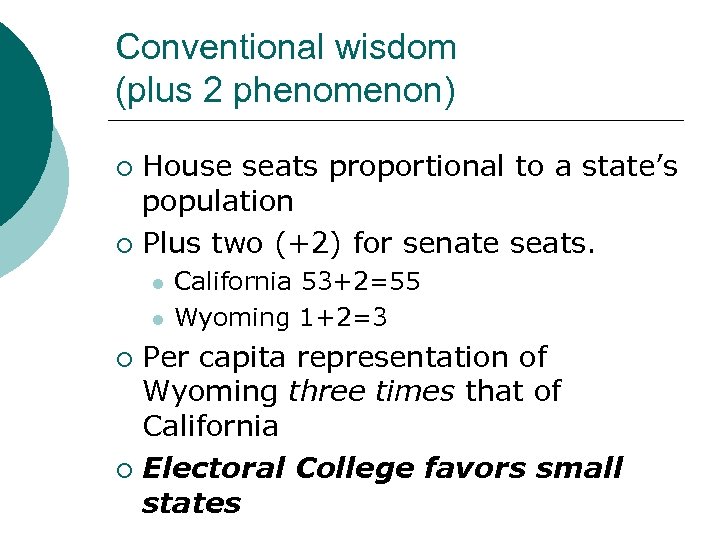 Conventional wisdom (plus 2 phenomenon) House seats proportional to a state’s population ¡ Plus two (+2) for senate seats. ¡ l l California 53+2=55 Wyoming 1+2=3 Per capita representation of Wyoming three times that of California ¡ Electoral College favors small states ¡
 Banzhaf’s question: ¡ ¡ How likely is a voter to affect the popular vote in his/her state? Clearly, a voter in a small state is more likely.
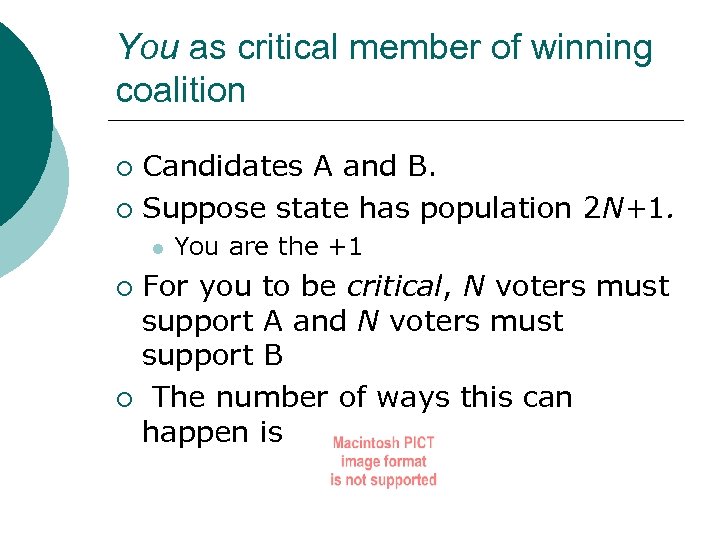 You as critical member of winning coalition Candidates A and B. ¡ Suppose state has population 2 N+1. ¡ l You are the +1 For you to be critical, N voters must support A and N voters must support B ¡ The number of ways this can happen is ¡
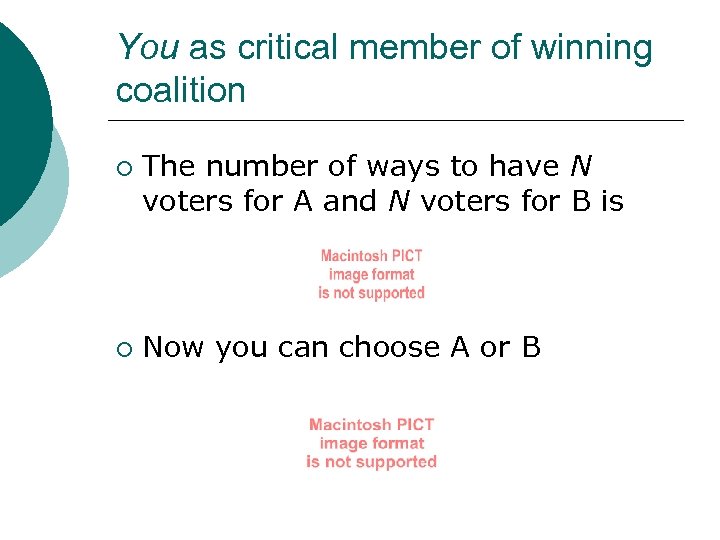 You as critical member of winning coalition ¡ ¡ The number of ways to have N voters for A and N voters for B is Now you can choose A or B
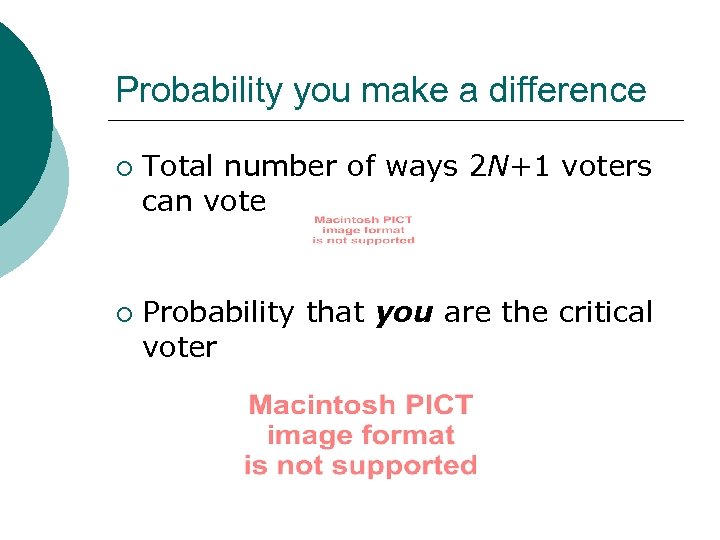 Probability you make a difference ¡ ¡ Total number of ways 2 N+1 voters can vote Probability that you are the critical voter
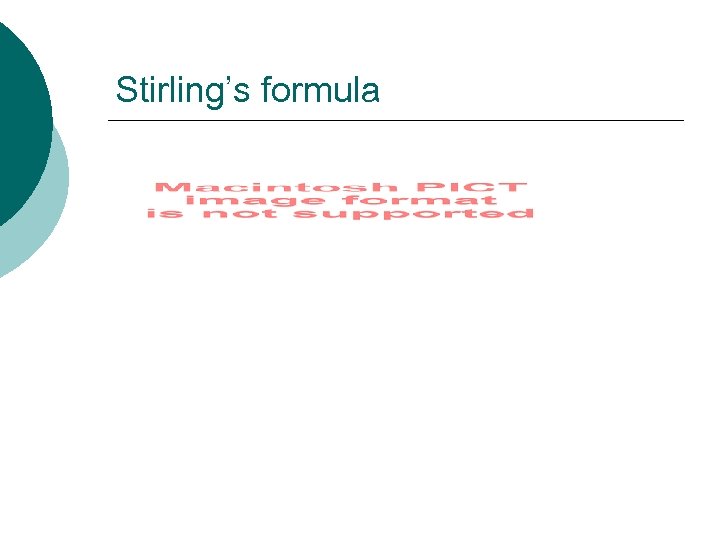 Stirling’s formula
 Banzhaf’s Stirling’s Formula estimate
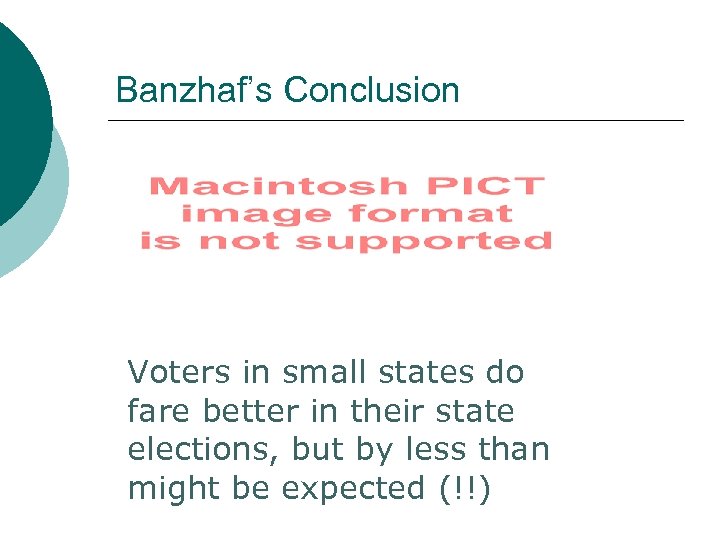 Banzhaf’s Conclusion Voters in small states do fare better in their state elections, but by less than might be expected (!!)
 Example l l Alabama: about 4, 000 Wyoming: about 400, 000 Alabama is 10 times the size of Wyoming ¡ But voters in Wyoming have only about 3 times the power of voters in Alabama… ¡ in their state elections. ¡
 Banzhaf’s second approximation ¡ The probability q that a particular state is critical in the Electoral College vote is approximately q = L 2 N where L is a constant ¡ This is very approximate at best. It fails to take the +2 into account. ¡ But it is a good first step.
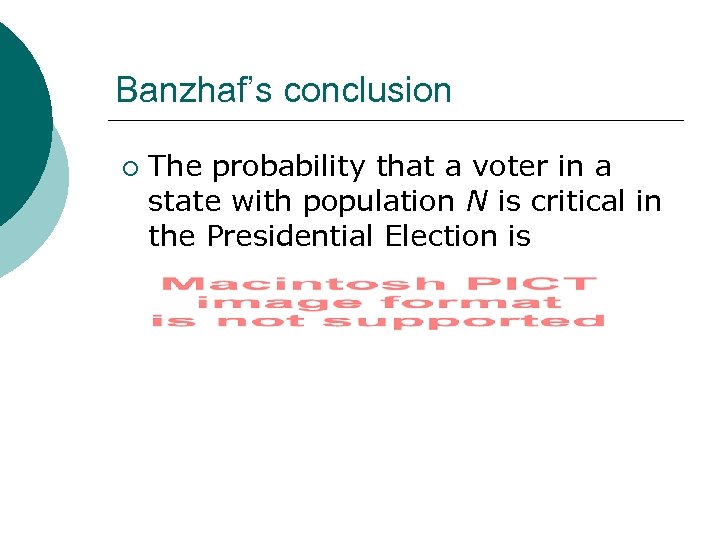 Banzhaf’s conclusion ¡ The probability that a voter in a state with population N is critical in the Presidential Election is
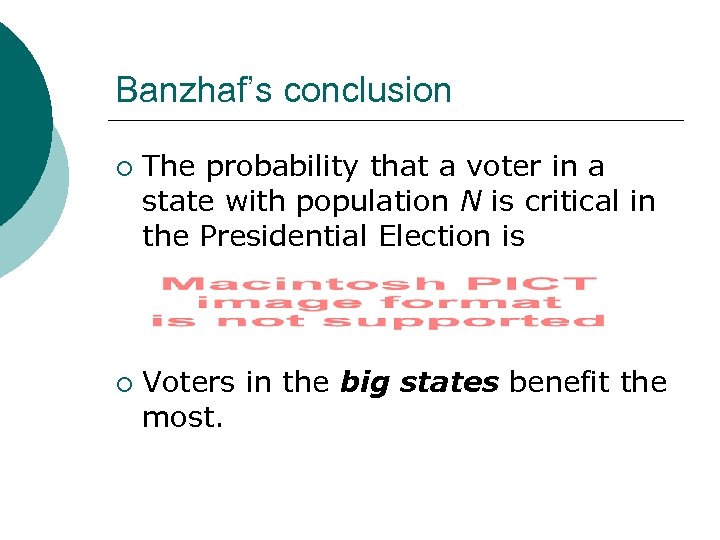 Banzhaf’s conclusion ¡ ¡ The probability that a voter in a state with population N is critical in the Presidential Election is Voters in the big states benefit the most.
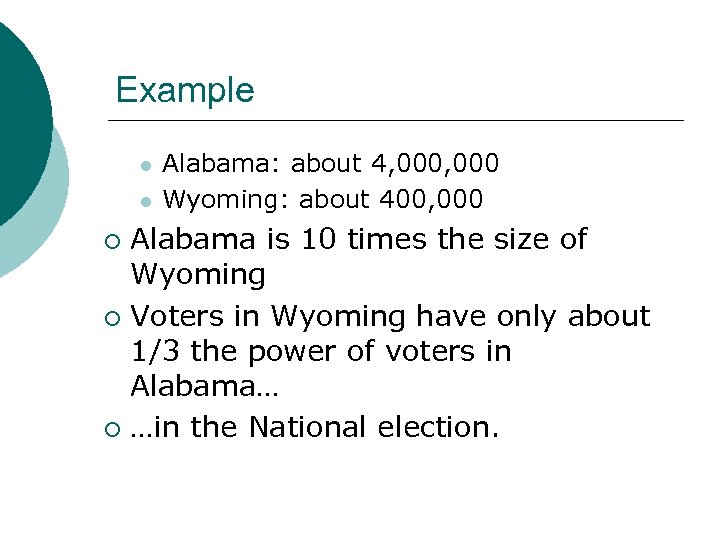 Example l l Alabama: about 4, 000 Wyoming: about 400, 000 Alabama is 10 times the size of Wyoming ¡ Voters in Wyoming have only about 1/3 the power of voters in Alabama… ¡ …in the National election. ¡
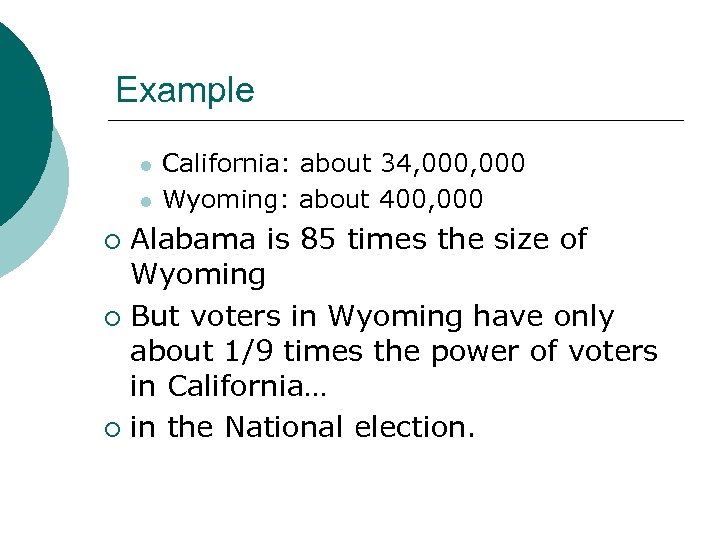 Example l l California: about 34, 000 Wyoming: about 400, 000 Alabama is 85 times the size of Wyoming ¡ But voters in Wyoming have only about 1/9 times the power of voters in California… ¡ in the National election. ¡
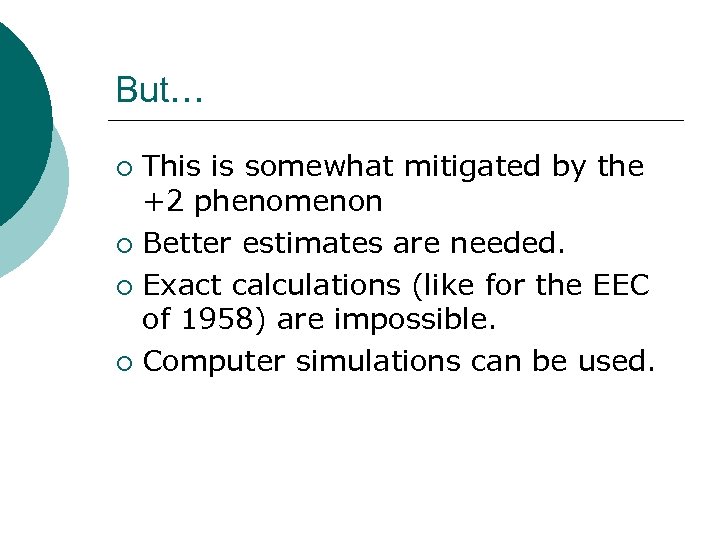 But… This is somewhat mitigated by the +2 phenomenon ¡ Better estimates are needed. ¡ Exact calculations (like for the EEC of 1958) are impossible. ¡ Computer simulations can be used. ¡
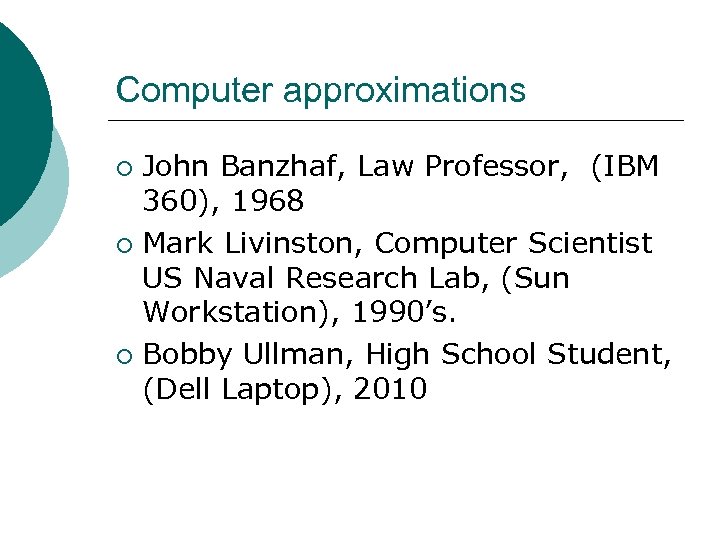 Computer approximations John Banzhaf, Law Professor, (IBM 360), 1968 ¡ Mark Livinston, Computer Scientist US Naval Research Lab, (Sun Workstation), 1990’s. ¡ Bobby Ullman, High School Student, (Dell Laptop), 2010 ¡
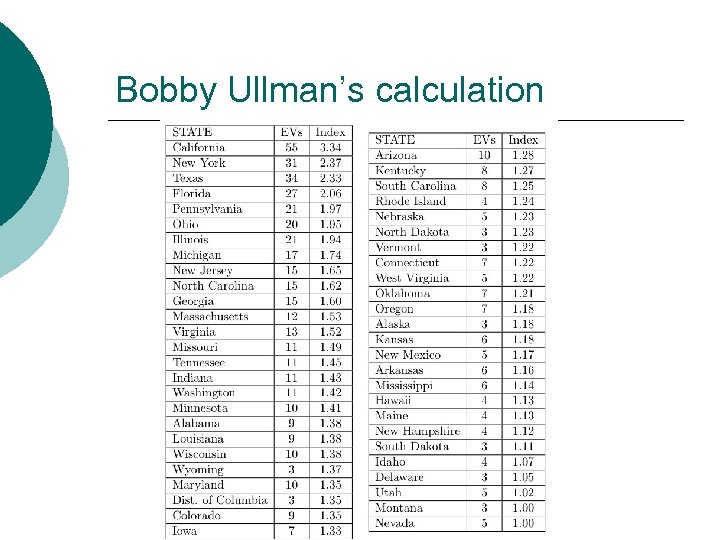 Bobby Ullman’s calculation
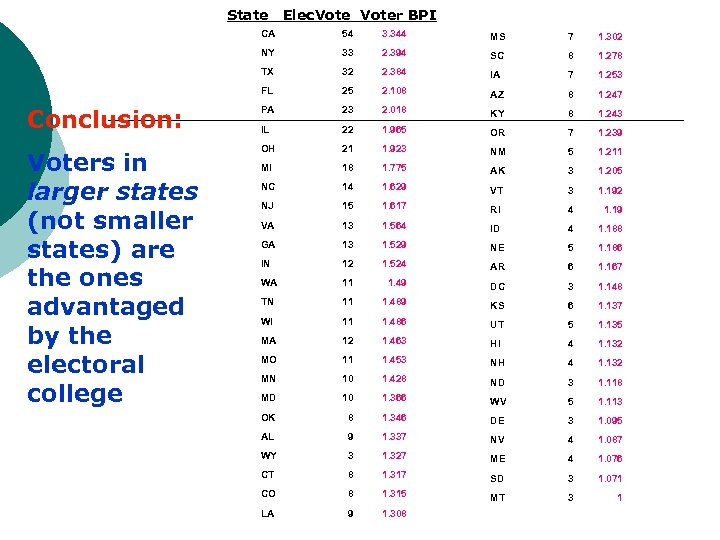 State Elec. Voter BPI CA 54 3. 344 MS 7 1. 302 NY 33 2. 394 SC 8 1. 278 TX 32 2. 384 IA 7 1. 253 FL 25 2. 108 AZ 8 1. 247 Conclusion: PA 23 2. 018 KY 8 1. 243 IL 22 1. 965 OR 7 1. 239 Voters in larger states (not smaller states) are the ones advantaged by the electoral college OH 21 1. 923 NM 5 1. 211 MI 18 1. 775 AK 3 1. 205 NC 14 1. 629 VT 3 1. 192 NJ 15 1. 617 RI 4 1. 19 VA 13 1. 564 ID 4 1. 188 GA 13 1. 529 NE 5 1. 186 IN 12 1. 524 AR 6 1. 167 WA 11 1. 49 DC 3 1. 148 TN 11 1. 489 KS 6 1. 137 WI 11 1. 486 UT 5 1. 135 MA 12 1. 463 HI 4 1. 132 MO 11 1. 453 NH 4 1. 132 MN 10 1. 428 ND 3 1. 118 MD 10 1. 366 WV 5 1. 113 OK 8 1. 346 DE 3 1. 095 AL 9 1. 337 NV 4 1. 087 WY 3 1. 327 ME 4 1. 076 CT 8 1. 317 SD 3 1. 071 CO 8 1. 315 MT 3 1 LA 9 1. 308
 Textbook