


 Скачать презентацию The Market Revolution What does this term mean
9daf6390e4de5aaed0f5c4ebe3f06bae.ppt
- Количество слайдов: 47
 The Market Revolution What does this term mean?
 th US Markets early 19 Century • Rural American workers produced and traded their goods with neighbors to supply almost all of their needs • At local markets, families sold the goods they produced • With the cash they earned, they purchased goods they could not produce themselves (coffee, sugar, horseshoes)
 US Markets expand mid century • In the Northeast, the US became more industrialized with the factory system • The factory system changed the lives of both workers and consumers • Workers spent their earnings on goods produced by other workers
 US Markets expand mid century • Farmers began to shift from selfsufficiency (raising a variety of food for their families) to specialization , raising one or two crops that they could sell at home or abroad. • These developments brought about a market revolution
 Market Revolution • People buy and sell goods rather than making the goods for themselves • This revolution led to a striking change in the US economy and in the daily lives of Americans. • Goods and services multiplied while incomes rose • The economy was growing rapidly
 Entrepreneurial spirit • Capitalism – the economic system in which private businesses and individuals control the means of production • Means of production – factories, machines and land – which are used to make a profit • Entrepreneurs – Businessmen who invested their own money (capital) in new businesses knowing that they risked losing their investment if a venture failed, but they also stood to earn huge profits if they succeeded
 Charles Goodyear 1800 -1860 • Purchased the rights of an inventor who mixed rubber with sulfur • Goodyear heated the mixture which toughened into permanent elastic • 1844 he received a patent for his process called vulcanization • Others stole and used his process • He was deeply in debt when he died • His risk paid off for Americans, but left him penniless
 Resourcefulness & Experimentation p Americans were willing to try anything. p They were first copiers, then innovators. 1800 41 patents were approved. 1860 4, 357 “ “ “
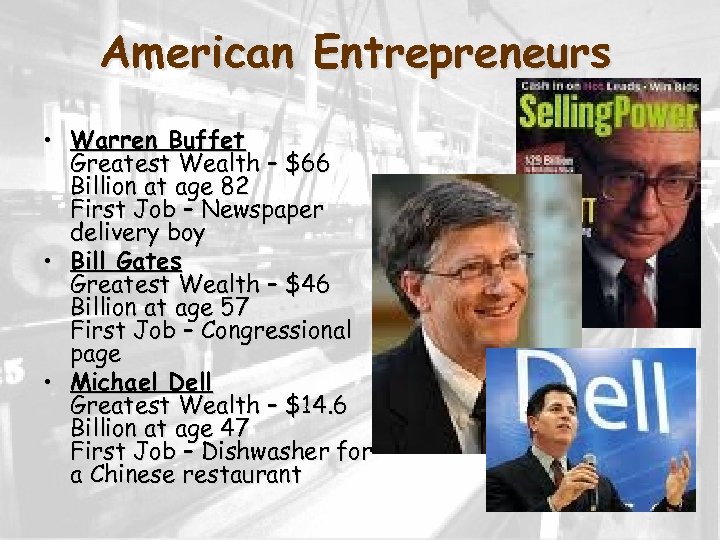 American Entrepreneurs • Warren Buffet Greatest Wealth – $66 Billion at age 82 First Job – Newspaper delivery boy • Bill Gates Greatest Wealth – $46 Billion at age 57 First Job – Congressional page • Michael Dell Greatest Wealth – $14. 6 Billion at age 47 First Job – Dishwasher for a Chinese restaurant
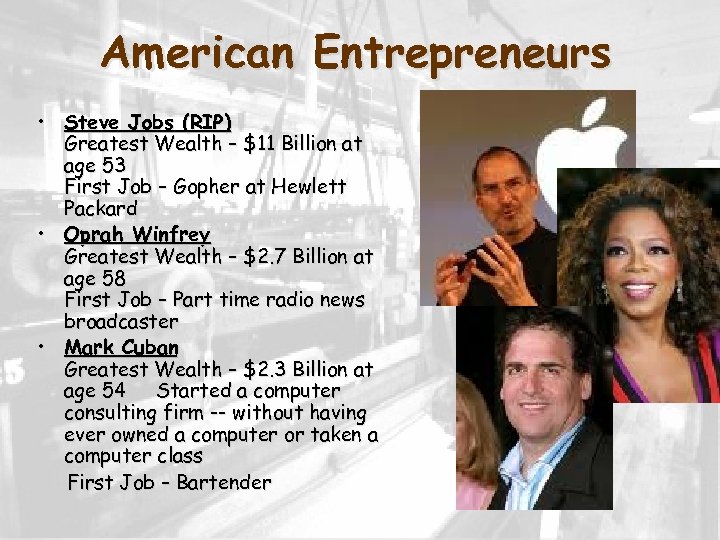 American Entrepreneurs • Steve Jobs (RIP) Greatest Wealth – $11 Billion at age 53 First Job – Gopher at Hewlett Packard • Oprah Winfrey Greatest Wealth – $2. 7 Billion at age 58 First Job – Part time radio news broadcaster • Mark Cuban Greatest Wealth – $2. 3 Billion at age 54 Started a computer consulting firm -- without having ever owned a computer or taken a computer class First Job – Bartender
 Impact on Household Economy • America boosted its industrial output especially in the north • American agriculture flourished feeding workers in the industrial cities • To meet new demands, farmers also began to use mechanized farm equipment produced in the factories
 Impact on Household Economy • Manufactured goods became less expensive as technological advances lowered prices • Falling prices meant that workers on farms and in cities became consumers of new products not only for work but also for comfort
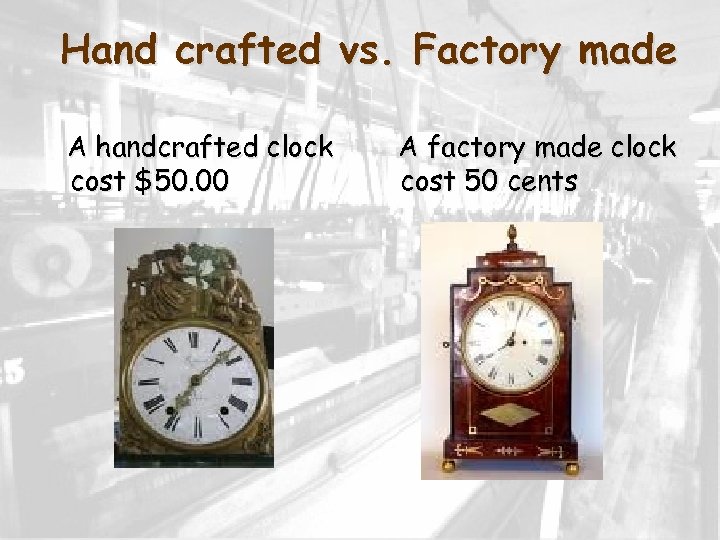 Hand crafted vs. Factory made A handcrafted clock cost $50. 00 A factory made clock cost 50 cents
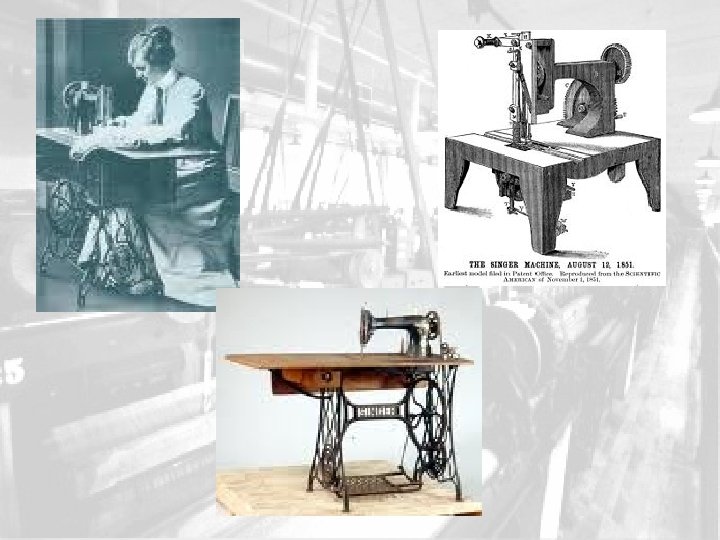
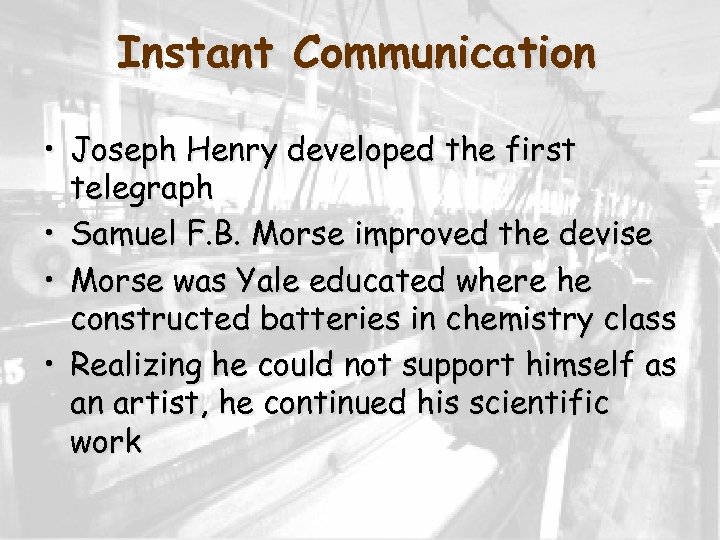
 Inventions and Improvements • Inventor entrepreneurs began to develop goods to make life more comfortable • Production of clothing was aided by the invention of the sewing machine • Patented by Elias Howe in 1846, the sewing machine was first used in shoe factories • Isaac Singer’s treadle sewing machine led to factory production of clothing • Clothing prices dropped by more than 75% • Working people could now afford to buy clothes
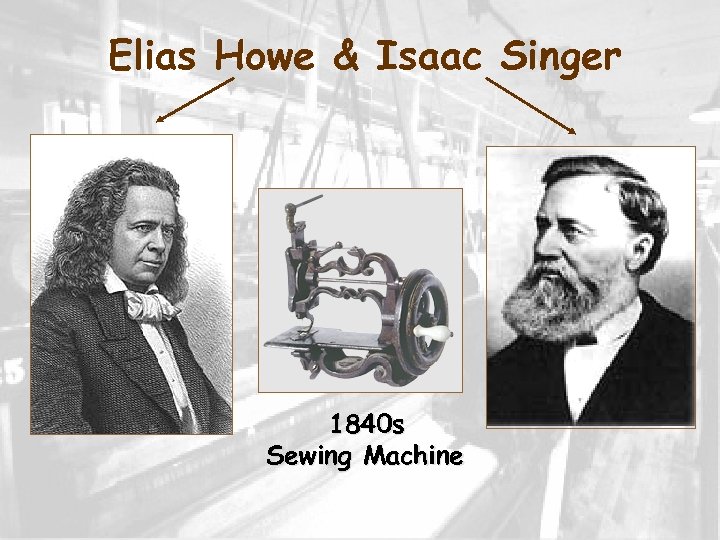 Elias Howe & Isaac Singer 1840 s Sewing Machine

 Instant Communication • Joseph Henry developed the first telegraph • Samuel F. B. Morse improved the devise • Morse was Yale educated where he constructed batteries in chemistry class • Realizing he could not support himself as an artist, he continued his scientific work
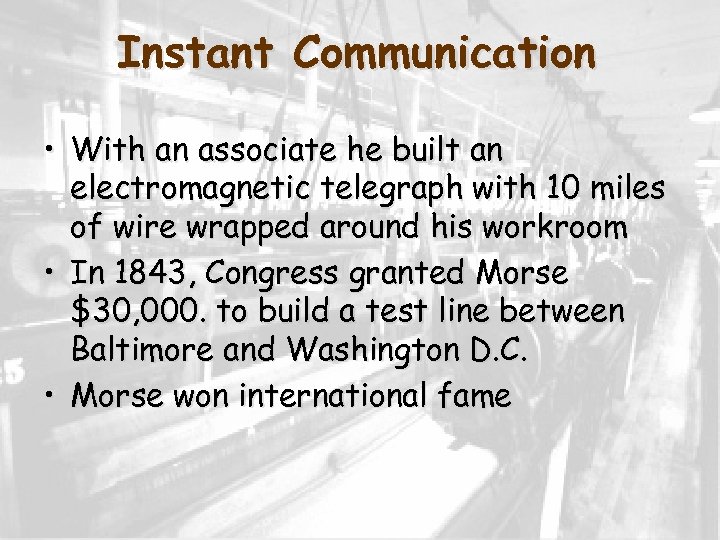 Instant Communication • With an associate he built an electromagnetic telegraph with 10 miles of wire wrapped around his workroom • In 1843, Congress granted Morse $30, 000. to build a test line between Baltimore and Washington D. C. • Morse won international fame
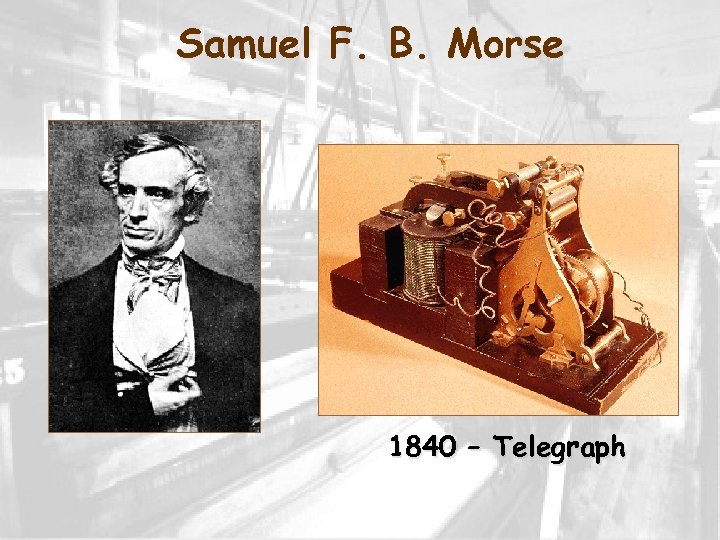 Samuel F. B. Morse 1840 – Telegraph
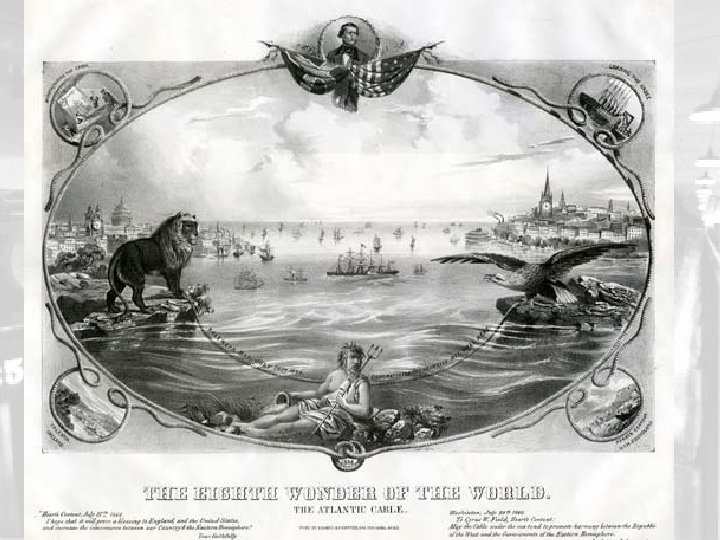
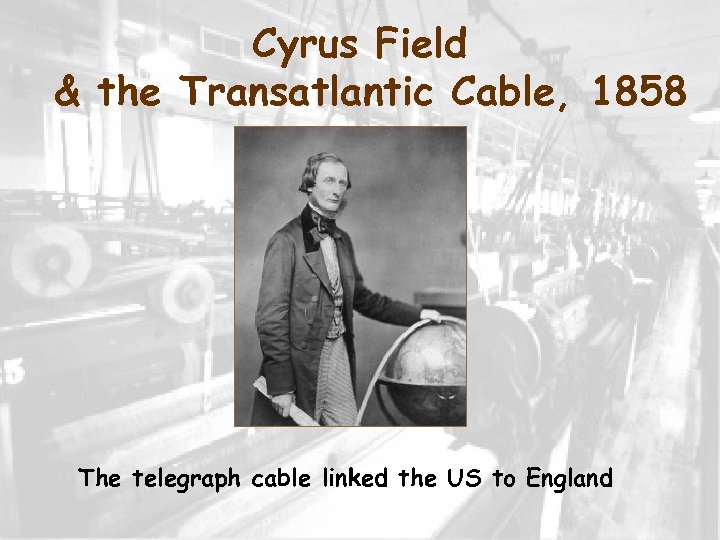 Cyrus Field & the Transatlantic Cable, 1858 The telegraph cable linked the US to England
 Steamboats • Better and faster transportation became essential to the expansion of agriculture and industry • In 1807, Robert Fulton ushered in the steamboat era when his boat, the Clermont, made a 150 mile trip up the Hudson River from New York City to Albany in 32 hours – very fast for the era. • By 1830, 200 steamboats traveled the nations rivers • Freight rates and voyage times were slashed
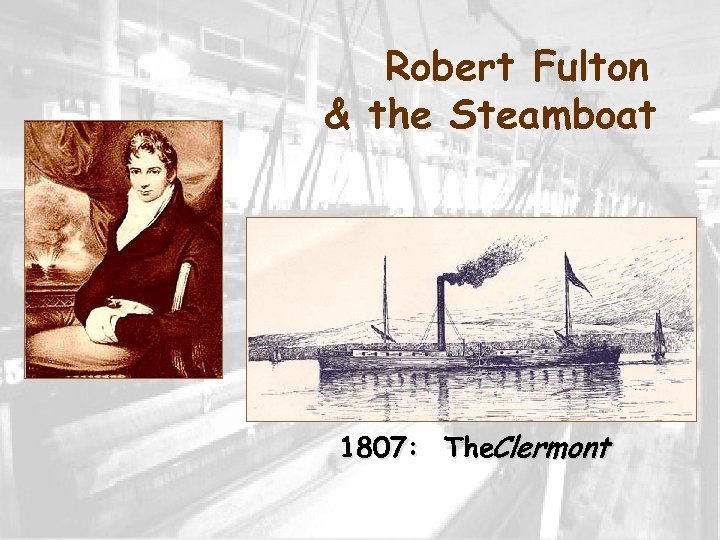 Robert Fulton & the Steamboat 1807: The. Clermont
 Americans makes canals • The Erie Canal was the nations first major canal • Before the canal was built it cost 19 cents a ton per mile to ship over land • By 1830, the cost had fallen to less than 2 cents a ton per mile • Dozens of other canal projects started opening up the heartland of America to world markets by binding the Northeast to the Midwest
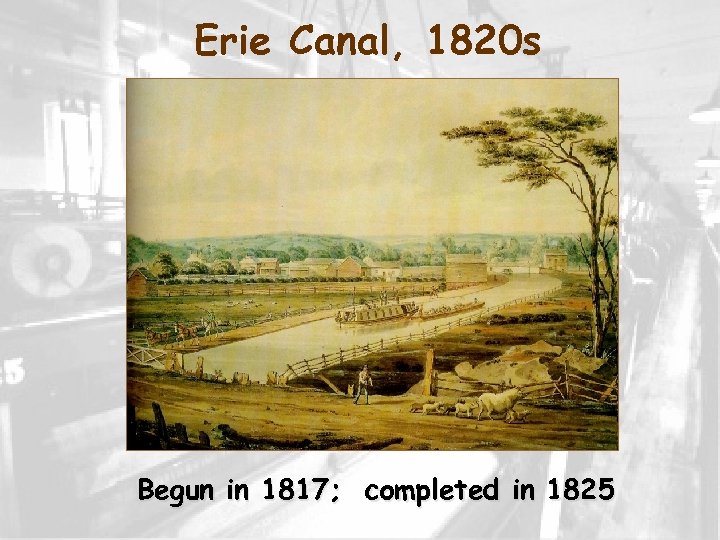 Erie Canal, 1820 s Begun in 1817; completed in 1825
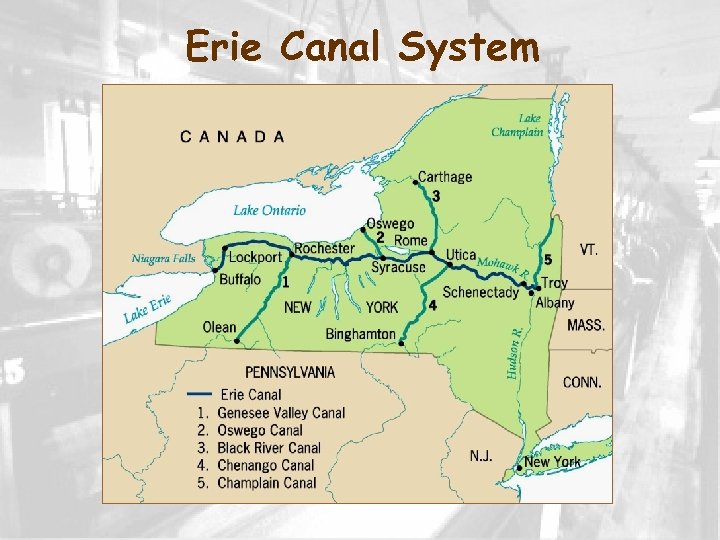 Erie Canal System
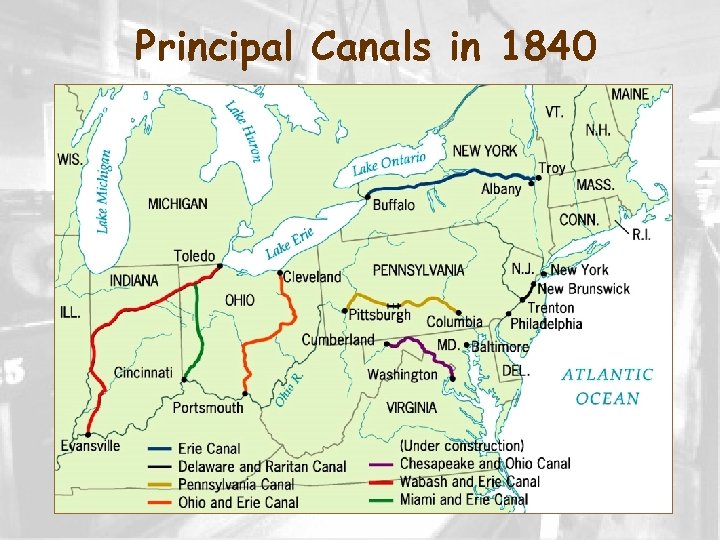 Principal Canals in 1840
 Emergence of Railroads • Although shipping by rail cost more than shipping by canal, railroads offered the advantage of speed • Railroads could operate during the winter unlike the canals • By the 1840’s steam engines pulled freight at ten miles an hour • Unfortunately, train travel was not comfortable
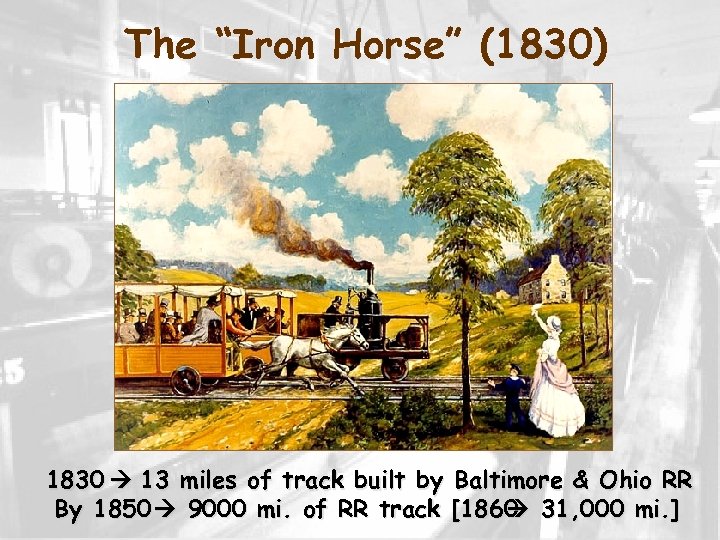 The “Iron Horse” (1830) 1830 13 miles of track built by Baltimore & Ohio RR By 1850 9000 mi. of RR track [1860 31, 000 mi. ]
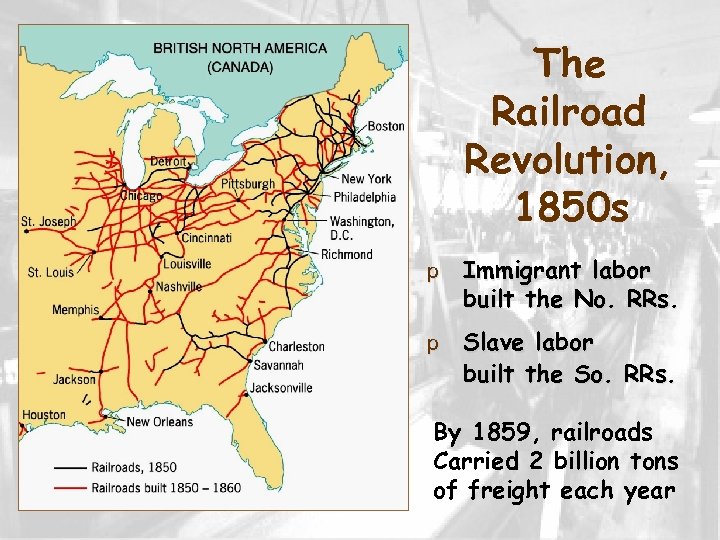 The Railroad Revolution, 1850 s p Immigrant labor built the No. RRs. p Slave labor built the So. RRs. By 1859, railroads Carried 2 billion tons of freight each year
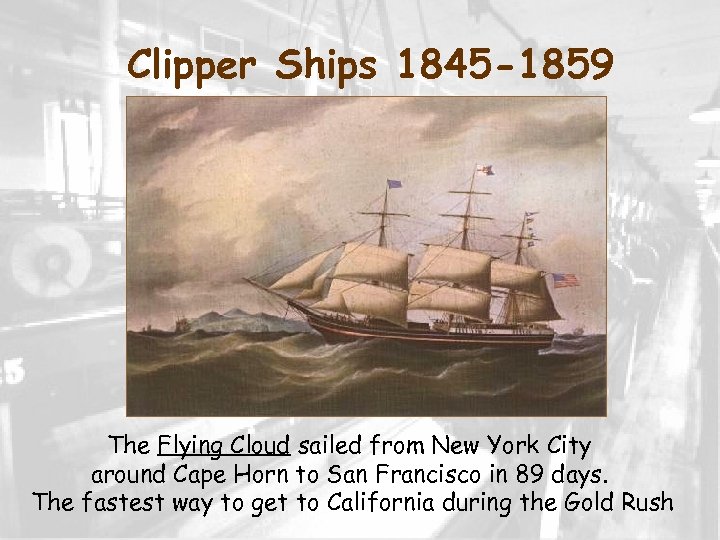 Clipper Ships 1845 -1859 The Flying Cloud sailed from New York City around Cape Horn to San Francisco in 89 days. The fastest way to get to California during the Gold Rush

 A Growing America • By the 1840’s improved transportation and communications made America’s regions interdependent • Steamboats plied the Mississippi linking North and South • The Erie Canal, railroads and telegraph wires linked the East and the West • Arteries like the “National Road”, funded by Congress opened up western travel
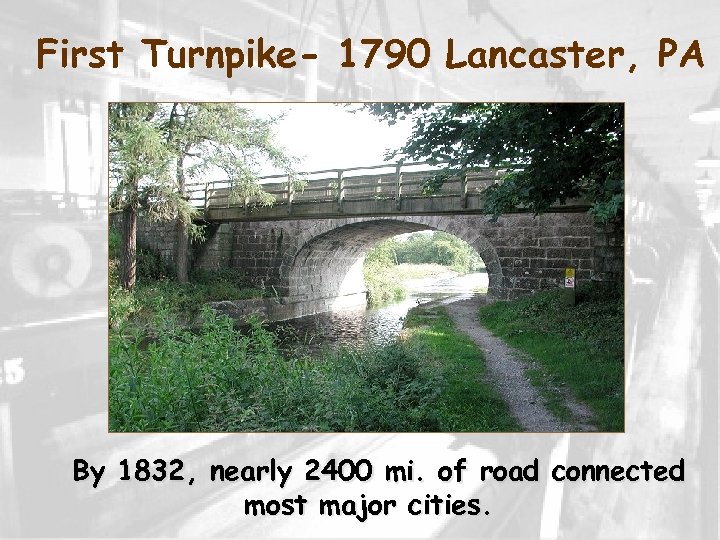 First Turnpike- 1790 Lancaster, PA By 1832, nearly 2400 mi. of road connected most major cities.
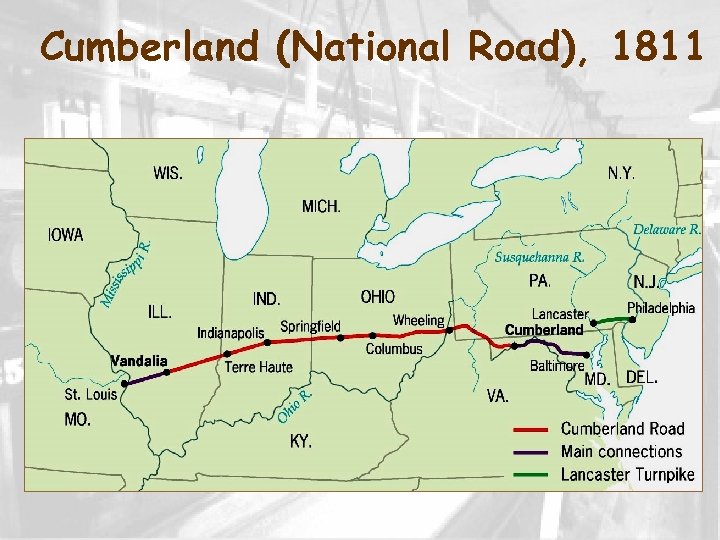 Cumberland (National Road), 1811
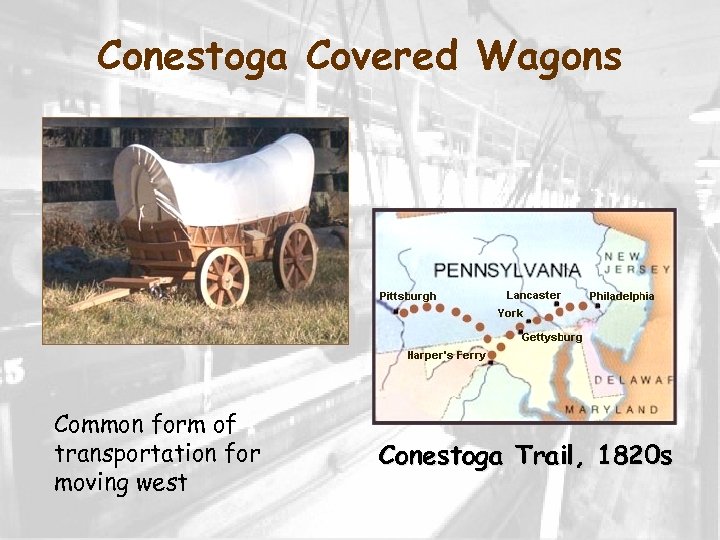 Conestoga Covered Wagons Common form of transportation for moving west Conestoga Trail, 1820 s
 Regional Specialization EAST Industrial - manufactured textiles and machinery (hired workers) WEST The Nation’s “Breadbasket” produced grain and livestock shipped to feed factory workers in eastern cities and Europe SOUTH Cotton traded to England New England (worked by slaves)
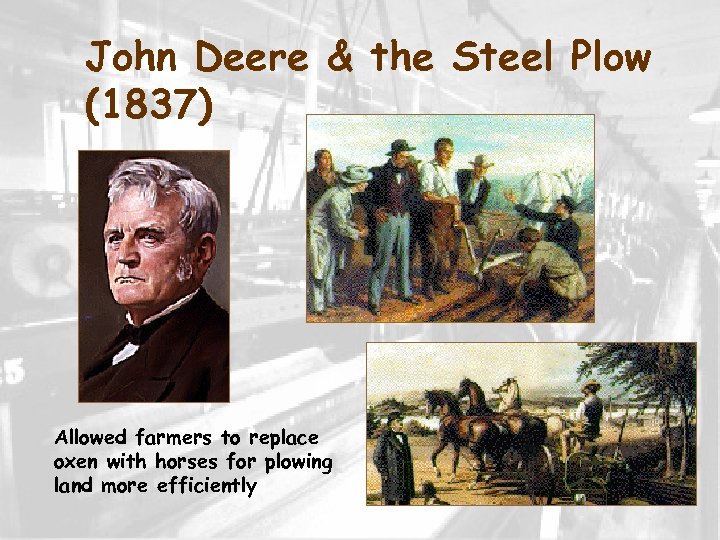 John Deere & the Steel Plow (1837) Allowed farmers to replace oxen with horses for plowing land more efficiently
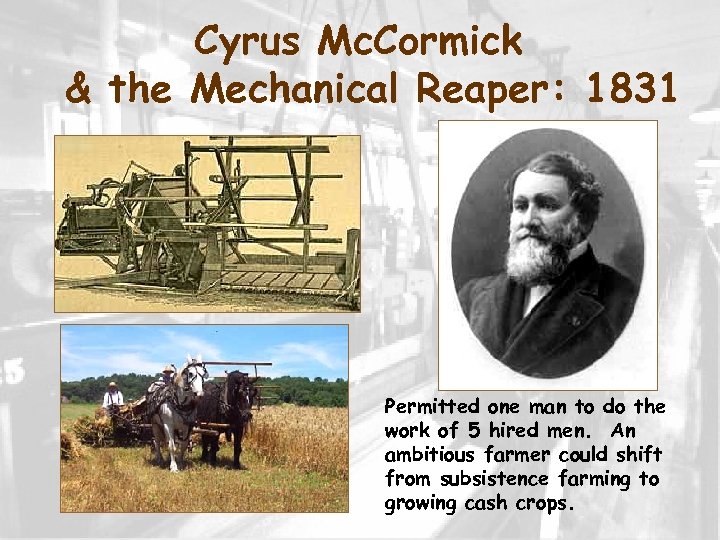 Cyrus Mc. Cormick & the Mechanical Reaper: 1831 Permitted one man to do the work of 5 hired men. An ambitious farmer could shift from subsistence farming to growing cash crops.
 Regional Specialization - East • New York City became the central link between American agriculture and European markets • Rise of manufacturing led to the production of better goods at lower prices • These goods became affordable for ordinary Americans
 Regional Specialization – Midwest Farming • Many people moved to farm the fertile soil of the Midwest • It took hard work to clear the land make it fit to cultivate • New inventions like the steel plow and Mc. Cormick Reaper made life easier • Transportation brought manufactured goods and carried crops to markets in the East
 Regional Specialization – Southern Agriculture • The South remained agricultural • Many Southerners looked at the industrialization of the Northeast with disfavor • The South usually lacked the capital ($) to build factories because they had invested so much in land slaves
 Communication Challenge • On the next slide you will see 9 images of devises that have changed the way we communicate or get information • With your group members, try to name the devise • With your group members, put the letter of the devise next to the date you think it matches • Good Luck
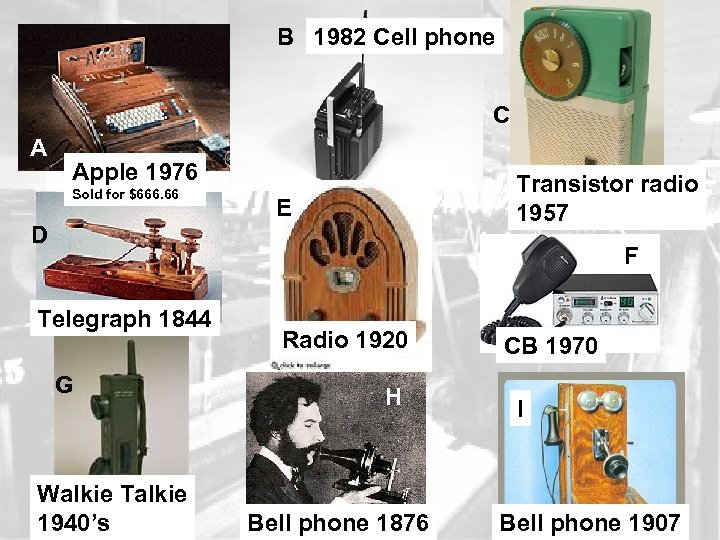 B 1982 Cell phone C A Apple 1976 Sold for $666. 66 Transistor radio 1957 E D F Telegraph 1844 G Walkie Talkie 1940’s Radio 1920 H Bell phone 1876 CB 1970 I Bell phone 1907